


What is the Fluorescent in Situ Hybridization (FISH) Size and Growth Rate?
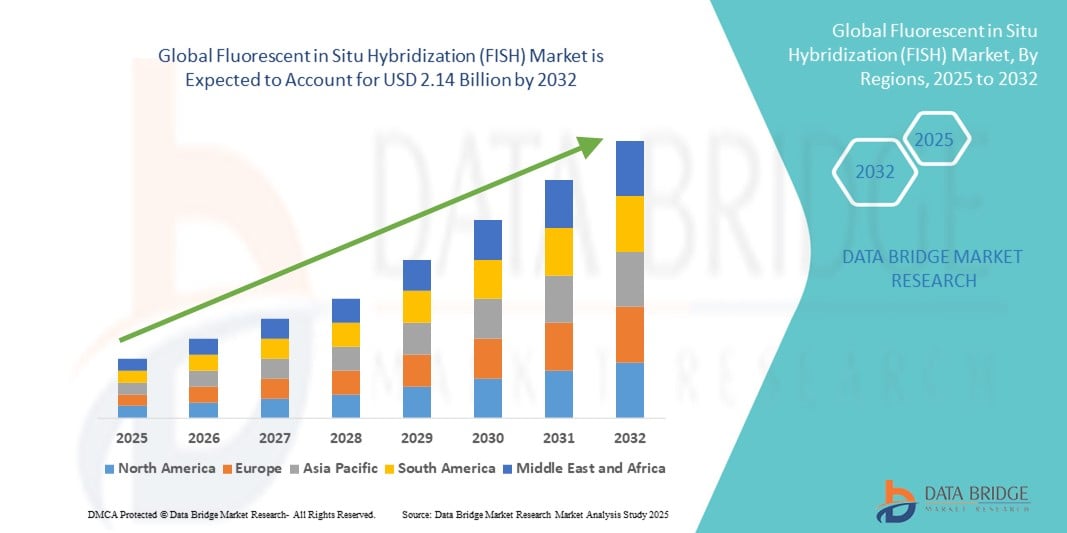
- As per Data Bridge Market Research Analysis the global fluorescent in situ hybridization (FISH) market size was valued at USD 1.14 billion in 2024 and is expected to reach USD 2.14 billion by 2032, at a CAGR of 8.20% during the forecast period
- The market growth is largely fueled by increasing adoption of advanced molecular diagnostic techniques and the expanding use of personalized medicine across oncology, hematology, and genetic disorder testing
- Furthermore, rising demand for accurate, rapid, and reliable cytogenetic and genetic testing solutions is driving the uptake of Fluorescent in Situ Hybridization (FISH) technologies, thereby significantly boosting the industry's growth. FISH is widely applied for detecting chromosomal abnormalities, gene rearrangements, and copy number variations, which are critical in cancer diagnostics, prenatal screening, and research applications
Market Size & Forecast
- Global Market Value (2024): USD 1.14 billion
- Expected Market Value (2032): USD 2.14 billion
- Forecast CAGR (2024–2032): 8.20%
What are the Major Takeaways of Fluorescent in Situ Hybridization (FISH)?
- The growing prevalence of genetic disorders, cancers, and chromosomal abnormalities has made Fluorescent in Situ Hybridization (FISH) a vital diagnostic and research tool across clinical and research laboratories. FISH enables rapid, accurate detection of specific DNA sequences, supporting early diagnosis, treatment planning, and monitoring of disease progression
- The escalating demand for Fluorescent in Situ Hybridization (FISH) is primarily driven by increasing adoption in oncology, prenatal diagnostics, and personalized medicine applications, as well as rising awareness among healthcare professionals about its accuracy and efficiency
- North America dominated the Fluorescent in Situ Hybridization (FISH) market with the largest revenue share of 41% in 2024, supported by advanced laboratory infrastructure, high adoption of molecular diagnostics, and a strong presence of key market players. The U.S. contributed significantly to this growth, driven by increased investment in genomic research and clinical diagnostic facilities
- Asia-Pacific is expected to be the fastest-growing region in the fluorescent in situ hybridization (FISH) market during the forecast period, with a CAGR of 9.1% from 2025 to 2032, fueled by rising healthcare expenditure, expansion of diagnostic laboratories, and growing awareness about early detection of genetic and chromosomal disorders
- The clinical segment dominated the Fluorescent in Situ Hybridization (FISH) market with a market revenue share of 50.2% in 2024, due to its extensive use in routine diagnostic workflows for genetic disorders, hematologic malignancies, and prenatal screening
Report Scope and Fluorescent in Situ Hybridization (FISH) Market Segmentation
|
Attributes |
Fluorescent in Situ Hybridization (FISH) Key Market Insights |
|
Segments Covered |
|
|
Countries Covered |
North America
Europe
Asia-Pacific
Middle East and Africa
South America
|
|
Key Market Players |
|
|
Market Opportunities |
|
|
Value Added Data Infosets |
|
What is the Key Trend in the Fluorescent in Situ Hybridization (FISH)?
Enhanced Diagnostic Precision and Automation
- A significant and accelerating trend in the global Fluorescent in Situ Hybridization (FISH) market is the increasing adoption of advanced imaging techniques and multiplexing capabilities. These technological advancements are enhancing diagnostic accuracy, reducing analysis time, and enabling simultaneous detection of multiple genetic abnormalities in a single assay
- FISH assays are increasingly being incorporated into personalized medicine and targeted therapy applications, allowing clinicians to tailor treatments based on specific genetic markers. The growing emphasis on early disease detection and precision oncology is further fueling demand for high-throughput and automated FISH solutions
- Automation and high-throughput platforms in the FISH market are enabling laboratories to improve workflow efficiency, reduce human error, and ensure consistent results across large sample volumes. These solutions are particularly attractive for clinical laboratories and research institutions handling complex genetic analyses
- The integration of advanced probes, fluorescent dyes, and imaging software in FISH is facilitating more detailed visualization of chromosomal structures and gene expression patterns. Researchers and clinicians benefit from enhanced sensitivity, specificity, and reproducibility, supporting more informed diagnostic and therapeutic decisions
- The demand for Fluorescent in Situ Hybridization (FISH) solutions is rising across oncology, prenatal diagnostics, and hematology applications, driven by increasing prevalence of genetic disorders, growing awareness among healthcare professionals, and expanding adoption of molecular diagnostics
- Overall, the market trend is moving towards more automated, high-precision, and multiplexed FISH solutions, which provide faster turnaround times, higher diagnostic accuracy, and broader clinical applicability, thereby reshaping the landscape of genetic testing and precision medicine
Fluorescent in Situ Hybridization (FISH) Market Dynamics
Driver
Growing Need Driven by Increasing Genetic Testing and Disease Diagnosis
- The rising prevalence of genetic disorders, cancer, and hematological abnormalities is significantly driving the demand for Fluorescent in Situ Hybridization (FISH) technologies across clinical and research settings. FISH is increasingly recognized as a precise diagnostic tool for identifying chromosomal abnormalities, gene rearrangements, and specific molecular markers that guide treatment strategies
- In April 2024, several leading biotechnology companies introduced enhanced FISH probe kits and automated imaging systems aimed at improving diagnostic throughput and accuracy. These innovations are expected to further boost the adoption of FISH solutions globally during the forecast period
- As healthcare providers prioritize early detection and targeted therapies, FISH enables accurate identification of genetic mutations and chromosomal translocations, providing actionable insights for personalized treatment approaches, particularly in oncology, prenatal diagnostics, and hematology
- Furthermore, the demand for multiplexed and high-throughput FISH assays is increasing, allowing laboratories to simultaneously analyze multiple genetic targets. This capability reduces testing time, increases efficiency, and supports large-scale screening programs in hospitals and diagnostic centers
- Convenience in laboratory workflows, reproducibility of results, and integration with advanced imaging and analysis software are key factors propelling FISH adoption in clinical, research, and academic institutions. Continuous enhancements in probe technology, fluorescent dyes, and automated platforms also contribute to improved reliability and diagnostic confidence
Restraint/Challenge
High Cost of Equipment and Technical Expertise Requirements
- The high initial investment required for FISH instrumentation, imaging systems, and reagents poses a challenge for smaller laboratories and budget-constrained healthcare facilities, potentially limiting widespread adoption in developing regions
- Moreover, the specialized technical expertise required for proper sample preparation, hybridization, and fluorescence imaging can restrict deployment to trained personnel, creating a barrier for smaller diagnostic centers or emerging markets
- Addressing these challenges through the development of more user-friendly, automated, and cost-effective FISH platforms is critical. Companies are focusing on producing simplified assay kits, automated imaging systems, and training programs to expand accessibility and reduce dependence on highly skilled technicians
- While costs remain a concern, the ongoing emphasis on improving laboratory efficiency, diagnostic accuracy, and personalized patient care is expected to sustain market growth. Integration with digital imaging and analysis platforms further enhances usability and reduces potential errors
- Overall, overcoming cost and technical barriers through innovation, education, and accessible platforms will be essential for continued expansion of the Fluorescent in Situ Hybridization (FISH) market across clinical, research, and academic applications worldwide
How is the Fluorescent in Situ Hybridization (FISH) Segmented?
The market is segmented on the basis of product type, technology, application, usage, end-user, and distribution channel.
- By Product Type
On the basis of product type, the Fluorescent in Situ Hybridization (FISH) market is segmented into consumables, instruments, and software. The consumables segment dominated the largest market revenue share of 46.8% in 2024, driven by the recurring demand for probes, reagents, and kits used in both clinical diagnostics and research applications. Consumables are essential for the daily operation of laboratories and are widely adopted due to their reliability, ease of use, and standardization. The increasing prevalence of genetic and cancer research is fueling ongoing consumption, while high adoption in emerging markets supports consistent revenue generation. The segment benefits from the expansion of hospital and diagnostic networks, as well as rising funding for molecular biology studies. Ongoing innovations in probe design, including fluorescent dyes and multiplexing capabilities, enhance diagnostic accuracy, further consolidating its dominant position.
The instrument segment is expected to witness the fastest CAGR of 9.3% from 2025 to 2032, fueled by the growing need for automated and high-throughput FISH systems in both clinical and research laboratories. Instrument adoption is driven by their ability to increase precision, reduce manual error, and support complex analyses such as multi-gene detection. Laboratories are increasingly investing in instruments to improve workflow efficiency, reproducibility, and turnaround time. Integration with imaging software and advanced analytics further strengthens market demand. Expansion of genomic research centers and precision medicine initiatives globally accelerates instrument deployment. In addition, government and private funding for advanced diagnostic equipment supports the segment’s rapid growth trajectory.
- By Technology
On the basis of technology, the Fluorescent in Situ Hybridization (FISH) market is segmented into DNA FISH, RNA FISH, PNA FISH, and others. The DNA FISH segment dominated the largest market revenue share of 48.5% in 2024, driven by its established use in detecting chromosomal abnormalities, gene amplifications, and structural rearrangements in both clinical and research settings. DNA FISH is widely adopted due to its high accuracy, reproducibility, and compatibility with automated imaging platforms. It is frequently employed in oncology, prenatal diagnostics, and hematology applications. The segment benefits from a robust body of clinical validation and inclusion in standard diagnostic protocols. Increasing prevalence of cancer and genetic disorders worldwide underpins steady demand. DNA FISH kits and protocols are continuously optimized for higher sensitivity, faster turnaround times, and multiplexing, reinforcing the segment’s leadership.
The RNA FISH segment is expected to witness the fastest CAGR of 10.1% from 2025 to 2032, fueled by rising applications in transcriptomics, gene expression analysis, and infectious disease research. RNA FISH allows visualization of RNA molecules within intact cells, providing critical spatial information about gene activity. Adoption is expanding due to increased research in personalized medicine and precision oncology. Technological advancements, including improved fluorescent probes and high-resolution imaging systems, enhance detection sensitivity. The growing integration of RNA FISH with single-cell analysis platforms further drives market adoption. Expansion of academic and commercial research labs globally supports the rapid growth of this segment.
- By Application
On the basis of application, the Fluorescent in Situ Hybridization (FISH) market is segmented into cancer research, genetic research, infectious disease, personalized medicine, and others. The cancer research segment dominated the largest market revenue share of 44.7% in 2024, owing to the widespread use of FISH in detecting oncogenic mutations, chromosomal translocations, and gene amplifications critical for diagnosis, prognosis, and therapy selection. FISH is a cornerstone technique in hematologic and solid tumor studies. The segment benefits from growing oncology research funding, increased prevalence of cancer globally, and the integration of FISH results into precision medicine protocols. Advanced imaging systems and multiplex probe panels further enhance its adoption. Clinical laboratories and research institutions prefer FISH for its reliability, reproducibility, and compatibility with other molecular diagnostics.
The personalized medicine segment is expected to witness the fastest CAGR of 11.2% from 2025 to 2032, driven by the rising demand for patient-specific therapeutic strategies and biomarker-guided treatments. FISH is extensively used to identify actionable genetic alterations, aiding in targeted therapies. Increasing emphasis on precision oncology, companion diagnostics, and pharmacogenomics is fueling adoption. Integration with other molecular technologies, such as NGS and PCR, enhances the utility of FISH. Expansion of private and academic research initiatives in precision medicine accelerates market growth. Regulatory support for biomarker-based therapies in oncology further propels this segment.
- By Usage
On the basis of usage, the Fluorescent in Situ Hybridization (FISH) market is segmented into clinical, research, and companion diagnostic. The clinical segment dominated the largest market revenue share of 50.2% in 2024, due to its extensive use in routine diagnostic workflows for genetic disorders, hematologic malignancies, and prenatal screening. Clinical adoption is supported by standardized protocols, reproducibility, and regulatory approval for diagnostic applications. Hospitals and diagnostic laboratories rely on FISH for timely and accurate patient management. Continuous demand for clinical consumables, probes, and imaging platforms sustains revenue generation. Rising awareness of early genetic testing and integration with precision medicine protocols further enhances segment dominance.
The research segment is expected to witness the fastest CAGR of 9.8% from 2025 to 2032, fueled by expanding molecular biology and genomics research across academic and private institutions. Research applications include studying gene expression, epigenetics, chromosomal rearrangements, and functional genomics. The growing emphasis on single-cell analysis, biomarker discovery, and infectious disease research boosts FISH adoption in laboratories. Technological advancements, such as automated imaging systems and multiplexing probes, increase efficiency and analytical capabilities. Rising funding in genomics and molecular medicine globally supports the rapid growth of this segment.
- By End User
On the basis of end user, the Fluorescent in Situ Hybridization (FISH) market is segmented into hospitals & clinics, diagnostic laboratories, pharmaceuticals & biotechnology companies, contract research organizations, academic & research institutes, and others. The hospitals & clinics segment dominated the largest market revenue share of 47.6% in 2024, attributed to direct patient testing, routine genetic screenings, and oncology diagnostics. Hospitals utilize FISH for hematology, oncology, and prenatal diagnostics to deliver precise, actionable results. Strong integration with hospital laboratory networks, trained personnel, and established procurement channels reinforces dominance. Increasing patient awareness of genetic testing and early diagnosis supports revenue growth. Hospitals also benefit from reimbursement coverage and regulatory approvals for FISH-based tests.
The diagnostic laboratories segment is expected to witness the fastest CAGR of 10.5% from 2025 to 2032, fueled by the growing outsourcing of genetic testing, oncology profiling, and infectious disease diagnostics. Laboratories offer high-throughput testing, specialized expertise, and faster turnaround times compared with in-house hospital labs. Expansion of private diagnostic chains, collaboration with pharmaceutical companies, and adoption of advanced imaging and automation systems drive segment growth. Rising demand for early detection, precision medicine, and routine screening accelerates the adoption of laboratory-based FISH testing.
- By Distribution Channel
On the basis of distribution channel, the Fluorescent in Situ Hybridization (FISH) market is segmented into retail sales, direct tender, online sales, and others. The direct tender segment dominated the largest market revenue share of 45.9% in 2024, driven by bulk procurement by hospitals, diagnostic centers, and research institutions ensuring cost advantages and reliable supply. Direct tender agreements often include long-term contracts, preferential pricing, and streamlined logistics. Government-funded healthcare programs and institutional buying further strengthen this channel. Bulk purchase ensures consistent availability of consumables, instruments, and kits for large-scale diagnostic or research applications. Strong distribution networks and supplier reliability maintain segment leadership.
The online sales segment is expected to witness the fastest CAGR of 11.0% from 2025 to 2032, fueled by growing e-commerce adoption, ease of ordering FISH kits and consumables, and increasing trust in verified online distributors. Online platforms facilitate rapid delivery to hospitals, labs, and research institutes, enhancing convenience and reducing lead times. Expansion of telemedicine, home-based genetic testing, and research collaborations further propels online sales. Cost competitiveness, flexible subscription models, and wide product availability accelerate market growth in this segment.
Which Region Holds the Largest Share of the How is Fluorescent in Situ Hybridization (FISH) Segmented?
- North America dominated the fluorescent in situ hybridization (FISH) market with the largest revenue share of 41% in 2024, driven by advanced healthcare infrastructure, high adoption of genetic and molecular diagnostic technologies, and the strong presence of key pharmaceutical and biotechnology companies
- The region has a well-established clinical diagnostics ecosystem, with hospitals, research institutions, and specialized laboratories rapidly integrating FISH for oncology, genetic disorders, and prenatal testing
- Rising prevalence of cancers and hereditary diseases, coupled with favorable reimbursement policies and increasing R&D investments, further strengthens market dominance
U.S. Fluorescent in Situ Hybridization (FISH) Market Insight
The U.S. fluorescent in situ hybridization (FISH) market captured the largest revenue share of 82% in 2024 within North America, fueled by widespread uptake of molecular diagnostics and advanced cytogenetic techniques. Increasing awareness about the benefits of FISH in early disease detection, cancer monitoring, and personalized medicine drives growth. Major hospitals and diagnostic laboratories are adopting high-throughput and automated FISH platforms to enhance testing efficiency and accuracy. Additionally, collaborations between academic research institutes and biotechnology firms accelerate innovation, expanding the availability of cutting-edge FISH assays. Government initiatives and public health programs focusing on hereditary disease screening and oncology diagnostics further support the robust growth of the U.S. market.
Europe Fluorescent in Situ Hybridization (FISH) Market Insight
The Europe fluorescent in situ hybridization (FISH) market is projected to expand at a substantial CAGR during the forecast period, primarily driven by stringent regulatory requirements for genetic testing and increasing prevalence of hereditary and oncological disorders. Countries such as the U.K. and Germany are witnessing growing adoption of FISH technologies in cancer research, genetic counseling, and personalized medicine. Well-established healthcare systems, the presence of leading research institutions, and increasing investments in precision diagnostics further fuel market growth.
U.K. Fluorescent in Situ Hybridization (FISH) Market Insight
The U.K. fluorescent in situ hybridization (FISH) market is anticipated to grow steadily, driven by the increasing need for precise cytogenetic and molecular diagnostics. Hospitals, diagnostic laboratories, and academic institutions are extensively using FISH for applications including cancer detection, prenatal screening, and translational research. Supportive government initiatives promoting advanced diagnostics, along with the growing research ecosystem and technological advancements in imaging and probe design, are expected to sustain market expansion.
Germany Fluorescent in Situ Hybridization (FISH) Market Insight
The Germany fluorescent in situ hybridization (FISH) market is expected to expand at a significant CAGR, fueled by rising demand for early disease detection, advanced research in oncology and genetic disorders, and robust clinical infrastructure. Technological innovations, including automated imaging systems, multi-color FISH assays, and high-throughput analysis platforms, are accelerating adoption in hospitals, research centers, and diagnostic laboratories. Additionally, strong regulatory frameworks and a growing emphasis on precision medicine contribute to market growth.
Asia-Pacific Fluorescent in Situ Hybridization (FISH) Market Insight
The Asia-Pacific fluorescent in situ hybridization (FISH) market is expected to witness the fastest CAGR of 9.1% during the forecast period of 2025–2032, driven by rapid urbanization, rising disposable incomes, and expansion of healthcare facilities offering specialized diagnostic and genetic testing services. Countries such as China, Japan, and India are increasing adoption of FISH for cancer research, infectious disease diagnostics, and personalized medicine. The region’s focus on building advanced healthcare infrastructure, government initiatives promoting molecular diagnostics, and growing investments in biotech research are key factors supporting the high growth rate.
Japan Fluorescent in Situ Hybridization (FISH) Market Insight
The Japan fluorescent in situ hybridization (FISH) market is gaining momentum due to high awareness of advanced diagnostics, rapid urbanization, and increasing prevalence of genetic and oncological disorders. Hospitals, diagnostic centers, and research institutions are integrating FISH into routine testing and translational research projects, particularly for cancer cytogenetics and personalized treatment strategies. The country’s technologically advanced healthcare system and strong focus on precision medicine contribute to steady market growth.
China Fluorescent in Situ Hybridization (FISH) Market Insight
China fluorescent in situ hybridization (FISH) market accounted for the largest market revenue share in Asia-Pacific in 2024, driven by expanding healthcare infrastructure, rapid urbanization, increasing demand for genetic testing, and a growing middle-class population. The country is a key market for FISH in clinical diagnostics, cancer research, and academic studies. Government initiatives promoting precision medicine, increasing public awareness of hereditary disorders, and investments by domestic and international biotechnology companies further support market expansion.
Which are the Top Companies in Fluorescent in Situ Hybridization (FISH)?
The Fluorescent in Situ Hybridization (FISH) industry is primarily led by well-established companies, including:
- Thermo Fisher Scientific Inc. (U.S.)
- Bio-Techne (U.S.)
- Abbott (U.S.)
- Agilent Technologies, Inc. (U.S.)
- Merck KGaA (Germany)
- F. Hoffmann-La Roche Ltd (Switzerland)
- Abnova Corporation (Taiwan)
- BioDot (U.S.)
- Biocare Medical, LLC (U.S.)
- Abcam plc. (U.K.)
- BIOZOL Diagnostics Vertrieb GmbH (Germany)
- Zytomed Systems GmbH (Germany)
- Genemed Biotechnologies, Inc. (U.S.)
- Bio SB (U.S.)
- BioGenex (U.S.)
- Excilone (France)
- MetaSystems (Germany)
- Kaneka Eurogentec S.A. (Belgium)
- BioCat GmbH (Germany)
- Leica Biosystems Nussloch GmbH (Germany)
What are Latest Developments in Fluorescent in Situ Hybridization (FISH)?
- In March 2025, Bio-Techne presented at the USCAP Annual Meeting, highlighting advances in the detection of clinically relevant biomarkers using RNAscope technologies. Leading pathologists discussed how they have utilized RNAscope technology to detect biomarkers, including secreted proteins, point mutations, and chromosomal translocations, with improved performance over existing methods
- In January 2024, Advanced Cell Diagnostics (ACD), a Bio-Techne brand, achieved a technical breakthrough enabling protease-free, same-slide detection of protein and RNA biomarkers using RNAscope technology. This advancement sets a new standard in spatial biology, enhancing the detection capabilities of FISH assays
- In March 2023, Abcam plc. announced that it has received "Antibody Supplier of the Year” in CiteAb's distinguished annual industry awards. This comes after Fast Company recently listed Abcam plc. as one of the most innovative companies in the world for its ground-breaking efforts to increase data reproducibility. The provider with the most antibody product citations in 2022 receives CiteAb's "Antibody Supplier of the Year" honor. Moreover, Abcam plc. was given a "highly commended" rating in the category of "Post Translational Modification Antibody Supplier of the Year," recognizing the difficulty in creating and validating antibodies for these challenging targets. This has aided the business in becoming known on a global scale
- In March 2023, BIOZOL Diagnostics Vertrieb GmbH announced the acquisition of AlphaScience GmbH. By making this acquisition, BIOZOL Diagnostics Vertrieb GmbH strengthened its dominant position in the global market for research and diagnostics. With a significant number of new supplier connections, outstanding product knowledge, and staff who are well-trained technically, AlphaScience enhances BIOZOL. Significant synergy effects between the two organizations improving their offerings to customers and suppliers
- In July 2022, Bio-Techne announced the launch of the CE-IVD designated RNAscope ISH Probe High Risk HPV in Europe in order to help patients with Oropharyngeal Squamous Cell Carcinoma (OPSCC) identify high-risk Human Papillomavirus (HPV). For the qualitative identification of HPV E6/E7 mRNA in FFPE tissue samples, the RNAscope ISH Probe High Risk HPV is used. This has aided the business in offering better solutions all over the world

- Interactive Data Analysis Dashboard
- Company Analysis Dashboard for high growth potential opportunities
- Research Analyst Access for customization & queries
- Competitor Analysis with Interactive dashboard
- Latest News, Updates & Trend analysis
- Harness the Power of Benchmark Analysis for Comprehensive Competitor Tracking
Data collection and base year analysis are done using data collection modules with large sample sizes. The stage includes obtaining market information or related data through various sources and strategies. It includes examining and planning all the data acquired from the past in advance. It likewise envelops the examination of information inconsistencies seen across different information sources. The market data is analysed and estimated using market statistical and coherent models. Also, market share analysis and key trend analysis are the major success factors in the market report. To know more, please request an analyst call or drop down your inquiry.
The key research methodology used by DBMR research team is data triangulation which involves data mining, analysis of the impact of data variables on the market and primary (industry expert) validation. Data models include Vendor Positioning Grid, Market Time Line Analysis, Market Overview and Guide, Company Positioning Grid, Patent Analysis, Pricing Analysis, Company Market Share Analysis, Standards of Measurement, Global versus Regional and Vendor Share Analysis. To know more about the research methodology, drop in an inquiry to speak to our industry experts.
Data Bridge Market Research is a leader in advanced formative research. We take pride in servicing our existing and new customers with data and analysis that match and suits their goal. The report can be customized to include price trend analysis of target brands understanding the market for additional countries (ask for the list of countries), clinical trial results data, literature review, refurbished market and product base analysis. Market analysis of target competitors can be analyzed from technology-based analysis to market portfolio strategies. We can add as many competitors that you require data about in the format and data style you are looking for. Our team of analysts can also provide you data in crude raw excel files pivot tables (Fact book) or can assist you in creating presentations from the data sets available in the report.













