


Focal Segmental Glomerulosclerosis Drugs Market Size
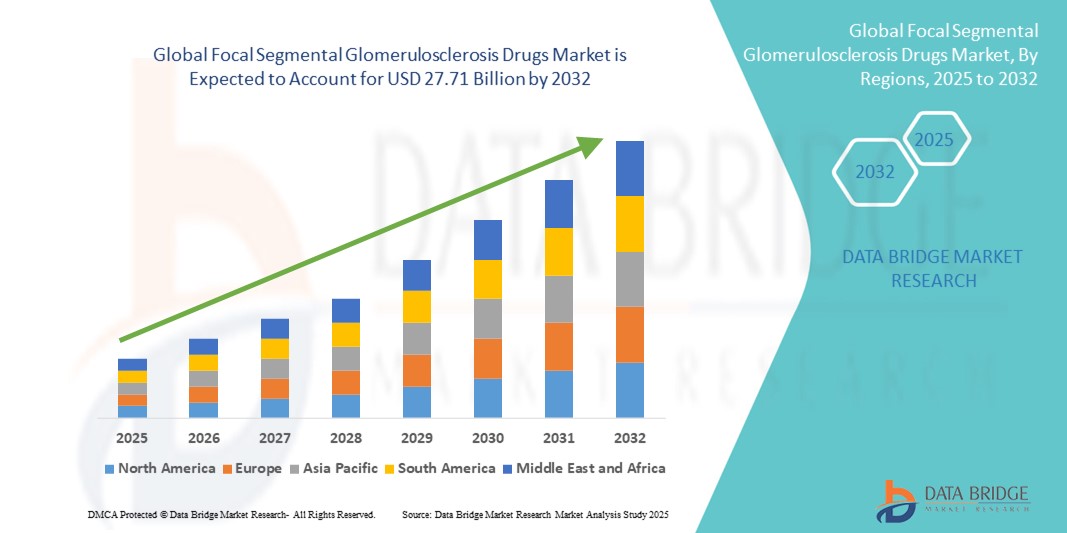
- The global focal segmental glomerulosclerosis drugs market size was valued at USD 14.75 billion in 2024 and is expected to reach USD 27.71 billion by 2032, at a CAGR of 8.20% during the forecast period
- The market growth is largely fueled by the rising prevalence of kidney-related disorders, particularly focal segmental glomerulosclerosis, coupled with increasing awareness about early diagnosis and treatment options. Advancements in pharmacological therapies and the introduction of novel drug formulations are further enhancing treatment efficacy and patient compliance, thereby driving adoption rates
- Furthermore, growing investments in research and development, along with regulatory support for orphan drug designations, are enabling the introduction of more targeted and personalized therapies for FSGS patients. These converging factors are accelerating the uptake of focal segmental glomerulosclerosis drug solutions, thereby significantly boosting the industry's growth
Focal Segmental Glomerulosclerosis Drugs Market Analysis
- The focal segmental glomerulosclerosis drugs market is growing steadily, driven by increasing prevalence of kidney disorders, rising awareness about FSGS, and advancements in effective drug therapies that help manage the disease and improve patient outcomes
- The rising demand for FSGS drugs is fueled by better diagnostic tools, increasing patient diagnosis rates, and adoption of new therapeutic options aimed at reducing proteinuria and delaying disease progression
- North America dominated the focal segmental glomerulosclerosis drugs market with the largest revenue share of 37.5% in 2024, supported by advanced healthcare infrastructure, high healthcare spending, and the presence of major pharmaceutical companies focusing on nephrology treatments. The U.S. leads growth in this region due to increased diagnosis and strong adoption of novel therapies
- Asia-Pacific is expected to be the fastest growing region in the focal segmental glomerulosclerosis drugs market during the forecast period, driven by rising urbanization, expanding healthcare access, and increasing investments in healthcare infrastructure in countries such as China, India, and Japan
- The corticosteroids segment dominated the focal segmental glomerulosclerosis drugs market with a market revenue share of 38.5% in 2024, driven by their effectiveness in reducing inflammation and proteinuria associated with FSGS
Report Scope and Focal Segmental Glomerulosclerosis Drugs Market Segmentation
|
Attributes |
Focal Segmental Glomerulosclerosis Drugs Key Market Insights |
|
Segments Covered |
|
|
Countries Covered |
North America
Europe
Asia-Pacific
Middle East and Africa
South America
|
|
Key Market Players |
|
|
Market Opportunities |
|
|
Value Added Data Infosets |
In addition to the insights on market scenarios such as market value, growth rate, segmentation, geographical coverage, and major players, the market reports curated by the Data Bridge Market Research also include in-depth expert analysis, pricing analysis, brand share analysis, consumer survey, demography analysis, supply chain analysis, value chain analysis, raw material/consumables overview, vendor selection criteria, PESTLE Analysis, Porter Analysis, and regulatory framework. |
Focal Segmental Glomerulosclerosis Drugs Market Trends
Increasing Focus on Innovative Therapeutics and Personalized Treatment
- A significant trend in the global focal segmental glomerulosclerosis drugs market is the growing emphasis on developing innovative and targeted therapies that address the underlying causes of FSGS, aiming to improve patient outcomes and reduce disease progression
- Pharmaceutical companies are investing in research and development of novel drugs such as selective immunosuppressants, biologics, and gene therapies to provide more effective and personalized treatment options for patients with FSGS
- The increasing prevalence of chronic kidney diseases and rising diagnosis rates worldwide are driving demand for advanced FSGS therapies. Furthermore, the adoption of precision medicine approaches helps tailor treatments to individual patient profiles, enhancing efficacy and reducing side effects
- Growing awareness about FSGS among healthcare professionals and patients, along with expanded healthcare infrastructure in emerging markets, is facilitating early diagnosis and timely treatment initiation
- The demand for corticosteroids and immunosuppressive agents remains high, but there is a noticeable shift towards newer drug classes with better safety and efficacy profiles, supported by ongoing clinical trials and regulatory approvals
- Overall, the focus on improving quality of life and managing long-term complications in FSGS patients is fostering growth in the pharmaceutical market dedicated to this rare kidney disorder
Focal Segmental Glomerulosclerosis Drugs Market Dynamics
Driver
Increasing Demand Driven by Rising Prevalence and Advances in Treatment
- The focal segmental glomerulosclerosis (FSGS) drugs market is witnessing steady growth, largely propelled by the increasing prevalence of FSGS globally. As awareness about this rare but serious kidney disorder improves among healthcare professionals and patients, more individuals are being accurately diagnosed and treated at earlier stages
- This rise in diagnosis is boosting the demand for effective drug therapies that can slow disease progression, reduce proteinuria, and improve kidney function
- Pharmaceutical companies are actively investing in research and development to introduce novel therapeutic options tailored to address the complex pathophysiology of FSGS
- The emergence of targeted therapies, including advanced immunosuppressants and biologics, reflects a shift toward personalized medicine, aiming to enhance treatment efficacy while minimizing side effects. These innovative drugs are increasingly adopted by healthcare providers seeking to improve long-term outcomes for patients with FSGS
- In addition, improvements in healthcare infrastructure, especially in developed and emerging markets, are facilitating better access to diagnostic tools and treatment facilities
- Governments and healthcare organizations are also prioritizing funding for rare kidney diseases, supporting clinical trials and accelerating the approval of new medications. Such supportive initiatives are expected to widen the patient pool benefiting from FSGS drugs and contribute to the overall expansion of the market
Restraint/Challenge
Challenges Hindering Market Growth
- Despite promising advancements, the FSGS drugs market faces notable challenges that could restrain its growth. One of the primary concerns is the high cost associated with many of the newer and more effective treatments
- This financial burden is particularly significant in developing regions, where healthcare budgets are constrained and patients may lack adequate insurance coverage. As a result, access to cutting-edge therapies remains limited, potentially leading to disparities in treatment outcomes across different geographies
- Another critical challenge lies in the limited awareness and understanding of FSGS among both patients and some healthcare providers, especially in less developed regions
- This often results in underdiagnosis or delayed diagnosis, preventing timely intervention that could slow disease progression. Furthermore, the side effects and safety profiles of certain immunosuppressive drugs may lead to poor patient adherence and discontinuation of therapy, which adversely impacts treatment success
- Regulatory hurdles and inconsistent reimbursement policies across countries also contribute to delays in launching new FSGS drugs in certain markets
- Navigating these complexities requires ongoing collaboration between pharmaceutical companies, regulatory bodies, and healthcare payers to streamline approvals and facilitate broader patient access
- Addressing these challenges through increased patient and physician education, development of cost-effective therapeutic options, and policy reforms aimed at improving reimbursement frameworks will be crucial for sustaining the growth trajectory of the FSGS Drugs market
Focal Segmental Glomerulosclerosis Drugs Market Scope
The market is segmented on the basis of drugs, end-users, and distribution channels.
- By Drugs
On the basis of drugs, the focal segmental glomerulosclerosis drugs market is segmented into corticosteroids, immunosuppressive drugs, ACE inhibitors, angiotensin receptor (A.R.) blockers, diuretics, and others. The corticosteroids segment dominated the focal segmental glomerulosclerosis (FSGS) drugs market with the largest revenue share of 38.5% in 2024. This strong market position is largely due to corticosteroids’ well-established efficacy in significantly reducing inflammation and proteinuria, which are primary complications in FSGS patients. Their widespread clinical use as a first-line treatment option continues to support their dominant share.
Meanwhile, the immunosuppressive drugs segment is projected to experience the fastest growth, with a robust CAGR of 8.2% from 2025 to 2032. This rapid expansion is fueled by the increasing number of patients who do not respond adequately to corticosteroids, driving the demand for alternative immunosuppressive therapies. In addition, ongoing advancements in drug formulations and growing physician awareness about immunosuppressive options are further accelerating the adoption of this segment.
- By End-Users
On the basis of end-users, the focal segmental glomerulosclerosis drugs market is segmented into hospitals, homecare, specialty clinics, and others. In 2024, hospitals dominated the market by capturing the largest revenue share of 52.3%. This leadership is primarily due to the presence of advanced nephrology departments, availability of specialized inpatient care, and comprehensive treatment facilities that manage severe and complex cases of glomerulosclerosis. Hospitals serve as the main treatment centers where multidisciplinary teams provide diagnosis, monitoring, and administration of drug therapies, making them a critical segment for drug consumption.
The homecare segment is anticipated to witness the fastest growth during the forecast period, registering a robust CAGR of 9.5%. This surge is driven by increasing adoption of telemedicine and remote patient monitoring technologies, which are enabling patients to receive effective treatment without frequent hospital visits. Moreover, a growing patient preference for outpatient care and home-based therapies—particularly among those with chronic conditions or limited mobility—is propelling the demand for homecare services. This trend is also supported by healthcare providers’ efforts to reduce hospital congestion and healthcare costs.
- By Distribution Channel
On the basis of distribution channels, the focal segmental glomerulosclerosis drugs market is segmented into hospital pharmacy, online pharmacy, and retail pharmacy. In 2024, hospital pharmacies dominated the market with a significant revenue share of 44.8%. This dominance is attributed to their crucial role as the primary point of access for prescription medications within inpatient and specialized care settings, where patients with severe or complicated cases of Focal Segmental Glomerulosclerosis receive treatment under medical supervision.
Online pharmacies, although currently holding a smaller market share, are poised for rapid expansion with an impressive projected CAGR of 11.3% from 2025 to 2032. This accelerated growth is driven by several factors, including the increasing adoption of e-commerce platforms, the convenience of home delivery services, discreet purchasing options appealing to privacy-conscious patients, and the expanding reach of internet connectivity across both urban and semi-urban regions. The shift towards telemedicine and digital healthcare consultations further bolsters the demand for online pharmaceutical services.
Focal Segmental Glomerulosclerosis Drugs Market Regional Analysis
- North America dominated the focal segmental glomerulosclerosis drugs market with the largest revenue share of 37.5% in 2024, driven by the rising prevalence of chronic kidney diseases, including FSGS, along with increasing healthcare expenditure and the adoption of advanced therapeutic options
- The region benefits from well-established healthcare infrastructure, high awareness levels among patients and physicians regarding early diagnosis and management of FSGS, and the presence of major pharmaceutical players developing innovative drugs such as corticosteroids and immunosuppressants
- Furthermore, government support in terms of funding research and promoting awareness programs has accelerated market growth. The rising incidence of lifestyle-related conditions such as diabetes and hypertension, which are key risk factors for kidney diseases, further intensifies the demand for effective FSGS treatment options
U.S. Focal Segmental Glomerulosclerosis Drugs Market Insight
The U.S. focal segmental glomerulosclerosis drugs market accounts for the lion’s share of 77% of North America’s market revenue in 2024, primarily due to its advanced healthcare system, extensive R&D activities, and rapid adoption of novel therapies. The country is witnessing a surge in clinical trials focusing on new biologics and targeted immunosuppressive agents, which are expected to improve patient outcomes significantly. In addition, favorable reimbursement policies and awareness campaigns spearheaded by organizations such as the National Kidney Foundation are facilitating better diagnosis rates and treatment adherence. The growing emphasis on personalized medicine and patient-centric care is also catalyzing the adoption of tailored drug regimens for FSGS management.
Europe Focal Segmental Glomerulosclerosis Drugs Market Insight
The Europe focal segmental glomerulosclerosis drugs market is projected to experience steady growth during the forecast period, driven by increasing healthcare awareness, improved diagnostic capabilities, and supportive reimbursement frameworks in countries such as Germany, France, and the U.K. The aging population and increasing incidence of kidney diseases are encouraging the adoption of established treatment protocols including ACE inhibitors and AR blockers, which help in managing symptoms and slowing disease progression. Moreover, ongoing investments in nephrology research and a shift towards precision medicine are driving the introduction of newer drug classes and combination therapies. Stringent healthcare regulations ensure the quality and efficacy of drugs, thus building patient trust and improving treatment compliance.
U.K. Focal Segmental Glomerulosclerosis Drugs Market Insight
The U.K. focal segmental glomerulosclerosis drugs market is expected to grow moderately, fueled by government initiatives aimed at reducing the burden of kidney diseases and improving healthcare outcomes. The National Health Service (NHS) plays a pivotal role in facilitating early diagnosis and access to treatment, thus improving prognosis for FSGS patients. Increased awareness about the disease and better screening protocols contribute to timely interventions. Furthermore, the U.K. is actively involved in multiple clinical trials focusing on immunosuppressive drugs and corticosteroids, which are the mainstay of FSGS treatment, thus ensuring availability of effective therapies to patients.
Germany Focal Segmental Glomerulosclerosis Drugs Market Insight
The Germany focal segmental glomerulosclerosis drugs market is expected to register significant market growth due to its strong healthcare infrastructure, high levels of healthcare spending, and robust research ecosystem. Patients benefit from early diagnosis programs and access to advanced treatment options such as corticosteroids, ACE inhibitors, and immunosuppressants. The country’s commitment to sustainability and patient-centric care has accelerated the adoption of new therapies with better efficacy and safety profiles. In addition, Germany's pharmaceutical market is characterized by a high level of innovation and collaboration between academia and industry, which is likely to introduce breakthrough treatments for FSGS during the forecast period.
Asia-Pacific Focal Segmental Glomerulosclerosis Drugs Market Insight
The Asia-Pacific focal segmental glomerulosclerosis drugs market is expected to grow at the fastest CAGR from 2025 to 2032, largely driven by increasing healthcare infrastructure development, rising disposable incomes, and growing awareness of kidney diseases in emerging economies such as China, India, and Japan. Government initiatives focusing on non-communicable diseases and efforts to improve healthcare accessibility have expanded the patient base seeking treatment. In addition, the region’s large population and urbanization contribute to an increasing prevalence of conditions such as diabetes and hypertension, which are risk factors for FSGS. The expansion of specialty clinics and home healthcare services further supports market growth by providing easier access to treatment.
Japan Focal Segmental Glomerulosclerosis Drugs Market Insight
The Japan focal segmental glomerulosclerosis drugs market is gaining momentum due to the country’s aging population and a high prevalence of kidney-related ailments. The healthcare system supports advanced diagnostic tools and therapies, including corticosteroids and immunosuppressive drugs, which are integral to FSGS management. In addition, the country is investing heavily in research and development, with a focus on biologics and hormone-based therapies that offer improved treatment outcomes. The cultural emphasis on preventive care and early intervention also drives higher treatment adherence among patients.
China Focal Segmental Glomerulosclerosis Drugs Market Insight
The China focal segmental glomerulosclerosis drugs market holds the largest revenue share in the Asia-Pacific region in 2024, attributed to rapid urbanization, a growing middle class, and significant improvements in healthcare delivery systems. The country is experiencing a rise in kidney disease incidence due to lifestyle changes and aging demographics. Government healthcare reforms aimed at expanding insurance coverage and promoting early diagnosis are critical growth drivers. Moreover, China is becoming a manufacturing hub for generic and patented drugs, improving affordability and accessibility. Increasing participation in global clinical trials and collaborations with international pharmaceutical companies is expected to further enhance the quality and range of available FSGS therapies.
Focal Segmental Glomerulosclerosis Drugs Market Share
The focal segmental glomerulosclerosis drugs industry is primarily led by well-established companies, including:
- Travere Therapeutics, Inc. (U.S.)
- Amicus Therapeutics (U.S.)
- ZyVersa Therapeutics, Inc. (U.S.)
- Pfizer Inc (U.S.)
- F. Hoffmann-La Roche Ltd (Switzerland)
- Viatris Inc. (U.S.)
- Dimerix (Australia)
- delta4.ai (Switzerland)
- Hikma Pharmaceuticals PLC (Japan)
- Novartis AG (Switzerland)
- Teva Pharmaceutical Industries Ltd. (Israel)
- Bristol Myers Squibb Company (U.S.)
- GSK Plc. (U.S.)
- Bayer AG (Germany)
- Otsuka Pharmaceutical Co., Ltd (Japan)
Latest Developments in Global Focal Segmental Glomerulosclerosis Drugs Market
- In August 2025, Zyversa Therapeutics’ CEO issued a shareholder letter highlighting the company’s ongoing commitment to advancing therapies for kidney diseases, including Focal Segmental Glomerulosclerosis (FSGS). The letter emphasized strategic plans to accelerate clinical development and expand the company’s pipeline in rare renal disorders
- In July 2025, Dimerix and Amicus Therapeutics announced an exclusive license agreement to develop and commercialize novel therapies for FSGS, aiming to bring innovative treatment options to patients affected by this rare kidney disorder. This collaboration highlights the growing interest in targeted drug development within the FSGS market
- In May 2025, the U.S. Food and Drug Administration (FDA) accepted the Supplemental New Drug Application (sNDA) for Sparsentan (FILSPARI) submitted by Travere Therapeutics for the treatment of FSGS. This acceptance marks a critical step toward expanding the availability of Sparsentan as a first-in-class therapy aimed at slowing disease progression
- In April 2025, European patent authorities granted patents related to novel compounds for the treatment of FSGS, as reported by Delta4.ai. These intellectual property advancements reinforce the ongoing innovation in drug development targeting the underlying mechanisms of FSGS
- In March 2025, HCPLive reported the FDA’s acceptance of the sNDA for Sparsentan (FILSPARI) in FSGS patients, highlighting the drug’s potential to become a key therapeutic option for managing proteinuria and preserving kidney function in this patient population

- Interactive Data Analysis Dashboard
- Company Analysis Dashboard for high growth potential opportunities
- Research Analyst Access for customization & queries
- Competitor Analysis with Interactive dashboard
- Latest News, Updates & Trend analysis
- Harness the Power of Benchmark Analysis for Comprehensive Competitor Tracking
Data collection and base year analysis are done using data collection modules with large sample sizes. The stage includes obtaining market information or related data through various sources and strategies. It includes examining and planning all the data acquired from the past in advance. It likewise envelops the examination of information inconsistencies seen across different information sources. The market data is analysed and estimated using market statistical and coherent models. Also, market share analysis and key trend analysis are the major success factors in the market report. To know more, please request an analyst call or drop down your inquiry.
The key research methodology used by DBMR research team is data triangulation which involves data mining, analysis of the impact of data variables on the market and primary (industry expert) validation. Data models include Vendor Positioning Grid, Market Time Line Analysis, Market Overview and Guide, Company Positioning Grid, Patent Analysis, Pricing Analysis, Company Market Share Analysis, Standards of Measurement, Global versus Regional and Vendor Share Analysis. To know more about the research methodology, drop in an inquiry to speak to our industry experts.
Data Bridge Market Research is a leader in advanced formative research. We take pride in servicing our existing and new customers with data and analysis that match and suits their goal. The report can be customized to include price trend analysis of target brands understanding the market for additional countries (ask for the list of countries), clinical trial results data, literature review, refurbished market and product base analysis. Market analysis of target competitors can be analyzed from technology-based analysis to market portfolio strategies. We can add as many competitors that you require data about in the format and data style you are looking for. Our team of analysts can also provide you data in crude raw excel files pivot tables (Fact book) or can assist you in creating presentations from the data sets available in the report.












