


Folate Deficiency Anemia Drug Market Size
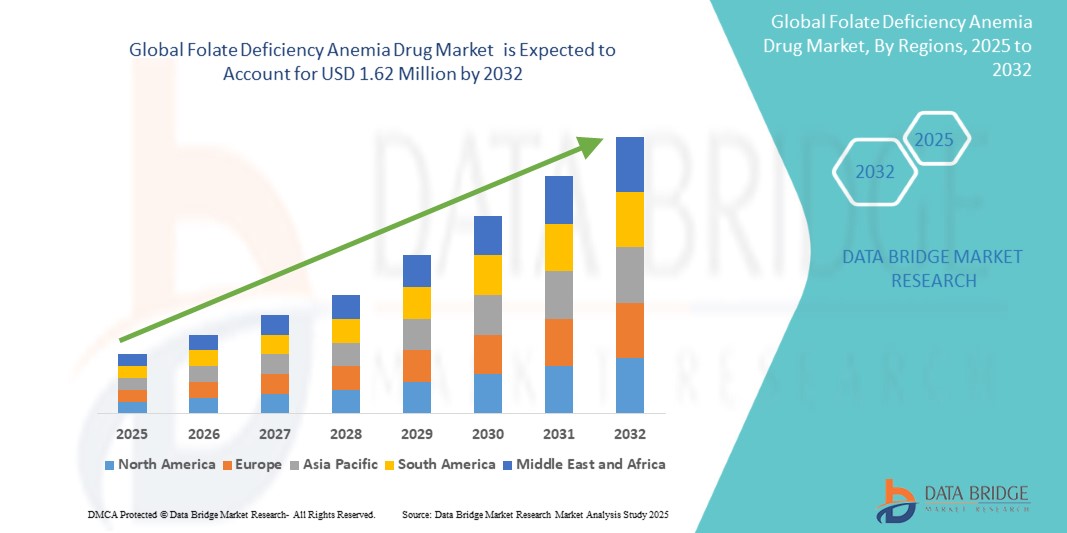
- The Global Folate Deficiency Anemia Drug Market size was valued at USD 890 million in 2024 and is expected to reach USD 1.62 billion by 2032, at a CAGR of 8.1% during the forecast period
- This growth is driven by factors such as the aging population, increasing prevalence of folate deficiency-related conditions, and ongoing advancements in diagnostic and pharmaceutical technologies targeting anemia management.
Folate Deficiency Anemia Drug Market Analysis
- Folate deficiency anemia is also defined knowns as Vitamin B9 deficiency anemia. It occurs when shortage of vitamin B12 triggers the body to produce inadequate or when an abnormally large amount of red blood cells eventually distresses the body to be efficient. Folate plays a significant role in the synthesis of genetic material such as DNA, RNA and proteins.
- The demand for these microscopes is significantly driven by the increasing prevalence of related conditions and advancements in treatment protocols.
- North America is expected to dominate the Folate Deficiency Anemia Drugs market due to advanced healthcare infrastructure and increasing focus on managing anemia-related complications in surgeries
- Asia-Pacific is expected to be the fastest growing region in the Folate Deficiency Anemia Drug market during the forecast period due to by rising awareness of anemia’s impact on overall health
- Dietary Folate Deficiency Anemia segment is expected to dominate the market with a market share of 56.22% due to its high prevalence and demand for precise treatments, as well as the increasing need for optimized drug therapies for anemia-related health conditions
Report Scope and Folate Deficiency Anemia Drug Market Segmentation
|
Attributes |
Folate Deficiency Anemia Drug Key Market Insights |
|
Segments Covered |
|
|
Countries Covered |
North America
Europe
Asia-Pacific
Middle East and Africa
South America
|
|
Key Market Players |
|
|
Market Opportunities |
|
|
Value Added Data Infosets |
In addition to the insights on market scenarios such as market value, growth rate, segmentation, geographical coverage, and major players, the market reports curated by the Data Bridge Market Research also include import export analysis, production capacity overview, production consumption analysis, price trend analysis, climate change scenario, supply chain analysis, value chain analysis, raw material/consumables overview, vendor selection criteria, PESTLE Analysis, Porter Analysis, and regulatory framework. |
Folate Deficiency Anemia Drug Market Trends
“Increasing Demand for Personalized Folate Supplementation”
- One prominent trend in the Global Folate Deficiency Anemia Drug Market is the increasing demand for personalized folate supplementation
- This trend is driving the development of tailored products, such as age-specific formulations and vegan-friendly options, to better address individual health needs and preferences.
- The growing focus on personalized folate supplementation is also fueled by increasing awareness of folate’s role in preventing health conditions like neural tube defects and anemia, particularly during pregnancy and in aging populations.
- For instance, personalized folate supplementation is becoming increasingly popular in prenatal care, with many expecting mothers opting for tailored folate formulations that better meet their nutritional needs, thus reducing the risk of folate deficiency-related complications.
- These innovations are enhancing treatment effectiveness, improving patient outcomes, and driving the demand for more customized folate supplementation products across various healthcare segments.
Folate Deficiency Anemia Drug Market Dynamics
Driver
“Increasing Prevalence of Folate Deficiency and Anemia”
- The rising prevalence of folate deficiency and anemia, particularly among pregnant women, the elderly, and individuals with poor dietary habits, is significantly contributing to the increased demand for folate deficiency anemia drugs
- As the global population continues to age, the incidence of folate deficiency-related anemia grows, with older adults being more vulnerable to nutritional deficiencies that require targeted treatment
- As more individuals seek effective supplementation and therapeutic solutions, the demand for folate deficiency anemia drugs rises, ensuring improved patient outcomes and reducing the risk of related health complications
For instance,
- In May 2021, a study published by the World Health Organization (WHO) revealed that folate deficiency anemia is highly prevalent in pregnant women, with an estimated 40% of pregnant women worldwide affected by folate deficiency. This condition increases the risk of complications such as preterm births and low birth weight, driving the demand for folate supplements and anemia treatments.
- As a result of the rising incidence of folate deficiency, especially in pregnant women and older adults, there is a growing demand for folate deficiency anemia drugs to ensure better maternal and child health outcomes.
Opportunity
“Growing Demand for Preventive Healthcare and Early Diagnosis”
- The increasing focus on preventive healthcare and early diagnosis of nutritional deficiencies is driving greater awareness and adoption of folate deficiency anemia treatments.
- As healthcare systems in emerging regions continue to improve, there is a rising demand for folate supplementation as part of routine health check-ups, particularly in populations at high risk of anemia, such as pregnant women and the elderly
- Additionally, with growing access to health screenings and nutritional assessments, more individuals are seeking early intervention and personalized folate supplementation, thereby boosting the market for folate deficiency anemia drugs
For instance,
- In November 2023, a report from the World Health Organization (WHO) highlighted that folate deficiency is a leading cause of anemia in children under five in low-income countries. The report emphasized the need for mass folate supplementation programs to improve maternal and child health, with the WHO calling for expanded access to folate supplements in high-risk regions. This initiative has sparked increased demand for folate deficiency anemia treatments, particularly in emerging markets
- The focus on expanding access to folate supplements through public health programs and nutritional interventions in these regions is expected to drive further market growth, as more individuals benefit from early detection and preventive care.
Restraint/Challenge
“High Cost of Treatment and Accessibility Issues in Low-Income Regions”
- The high cost of folate deficiency anemia treatments presents a significant barrier to market growth, particularly in low-income and developing regions where healthcare funding is limited.
- Many advanced forms of folate supplements, as well as specialized drugs for treating severe deficiencies, can be cost-prohibitive for healthcare systems in these regions.
- This financial challenge limits access to necessary treatments, hindering efforts to reduce folate deficiency-related health complications, and often results in patients forgoing timely treatment or relying on suboptimal care.
For instance,
- In December 2023, the World Health Organization (WHO) published a report highlighting that high treatment costs for folate deficiency anemia are particularly challenging for low-income countries. The report emphasized that despite the availability of affordable folate supplements, the overall cost of healthcare, including transportation to medical facilities, further exacerbates the issue. In regions like Sub-Saharan Africa, these costs often result in delayed treatments or individuals forgoing treatment altogether
- This financial barrier, combined with limited access to healthcare infrastructure, not only prevents many individuals from receiving necessary folate supplements but also contributes to higher rates of anemia and related complications, slowing progress toward global health goals
Folate Deficiency Anemia Drug Market Scope
The market is segmented on the basis type, treatment type, drug type, route of administration and end users.
|
Segmentation |
Sub-Segmentation |
|
By Type |
|
|
By Treatment Type |
|
|
By Drug Type |
|
|
By Route of Administration
|
|
|
By End User |
|
In 2025, the Dietary Folate Deficiency Anemia is projected to dominate the market with a largest share in type segment
The Dietary Folate Deficiency Anemia segment is expected to dominate the Folate Deficiency Anemia Drug market with the largest share of 56.22% in 2025 due to its high prevalence and the growing demand for precision treatments. This segment benefits from increased awareness of the role of folate in health and its critical importance in addressing deficiencies. As the most common cause of folate deficiency anemia, the demand for effective therapeutic solutions continues to rise, supported by advancements in both pharmacological treatments and diagnostic techniques.
The Medication is expected to account for the largest share during the forecast period in treatment type market
In 2025, the Medication segment is expected to dominate the market with the largest market share of 51.31% due to the high prevalence of folate deficiency anemia and the growing demand for effective, precision-based treatments. Advances in pharmaceutical formulations, alongside improved diagnostic tools, are driving the demand for more targeted and efficient therapies. The rising aging population, which is more susceptible to nutritional deficiencies, coupled with an increase in lifestyle-related factors contributing to folate deficiency, further strengthens the segment's dominance.
Folate Deficiency Anemia Drug Market Regional Analysis
“North America Holds the Largest Share in the Folate Deficiency Anemia Drug Market”
- North America dominates the Folate Deficiency Anemia Drug market, driven by advanced healthcare infrastructure, high adoption of cutting-edge medical technologies, and a strong presence of key pharmaceutical players
- The U.S. holds a significant share due to the rising prevalence of folate deficiency anemia, increased demand for precision treatments, and continuous advancements in medical research and drug formulations
- The availability of well-established reimbursement policies and increasing investments in research & development by leading pharmaceutical companies further strengthen the market.
- In addition, the growing focus on personalized medicine and the rising awareness of the importance of folate in overall health are fueling market expansion across the region.
“Asia-Pacific is Projected to Register the Highest CAGR in the Folate Deficiency Anemia Drug Market”
- The Asia-Pacific region is expected to experience the highest growth rate in the Folate Deficiency Anemia Drug market, driven by rapid advancements in healthcare infrastructure, increasing awareness about the importance of folate, and rising numbers of patients requiring treatment
- Countries such as China, India, and Japan are emerging as key markets due to the growing aging population, which is more susceptible to folate deficiency anemia, among other health condition
- Japan, with its advanced healthcare system and highly trained medical professionals, remains a critical market for folate deficiency anemia drugs, continuously adopting innovative treatment options to address the rising demand for anemia care
- China and India, with their large and aging populations, are seeing increased investments in healthcare, both from the government and private sectors, to address rising health concerns, including folate deficiency anemia. The growing presence of global pharmaceutical companies and improving access to treatment are further driving market growth
Folate Deficiency Anemia Drug Market Share
The market competitive landscape provides details by competitor. Details included are company overview, company financials, revenue generated, market potential, investment in research and development, new market initiatives, global presence, production sites and facilities, production capacities, company strengths and weaknesses, product launch, product width and breadth, application dominance. The above data points provided are only related to the companies' focus related to market.
The Major Market Leaders Operating in the Market Are:
- GlaxoSmithKline plc (U.K.)
- Lilly (U.S.
- Merck KGaA (Germany
- Bluebird Inc. (U.S.)
- Biocon (India)
- GlycoMimetics (U.S.
- Regen BioPharma Inc (U.S.
- Bayer AG (Germany)
- Acceleron Pharma, Inc. (U.S.)
- Johnson & Johnson Services, Inc. (U.S.)
- F. Hoffmann-La Roche Ltd (Switzerland)
- Pfizer Inc (U.S.
- Merck & Co., Inc. (U.S.)
- Novartis AG (Switzerland)
- Teva Pharmaceutical Industries Ltd (Israel)
- AMAG Pharmaceuticals (U.S.)
- Akebia Therapeutics (U.S.)
- Vifor Pharma Management Ltd (Switzerland
- Omeros Corporation (U.S.)
- PHARMACOSMOS A/S (Denmark)
- Helsinn Healthcare SA (Switzerland)
Latest Developments in Global Folate Deficiency Anemia Drug Market
- In November 2024, Cadila Pharmaceuticals launched Militol, an iron supplement that contains ferric maltol, a low-dose form of ferric iron complexed with maltol and folic acid.
- In September 2024, researchers were able to use renewable energy and microbes to produce protein and vitamin B9 as an alternative option. Largus Angenent of the University of Tübingen, Germany, stated that the fermentation process was given gas and acetate to produce vitamin B9. This vitamin is also known as folate and is essential for bodily functions like cell growth and metabolism.

- Interactive Data Analysis Dashboard
- Company Analysis Dashboard for high growth potential opportunities
- Research Analyst Access for customization & queries
- Competitor Analysis with Interactive dashboard
- Latest News, Updates & Trend analysis
- Harness the Power of Benchmark Analysis for Comprehensive Competitor Tracking
Data collection and base year analysis are done using data collection modules with large sample sizes. The stage includes obtaining market information or related data through various sources and strategies. It includes examining and planning all the data acquired from the past in advance. It likewise envelops the examination of information inconsistencies seen across different information sources. The market data is analysed and estimated using market statistical and coherent models. Also, market share analysis and key trend analysis are the major success factors in the market report. To know more, please request an analyst call or drop down your inquiry.
The key research methodology used by DBMR research team is data triangulation which involves data mining, analysis of the impact of data variables on the market and primary (industry expert) validation. Data models include Vendor Positioning Grid, Market Time Line Analysis, Market Overview and Guide, Company Positioning Grid, Patent Analysis, Pricing Analysis, Company Market Share Analysis, Standards of Measurement, Global versus Regional and Vendor Share Analysis. To know more about the research methodology, drop in an inquiry to speak to our industry experts.
Data Bridge Market Research is a leader in advanced formative research. We take pride in servicing our existing and new customers with data and analysis that match and suits their goal. The report can be customized to include price trend analysis of target brands understanding the market for additional countries (ask for the list of countries), clinical trial results data, literature review, refurbished market and product base analysis. Market analysis of target competitors can be analyzed from technology-based analysis to market portfolio strategies. We can add as many competitors that you require data about in the format and data style you are looking for. Our team of analysts can also provide you data in crude raw excel files pivot tables (Fact book) or can assist you in creating presentations from the data sets available in the report.












