


What is the Global Folic Acid Market Size and Growth Rate?
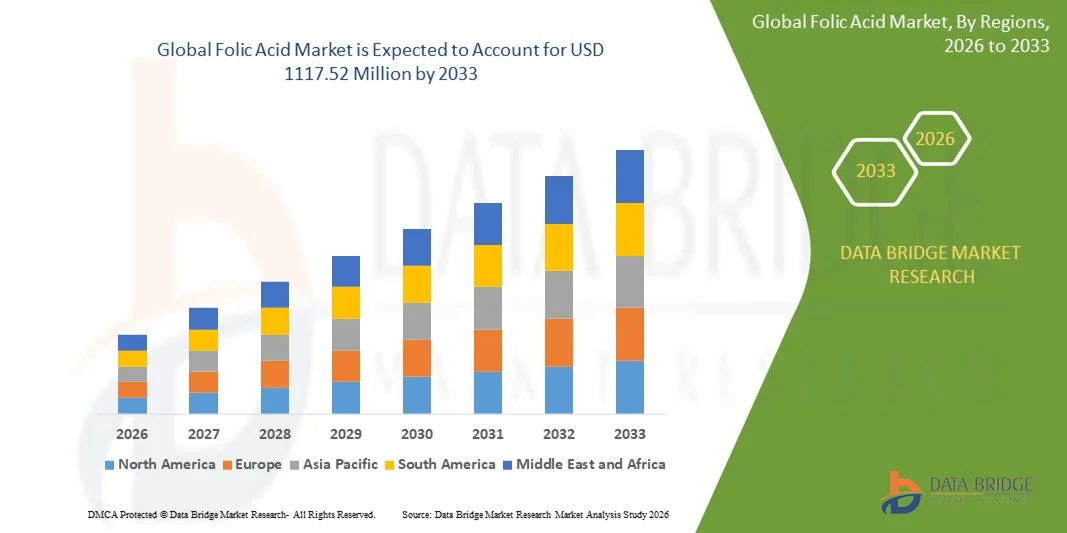
- As per Data Bridge Market Research analysis that the global Folic Acid Market size was valued at USD 711.82 million in 2025 and is expected to reach USD 1117.52 million by 2033, at a CAGR of 5.80% during the forecast period
- The market growth is largely driven by increasing awareness of prenatal health, rising incidence of neural tube defects, and growing demand for fortified foods and dietary supplements across the globe
- Furthermore, advancements in nutraceutical formulations, expanding application in food fortification, and rising consumer preference for health and wellness products are propelling the adoption of folic acid, thereby significantly boosting the industry’s growth
Market Size & Forecast
- Global Market Value (2025): USD 711.82 million
- Expected Market Value (2033): USD 1117.52 million
- Forecast CAGR (2026–2033): 5.80%
What are the Major Takeaways of Global Folic Acid Market?
- Folic acid, a vital B-vitamin (B9) essential for DNA synthesis and cell growth, is increasingly recognized for its importance in prenatal health, fortified foods, and dietary supplements across both developed and emerging markets due to its proven role in preventing neural tube defects and supporting overall wellness.
- The escalating demand for folic acid is primarily fueled by growing awareness of maternal and child health, rising prevalence of nutrient deficiencies, and increasing consumer preference for fortified foods and nutraceutical products.
- Asia-Pacific dominated the Global Folic Acid Market with the largest revenue share of 35.2% in 2025, driven by strong healthcare infrastructure, high awareness of prenatal supplementation, and the presence of key market players producing fortified foods and dietary supplements, with the U.S. leading in folic acid supplement consumption due to well-established public health initiatives and widespread product availability.
- Europe is expected to be the fastest-growing region in the Global Folic Acid Market during the forecast period due to increasing urbanization, rising disposable incomes, growing healthcare awareness, and expanding fortification programs in countries like China and India.
- The tablets segment dominated the market with the largest revenue share of 45.6% in 2025, driven by their convenience, precise dosing, and widespread use in both prenatal supplements and general wellness products.
Report Scope and Global Folic Acid Market Segmentation
|
Attributes |
Folic Acid Key Market Insights |
|
Segments Covered |
|
|
Countries Covered |
North America
Europe
Asia-Pacific
Middle East and Africa
South America
|
|
Key Market Players |
• DSM Nutritional Products (Switzerland) |
|
Market Opportunities |
|
|
Value Added Data Infosets |
In addition to the insights on market scenarios such as market value, growth rate, segmentation, geographical coverage, and major players, the market reports curated by the Data Bridge Market Research also include in-depth expert analysis, pricing analysis, brand share analysis, consumer survey, demography analysis, supply chain analysis, value chain analysis, raw material/consumables overview, vendor selection criteria, PESTLE Analysis, Porter Analysis, and regulatory framework. |
What is the Key Trend in the Folic Acid Market?
Enhanced Convenience Through Fortified and Functional Products
- A significant and accelerating trend in the global Folic Acid Market is the increasing integration of folic acid into fortified foods, beverages, and nutraceutical products, providing consumers with convenient and effective ways to meet their daily nutritional requirements. This integration is significantly enhancing user accessibility and adherence to recommended dietary intake.
- For instance, many breakfast cereals, energy bars, and dairy products are now fortified with folic acid, allowing consumers to supplement their diet effortlessly without relying solely on tablets or capsules. Similarly, prenatal vitamins often combine folic acid with other essential vitamins and minerals, offering a comprehensive and convenient health solution.
- Functional product integration enables targeted health benefits, such as supporting prenatal health, reducing the risk of neural tube defects, and improving overall wellness. For example, fortified beverages and dairy products cater to populations with higher nutritional needs, while nutraceutical supplements provide precise dosing for individuals with specific health requirements.
- The seamless incorporation of folic acid into everyday consumables facilitates widespread adoption and ensures that users can maintain consistent intake without altering their lifestyle. Through a variety of product formats—ranging from fortified foods to ready-to-drink beverages—consumers can access folic acid in a manner that fits their daily routines.
- This trend toward more convenient, multifunctional, and accessible folic acid products is fundamentally reshaping consumer expectations for nutritional supplementation. Consequently, companies such as DSM Nutritional Products and Fermenta Biotech are developing innovative folic acid-fortified solutions tailored for diverse consumer needs.
- The demand for folic acid-enriched foods and supplements is growing rapidly across both developed and emerging markets, as consumers increasingly prioritize convenience, preventive healthcare, and comprehensive nutritional solutions.
Global Folic Acid Market Dynamics
Driver
Growing Need Due to Rising Health Awareness and Nutritional Deficiencies
- The increasing prevalence of nutrient deficiencies, particularly among women of childbearing age, coupled with rising awareness of the importance of prenatal and overall health, is a significant driver for the heightened demand for folic acid.
- For instance, in 2025, DSM Nutritional Products launched a series of folic acid-fortified products targeting maternal and child health, highlighting the role of fortified foods and supplements in preventing neural tube defects. Such initiatives by key companies are expected to drive folic acid market growth during the forecast period.
- As consumers become more conscious of health risks associated with folate deficiency, folic acid supplements and fortified products provide an effective and convenient solution, supporting prenatal health, cardiovascular wellness, and overall nutritional balance.
- Furthermore, the growing popularity of functional foods, dietary supplements, and wellness-oriented products is making folic acid an integral component of health-focused diets, offering seamless integration with other vitamins and nutrients to provide comprehensive benefits.
- The convenience of ready-to-consume fortified foods, dietary supplements, and nutraceutical formulations, along with increasing access through e-commerce platforms and retail channels, is propelling folic acid adoption across diverse demographic segments. The trend towards preventive healthcare and health-conscious lifestyles further contributes to market growth.
Restraint/Challenge
Concerns Regarding Overconsumption and Regulatory Compliance
- Concerns surrounding potential overconsumption of folic acid, especially from combined sources of fortified foods and supplements, pose a significant challenge to broader market penetration. Excess intake can lead to adverse health effects in certain populations, raising awareness about safe consumption limits.
- For instance, regulatory agencies in the U.S. and Europe have set upper intake levels for folic acid, and companies must ensure compliance in product formulation and labeling, which can increase production complexity and costs.
- Addressing these concerns through clear labeling, consumer education, and adherence to regulatory guidelines is crucial for building trust. Companies such as Fermenta Biotech and Glanbia Nutritionals emphasize scientifically backed dosing and safe formulation in their marketing to reassure consumers. Additionally, price sensitivity in emerging markets can limit adoption of high-quality supplements or fortified products, particularly where local alternatives are cheaper but less standardized.
- While affordability is gradually improving through mass production and wider distribution, perceived premium pricing for high-quality or specialized folic acid products can still hinder widespread adoption, especially in low-income regions or for cost-conscious consumers.
- Overcoming these challenges through regulatory compliance, consumer education on safe intake, and the development of affordable yet high-quality folic acid solutions will be vital for sustained market growth.
How is the Folic Acid Market Segmented?
The folic acid market is segmented on the basis of form type, source type and application.
- By Form Type
On the basis of form type, the Global Folic Acid Market is segmented into tablets, soft gels, lozenges, and others. The tablets segment dominated the market with the largest revenue share of 45.6% in 2025, driven by their convenience, precise dosing, and widespread use in both prenatal supplements and general wellness products. Tablets are preferred by healthcare providers for their stability, ease of storage, and compatibility with combination formulations containing other vitamins and minerals.
The soft gels segment is expected to witness the fastest CAGR of 22.1% from 2026 to 2033, fueled by increasing consumer preference for easy-to-swallow, bioavailable forms of folic acid. Soft gels are particularly popular among populations with swallowing difficulties, such as the elderly and pregnant women, and are often marketed as premium, higher-absorption products. The lozenges and other forms also see growth due to convenience, taste, and the rising demand for functional supplement alternatives.
- By Source Type
On the basis of source type, the Global Folic Acid Market is segmented into vegetables, fruits, and others. The vegetables segment held the largest market revenue share of 41.8% in 2025, driven by naturally high folate content in leafy greens, legumes, and cruciferous vegetables, which are widely consumed in daily diets. Increased health awareness and the adoption of plant-based diets are boosting folic acid intake from vegetable sources, particularly in developed regions.
The fruits segment is expected to witness the fastest CAGR of 20.7% from 2026 to 2033, owing to the growing popularity of folate-rich fruits such as oranges, papaya, and avocados, as well as fortified fruit products like juices and smoothies. The “others” category, including grains and fortified processed foods, also contributes to market growth, catering to consumers seeking diverse dietary options and easy-to-consume folic acid sources.
- By Application
On the basis of application, the Global Folic Acid Market is segmented into food and beverages, pharmaceutical, nutraceuticals, and others. The pharmaceutical segment dominated the market with the largest revenue share of 44.3% in 2025, driven by the widespread use of folic acid in prescription and over-the-counter supplements targeting prenatal health, cardiovascular support, and anemia management. Pharmaceutical formulations ensure precise dosing, safety, and regulatory compliance, making them the preferred choice among healthcare providers.
The nutraceuticals segment is expected to witness the fastest CAGR of 21.5% from 2026 to 2033, fueled by growing consumer demand for preventive healthcare products, dietary supplements, and fortified functional foods. Food and beverages fortified with folic acid, including cereals, snacks, and beverages, also contribute to market growth by offering convenient, daily-consumption options, particularly in regions with government-supported fortification programs.
Which Region Holds the Largest Share of the Global Folic Acid Market?
- Asia-Pacific dominated the Global Folic Acid Market with the largest revenue share of 35.2% in 2025, driven by increasing awareness of prenatal health, government initiatives promoting maternal nutrition, and strong adoption of dietary supplements.
- Consumers in the region highly value the preventive health benefits, ease of consumption, and proven effectiveness of folic acid in supporting fetal development and reducing the risk of birth defects.
- This widespread adoption is further supported by high healthcare awareness, strong distribution networks, and growing preference for fortified foods and supplements, establishing folic acid as a preferred nutritional solution for both maternal and general health.
U.S. Folic Acid Market Insight
The U.S. folic acid market captured the largest revenue share of 81% in 2025 within North America, fueled by increasing awareness of maternal and prenatal health, and the widespread adoption of dietary supplements. Consumers are increasingly prioritizing preventive healthcare and the benefits of folic acid for fetal development. The growing preference for fortified foods, along with strong demand for convenient supplement formats such as tablets, gummies, and powders, further propels the folic acid market. Moreover, government initiatives promoting maternal nutrition and widespread healthcare campaigns are significantly contributing to the market’s expansion.
Europe Folic Acid Market Insight
The Europe folic acid market is projected to expand at a substantial CAGR throughout the forecast period, primarily driven by rising health awareness, stringent prenatal nutrition guidelines, and the increasing prevalence of dietary deficiencies. Urbanization and growing consumer focus on preventive healthcare are fostering the adoption of folic acid supplements. European consumers are also drawn to the convenience and efficacy of fortified foods and dietary supplements. The region is experiencing significant growth across prenatal, general wellness, and fortified food applications, with folic acid increasingly incorporated into both health programs and consumer diets.
U.K. Folic Acid Market Insight
The U.K. folic acid market is anticipated to grow at a noteworthy CAGR during the forecast period, driven by heightened awareness of maternal and child health and a growing preference for preventive healthcare solutions. Additionally, government recommendations for folic acid intake among women of childbearing age are encouraging widespread adoption. The UK’s strong retail and e-commerce infrastructure, coupled with growing consumption of fortified foods and supplements, is expected to continue stimulating market growth.
Germany Folic Acid Market Insight
The Germany folic acid market is expected to expand at a considerable CAGR during the forecast period, fueled by increasing awareness of nutritional health, preventive healthcare trends, and the demand for high-quality dietary supplements. Germany’s well-developed healthcare system, combined with a strong emphasis on research and innovation in nutrition, promotes the adoption of folic acid across prenatal, general wellness, and fortified food segments. Integration of folic acid in dietary programs and consumer diets is also becoming increasingly prevalent, aligning with local health-conscious consumer preferences.
Asia-Pacific Folic Acid Market Insight
The Asia-Pacific folic acid market is poised to grow at the fastest CAGR of 24% during the forecast period of 2026 to 2033, driven by rapid urbanization, rising disposable incomes, and increasing awareness of nutritional health in countries such as China, India, and Japan. The region’s growing focus on maternal health and preventive care, supported by government initiatives promoting supplementation and fortified foods, is driving folic acid adoption. Furthermore, as APAC emerges as a major production hub for dietary supplements and fortified foods, the affordability and accessibility of folic acid are expanding to a wider consumer base.
Japan Folic Acid Market Insight
The Japan folic acid market is gaining momentum due to high health awareness, rapid urbanization, and increasing demand for preventive healthcare. The Japanese market places significant emphasis on prenatal care and general wellness, and the adoption of folic acid supplements is driven by growing consumption of fortified foods and dietary programs. Integration of folic acid into health-conscious diets, coupled with government recommendations and a focus on easy-to-consume supplement formats, is fueling market growth. Moreover, Japan’s aging population is expected to further spur demand for nutritional supplements that support overall health.
China Folic Acid Market Insight
The China folic acid market accounted for the largest market revenue share in Asia Pacific in 2025, attributed to the country’s expanding middle class, rising health awareness, and increasing adoption of dietary supplements. China stands as one of the largest markets for fortified foods and prenatal supplements, and folic acid is becoming increasingly popular in both maternal and general wellness applications. Government campaigns promoting maternal and child health, the push for fortified food programs, and the availability of affordable folic acid products from strong domestic manufacturers are key factors propelling the market in China.
Which are the Top Companies in Global Folic Acid Market?
The Folic Acid industry is primarily led by well-established companies, including:
• DSM Nutritional Products (Switzerland)
• BASF SE (Germany)
• Archer Daniels Midland Company (U.S.)
• Glanbia Nutritionals (Ireland)
• Merck KGaA (Germany)
• Lonza Group (Switzerland)
• Zhejiang NHU Co., Ltd. (China)
• Fagron NV (Belgium)
• Zhejiang Medicine Co., Ltd. (China)
• Zhejiang NHU Biochemical Co., Ltd. (China)
• Pfizer Inc. (U.S.)
• Novozymes A/S (Denmark)
• Solgar (U.S.)
• Reckitt Benckiser Group PLC (U.K.)
• Amway Corporation (U.S.)
• Evonik Industries AG (Germany)
• GlaxoSmithKline plc (U.K.)
• NutraScience Labs (U.S.)
• Zhejiang Jianfeng Pharmaceutical Co., Ltd. (China)
• Shandong Luwei Pharmaceutical Co., Ltd. (China)
What are the Recent Developments in Global Folic Acid Market?
- In April 2024, DSM Nutritional Products, a global leader in vitamins and nutritional solutions, launched a strategic initiative in South Africa to expand the availability of folic acid supplements and fortified foods. This initiative underscores the company’s commitment to improving maternal and child health by addressing regional nutritional deficiencies and leveraging its global expertise to strengthen folic acid accessibility and awareness.
- In March 2024, BASF SE introduced a new line of folic acid-based prenatal supplements in the U.S., specifically formulated to support maternal health and fetal development. The innovative supplement range highlights BASF’s dedication to developing scientifically backed nutritional solutions that cater to the health needs of women during pregnancy, ensuring enhanced safety and wellness outcomes.
- In March 2024, Archer Daniels Midland Company (ADM) successfully expanded its fortified food program in Bengaluru, India, aiming to enhance nutritional intake among urban populations. This initiative utilizes folic acid-enriched products to address micronutrient deficiencies, demonstrating ADM’s commitment to promoting preventive healthcare and improving community health outcomes in rapidly urbanizing regions.
- In February 2024, Glanbia Nutritionals, a global provider of nutritional ingredients, announced a strategic partnership with the Indian Dietetic Association to promote folic acid supplementation and awareness campaigns among healthcare professionals. This collaboration is designed to increase the adoption of folic acid in dietary programs, highlighting Glanbia’s focus on education, innovation, and operational effectiveness within the nutrition sector.
- In January 2024, Merck KGaA launched a new folic acid supplement line in Europe at the Vitafoods Europe 2024 event. Equipped with advanced bioavailability features, these supplements allow consumers to achieve optimal daily intake efficiently. The launch highlights Merck’s commitment to integrating science-driven innovation into nutritional health solutions, offering improved convenience and efficacy while addressing critical dietary needs.

- Interactive Data Analysis Dashboard
- Company Analysis Dashboard for high growth potential opportunities
- Research Analyst Access for customization & queries
- Competitor Analysis with Interactive dashboard
- Latest News, Updates & Trend analysis
- Harness the Power of Benchmark Analysis for Comprehensive Competitor Tracking
Global Folic Acid Market, Supply Chain Analysis and Ecosystem Framework
To support market growth and help clients navigate the impact of geopolitical shifts, DBMR has integrated in-depth supply chain analysis into its Global Folic Acid Market research reports. This addition empowers clients to respond effectively to global changes affecting their industries. The supply chain analysis section includes detailed insights such as Global Folic Acid Market consumption and production by country, price trend analysis, the impact of tariffs and geopolitical developments, and import and export trends by country and HSN code. It also highlights major suppliers with data on production capacity and company profiles, as well as key importers and exporters. In addition to research, DBMR offers specialized supply chain consulting services backed by over a decade of experience, providing solutions like supplier discovery, supplier risk assessment, price trend analysis, impact evaluation of inflation and trade route changes, and comprehensive market trend analysis.
Data collection and base year analysis are done using data collection modules with large sample sizes. The stage includes obtaining market information or related data through various sources and strategies. It includes examining and planning all the data acquired from the past in advance. It likewise envelops the examination of information inconsistencies seen across different information sources. The market data is analysed and estimated using market statistical and coherent models. Also, market share analysis and key trend analysis are the major success factors in the market report. To know more, please request an analyst call or drop down your inquiry.
The key research methodology used by DBMR research team is data triangulation which involves data mining, analysis of the impact of data variables on the market and primary (industry expert) validation. Data models include Vendor Positioning Grid, Market Time Line Analysis, Market Overview and Guide, Company Positioning Grid, Patent Analysis, Pricing Analysis, Company Market Share Analysis, Standards of Measurement, Global versus Regional and Vendor Share Analysis. To know more about the research methodology, drop in an inquiry to speak to our industry experts.
Data Bridge Market Research is a leader in advanced formative research. We take pride in servicing our existing and new customers with data and analysis that match and suits their goal. The report can be customized to include price trend analysis of target brands understanding the market for additional countries (ask for the list of countries), clinical trial results data, literature review, refurbished market and product base analysis. Market analysis of target competitors can be analyzed from technology-based analysis to market portfolio strategies. We can add as many competitors that you require data about in the format and data style you are looking for. Our team of analysts can also provide you data in crude raw excel files pivot tables (Fact book) or can assist you in creating presentations from the data sets available in the report.













