


Fragile X Syndrome (FXS) Treatment Market Size
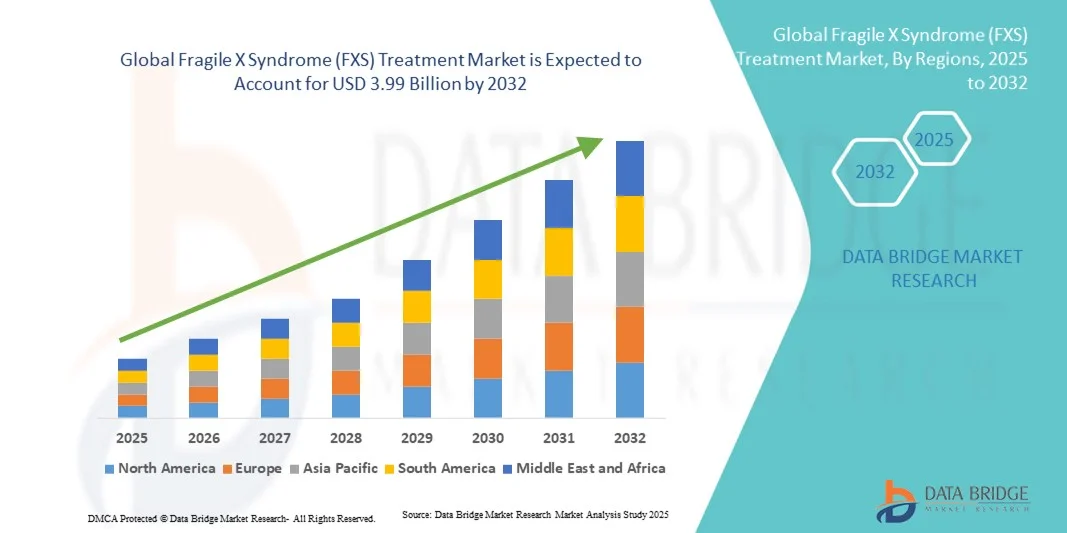
- The global fragile X syndrome (FXS) treatment market size was valued at USD 2.64 billion in 2024 and is expected to reach USD 3.99 billion by 2032, at a CAGR of 5.30% during the forecast period
- The market growth is largely fueled by the increasing prevalence of fragile X syndrome (FXS) and growing awareness about early diagnosis and management of genetic neurodevelopmental disorders, leading to higher demand for therapeutic interventions and supportive care solutions
- Furthermore, rising investments in research and development for targeted therapies, advancements in pharmacological and behavioral treatments, and expanding access to specialized healthcare facilities are accelerating the uptake of fragile X syndrome (FXS) treatment solutions, thereby significantly boosting the industry’s growth
Fragile X Syndrome (FXS) Treatment Market Analysis
- The Fragile X Syndrome (FXS) Treatment market is witnessing robust growth, driven by the increasing prevalence of FXS and the rising need for early diagnosis, targeted therapies, and supportive interventions to manage cognitive, behavioral, and developmental symptoms
- The escalating demand for FXS treatment is primarily fueled by advancements in pharmacological therapies, behavioral interventions, and growing access to specialized healthcare centers focused on genetic and neurodevelopmental disorders
- North America dominated the fragile X syndrome (FXS) treatment market with the largest revenue share of 44.7% in 2024, attributed to well-established healthcare infrastructure, high patient awareness, and the presence of leading pharmaceutical companies actively developing and marketing therapies for FXS
- Asia-Pacific is expected to be the fastest-growing region in the fragile X syndrome (FXS) treatment market during the forecast period, with a projected CAGR due to improving healthcare access, increasing urbanization, and rising investments in pediatric neurology and genetic disorder management in countries such as China, India, and Japan
- The Diagnosis segment dominated the largest market revenue share of 52.3% in 2024, driven by the increasing prevalence of genetic testing and early detection programs for FXS
Report Scope and Fragile X Syndrome (FXS) Treatment Market Segmentation
|
Attributes |
Fragile X Syndrome (FXS) Treatment Key Market Insights |
|
Segments Covered |
|
|
Countries Covered |
North America
Europe
Asia-Pacific
Middle East and Africa
South America
|
|
Key Market Players |
|
|
Market Opportunities |
|
|
Value Added Data Infosets |
In addition to the insights on market scenarios such as market value, growth rate, segmentation, geographical coverage, and major players, the market reports curated by the Data Bridge Market Research also include in-depth expert analysis, patient epidemiology, pipeline analysis, pricing analysis, and regulatory framework. |
Fragile X Syndrome (FXS) Treatment Market Trends
Enhanced Convenience Through Advanced Therapeutic Approaches
- A significant and accelerating trend in the global fragile X syndrome (FXS) treatment market is the adoption of advanced therapeutic approaches that integrate personalized medicine, combination therapies, and improved drug delivery systems. This trend is significantly enhancing treatment efficacy and patient outcome
- For instance, recent developments in targeted pharmacological interventions allow clinicians to address specific genetic and molecular pathways associated with FXS, improving symptom management and overall quality of life. Similarly, novel formulations and delivery mechanisms are enabling sustained-release and more precise dosing of key therapeutics, offering patients a more convenient and effective treatment experience
- Integration of multidisciplinary care models—including pharmacotherapy, behavioral therapy, and supportive interventions—is enabling more holistic management of FXS patients. These approaches allow healthcare providers to monitor patient progress more closely, tailor treatments to individual needs, and optimize outcomes
- The growing availability of advanced diagnostic tools, including genetic testing and biomarker profiling, facilitates earlier detection and personalized intervention strategies. By combining these diagnostics with innovative therapeutics, clinicians can provide more precise and effective care
- The demand for advanced therapeutic solutions is growing rapidly across both pediatric and adult patient populations, as caregivers and healthcare providers increasingly prioritize effective, safe, and convenient treatment options
Fragile X Syndrome (FXS) Treatment Market Dynamics
Driver
Growing Need Due to Rising Awareness and Advanced Therapeutic Adoption
- The increasing prevalence of fragile X syndrome, combined with rising awareness among healthcare providers and caregivers, is a significant driver for the heightened demand for advanced treatment options
- For instance, in 2023, several biotech companies initiated clinical trials for new targeted therapeutics aimed at addressing the underlying molecular causes of FXS, reflecting industry commitment to innovation and patient-centric solutions. Such initiatives are expected to drive market growth during the forecast period
- As patients and clinicians become more aware of the benefits of personalized and combination therapies, demand for treatments offering improved efficacy and safety profiles is increasing, providing a compelling growth opportunity for the market
- Furthermore, increasing investments in research, development, and early intervention programs are enabling the introduction of new therapeutic solutions, improving both clinical outcomes and patient quality of life
- The accessibility of improved treatment protocols, coupled with better patient monitoring and follow-up care, is encouraging adoption across both specialized clinics and general healthcare facilities, further boosting market expansion
Restraint/Challenge
Concerns Regarding High Costs and Limited Accessibility
- The relatively high cost of innovative Fragile X Syndrome (FXS) therapeutics compared to conventional treatments poses a challenge to broader market adoption, particularly in developing regions or among budget-conscious healthcare providers
- Limited accessibility of specialized treatment centers and trained healthcare professionals can hinder timely diagnosis and initiation of advanced therapies, impacting patient outcomes
- Regulatory complexities and lengthy approval processes for novel therapeutics can delay market entry and limit the availability of cutting-edge treatments to patients
- While patient awareness and demand are increasing, gaps in insurance coverage or reimbursement policies for advanced therapies may restrict adoption, especially for high-cost or newly approved drugs
- Variability in treatment response due to genetic heterogeneity among patients may affect clinician confidence and slow adoption of certain therapies
- Limited longitudinal clinical data on long-term safety and efficacy of emerging therapies can make healthcare providers hesitant to prescribe them widely
- Challenges in patient adherence to complex treatment regimens, especially in pediatric populations, can reduce overall effectiveness and influence market growth negatively
- Inadequate infrastructure for patient monitoring and follow-up care in certain regions may impede the consistent delivery of advanced therapeutic solutions
- High costs associated with research, development, and commercialization of novel treatments may limit investment from smaller biotech firms, potentially slowing innovation in the FXS treatment space
Fragile X Syndrome (FXS) Treatment Market Scope
The market is segmented on the basis of type, related disorders, end users, and distribution channel.
- By Type
On the basis of type, the Fragile X Syndrome (FXS) Treatment market is segmented into Diagnosis and Treatment. The Diagnosis segment dominated the largest market revenue share of 52.3% in 2024, driven by the increasing prevalence of genetic testing and early detection programs for FXS. The availability of advanced molecular diagnostics, including PCR and CGG repeat testing, facilitates accurate and early diagnosis, which is critical for effective patient management. Widespread awareness campaigns, government-supported screening programs, and integration of diagnostic services into pediatric and genetic clinics further reinforce market dominance. The expansion of diagnostic laboratories and adoption of next-generation sequencing technologies contribute to revenue growth. Diagnostic services are also supported by insurance coverage in key regions, increasing accessibility and affordability. Hospital and specialty clinic adoption is high due to established testing protocols. Partnerships between diagnostics providers and healthcare institutions expand reach. Clinician preference for early diagnosis and genetic counseling boosts the segment. Early diagnosis enables timely intervention with therapy, strengthening the market position. Availability of non-invasive testing options and rapid results enhances patient compliance and adoption. Increasing prevalence of related disorders and multi-symptom screening further consolidate diagnostic dominance.
The Treatment segment is expected to witness the fastest CAGR of 8.6% from 2025 to 2032, driven by rising awareness of targeted therapies, including pharmacological interventions and behavioral therapies for FXS patients. Adoption of customized treatment plans, increased clinical research, and availability of combination therapy regimens are fueling growth. Hospitals and specialty clinics are increasingly offering multidisciplinary care programs. Patient adherence to therapy protocols and government initiatives supporting rare disease treatment contribute to expansion. Emerging markets show rising demand for treatment due to improved healthcare access. Collaboration between pharma companies and research institutes accelerates new therapy availability. Insurance coverage improvements enhance affordability. Integration of digital therapeutics and telehealth solutions supports remote care and treatment monitoring. Clinical trials for novel therapies further drive segment adoption.
- By Related Disorders
On the basis of related disorders, the market is segmented into Fragile X Tremor-Ataxia Syndrome, FMR1-Related Primary Ovarian Insufficiency, Fragile XE Syndrome, Renpenning Syndrome, and Others. Fragile X Tremor-Ataxia Syndrome dominated the market with a revenue share of 38.9% in 2024, due to its higher prevalence among aging carriers and the clinical focus on neurodegenerative symptoms. Advanced neurodiagnostic facilities and genetic counseling services strengthen dominance. Awareness among neurologists and integration into specialized clinics boost market share. Emerging therapeutic research targeting tremor and ataxia symptoms contributes to patient uptake. Government and private initiatives supporting rare neurological disorder management facilitate adoption. Early detection in family members enhances demand. Clinical guidelines and best practices drive standardized care protocols. Growing recognition of symptomatic overlaps with FXS in adults enhances patient enrollment. Insurance coverage for neurological testing increases access. Regional research collaborations expand treatment centers. Pharmaceutical and biotech development programs focus on symptom-specific interventions, further consolidating dominance. Long-term follow-up and patient monitoring increase recurring revenue for healthcare providers.
FMR1-Related Primary Ovarian Insufficiency is expected to witness the fastest CAGR of 9.2% from 2025 to 2032, driven by rising awareness of reproductive health issues among women carrying FMR1 mutations. Increasing genetic counseling services, fertility clinics, and hormone replacement therapies support segment growth. Adoption of early screening and proactive management in hospitals and specialty clinics further accelerates the market. Emerging research on novel hormonal therapies enhances adoption. Patient education programs and awareness campaigns improve diagnosis rates. Insurance reimbursement policies expand treatment affordability. Regional expansion in Asia-Pacific and Latin America contributes to growth. Collaborative initiatives between pharma companies and clinics improve accessibility. Telemedicine platforms support remote monitoring and consultations. Rising investments in reproductive health infrastructure aid service delivery.
- By End Users
On the basis of end users, the market is segmented into Hospitals, Specialty Clinics, and Others. Hospitals dominated the market with a revenue share of 59.4% in 2024, due to comprehensive diagnostic and treatment infrastructure, specialist availability, and integrated patient care pathways. High patient volume, long-term follow-up, and access to both diagnosis and therapy reinforce dominance. Hospitals in North America and Europe contribute heavily due to established healthcare systems. Adoption of electronic medical records and genetic data integration further support market share. Multidisciplinary teams, combining neurology, genetics, and reproductive specialists, enhance patient outcomes. Collaboration with research institutes ensures access to clinical trials. Availability of advanced therapies such as pharmacological and behavioral interventions consolidates dominance. Centralized care and insurance support improve treatment adherence. Government programs supporting rare disease management further strengthen adoption. Hospitals’ strong referral networks expand patient inflow.
Specialty Clinics are expected to witness the fastest CAGR of 10.1% from 2025 to 2032, driven by dedicated genetic counseling centers, personalized care approaches, and expansion of rare disease management programs. Growth in Asia-Pacific and emerging markets supports segment adoption. Adoption of telehealth and digital monitoring enhances patient convenience. Personalized therapy plans improve patient satisfaction and outcomes. Collaboration with local healthcare providers accelerates patient access. Awareness campaigns targeting rare disorders drive clinic visits. Integration with fertility and neurology services boosts service portfolio. Insurance partnerships improve affordability. Research collaborations enhance clinical offerings. Expansion of clinic networks in urban and semi-urban areas increases market reach. Emerging funding initiatives for rare diseases support infrastructure growth.
- By Distribution Channel
On the basis of distribution channel, the market is segmented into Direct Tender, Hospital Pharmacy, Retail Pharmacy, Online Pharmacy, and Others. Hospital Pharmacy dominated the market with a revenue share of 46.8% in 2024, due to direct access to hospitals’ integrated diagnostic and treatment services, higher patient footfall, and immediate availability of therapies. Partnerships between hospitals and pharmaceutical providers enhance supply chain efficiency. Hospital pharmacies benefit from consistent bulk procurement, standardized storage facilities, and trained pharmacy staff. Integration with electronic health records ensures precise medication dispensing. Long-term patient follow-up ensures recurring demand. Access to both first-line and advanced therapies strengthens dominance. Government regulations and quality standards maintain high trust in hospital pharmacy services. Regional expansion in mature markets ensures high penetration. Collaboration with diagnostics centers enables integrated service delivery. Hospitals’ established patient networks improve therapy adherence.
Online Pharmacy is expected to witness the fastest CAGR of 11.3% from 2025 to 2032, driven by the growing trend of e-commerce in healthcare, remote access to therapies, subscription-based delivery models, and increasing digital literacy among patients and caregivers. Expansion of telehealth platforms and regulatory support for online drug distribution contribute to growth. Convenience of home delivery increases patient compliance. Digital marketing and awareness campaigns drive adoption. Integration with mobile apps for prescriptions enhances service efficiency. Partnerships with logistics providers ensure timely delivery. Emerging markets with limited hospital access fuel growth. Collaboration with specialty clinics expands product availability. Subscription models provide predictable revenue streams. Teleconsultation integration enables seamless therapy management. Cost-effective solutions increase affordability for patients. Increasing adoption of rare disease management programs online accelerates segment expansion.
Fragile X Syndrome (FXS) Treatment Market Regional Analysis
- North America dominated the fragile X syndrome (FXS) treatment market with the largest revenue share of 44.7% in 2024
- Attributed to well-established healthcare infrastructure, high patient awareness, and the presence of leading pharmaceutical companies actively developing and marketing therapies for FXS
- The region’s strong clinical networks and funding for rare-disease research further support rapid uptake of innovative treatments
U.S. Fragile X Syndrome (FXS) Treatment Market Insight
The U.S. fragile X syndrome (FXS) treatment market captured the largest revenue share in 2024 within North America, driven by increasing awareness of genetic disorders, greater accessibility to specialized therapies, and the adoption of standardized diagnostic and treatment protocols across hospitals, specialty clinics, and pediatric neurology centers. Robust clinical trial activity, high R&D investment by biotech and pharma companies, and comprehensive patient-support programs further propel market expansion in the country.
Europe Fragile X Syndrome (FXS) Treatment Market Insight
The Europe fragile X syndrome (FXS) treatment market is projected to expand at a substantial CAGR throughout the forecast period, driven by growing awareness of genetic disorders, increased healthcare spending, and the presence of specialized neurology and pediatric care centers. European health systems’ focus on early diagnosis and multidisciplinary care is encouraging wider adoption of targeted therapies and supportive interventions.
U.K. Fragile X Syndrome (FXS) Treatment Market Insight
The U.K. fragile X syndrome (FXS) treatment market is anticipated to grow at a noteworthy CAGR during the forecast period, fueled by rising awareness of developmental disorders and increasing government support for rare disease management programs. Enhanced screening initiatives, improved access to diagnostic services, and expanded clinical pathways for pediatric neurology are contributing to the market’s growth.
Germany Fragile X Syndrome (FXS) Treatment Market Insight
The Germany fragile X syndrome (FXS) treatment market is expected to expand at a considerable CAGR during the forecast period, supported by a well-developed healthcare infrastructure and an increasing focus on research-driven therapeutic approaches. Germany’s emphasis on innovation, early diagnosis, and integrated care models promotes the adoption of advanced therapies across hospitals, specialty clinics, and research centers.
Asia‑Pacific Fragile X Syndrome (FXS) Treatment Market Insight
Asia‑Pacific fragile X syndrome (FXS) treatment market is expected to be the fastest‑growing region in the Fragile X Syndrome (FXS) Treatment market during the forecast period, with a projected CAGR driven by improving healthcare access, increasing urbanization, and rising investments in pediatric neurology and genetic disorder management in countries such as China, India, and Japan. Strengthening public‑private partnerships, expansion of diagnostic capacity, and awareness campaigns are accelerating adoption of FXS therapies across the region.
Japan Fragile X Syndrome (FXS) Treatment Market Insight
The Japan fragile X syndrome (FXS) treatment market is gaining momentum due to advanced healthcare facilities, strong government support for genetic disorder management, and the country’s focus on improving pediatric neurology services. Growing awareness among patients and caregivers, combined with investments in clinical research and treatment programs, supports steady market growth.
China Fragile X Syndrome (FXS) Treatment Market Insight
The China fragile X syndrome (FXS) treatment market accounted for the largest revenue share in Asia‑Pacific in 2024, attributed to expanding healthcare and pediatric neurology infrastructure, increasing number of hospitals and specialty clinics, rising awareness of genetic disorders, and supportive government initiatives promoting rare disease programs. Rapid urbanization and growing investments in advanced therapies are key factors propelling the market in China.
Fragile X Syndrome (FXS) Treatment Market Share
The Fragile X Syndrome (FXS) Treatment industry is primarily led by well-established companies, including:
• Roche Holding AG (Switzerland)
• Novartis AG (Switzerland)
• Pfizer Inc. (U.S.)
• Johnson & Johnson and its affiliates (U.S.)
• BioMarin Pharmaceutical Inc. (U.S.)
• Ionis Pharmaceuticals, Inc. (U.S.)
• Acadia Pharmaceuticals Inc. (U.S.)
• Seaside Therapeutics, Inc. (U.S.)
• Ultragenyx Pharmaceutical Inc. (U.S.)
• Ovid Therapeutics Inc. (U.S.)
• GW Pharmaceuticals (U.K.)
• Amgen Inc. (U.S.)
• Takeda Pharmaceutical Company Limited (Japan)
• Lundbeck A/S (Denmark)
• Sanofi (France)
• Evotec SE (Germany)
Latest Developments in Global Fragile X Syndrome (FXS) Treatment Market
- In October 2021, British startup Healx secured FDA approval for a Phase 2a clinical trial of an AI-discovered compound aimed at managing symptoms of Fragile X syndrome. This milestone underscores the growing role of artificial intelligence in identifying new therapeutic applications for existing drugs
- In May 2025, Dr. Jeannie Lee received a USD 1 million Blavatnik Award to advance FMR1 gene reactivation therapy for Fragile X syndrome. This award builds upon years of FRAXA-funded research, highlighting significant progress in gene-based therapeutic approaches
- In September 2025, Spinogenix announced positive feedback from the U.S. FDA following a Type C meeting regarding SPG601, a treatment for Fragile X syndrome. This agreement paves the way for a Phase 2B/3 clinical trial, marking a significant step toward potential FDA approval
- In July 2025, FRAXA Research Foundation announced new grants supporting breakthrough science, therapy platforms, and clinical tools for Fragile X syndrome. These initiatives aim to accelerate the development of effective treatments and improve patient care
- In April 2025, research identified the NMDA receptor as a promising treatment target for Fragile X syndrome. Drugs already in trials targeting this receptor offer faster paths to human studies, potentially leading to more effective therapies

- Interactive Data Analysis Dashboard
- Company Analysis Dashboard for high growth potential opportunities
- Research Analyst Access for customization & queries
- Competitor Analysis with Interactive dashboard
- Latest News, Updates & Trend analysis
- Harness the Power of Benchmark Analysis for Comprehensive Competitor Tracking
Data collection and base year analysis are done using data collection modules with large sample sizes. The stage includes obtaining market information or related data through various sources and strategies. It includes examining and planning all the data acquired from the past in advance. It likewise envelops the examination of information inconsistencies seen across different information sources. The market data is analysed and estimated using market statistical and coherent models. Also, market share analysis and key trend analysis are the major success factors in the market report. To know more, please request an analyst call or drop down your inquiry.
The key research methodology used by DBMR research team is data triangulation which involves data mining, analysis of the impact of data variables on the market and primary (industry expert) validation. Data models include Vendor Positioning Grid, Market Time Line Analysis, Market Overview and Guide, Company Positioning Grid, Patent Analysis, Pricing Analysis, Company Market Share Analysis, Standards of Measurement, Global versus Regional and Vendor Share Analysis. To know more about the research methodology, drop in an inquiry to speak to our industry experts.
Data Bridge Market Research is a leader in advanced formative research. We take pride in servicing our existing and new customers with data and analysis that match and suits their goal. The report can be customized to include price trend analysis of target brands understanding the market for additional countries (ask for the list of countries), clinical trial results data, literature review, refurbished market and product base analysis. Market analysis of target competitors can be analyzed from technology-based analysis to market portfolio strategies. We can add as many competitors that you require data about in the format and data style you are looking for. Our team of analysts can also provide you data in crude raw excel files pivot tables (Fact book) or can assist you in creating presentations from the data sets available in the report.












