


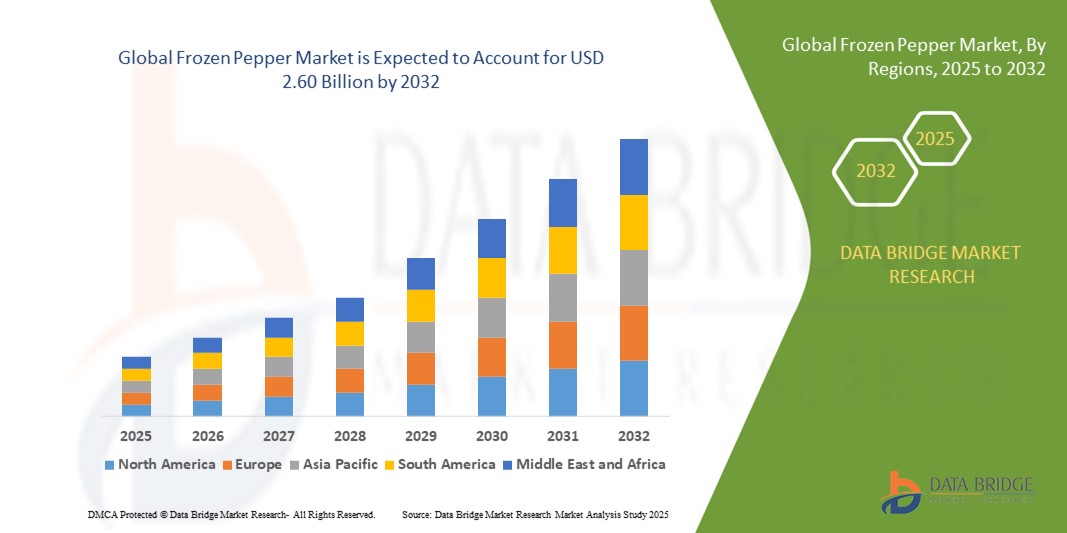
Frozen Pepper Market Size
- The global frozen pepper market size was valued at USD 1.79 billion in 2024 and is expected to reach USD 2.60 billion by 2032, at a CAGR of 4.8% during the forecast period
- The market growth is largely fueled by the rising consumer preference for convenient and nutritious frozen vegetables, along with advancements in freezing and packaging technologies that preserve freshness and flavor. Increasing urbanization and busy lifestyles are driving households and foodservice providers to adopt frozen peppers as a time-saving, versatile ingredient available year-round
- Furthermore, the expanding demand from food processing industries and quick-service restaurants for consistent, ready-to-use ingredients is strengthening market growth. These converging factors are accelerating the uptake of frozen peppers across both retail and commercial sectors, thereby significantly boosting the industry’s expansion
Frozen Pepper Market Analysis
- Frozen peppers are processed vegetables preserved at peak freshness to retain their flavor, texture, and nutritional value, offering consumers a reliable alternative to fresh produce. They are widely used in household cooking, ready-to-eat meals, sauces, pizzas, and foodservice dishes due to their versatility and extended shelf life
- The escalating demand for frozen peppers is primarily fueled by growing consumer reliance on convenience foods, the expanding global frozen food industry, and a rising preference for healthy, waste-reducing meal solutions. The market is also benefiting from the increasing penetration of modern retail formats and the growth of international cuisines that incorporate peppers as a core ingredient
- North America dominated the frozen pepper market with a share of 35.5% in 2024, due to rising demand for convenient frozen vegetables and the strong presence of processed food manufacturers
- Europe is expected to be the fastest growing region in the frozen pepper market during the forecast period due to increasing demand for healthier frozen food alternatives and the expanding adoption of frozen vegetables across households and food processing
- Fresh pepper segment dominated the market with a market share of 61.8% in 2024, due to its broad use in household cooking and its ability to retain natural flavor and texture after freezing. Consumers increasingly prefer frozen fresh peppers as they offer year-round availability without the issue of spoilage. Rising adoption of frozen vegetables as a healthier alternative to canned products further boosts demand. In addition, the expansion of modern retail outlets and improved cold chain logistics has strengthened the supply of fresh frozen peppers globally
Report Scope and Frozen Pepper Market Segmentation
|
Attributes |
Frozen Pepper Key Market Insights |
|
Segments Covered |
|
|
Countries Covered |
North America
Europe
Asia-Pacific
Middle East and Africa
South America
|
|
Key Market Players |
|
|
Market Opportunities |
|
|
Value Added Data Infosets |
In addition to the insights on market scenarios such as market value, growth rate, segmentation, geographical coverage, and major players, the market reports curated by the Data Bridge Market Research also include in-depth expert analysis, pricing analysis, brand share analysis, consumer survey, demography analysis, supply chain analysis, value chain analysis, raw material/consumables overview, vendor selection criteria, PESTLE Analysis, Porter Analysis, and regulatory framework. |
Frozen Pepper Market Trends
Rising Demand for Convenient and Ready-To-Use Frozen Vegetables
- The global frozen pepper market is experiencing increasing growth as consumers prioritize convenience and longer shelf life in vegetable products. The ability to use peppers instantly without washing, cutting, or cooking preparation drives higher household and foodservice adoption
- For instance, McCain Foods has expanded its frozen vegetable portfolio by including pre-sliced frozen peppers, catering to quick-service restaurants and retail segments seeking time-saving ingredients that ensure quality and consistent supply for high-volume operations
- The rising awareness regarding food waste reduction is also boosting demand for frozen peppers. As frozen varieties allow proper portion control and longer storage without spoilage, both consumers and restaurants are leaning toward sustainable frozen food options
- In addition, advancements in freezing technologies such as IQF (Individually Quick Frozen) are improving the texture, flavor, and nutritional retention of peppers. This is making frozen pepper products nearly indistinguishable from fresh alternatives, accelerating consumer acceptance
- Convenience-driven purchases are further supported by the increasing penetration of modern retail channels and online grocery platforms. The widespread availability of frozen peppers through supermarkets, hypermarkets, and e-commerce platforms enhances consumer accessibility and adoption rates
- The frozen pepper market outlook is steadily being shaped by urbanization and changing food consumption patterns. As busy lifestyles encourage quick meal preparation, frozen peppers are becoming indispensable in both household kitchens and commercial foodservice establishments
Frozen Pepper Market Dynamics
Driver
Rising Use in Quick-Service Restaurants
- The widespread use of frozen peppers across quick-service restaurants (QSRs) is a major driver of market growth. Their consistent taste, texture, and availability help maintain quality standards despite fluctuating fresh produce supplies
- For instance, Domino’s and Pizza Hut integrate frozen pepper varieties into pizzas and toppings to ensure uniform flavor in high-volume production. This strategy helps global franchises streamline supply chains while delivering consistent dining experiences across regions
- The demand from QSRs is further enhanced by the cost-efficiency of frozen peppers. Large food chains can avoid spoilage losses, ensure uninterrupted availability, and maintain operational flexibility with extended shelf life options
- In addition, frozen peppers align with the rising global trend of standardized food preparation methods in restaurant chains. Their uniform size, pre-cut processing, and ease of use directly contribute to operational efficiency in high-demand kitchens
- As consumer demand for fresh-tasting fast food options grows, the role of frozen peppers becomes critical. Their ability to deliver convenience without compromising flavor or nutrition strengthens adoption in both QSRs and casual dining formats
Restraint/Challenge
Supply Chain and Cold Storage Constraints
- The expansion of the frozen pepper market is limited by the significant cold storage and logistics infrastructure required. Maintaining low temperatures throughout the supply chain adds operational costs that can hinder affordability and accessibility
- For instance, in developing markets such as India, inadequate cold chain networks are leading to high wastage of frozen vegetables including peppers. This limits penetration in rural areas and creates inefficiencies for distributors and retailers
- Energy-intensive refrigeration systems also raise sustainability concerns for producers. The high dependence on electricity and specialized storage facilities can impact both environmental footprints and overall profitability of companies operating in frozen pepper supply chains
- In addition, fluctuations in energy prices and fuel costs directly affect the pricing of frozen peppers. These added logistics expenses can make the products costlier compared to fresh alternatives, thereby constraining consumer adoption in certain regions
- The challenge of maintaining consistent cold chain integrity during transportation remains substantial. Any variation in storage conditions can compromise product quality, reduce shelf life, and erode consumer trust in frozen pepper brands
Frozen Pepper Market Scope
The market is segmented on the basis of type, color, form, and application.
- By Type
On the basis of type, the frozen pepper market is segmented into sweet frozen pepper and hot frozen pepper. The sweet frozen pepper segment dominated the largest market revenue share in 2024, driven by its widespread use in culinary applications, ranging from salads and stir-fries to pizzas and frozen ready-to-eat meals. Consumers prefer sweet frozen peppers due to their milder taste, versatility across global cuisines, and nutritional content rich in vitamins A and C. Their convenience and longer shelf life compared to fresh alternatives further enhance demand, especially in urban areas where frozen food adoption is rising. The rising popularity of frozen vegetables in retail stores and e-commerce platforms is also supporting the strong market presence of sweet frozen peppers.
The hot frozen pepper segment is anticipated to witness the fastest growth rate from 2025 to 2032, fueled by the increasing global demand for spicy food products and ethnic cuisines. Rising consumer interest in bold flavors, coupled with the incorporation of hot peppers in processed frozen foods, sauces, and snacks, is accelerating their adoption. The foodservice industry, especially quick-service restaurants, is increasingly incorporating hot peppers to cater to changing consumer palates, boosting their demand. Furthermore, the growing trend of frozen convenience foods in emerging economies, combined with the expanding popularity of international cuisines such as Mexican, Thai, and Indian, positions hot frozen peppers as the fastest-growing segment.
- By Color
On the basis of color, the frozen pepper market is segmented into red pepper, green pepper, yellow pepper, and orange and purple pepper. The red pepper segment held the largest market share in 2024, supported by its high demand in both retail and foodservice sectors due to its sweet flavor profile and vibrant color appeal. Red frozen peppers are widely used in sauces, frozen ready meals, pasta dishes, and foodservice recipes for their taste and visual enhancement. Their rich nutritional profile, including antioxidants such as beta-carotene, also contributes to consumer preference. The increasing utilization of red peppers in processed frozen food products further solidifies their dominance.
The orange and purple pepper segment is expected to witness the fastest CAGR from 2025 to 2032, driven by rising consumer interest in visually appealing and nutritionally rich food options. These peppers are gaining popularity due to their distinct appearance, unique taste profiles, and higher antioxidant content, which aligns with the growing focus on healthy eating. The rising trend of premium and exotic frozen vegetables in both developed and developing markets is contributing to the growth of this segment. Furthermore, their incorporation into gourmet dishes and specialty frozen products makes orange and purple peppers an emerging high-growth category.
- By Form
On the basis of form, the frozen pepper market is segmented into fresh pepper and processed pepper. The fresh frozen pepper segment dominated the market share of 61.8% in 2024, primarily due to its broad use in household cooking and its ability to retain natural flavor and texture after freezing. Consumers increasingly prefer frozen fresh peppers as they offer year-round availability without the issue of spoilage. Rising adoption of frozen vegetables as a healthier alternative to canned products further boosts demand. In addition, the expansion of modern retail outlets and improved cold chain logistics has strengthened the supply of fresh frozen peppers globally.
The processed frozen pepper segment is projected to witness the fastest growth from 2025 to 2032, driven by the rising incorporation of value-added frozen pepper products in food processing industries. Processed peppers, including diced, sliced, and roasted variants, provide convenience for food manufacturers and restaurants, reducing preparation time and enhancing consistency. Increasing demand for frozen snacks, pizzas, and ready-to-cook packaged meals that use processed peppers is fueling segment expansion. The rising preference for time-saving food options among urban consumers is also a key factor supporting this growth trajectory.
- By Application
On the basis of application, the frozen pepper market is segmented into culinary use, food processing, and foodservice industry. The culinary use segment held the largest market revenue share in 2024, supported by rising consumer adoption of frozen peppers for home cooking and meal preparation. Increasing urbanization and busy lifestyles are fueling reliance on frozen vegetables that provide convenience without compromising nutrition. The availability of frozen peppers in multiple cuts and packaging sizes also enhances their household adoption. Moreover, the growing trend of healthy cooking at home has contributed to the strong market presence of frozen peppers in this segment.
The foodservice industry segment is anticipated to witness the fastest growth rate from 2025 to 2032, driven by the expanding global foodservice sector and increasing use of frozen peppers in quick-service restaurants, catering services, and institutional kitchens. Frozen peppers offer consistent quality, longer shelf life, and reduced preparation costs, making them an ideal choice for foodservice operators. The rising demand for pizzas, sandwiches, stir-fried dishes, and ethnic cuisines in commercial kitchens is further accelerating growth. With restaurants and cafes increasingly focusing on operational efficiency and cost management, the adoption of frozen peppers in foodservice operations is expected to rise significantly over the forecast period.
Frozen Pepper Market Regional Analysis
- North America dominated the frozen pepper market with the largest revenue share of 35.5% in 2024, driven by rising demand for convenient frozen vegetables and the strong presence of processed food manufacturers
- Consumers in the region increasingly favor frozen peppers for their year-round availability, nutritional value, and suitability in both household cooking and foodservice
- The high consumption of ready-to-eat meals and pizzas, where frozen peppers are a key ingredient, supports this dominance. Well-developed cold chain infrastructure and widespread retail penetration further reinforce North America’s leadership
U.S. Frozen Pepper Market Insight
The U.S. frozen pepper market captured the largest revenue share in 2024 within North America, fueled by strong consumer reliance on frozen vegetables and the growing trend of convenient meal solutions. Frozen peppers are widely used in pizzas, sauces, and frozen ready-to-cook meals, driving significant demand. Rising adoption from quick-service restaurants and retail chains further boosts growth. Technological advancements in freezing and packaging methods that preserve freshness and flavor are also expanding market penetration in the U.S.
Asia-Pacific Frozen Pepper Market Insight
The Asia-Pacific frozen pepper market is also witnessing significant growth, driven by urbanization, rising disposable incomes, and growing retail penetration of frozen food products. Increasing demand from quick-service restaurants and the adoption of frozen convenience foods in China, Japan, and India are boosting market uptake. Expanding cold storage infrastructure and the region’s strong agricultural output further support adoption, making Asia-Pacific a key contributor to overall market growth.
Japan Frozen Pepper Market Insight
The Japan frozen pepper market is gaining traction, supported by consumer preference for high-quality, convenient frozen vegetables in ready-to-cook meals. The use of frozen peppers in noodles, pizzas, and stir-fry dishes is driving demand. Innovations in freezing and packaging technologies that retain freshness and nutrition further encourage adoption in Japan’s health-conscious consumer base.
China Frozen Pepper Market Insight
The China frozen pepper market accounted for the largest market revenue share in Asia-Pacific in 2024, fueled by rapid urbanization, rising middle-class consumption, and strong demand for frozen convenience foods. Frozen peppers are increasingly used in ready-to-eat meals, sauces, and foodservice menus. Government initiatives supporting cold chain logistics and the presence of large domestic manufacturers are strengthening availability. China’s affordability-driven market and preference for convenient yet nutritious foods solidify its leadership within the region.
Europe Frozen Pepper Market Insight
The Europe frozen pepper market is projected to grow at the fastest CAGR during the forecast period, supported by increasing demand for healthier frozen food alternatives and the expanding adoption of frozen vegetables across households and food processing. Rising urbanization, busy lifestyles, and the strong popularity of Mediterranean cuisines are key demand drivers. Consumers in Europe are also drawn to frozen peppers for their convenience, nutritional value, and versatility in dishes such as pizzas, pastas, and sauces. Growing supermarket penetration, coupled with strong demand from the foodservice sector, is expected to accelerate Europe’s growth momentum.
U.K. Frozen Pepper Market Insight
The U.K. frozen pepper market is anticipated to grow at a noteworthy CAGR, driven by rising demand for quick, nutritious meal options and the expanding frozen food segment in retail chains. The widespread adoption of frozen pizzas and ethnic cuisines continues to fuel demand. The U.K.’s well-established e-commerce and supermarket infrastructure also ensures strong availability, further stimulating growth in the frozen pepper category.
Germany Frozen Pepper Market Insight
The Germany frozen pepper market is expected to expand at a considerable CAGR, supported by the country’s emphasis on sustainable, high-quality food products and nutritional convenience. Frozen peppers are increasingly incorporated into both household meals and foodservice offerings. Germany’s strong food processing industry and preference for fresh-tasting, nutrient-retaining frozen vegetables create favorable conditions for market expansion.
Frozen Pepper Market Share
The frozen pepper industry is primarily led by well-established companies, including:
- Gelpass group (France)
- Eckert (U.S.)
- Kiril Mischeff (U.K.)
- XIAMEN JOOEVER CO., LTD (China)
- Grasso Foods INC. (U.S.)
- HANOVER FOODS (U.S.)
- General Mills Inc. (U.S.)
- Conagra Brands, Inc. (U.S.)
Latest Developments in Global Frozen Pepper Market
- In February 2025, Keurig Dr Pepper (KDP) unveiled a new flavor innovation with the launch of Dr Pepper Blackberry in the U.S. market, blending its iconic 23 flavors with the sweetness of blackberry. This move addresses the growing consumer demand for unique and refreshing beverage experiences, particularly as blackberry-flavored carbonated soft drinks are outpacing the category in sales growth. The introduction strengthens KDP’s competitive edge in the flavored soda segment and demonstrates the company’s commitment to diversifying its portfolio in line with evolving consumer taste preferences
- In January 2024, U.K.-based alt meat brand Squeaky Bean entered the frozen foods market with its first frozen ingredients range, featuring Seasoned Chicken Style Pieces and Steak Style Strips. This development supports the growing consumer shift towards plant-based diets and the rising preference for convenient, versatile frozen options. By offering products tailored for everyday recipes such as curries, stir-fries, and tacos, Squeaky Bean is filling a market gap for premium frozen meat alternatives while expanding the accessibility of plant-based proteins to a broader audience
- In August 2022, Seara launched its complete halal portfolio consisting of 120 frozen food products, including frozen poultry, beef, seafood, vegetables, and fruits. This strategic move positioned Seara to cater to the increasing global demand for halal-certified frozen foods, providing consumers with a wide variety of convenient, preservative-free products with extended shelf lives. The launch enhanced Seara’s reach in international markets and also aligned with the growing preference for cost-effective, waste-reducing food solutions
- In January 2022, Gelpaas Group introduced Frozen Pepper to the market, providing consumers with a ready-to-use solution that maintains both flavor and nutritional value. By freezing peppers at peak freshness, Gelpaas addressed the rising demand for convenience without compromising on quality. This innovation supports busy consumer lifestyles and promotes wider adoption of frozen vegetables as a healthier, time-saving alternative to fresh produce, strengthening the brand’s position in the frozen food sector
- In March 2023, Greenyard Frozen expanded its product portfolio by launching a new line of sustainably sourced frozen vegetables across European retail chains. This initiative targeted the growing consumer demand for eco-conscious food products while reinforcing Greenyard’s commitment to sustainability. The development strengthened its market positioning in Europe and also enhanced consumer trust by offering nutritious, environmentally responsible frozen options

- Interactive Data Analysis Dashboard
- Company Analysis Dashboard for high growth potential opportunities
- Research Analyst Access for customization & queries
- Competitor Analysis with Interactive dashboard
- Latest News, Updates & Trend analysis
- Harness the Power of Benchmark Analysis for Comprehensive Competitor Tracking
Global Frozen Pepper Market, Supply Chain Analysis and Ecosystem Framework
To support market growth and help clients navigate the impact of geopolitical shifts, DBMR has integrated in-depth supply chain analysis into its Global Frozen Pepper Market research reports. This addition empowers clients to respond effectively to global changes affecting their industries. The supply chain analysis section includes detailed insights such as Global Frozen Pepper Market consumption and production by country, price trend analysis, the impact of tariffs and geopolitical developments, and import and export trends by country and HSN code. It also highlights major suppliers with data on production capacity and company profiles, as well as key importers and exporters. In addition to research, DBMR offers specialized supply chain consulting services backed by over a decade of experience, providing solutions like supplier discovery, supplier risk assessment, price trend analysis, impact evaluation of inflation and trade route changes, and comprehensive market trend analysis.
Data collection and base year analysis are done using data collection modules with large sample sizes. The stage includes obtaining market information or related data through various sources and strategies. It includes examining and planning all the data acquired from the past in advance. It likewise envelops the examination of information inconsistencies seen across different information sources. The market data is analysed and estimated using market statistical and coherent models. Also, market share analysis and key trend analysis are the major success factors in the market report. To know more, please request an analyst call or drop down your inquiry.
The key research methodology used by DBMR research team is data triangulation which involves data mining, analysis of the impact of data variables on the market and primary (industry expert) validation. Data models include Vendor Positioning Grid, Market Time Line Analysis, Market Overview and Guide, Company Positioning Grid, Patent Analysis, Pricing Analysis, Company Market Share Analysis, Standards of Measurement, Global versus Regional and Vendor Share Analysis. To know more about the research methodology, drop in an inquiry to speak to our industry experts.
Data Bridge Market Research is a leader in advanced formative research. We take pride in servicing our existing and new customers with data and analysis that match and suits their goal. The report can be customized to include price trend analysis of target brands understanding the market for additional countries (ask for the list of countries), clinical trial results data, literature review, refurbished market and product base analysis. Market analysis of target competitors can be analyzed from technology-based analysis to market portfolio strategies. We can add as many competitors that you require data about in the format and data style you are looking for. Our team of analysts can also provide you data in crude raw excel files pivot tables (Fact book) or can assist you in creating presentations from the data sets available in the report.













