Fruit and Tree Nut Farming Market Size
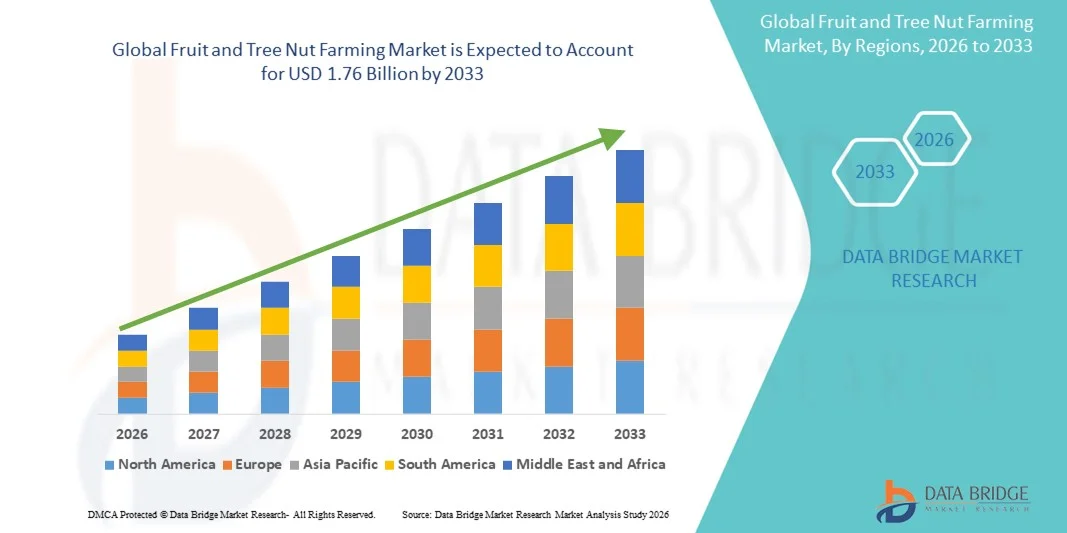
- The global fruit and tree nut farming market size was valued at USD 1.25 billion in 2025 and is expected to reach USD 1.76 billion by 2033, at a CAGR of 4.40% during the forecast period
- The market growth is largely fueled by increasing global demand for fresh fruits and tree nuts, coupled with the adoption of modern farming techniques such as precision agriculture, mechanized harvesting, and advanced irrigation systems, leading to higher yield, better quality produce, and enhanced supply chain efficiency
- Furthermore, rising consumer preference for healthy, nutritious, and plant-based diets is encouraging farmers and agribusinesses to expand fruit and nut cultivation. These converging factors are accelerating the adoption of high-value crops, thereby significantly boosting the industry's growth
Fruit and Tree Nut Farming Market Analysis
- Fruit and tree nut farming, involving the cultivation of crops such as apples, citrus, almonds, and other nuts, is increasingly vital for meeting the rising global demand for nutritious food products and supporting both domestic consumption and export markets due to their health benefits and versatility
- The escalating demand for fruit and tree nut farming is primarily fueled by growing awareness of healthy eating, increasing disposable incomes, expansion of organized retail channels, and supportive government initiatives for horticulture and orchard development, which are enhancing production efficiency and market availability
- Asia-Pacific dominated the fruit and tree nut farming market with a share of 45.9% in 2025, due to favorable climatic conditions, increasing demand for fresh fruits and nuts, and a strong agricultural base across major producing countries
- North America is expected to be the fastest growing region in the fruit and tree nut farming market during the forecast period due to rising consumption of healthy and snackable fruits and nuts, adoption of modern farming technologies, and increasing exports
- Traditional farming segment dominated the market with a market share of 55.7% in 2025, due to established cultivation practices, familiarity among farmers, and lower initial investment compared to certified organic methods. Traditional farming allows for large-scale production of fruits and nuts to meet the demands of domestic and export markets. It also benefits from government support programs, mechanization, and access to conventional fertilizers and pesticides that optimize yields and reduce production risks
Report Scope and Fruit and Tree Nut Farming Market Segmentation
|
Attributes |
Fruit and Tree Nut Farming Key Market Insights |
|
Segments Covered |
|
|
Countries Covered |
North America
Europe
Asia-Pacific
Middle East and Africa
South America
|
|
Key Market Players |
|
|
Market Opportunities |
|
|
Value Added Data Infosets |
In addition to the insights on market scenarios such as market value, growth rate, segmentation, geographical coverage, and major players, the market reports curated by the Data Bridge Market Research also include import export analysis, production capacity overview, production consumption analysis, price trend analysis, climate change scenario, supply chain analysis, value chain analysis, raw material/consumables overview, vendor selection criteria, PESTLE Analysis, Porter Analysis, and regulatory framework. |
Fruit and Tree Nut Farming Market Trends
Growing Adoption of Precision and Mechanized Farming
- The fruit and tree nut farming market is experiencing significant transformation through widespread adoption of precision agriculture and mechanization techniques designed to maximize productivity and resource efficiency. Integrating GPS-guided machinery, IoT sensors for soil and crop health, and automated irrigation systems allows farmers to optimize water use, nutrient application, and pest management tailored to individual orchard zones. These practices are improving yields, crop uniformity, and sustainability while reducing labor intensity and operational costs
- For instance, Paramount Farming utilizes advanced automation and precision horticulture technologies in its almond and pistachio orchards, employing AI-driven crop monitoring and mechanized harvesting to increase efficiency and quality. Similarly, South Valley Farms reports record yields credited to modern equipment and precision agriculture methods that enhance tree health and fruit development
- Mechanization has accelerated the shift from traditional manual harvesting to machine-driven picking, pruning, and orchard floor management. This transition supports scalability, reduces seasonal labor shortages, and enhances harvesting speed without compromising fruit or nut integrity
- Remote sensing and satellite imagery combined with AI analytics enable early detection of disease outbreaks and microclimate variations, allowing proactive interventions and minimizing crop losses. These technologies facilitate data-driven decisions that improve resilience to environmental stresses and optimize inputs at reduced cost
- Advances in tree breeding and precision planting techniques complement mechanization, enabling development of high-density orchards with improved yield per acre and better water management. This integrated approach reinforces sustainability goals by aligning crop performance with environmental conservation efforts
- Overall, the growing adoption of precision and mechanized farming is positioning the fruit and tree nut sector for sustained growth by driving higher productivity, operational efficiency, and climate resilience across global production landscapes
Fruit and Tree Nut Farming Market Dynamics
Driver
Rising Global Demand for Nutritious Fruits and Tree Nuts
- Increasing global consumer demand for nutritious fruits and tree nuts, driven by rising health awareness, changing dietary preferences, and growing middle-class populations, is a critical factor fueling market growth. Consumers are increasingly incorporating nutrient-dense fruits and nuts into their diets due to recognized benefits such as heart health, plant-based proteins, and antioxidants
- For instance, The Organic Trade Association reported a 4.5% annual increase in organic fruit sales in the U.S., reflecting the expanding consumer shift toward healthy and organic food consumption. Major producers such as Paramount Farming and South Valley Farms are capitalizing on this trend with premium and organic product offerings that meet evolving market needs
- Demand growth is also supported by increasing utilization of nuts in food processing, confectionery, dairy alternatives, and snack industries, expanding market channels beyond fresh consumption. Urbanization, higher disposable incomes, and e-commerce penetration further enable access to a broad consumer base worldwide
- The rise of plant-based diets and vegetarianism boosts nut consumption as a primary protein and healthy fat source, strengthening the market outlook. Retail innovations including direct-to-consumer sales and value-added processed fruit products add further momentum to the sector’s expansion
- The global demand trajectory for fruits and tree nuts reflects heightened prioritization of nutrition, wellness, and natural foods, linking consumer behavior to sustained production growth and investment opportunities within the agri-food value chain
Restraint/Challenge
Climate Variability and Pest Management Issues
- Climate variability poses significant challenges to fruit and tree nut farming, as shifting temperature and precipitation patterns affect flowering, fruit set, and yield quality. Increased frequency of extreme weather events such as droughts, heatwaves, and unseasonal frosts disrupt traditional growing calendars and exacerbate production risk
- For instance, the USDA Climate Hubs indicate rising temperatures have reduced fruit set and increased sunburn damage in crops such as apples and walnuts, trends expected to persist and intensify over the coming years. These climatic stresses necessitate adaptive management strategies and increased monitoring for timely interventions
- Pest and disease pressures are amplified under changing climate conditions, complicating pest management programs. Emerging pests, resistance development, and complex pathogen cycles require integrated pest management systems that combine biological controls, chemical treatments, and precision monitoring technologies
- The reliance on chemical pesticides is increasingly restricted by regulatory authorities and consumer demand for residue-free products, creating further complexity and costs for effective pest control. Transitioning to sustainable and precision pest management approaches remains an ongoing challenge for producers seeking to maintain productivity and market access
- Infrastructure constraints for irrigation, frost protection, and soil health management compound the vulnerability of orchards to climatic shifts, especially in regions with limited water resources or infrastructure investment
- Addressing climate variability and pest management through resilient varietals, enhanced agronomic practices, and digital monitoring platforms is imperative to safeguard long-term yield stability and fruit quality. These efforts will be central to overcoming sectoral challenges and ensuring sustainable growth in fruit and tree nut farming worldwide
Fruit and Tree Nut Farming Market Scope
The market is segmented on the basis of type, application, and farming process.
- By Type
On the basis of type, the fruit and tree nut farming market is segmented into orange groves, citrus groves, noncitrus fruit, tree nut farming, apple orchards, grape vineyards, strawberry farming, and other berry farming. The citrus groves segment dominated the market with the largest market revenue share of 38.5% in 2025, driven by the high global demand for citrus fruits for both fresh consumption and processed products such as juices and concentrates. Citrus groves are favored by farmers due to their relatively consistent yield, adaptability to diverse climates, and long shelf life of the produce. In addition, established supply chains and growing consumer awareness of citrus health benefits support sustained demand. The market also sees strong growth from citrus groves owing to technological advancements in irrigation, pest management, and yield optimization techniques, which enhance profitability for growers.
The tree nut farming segment is anticipated to witness the fastest growth rate of 20.8% from 2026 to 2033, fueled by rising demand for nuts such as almonds, walnuts, and cashews due to their nutritional benefits and incorporation into health-conscious diets. For instance, companies such as Blue Diamond Growers have expanded their global distribution networks, increasing tree nut availability and adoption. Tree nut cultivation also benefits from premium pricing, export opportunities, and the integration of precision farming technologies, which improve yield efficiency and reduce resource consumption. In addition, increasing consumer preference for plant-based protein sources supports the expansion of the tree nut farming segment.
- By Application
On the basis of application, the fruit and tree nut farming market is segmented into hypermarkets/supermarkets, convenience stores, and others. The hypermarkets/supermarkets segment dominated the market with the largest market revenue share of 42.1% in 2025, driven by large-scale procurement contracts and consistent consumer footfall in these retail channels. These outlets provide farmers and distributors with the ability to supply fresh and processed fruits and nuts to a wide consumer base efficiently. The segment also benefits from the growing trend of one-stop shopping, where consumers prefer purchasing a variety of fresh produce in a single location. Supply chain improvements, cold storage facilities, and partnerships with logistics providers enhance the reliability and volume of produce delivered to hypermarkets.
The convenience stores segment is expected to witness the fastest CAGR from 2026 to 2033, driven by the rising demand for ready-to-eat fruits and packaged nut products in urban areas. For instance, 7-Eleven has expanded its fresh fruit and snack offerings, boosting accessibility and adoption. Convenience stores cater to busy lifestyles, providing quick access to healthy snacks and seasonal fruits, which encourages frequent purchases. The segment also benefits from increasing urbanization, higher disposable income, and growing health-conscious consumer behavior.
- By Farming Process
On the basis of farming process, the fruit and tree nut farming market is segmented into organic farming and traditional farming. The traditional farming segment dominated the market with the largest market revenue share of 55.7% in 2025, driven by established cultivation practices, familiarity among farmers, and lower initial investment compared to certified organic methods. Traditional farming allows for large-scale production of fruits and nuts to meet the demands of domestic and export markets. It also benefits from government support programs, mechanization, and access to conventional fertilizers and pesticides that optimize yields and reduce production risks.
The organic farming segment is anticipated to witness the fastest growth rate of 19.5% from 2026 to 2033, fueled by increasing consumer preference for chemical-free and environmentally sustainable produce. For instance, companies such as Earthbound Farm have expanded organic fruit and nut offerings in retail channels, strengthening market adoption. Organic farming commands premium pricing and attracts a growing segment of health-conscious consumers seeking certified produce. In addition, rising awareness of soil health, biodiversity, and eco-friendly farming practices is encouraging farmers to adopt organic cultivation methods.
Fruit and Tree Nut Farming Market Regional Analysis
- Asia-Pacific dominated the fruit and tree nut farming market with the largest revenue share of 45.9% in 2025, driven by favorable climatic conditions, increasing demand for fresh fruits and nuts, and a strong agricultural base across major producing countries
- The region’s cost-effective labor, expanding modern farming practices, and growing investments in cold storage and logistics infrastructure are accelerating market expansion
- The availability of fertile land, government support for horticulture, and rapid adoption of mechanized and technology-driven farming techniques are contributing to increased production and consumption of fruits and tree nuts
China Fruit and Tree Nut Farming Market Insight
China held the largest share in the Asia-Pacific fruit and tree nut farming market in 2025, owing to its status as one of the world’s leading fruit and nut producers. The country benefits from large-scale orchards, advanced irrigation systems, and strong domestic and international demand for apples, citrus fruits, and tree nuts. Government policies promoting modern horticulture, mechanization, and export-oriented production are major growth drivers. In addition, investments in research and development for high-yield and disease-resistant varieties are enhancing productivity and market competitiveness.
India Fruit and Tree Nut Farming Market Insight
India is witnessing the fastest growth in the Asia-Pacific region, fueled by increasing horticultural output, expanding orchard-based farming, and growing export demand for mangoes, cashews, and almonds. For instance, government initiatives such as the National Horticulture Mission are supporting modern farming methods, irrigation, and cold storage infrastructure. Rising awareness of healthy eating and plant-based diets is encouraging higher domestic consumption of fruits and nuts. In addition, increasing private sector investment in contract farming and processing facilities is strengthening market expansion.
Europe Fruit and Tree Nut Farming Market Insight
The Europe fruit and tree nut farming market is expanding steadily, supported by stringent quality standards, high demand for premium and organic produce, and investment in sustainable farming practices. The region emphasizes product traceability, environmental compliance, and certification, particularly for export markets. Advanced technologies in pest management, soil health, and precision farming are enhancing yields and quality. Increasing consumer focus on healthy diets and organic products is further driving market growth across European countries.
Germany Fruit and Tree Nut Farming Market Insight
Germany’s fruit and tree nut farming market is driven by its well-established agricultural sector, high focus on quality and sustainability, and strong domestic consumption of fresh and processed fruits and nuts. The country benefits from mechanized orchards, research in crop improvement, and efficient supply chains linking farms to retail and food processing sectors. For instance, premium apples and berries are widely exported, supporting both revenue growth and international market presence.
U.K. Fruit and Tree Nut Farming Market Insight
The U.K. market is supported by a growing focus on locally sourced fruits and nuts, rising organic produce demand, and advanced greenhouse and orchard farming techniques. Increasing consumer preference for healthy snacking and plant-based nutrition is driving cultivation of berries, apples, and nuts. For instance, collaboration between farmers and retail chains ensures consistent supply and quality standards, strengthening the country’s market position.
North America Fruit and Tree Nut Farming Market Insight
North America is projected to grow at the fastest CAGR from 2026 to 2033, driven by rising consumption of healthy and snackable fruits and nuts, adoption of modern farming technologies, and increasing exports. Precision farming, controlled irrigation systems, and innovative crop management techniques are boosting productivity. In addition, growing consumer awareness about plant-based diets and protein-rich nuts is enhancing demand across the region.
U.S. Fruit and Tree Nut Farming Market Insight
The U.S. accounted for the largest share in the North America market in 2025, underpinned by its established orchards, advanced agricultural practices, and strong domestic and export demand for almonds, apples, and berries. Government support for sustainable farming, extensive research on crop improvement, and integration of automation and digital technologies are key growth drivers. For instance, California remains a leading producer of tree nuts and citrus fruits, maintaining the country’s leadership position in the regional market.
Fruit and Tree Nut Farming Market Share
The fruit and tree nut farming industry is primarily led by well-established companies, including:
- The Wonderful Company LLC (U.S.)
- South Valley Farms (U.S.)
- Agriland Farming Company (U.S.)
- Dole Food Company Inc (U.S.)
- Costa Group (Australia)
- Hennie De Beer Boerdery T/A Vaalbos Trust (South Africa)
- Stemilt Growers LLC (U.S.)
- Zespri Group Limited (New Zealand)
- Dun & Bradstreet, Inc. (U.S.)
- Olam International (Singapore)
- Diamond Foods (U.S.)
- Mariani Nut Co (U.S.)
- Bayer CropScience AG (Germany)
- Select Harvests Limited (Australia)
- Waterford Nut Co. (U.S.)
- ADM (Archer Daniels Midland Company) (U.S.)
- Lone Tree Nut Company, Inc. (U.S.)
- Sun Valley Nut, LLC (U.S.)
- TREE NUTS INTERNATIONAL (U.S.)
- Ison's Nursery & Vineyard (U.S.)
Latest Developments in Global Fruit and Tree Nut Farming Market
- In September 2025, Orchard Robotics raised US$ 22 million in a Series A funding round to scale its AI‑driven crop management platform for specialty fruit and nut farms. This development is significant for the fruit and tree nut farming market because it signals stronger uptake of precision agriculture technologies, enabling growers to better monitor tree health, optimize harvesting and reduce waste, thereby increasing yields and reducing costs
- In July 2025, Bonsai Robotics acquired farm‑ng Inc., a pioneer in modular electric robots for farm operations. This merger has important implications for the fruit and tree nut farming market because it creates a combined capability of advanced robotics and vision‑based autonomy, offering growers innovative mixed‑fleet solutions that can handle nut orchards and fruit plantations more efficiently and cost‑effectively, accelerating automation adoption
- In January 2025, Bonsai Robotics secured US$ 15 million in a Series A funding round to advance its autonomous orchard machines aimed at tree crops such as almonds and other nuts. This funding is impactful for the market because it addresses the critical challenge of labor shortages in nut and fruit orchards, enabling growers to deploy automation which in turn improves operational efficiency, reduces labor cost pressure and enhances competitiveness of nut production globally
- In September 2025, Bonsai Robotics launched the “Farm Robotics Challenge”, inviting engineers and innovators to contribute ideas for autonomous agricultural solutions. This initiative influences the fruit and tree nut farming market by fostering a pipeline of new technologies targeted at orchard operations, promoting faster innovation cycles and broader technology adoption among growers, which can lead to enhanced productivity and reduced operational bottlenecks
- In February 2025, Bonsai Robotics announced expansion of its physical AI platform including its VisionSteer™ technology and rolled out partnerships with original equipment manufacturers (OEMs) to commercialize autonomous orchard solutions. This development matters for the fruit and tree nut farming market because commercialization of such automation tools signals greater accessibility for growers, which supports broader industry adoption of smart orchard equipment, potentially boosting yield, lowering cost per acre and raising the competitiveness of nut and fruit output

- Interactive Data Analysis Dashboard
- Company Analysis Dashboard for high growth potential opportunities
- Research Analyst Access for customization & queries
- Competitor Analysis with Interactive dashboard
- Latest News, Updates & Trend analysis
- Harness the Power of Benchmark Analysis for Comprehensive Competitor Tracking
Data collection and base year analysis are done using data collection modules with large sample sizes. The stage includes obtaining market information or related data through various sources and strategies. It includes examining and planning all the data acquired from the past in advance. It likewise envelops the examination of information inconsistencies seen across different information sources. The market data is analysed and estimated using market statistical and coherent models. Also, market share analysis and key trend analysis are the major success factors in the market report. To know more, please request an analyst call or drop down your inquiry.
The key research methodology used by DBMR research team is data triangulation which involves data mining, analysis of the impact of data variables on the market and primary (industry expert) validation. Data models include Vendor Positioning Grid, Market Time Line Analysis, Market Overview and Guide, Company Positioning Grid, Patent Analysis, Pricing Analysis, Company Market Share Analysis, Standards of Measurement, Global versus Regional and Vendor Share Analysis. To know more about the research methodology, drop in an inquiry to speak to our industry experts.
Data Bridge Market Research is a leader in advanced formative research. We take pride in servicing our existing and new customers with data and analysis that match and suits their goal. The report can be customized to include price trend analysis of target brands understanding the market for additional countries (ask for the list of countries), clinical trial results data, literature review, refurbished market and product base analysis. Market analysis of target competitors can be analyzed from technology-based analysis to market portfolio strategies. We can add as many competitors that you require data about in the format and data style you are looking for. Our team of analysts can also provide you data in crude raw excel files pivot tables (Fact book) or can assist you in creating presentations from the data sets available in the report.