Fruit Beer Market Size
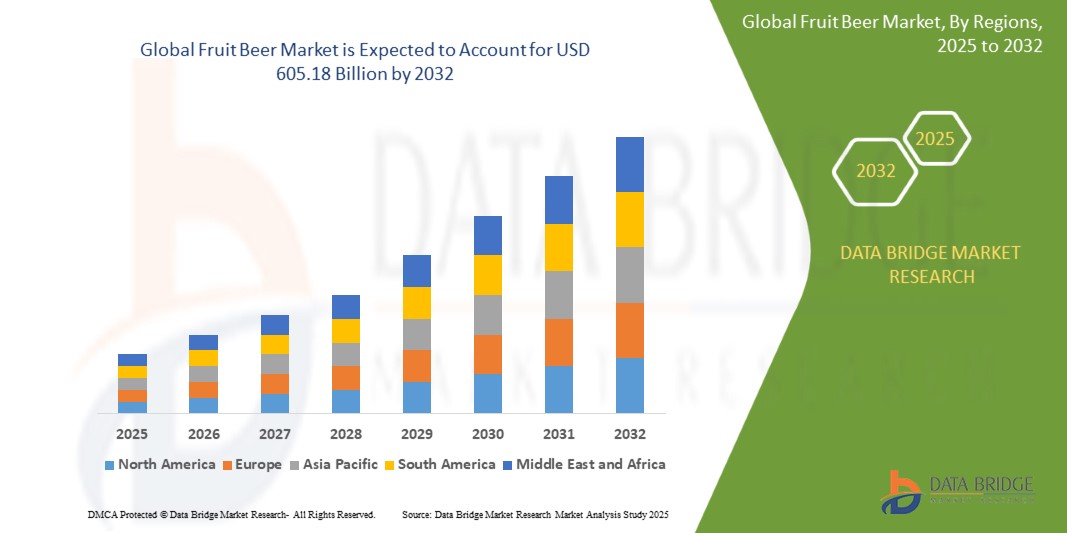
- The global fruit beer market was valued at USD 365.67 billion in 2024 and is expected to reach USD 605.18 billion by 2032
- During the forecast period of 2025 to 2032 the market is likely to grow at a CAGR of 6.50%, primarily driven by rising consumer preference for flavoured and innovative alcoholic beverages
- This growth is driven by factors such as increased demand for craft beers and the growing trend of experimenting with fruit-infused alcoholic drinks
Fruit Beer Market Analysis
- The demand for fruit beers is increasing as consumers look for unique, flavorful beverages that offer a refreshing taste. The infusion of fruits such as apple, cherry, and citrus into beer creates a distinct taste, appealing to those looking for alternatives to traditional beer
- The craft beer industry is experiencing significant growth, and fruit beers have become an important segment within this market. Smaller breweries are experimenting with various fruit combinations to create innovative products that cater to changing consumer tastes
- Fruit beer is part of a broader trend towards flavored alcoholic beverages. As consumers continue to seek new and exciting drink options, fruit beer offers a refreshing alternative to conventional beers and ciders
- With an increasing focus on health, many fruit beers are marketed as lower in alcohol and contain natural ingredients, positioning them as a healthier alternative to high-calorie drinks. This trend has contributed to the growth of fruit beer products in the market
- For instance, brands such as Sam Adams have introduced fruit-infused beers such as Cherry Wheat and Summer Ale, which combine traditional beer flavors with fruity notes to appeal to a wider range of consumers looking for innovative beer options
Report Scope and Fruit Beer Market Segmentation
|
Attributes |
Fruit Beer Key Market Insights |
|
Segments Covered |
|
|
Countries Covered |
North America
Europe
Asia-Pacific
Middle East and Africa
South America
|
|
Key Market Players |
|
|
Market Opportunities |
|
|
Value Added Data Infosets |
In addition to the insights on market scenarios such as market value, growth rate, segmentation, geographical coverage, and major players, the market reports curated by the Data Bridge Market Research also include in-depth expert analysis, pricing analysis, brand share analysis, consumer survey, demography analysis, supply chain analysis, value chain analysis, raw material/consumables overview, vendor selection criteria, PESTLE Analysis, Porter Analysis, and regulatory framework. |
Fruit Beer Market Trends
“Shift Towards Fruit-Flavoured Beers Among Younger Consumers”
- Younger consumers, particularly Generation Z, are showing a marked preference for fruit-flavored beers over traditional bitter or malty options
- Fruit beers are often perceived as lighter and potentially lower in alcohol content, aligning with the health and wellness trends prevalent among younger drinkers
- Craft Beer Movement Influence: The craft beer movement has introduced a variety of fruit-infused beers, expanding the flavor profiles available and attracting a broader audience
- Breweries are employing creative marketing techniques, such as limited-edition flavors and collaborations, to engage younger consumers and sustain interest in fruit beers
- For Instance, Brands such as Jubel have experienced significant growth, with a 300% increase in demand for their fruit-flavored lagers, indicating a strong market shift towards these products
Fruit Beer Market Dynamics
Driver
“Increasing Consumer Demand for Flavored Alcoholic Beverages”
- As the demand for flavored alcoholic beverages increases, fruit beers are becoming increasingly popular among consumers looking for new and exciting flavor profiles that differentiate from traditional beers such as lagers and ales
- The ongoing growth of the craft beer movement has greatly contributed to the rise of fruit-infused beers, as smaller breweries experiment with various fruits to create unique and marketable products
- With the growing trend of health-conscious consumption, fruit beers are often seen as a lighter, less bitter alternative to traditional beers, making them appealing to individuals who want to enjoy a refreshing beverage with a hint of natural sweetness
- For instance, brands such as Sam Adams and Blue Moon Brewing have capitalized on this trend by introducing fruit-infused beers such as Citrus Wheat and Belgian White, which feature citrus and orange flavors, respectively, appealing to a broader range of taste preferences among consumers
Opportunity
“Expansion into New and Emerging Markets”
- As consumers in emerging markets such as Asia-Pacific, Latin America, and Africa continue to develop a taste for beer, there is an opportunity for fruit beers to become a key part of the beer market in these regions
- Brands can tap into international markets by offering fruit-flavored beers in regions where traditional beers may not be as popular, especially among younger, adventurous consumers seeking new flavors and experiences
- As consumers, particularly millennials and Gen Z, are more open to trying new and innovative alcoholic beverages, the growth of the fruit beer market is expected to continue as these consumers prioritize variety and flavor over traditional beer styles
- For Instance, Jubel, a British brand, has expanded globally, particularly in markets such as the U.S. and Europe, where fruit-flavored beers are growing in popularity due to consumer demand for variety and experimentation in flavor profiles
Restraint/Challenge
“Limited Awareness and Consumer Education”
- Despite the growing popularity of fruit beers, a lack of awareness about these products among a broader audience remains a challenge, especially in markets where traditional beer consumption is deeply rooted
- Educating consumers about the differences between fruit beers and other alcoholic beverages, as well as how fruit flavors impact the overall taste, requires significant marketing and promotional efforts by manufacturers
- The increasing variety of alcoholic beverages, including hard seltzers, flavored ciders, and ready-to-drink cocktails, also poses a challenge as fruit beers have to compete with other products that may offer more distinct or sweeter flavor profiles
- For Instance, Brands such as Schöfferhofer have had to invest heavily in marketing campaigns to raise awareness and educate consumers on the distinct flavors and unique appeal of their fruit beer blends
Fruit Beer Market Scope
The market is segmented on the basis flavor, distribution channel, application and industry vertical.
|
Segmentation |
Sub-Segmentation |
|
By Flavour |
|
|
By Distribution Channel |
|
|
By Application |
|
|
By Industry Vertical
|
|
Fruit Beer Market Regional Analysis
“North America is the Dominant Region in the Fruit Beer Market”
- North America is currently dominating the global fruit beer market due to the growing interest in craft beers and non-alcoholic beverages
- The U.S., in particular, has seen a significant increase in demand for innovative fruit-flavored beers, driven by millennials seeking unique and refreshing beverages
- The preference for low-alcohol and non-alcoholic beer variants is contributing to this dominance as health-conscious consumers seek flavorful yet lighter alternatives
- Popular brands such as Magic Hat Brewing Company and New Belgium Brewing Company are leading this trend by introducing a variety of fruit-flavored beers
- This region is likely to maintain its dominance as consumer awareness and preference for fruit beers continues to rise, with a growing number of bars, restaurants, and retail stores adding fruit beer to their offerings
“Asia-Pacific is Projected to Register the Highest Growth Rate”
- The Asia-Pacific region is expected to witness the fastest growth in the fruit beer market
- Countries such as Japan, China, and India are increasingly embracing international trends, including the popularity of craft and fruit beers
- Consumer behavior in these countries is shifting towards more diversified beverage options, including fruit-flavored beers
- For instance, Japan's beer market is evolving, with local breweries launching innovative products that combine traditional brewing methods with fruit infusions
- The expansion of global beer brands and the rise of local craft breweries in this region will drive the rapid growth of the fruit beer market in Asia-Pacific
Fruit Beer Market Share
The market competitive landscape provides details by competitor. Details included are company overview, company financials, revenue generated, market potential, investment in research and development, new market initiatives, global presence, production sites and facilities, production capacities, company strengths and weaknesses, product launch, product width and breadth, application dominance. The above data points provided are only related to the companies' focus related to market.
The Major Market Leaders Operating in the Market Are:
- Lindemans (Australia)
- LOST COAST BREWERY (U.S.)
- Magic Hat Brewing Company (U.S.)
- New Belgium Brewing Company, Inc. (U.S.)
- Brewery Ommegang (U.S.)
- All Saints Brewing Company (U.S.)
- Shipyard Brewing Company (U.S.)
- Unibroue (Canada)
- ABITA BREWING COMPANY (U.S.)
- Pyramid Brewing Co. (U.S.)
- HokkaidoBrewing (Japan)
- Rhinegeist Brewery (U.S.)
- The Boston Beer Company (U.S.)
- Jester King Craft Brewery (U.S.)
Latest Developments in Global Fruit Beer Market
- In February 2025, United Breweries introduced two new beer flavors, Mango Berry Twist and Lemon Masala, inspired by Indian street culture. These flavors aim to resonate with Gen Z consumers seeking unique and refreshing experiences. Initially launched in Goa and Daman, there's potential for nationwide expansion
- In January 2025, Edinburgh-based Vault City released 'Love Potion', a raspberry sour beer infused with pure liquid cacao and habanero chili flakes. Launched around Valentine's Day, this 6.8% ABV beer combines fruity, spicy, and chocolaty flavors, aiming to spice up consumers' love lives
- In 2022, Sonnen Hill Brewing announced the launch of a limited-edition fruit beer which Blackberry and Raspberry prepare along with grain and Ontario fruit. This product was primarily fermented in stainless steel for over a year and a half, maintaining a proper balance of fruit, funk, and acidity

- Interactive Data Analysis Dashboard
- Company Analysis Dashboard for high growth potential opportunities
- Research Analyst Access for customization & queries
- Competitor Analysis with Interactive dashboard
- Latest News, Updates & Trend analysis
- Harness the Power of Benchmark Analysis for Comprehensive Competitor Tracking
Global Fruit Beer Market, Supply Chain Analysis and Ecosystem Framework
To support market growth and help clients navigate the impact of geopolitical shifts, DBMR has integrated in-depth supply chain analysis into its Global Fruit Beer Market research reports. This addition empowers clients to respond effectively to global changes affecting their industries. The supply chain analysis section includes detailed insights such as Global Fruit Beer Market consumption and production by country, price trend analysis, the impact of tariffs and geopolitical developments, and import and export trends by country and HSN code. It also highlights major suppliers with data on production capacity and company profiles, as well as key importers and exporters. In addition to research, DBMR offers specialized supply chain consulting services backed by over a decade of experience, providing solutions like supplier discovery, supplier risk assessment, price trend analysis, impact evaluation of inflation and trade route changes, and comprehensive market trend analysis.
Data collection and base year analysis are done using data collection modules with large sample sizes. The stage includes obtaining market information or related data through various sources and strategies. It includes examining and planning all the data acquired from the past in advance. It likewise envelops the examination of information inconsistencies seen across different information sources. The market data is analysed and estimated using market statistical and coherent models. Also, market share analysis and key trend analysis are the major success factors in the market report. To know more, please request an analyst call or drop down your inquiry.
The key research methodology used by DBMR research team is data triangulation which involves data mining, analysis of the impact of data variables on the market and primary (industry expert) validation. Data models include Vendor Positioning Grid, Market Time Line Analysis, Market Overview and Guide, Company Positioning Grid, Patent Analysis, Pricing Analysis, Company Market Share Analysis, Standards of Measurement, Global versus Regional and Vendor Share Analysis. To know more about the research methodology, drop in an inquiry to speak to our industry experts.
Data Bridge Market Research is a leader in advanced formative research. We take pride in servicing our existing and new customers with data and analysis that match and suits their goal. The report can be customized to include price trend analysis of target brands understanding the market for additional countries (ask for the list of countries), clinical trial results data, literature review, refurbished market and product base analysis. Market analysis of target competitors can be analyzed from technology-based analysis to market portfolio strategies. We can add as many competitors that you require data about in the format and data style you are looking for. Our team of analysts can also provide you data in crude raw excel files pivot tables (Fact book) or can assist you in creating presentations from the data sets available in the report.