


What is the Fruit Brandy Market Size and Growth Rate?
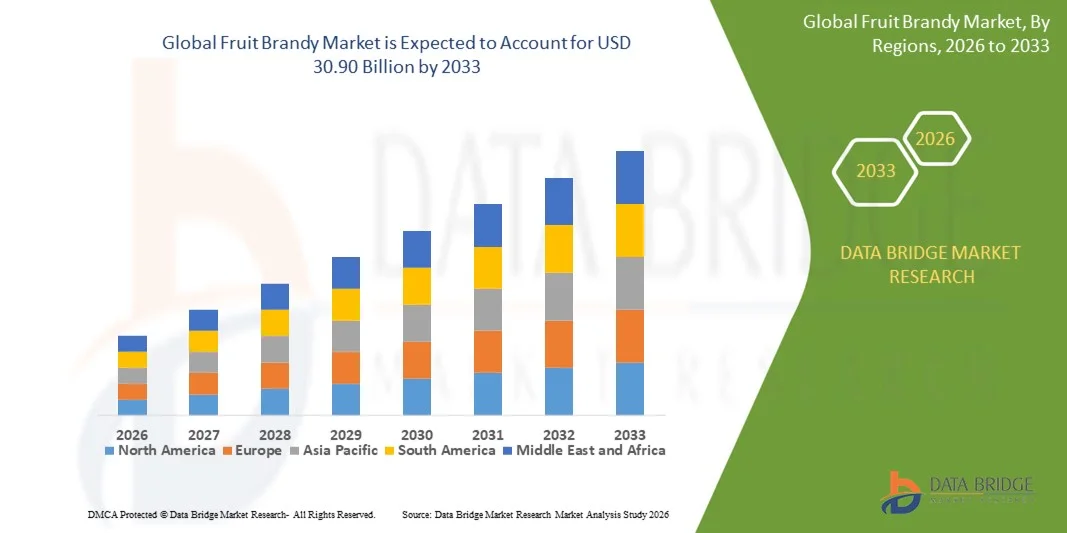
- As per Data Bridge Market Research Analysis, the global fruit brandy market size was valued at USD 26.37 billion in 2025 and is expected to reach USD 30.90 billion by 2033, at a CAGR of 2.0% during the forecast period
- The market growth is largely fueled by the increasing consumer preference for premium, craft, and flavored spirits, which is driving innovation and product diversification in the fruit brandy segment
- Furthermore, rising demand for authentic, artisanal, and heritage-based brandies is encouraging distilleries to expand production and introduce limited-edition offerings. These converging factors are accelerating the adoption of fruit brandy globally, thereby significantly boosting the industry’s growth
Market Size & Forecast
- Global Market Value (2025): USD 26.37 billion in 2025
- Expected Market Value (2033): USD 30.90 billion by 2033
- Forecast CAGR (2026–2033): 2.0%
Fruit Brandy Market Analysis
- Fruit brandies, distilled from fruits such as apples, pears, plums, and cherries, are gaining prominence as premium alcoholic beverages in both on-trade and off-trade channels due to their unique flavors, craftsmanship, and cultural heritage
- The escalating demand for fruit brandy is primarily fueled by consumers’ growing interest in high-quality, natural, and artisanal spirits, expanding cocktail and RTD consumption occasions, and the rising popularity of imported and flavored variants
- Europe dominated the fruit brandy market in 2025, due to a long-standing tradition of fruit brandy production, well-established distribution networks, and increasing consumer preference for premium and craft spirits
- Middle East and Africa is expected to be the fastest growing region in the fruit brandy market during the forecast period due to rising disposable incomes, changing lifestyle patterns, and increasing adoption of premium alcoholic beverages in countries such as South Africa and U.A.E.
- Glass bottles segment dominated the market with a market share of 52.8% in 2025, due to its premium positioning, recyclability, and consumer perception of superior quality. Glass packaging allows for better preservation of flavor, aging potential, and visual appeal, which is critical for both gifting and retail display. Leading brands often use uniquely designed glass bottles to differentiate their products and attract high-end consumers. The segment benefits from established consumer trust and traditional packaging practices that reinforce brand heritage. Glass bottles are compatible with various closures and labeling innovations, enhancing marketing flexibility. Their use in bars and restaurants further solidifies demand due to both aesthetics and functionality
Report Scope and Fruit Brandy Market Segmentation
|
Attributes |
Fruit Brandy Key Market Insights |
|
Segments Covered |
|
|
Countries Covered |
North America
Europe
Asia-Pacific
Middle East and Africa
South America
|
|
Key Market Players |
|
|
Market Opportunities |
|
|
Value Added Data Infosets |
In addition to the insights on market scenarios such as market value, growth rate, segmentation, geographical coverage, and major players, the market reports curated by the Data Bridge Market Research also include in-depth expert analysis, pricing analysis, brand share analysis, consumer survey, demography analysis, supply chain analysis, value chain analysis, raw material/consumables overview, vendor selection criteria, PESTLE Analysis, Porter Analysis, and regulatory framework. |
What is the Key Trend in the Fruit Brandy Market?
Rising Consumer Preference for Premium and Flavored Fruit Brandies
- A significant trend in the fruit brandy market is the growing consumer inclination toward premium, flavored, and craft spirits, driven by increasing awareness of quality, authenticity, and innovative taste experiences. This trend is elevating fruit brandy as a preferred choice for both connoisseurs and younger consumers seeking unique alcoholic beverages
- For instance, Tilaknagar Industries’ launch of its green apple flavored brandy in 2024 and Allied Blenders & Distillers’ Golden Mist French Brandy in 2025 are clear indicators of companies responding to evolving consumer palates and the premiumization of the segment. Such launches are expanding the flavored and prestige fruit brandy portfolio in India and reinforcing the premium spirits market
- The adoption of fruit brandy in cocktail and RTD formats is increasing globally, as consumers explore versatile consumption occasions in bars, restaurants, and social events. This is positioning fruit brandy as a modern, lifestyle-oriented spirit that appeals to both traditional and experimental drinkers
- The hospitality and tourism sectors are integrating premium fruit brandies into their offerings, boosting exposure through tasting events, mixology programs, and luxury experiences. This rising incorporation of artisanal and specialty brandies is strengthening brand recognition and consumer loyalty
- The market is witnessing a surge in demand for heritage and regional expressions, where traditional distillation techniques and locally sourced fruits contribute to perceived authenticity. This trend is accelerating the growth of small-batch and craft fruit brandies
- Consumers are increasingly prioritizing natural ingredients, sustainable production, and eco-friendly packaging, which is driving producers to innovate while maintaining high-quality standards. This rising consciousness is influencing purchasing decisions and positioning fruit brandy as a premium, responsible choice
Fruit Brandy Market Dynamics
Driver
Growing Demand for Artisanal and Heritage Spirits
- The growing consumer preference for artisanal, heritage, and craft spirits is a key driver of the fruit brandy market, motivating producers to expand their premium product lines and introduce authentic, region-specific offerings. These factors are enhancing the market’s attractiveness and supporting higher price points for quality fruit brandies
- For instance, U.S.-based Iztok’s Yebiga Bela Rakija and French brand F.E. TRIMBACH are expanding their portfolios to meet demand for craft and heritage fruit brandies, emphasizing traditional distillation processes and natural fruit ingredients. These products are strengthening the brandy market by attracting premium consumers and creating differentiation in competitive markets
- The rising popularity of fruit brandy in premium bars, cocktail lounges, and fine dining establishments is increasing the visibility and adoption of high-quality variants. This is shaping consumer perception of fruit brandy as a sophisticated and culturally significant spirit
- Retail expansion and e-commerce platforms are facilitating easier access to artisanal and imported fruit brandies, connecting producers with wider audiences. This distribution growth supports both domestic and international sales while reinforcing brand positioning in premium segments
- Increasing global exposure to international spirits through trade fairs, tastings, and digital marketing campaigns continues to promote heritage and artisanal fruit brandies. These initiatives are accelerating consumer awareness and establishing long-term demand
Restraint/Challenge
High Production Costs and Limited Raw Material Availability
- The fruit brandy market faces challenges due to the high costs associated with sourcing quality fruits, maintaining artisanal distillation techniques, and aging processes. These factors increase overall production costs and can limit scalability for producers
- For instance, companies such as Distilleries et Domaines de Provence and Great Lakes Distillery rely on premium fruit varieties and small-batch distillation methods, which elevate operational expenses. This can restrict the ability to offer competitively priced products in broader markets
- Seasonal variations in fruit availability and dependency on specific regional crops create supply-side vulnerabilities that impact production continuity and cost stability. Fluctuations in yields can affect both quantity and quality of brandy output
- Maintaining high standards for aging, packaging, and quality control further adds to production complexity and expenditure. These requirements can hinder new entrants and pose challenges for scaling operations in line with growing demand
- Overall, high production costs and limited access to specialty fruits are significant restraints that compel producers to innovate, optimize processes, and strategically position their offerings to maintain competitiveness
Fruit Brandy Market Scope
The market is segmented on the basis of type, product, packaging material, price, and application.
- By Type
On the basis of type, the fruit brandy market is segmented into apple, pear, apricot, plum, cherry, and others. The apple segment dominated the market with the largest market revenue share in 2025, driven by its established global popularity and well-known flavor profile preferred by consumers. Apple brandy is often favored for its smooth taste, versatility in cocktails, and adaptability to both casual and premium consumption occasions. The segment also benefits from strong cultivation and production networks in major apple-growing regions, ensuring consistent supply and quality. In addition, apple brandy is commonly used in culinary applications, further expanding its demand across multiple consumer segments. Its compatibility with aging in different types of barrels enhances flavor diversity, making it attractive for both traditional and innovative products.
The apricot segment is anticipated to witness the fastest growth rate from 2026 to 2033, fueled by rising consumer interest in exotic and fruit-specific spirits. For instance, Rémy Martin has seen growing traction with fruit-forward limited-edition brandies, highlighting market potential. Apricot brandy appeals to consumers seeking distinctive taste experiences and is increasingly used in mixology and cocktail culture. Its production is often associated with artisanal and small-batch methods, which appeal to premium and health-conscious buyers. The increasing popularity of European fruit brandy styles also supports the expansion of apricot brandy in international markets. The segment benefits from both rising e-commerce sales and the growing demand for giftable, visually appealing spirits.
- By Product
On the basis of product, the fruit brandy market is segmented into grape brandy, cognac, armagnac, and others. The grape brandy segment dominated the market in 2025, driven by its established recognition and widespread global consumption. Grape brandy is highly valued for its traditional production methods, aged varieties, and consistency in flavor, making it a preferred choice for both casual and connoisseur consumers. The segment benefits from robust brand portfolios and strong distribution networks from leading producers in Europe and North America. Its versatility in cocktails and culinary applications further enhances its demand across hospitality and retail channels. Grape brandy’s association with premium quality and heritage production practices reinforces its dominance in the market.
The armagnac segment is projected to register the fastest growth rate from 2026 to 2033, fueled by increasing awareness of unique, regional brandy varieties. For instance, Château de Laubade has contributed to armagnac’s rising appeal in international markets. Armagnac’s artisanal production, distinctive flavor profiles, and aging potential attract both collectors and cocktail enthusiasts. The growth is supported by expanding exports from France and rising interest in heritage spirits among millennials. Premiumization trends in the spirits industry also favor armagnac’s niche but growing market presence. Its limited-batch and single-estate offerings position the segment for steady growth over the forecast period.
- By Packaging Material
On the basis of packaging material, the fruit brandy market is segmented into plastic bottles, glass bottles, tins, and others. The glass bottle segment dominated the market with the largest share of 52.8% in 2025, driven by its premium positioning, recyclability, and consumer perception of superior quality. Glass packaging allows for better preservation of flavor, aging potential, and visual appeal, which is critical for both gifting and retail display. Leading brands often use uniquely designed glass bottles to differentiate their products and attract high-end consumers. The segment benefits from established consumer trust and traditional packaging practices that reinforce brand heritage. Glass bottles are compatible with various closures and labeling innovations, enhancing marketing flexibility. Their use in bars and restaurants further solidifies demand due to both aesthetics and functionality.
The tin segment is expected to witness the fastest growth rate from 2026 to 2033, fueled by rising interest in portable and travel-friendly packaging solutions. For instance, J.A. Baczewski has explored metal tins for small-batch spirits, targeting gifting and outdoor consumption occasions. Tin packaging is lightweight, durable, and offers design flexibility that appeals to younger demographics and collectors. The segment is also supported by growth in e-commerce sales where protective and cost-effective packaging is preferred. Increasing awareness of sustainable and reusable packaging materials contributes to its adoption. The portability and novelty factor of tins make them a rapidly expanding niche in the fruit brandy market.
- By Price
On the basis of price, the fruit brandy market is segmented into value, premium, high-end premium, and super premium. The premium segment dominated the market in 2025, driven by growing consumer preference for high-quality, well-aged brandies that offer authentic taste experiences. Premium fruit brandies balance affordability and quality, appealing to both casual drinkers and connoisseurs seeking refined flavors. The segment benefits from extensive retail penetration across hypermarkets, specialty stores, and online platforms. Premium brandies often include attractive packaging and regional authenticity, which further enhance consumer perception and willingness to pay. Brand marketing and global export strategies by major producers reinforce the dominance of this segment. Its adaptability for gifting and social occasions sustains consistent demand.
The super premium segment is expected to witness the fastest growth rate from 2026 to 2033, fueled by increasing luxury consumption and the rise of collectible spirits. For instance, Hine Cognac’s limited-edition releases showcase the appeal of super premium brandies in international markets. Super premium brandies focus on aging, rarity, and heritage, which attract affluent consumers and collectors. The growth is supported by expanding high-end retail channels, duty-free stores, and online luxury marketplaces. Social media and influencer marketing also drive awareness among younger premium buyers. The segment’s exclusivity and unique production practices make it a high-margin opportunity for producers.
- By Application
On the basis of application, the fruit brandy market is segmented into hypermarkets/supermarkets, specialty stores, drug stores and pharmacies, health and beauty stores, food and drinks specialists, online retail, and others. The hypermarkets/supermarkets segment dominated the market in 2025, driven by wide accessibility, competitive pricing, and high consumer footfall. Retailers offer extensive brandy selections, promotions, and bundle deals, which support high sales volumes. Hypermarkets also provide visibility for both domestic and imported brandies, making them a key distribution channel. The segment benefits from consumer convenience and the ability to compare products easily. Strong partnerships between producers and retail chains further reinforce market dominance. Promotions, seasonal offers, and loyalty programs enhance consumer engagement and repeat purchases.
The online retail segment is projected to witness the fastest growth rate from 2026 to 2033, fueled by increasing e-commerce penetration and changing shopping behaviors. For instance, Drizly and Master of Malt have significantly expanded fruit brandy availability to online consumers, boosting sales. Online platforms offer wider product variety, convenient delivery, and access to limited-edition or niche brandies. Growth is supported by improved digital payment systems and consumer trust in online shopping. Targeted digital marketing and social media campaigns increase visibility and appeal, particularly among millennials and Gen Z buyers. The segment’s flexibility and convenience make it a rapidly expanding distribution channel in the fruit brandy market.
Which Region Holds the Largest Share of the Fruit Brandy Market?
- Europe dominated the fruit brandy market with the largest revenue share in 2025, driven by a long-standing tradition of fruit brandy production, well-established distribution networks, and increasing consumer preference for premium and craft spirits
- Consumers in the region highly value authentic flavors, artisanal production methods, and heritage brands, which are often associated with quality and exclusivity
- This widespread adoption is further supported by a mature hospitality sector, growing tourism, and rising disposable incomes, establishing fruit brandy as a preferred choice for both domestic consumption and gifting
Germany Fruit Brandy Market Insight
The Germany fruit brandy market captured the largest revenue share in Europe in 2025, fueled by the country’s strong cultural affinity for schnapps and other fruit-based spirits. For instance, brands such as Schladerer and Berentzen have expanded their premium product lines, driving growth through both retail and on-trade channels. Consumers are increasingly seeking natural ingredients, traditional distillation techniques, and limited-edition offerings. The rising trend of craft and organic spirits is further contributing to the market's expansion. Moreover, festivals, tasting events, and online retail platforms are enhancing brand visibility and accessibility.
France Fruit Brandy Market Insight
The France fruit brandy market is projected to grow at a substantial CAGR during the forecast period, primarily driven by the demand for high-quality eau-de-vie and regional specialties such as Calvados and Poire Williams. For instance, brands such as Domaine Dupont and Louis Roderer are introducing premium variants to cater to connoisseurs. The country’s rich heritage in fruit brandy production and the strong export market are supporting the adoption of both classic and innovative products. French consumers are also attracted to artisanal packaging and aged expressions. The growth extends across retail, hospitality, and tourism-related consumption.
Italy Fruit Brandy Market Insight
The Italy fruit brandy market is anticipated to expand at a noteworthy CAGR during the forecast period, driven by the increasing demand for grappas and regional fruit spirits that emphasize authenticity and tradition. For instance, producers such as Nonino and Jacopo Poli have strengthened their international presence, boosting market visibility. Italian consumers are showing a preference for limited-edition, small-batch spirits, as well as innovative flavor profiles. The country’s well-established culinary culture and growing cocktail scene are further encouraging the consumption of fruit brandy. Sustainable production practices and organic labeling are increasingly influencing buying decisions.
Middle East & Africa Fruit Brandy Market Insight
The Middle East & Africa fruit brandy market is poised to grow at the fastest CAGR during the forecast period, driven by rising disposable incomes, changing lifestyle patterns, and increasing adoption of premium alcoholic beverages in countries such as South Africa and U.A.E. For instance, South African brands such as KWV are expanding distribution across the region to meet growing demand. The region’s emerging hospitality sector, growing tourism, and modern retail channels are facilitating the introduction of fruit brandy. Consumers are showing interest in imported premium brands as well as locally crafted spirits. Cultural shifts toward experimenting with international beverages are further propelling the market.
South Africa Fruit Brandy Market Insight
The South Africa fruit brandy market is gaining momentum due to the country’s rising cocktail culture, premiumization trend, and expanding tourism sector. The market is supported by both domestic production and imported brands catering to upscale bars, restaurants, and hotels. Innovative flavors, craft distillation techniques, and packaging aesthetics are attracting younger consumers. For instance, Van Ryn’s and KWV are launching limited-edition fruit brandies to capture niche demand. Retail expansion, tasting events, and e-commerce availability are further stimulating consumption across urban centers.
U.A.E. Fruit Brandy Market Insight
The U.A.E. fruit brandy market accounted for the largest market revenue share in Middle East & Africa in 2025, attributed to the growing expatriate population, increasing premium spirits consumption, and high disposable income. Imported European brands are highly favored in both on-trade and retail channels. For instance, brands such as Berentzen and Domaine Dupont are leveraging luxury hotel and bar partnerships to enhance brand presence. Rising tourism and the popularity of fine dining experiences are boosting awareness and trial of fruit brandy. The trend toward gifting premium spirits is also influencing sales, particularly during festive seasons and corporate events.
Which are the Top Companies in Fruit Brandy Market?
The fruit brandy industry is primarily led by well-established companies, including:
- F.E. TRIMBACH (France)
- Distilleries et Domaines de Provence (France)
- Great Lakes Distillery (Canada)
- Lucas Bols (Netherlands)
- Beam Suntory Inc. (U.S.)
- Diageo (U.K.)
- E. & J. Gallo Winery (U.S.)
- F. Korbel & Bros. (U.S.)
- Martell (France)
- SPECIALITY BRANDS LTD. (U.K.)
- Saint Roch Srl (Italy)
- Rémy Cointreau (France)
- Alsace Wine Meyer Jean-Luc & Bruno (France)
What are the Recent Developments in Fruit Brandy Market?
- In April 2025, Allied Blenders and Distillers (ABD), India’s third-largest spirits company by volume, announced the launch of Golden Mist French Brandy in Karnataka, marking the company’s strategic entry into the prestige brandy segment. This move is expected to strengthen ABD’s presence in the premium segment, which is currently growing at 13.1% in the region, outpacing the overall brandy market, and will likely stimulate competition among high-end fruit brandies in India, encouraging innovation and premiumization
- In June 2024, Tilaknagar Industries introduced a green apple flavored brandy, targeting the growing demand for innovative and flavored fruit spirits in India. This launch is projected to attract younger consumers and experimenters seeking new taste experiences, thereby expanding the flavored brandy segment and contributing to the overall growth of fruit brandies in the country
- In November 2023, Tattersall Distilling launched its Brandy Old Fashioned ready-to-drink bottled cocktail in Wisconsin, paying tribute to the newly declared state cocktail. The product’s entry into the RTD and cocktail category is expected to broaden brandy consumption occasions, enhance market visibility for Tattersall, and promote brandy as a versatile spirit among both casual and premium consumers in the U.S.
- In August 2023, Hiram Walker & Sons, a global spirits company, announced the launch of its first small-batch pear brandy in the U.S. and European markets. This development is expected to strengthen the company’s portfolio in craft and artisanal brandies, cater to the rising demand for fruit-forward premium spirits, and stimulate cross-regional adoption of innovative fruit brandies, particularly among millennial and premium consumers
- In April 2021, U.S.-based Iztok unveiled a new brandy under its Yebiga Bela Rakija line, expanding its product portfolio in the country. This launch is likely to reinforce Iztok’s presence in the premium and craft fruit brandy segment, targeting consumers seeking authentic, international fruit brandy flavors, and driving niche market growth in the U.S.

- Interactive Data Analysis Dashboard
- Company Analysis Dashboard for high growth potential opportunities
- Research Analyst Access for customization & queries
- Competitor Analysis with Interactive dashboard
- Latest News, Updates & Trend analysis
- Harness the Power of Benchmark Analysis for Comprehensive Competitor Tracking
Global Fruit Brandy Market, Supply Chain Analysis and Ecosystem Framework
To support market growth and help clients navigate the impact of geopolitical shifts, DBMR has integrated in-depth supply chain analysis into its Global Fruit Brandy Market research reports. This addition empowers clients to respond effectively to global changes affecting their industries. The supply chain analysis section includes detailed insights such as Global Fruit Brandy Market consumption and production by country, price trend analysis, the impact of tariffs and geopolitical developments, and import and export trends by country and HSN code. It also highlights major suppliers with data on production capacity and company profiles, as well as key importers and exporters. In addition to research, DBMR offers specialized supply chain consulting services backed by over a decade of experience, providing solutions like supplier discovery, supplier risk assessment, price trend analysis, impact evaluation of inflation and trade route changes, and comprehensive market trend analysis.
Data collection and base year analysis are done using data collection modules with large sample sizes. The stage includes obtaining market information or related data through various sources and strategies. It includes examining and planning all the data acquired from the past in advance. It likewise envelops the examination of information inconsistencies seen across different information sources. The market data is analysed and estimated using market statistical and coherent models. Also, market share analysis and key trend analysis are the major success factors in the market report. To know more, please request an analyst call or drop down your inquiry.
The key research methodology used by DBMR research team is data triangulation which involves data mining, analysis of the impact of data variables on the market and primary (industry expert) validation. Data models include Vendor Positioning Grid, Market Time Line Analysis, Market Overview and Guide, Company Positioning Grid, Patent Analysis, Pricing Analysis, Company Market Share Analysis, Standards of Measurement, Global versus Regional and Vendor Share Analysis. To know more about the research methodology, drop in an inquiry to speak to our industry experts.
Data Bridge Market Research is a leader in advanced formative research. We take pride in servicing our existing and new customers with data and analysis that match and suits their goal. The report can be customized to include price trend analysis of target brands understanding the market for additional countries (ask for the list of countries), clinical trial results data, literature review, refurbished market and product base analysis. Market analysis of target competitors can be analyzed from technology-based analysis to market portfolio strategies. We can add as many competitors that you require data about in the format and data style you are looking for. Our team of analysts can also provide you data in crude raw excel files pivot tables (Fact book) or can assist you in creating presentations from the data sets available in the report.













