


Frusemide Market Size
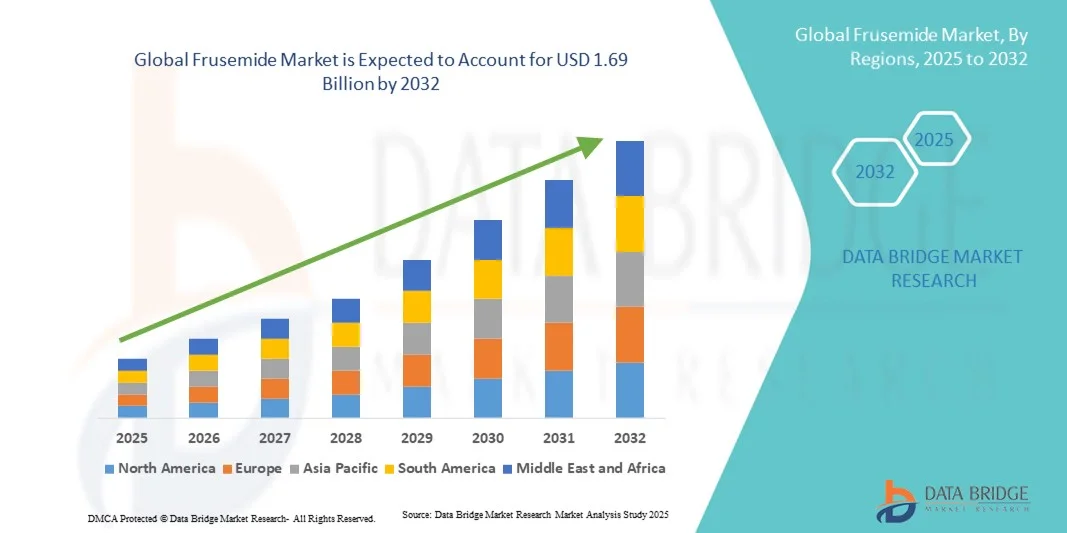
- The global frusemide market size was valued at USD 1.22 billion in 2024 and is expected to reach USD 1.69 billion by 2032, at a CAGR of 4.20% during the forecast period
- The market growth is largely fueled by the rising prevalence of cardiovascular diseases, kidney disorders, and hypertension, which are driving the demand for diuretics such as frusemide across both developed and emerging economies
- Furthermore, increasing healthcare expenditure, expanding access to essential medicines, and the growing use of frusemide in hospital settings as well as home healthcare are accelerating its adoption, thereby significantly boosting the market’s growth
Frusemide Market Analysis
- Frusemide, a widely used loop diuretic prescribed for the management of hypertension, edema, and congestive heart failure, remains a critical component of cardiovascular and renal disease treatment protocols across both hospital and outpatient settings due to its proven efficacy and cost-effectiveness
- The escalating demand for frusemide is primarily fueled by the rising global prevalence of chronic kidney disease, cardiovascular disorders, and hypertension, along with increasing accessibility of generic formulations that ensure affordability across low- and middle-income countries
- North America dominated the frusemide market with the largest revenue share of 38.7% in 2024, driven by advanced healthcare infrastructure, high diagnosis rates of cardiovascular and renal conditions, and strong presence of leading pharmaceutical manufacturers. The U.S. accounted for the bulk of this demand, supported by large patient populations and widespread use of generics in hospital formularies
- Asia-Pacific is expected to be the fastest-growing region in the frusemide market during the forecast period, with a projected CAGR of 7.8%, fueled by increasing disease burden, expanding healthcare access in emerging economies such as India and China, and government initiatives aimed at improving affordable drug availability
- The Prescription segment dominated with a revenue share of 61.4% in 2024, owing to the necessity for physician oversight in dosing, management of comorbidities, and monitoring of side effects. Prescription-based access ensures patient safety while allowing clinicians to track therapy efficacy and intervene in case of adverse events
Report Scope and Frusemide Market Segmentation
|
Attributes |
Frusemide Key Market Insights |
|
Segments Covered |
|
|
Countries Covered |
North America
Europe
Asia-Pacific
Middle East and Africa
South America
|
|
Key Market Players |
|
|
Market Opportunities |
|
|
Value Added Data Infosets |
In addition to the insights on market scenarios such as market value, growth rate, segmentation, geographical coverage, and major players, the market reports curated by the Data Bridge Market Research also include in-depth expert analysis, pricing analysis, brand share analysis, consumer survey, demography analysis, supply chain analysis, value chain analysis, raw material/consumables overview, vendor selection criteria, PESTLE Analysis, Porter Analysis, and regulatory framework. |
Frusemide Market Trends
Enhanced Patient Management and Therapeutic Optimization
- A significant and accelerating trend in the global Frusemide market is the focus on improving patient management and optimizing therapeutic outcomes through integrated clinical protocols and personalized dosing strategies. This trend is reshaping how Frusemide therapy is prescribed, monitored, and adjusted for patients with cardiovascular and renal conditions
- For instance, clinicians are increasingly using patient-specific parameters such as kidney function, fluid balance, and blood pressure readings to determine optimal Frusemide dosing, reducing the risk of complications like electrolyte imbalance or hypotension
- Telemedicine and remote patient monitoring are becoming common tools to track patients on Frusemide therapy, allowing timely dose adjustments and early detection of fluid retention
- Integration of Frusemide treatment into broader care pathways for conditions such as heart failure, hypertension, and chronic kidney disease enables physicians to monitor multiple aspects of patient health in a coordinated manner, ensuring safer and more effective therapy
- Predictive analytics and risk assessment tools are being increasingly applied in hospitals to identify patients at high risk of fluid overload, guiding proactive Frusemide administration and minimizing hospitalizations
- This trend toward more personalized, data-driven, and patient-centric Frusemide management is encouraging pharmaceutical companies and healthcare providers to develop advanced dosing guidelines, monitoring protocols, and supportive digital health resources for better therapeutic outcomes
Frusemide Market Dynamics
Driver
Growing Need Due to Rising Cardiovascular and Renal Disease Burden
- The increasing global prevalence of cardiovascular disorders, particularly heart failure, hypertension, and chronic kidney disease, is a significant driver fueling the demand for Frusemide. As these conditions often lead to fluid overload, Frusemide remains a frontline treatment to manage edema and related complications
- For instance, heart failure hospitalizations have been rising steadily across both developed and developing nations. Frusemide, being the most widely used loop diuretic, continues to be a cornerstone of therapy in reducing hospitalization rates by managing fluid retention effectively
- The aging population further amplifies demand, as elderly individuals are at higher risk of developing cardiac and renal complications that require diuretic intervention. This demographic shift is directly boosting Frusemide prescriptions worldwide
- Furthermore, the growing adoption of Frusemide in combination therapies with other antihypertensive and diuretic agents is expanding its clinical applications. Physicians prefer Frusemide in multi-drug regimens to optimize fluid balance and blood pressure control
- Increased availability of generic Frusemide formulations at lower costs has made the drug more accessible, especially in low- and middle-income countries where the burden of heart and kidney diseases is rising. This affordability factor is expected to further drive market growth
- Ongoing research and development into novel delivery mechanisms, including intravenous, oral, and sustained-release formulations, are also supporting wider clinical usage and patient adherence
Restraint/Challenge
Concerns Regarding Side Effects, Resistance, and Cost Pressures
- One of the major challenges limiting the frusemide market is the risk of adverse effects such as electrolyte imbalance, dehydration, hypotension, and ototoxicity. These side effects often require close monitoring and may restrict long-term use in vulnerable patients
- Over time, patients may also develop resistance to Frusemide, where its diuretic effect diminishes despite continued dosing. This necessitates higher doses or switching to alternative therapies, creating hurdles for consistent treatment outcomes
- In addition, the growing scrutiny over diuretic overuse in clinical practice has raised concerns regarding unnecessary prescriptions, particularly in elderly patients. This may limit market expansion in regions with stricter regulatory oversight
- The widespread availability of low-cost generics, while improving access, exerts pricing pressure on branded manufacturers. This reduces profit margins and discourages investments in innovation and advanced formulations of Frusemide
- In developing regions, lack of access to routine electrolyte monitoring and follow-up care can increase the risks associated with Frusemide therapy. This may restrict adoption despite the high disease burden
- Overcoming these challenges will require ongoing patient education, closer collaboration between physicians and digital monitoring platforms, and the development of safer, next-generation diuretic formulations that minimize side effects while maintaining efficacy
Frusemide Market Scope
The market is segmented on the basis of route of administration, end user, mode of purchase, and distribution channel.
- By Route of Administration
On the basis of route of administration, the frusemide market is segmented into oral, intravenous, and others. The Oral segment dominated the market with a revenue share of 46.5% in 2024, driven by its convenience, ease of administration, and higher patient compliance compared to other forms. Oral Frusemide is widely prescribed for chronic conditions such as heart failure, hypertension, and edema associated with kidney or liver disease. Its extensive use in outpatient settings allows patients to continue therapy at home while maintaining regular follow-ups with healthcare providers. The affordability of oral formulations, combined with the widespread availability of generic alternatives, has made this segment highly accessible. Moreover, hospitals and specialty clinics prefer oral Frusemide for long-term treatment due to its safety profile and integration into combination therapy regimens. The presence of well-established distribution networks in urban, semi-urban, and rural areas ensures consistent access, while insurance coverage further strengthens its adoption. Educational programs for physicians and patients also contribute to its dominant position, as they encourage adherence to prescribed regimens and proper dosing practices. Overall, the oral segment remains the backbone of Frusemide therapy due to its proven efficacy, convenience, and widespread acceptance.
The intravenous segment is expected to witness the fastest growth at a CAGR of 6.8% from 2025 to 2032, fueled by the increasing incidence of acute heart failure, renal complications, and the need for rapid therapeutic intervention in hospitals. IV Frusemide allows for precise control over diuresis and immediate effect in critical care settings such as ICUs, emergency wards, and perioperative care. Hospitals and specialty clinics are expanding their capacity to administer IV therapies safely, supported by trained healthcare personnel and advanced monitoring equipment. The segment is further driven by improved stability and formulation safety, allowing broader adoption even in smaller clinics. Rising awareness among healthcare professionals about the benefits of IV administration for acute management, combined with clinical guidelines recommending its use in severe cases, is propelling growth. Furthermore, the expansion of cardiac and renal care programs in both developed and emerging markets is increasing demand for intravenous therapy. As hospital networks modernize and adopt standardized care protocols, the adoption of IV Frusemide continues to accelerate steadily.
- By End User
On the basis of end user, the frusemide market is segmented into hospitals, specialty clinics, and home healthcare. The hospitals segment accounted for the largest revenue share of 52.3% in 2024, driven by the high patient throughput, established treatment protocols, and availability of advanced monitoring infrastructure. Hospitals provide comprehensive care for both acute and chronic patients, allowing for careful supervision of dosing, renal function, and fluid balance. Bulk procurement through hospital formularies and long-term supply agreements with pharmaceutical companies further consolidate their dominance. Hospitals also offer integrated care involving cardiology, nephrology, and internal medicine departments, making them the primary choice for Frusemide therapy. The segment benefits from continuous innovation, including adoption of newer formulations, updated treatment guidelines, and digital patient monitoring tools. In addition, hospitals actively engage in clinical trials and research programs, boosting both awareness and adoption rates. The high level of professional expertise, access to diagnostic facilities, and patient education initiatives enhance compliance and therapeutic outcomes, maintaining the segment’s leading position in the market.
The specialty clinics segment is expected to register the fastest growth at a CAGR of 7.1% from 2025 to 2032, driven by the rise of outpatient management of chronic cardiovascular, renal, and hypertensive conditions. Clinics are increasingly equipped to provide personalized care plans, including dose adjustments, routine monitoring, and patient follow-ups. The growing popularity of specialty care, combined with expanded clinic networks and focused healthcare programs, is fueling adoption. Awareness campaigns targeting both patients and healthcare providers emphasize the importance of early intervention and adherence to prescribed Frusemide therapy, further accelerating demand. Clinics benefit from flexible scheduling, reduced wait times, and closer patient engagement, making them attractive for long-term management of conditions requiring diuretics. In addition, collaboration with pharmaceutical companies ensures clinics have timely access to formulations and patient education materials. The segment is also benefiting from technological advancements in remote monitoring, telemedicine integration, and outpatient diagnostic services, solidifying its position as the fastest-growing end-user channel.
- By Mode of Purchase
On the basis of mode of purchase, the frusemide market is segmented into prescription and over the counter (OTC). The Prescription segment dominated with a revenue share of 61.4% in 2024, primarily driven by the necessity for physician oversight in dosing, careful management of comorbidities, and monitoring of potential side effects. Prescription-based access allows healthcare professionals to ensure optimal therapeutic outcomes while minimizing risks associated with misuse or incorrect dosing. Hospitals, specialty clinics, and healthcare providers rely on prescription channels to maintain detailed patient records, track treatment efficacy, and intervene promptly in the event of adverse reactions. Regulatory frameworks in most countries mandate prescription access for Frusemide, reinforcing patient safety and promoting professional supervision. In addition, prescription channels often benefit from insurance coverage, bulk procurement agreements, and integration into hospital and clinic formularies, further consolidating their dominant position in the market. Continuous awareness programs by healthcare providers and pharmaceutical companies enhance patient adherence and trust in prescribed therapies, making this segment the primary route of purchase.
The OTC segment is expected to witness the fastest growth at a CAGR of 5.9% from 2025 to 2032, driven by growing patient awareness regarding self-management of mild edema, hypertension, and related conditions. The availability of low-dose OTC formulations in select regions allows patients to access treatment without waiting for a physician’s consultation, offering convenience and time savings. Educational initiatives from healthcare authorities and pharmaceutical companies promote responsible use, highlighting dosage guidelines, potential side effects, and when to seek medical advice. Expansion of pharmacy networks, increasing penetration in semi-urban and rural areas, and the rising use of digital platforms for health guidance further support this growth. Consumers increasingly value the ease of obtaining OTC Frusemide for short-term or mild conditions, complementing professional care while ensuring treatment continuity. The OTC segment also benefits from improved packaging, clear labeling, and awareness campaigns that emphasize safety and adherence, facilitating broader acceptance among self-managing patients.
- By Distribution Channel
On the basis of distribution channel, the frusemide market is segmented into veterinary clinics, veterinary pharmacies, online veterinary stores, and others. The Veterinary Clinics segment dominated the market with a revenue share of 44.8% in 2024, providing essential direct supervision, precise dosing guidance, and ongoing monitoring for animal patients with cardiovascular, renal, or fluid retention disorders. Clinics ensure rapid intervention in critical or emergency cases, supporting the therapeutic effectiveness and safety of Frusemide treatment. Veterinarians also offer diagnostic services, regular check-ups, and personalized treatment plans, making clinics the preferred choice for managing complex or chronic conditions. Bulk procurement agreements and partnerships with pharmaceutical companies further strengthen the segment’s reach and availability. Continuous professional training and adoption of standardized treatment protocols ensure that veterinary clinics maintain high-quality care, reinforcing their dominant role in the distribution landscape.
The online veterinary stores segment is expected to witness the fastest growth at a CAGR of 8.2% from 2025 to 2032, driven by the rapid expansion of e-commerce, convenience of doorstep delivery, and the increasing availability of various Frusemide formulations. Pet owners prefer online platforms due to easy access to multiple brands, timely refills, competitive pricing, and discreet purchases. The segment’s growth is further supported by rising awareness of chronic pet health conditions, the adoption of digital payment solutions, improved logistics and supply chain networks, and promotional initiatives from online veterinary platforms. Online stores also offer detailed product information, dosage instructions, and guidance, helping pet owners make informed decisions while ensuring proper administration. The convenience of shopping online combined with faster delivery and subscription-based refill models is increasingly driving adoption, positioning online veterinary stores as the fastest-growing distribution channel in the Frusemide market.
Frusemide Market Regional Analysis
- North America dominated the frusemide market with the largest revenue share of 38.7% in 2024, driven by advanced healthcare infrastructure, high diagnosis rates of cardiovascular and renal conditions, and a strong presence of leading pharmaceutical manufacturers
- The market accounted for the bulk of this demand, supported by large patient populations and widespread use of generics in hospital formularies
- The region is characterized by well-established hospital networks, high patient awareness, and consistent adoption of guideline-recommended therapies for conditions such as heart failure, hypertension, and chronic kidney disease, further reinforcing the demand for Frusemide
U.S. Frusemide Market Insight
The U.S. frusemide market captured the largest revenue share in North America in 2024, fueled by high patient prevalence of cardiovascular and renal diseases and the widespread availability of generic Frusemide formulations. Hospitals and outpatient clinics in the U.S. rely heavily on Frusemide for managing fluid retention and edema in patients with heart failure, chronic kidney disease, and liver disorders. The robust healthcare infrastructure, high treatment awareness, and favorable reimbursement policies further support market growth in the country.
Europe Frusemide Market Insight
The Europe frusemide market is projected to expand at a substantial CAGR throughout the forecast period, primarily driven by increasing prevalence of cardiovascular and renal disorders and a well-established healthcare system. Rising urbanization, coupled with growing patient awareness and adherence to treatment protocols, is fostering adoption across hospitals, clinics, and specialized care centers. Germany, France, and the U.K. are key contributors, with strong demand in both acute and chronic care settings.
U.K. Frusemide Market Insight
The U.K. frusemide market is anticipated to grow at a noteworthy CAGR during the forecast period, driven by the rising incidence of heart failure, hypertension, and chronic kidney disease. National health programs, hospital formularies, and outpatient care initiatives are actively promoting the use of loop diuretics such as Frusemide. In addition, the increasing elderly population and emphasis on effective disease management are encouraging consistent adoption in both residential healthcare and institutional settings.
Germany Frusemide Market Insight
The Germany frusemide market is expected to expand at a considerable CAGR during the forecast period, fueled by growing awareness of fluid management in cardiovascular and renal patients and a focus on guideline-driven care. Germany’s advanced healthcare infrastructure, along with its emphasis on research and development of generics and combination therapies, supports the widespread use of Frusemide in hospitals and clinics.
Asia-Pacific Frusemide Market Insight
The Asia-Pacific frusemide market is expected to be the fastest-growing region during the forecast period, with a projected CAGR of 7.8%, fueled by increasing disease burden, expanding healthcare access in emerging economies such as India and China, and government initiatives aimed at improving affordable drug availability. Urbanization, rising disposable incomes, and healthcare modernization in these countries are supporting the adoption of Frusemide for the management of cardiovascular, renal, and hepatic conditions.
Japan Frusemide Market Insight
The Japan frusemide market is growing steadily due to the country’s aging population and the high prevalence of cardiovascular and renal disorders. Japan’s well-developed healthcare system and emphasis on chronic disease management support the sustained use of Frusemide in hospitals, outpatient clinics, and long-term care facilities.
China Frusemide Market Insight
The China frusemide market accounted for the largest revenue share in the Asia-Pacific region in 2024, driven by rapid urbanization, increasing prevalence of cardiovascular and renal diseases, and expanding healthcare access. Strong government initiatives to improve drug affordability, coupled with a growing patient population and the availability of generic Frusemide formulations, are key factors propelling market growth in China.
Frusemide Market Share
The frusemide industry is primarily led by well-established companies, including:
- Sanofi (France)
- Fresenius Kabi AG (Germany)
- Hikma Pharmaceuticals PLC (U.K.)
- Novartis AG (Switzerland)
- Cipla (India)
- Teva Pharmaceutical Industries Ltd. (Israel)
- Aurobindo Pharma Limited (India)
- Dr. Reddy’s Laboratories (India)
- Boehringer Ingelheim International GmbH (Germany)
- GSK Plc. (U.K.)
- Sun Pharmaceutical Industries Ltd. (India)
- Macleods Pharmaceuticals (India)
- Zhejiang Huahai Pharmaceutical (China)
- Lupin Pharmaceuticals, Inc. (India)
- Pfizer Inc. (U.S.)
Latest Developments in Global Frusemide Market
- In February 2023, scPharmaceuticals announced the launch and commercial availability of FUROSCIX (furosemide injection), a proprietary formulation of furosemide delivered via an on-body infusor for the outpatient treatment of congestion due to fluid overload in adult patients with New York Heart Association (NYHA) Class II and Class III chronic heart failure. This innovative delivery method aims to reduce hospital admissions and improve patient quality of life by enabling at-home treatment
- In March 2024, Avenacy announced the launch of Furosemide for Injection in the U.S. market. This product represents the company's fifth product launch and third product announced during DCAT Week 2024, expanding the availability of furosemide injection formulations to meet growing demand
- In March 2025, scPharmaceuticals received approval from the U.S. Food and Drug Administration (FDA) for a supplemental New Drug Application (sNDA) to expand the indication of FUROSCIX to include the treatment of edema in patients with chronic kidney disease (CKD), including nephrotic syndrome. This expansion allows for broader use of FUROSCIX in managing fluid overload in CKD patients, enhancing its therapeutic potential

- Interactive Data Analysis Dashboard
- Company Analysis Dashboard for high growth potential opportunities
- Research Analyst Access for customization & queries
- Competitor Analysis with Interactive dashboard
- Latest News, Updates & Trend analysis
- Harness the Power of Benchmark Analysis for Comprehensive Competitor Tracking
Data collection and base year analysis are done using data collection modules with large sample sizes. The stage includes obtaining market information or related data through various sources and strategies. It includes examining and planning all the data acquired from the past in advance. It likewise envelops the examination of information inconsistencies seen across different information sources. The market data is analysed and estimated using market statistical and coherent models. Also, market share analysis and key trend analysis are the major success factors in the market report. To know more, please request an analyst call or drop down your inquiry.
The key research methodology used by DBMR research team is data triangulation which involves data mining, analysis of the impact of data variables on the market and primary (industry expert) validation. Data models include Vendor Positioning Grid, Market Time Line Analysis, Market Overview and Guide, Company Positioning Grid, Patent Analysis, Pricing Analysis, Company Market Share Analysis, Standards of Measurement, Global versus Regional and Vendor Share Analysis. To know more about the research methodology, drop in an inquiry to speak to our industry experts.
Data Bridge Market Research is a leader in advanced formative research. We take pride in servicing our existing and new customers with data and analysis that match and suits their goal. The report can be customized to include price trend analysis of target brands understanding the market for additional countries (ask for the list of countries), clinical trial results data, literature review, refurbished market and product base analysis. Market analysis of target competitors can be analyzed from technology-based analysis to market portfolio strategies. We can add as many competitors that you require data about in the format and data style you are looking for. Our team of analysts can also provide you data in crude raw excel files pivot tables (Fact book) or can assist you in creating presentations from the data sets available in the report.












