What is the Functional Deodorant Products Market Size and Growth Rate?
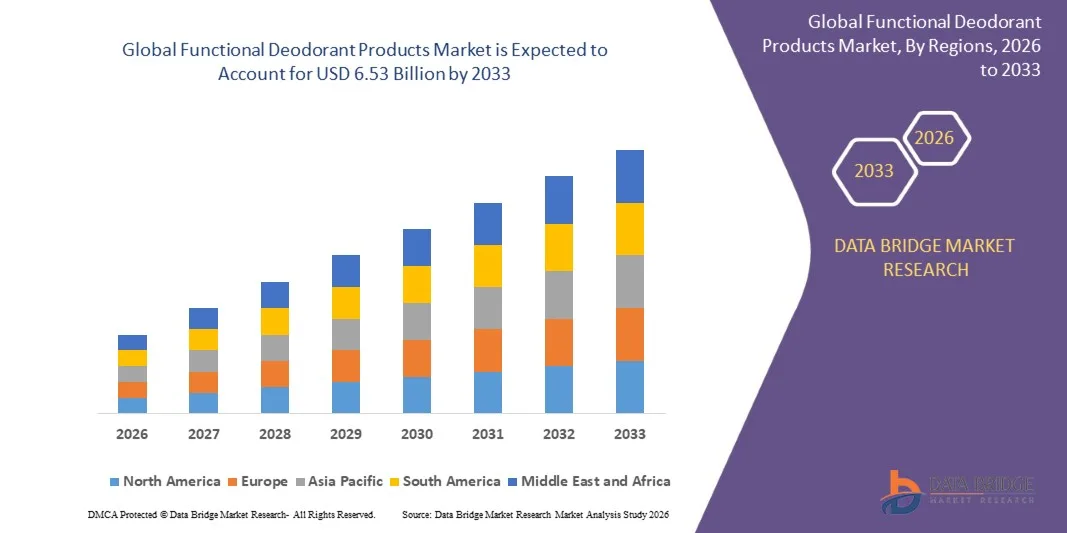
- As per Data Bridge Market Research analysis, the functional deodorant products market was valued at USD 3.40 billion in 2025 and is projected to reach USD 6.53 billion by 2033, growing at a CAGR of 8.50% from 2026 to 2033.
- The market is experiencing rapid growth driven by rising demand for aluminum-free and skin-friendly formulas, increasing interest in whole-body and specialized products, and expanding sales across online, pharmacy, and mass retail channels.
- The increasing shift toward natural, dermatologist-tested, and multi-benefit personal care, combined with growing awareness of hygiene, skin sensitivity, and sweat and odor control beyond the underarm, is supporting market adoption. Functional deodorants are being positioned across daily hygiene, sports, sensitive skin, and whole-body care, offering consumers greater choice through antiperspirants and deodorants, deodorant products, and natural deodorants with added skin benefits.
Market Size & Forecast
- Global Market Value (2025): USD 3.40 Billion
- Expected Market Value (2033): USD 6.53 Billion
- Forecast CAGR (2026–2033): 8.50%
- Leading Region in 2025: North America
- Fastest Growing Region: Asia-Pacific
What are the Major Takeaways of the Functional Deodorant Products Market?
- North America dominated the functional deodorant products market with the largest revenue share of 34.20% in 2025, supported by high personal care spending, strong brand innovation, and wide availability of natural and premium products.
- Asia-Pacific is expected to be the fastest-growing region at a CAGR of 10.40% from 2026 to 2033, fueled by rising incomes, hot and humid climates, and growing awareness of personal hygiene and grooming.
- The sticks segment led the market with a 36.50% share in 2025, driven by familiar application, long-lasting protection, and wide availability.
- Creams & others are the fastest-growing product type, projected to register a CAGR of 10.10%, reflecting rising demand for natural, aluminum-free, and sensitive-skin formats.
- The odor control segment dominated the functionality category with a 44.60% revenue share in 2025, led by its role as the core purchase reason for daily deodorant use.
- Supermarkets & hypermarkets accounted for 46.80% of the market share in 2025, preferred for wide brand choice, promotions, and routine household shopping.
- The online retail segment is the fastest-growing distribution channel, with a CAGR of 12.30%, driven by subscription models, direct-to-consumer brands, and discovery of niche natural products.
Report Scope and Functional Deodorant Products Market Segmentation
|
Attributes |
Functional Deodorant Products Key Market Insights |
|
Segments Covered |
|
|
Countries Covered |
North America
Europe
Asia-Pacific
Middle East and Africa
South America
|
|
Key Market Players |
|
|
Market Opportunities |
|
|
Value Added Data Infosets |
In addition to the insights on market scenarios such as market value, growth rate, segmentation, geographical coverage, and major players, the market reports curated by the Data Bridge Market Research also include in-depth expert analysis, pricing analysis, brand share analysis, consumer survey, demography analysis, supply chain analysis, value chain analysis, raw material/consumables overview, vendor selection criteria, PESTLE Analysis, Porter Analysis, and regulatory framework. |
What is the Key Trend in the Functional Deodorant Products Market?
- Deodorants are increasingly evolving from single-purpose underarm products into functional, whole-body care, combining odor control with skin soothing, pH balance, moisturizing ingredients, and mood-focused fragrances. Brands also see growing demand for products that fit sensitive skin, shaving routines, and active lifestyles.
- For instance, in In July 2026, Godrej Consumer Products launched Bloq roll-on deodorants in India, offering a long-lasting sweat and odor control format for younger consumers. The launch reflects growing competition in functional deodorants among Indian and global brands. The brand positions the product as a convenient, long-lasting option for daily use. The brand also plans to expand distribution through modern trade and online platforms across several states.
- Aluminum-free and skin-friendly formulas are gaining share, as consumers look for gentle options with plant-based actives, minimal irritation, and clear ingredient lists.
- Brands are increasingly adding functional claims such as long-lasting freshness, sweat management, and skin care benefits, as buyers compare products on efficacy, ingredient safety, scent, and price across mass and premium ranges.
- For instance, in January 2025, Unilever launched Sure Whole Body Deodorant and Lynx Lower Body Spray in the U.K. with GBP 12.5 million of advertising support, targeting consumers who want odor protection beyond the underarm, and expanding the range of functional formats on shelves
- As natural ingredients, whole-body positioning, sensitive-skin claims, and direct-to-consumer retail continue to advance, functional deodorants are expected to expand into new body areas and care routines.
What are the Key Drivers of the Functional Deodorant Products Market?
- Rising awareness of personal hygiene and growing consumer interest in products that offer more than basic odor control have significantly increased demand for functional deodorants.
- For instance, in April 2024, according to Unilever only about 2% of consumers already used whole-body deodorants, while 76% were interested in them, indicating large untapped demand for functional formats, encouraging further launches, and encouraging brands to build new product lines for different body areas and use occasions.
- Men and women, athletes, and consumers with sensitive skin are adopting functional deodorants to manage sweat and odor, protect skin, and match product choice to daily activities and climates.
- For instance, in June 2025, Unilever agreed to acquire Dr. Squatch for about USD 1.5 billion, highlighting investor confidence in natural and men’s personal care brands and the growing value of direct-to-consumer brands, and the potential for large companies to scale niche brands through broader distribution.
- With mass-market brands, natural start-ups, and online retailers expanding assortments, functional deodorant products can gain wider visibility, trial, and repeat purchases across supermarkets, pharmacies, and e-commerce platforms.
What Factors are Challenging the Growth of the Functional Deodorant Products Market?
- Functional and natural deodorants often cost more than conventional products, and some consumers find aluminum-free formulas less effective at controlling sweat, which can limit repeat purchases.
- For instance, in November 2021, Procter & Gamble recalled Old Spice and Secret aerosol sprays after benzene was detected, showing how product safety issues can damage trust in deodorant categories, and prompting stricter testing.
- These safety and efficacy concerns can raise scrutiny from regulators and consumers, while ingredient restrictions and testing requirements may increase development and compliance costs. Retailers may also reduce shelf space for slower-selling premium items.
- Allergic reactions to fragrances and natural actives, fragmented regulation of claims such as natural and clean, and competition from low-priced private labels further restrict growth, requiring brands to invest in clinical testing, transparent labeling, and consumer education that may increase marketing costs.
- For instance, in July 2025, according to FDA recall information summarized by industry sources, a deodorant manufacturer recalled about 67,000 cases of roll-on products after finding manufacturing violations, highlighting quality control risks in the category and the importance of strong supplier audits and good manufacturing practices.
- The combination of higher prices, mixed efficacy perceptions, product safety recalls, and price competition from private labels can constrain adoption among cost-sensitive consumers and smaller brands. Smaller brands may also find it harder to fund the clinical testing and safety documentation that retailers increasingly request.
How is the Functional Deodorant Products Market Segmented?
The functional deodorant products market is segmented on the basis of product type, functionality, end user, and distribution channel.
- By Product Type
On the basis of product type, the functional deodorant products market is segmented into sticks, sprays, roll-ons, and creams & others. The sticks segment dominated the market with 36.50% share in 2025, supported by familiar application, long-lasting protection, and wide availability. Sticks are easy to carry, apply, and control, and suit both antiperspirant and deodorant formulas. They are offered by almost every major and niche brand in many fragrances and skin-friendly options. Natural and aluminum-free sticks are widening appeal. Strong shelf presence and repeat purchase habits continue to reinforce the segment’s leadership. Producers also offer travel sizes, refillable cases, and recyclable packaging to appeal to eco-conscious buyers.
The creams & others segment is projected to register the fastest growth at a CAGR of 10.10% from 2026 to 2033, driven by rising demand for natural, aluminum-free, and sensitive-skin formats. Creams and pastes use butters, oils, and mineral actives that are applied by hand or spatula. They appeal to consumers seeking gentler or more sustainable options. Direct-to-consumer and clean beauty brands are expanding these formats. Application feel, packaging, and price remain important considerations for wider adoption. Brands are also developing vegan and mineral-based formulas to meet clean label expectations. Subscription and refill programs also help brands reduce packaging waste and keep customers engaged over time.
- By Functionality
On the basis of functionality, the functional deodorant products market is segmented into odor control, sweat protection, sensitive skin care, and whole-body. The odor control segment dominated the market with 44.60% share in 2025, supported by its role as the core reason for daily deodorant use. Products use antimicrobial agents, odor absorbers, and fragrances to prevent odor. Consumers across age groups use odor control products regularly. Continuous improvement in long-lasting freshness and gentle formulas strengthens demand. Established brands and strong marketing continue to reinforce the segment’s leadership. Brands also add skin-protecting extracts and mild scents to appeal to users with sensitive skin and frequent daily use.
The whole-body segment is projected to register the fastest growth at a CAGR of 11.80% from 2026 to 2033, driven by increasing interest in odor protection beyond the underarm. Products are designed for use on the feet, groin, chest, and other areas, with skin-friendly formulas. Brands are launching sprays, creams, and sticks specifically for body use. Large marketing campaigns are educating consumers about new use occasions. Safety, skin tolerance, and clear usage guidance remain important considerations. Brands are also testing foot, intimate-area, and body-fold products with dermatologist input to build trust. Growing interest in fresh-feeling, light, and non-staining formulas is also helping these products gain trial.
- By End User
On the basis of end user, the functional deodorant products market is segmented into women, men, and unisex. The women segment dominated the market with 47.30% share in 2025, driven by broad product ranges, strong interest in skin care benefits, and frequent product trial. Women’s deodorants emphasize gentle ingredients, fragrance, and skin feel. Brands add moisturizing and brightening claims to stand out. Premium and natural options are widely available. Established brands and wide retail access continue to reinforce this segment's leadership. Seasonal gift sets and trial-size packs also help brands reach new users and increase basket size.
The men segment is projected to register the fastest growth at a CAGR of 9.60% from 2026 to 2033, driven by rising male grooming, active lifestyles, and interest in natural formulas. Men’s brands highlight strong odor protection, sport performance, and scent. Direct-to-consumer brands have built loyal audiences through subscriptions and social media. Mass brands are adding aluminum-free and mood-focused ranges. Education on skin care and ingredient safety is increasing. Sports sponsorships and fitness communities are also helping brands reach active male consumers. Social media creators and barbers are also helping educate male consumers about deodorants that suit different skin types and activity levels.
- By Distribution Channel
On the basis of distribution channel, the functional deodorant products market is segmented into supermarkets & hypermarkets, pharmacies & drugstores, online retail, and others. The supermarkets & hypermarkets segment dominated the market with 46.80% share in 2025, supported by wide brand choice, promotions, and routine household shopping. Shoppers can compare sizes, scents, and prices in one visit. Retailers feature private-label and multipack options. Prominent shelf space and in-store promotions help new launches reach consumers. Established relationships between brands and retailers continue to reinforce this channel's leadership. Frequent promotions and loyalty programs also encourage consumers to buy multipacks during regular shopping trips.
The online retail segment is projected to register the fastest growth at a CAGR of 12.30% from 2026 to 2033, driven by subscriptions, direct-to-consumer brands, and discovery of niche natural products. Online platforms offer reviews, ingredient information, and trial sizes. Social media and influencers help new brands build awareness. Bundles and refill programs encourage repeat purchases. Delivery cost and competition for visibility remain important considerations. Subscription discounts and quick delivery services are also making online replenishment easier for busy consumers. Marketplace rankings, customer reviews, and subscription bundles also strongly influence which brands win in online channels.
Which Region Holds the Largest Share of the Functional Deodorant Products Market?
- North America dominated the functional deodorant products market with the largest revenue share of 34.20% in 2025, supported by high personal care spending, strong brand innovation, and wide availability of natural and premium products.
- The region also benefits from strong consumer interest in natural and clean personal care, active direct-to-consumer brands, and well-developed retail and e-commerce networks. Increasing launches of aluminum-free and whole-body products continue to strengthen North America’s position in the global market. Strong investment in marketing and product testing also supports frequent new product launches.
U.S. Functional Deodorant Products Market Insight
The U.S. functional deodorant products market is witnessing steady growth due to strong demand for natural and aluminum-free options, active direct-to-consumer brands, and a large mass-market base. The country’s major personal care companies, along with online retailers and drugstore chains, are driving demand for new formats and claims. In addition, growing interest in men’s grooming, sensitive skin, and sustainable packaging is accelerating adoption across consumers. Strong retailer support for private-label and natural lines also keeps competition high.
Canada Functional Deodorant Products Market Insight
Canada’s functional deodorant products market is evolving as consumers increasingly seek targeted odor control, long-lasting freshness, and skin-friendly formulations. Demand is supported by growing interest in aluminum-free, fragrance-free, natural, and sensitive-skin products. Premium offerings featuring multifunctional benefits and innovative ingredients are gaining attention, while pharmacies, supermarkets, and e-commerce platforms remain important distribution channels. However, price sensitivity, formulation effectiveness, and competition from established brands present challenges. Opportunities lie in personalized solutions, sustainable packaging, and science-backed products addressing specific consumer needs.
Asia-Pacific Functional Deodorant Products Market Insight
The Asia-Pacific functional deodorant products market is expected to witness rapid growth, driven by rising incomes, hot and humid climates, and growing awareness of personal hygiene across countries such as China, India, and Japan. Growing urban populations and modern retail are supporting regional market expansion. In addition, the region’s expanding online retail, local brands, and rising demand for premium and natural options are accelerating availability and demand. Growing interest in men’s grooming and sports and fitness activities is also supporting regional demand.
Japan Functional Deodorant Products Market Insight
The Japan functional deodorant products market is witnessing consistent growth due to high hygiene standards, strong demand for odor-free and sweat-control products, and innovative formulations. Consumers and brands are increasingly adopting sheets, sprays, and sticks with skin care benefits. Moreover, strong demand for subtle fragrance, gentle ingredients, and convenient formats is further contributing to market growth in Japan. Close cooperation between brands and research institutes also supports innovation in odor control technology.
China Functional Deodorant Products Market Insight
The China functional deodorant products market is growing rapidly, driven by rising urban incomes, changing hygiene habits, and expanding e-commerce. Growing interest from younger consumers is significantly boosting market demand. In addition, social media marketing, local and international brands, and rising demand for premium and natural products are positioning China as a key growth market across Asia-Pacific. Rapid growth of livestreaming and social commerce also helps new brands reach consumers quickly.
Which are the Top Companies in Functional Deodorant Products Market?
The functional deodorant products industry is primarily led by well-established companies, including:
- Unilever PLC (U.K.)
- The Procter & Gamble Company (U.S.)
- Beiersdorf AG (Germany)
- Colgate-Palmolive Company (U.S.)
- Henkel AG & Co. KGaA (Germany)
- Church & Dwight Co., Inc. (U.S.)
- L’Oréal S.A. (France)
- Kao Corporation (Japan)
- Lion Corporation (Japan)
- Coty Inc. (U.S.)
- Edgewell Personal Care Company (U.S.)
- Godrej Consumer Products Limited (India)
- Shiseido Company, Limited (Japan)
- Avon Products, Inc. (U.S.)
- The Honest Company, Inc. (U.S.)
- Weleda AG (Switzerland)
- Dr. Squatch, LLC (U.S.)
- Wild (U.K.)
- Adidas AG (Germany)
- Revlon, Inc. (U.S.)
What are Latest Developments in Functional Deodorant Products Market?
- In July 2026, Godrej Consumer Products launched Bloq roll-on deodorants in India, offering a long-lasting sweat and odor control format for younger consumers. The launch reflects growing competition in functional deodorants among Indian and global brands. The brand positions the product as a convenient, long-lasting option for daily use. The brand also plans to expand distribution through modern trade and online platforms across several states.
- In April 2026, The Bare Bar upgraded its clean deodorant range with improved formulations designed to deliver effective odor protection with simple ingredients. The update reflects growing demand for natural, plastic-free, and skin-friendly deodorants. The brand also emphasizes sustainable packaging and refill options. The brand says the new range is made without aluminum and uses compostable or refillable packaging in selected formats.
- In February 2026, Dr. Squatch launched Invisible Glide deodorant and spray formats, extending its natural men’s personal care range into smoother, residue-free applications. The brand became part of Unilever following its acquisition. The line focuses on a smooth, dry feel and simple fragrance options. The launch also supports broader distribution through retailers and online platforms.
- In April 2025, Unilever acquired Wild, a U.K. brand known for refillable natural deodorant, strengthening its position in sustainable and premium personal care. The acquisition complements its mass-market portfolio of brands such as Dove, Sure, and Lynx. The move also reflects growing mass-market interest in refillable formats.
- In January 2025, Unilever launched Sure Whole Body Deodorant and Lynx Lower Body Spray in the U.K. with GBP 12.5 million of advertising support. The products target consumers who want odor protection on areas beyond the underarm and expand the whole-body deodorant category. The campaign reflects investment to build a new category of body-wide odor care.
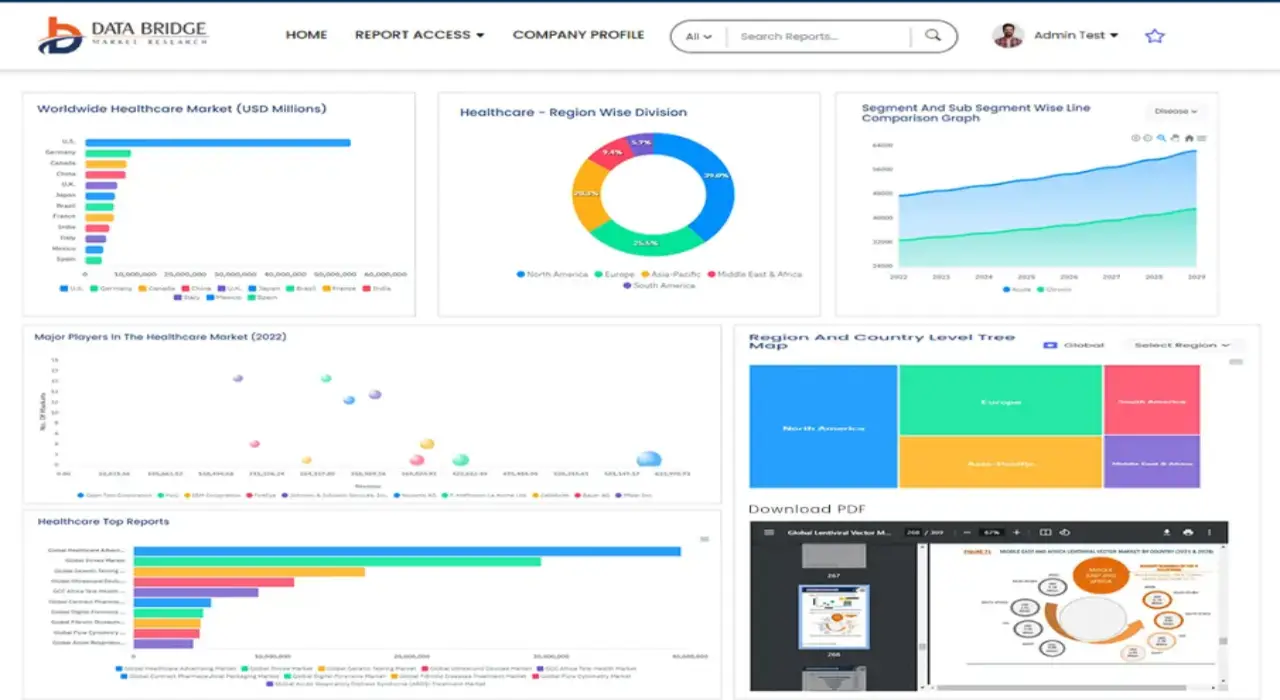
- Interactive Data Analysis Dashboard
- Company Analysis Dashboard for high growth potential opportunities
- Research Analyst Access for customization & queries
- Competitor Analysis with Interactive dashboard
- Latest News, Updates & Trend analysis
- Harness the Power of Benchmark Analysis for Comprehensive Competitor Tracking
Data collection and base year analysis are done using data collection modules with large sample sizes. The stage includes obtaining market information or related data through various sources and strategies. It includes examining and planning all the data acquired from the past in advance. It likewise envelops the examination of information inconsistencies seen across different information sources. The market data is analysed and estimated using market statistical and coherent models. Also, market share analysis and key trend analysis are the major success factors in the market report. To know more, please request an analyst call or drop down your inquiry.
The key research methodology used by DBMR research team is data triangulation which involves data mining, analysis of the impact of data variables on the market and primary (industry expert) validation. Data models include Vendor Positioning Grid, Market Time Line Analysis, Market Overview and Guide, Company Positioning Grid, Patent Analysis, Pricing Analysis, Company Market Share Analysis, Standards of Measurement, Global versus Regional and Vendor Share Analysis. To know more about the research methodology, drop in an inquiry to speak to our industry experts.
Data Bridge Market Research is a leader in advanced formative research. We take pride in servicing our existing and new customers with data and analysis that match and suits their goal. The report can be customized to include price trend analysis of target brands understanding the market for additional countries (ask for the list of countries), clinical trial results data, literature review, refurbished market and product base analysis. Market analysis of target competitors can be analyzed from technology-based analysis to market portfolio strategies. We can add as many competitors that you require data about in the format and data style you are looking for. Our team of analysts can also provide you data in crude raw excel files pivot tables (Fact book) or can assist you in creating presentations from the data sets available in the report.