Functional Plant-Based Yogurt Market Size
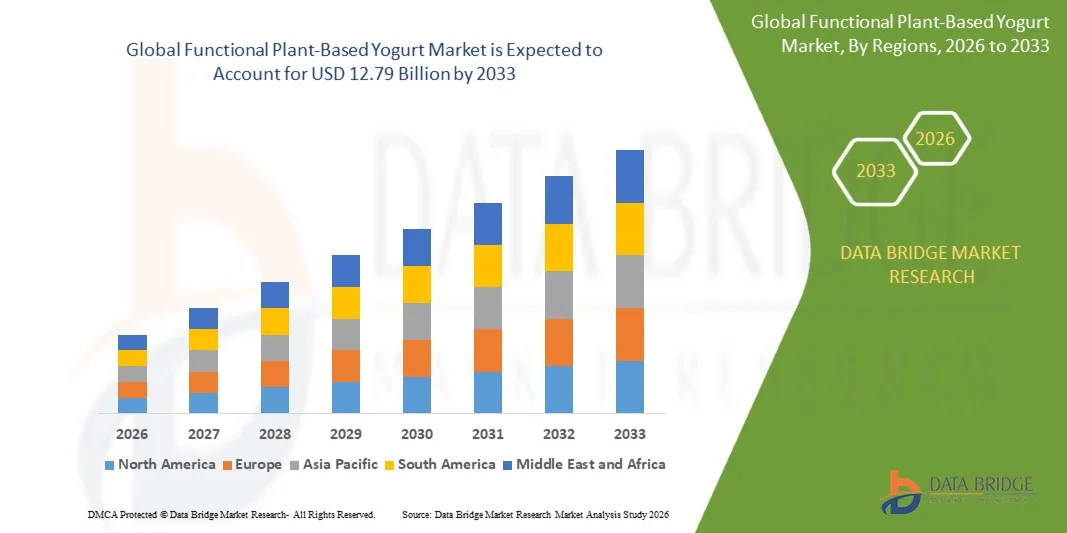
- The global functional plant-based yogurt market size was valued at USD 4.72 billion in 2025 and is expected to reach USD 12.79 billion by 2033, at a CAGR of 13.28% during the forecast period
- The market growth is largely fuelled by the rising demand for dairy-free functional foods, increasing lactose intolerance population, and growing preference for probiotic-rich plant-based alternatives
- Expanding health consciousness among consumers, particularly regarding digestive wellness and immunity support, is further accelerating product adoption across global markets
Functional Plant-Based Yogurt Market Analysis
- The market is witnessing strong growth due to increasing shift toward vegan and flexitarian diets across developed and emerging economies
- Rising demand for gut-health focused products enriched with probiotics and plant-based proteins is significantly driving category expansion
- North America dominated the functional plant-based yogurt market with the largest revenue share in 2025, driven by rising demand for dairy-free functional foods and strong consumer awareness of gut health benefits. The region has a well-established plant-based food industry supported by high disposable incomes and a strong retail infrastructure
- Asia-Pacific region is expected to witness the highest growth rate in the global functional plant-based yogurt market, driven by rapid population growth, shifting dietary preferences toward plant-based foods, increasing health awareness, and strong expansion of retail and e-commerce distribution networks
- The Plant-Based Yogurt segment held the largest market revenue share in 2025 driven by strong consumer preference for traditional yogurt-like formats with added probiotic and nutritional benefits. These products are widely consumed as breakfast and snack options due to their convenience, taste variety, and digestive health benefits. Increasing availability across retail and online platforms is further supporting strong market penetration among health-conscious consumers
Report Scope and Functional Plant-Based Yogurt Market Segmentation
|
Attributes |
Functional Plant-Based Yogurt Key Market Insights |
|
Segments Covered |
|
|
Countries Covered |
North America
Europe
Asia-Pacific
Middle East and Africa
South America
|
|
Key Market Players |
• Nestlé (Switzerland) |
|
Market Opportunities |
• Expansion Of Clean Label And Organic Plant-Based Dairy Products |
|
Value Added Data Infosets |
In addition to the insights on market scenarios such as market value, growth rate, segmentation, geographical coverage, and major players, the market reports curated by the Data Bridge Market Research also include in-depth expert analysis, pricing analysis, brand share analysis, consumer survey, demography analysis, supply chain analysis, value chain analysis, raw material/consumables overview, vendor selection criteria, PESTLE Analysis, Porter Analysis, and regulatory framework. |
Functional Plant-Based Yogurt Market Trends
“Rising Demand for Dairy-Free and Plant-Based Functional Foods”
• The growing shift toward vegan and flexitarian diets is significantly shaping the functional plant-based yogurt market, as consumers increasingly prefer dairy-free alternatives that support digestion and overall wellness. Plant-based yogurts enriched with probiotics are gaining traction due to their ability to provide gut health benefits while remaining lactose-free and allergen-friendly. This trend is strengthening product adoption across global retail and foodservice channels
• Increasing awareness of digestive health, immunity support, and overall nutrition has accelerated demand for functional plant-based yogurt in categories such as breakfast foods, snacks, and on-the-go nutrition. Health-conscious consumers are actively seeking probiotic-rich formulations made from almond, oat, coconut, and soy sources. This has encouraged manufacturers to enhance product formulations with added vitamins, minerals, and protein content
• Clean-label, organic, and minimally processed trends are influencing purchasing behavior, with brands focusing on transparent labeling, natural ingredients, and sustainable sourcing practices. Companies are emphasizing non-GMO, additive-free, and plant-based certifications to strengthen consumer trust. Marketing strategies highlighting health benefits and environmental sustainability are also supporting brand differentiation in a competitive market
• For instance, in 2024, Danone in France and Oatly in Sweden expanded their plant-based dairy portfolios by introducing functional yogurt alternatives enriched with probiotics and natural plant proteins. These products were launched in response to rising demand for clean-label and dairy-free nutrition, with strong distribution across supermarkets, specialty stores, and online retail platforms
• While demand is increasing, long-term growth depends on continuous innovation in taste, texture, and fermentation technology, along with cost-effective production and scalable supply chains for plant-based ingredients
Functional Plant-Based Yogurt Market Dynamics
Driver
“Growing Demand for Dairy Alternatives and Gut Health Products”
• Rising lactose intolerance and dairy allergies globally are a major driver for the functional plant-based yogurt market, encouraging consumers to shift toward plant-based probiotic alternatives. Manufacturers are focusing on developing dairy-free yogurts that offer similar taste, texture, and nutritional benefits as traditional dairy products. This is supporting strong product diversification across multiple plant sources such as oat, almond, soy, and coconut, while also expanding availability in mainstream retail channels and foodservice outlets
• Expanding applications in breakfast foods, snacks, desserts, and functional nutrition products are further driving market growth. Functional plant-based yogurt is increasingly being positioned as a high-protein, digestive-health-focused food option suitable for all age groups. The rising popularity of vegan diets and fitness-oriented lifestyles is also contributing to increased consumption, along with growing integration into meal replacement and on-the-go nutrition formats
• Food and beverage companies are investing heavily in product innovation, fermentation technologies, and fortified formulations to enhance nutritional value and improve sensory appeal. Strategic partnerships with ingredient suppliers and biotech firms are supporting advancements in plant protein and probiotic integration, enabling better texture, flavor, and stability in final products for wider consumer acceptance
• For instance, in 2023, Nestlé in Switzerland and Chobani in the U.S. introduced expanded ranges of plant-based yogurt products enriched with probiotics and clean-label ingredients. These launches were driven by rising consumer demand for healthier and sustainable dairy alternatives, resulting in increased retail penetration and brand loyalty, along with stronger presence across supermarkets and online platforms
• However, sustained growth depends on improving affordability, enhancing taste profiles, and ensuring consistent availability of high-quality plant-based raw materials across global supply chains. Manufacturers are also focusing on scaling production efficiency and improving probiotic stability to maintain product quality and competitiveness in the long term
Restraint/Challenge
“Higher Production Costs and Taste Acceptance Issues”
• The relatively higher production cost of functional plant-based yogurt compared to conventional dairy yogurt remains a key challenge, limiting adoption among price-sensitive consumers. Costs associated with plant protein extraction, fermentation technology, and clean-label certifications contribute to higher retail prices, making it less accessible in developing and cost-sensitive markets
• Taste, texture, and mouthfeel differences compared to traditional dairy yogurt also pose a challenge for consumer acceptance, particularly in emerging markets. Many consumers still perceive plant-based yogurts as less creamy or less flavorful, which affects repeat purchases and slows down long-term brand loyalty development across key regions
• Supply chain limitations, including inconsistent availability of raw materials such as almond, oat, and coconut, further impact production scalability. In addition, maintaining probiotic stability in plant-based matrices requires advanced processing techniques, increasing operational complexity, production costs, and dependency on cold-chain infrastructure
• For instance, in 2024, plant-based yogurt producers in Southeast Asia and Europe reported slower adoption due to higher retail prices and limited consumer awareness of functional benefits compared to dairy yogurt. Retailers in countries such as Thailand and Italy also noted lower shelf turnover for premium plant-based yogurt products, affecting distribution expansion and overall market penetration strategies
• Overcoming these challenges will require investment in R&D, cost-efficient fermentation technologies, and improved sensory formulation techniques, along with stronger consumer education on the health benefits of plant-based probiotics. Companies are also expected to focus on pricing strategies, supply chain optimization, and ingredient innovation to enhance scalability and market acceptance
Functional Plant-Based Yogurt Market Scope
The market is segmented on the basis of product, source, flavor, formulation type, distribution channel, end user, and application.
• By Product
On the basis of product, the functional plant-based yogurt market is segmented into Plant-Based Yogurt, Plant-Based Drinkable Yogurt, Plant-Based Greek-Style Yogurt, Plant-Based Frozen Yogurt, and Others. The Plant-Based Yogurt segment held the largest market revenue share in 2025 driven by strong consumer preference for traditional yogurt-like formats with added probiotic and nutritional benefits. These products are widely consumed as breakfast and snack options due to their convenience, taste variety, and digestive health benefits. Increasing availability across retail and online platforms is further supporting strong market penetration among health-conscious consumers.
The Plant-Based Drinkable Yogurt segment is expected to witness the fastest growth rate from 2026 to 2033, driven by rising demand for on-the-go nutrition and convenient functional beverages. These products are gaining popularity among working professionals and younger consumers due to their portability and easy consumption. Enhanced formulations with added proteins, probiotics, and vitamins are further boosting adoption. Expanding distribution through supermarkets, vending channels, and e-commerce platforms is also accelerating growth.
• By Source
On the basis of source, the market is segmented into Soy, Almond, Coconut, Oat, Cashew, and Others. The Soy segment held the largest market revenue share in 2025 driven by its high protein content, cost-effectiveness, and long-standing use in plant-based dairy alternatives. Soy-based yogurts offer a creamy texture and strong nutritional profile, making them widely accepted across global markets. Manufacturers also prefer soy due to its scalability and stable supply chain.
The Oat segment is expected to witness the fastest growth rate from 2026 to 2033, driven by increasing consumer preference for clean-label, allergen-free, and sustainable ingredients. Oat-based yogurts are gaining traction due to their mild taste, smooth texture, and digestive benefits. Rising popularity of oat-based dairy alternatives in Europe and North America is further supporting rapid expansion. Strong alignment with vegan and eco-friendly consumption trends is also boosting demand.
• By Flavor
On the basis of flavor, the market is segmented into Plain, Vanilla, Strawberry, Blueberry, Mango, and Others. The Plain segment held the largest market revenue share in 2025 driven by its versatility, clean-label positioning, and wide use in both direct consumption and recipe applications. Plain plant-based yogurts are preferred by health-conscious consumers who avoid added sugars and artificial flavors. They are also commonly used as bases for smoothies and functional meals.
The Blueberry segment is expected to witness the fastest growth rate from 2026 to 2033, driven by rising demand for fruit-flavored functional foods with antioxidant benefits. Blueberry-flavored yogurts are gaining popularity due to their taste appeal and association with immunity and overall wellness. Increasing product innovation in fruit-infused plant-based dairy alternatives is further supporting growth. Strong consumer preference for natural fruit flavors is also enhancing adoption.
• By Formulation Type
On the basis of formulation type, the market is segmented into Probiotic-Fortified, Protein-Enriched, Low-Sugar, Organic, and Others. The Probiotic-Fortified segment held the largest market revenue share in 2025 driven by growing awareness of gut health and digestive wellness benefits. These formulations are widely consumed for improving microbiome balance and overall immunity. Strong clinical backing of probiotics is further increasing consumer trust and product demand.
The Protein-Enriched segment is expected to witness the fastest growth rate from 2026 to 2033, driven by rising fitness trends and demand for high-protein plant-based diets. These products are increasingly used as meal replacements and post-workout nutrition options. Growing adoption among athletes and active lifestyle consumers is further boosting market expansion. Continuous innovation in plant protein fortification is strengthening product performance.
• By Distribution Channel
On the basis of distribution channel, the market is segmented into Supermarkets/Hypermarkets, Convenience Stores, Online Retail, Specialty Stores, and Others. The Supermarkets/Hypermarkets segment held the largest market revenue share in 2025 driven by high product visibility, strong brand presence, and wide availability of multiple variants. These retail outlets allow consumers to compare products easily and benefit from promotional offers.
The Online Retail segment is expected to witness the fastest growth rate from 2026 to 2033, driven by increasing digital adoption and rising preference for home delivery and subscription-based nutrition products. E-commerce platforms offer convenience, wider product selection, and personalized recommendations. Growing penetration of direct-to-consumer brands is also accelerating online sales.
• By End User
On the basis of end user, the market is segmented into Adults, Children, Athletes, Elderly, and Health-Conscious Consumers. The Adults segment held the largest market revenue share in 2025 driven by busy lifestyles, increasing demand for convenient nutrition, and growing awareness of digestive health benefits. Plant-based yogurt is widely adopted as a daily snack or breakfast alternative among working individuals.
The Athletes segment is expected to witness the fastest growth rate from 2026 to 2033, driven by rising demand for protein-rich and performance-enhancing functional foods. These consumers prefer plant-based yogurts for muscle recovery, energy support, and clean nutrition. Increasing participation in fitness activities and sports nutrition trends is further boosting segment growth.
• By Application
On the basis of application, the market is segmented into Functional Nutrition, Digestive Health, Weight Management, General Wellness, and Clinical Nutrition. The Functional Nutrition segment held the largest market revenue share in 2025 driven by strong demand for nutrient-rich, probiotic-fortified foods that support daily health and immunity. Plant-based yogurt is widely integrated into balanced diets for overall wellness.
The Digestive Health segment is expected to witness the fastest growth rate from 2026 to 2033, driven by increasing awareness of gut microbiome benefits and rising prevalence of digestive disorders. Probiotic-rich plant-based yogurts are increasingly recommended for improving digestion and maintaining intestinal health. Strong consumer shift toward preventive healthcare is further accelerating demand.
Functional Plant-Based Yogurt Market Regional Analysis
• North America dominated the functional plant-based yogurt market with the largest revenue share in 2025, driven by rising demand for dairy-free functional foods and strong consumer awareness of gut health benefits. The region has a well-established plant-based food industry supported by high disposable incomes and a strong retail infrastructure
• Consumers in the region highly value the health benefits, taste variety, and convenience offered by functional plant-based yogurt products. Growing awareness of lactose intolerance and dairy allergies is encouraging a shift toward plant-based alternatives enriched with probiotics and nutrients. The strong fitness and wellness culture is further boosting demand for high-protein and digestive-health-focused yogurt products
• This widespread adoption is further supported by high disposable incomes, busy urban lifestyles, and increasing preference for sustainable and plant-based diets, establishing functional plant-based yogurt as a mainstream dairy alternative across both residential and foodservice sectors. Strong marketing of health benefits and environmental sustainability is also driving consumer shift toward these products
U.S. Functional Plant-Based Yogurt Market Insight
The U.S. functional plant-based yogurt market captured the largest revenue share in 2025 within North America, driven by strong demand for plant-based dairy alternatives and increasing focus on digestive health. Consumers are rapidly adopting probiotic-enriched yogurts as part of daily nutrition routines. The presence of leading plant-based food brands and continuous product innovation is further strengthening market growth. In addition, rising popularity of vegan diets and functional snacking is supporting widespread adoption.
Europe Functional Plant-Based Yogurt Market Insight
The Europe functional plant-based yogurt market is expected to witness the fastest growth rate from 2026 to 2033, primarily driven by rising vegan population, strong environmental awareness, and increasing demand for clean-label dairy alternatives. Consumers in the region are highly focused on sustainability and health-oriented food choices. Expanding retail distribution and growing availability of organic plant-based yogurt products are further supporting market expansion. Strong regulatory support for plant-based innovation is also contributing to growth.
U.K. Functional Plant-Based Yogurt Market Insight
The U.K. functional plant-based yogurt market is expected to witness the fastest growth rate from 2026 to 2033, driven by increasing health consciousness and rising demand for convenient dairy-free nutrition options. Busy lifestyles and growing preference for plant-based diets are boosting consumption of probiotic yogurt alternatives. The strong presence of supermarkets and online grocery platforms is improving accessibility. Rising awareness of gut health and immunity benefits is further accelerating market adoption.
Germany Functional Plant-Based Yogurt Market Insight
The Germany functional plant-based yogurt market is expected to witness the fastest growth rate from 2026 to 2033, fueled by strong consumer preference for organic, sustainable, and high-quality food products. The country’s focus on environmental sustainability and health-driven nutrition is supporting demand for plant-based dairy alternatives. Increasing innovation in oat and soy-based yogurt formulations is also driving market expansion. In addition, strong retail penetration and growing vegan population are boosting adoption.
Asia-Pacific Functional Plant-Based Yogurt Market Insight
The Asia-Pacific functional plant-based yogurt market is expected to witness the fastest growth rate from 2026 to 2033, driven by rising urbanization, increasing disposable incomes, and growing awareness of plant-based nutrition. Expanding middle-class population and changing dietary habits are supporting strong demand for functional dairy alternatives. Government initiatives promoting healthy eating and plant-based innovation are further boosting growth. Rapid expansion of retail and e-commerce channels is also improving product accessibility.
Japan Functional Plant-Based Yogurt Market Insight
The Japan functional plant-based yogurt market is expected to witness the fastest growth rate from 2026 to 2033 due to high health awareness, aging population, and strong demand for functional foods. Consumers prefer easy-to-digest, probiotic-rich products that support digestive health and immunity. The country’s advanced food technology sector is driving innovation in plant-based yogurt formulations. Integration with daily nutrition and wellness-focused diets is further supporting steady market expansion.
China Functional Plant-Based Yogurt Market Insight
The China functional plant-based yogurt market accounted for the largest market revenue share in Asia Pacific in 2025, attributed to rapid urbanization, growing middle-class population, and increasing demand for healthy dairy alternatives. Consumers are increasingly adopting plant-based yogurt for its digestive and nutritional benefits. Strong domestic production capabilities and expanding e-commerce platforms are further supporting market growth. Government support for plant-based food innovation and health awareness campaigns is also driving adoption.
Functional Plant-Based Yogurt Market Share
The Functional Plant-Based Yogurt industry is primarily led by well-established companies, including:
• Nestlé (Switzerland)
• Danone (France)
• General Mills Inc (U.S.)
• Chobani LLC (U.S.)
• Oatly Group AB (Sweden)
• Valio Ltd (Finland)
• Alpro (Belgium)
• Lifeway Foods Inc (U.S.)
• Kite Hill (U.S.)
• Silk (U.S.)
• Forager Project (U.S.)
• So Delicious Dairy Free (U.S.)
• Yeo Valley (U.K.)
• Califia Farms (U.S.)
• Danone North America (U.S.)

- Interactive Data Analysis Dashboard
- Company Analysis Dashboard for high growth potential opportunities
- Research Analyst Access for customization & queries
- Competitor Analysis with Interactive dashboard
- Latest News, Updates & Trend analysis
- Harness the Power of Benchmark Analysis for Comprehensive Competitor Tracking
Global Functional Plant Based Yogurt Market, Supply Chain Analysis and Ecosystem Framework
To support market growth and help clients navigate the impact of geopolitical shifts, DBMR has integrated in-depth supply chain analysis into its Global Functional Plant Based Yogurt Market research reports. This addition empowers clients to respond effectively to global changes affecting their industries. The supply chain analysis section includes detailed insights such as Global Functional Plant Based Yogurt Market consumption and production by country, price trend analysis, the impact of tariffs and geopolitical developments, and import and export trends by country and HSN code. It also highlights major suppliers with data on production capacity and company profiles, as well as key importers and exporters. In addition to research, DBMR offers specialized supply chain consulting services backed by over a decade of experience, providing solutions like supplier discovery, supplier risk assessment, price trend analysis, impact evaluation of inflation and trade route changes, and comprehensive market trend analysis.
Data collection and base year analysis are done using data collection modules with large sample sizes. The stage includes obtaining market information or related data through various sources and strategies. It includes examining and planning all the data acquired from the past in advance. It likewise envelops the examination of information inconsistencies seen across different information sources. The market data is analysed and estimated using market statistical and coherent models. Also, market share analysis and key trend analysis are the major success factors in the market report. To know more, please request an analyst call or drop down your inquiry.
The key research methodology used by DBMR research team is data triangulation which involves data mining, analysis of the impact of data variables on the market and primary (industry expert) validation. Data models include Vendor Positioning Grid, Market Time Line Analysis, Market Overview and Guide, Company Positioning Grid, Patent Analysis, Pricing Analysis, Company Market Share Analysis, Standards of Measurement, Global versus Regional and Vendor Share Analysis. To know more about the research methodology, drop in an inquiry to speak to our industry experts.
Data Bridge Market Research is a leader in advanced formative research. We take pride in servicing our existing and new customers with data and analysis that match and suits their goal. The report can be customized to include price trend analysis of target brands understanding the market for additional countries (ask for the list of countries), clinical trial results data, literature review, refurbished market and product base analysis. Market analysis of target competitors can be analyzed from technology-based analysis to market portfolio strategies. We can add as many competitors that you require data about in the format and data style you are looking for. Our team of analysts can also provide you data in crude raw excel files pivot tables (Fact book) or can assist you in creating presentations from the data sets available in the report.