


What is the Fungal Infection Market Size and Growth Rate?
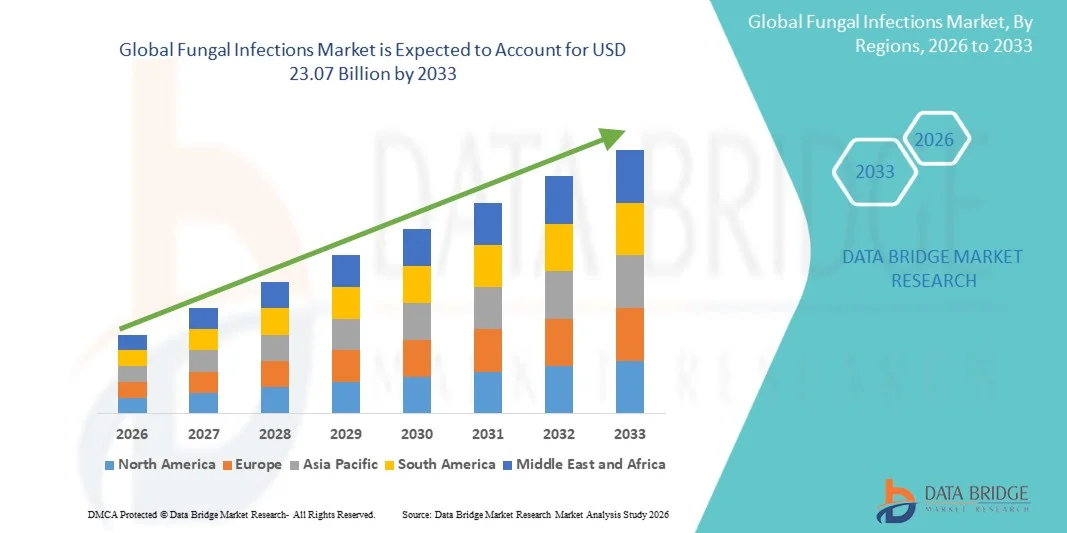
As per Data Bridge Market Research Analysis the Fungal Infections Market was valued at USD 16.86 billion in 2025 and is projected to reach USD 23.07 billion by 2033, growing at a CAGR of 4.00% from 2026 to 2033. The market is witnessing steady growth driven by the rising prevalence of invasive and superficial fungal infections, increasing immunocompromised patient populations, and growing awareness regarding early diagnosis and antifungal treatment.
The increasing incidence of hospital-acquired fungal infections, coupled with the expanding burden of chronic diseases such as cancer, diabetes, and HIV/AIDS, is encouraging healthcare providers and governments to strengthen antifungal treatment and infection control strategies. Advanced antifungal therapies, rapid diagnostic technologies, and combination treatment approaches are gaining wider adoption across hospitals, specialty clinics, and research institutions, offering improved patient outcomes and enhanced management of drug-resistant fungal pathogens.
Key Market Trends & Insights
- North America dominated the Fungal Infections Market with the largest revenue share of 38.46% in 2025, supported by advanced healthcare infrastructure, high antifungal drug adoption, and increasing incidence of hospital-acquired fungal infections.
- The Candidiasis segment led the market with a 39.64% share in 2025, driven by to the high prevalence of Candida infections among hospitalized and immunocompromised patients globally.
- Asia-Pacific is expected to be the fastest-growing region at a CAGR of 7.4% from 2026 to 2033, fueled by rising healthcare expenditure, growing awareness regarding fungal disease management, and increasing patient populations in China, India, and Japan.
- Immunomodulator are the fastest-growing simulation drugs, projected to register a CAGR of 6.9%, reflecting the surge in rising interest in immune-based approaches for fungal infection management.
- The Antifungal segment dominated the treatment category with a 72.48% revenue share in 2025, led by its widespread use as the primary therapeutic approach for fungal infection treatment.
- Oral accounted for 43.91% of the market, preferred by its convenience, high patient compliance, and widespread use in treating common fungal infections.
- The Solutions segment is the fastest-growing dosage form category, with a CAGR of 6.8%, driven by increasing use in nail, scalp, and hard-to-reach fungal infections.
Market Size & Forecast
- Global Market Value (2025): USD 16.86 Billion
- Expected Market Value (2033): USD 23.07 Billion
- Forecast CAGR (2026–2033): 4.00%
- Leading Region in 2025: North America
- Fastest Growing Region: Asia Pacific
Report Scope and Fungal Infections Market Segmentation
|
Attributes |
Fungal Infections Key Market Insights |
|
Segments Covered |
|
|
Countries Covered |
North America · U.S. · Canada · Mexico Europe · Germany · France · U.K. · Netherlands · Switzerland · Belgium · Russia · Italy · Spain · Turkey · Rest of Europe Asia-Pacific · China · Japan · India · South Korea · Singapore · Malaysia · Australia · Thailand · Indonesia · Philippines · Rest of Asia-Pacific Middle East and Africa · Saudi Arabia · U.A.E. · South Africa · Egypt · Israel · Rest of Middle East and Africa South America · Brazil · Argentina · Rest of South America |
|
Key Market Players |
· Pfizer Inc. (U.S.) · Gilead Sciences, Inc. (U.S.) · Bayer AG (Germany) · Astellas Pharma Inc. (Japan) · AbbVie Inc. (U.S.) · F. Hoffmann-La Roche Ltd (Switzerland) · Novartis AG (Switzerland) · Sanofi (France) · GSK plc (U.K.) · Merck & Co., Inc. (U.S.) · Johnson & Johnson Services, Inc. (U.S.) · Bristol Myers Squibb (U.S.) · Bausch Health. (Canada) · Cipla Inc. (India) · Sun Pharmaceutical Industries Ltd. (India) · Viatris Inc. (U.S.) · Zydus Lifesciences Limited (India) · Glenmark Pharmaceuticals Ltd. (India) · Dr. Reddy’s Laboratories Ltd. (India) · SCYNEXIS, Inc. (U.S.) |
|
Market Opportunities |
· Growing development of broad-spectrum antifungal drugs for treating multidrug-resistant fungal pathogens · Rising adoption of rapid molecular and biomarker-based fungal diagnostics · Increasing demand for antifungal therapies in immunocompromised populations |
|
Value Added Data Infosets |
In addition to the insights on market scenarios such as market value, growth rate, segmentation, geographical coverage, and major players, the market reports curated by the Data Bridge Market Research also include in-depth expert analysis, patient epidemiology, pipeline analysis, pricing analysis, and regulatory framework. |
What is the Key Trend in the Fungal Infections Market?
Trend: Rising Demand for Rapid Fungal Diagnostic Technologies
Healthcare providers are increasingly adopting rapid fungal diagnostic technologies to improve early disease detection, accelerate treatment decisions, and reduce mortality associated with invasive fungal infections. The integration of molecular diagnostics, PCR assays, and biomarker-based testing enables accurate identification of fungal pathogens with greater speed and sensitivity than conventional culture-based methods. Hospitals and diagnostic laboratories are similarly leveraging automated diagnostic platforms to strengthen infection surveillance and antimicrobial stewardship programs, while AI-assisted analytics support efficient interpretation of complex fungal testing data in critical care environments. For instance, the March 2025 expansion of fungal diagnostic testing capabilities by bioMérieux through advanced molecular assay integration highlights the growing emphasis on rapid and accurate fungal infection identification across hospital laboratories.
Fungal Infections Market Dynamics
Key Market Driver: Increasing Prevalence of Immunocompromised Patient Populations
The growing population of immunocompromised patients and individuals undergoing intensive medical treatments has created substantial demand for advanced antifungal therapies capable of managing severe and opportunistic fungal infections. Healthcare providers, pharmaceutical companies, and research institutions are expanding antifungal treatment strategies to address rising infection risks among cancer patients, transplant recipients, and individuals with chronic illnesses. Increasing hospitalization rates and broader use of immunosuppressive therapies are further accelerating the need for effective fungal infection management, improving patient outcomes and reducing healthcare-associated complications. For instance, the February 2024 approval expansion of Cresemba for invasive fungal infection treatment in high-risk patient populations reflects the increasing clinical demand for broad-spectrum antifungal therapies worldwide.
Key Restraint/Challenge: Rising Antifungal Drug Resistance and Limited Treatment Options
A significant restraint in the Fungal Infections Market is the increasing emergence of antifungal drug resistance among major fungal pathogens. Modern fungal strains are developing resistance against commonly prescribed azoles, echinocandins, and polyenes, creating challenges in treatment effectiveness and long-term disease management. The burden of resistance extends to prolonged hospitalization, higher treatment costs, and increased mortality risks, making infection control difficult for healthcare providers, particularly in resource-constrained settings and intensive care environments.
For instance, the 2024 global surveillance findings on multidrug-resistant Candida auris published by the World Health Organization illustrate the growing concern surrounding resistant fungal infections and the limited availability of effective treatment alternatives.
Key Market Opportunity: Expansion of Novel Antifungal Drug Development Programs
The development of next-generation antifungal therapies presents a significant market opportunity. Novel antifungal agents can target resistant fungal strains, improve treatment efficacy, and reduce toxicity associated with conventional therapies. The expansion of biologics research, combination treatment approaches, and precision medicine strategies is further supporting innovation in fungal disease management, opening growth opportunities across hospitals, specialty clinics, and emerging healthcare markets globally. For instance, the 2025 advancement of late-stage antifungal pipeline candidates by Pfizer Inc. and GSK plc demonstrates increasing pharmaceutical investment in innovative therapies for invasive and drug-resistant fungal infections.
How is the Fungal Infections Market Segmented?
The fungal infections market is segmented on the basis of type, drugs, treatment, route of administration, dosage form, end-users, and distribution channel.
- By Type
On the basis of type, the Fungal Infections Market is segmented into aspergillosis, blastomycosis, candidiasis, Candida auris, coccidioidomycosis, Cryptococcus gattii infection, fungal eyes infection, fungal nail infection, histoplasmosis, ringworm, and others. The Candidiasis segment dominated the market with a 39.64% share in 2025, owing to the high prevalence of Candida infections among hospitalized and immunocompromised patients globally. Increasing incidences of bloodstream infections, oral thrush, and vaginal candidiasis are significantly driving treatment demand across healthcare settings. Hospitals extensively utilize antifungal therapies for managing severe candidiasis cases in intensive care units and surgical wards. Rising awareness regarding early fungal infection diagnosis is also supporting segment growth. Broad availability of antifungal drugs and established clinical treatment protocols continue to strengthen market penetration. The growing burden of chronic diseases and prolonged antibiotic usage further contributes to the dominance of this segment.
The Candida auris segment is projected to register the fastest growth at a CAGR of 7.3% from 2026 to 2033, driven by the increasing emergence of multidrug-resistant fungal infections worldwide. Healthcare authorities are intensifying surveillance and infection control initiatives to contain hospital-acquired outbreaks associated with this pathogen. Growing concern regarding high mortality rates and treatment resistance is accelerating research and antifungal drug development activities. Rapid diagnostic technologies are also improving early identification and management of Candida auris infections. Expanding hospitalization rates and rising ICU admissions are further supporting segment growth. Increasing investments in antimicrobial resistance management programs are expected to create strong long-term demand for advanced fungal therapies.
- By Drugs
On the basis of drugs, the Fungal Infections Market is segmented into corticosteroids, corticosteroid-sparing agents, immunosuppressive, immunomodulator, antifungals, and others. The Antifungals segment dominated the market with a 48.22% share in 2025 due to its central role in the treatment of both invasive and superficial fungal infections. Antifungal drugs including azoles, echinocandins, and polyenes are widely prescribed across hospitals, specialty clinics, and outpatient settings. Increasing prevalence of fungal diseases among immunocompromised populations is significantly supporting prescription volumes globally. Continuous development of broad-spectrum antifungal agents is improving treatment efficacy and expanding therapeutic applications. Strong clinical guidelines and growing physician awareness are further accelerating drug adoption. The segment also benefits from increasing investments in antifungal research and pharmaceutical pipeline development.
The Immunomodulator segment is expected to witness the fastest growth at a CAGR of 6.9% from 2026 to 2033, driven by rising interest in immune-based approaches for fungal infection management. These therapies help improve host immune response and reduce complications associated with severe fungal diseases. Increasing research activities focused on targeted immune modulation are supporting innovation in treatment strategies. Healthcare providers are also exploring combination therapies integrating immunomodulators with conventional antifungal drugs. Growing incidence of chronic and recurrent fungal infections is further driving demand for advanced supportive therapies. Expanding precision medicine applications and biologic drug development are anticipated to strengthen future market growth.
- By Treatment
On the basis of treatment, the Fungal Infections Market is segmented into antifungal and others. The Antifungal segment dominated the market with a 72.48% share in 2025 owing to its widespread use as the primary therapeutic approach for fungal infection treatment. Antifungal medications are extensively utilized for managing systemic, topical, and opportunistic fungal diseases across diverse healthcare settings. Increasing prevalence of fungal infections among aging and immunocompromised populations continues to drive treatment demand globally. Advancements in antifungal drug formulations are improving patient compliance and therapeutic effectiveness. Healthcare providers are increasingly adopting combination antifungal therapies for resistant fungal strains. Strong availability of prescription antifungal medications across hospital and retail pharmacies further supports the dominance of this segment.
The Others segment is anticipated to register the fastest growth at a CAGR of 6.5% during the forecast period due to increasing adoption of adjunctive and supportive treatment approaches. Growing research into immunotherapy, microbiome-based therapies, and combination treatment strategies is expanding alternative therapeutic options. Healthcare providers are also emphasizing preventive care and infection control measures for high-risk patient populations. Rising awareness regarding recurrent fungal infections is supporting demand for long-term disease management solutions. Technological advancements in targeted drug delivery systems are improving treatment outcomes. Increasing clinical trials focused on novel fungal treatment modalities are expected to accelerate segment growth.
- By Route of Administration
On the basis of route of administration, the Fungal Infections Market is segmented into oral, parenteral, topical, vaginal, and others. The Oral segment dominated the market with a 43.91% share in 2025 due to its convenience, high patient compliance, and widespread use in treating common fungal infections. Oral antifungal therapies are extensively prescribed for candidiasis, ringworm, and nail fungal infections across outpatient settings. Easy availability of oral medications through retail and hospital pharmacies is further strengthening segment demand. Pharmaceutical companies are continuously developing improved oral formulations with enhanced bioavailability and reduced side effects. Increasing preference for home-based treatment and self-administration is also supporting growth. The affordability and accessibility of oral antifungal drugs continue to maintain this segment’s leading position globally.
The Parenteral segment is projected to witness the fastest growth at a CAGR of 7.1% from 2026 to 2033, driven by rising incidence of severe invasive fungal infections requiring immediate systemic treatment. Hospitals and intensive care units extensively utilize injectable antifungal therapies for critically ill and immunocompromised patients. Increasing hospitalization rates and surgical procedures are significantly supporting demand for parenteral administration. Advanced intravenous antifungal drugs provide rapid therapeutic action and improved efficacy in life-threatening infections. Growing prevalence of antifungal resistance is also encouraging the use of stronger systemic therapies. Expanding critical care infrastructure worldwide is expected to accelerate future segment growth.
- By Dosage Form
On the basis of dosage form, the Fungal Infections Market is segmented into creams, gels, ointment, solution, lotions, and others. The Creams segment dominated the market with a 34.77% share in 2025 owing to its extensive use in treating superficial fungal skin infections such as ringworm and athlete’s foot. Cream-based antifungal formulations offer easy application, localized action, and improved patient comfort. Dermatologists and healthcare providers widely recommend creams for mild-to-moderate fungal conditions due to their effectiveness and convenience. Increasing consumer awareness regarding personal hygiene and skin health is supporting segment demand. Pharmaceutical companies are also introducing combination creams with anti-inflammatory properties to enhance treatment outcomes. Broad availability of over-the-counter antifungal creams further contributes to the segment’s market leadership.
The Solutions segment is expected to grow at the fastest pace at a CAGR of 6.8% during the forecast period due to increasing use in nail, scalp, and hard-to-reach fungal infections. Liquid formulations provide improved penetration and targeted delivery compared to conventional topical treatments. Rising prevalence of fungal nail infections among aging populations is significantly supporting demand for antifungal solutions. Healthcare professionals are increasingly recommending these products for chronic and recurrent fungal conditions. Advancements in topical drug delivery technologies are also enhancing treatment effectiveness and patient adherence. Expanding product innovation and premium dermatology care are anticipated to accelerate segment growth.
- By End-Users
On the basis of end-users, the Fungal Infections Market is segmented into hospitals, homecare, specialty clinics, and others. The Hospitals segment dominated the market with a 52.86% share in 2025 due to the high volume of invasive fungal infection treatments administered in inpatient and critical care settings. Hospitals serve as primary treatment centers for immunocompromised patients, transplant recipients, and individuals with severe systemic fungal diseases. Availability of advanced diagnostic infrastructure and specialized healthcare professionals supports effective fungal infection management. Increasing hospitalization rates and surgical procedures are also driving antifungal drug utilization. Hospitals extensively utilize injectable antifungal therapies and rapid diagnostic technologies for infection control. Strong reimbursement frameworks and institutional treatment protocols continue to strengthen this segment’s dominance.
The Homecare segment is projected to witness the fastest growth at a CAGR of 6.7% from 2026 to 2033, driven by rising preference for outpatient treatment and self-managed fungal care solutions. Increasing availability of oral and topical antifungal therapies is supporting treatment outside traditional hospital settings. Patients with mild-to-moderate fungal infections are increasingly opting for convenient home-based treatment approaches. Growing telemedicine adoption and online pharmacy penetration are further improving treatment accessibility. Rising healthcare costs and pressure on hospital infrastructure are also encouraging homecare-based management strategies. Continuous development of user-friendly antifungal formulations is expected to support long-term segment expansion.
- By Distribution Channel
On the basis of distribution channel, the Fungal Infections Market is segmented into hospital pharmacy, retail pharmacy, online pharmacies, and others. The Hospital Pharmacy segment dominated the market with a 56.14% share in 2025 owing to the high demand for prescription antifungal therapies in inpatient and critical care settings. Hospitals maintain extensive inventories of systemic and injectable antifungal medications for immediate treatment requirements. Increasing incidence of invasive fungal infections among hospitalized patients is significantly supporting pharmacy sales volumes. Strong coordination between physicians, pharmacists, and infection control teams enhances treatment efficiency in hospital settings. Availability of specialized antifungal formulations and advanced monitoring services further strengthens this segment. The growing burden of healthcare-associated fungal infections continues to support hospital pharmacy dominance globally.
The Online Pharmacies segment is anticipated to register the fastest growth at a CAGR of 7.2% during the forecast period due to increasing digital healthcare adoption and expanding e-commerce penetration worldwide. Consumers are increasingly purchasing antifungal medications online because of convenience, home delivery services, and competitive pricing advantages. Rising internet accessibility and smartphone usage are improving access to online pharmaceutical platforms across emerging markets. Online pharmacies also provide greater product availability and improved patient awareness through digital healthcare resources. Increasing demand for self-care and home-based fungal infection management is further supporting segment growth. Expanding regulatory support for digital pharmacy services is expected to accelerate future market expansion.
Which Region Holds the Largest Share of the Fungal Infections Market?
North America dominated the Fungal Infections Market with the largest revenue share of 38.46% in 2025, supported by advanced healthcare infrastructure, high antifungal drug adoption, and increasing incidence of hospital-acquired fungal infections. The region also benefits from increasing prevalence of invasive fungal infections, strong investments in infectious disease research, and growing use of rapid diagnostic technologies across hospitals and specialty care settings. Rising awareness regarding antifungal resistance, expanding immunocompromised patient populations, and continuous development of novel antifungal therapies continue to strengthen North America’s leadership position in the global market.
U.S. Fungal Infections Market Insight
The U.S. fungal infections market is witnessing strong growth due to rising prevalence of invasive fungal diseases, increasing immunocompromised patient populations, and growing adoption of advanced antifungal therapies and rapid diagnostic technologies. The country’s well-established healthcare infrastructure, along with increasing investments in infectious disease research and antifungal drug development, is driving demand across hospitals, specialty clinics, and research institutions. In addition, growing emphasis on early fungal infection diagnosis and management of antifungal resistance is accelerating market expansion across the healthcare sector.
Europe Fungal Infections Market Insight
The Europe fungal infections market remains a major contributor to global revenue, driven by strong healthcare systems, increasing awareness regarding fungal disease management, and high demand for advanced antifungal treatment solutions. The widespread use of rapid diagnostic technologies and prescription antifungal therapies across hospitals and specialty care settings is supporting market expansion throughout the region. Increasing investments in infectious disease surveillance programs, coupled with growing concerns regarding antifungal resistance and aging populations, continue to enhance the adoption of fungal infection treatment solutions across Europe.
U.K. Fungal Infections Market Insight
The U.K. fungal infections market is experiencing steady growth, supported by increasing prevalence of hospital-acquired fungal infections, rising adoption of advanced diagnostic technologies, and growing investments in infectious disease management programs. Expanding use of antifungal therapies across hospitals and specialty clinics is contributing significantly to market development. Furthermore, integration of molecular diagnostics, antimicrobial stewardship initiatives, and continuous research into resistant fungal pathogens is improving treatment outcomes and strengthening the U.K.’s position in the fungal infections industry.
Germany Fungal Infections Market Insight
The Germany fungal infections market is expanding steadily due to the country’s advanced healthcare infrastructure, strong pharmaceutical industry presence, and increasing adoption of next-generation fungal diagnostic technologies. Hospitals, research institutions, and specialty clinics are increasingly utilizing advanced antifungal therapies for infection management and patient care optimization. Continuous advancements in molecular diagnostics, antifungal drug development, and laboratory testing capabilities, along with strong government focus on infectious disease control and healthcare innovation, are further driving market growth in Germany.
Asia-Pacific Fungal Infections Market Insight
The Asia-Pacific fungal infections market is expected to witness rapid growth, driven by increasing healthcare expenditure, rising prevalence of fungal diseases, and expanding healthcare infrastructure across countries such as China, India, and Japan. Growing awareness regarding fungal infection diagnosis, increasing adoption of advanced antifungal therapies, and rising demand for cost-effective treatment solutions are supporting regional market expansion. In addition, the growing burden of chronic diseases and improving access to healthcare services are accelerating fungal infection treatment adoption across hospitals and outpatient settings.
Japan Fungal Infections Market Insight
The Japan fungal infections market is witnessing consistent growth due to rising investments in infectious disease management, advanced healthcare technologies, and increasing awareness regarding fungal infection diagnosis and prevention. Hospitals, pharmaceutical companies, and research institutes are increasingly adopting rapid diagnostic systems and advanced antifungal therapies for patient treatment and clinical research purposes. Moreover, increasing focus on aging population healthcare management and the country’s emphasis on high-quality medical services are further contributing to market growth.
China Fungal Infections Market Insight
The China fungal infections market is growing rapidly, driven by increasing healthcare infrastructure development, rising prevalence of fungal infections, and growing government focus on infectious disease prevention and treatment programs. Growing adoption of advanced antifungal drugs and rapid molecular diagnostic technologies across hospitals and healthcare institutions is significantly boosting market demand. In addition, rising investments in pharmaceutical research, increasing awareness regarding early fungal infection treatment, and rapid healthcare modernization are positioning China as one of the fastest-growing markets for fungal infection management globally.
Fungal Infections Market Share
The fungal infections industry is primarily led by well-established companies, including:
- Pfizer Inc. (U.S.)
- Gilead Sciences, Inc. (U.S.)
- Bayer AG (Germany)
- Astellas Pharma Inc. (Japan)
- AbbVie Inc. (U.S.)
- Hoffmann-La Roche Ltd (Switzerland)
- Novartis AG (Switzerland)
- Sanofi (France)
- GSK plc (U.K.)
- Merck & Co., Inc. (U.S.)
- Johnson & Johnson Services, Inc. (U.S.)
- Bristol Myers Squibb (U.S.)
- Bausch Health. (Canada)
- Cipla Inc. (India)
- Sun Pharmaceutical Industries Ltd. (India)
- Viatris Inc. (U.S.)
- Zydus Lifesciences Limited (India)
- Glenmark Pharmaceuticals Ltd. (India)
- Reddy’s Laboratories Ltd. (India)
- SCYNEXIS, Inc. (U.S.)
What are Latest Developments in Fungal Infections Market
- In September 2025, Propedix Inc. launched Dryello™, the first dry-stick antifungal treatment for athlete’s foot containing tolnaftate 1%. The product introduced a mess-free topical delivery format designed to improve convenience, portability, and adherence for fungal skin infection management
- In May 2025, SCYNEXIS, Inc. announced the resumption of patient dosing in its Phase 3 MARIO study evaluating oral ibrexafungerp as a step-down therapy for invasive candidiasis following the lifting of the U.S. FDA clinical hold. The development marked a significant advancement in the treatment pipeline for life-threatening fungal infections and highlighted growing industry focus on drug-resistant Candida infections
- In March 2025, Zydus Lifesciences Limited received U.S. FDA approval to market Ketoconazole Shampoo, 2%, a generic antifungal medication indicated for dandruff and various fungal skin infections. The approval strengthened the company’s dermatology portfolio and expanded access to cost-effective antifungal treatments in the U.S. market
- In March 2025, scientists published findings on mandimycin, a novel antifungal compound capable of killing multidrug-resistant fungal pathogens through a unique phospholipid-targeting mechanism. The discovery demonstrated strong potential against resistant Candida and Cryptococcus strains, highlighting growing innovation in next-generation antifungal drug development
- In June 2024, researchers from University of Georgia reported the development of a novel broad-spectrum fungal vaccine demonstrating protection against multiple fungal pathogens in preclinical studies. The breakthrough highlighted increasing research efforts toward preventive fungal infection strategies and supported future clinical development opportunities in antifungal immunization

- Interactive Data Analysis Dashboard
- Company Analysis Dashboard for high growth potential opportunities
- Research Analyst Access for customization & queries
- Competitor Analysis with Interactive dashboard
- Latest News, Updates & Trend analysis
- Harness the Power of Benchmark Analysis for Comprehensive Competitor Tracking
Data collection and base year analysis are done using data collection modules with large sample sizes. The stage includes obtaining market information or related data through various sources and strategies. It includes examining and planning all the data acquired from the past in advance. It likewise envelops the examination of information inconsistencies seen across different information sources. The market data is analysed and estimated using market statistical and coherent models. Also, market share analysis and key trend analysis are the major success factors in the market report. To know more, please request an analyst call or drop down your inquiry.
The key research methodology used by DBMR research team is data triangulation which involves data mining, analysis of the impact of data variables on the market and primary (industry expert) validation. Data models include Vendor Positioning Grid, Market Time Line Analysis, Market Overview and Guide, Company Positioning Grid, Patent Analysis, Pricing Analysis, Company Market Share Analysis, Standards of Measurement, Global versus Regional and Vendor Share Analysis. To know more about the research methodology, drop in an inquiry to speak to our industry experts.
Data Bridge Market Research is a leader in advanced formative research. We take pride in servicing our existing and new customers with data and analysis that match and suits their goal. The report can be customized to include price trend analysis of target brands understanding the market for additional countries (ask for the list of countries), clinical trial results data, literature review, refurbished market and product base analysis. Market analysis of target competitors can be analyzed from technology-based analysis to market portfolio strategies. We can add as many competitors that you require data about in the format and data style you are looking for. Our team of analysts can also provide you data in crude raw excel files pivot tables (Fact book) or can assist you in creating presentations from the data sets available in the report.












