


What is the Global Gamma Aminobutyric Acid Transaminase Deficiency Treatment Market Size and Growth Rate?
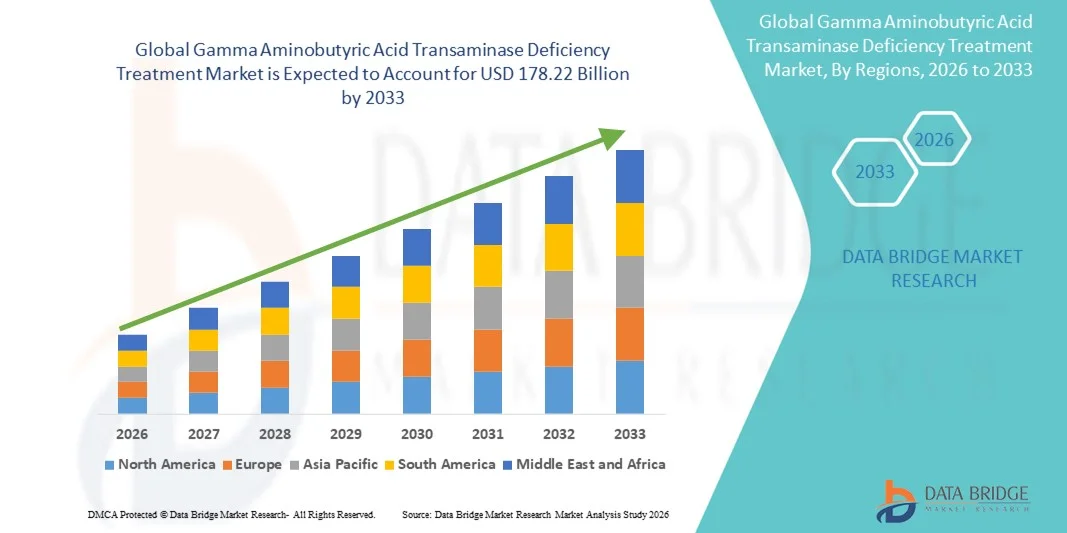
- As per Data Bridge Market Research analysis that the global gamma aminobutyric acid transaminase deficiency treatment market size was valued at USD 131.23 billion in 2025 and is expected to reach USD 178.22 billion by 2033, at a CAGR of 3.90% during the forecast period
- The market growth is largely fueled by increasing awareness of rare metabolic disorders, improvements in genetic screening programs, and advancements in diagnostic technologies, which are enabling earlier identification and better clinical management in both pediatric and adult patient populations
- Furthermore, rising investments in rare disease research, expanding access to supportive and symptomatic treatment options, and growing collaboration between research institutions and healthcare providers are accelerating the uptake of Gamma Aminobutyric Acid Transaminase Deficiency Treatment solutions, thereby significantly contributing to overall market expansion
Market Size & Forecast
Global Market Value (2025): USD 131.23 Billion
Expected Market Value (2033): USD 178.22 Billion
Forecast CAGR (2026–2033): 3.90%
What are the Major Takeaways of Gamma Aminobutyric Acid Transaminase Deficiency Treatment Market?
- Gamma Aminobutyric Acid Transaminase Deficiency is a rare inherited metabolic disorder that affects GABA metabolism, leading to severe neurological symptoms such as developmental delay, seizures, hypotonia, and movement abnormalities. As awareness of this condition grows among clinicians and caregivers, the demand for accurate diagnosis and supportive treatment approaches is steadily increasing across specialized healthcare settings
- The growing focus on rare disease management, improvements in genetic and molecular diagnostic techniques, and rising participation in clinical research programs are playing a significant role in strengthening the treatment landscape and improving patient outcomes over time
- North America dominated the gamma aminobutyric acid transaminase deficiency treatment market with the largest revenue share of 42.85% in 2025, supported by a well-established healthcare infrastructure, advanced genetic testing capabilities, high awareness levels among medical professionals, and strong presence of rare disease research centers. The U.S. is witnessing substantial growth in the adoption of specialized treatment approaches, particularly in pediatric and neurology-focused hospitals, driven by government support, orphan drug incentives, and ongoing clinical developments
- Asia-Pacific is expected to be the fastest-growing region, registering a projected CAGR during the forecast period, owing to increasing healthcare investments, improving access to advanced diagnostic tools, rising awareness of rare neurological disorders, and the expansion of specialized treatment facilities in developing countries such as China and India
- The Flumazenil segment dominated the largest market revenue share of approximately 62.4% in 2025, driven by its established role in managing altered neurotransmitter activity associated with excessive GABA accumulation in patients
Report Scope and Gamma Aminobutyric Acid Transaminase Deficiency Treatment Market Segmentation
|
Attributes |
Gamma Aminobutyric Acid Transaminase Deficiency Treatment Key Market Insights |
|
Segments Covered |
|
|
Countries Covered |
North America
Europe
Asia-Pacific
Middle East and Africa
South America
|
|
Key Market Players |
|
|
Market Opportunities |
|
|
Value Added Data Infosets |
In addition to the insights on market scenarios such as market value, growth rate, segmentation, geographical coverage, and major players, the market reports curated by the Data Bridge Market Research also include in-depth expert analysis, patient epidemiology, pipeline analysis, pricing analysis, and regulatory framework. |
Gamma Aminobutyric Acid Transaminase Deficiency Treatment Market Trends
Advancements in Precision Medicine and Genetic-Based Therapeutics
- A significant and accelerating trend in the global gamma aminobutyric acid transaminase (GABA-T) deficiency treatment market is the increasing focus on precision medicine approaches, enzyme-targeted therapies, and genetic-based interventions. Researchers and pharmaceutical companies are emphasizing therapies designed to correct or compensate for the underlying metabolic imbalance caused by GABA-T deficiency, thereby improving symptom management and long-term neurological outcomes
- For instance, several academic research institutions and biotechnology firms are investigating gene replacement therapy, antisense oligonucleotides, and enzyme modulation strategies to reduce the abnormal accumulation of gamma-aminobutyric acid (GABA) in the brain. These innovative approaches aim to address the root cause of the disorder rather than simply treating associated symptoms such as seizures and developmental delay
- The integration of advanced diagnostic techniques, including next-generation sequencing, has enabled earlier and more accurate identification of GABA-T deficiency. Early diagnosis allows for prompt therapeutic intervention, dietary management, and supportive treatments, which significantly enhance quality of life and disease outcomes in affected individuals, particularly in pediatric populations
- In addition, the development of orphan drugs and rare-disease-specific treatment pipelines is expanding rapidly, supported by favorable regulatory frameworks and incentives from government health authorities. These programs encourage drug developers to invest in rare metabolic and neurological disorders such as GABA-T deficiency, accelerating clinical trials and market availability
- The growing collaboration between research institutes, pharmaceutical manufacturers, and patient advocacy groups is further driving innovation in treatment protocols. These partnerships are focused on improving access to advanced therapies, optimizing clinical guidelines, and enhancing awareness of this rare condition among healthcare professionals
- As awareness increases and diagnostic rates improve globally, the demand for targeted Gamma Aminobutyric Acid Transaminase Deficiency Treatment solutions is expected to rise steadily, contributing to the long-term growth of this specialized therapeutic market
Gamma Aminobutyric Acid Transaminase Deficiency Treatment Market Dynamics
Driver
Rising Awareness of Rare Neurological Disorders and Expanding Diagnostic Capabilities
- The increasing awareness of rare metabolic and neurological disorders, coupled with significant progress in genetic screening and diagnostic technologies, is a major driver of growth in the Gamma Aminobutyric Acid Transaminase Deficiency Treatment market
- For instance, in April 2025, several international rare disease organizations expanded their newborn screening recommendations to include rare neurotransmitter-related metabolic conditions, increasing early detection rates and supporting timely treatment interventions. Such initiatives are expected to positively impact the overall growth of the GABA-T deficiency treatment landscape.
- As healthcare providers and families become more educated about rare genetic conditions, there is a rising demand for accurate diagnosis, specialized care, and long-term management strategies tailored to the needs of affected individuals
- Moreover, advancements in neuroimaging techniques and molecular diagnostics have enabled clinicians to identify this condition with greater precision. This has increased the number of diagnosed cases and, consequently, the demand for specialized therapeutic options
- The growing investment in research and development by biotechnology and pharmaceutical companies, along with increased funding for rare disease treatment programs, further supports the expansion of the Gamma Aminobutyric Acid Transaminase Deficiency Treatment market on a global scale
- In addition, improvements in healthcare infrastructure and broader access to genetic testing in both developed and developing regions are accelerating the diagnosis and treatment of this previously under-recognized disorder
Restraint/Challenge
Limited Patient Pool, High Treatment Costs, and Lack of Standardized Therapies
- One of the most significant challenges in the Gamma Aminobutyric Acid Transaminase Deficiency Treatment market is the extremely small patient population, as the condition is classified as an ultra-rare disorder. This limited prevalence restricts large-scale clinical trials and reduces commercial incentives for widespread drug development
- The high cost associated with advanced therapies, including gene-based treatments and long-term neurological support, can place a substantial financial burden on patients, families, and healthcare systems. These expenses often limit access to appropriate care, especially in low- and middle-income regions
- For instance, In addition, the lack of standardized treatment protocols and the limited availability of disease-specific medications make it difficult for clinicians to establish consistent, evidence-based therapeutic strategies
- Many current treatment approaches remain focused on symptom management — such as seizure control, nutritional support, and physical therapy — rather than definitive disease modification. This highlights a critical unmet need in the market
- Overcoming these limitations will require increased global collaboration, greater public and private funding for rare disease research, and continued advocacy to encourage the development of affordable and accessible Gamma Aminobutyric Acid Transaminase Deficiency Treatment solutions
- Strengthening data registries, expanding patient identification efforts, and improving healthcare professional training will also play a vital role in addressing these challenges and supporting sustainable market growth in the future
How is the Gamma Aminobutyric Acid Transaminase Deficiency Treatment Market Segmented?
The market is segmented on the basis of treatment, diagnosis, dosage, route of administration, end-users, and distribution channel.
- By Treatment
On the basis of treatment, the Gamma Aminobutyric Acid Transaminase Deficiency Treatment market is segmented into Flumazenil and Others. The Flumazenil segment dominated the largest market revenue share of approximately 62.4% in 2025, driven by its established role in managing altered neurotransmitter activity associated with excessive GABA accumulation in patients. Flumazenil has shown potential in stabilizing neurological function by counteracting abnormal inhibitory signaling in the brain, making it a preferred therapeutic option in clinical practice. The availability of injectable formulations, growing clinical familiarity, and inclusion in experimental treatment protocols for rare neurological disorders have further strengthened its demand. In addition, increased research into its extended applications within metabolic encephalopathies has resulted in higher adoption rates across specialized neurology centers. Support from orphan-drug initiatives, government research funding, and academic studies has also enhanced the accessibility of this drug in advanced healthcare systems. The consistent clinical outcomes observed in certain pediatric and adolescent cases are giving physicians higher confidence in its use, contributing to sustained dominance in this segment.
The “Others” segment is expected to witness the fastest CAGR of 22.3% from 2026 to 2033, owing to the rapid development of experimental therapies, nutritional interventions, and gene-based treatments currently undergoing research and early-stage clinical trials. This category includes supportive medications such as anticonvulsants, dietary supplements, and investigational compounds aimed at enzyme modulation. Progress in precision medicine and orphan drug development programs is driving accelerated innovation in this area. Additionally, academic and biotechnology collaborations are producing alternative therapeutic solutions focused on symptom management and long-term neurological improvement. The introduction of rare-disease incentives and priority review pathways by regulatory authorities further encourages pharmaceutical companies to expand this segment. Rising clinical trial activity and improved patient identification through advanced genetic testing are also expected to significantly boost the growth rate of this category in the coming years.
- By Diagnosis
On the basis of diagnosis, the market is segmented into Physical Exam, Laboratory Tests, Genetic Testing, and Others. The Genetic Testing segment held the largest market revenue share of 48.9% in 2025, as GABA Transaminase Deficiency is a genetic metabolic disorder that requires molecular confirmation for accurate diagnosis. The growing accessibility of whole-exome sequencing and targeted gene panels has significantly increased early identification of this condition. Hospitals and specialized laboratories now rely heavily on genetic testing to confirm mutations related to the ABAT gene, ensuring precise diagnosis and facilitating timely treatment initiation. Increasing awareness among pediatric neurologists and the expansion of newborn screening in certain regions have further fueled the dominance of this segment. Additionally, technological advancements have reduced both the cost and time associated with genetic sequencing. The improved diagnostic accuracy offered by these tests also reduces misdiagnosis, leading physicians to prefer genetic validation over conventional methods. As a result, this segment continues to command a strong position in the overall market.
The Laboratory Tests segment is projected to register the fastest CAGR of 20.1% from 2026 to 2033, driven by the increasing use of cerebrospinal fluid and blood-based biochemical assays to measure abnormal GABA levels. These tests are often used as initial screening tools before proceeding to genetic confirmation, making them essential in the diagnostic pathway. Continuous development in advanced biomarker detection techniques and improved laboratory automation is strengthening this segment. Furthermore, a growing number of diagnostic centers in emerging economies are adopting specialized metabolic testing to detect rare neurological disorders. The expansion of healthcare infrastructure, increasing funding for rare disease diagnostics, and rising awareness among clinicians are also expected to propel the rapid growth of this segment in the forecast period.
- By Dosage
On the basis of dosage, the Gamma Aminobutyric Acid Transaminase Deficiency Treatment market is segmented into Solution, Injection, and Others. The Injection segment accounted for the largest market revenue share of 55.6% in 2025, attributed to its high bioavailability and rapid therapeutic effect in patients with severe neurological symptoms. In acute cases, injectable formulations are preferred in hospital and emergency care settings to achieve immediate control over abnormal neurotransmitter activity. Physicians favor this form due to its controlled dosing, reliability, and quick onset of action. The widespread availability of hospital-based injectable medications and their inclusion in advanced treatment protocols have further strengthened this segment. In addition, ongoing clinical trials evaluating injectable enzyme-modulating therapies are increasing its adoption. Support from government-funded research institutions and rare-disease programs has also increased patient access to injectable treatments.
The Solution segment is anticipated to witness the fastest CAGR of 21.4% from 2026 to 2033, owing to its growing use in long-term and pediatric management of GABA-T deficiency. Oral and liquid solutions are considered more convenient for children and individuals requiring continuous supportive therapy at home. The development of improved formulations with enhanced stability and better absorption is also boosting this segment. These solutions provide flexibility in dosing and are easier to administer in non-hospital settings, which significantly increases patient compliance. Rising focus on home-care management for chronic neurological disorders and increasing availability of prescription-based solutions through specialized pharmacies further contribute to this strong growth outlook.
- By Route of Administration
On the basis of route of administration, the market is segmented into Intravenous and Others. The Intravenous segment dominated the market with a revenue share of 57.2% in 2025, due to its superior efficiency in delivering critical medications directly into the bloodstream. This route is typically used for severe cases that require close monitoring in clinical environments. Intravenous therapy allows for controlled and precise dosing, which is crucial in rare metabolic disorders such as GABA Transaminase Deficiency. Hospitals and specialty clinics largely prefer this method to achieve faster therapeutic response and stabilize neurological conditions. Additionally, the increasing number of inpatient admissions for rare central nervous system disorders is further fueling the demand for intravenous treatment routes. Continuous improvements in infusion technologies, alongside the strong presence of trained medical professionals in advanced healthcare systems, also support the dominance of this segment.
The “Others” segment (including oral and intramuscular routes) is expected to grow at the fastest CAGR of 19.6% from 2026 to 2033, driven by the rising adoption of patient-friendly and less invasive methods. Oral treatment options are particularly preferred for long-term symptom management and outpatient care. Advancements in formulation technology that improve bioavailability through non-intravenous routes are encouraging wider acceptance. The growing emphasis on home-based care and reduced hospital stays is also pushing the demand for alternative administration methods. These routes offer improved patient comfort, reduced healthcare costs, and increased treatment accessibility, all of which are anticipated to significantly fuel segment growth over the forecast period.
- By End-Users
On the basis of end-users, the market is segmented into Clinics, Hospitals, and Others. The Hospitals segment held the largest revenue share of 51.8% in 2025, as most cases of GABA Transaminase Deficiency require specialized neurological care, continuous monitoring, and advanced diagnostic tools that are primarily available in hospital settings. Tertiary care and pediatric hospitals play a central role in managing this rare condition, offering multidisciplinary treatment approaches. The presence of trained geneticists, neurologists, and critical care units strengthens the dominance of this segment. Additionally, the availability of advanced intravenous therapies and emergency management facilities makes hospitals the preferred treatment centers. Government funding, research collaborations, and rare disease programs are also largely centered around major hospital systems, contributing to this segment’s strong market position.
The Clinics segment is expected to exhibit the fastest CAGR of 20.7% from 2026 to 2033, driven by the expansion of specialized neurology and genetic clinics across urban and semi-urban areas. These facilities are increasingly equipped to handle diagnosis, follow-up consultations, and long-term management of rare disorders. The rising number of private clinics offering genetic counseling and metabolic screening services is further supporting growth. Improved awareness among patients and caregivers about the importance of early treatment is also increasing clinic visits. Moreover, the growing integration of telemedicine and remote consultation services makes clinics more accessible, encouraging rapid expansion in this segment.
- By Distribution Channel
On the basis of distribution channel, the market is segmented into Hospital Pharmacy, Retail Pharmacy, and Online Pharmacy. The Hospital Pharmacy segment dominated the market with a share of 49.3% in 2025, as most treatments and injectable drugs for GABA Transaminase Deficiency are administered in hospital settings. These pharmacies maintain direct coordination with treatment teams, ensuring immediate availability of prescribed medications. Given the rare and critical nature of the disorder, most drugs are distributed under strict medical supervision via hospital channels. The availability of specialized storage, handling of high-risk medications, and alignment with hospital treatment protocols further strengthen this segment’s dominance. Moreover, government-supported hospitals often act as primary hubs for rare disease drug distribution.
The Online Pharmacy segment is expected to witness the fastest CAGR of 23.5% from 2026 to 2033, fueled by the rapid expansion of e-commerce healthcare platforms and increasing patient preference for home delivery of medications. Online pharmacies provide greater accessibility, especially for patients living in remote regions where specialty medications are not readily available. Increasing digitalization in healthcare, improved logistics networks, and secure prescription verification systems are supporting this segment’s strong growth. Furthermore, the convenience, broader availability, and potential cost advantages offered by online channels are making them an increasingly preferred option in long-term treatment management.
Gamma Aminobutyric Acid Transaminase Deficiency Treatment Market Regional Analysis
- North America dominated the gamma aminobutyric acid transaminase deficiency treatment market with the largest revenue share of 42.85% in 2025
- Supported by a well-established healthcare infrastructure, advanced genetic testing capabilities, high awareness levels among medical professionals, and a strong presence of rare disease research centers
- The market is witnessing substantial growth in the adoption of specialized treatment approaches, particularly in pediatric and neurology-focused hospitals, driven by government support, orphan drug incentives, and ongoing clinical developments
U.S. Gamma Aminobutyric Acid Transaminase Deficiency Treatment Market Insight
The U.S. gamma aminobutyric acid transaminase deficiency treatment market captured a leading revenue share in 2025, fueled by increasing awareness of rare neurological disorders, wider adoption of enzyme-targeted therapies, and expansion of specialized care centers. Rising investments in clinical trials, ongoing research collaborations, and government-backed orphan drug programs are accelerating the availability of novel treatment options, further strengthening market growth.
Europe Gamma Aminobutyric Acid Transaminase Deficiency Treatment Market Insight
The Europe gamma aminobutyric acid transaminase deficiency treatment market is projected to expand at a significant CAGR during the forecast period, driven by established healthcare systems, increasing awareness of rare diseases, and enhanced access to diagnostic tools. Countries such as Germany, France, and the U.K. are witnessing growth through advanced pediatric care facilities and clinical research programs aimed at improving outcomes in patients with GABA-T deficiency.
U.K. Gamma Aminobutyric Acid Transaminase Deficiency Treatment Market Insight
The U.K. gamma aminobutyric acid transaminase deficiency treatment market is anticipated to grow steadily due to increasing government initiatives to support rare disease treatment, the presence of specialized pediatric hospitals, and growing adoption of enzyme replacement and targeted therapies. Rising healthcare funding and awareness campaigns are also boosting early diagnosis and intervention.
Germany Gamma Aminobutyric Acid Transaminase Deficiency Treatment Market Insight
The Germany gamma aminobutyric acid transaminase deficiency treatment market is expected to expand considerably, fueled by high healthcare standards, strong research infrastructure, and increasing awareness among healthcare providers. Government support for rare disease programs and the adoption of advanced treatment modalities in specialized centers are key drivers of growth.
Asia-Pacific Gamma Aminobutyric Acid Transaminase Deficiency Treatment Market Insight
The Asia-Pacific gamma aminobutyric acid transaminase deficiency treatment market is poised to grow at the fastest CAGR during the forecast period, driven by rising healthcare investments, improving diagnostic capabilities, and growing awareness of rare neurological disorders. Countries such as China, India, and Japan are expanding access to specialized treatment facilities, creating new opportunities for market growth.
Japan Gamma Aminobutyric Acid Transaminase Deficiency Treatment Market Insight
The Japan gamma aminobutyric acid transaminase deficiency treatment market is gaining momentum due to its advanced healthcare system, high awareness of rare diseases, and increasing focus on pediatric and neurological care. Early screening programs and hospital-based treatment centers are supporting adoption, while ongoing research and clinical studies are fueling innovation in therapy options.
China Gamma Aminobutyric Acid Transaminase Deficiency Treatment Market Insight
The China gamma aminobutyric acid transaminase deficiency treatment market accounted for the largest revenue share in Asia-Pacific in 2025, attributed to increasing healthcare infrastructure, expanding rare disease programs, and rising awareness among clinicians. Government initiatives promoting access to specialized treatment, coupled with growing private and public investments in rare disease research, are key factors driving market growth.
Which are the Top Companies in Gamma Aminobutyric Acid Transaminase Deficiency Treatment Market?
The Gamma Aminobutyric Acid Transaminase Deficiency Treatment industry is primarily led by well-established companies, including:
- Pfizer Inc. (U.S.)
- F. Hoffmann-La Roche Ltd. (Switzerland)
- Novartis AG (Switzerland)
- Sanofi S.A. (France)
- GlaxoSmithKline plc (U.K.)
- Takeda Pharmaceutical Company (Japan)
- Biogen Inc. (U.S.)
- AbbVie Inc. (U.S.)
- Johnson & Johnson (U.S.)
- Merck & Co., Inc. (U.S.)
- PTC Therapeutics (U.S.)
- Ultragenyx Pharmaceutical (U.S.)
- Ionis Pharmaceuticals (U.S.)
- Sarepta Therapeutics (U.S.)
- Alexion Pharmaceuticals (U.S.)
- Amicus Therapeutics (U.S.)
- BioMarin Pharmaceutical (U.S.)
- Recordati Rare Diseases (Italy)
- Zydus Lifesciences (India)
- Sun Pharmaceutical Industries (India)
Latest Developments in Global Gamma Aminobutyric Acid Transaminase Deficiency Treatment Market
- In June 2023, researchers published a computational study analyzing how various disease‑causing mutations in the enzyme GABA‑aminotransferase affect its structure and function. The study used molecular dynamics simulations and free energy calculations to show that certain mutations (P152S, Q296H, R92Q) cause structural instability, which helps explain differing severity among patients
- In November 2023, a research team reported the discovery of novel small‑molecule inhibitors of GABA‑AT via molecular docking, molecular dynamics simulation, and biological evaluation — highlighting renewed efforts to pharmacologically target GABA metabolism, which may offer a starting point for future therapies

- Interactive Data Analysis Dashboard
- Company Analysis Dashboard for high growth potential opportunities
- Research Analyst Access for customization & queries
- Competitor Analysis with Interactive dashboard
- Latest News, Updates & Trend analysis
- Harness the Power of Benchmark Analysis for Comprehensive Competitor Tracking
Data collection and base year analysis are done using data collection modules with large sample sizes. The stage includes obtaining market information or related data through various sources and strategies. It includes examining and planning all the data acquired from the past in advance. It likewise envelops the examination of information inconsistencies seen across different information sources. The market data is analysed and estimated using market statistical and coherent models. Also, market share analysis and key trend analysis are the major success factors in the market report. To know more, please request an analyst call or drop down your inquiry.
The key research methodology used by DBMR research team is data triangulation which involves data mining, analysis of the impact of data variables on the market and primary (industry expert) validation. Data models include Vendor Positioning Grid, Market Time Line Analysis, Market Overview and Guide, Company Positioning Grid, Patent Analysis, Pricing Analysis, Company Market Share Analysis, Standards of Measurement, Global versus Regional and Vendor Share Analysis. To know more about the research methodology, drop in an inquiry to speak to our industry experts.
Data Bridge Market Research is a leader in advanced formative research. We take pride in servicing our existing and new customers with data and analysis that match and suits their goal. The report can be customized to include price trend analysis of target brands understanding the market for additional countries (ask for the list of countries), clinical trial results data, literature review, refurbished market and product base analysis. Market analysis of target competitors can be analyzed from technology-based analysis to market portfolio strategies. We can add as many competitors that you require data about in the format and data style you are looking for. Our team of analysts can also provide you data in crude raw excel files pivot tables (Fact book) or can assist you in creating presentations from the data sets available in the report.












