


Global Gas Pooling Mechanism Market Size
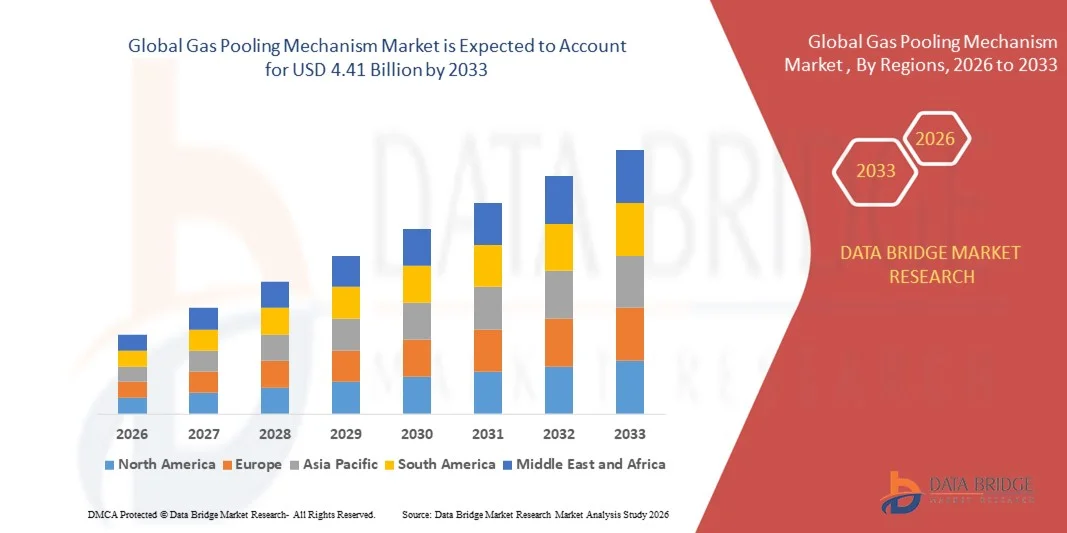
- The global Gas Pooling Mechanism Market size was valued at USD 2.52 billion in 2025 and is expected to reach USD 4.41 billion by 2033, at a CAGR of 7.20% during the forecast period.
- The market growth is primarily driven by increasing industrial and residential energy demand, coupled with advancements in gas distribution and storage technologies, which enhance efficiency and reliability across supply chains.
- Additionally, rising government initiatives to promote cleaner energy usage and optimize gas resource management are encouraging widespread adoption of gas pooling mechanisms, positioning them as a preferred solution for energy cost optimization and sustainable resource utilization. These factors collectively are accelerating market expansion and driving substantial industry growth.
Global Gas Pooling Mechanism Market Analysis
- Gas pooling mechanisms, enabling the aggregation and optimization of natural gas supply among multiple users or regions, are becoming increasingly critical for efficient energy management in both industrial and commercial sectors due to improved cost efficiency, supply reliability, and operational flexibility.
- The growing adoption of gas pooling mechanisms is primarily driven by rising energy consumption, increasing industrialization, and the need for cost-effective and sustainable gas distribution solutions.
- North America dominated the Global Gas Pooling Mechanism Market with the largest revenue share of 36.2% in 2025, supported by well-established gas infrastructure, strong regulatory frameworks, and the presence of major energy companies investing in advanced pooling technologies, with the U.S. witnessing significant integration of gas pooling in industrial hubs and commercial utilities to enhance supply efficiency and reduce operational costs.
- Asia-Pacific is expected to be the fastest-growing region in the Global Gas Pooling Mechanism Market during the forecast period due to rapid urbanization, growing industrial demand, and increased investments in energy infrastructure.
- The Voluntary Pooled segment dominated the market with the largest revenue share of 41.5% in 2025, driven by its flexibility and efficiency in aggregating gas resources from multiple operators without regulatory compulsion.
Report Scope and Global Gas Pooling Mechanism Market Segmentation
|
Attributes |
Gas Pooling Mechanism Key Market Insights |
|
Segments Covered |
|
|
Countries Covered |
North America
Europe
Asia-Pacific
Middle East and Africa
South America
|
|
Key Market Players |
|
|
Market Opportunities |
|
|
Value Added Data Infosets |
In addition to the insights on market scenarios such as market value, growth rate, segmentation, geographical coverage, and major players, the market reports curated by the Data Bridge Market Research also include import export analysis, production capacity overview, production consumption analysis, price trend analysis, climate change scenario, supply chain analysis, value chain analysis, raw material/consumables overview, vendor selection criteria, PESTLE Analysis, Porter Analysis, and regulatory framework. |
Global Gas Pooling Mechanism Market Trends
Enhanced Efficiency Through AI and Predictive Energy Management
- A significant and accelerating trend in the global Gas Pooling Mechanism Market is the increasing integration of artificial intelligence (AI) and predictive analytics into gas distribution and pooling systems. This fusion of technologies is enhancing operational efficiency, reducing wastage, and optimizing supply allocation across industrial and commercial users.
- For instance, advanced gas pooling platforms can leverage AI algorithms to forecast demand patterns and dynamically adjust allocations among multiple consumers, minimizing downtime and ensuring consistent supply. Similarly, predictive maintenance tools can monitor pipeline conditions and equipment health, reducing the risk of unexpected failures and operational interruptions.
- AI integration in gas pooling enables features such as real-time demand forecasting, anomaly detection in gas flow, and optimization of storage utilization. For example, some systems use machine learning to predict peak demand periods and suggest operational adjustments to balance supply efficiently. Furthermore, automated control systems allow operators to manage gas distribution remotely, responding instantly to changing consumption patterns.
- The seamless integration of AI-driven gas pooling mechanisms with broader energy management platforms allows centralized oversight of multiple facilities, optimizing energy consumption alongside operational costs. Through a single interface, operators can manage gas flow, storage, and distribution while monitoring performance metrics and environmental impact.
- This trend towards more intelligent, automated, and interconnected gas pooling solutions is fundamentally transforming expectations for energy management efficiency. Consequently, companies such as Shell, BP, and Gazprom are investing in AI-enabled pooling systems that optimize resource allocation, enhance predictive maintenance, and support real-time operational decision-making.
- The demand for gas pooling mechanisms with integrated AI and predictive management capabilities is growing rapidly across industrial and commercial sectors, as operators increasingly prioritize efficiency, reliability, and sustainable energy utilization.
Global Gas Pooling Mechanism Market Dynamics
Driver
Growing Need Due to Rising Energy Demand and Industrialization
- The increasing energy demand across industrial, commercial, and residential sectors, coupled with rapid industrialization, is a significant driver for the heightened adoption of gas pooling mechanisms.
- For instance, in 2025, Shell and BP announced advancements in centralized gas allocation systems aimed at optimizing supply efficiency for multiple industrial clients, reflecting strategies by key companies expected to drive market growth during the forecast period.
- As industries and utility providers seek cost-effective and reliable energy distribution solutions, gas pooling mechanisms offer advanced features such as real-time demand balancing, optimized storage utilization, and streamlined allocation, providing a substantial improvement over traditional, siloed gas supply methods.
- Furthermore, the push for sustainable energy practices and efficient resource management is making gas pooling an integral component of modern energy infrastructure, enabling better integration with renewable energy sources, digital monitoring systems, and broader energy management platforms.
- The ability to reduce operational costs, improve supply reliability, and manage peak demand periods efficiently are key factors propelling the adoption of gas pooling mechanisms across both industrial and commercial sectors. The trend towards digitalized energy management and increasing availability of AI-enabled gas pooling solutions further contribute to market expansion.
Restraint/Challenge
Concerns Regarding Infrastructure Costs and Regulatory Compliance
- High initial investment costs for gas pooling infrastructure, including pipelines, storage facilities, and digital management systems, pose a significant challenge to broader market adoption. These costs can be a barrier, particularly for smaller utilities or industrial operators in developing regions.
- For instance, projects requiring integration of advanced monitoring and AI-based control systems often involve substantial capital expenditure, making some companies hesitant to adopt pooling mechanisms despite long-term efficiency benefits.
- Regulatory compliance and varying standards across regions also add complexity and cost to the deployment of gas pooling solutions. Ensuring adherence to safety protocols, emission standards, and government regulations requires careful planning and continuous monitoring.
- Addressing these challenges through government incentives, cost-sharing partnerships, and technological innovations that reduce infrastructure expenses is crucial for market growth. Additionally, scalable and modular gas pooling solutions are being developed by companies such as Gazprom and Equinor to lower entry barriers and enhance adoption among smaller operators.
- While long-term operational savings and efficiency gains are compelling, overcoming high upfront costs and regulatory hurdles remains essential for widespread deployment of gas pooling mechanisms worldwide.
Global Gas Pooling Mechanism Market Scope
Gas pooling mechanism market is segmented on the basis of type and application.
- By Type
On the basis of type, the Global Gas Pooling Mechanism Market is segmented into Voluntary Pooled, Forced Pooled, Drilling, Proration, Field Enhanced Recovery, and Specially Defined. The Voluntary Pooled segment dominated the market with the largest revenue share of 41.5% in 2025, driven by its flexibility and efficiency in aggregating gas resources from multiple operators without regulatory compulsion. Voluntary pooling allows operators to optimize production, reduce infrastructure costs, and manage supply more effectively, making it a preferred choice in mature and developing gas fields.
The Forced Pooled segment is expected to witness the fastest CAGR of 22.3% from 2026 to 2033, fueled by regulatory mandates in certain regions requiring operators to combine their production for equitable resource allocation. Forced pooling ensures fair distribution of gas reserves, prevents resource underutilization, and is increasingly adopted in high-demand industrial regions.
- By Application
On the basis of application, the Global Gas Pooling Mechanism Market is segmented into Power Generation, Transportation, Industrial, Fertilizers, Hydrogen Production, and Others. The Industrial segment accounted for the largest market revenue share of 38.7% in 2025, driven by high energy consumption in manufacturing, petrochemical processing, and heavy industries that benefit from pooled gas supply for cost efficiency and reliability. Gas pooling reduces procurement costs, ensures consistent supply, and supports large-scale operations, making it highly attractive to industrial operators.
The Hydrogen Production segment is expected to witness the fastest CAGR of 23.1% from 2026 to 2033, fueled by the global push for clean energy and the growing demand for green hydrogen. Pooled natural gas supplies provide a stable feedstock for hydrogen production, enabling scalable, efficient, and economically viable hydrogen generation across emerging energy markets.
Global Gas Pooling Mechanism Market Regional Analysis
- North America dominated the Global Gas Pooling Mechanism Market with the largest revenue share of 36.2% in 2025, driven by increasing industrialization, high energy consumption, and the presence of well-established gas infrastructure.
- Companies and utilities in the region prioritize efficient and cost-effective energy distribution, leveraging gas pooling mechanisms to optimize supply, reduce operational costs, and enhance reliability across multiple industrial and commercial users.
- This widespread adoption is further supported by strong regulatory frameworks, advanced technological capabilities, and substantial investments from leading energy companies. The integration of digital monitoring and AI-driven management systems enables operators to efficiently balance supply and demand, ensuring uninterrupted gas availability. Consequently, North America remains a key market for gas pooling solutions, with significant deployment in power generation, industrial facilities, and transportation sectors, establishing these mechanisms as a critical component of the region’s energy management strategy.
U.S. Gas Pooling Mechanism Market Insight
The U.S. gas pooling mechanism market captured the largest revenue share of 82% in 2025 within North America, driven by a mature energy infrastructure, high industrial energy demand, and the need for efficient gas distribution systems. Companies are increasingly leveraging pooled gas supplies to optimize resource allocation, reduce operational costs, and ensure uninterrupted supply for industrial, power generation, and transportation sectors. The adoption of digital monitoring, predictive analytics, and AI-driven allocation platforms further enhances operational efficiency, driving market growth in both residential and commercial applications.
Europe Gas Pooling Mechanism Market Insight
The Europe gas pooling mechanism market is projected to expand at a substantial CAGR throughout the forecast period, driven by stringent energy regulations, the push for sustainable gas utilization, and increasing industrial and commercial demand. The region’s emphasis on energy efficiency, coupled with growing adoption of centralized gas management systems, fosters the uptake of gas pooling. Key applications include industrial manufacturing, power generation, and fertilizer production, where pooled gas systems help optimize costs and ensure reliability.
U.K. Gas Pooling Mechanism Market Insight
The U.K. gas pooling mechanism market is anticipated to grow at a noteworthy CAGR during the forecast period, fueled by rising energy consumption in industries and commercial sectors, coupled with the government’s focus on efficient resource utilization. The growing demand for cost-effective energy distribution and enhanced operational reliability encourages the adoption of pooled gas systems. Additionally, regulatory frameworks promoting fair and equitable gas allocation across operators support market expansion.
Germany Gas Pooling Mechanism Market Insight
The Germany gas pooling mechanism market is expected to expand at a considerable CAGR during the forecast period, supported by strong industrial activity, advanced infrastructure, and the adoption of digitalized energy management systems. Germany’s focus on sustainability and optimization of natural resources promotes the deployment of pooled gas solutions, particularly for industrial, transportation, and power generation applications. Integration with predictive maintenance and AI-enabled monitoring systems enhances efficiency and reliability.
Asia-Pacific Gas Pooling Mechanism Market Insight
The Asia-Pacific gas pooling mechanism market is poised to grow at the fastest CAGR of 23% during the forecast period of 2026 to 2033, driven by rapid industrialization, urbanization, and rising energy demand in countries such as China, India, and Japan. Governments in the region are promoting energy efficiency and infrastructure modernization, which is boosting the adoption of gas pooling mechanisms. The increasing establishment of industrial parks, power plants, and fertilizer production facilities further supports market growth.
Japan Gas Pooling Mechanism Market Insight
The Japan gas pooling mechanism market is gaining momentum due to the country’s high-tech industrial landscape, strong energy infrastructure, and focus on operational efficiency. Industrial and commercial sectors are increasingly adopting pooled gas systems to optimize supply, minimize operational costs, and support sustainable energy management. Integration with AI-driven monitoring and predictive analytics is further enhancing system efficiency and reliability.
China Gas Pooling Mechanism Market Insight
The China gas pooling mechanism market accounted for the largest market revenue share in Asia-Pacific in 2025, driven by rapid industrialization, urbanization, and rising energy consumption. The country’s strong focus on optimizing gas utilization and reducing operational costs encourages the deployment of pooled gas systems across industrial, power generation, and fertilizer production sectors. Additionally, the expansion of domestic energy infrastructure and supportive government initiatives for efficient energy management are key factors propelling the market in China.
Global Gas Pooling Mechanism Market Share
The Gas Pooling Mechanism industry is primarily led by well-established companies, including:
• Shell plc (U.K.)
• BP plc (U.K.)
• ExxonMobil (U.S.)
• Chevron Corporation (U.S.)
• TotalEnergies SE (France)
• Equinor ASA (Norway)
• ConocoPhillips (U.S.)
• Gazprom (Russia)
• PetroChina (China)
• Sinopec (China)
• Reliance Industries Limited (India)
• Adani Gas Limited (India)
• Eni S.p.A. (Italy)
• Siemens Energy (Germany)
• Linde plc (Ireland)
• Honeywell International Inc. (U.S.)
• TechnipFMC (U.S.)
• Mitsubishi Heavy Industries (Japan)
• Pertamina (Indonesia)
• Kogas (South Korea)
What are the Recent Developments in Global Gas Pooling Mechanism Market?
- In April 2024, Shell plc, a global energy leader, launched a strategic initiative in South Africa to optimize natural gas distribution through advanced gas pooling mechanisms. This initiative aims to enhance supply efficiency and reliability for industrial and commercial users, demonstrating Shell’s commitment to leveraging global expertise and cutting-edge energy management solutions to address regional energy challenges while strengthening its position in the growing global gas pooling market.
- In March 2024, BP plc implemented the Gas Pool Optimization System at multiple industrial sites in the U.S., designed to streamline gas allocation and reduce operational costs. The system uses predictive analytics to balance supply and demand across facilities, highlighting BP’s dedication to innovative solutions that improve energy efficiency and operational resilience in critical industrial and commercial applications.
- In March 2024, Honeywell International Inc. successfully deployed a Smart Gas Management Project in Bengaluru, India, aimed at improving gas distribution reliability for urban and industrial sectors. The initiative integrates advanced monitoring, AI-driven analytics, and predictive maintenance to enhance efficiency and ensure continuous energy supply, underscoring Honeywell’s role in promoting smart, sustainable energy solutions.
- In February 2024, Siemens Energy announced a partnership with Asian Industrial Gas Consortium to implement gas pooling solutions for power generation facilities across Southeast Asia. The collaboration focuses on centralized gas management to reduce wastage, optimize supply, and enhance operational efficiency, demonstrating Siemens Energy’s commitment to innovation and sustainable energy infrastructure development.
- In January 2024, ExxonMobil launched the NextGen Gas Pooling Platform at its European industrial hubs, incorporating advanced digital monitoring and automated supply allocation. This platform allows operators to optimize gas usage across multiple facilities, improve cost efficiency, and ensure reliability, reflecting ExxonMobil’s focus on integrating technology-driven solutions into global gas management strategies.

- Interactive Data Analysis Dashboard
- Company Analysis Dashboard for high growth potential opportunities
- Research Analyst Access for customization & queries
- Competitor Analysis with Interactive dashboard
- Latest News, Updates & Trend analysis
- Harness the Power of Benchmark Analysis for Comprehensive Competitor Tracking
Global Gas Pooling Mechanism Market, Supply Chain Analysis and Ecosystem Framework
To support market growth and help clients navigate the impact of geopolitical shifts, DBMR has integrated in-depth supply chain analysis into its Global Gas Pooling Mechanism Market research reports. This addition empowers clients to respond effectively to global changes affecting their industries. The supply chain analysis section includes detailed insights such as Global Gas Pooling Mechanism Market consumption and production by country, price trend analysis, the impact of tariffs and geopolitical developments, and import and export trends by country and HSN code. It also highlights major suppliers with data on production capacity and company profiles, as well as key importers and exporters. In addition to research, DBMR offers specialized supply chain consulting services backed by over a decade of experience, providing solutions like supplier discovery, supplier risk assessment, price trend analysis, impact evaluation of inflation and trade route changes, and comprehensive market trend analysis.
Data collection and base year analysis are done using data collection modules with large sample sizes. The stage includes obtaining market information or related data through various sources and strategies. It includes examining and planning all the data acquired from the past in advance. It likewise envelops the examination of information inconsistencies seen across different information sources. The market data is analysed and estimated using market statistical and coherent models. Also, market share analysis and key trend analysis are the major success factors in the market report. To know more, please request an analyst call or drop down your inquiry.
The key research methodology used by DBMR research team is data triangulation which involves data mining, analysis of the impact of data variables on the market and primary (industry expert) validation. Data models include Vendor Positioning Grid, Market Time Line Analysis, Market Overview and Guide, Company Positioning Grid, Patent Analysis, Pricing Analysis, Company Market Share Analysis, Standards of Measurement, Global versus Regional and Vendor Share Analysis. To know more about the research methodology, drop in an inquiry to speak to our industry experts.
Data Bridge Market Research is a leader in advanced formative research. We take pride in servicing our existing and new customers with data and analysis that match and suits their goal. The report can be customized to include price trend analysis of target brands understanding the market for additional countries (ask for the list of countries), clinical trial results data, literature review, refurbished market and product base analysis. Market analysis of target competitors can be analyzed from technology-based analysis to market portfolio strategies. We can add as many competitors that you require data about in the format and data style you are looking for. Our team of analysts can also provide you data in crude raw excel files pivot tables (Fact book) or can assist you in creating presentations from the data sets available in the report.













