


What is the Gene Therapy for Rare Diseases Market Size and Overview?
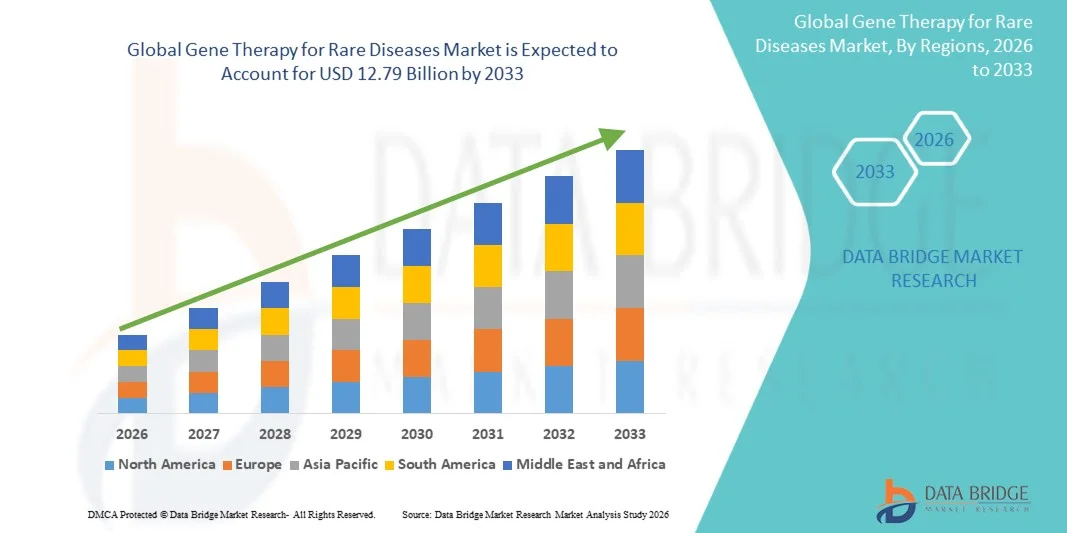
As per Data Bridge Market Research analysis the Gene Therapy for Rare Diseases Market was valued at USD 5.28 billion in 2025 and is projected to reach USD 12.79 billion by 2033, growing at a CAGR of 11.70% from 2026 to 2033. The market is experiencing robust growth driven by the increasing prevalence of rare genetic disorders, growing success of gene therapy clinical trials, and continuous advancements in viral vector engineering, gene editing technologies, and genetic medicine. The expanding adoption of one-time curative therapies for inherited diseases, coupled with favorable regulatory support for orphan drugs and rare disease treatments, is enabling healthcare providers to address the underlying genetic causes of disorders rather than merely managing symptoms, significantly improving patient outcomes and long-term quality of life.
Market Size & Forecast
- Global Market Value (2025): USD 5.28 Billion
- Expected Market Value (2033): USD 12.79 Billion
- Forecast CAGR (2026–2033): 11.70%
The rising incidence of rare monogenic diseases such as spinal muscular atrophy (SMA), Duchenne muscular dystrophy (DMD), inherited retinal diseases, hemophilia, sickle cell disease, and beta-thalassemia, along with increasing investments by biotechnology and pharmaceutical companies in gene therapy research and commercialization, is accelerating market growth. Regulatory agencies are increasingly granting orphan drug designation, fast-track approvals, and accelerated review pathways for innovative gene therapies, encouraging product development and market entry. Furthermore, advancements in adeno-associated virus (AAV) and lentiviral vector platforms, improvements in manufacturing capabilities, expanding genomic screening programs, and increasing collaboration among biotechnology companies, research institutions, and healthcare organizations are further driving the adoption of gene therapy for rare diseases across both developed and emerging markets.
Key Market Trends & Insights
- North America dominated the Gene Therapy for Rare Diseases Market with 42.8% of the total revenue share in 2026, driven by the strong presence of leading biotechnology and pharmaceutical companies, favorable regulatory pathways such as orphan drug and gene therapy approvals, advanced healthcare infrastructure, increasing investment in genomic medicine, and a high concentration of rare disease clinical trials in the United States.
- The in vivo gene therapy segment dominated the Gene Therapy for Rare Diseases Market with an estimated 73.18% share in 2025 owing to its ability to deliver therapeutic genes directly into patients without the need for cell extraction and laboratory manipulation.
- Asia-Pacific is projected to be the fastest-growing regional market during 2026–2033, registering a CAGR of 38.2%, supported by increasing investments in genomic research, expanding biotechnology capabilities, improving regulatory frameworks, growing healthcare expenditure, and rising adoption of advanced therapies across China, Japan, South Korea, and India. The region is also witnessing a rapid increase in clinical trials and government initiatives supporting rare disease treatment development.
- The specialty clinics segment is anticipated to register the fastest CAGR of 29.8% from 2026 to 2033, driven by increasing establishment of dedicated rare disease and genetic medicine clinics worldwide.
- The non-viral vectors segment is anticipated to register the fastest CAGR of 33.5% from 2026 to 2033, driven by growing demand for safer, scalable, and cost-effective gene delivery technologies
Report Scope and Gene Therapy for Rare Diseases Market Segmentation
|
Attributes |
Gene Therapy for Rare Diseases Key Market Insights |
|
Segments Covered |
|
|
Countries Covered |
North America
Europe
Asia-Pacific
Middle East and Africa
South America
|
|
Key Market Players |
|
|
Market Opportunities |
|
|
Value Added Data Infosets |
In addition to the insights on market scenarios such as market value, growth rate, segmentation, geographical coverage, and major players, the market reports curated by the Data Bridge Market Research also include in-depth expert analysis, geographically represented company-wise production and capacity, network layouts of distributors and partners, detailed and updated price trend analysis and deficit analysis of supply chain and demand. |
What is the Key Trend in the Gene Therapy for Rare Diseases Market?
Trend: Rapid Advancement of AAV and Gene Editing Technologies for Rare Disease Treatment
The Gene Therapy for Rare Diseases Market is witnessing significant momentum with the rapid advancement of adeno-associated virus (AAV) vector platforms, lentiviral gene therapies, and next-generation gene-editing technologies for the treatment of inherited rare diseases. Biopharmaceutical companies are increasingly developing one-time, potentially curative therapies targeting monogenic disorders such as spinal muscular atrophy (SMA), hemophilia, Duchenne muscular dystrophy (DMD), inherited retinal diseases, and sickle cell disease. Improvements in vector engineering, manufacturing scalability, tissue-specific delivery, and long-term gene expression are expanding the clinical applicability of gene therapies. Regulatory agencies have also accelerated approvals through orphan drug designation, Fast Track, Breakthrough Therapy, and RMAT pathways, encouraging innovation in the sector. For instance, In June 2023, Sarepta Therapeutics received U.S. FDA accelerated approval for ELEVIDYS, the first gene therapy approved for treating ambulatory pediatric patients with Duchenne muscular dystrophy carrying a confirmed mutation in the DMD gene. The approval represented a major milestone in expanding gene therapy for rare genetic disorders and highlighted the growing clinical adoption of AAV-mediated gene replacement therapies.
Gene Therapy for Rare Diseases Market Dynamics
Key Market Driver: Increasing Regulatory Approvals and Expanding Pipeline of One-Time Curative Gene Therapies
The primary driver of the Gene Therapy for Rare Diseases Market is the increasing number of regulatory approvals and late-stage clinical programs targeting rare inherited disorders. Thousands of rare diseases have an identified genetic cause but lack effective treatments, creating substantial demand for gene replacement and gene-editing therapies capable of addressing the underlying genetic defect rather than only managing symptoms. Advances in viral vector engineering, genome editing technologies, manufacturing capabilities, and precision diagnostics have accelerated the commercialization of potentially curative therapies. Governments and regulatory agencies continue supporting innovation through orphan drug incentives, priority review programs, and expedited approval pathways, improving investment attractiveness across the sector. For instance, in December 2023, Vertex Pharmaceuticals and CRISPR Therapeutics received U.S. FDA approval for CASGEVY, the world's first approved CRISPR-based gene-editing therapy for patients with sickle cell disease. The approval marked a transformative milestone in precision medicine and demonstrated the growing commercial viability of gene-editing technologies for treating rare genetic diseases.
Key Restraint/Challenge: High Treatment Costs and Complex Manufacturing Infrastructure
One of the most significant challenges facing the gene therapy for rare diseases market is the exceptionally high cost of treatment and the complexity associated with manufacturing advanced gene therapies. Viral vector production requires highly specialized facilities, stringent quality control, sophisticated analytical testing, and compliance with Good Manufacturing Practice (GMP) standards. Limited manufacturing capacity, supply chain constraints, and individualized treatment processes contribute to high production costs and restricted patient access. In addition, reimbursement negotiations remain challenging because many therapies involve substantial upfront costs despite offering potential long-term clinical benefits. For instance, Zolgensma, developed by Novartis for spinal muscular atrophy, remains one of the world's most expensive medicines, highlighting ongoing reimbursement and affordability challenges associated with one-time curative gene therapies
Key Market Opportunity: Expansion of Gene Therapies into Ultra-Rare Genetic Disorders Through Next-Generation Gene Editing
A significant long-term opportunity for the gene therapy for rare diseases market lies in expanding gene therapy applications to ultra-rare inherited disorders using next-generation genome editing, base editing, prime editing, and novel delivery technologies. Increasing availability of genomic sequencing, newborn screening programs, and precision diagnostics is enabling earlier identification of patients eligible for targeted genetic therapies. Continued collaboration among biotechnology companies, academic research institutes, contract development and manufacturing organizations (CDMOs), and regulatory agencies is expected to accelerate clinical development across previously untreatable rare diseases. For instance, in January 2024, Prime Medicine announced regulatory progress for PM359, its prime-editing program targeting chronic granulomatous disease (CGD), advancing the application of precise gene-editing technologies for rare inherited disorders. The program reflects the industry's shift toward next-generation editing platforms capable of correcting disease-causing mutations with greater precision than conventional gene replacement approaches.
How is the Gene Therapy for Rare Diseases Market Segmented?
The gene therapy for rare diseases market is segmented on the basis of drug, therapeutic application, therapy type, vector type, route of administration, and end user.
- By Drug
On the basis of drug, the Gene Therapy for Rare Diseases Market is segmented into approved drugs and pipeline drugs. The approved drugs segment dominated the Gene Therapy for Rare Diseases Market with an estimated 68.42% share in 2025 owing to the increasing commercialization of regulatory-approved gene therapies across multiple rare genetic disorders. Commercial products for spinal muscular atrophy, inherited retinal diseases, hemophilia, beta-thalassemia, and sickle cell disease have significantly expanded treatment availability. The Gene Therapy for Rare Diseases Market is benefiting from growing physician confidence in clinically validated therapies with proven long-term efficacy and safety profiles. Strong reimbursement support across North America and Europe continues accelerating patient access to approved products. Pharmaceutical companies are expanding manufacturing capacity to address increasing global demand. Continuous post-marketing evidence is further strengthening clinical adoption and supporting broader treatment recommendations. Hospitals and specialized treatment centers increasingly prioritize approved drugs because of established regulatory guidance and standardized treatment protocols. Rising awareness among healthcare providers and patient advocacy organizations is improving diagnosis rates and treatment uptake. Ongoing label expansions and geographic market approvals continue supporting commercial growth. Increasing investment in next-generation manufacturing technologies is improving product availability. These factors are expected to maintain the leadership of the approved drugs segment throughout the forecast period.
The pipeline drugs segment is projected to witness the fastest CAGR of 32.6% from 2026 to 2033, driven by the rapid advancement of clinical-stage gene therapy candidates targeting previously untreatable rare diseases. The Gene Therapy for Rare Diseases Market is experiencing substantial investment in innovative gene-editing technologies, next-generation viral vectors, and precision genetic medicines. Biotechnology companies continue expanding Phase II and Phase III clinical pipelines across neurological, metabolic, immunological, and hematological disorders. Increasing orphan drug incentives and expedited regulatory pathways are accelerating product development timelines. Growing collaboration between pharmaceutical companies and academic institutions is strengthening research activities. Advances in manufacturing technologies are improving scalability and reducing development costs. Expanding genomic screening programs are increasing identification of eligible patient populations. Strong venture capital funding and strategic licensing agreements continue supporting innovation. Continuous breakthroughs in CRISPR-based therapies and non-viral delivery technologies are broadening commercial opportunities. These developments are anticipated to make the pipeline drugs segment the fastest-growing category during the forecast period.
- By Therapeutic Application
On the basis of therapeutic application, the Gene Therapy for Rare Diseases Market is segmented into oncology, neurological disorders, ophthalmic disorders, hematological disorders, immunodeficiency disorders, metabolic disorders, and others. The neurological disorders segment dominated the Gene Therapy for Rare Diseases Market with an estimated 31.84% share in 2025 owing to the growing commercialization of gene therapies targeting spinal muscular atrophy and other inherited neurological conditions. The Gene Therapy for Rare Diseases Market has witnessed significant clinical success in neurological disorders because of durable therapeutic outcomes and improved patient survival. Expanding newborn screening programs are enabling earlier diagnosis and timely therapeutic intervention. Pharmaceutical companies continue investing heavily in next-generation neurological gene therapies with enhanced safety and efficacy. Favorable reimbursement policies across developed healthcare markets are supporting wider treatment accessibility. Continuous improvements in viral vector engineering are enhancing therapeutic delivery to nervous system tissues. Growing physician awareness and specialized neurological treatment centers are accelerating patient adoption. Increasing clinical evidence demonstrating long-term functional improvement continues strengthening market confidence. Ongoing regulatory approvals and label expansions further reinforce the leadership of neurological disorders within the Gene Therapy for Rare Diseases Market. These factors are expected to sustain segment dominance throughout the forecast period.
The hematological disorders segment is anticipated to register the fastest CAGR of 33.1% from 2026 to 2033, driven by the increasing commercialization of gene therapies for sickle cell disease and beta-thalassemia. The Gene Therapy for Rare Diseases Market is benefiting from major breakthroughs in gene editing and lentiviral gene replacement technologies for inherited blood disorders. Recent regulatory approvals have demonstrated the curative potential of advanced genetic medicines, encouraging broader clinical adoption. Biotechnology companies continue expanding clinical pipelines for additional hematological indications. Increasing government investment in rare blood disorder treatment programs is improving patient accessibility worldwide. Growing adoption of genomic testing enables earlier patient identification and treatment selection. Strategic collaborations between biotechnology companies and academic institutions continue accelerating innovation. Expanding reimbursement support and healthcare infrastructure are strengthening commercial adoption. Rising prevalence of inherited blood disorders across emerging economies is creating substantial market opportunities. Continuous technological advancements are expected to establish hematological disorders as the fastest-growing therapeutic application segment during the forecast period.
- By Therapy Type
On the basis of therapy type, the Gene Therapy for Rare Diseases Market is segmented into in vivo gene therapy and ex vivo gene therapy. The in vivo gene therapy segment dominated the Gene Therapy for Rare Diseases Market with an estimated 73.18% share in 2025 owing to its ability to deliver therapeutic genes directly into patients without the need for cell extraction and laboratory manipulation. Most commercially approved therapies for spinal muscular atrophy, inherited retinal diseases, and hemophilia utilize in vivo delivery approaches, supporting widespread clinical adoption. The Gene Therapy for Rare Diseases Market continues benefiting from advances in adeno-associated viral vector engineering that improve gene delivery efficiency and long-term therapeutic expression. Pharmaceutical companies increasingly prioritize in vivo platforms because of simplified manufacturing and broader applicability across multiple rare diseases. Expanding regulatory approvals and favorable reimbursement policies continue accelerating commercialization. Growing physician familiarity with in vivo treatment protocols is improving patient access. Continuous investments in neurological, ophthalmic, and metabolic disorders are strengthening product pipelines. Improvements in vector specificity and safety profiles continue supporting long-term clinical outcomes. Increasing manufacturing capacity is further improving commercial availability. These factors are expected to maintain the dominance of the in vivo gene therapy segment throughout the forecast period.
The ex vivo gene therapy segment is projected to witness the fastest CAGR of 31.2% from 2026 to 2033, driven by rapid advancements in autologous cell engineering and genome editing technologies. The Gene Therapy for Rare Diseases Market is witnessing increasing adoption of ex vivo approaches for hematological disorders, primary immunodeficiency diseases, and inherited metabolic disorders. Continuous improvements in CRISPR-based editing, lentiviral transduction, and cell processing technologies are enhancing therapeutic precision and durability. Biotechnology companies are expanding commercial pipelines targeting sickle cell disease and beta-thalassemia using ex vivo platforms. Growing investment in advanced manufacturing facilities and cell processing infrastructure is supporting commercialization. Strategic collaborations between biotechnology companies and research institutes continue accelerating innovation. Increasing regulatory support for advanced therapy medicinal products is encouraging clinical development. Rising demand for personalized genetic medicines is strengthening market expansion. Continuous improvements in manufacturing efficiency and product consistency are enhancing commercial viability. These developments are expected to make the ex vivo gene therapy segment the fastest-growing therapy category during the forecast period.
- By Vector Type
On the basis of vector type, the Gene Therapy for Rare Diseases Market is segmented into adeno-associated virus (AAV), lentiviral vectors, retroviral vectors, adenoviral vectors, herpes simplex viral (HSV) vectors, and non-viral vectors. The adeno-associated virus (AAV) segment dominated the Gene Therapy for Rare Diseases Market with an estimated 57.36% share in 2025 owing to its superior safety profile, efficient gene delivery capability, and extensive utilization across commercially approved gene therapies. The Gene Therapy for Rare Diseases Market continues witnessing increasing adoption of AAV vectors for neurological, ophthalmic, muscular, and metabolic disorders because of their ability to provide durable therapeutic gene expression with relatively low immunogenicity. Pharmaceutical companies continue investing in next-generation AAV capsid engineering to improve tissue specificity and therapeutic efficacy. Expanding commercial manufacturing capacity is supporting global product availability. Continuous improvements in production technologies are enhancing scalability and reducing manufacturing costs. Regulatory agencies have demonstrated strong acceptance of AAV-based therapies, supporting additional product approvals. Growing clinical evidence continues strengthening physician confidence. Increasing research into novel AAV serotypes is expanding therapeutic applications across additional rare diseases. These factors are expected to sustain the leadership of the AAV segment throughout the forecast period.
The non-viral vectors segment is anticipated to register the fastest CAGR of 33.5% from 2026 to 2033, driven by growing demand for safer, scalable, and cost-effective gene delivery technologies. The Gene Therapy for Rare Diseases Market is experiencing substantial research activity focused on lipid nanoparticles, polymer-based carriers, and nanoparticle delivery platforms that reduce immunogenicity while improving manufacturing flexibility. Advances in RNA delivery technologies have accelerated interest in non-viral delivery systems across multiple rare disease indications. Biotechnology companies continue investing in precision gene-editing platforms utilizing non-viral delivery methods. Lower manufacturing complexity compared with viral vectors is improving commercial scalability. Continuous innovation in nanotechnology is enhancing intracellular delivery efficiency and therapeutic effectiveness. Expanding collaborations between academic institutions and biotechnology companies are accelerating product development. Increasing investment in precision medicine and CRISPR-based therapies is strengthening commercialization opportunities. Ongoing technological advancements are expected to position non-viral vectors as the fastest-growing vector segment during the forecast period.
- By Route of Administration
On the basis of route of administration, the Gene Therapy for Rare Diseases Market is segmented into intravenous, intrathecal, intramuscular, subretinal, and others. The intravenous segment dominated the Gene Therapy for Rare Diseases Market with an estimated 49.14% share in 2025 owing to its broad applicability across numerous systemic genetic disorders including hematological, neuromuscular, and metabolic diseases. The Gene Therapy for Rare Diseases Market benefits from widespread physician familiarity with intravenous administration and well-established hospital infusion infrastructure. Several commercially approved gene therapies utilize intravenous delivery because it enables systemic distribution of therapeutic vectors and standardized treatment protocols. Continuous improvements in vector engineering are enhancing treatment efficacy and safety. Expansion of specialized infusion centers is improving patient accessibility across developed healthcare markets. Growing reimbursement support continues accelerating treatment adoption. Pharmaceutical companies are prioritizing intravenous delivery for numerous late-stage clinical candidates targeting systemic rare diseases. Increasing investments in hospital-based advanced therapy programs further support market expansion. These factors are anticipated to maintain the dominance of the intravenous segment throughout the forecast period.
The intrathecal segment is projected to witness the fastest CAGR of 30.1% from 2026 to 2033, driven by increasing development of gene therapies targeting neurological and central nervous system disorders. The Gene Therapy for Rare Diseases Market is witnessing substantial investment in intrathecal delivery approaches because they enable direct administration into cerebrospinal fluid, improving therapeutic distribution within the brain and spinal cord. Pharmaceutical companies continue expanding pipelines for lysosomal storage disorders and neurodegenerative diseases requiring CNS delivery. Advances in catheter systems and minimally invasive procedures are improving treatment safety and patient acceptance. Increasing clinical evidence demonstrating favorable neurological outcomes is strengthening physician confidence. Growing regulatory support for innovative CNS therapies is accelerating commercialization. Rising investments in pediatric neurological disorders continue expanding market opportunities. Continuous improvements in delivery technologies are enhancing therapeutic precision and long-term efficacy. These developments are expected to make intrathecal administration the fastest-growing route segment during the forecast period.
- By End User
On the basis of end user, the Gene Therapy for Rare Diseases Market is segmented into hospitals, specialty clinics, academic & research institutes, and others. The hospitals segment dominated the Gene Therapy for Rare Diseases Market with an estimated 53.12% share in 2025 owing to the availability of multidisciplinary medical teams, advanced genomic diagnostic capabilities, intensive patient monitoring infrastructure, and specialized infusion facilities. The Gene Therapy for Rare Diseases Market continues relying heavily on hospitals because most approved therapies require comprehensive clinical evaluation, administration, and long-term patient monitoring. Expansion of hospital-based genomic medicine departments and rare disease centers is improving treatment accessibility worldwide. Favorable reimbursement mechanisms across developed countries continue supporting hospital-based therapy delivery. Growing physician expertise and multidisciplinary collaboration are enhancing clinical outcomes. Hospitals also remain the primary sites for advanced clinical trials evaluating emerging gene therapies. Increasing investments in precision medicine infrastructure continue strengthening hospital capabilities. Continuous expansion of specialized pediatric treatment centers further supports segment leadership. These factors are expected to maintain the dominance of the hospitals segment throughout the forecast period.
The specialty clinics segment is anticipated to register the fastest CAGR of 29.8% from 2026 to 2033, driven by increasing establishment of dedicated rare disease and genetic medicine clinics worldwide. The Gene Therapy for Rare Diseases Market is witnessing growing investment in specialty clinics that provide integrated genetic diagnosis, patient counseling, therapy administration, and long-term follow-up within specialized treatment settings. Rising partnerships between biotechnology companies and healthcare providers are supporting expansion of these facilities across developed and emerging markets. Specialty clinics offer highly trained professionals with expertise in managing complex gene therapy procedures, improving treatment efficiency and patient outcomes. Growing adoption of personalized medicine is increasing patient referrals to specialized centers. Expansion of genomic testing services continues supporting earlier diagnosis and therapy selection. Increasing regulatory emphasis on specialized treatment networks is accelerating adoption. Continuous investments in advanced infrastructure and precision medicine programs are expected to position specialty clinics as the fastest-growing end-user segment during the forecast period.
Which Region Holds the Largest Share of the Gene Therapy for Rare Diseases Market?
North America dominated the gene therapy for rare diseases market and accounted for the largest revenue share of 42.80% in 2026, driven by the strong presence of leading biotechnology and pharmaceutical companies, favorable regulatory pathways for orphan drugs and gene therapies, advanced healthcare infrastructure, and increasing investment in genomic medicine. The region benefits from a high concentration of rare disease clinical trials, well-established reimbursement frameworks for innovative therapies, and continuous advancements in viral vector manufacturing and genetic medicine. Increasing collaborations between biotechnology companies, academic institutions, and healthcare providers, along with growing adoption of precision medicine, continue to strengthen North America's leadership position in the global market.
U.S. Gene Therapy for Rare Diseases Market Insight
The U.S. gene therapy for rare diseases market is witnessing robust growth owing to the presence of major biotechnology innovators, increasing FDA approvals for gene therapies, and substantial investment in rare disease research and development. The country leads in clinical trials, viral vector manufacturing, and commercialization of advanced genetic therapies for conditions such as spinal muscular atrophy, hemophilia, inherited retinal diseases, and sickle cell disease. Furthermore, supportive regulatory initiatives, strong venture capital funding, and expanding genomic medicine programs are accelerating market growth across the country.
Europe Gene Therapy for Rare Diseases Market Insight
The Europe gene therapy for rare diseases market is experiencing significant growth due to strong government support for orphan drug development, increasing investment in advanced therapeutics, and a well-established biotechnology ecosystem. The region is witnessing rising clinical research activities, expanding collaborations between pharmaceutical companies and academic research organizations, and growing adoption of precision medicine. Favorable reimbursement policies in several European countries and continuous innovation in gene delivery technologies are further supporting market expansion throughout Europe.
U.K. Gene Therapy for Rare Diseases Market Insight
The U.K. gene therapy for rare diseases market is expanding steadily, supported by increasing investment in genomic research, a strong clinical trial environment, and government initiatives promoting advanced therapy medicinal products (ATMPs). The country's biotechnology companies and research institutions are actively developing novel gene therapies targeting inherited genetic disorders. In addition, expanding partnerships between healthcare providers, universities, and biotechnology companies are contributing to continued market growth.
Germany Gene Therapy for Rare Diseases Market Insight
The Germany gene therapy for rare diseases market is witnessing steady expansion due to the country's advanced healthcare infrastructure, strong pharmaceutical manufacturing capabilities, and growing investment in biotechnology innovation. Germany continues to strengthen its position through increasing research collaborations, adoption of precision medicine, and development of advanced viral vector technologies. Furthermore, rising government funding for rare disease research and expanding clinical development programs continue to support market growth across the country.
Asia-Pacific Gene Therapy for Rare Diseases Market Insight
The Asia-Pacific gene therapy for rare diseases market is expected to witness the fastest growth during the forecast period, registering a CAGR of 38.20% from 2026 to 2033. The regional market is driven by increasing investments in genomic research, expanding biotechnology capabilities, improving regulatory frameworks, growing healthcare expenditure, and rising adoption of advanced therapies across China, Japan, South Korea, and India. In addition, the region is witnessing a rapid increase in clinical trials, expanding manufacturing capabilities, and government initiatives supporting rare disease treatment development, positioning Asia-Pacific as the fastest-growing regional market.
Japan Gene Therapy for Rare Diseases Market Insight
The Japan gene therapy for rare diseases market is witnessing consistent growth due to the country's advanced biotechnology sector, increasing investment in regenerative medicine, and supportive regulatory policies for innovative therapies. Japanese pharmaceutical companies and research institutions are actively developing gene therapies for inherited disorders while expanding collaborations with global biotechnology firms. Moreover, continuous innovation in genomic medicine and increasing government support for rare disease treatment are contributing to market expansion.
China Gene Therapy for Rare Diseases Market Insight
The China gene therapy for rare diseases market is growing rapidly owing to expanding biotechnology research, increasing government investment in genomic medicine, and rising clinical development of gene therapies. Domestic biotechnology companies are strengthening their capabilities in viral vector manufacturing, gene editing technologies, and rare disease therapeutics through strategic partnerships and research collaborations. In addition, supportive regulatory reforms, increasing healthcare expenditure, and growing awareness of rare genetic disorders are positioning China as one of the fastest-growing markets for gene therapy for rare diseases globally.
Gene Therapy for Rare Diseases Market Share
The gene therapy for rare diseases industry is primarily led by well-established companies, including:
- Novartis AG (Switzerland)
- F. Hoffmann-La Roche Ltd (Switzerland)
- Pfizer Inc. (U.S.)
- Sarepta Therapeutics, Inc. (U.S.)
- Genetix Biotherapeutics Inc.. (U.S.)
- CSL (U.S.)
- BioMarin (U.S.)
- Krystal Biotech, Inc. (U.S.)
- REGENXBIO Inc. (U.S.)
- uniQure N.V. (Netherlands)
- Rocket Pharmaceuticals (U.S.)
- Orchard Therapeutics plc (U.K.)
- Lexeo Therapeutics, Inc. (U.S.)
- MeiraGTx Limited (U.K.)
- Abeona Therapeutics Inc. (U.S.)
- Solid Biosciences Inc. (U.S.)
- 4D Molecular Therapeutics (U.S.)
- Astellas Pharma Inc. (Japan)
What are Latest Developments in Gene Therapy for Rare Diseases Market?
- In June 2023, Sarepta Therapeutics announced that the U.S. Food and Drug Administration (FDA) granted accelerated approval to ELEVIDYS, making it the first approved gene therapy for pediatric patients aged 4–5 years with Duchenne muscular dystrophy (DMD) carrying a confirmed mutation in the DMD gene. The approval marked a significant milestone for rare neuromuscular disorders by introducing a one-time gene replacement therapy designed to address the underlying genetic cause of DMD
- In December 2023, Vertex Pharmaceuticals and CRISPR Therapeutics received FDA approval for CASGEVY, the world's first CRISPR/Cas9 gene-editing therapy for patients aged 12 years and older with sickle cell disease. At the same time, the FDA also approved Lyfgenia from Bluebird Bio. These approvals represented a landmark advancement in gene-editing technology and significantly expanded curative treatment options for rare inherited blood disorders
- In March 2024, the FDA approved Lenmeldy, developed by Orchard Therapeutics, as the first gene therapy in the United States for children with early-onset Metachromatic Leukodystrophy (MLD). The autologous hematopoietic stem cell gene therapy is intended to slow disease progression before irreversible neurological damage occurs, representing a major breakthrough for this ultra-rare inherited neurodegenerative disorder
- In June 2024, the FDA expanded the approval of ELEVIDYS from Sarepta Therapeutics to include both ambulatory and non-ambulatory individuals aged 4 years and older with Duchenne muscular dystrophy carrying a confirmed mutation in the DMD gene. The expanded indication significantly increased patient eligibility and strengthened the commercial adoption of gene therapy for rare neuromuscular diseases
- In April 2025, Pfizer announced that it would discontinue global development and commercialization of Beqvez, its gene therapy for hemophilia B, due to limited market demand despite regulatory approvals. The decision highlighted the growing commercial challenges facing high-cost gene therapies, including reimbursement barriers, treatment adoption, and market accessibility within the rare disease gene therapy landscape

- Interactive Data Analysis Dashboard
- Company Analysis Dashboard for high growth potential opportunities
- Research Analyst Access for customization & queries
- Competitor Analysis with Interactive dashboard
- Latest News, Updates & Trend analysis
- Harness the Power of Benchmark Analysis for Comprehensive Competitor Tracking
Data collection and base year analysis are done using data collection modules with large sample sizes. The stage includes obtaining market information or related data through various sources and strategies. It includes examining and planning all the data acquired from the past in advance. It likewise envelops the examination of information inconsistencies seen across different information sources. The market data is analysed and estimated using market statistical and coherent models. Also, market share analysis and key trend analysis are the major success factors in the market report. To know more, please request an analyst call or drop down your inquiry.
The key research methodology used by DBMR research team is data triangulation which involves data mining, analysis of the impact of data variables on the market and primary (industry expert) validation. Data models include Vendor Positioning Grid, Market Time Line Analysis, Market Overview and Guide, Company Positioning Grid, Patent Analysis, Pricing Analysis, Company Market Share Analysis, Standards of Measurement, Global versus Regional and Vendor Share Analysis. To know more about the research methodology, drop in an inquiry to speak to our industry experts.
Data Bridge Market Research is a leader in advanced formative research. We take pride in servicing our existing and new customers with data and analysis that match and suits their goal. The report can be customized to include price trend analysis of target brands understanding the market for additional countries (ask for the list of countries), clinical trial results data, literature review, refurbished market and product base analysis. Market analysis of target competitors can be analyzed from technology-based analysis to market portfolio strategies. We can add as many competitors that you require data about in the format and data style you are looking for. Our team of analysts can also provide you data in crude raw excel files pivot tables (Fact book) or can assist you in creating presentations from the data sets available in the report.












