


What is the Genitourinary Tract Agents Market Size and Growth Rate?
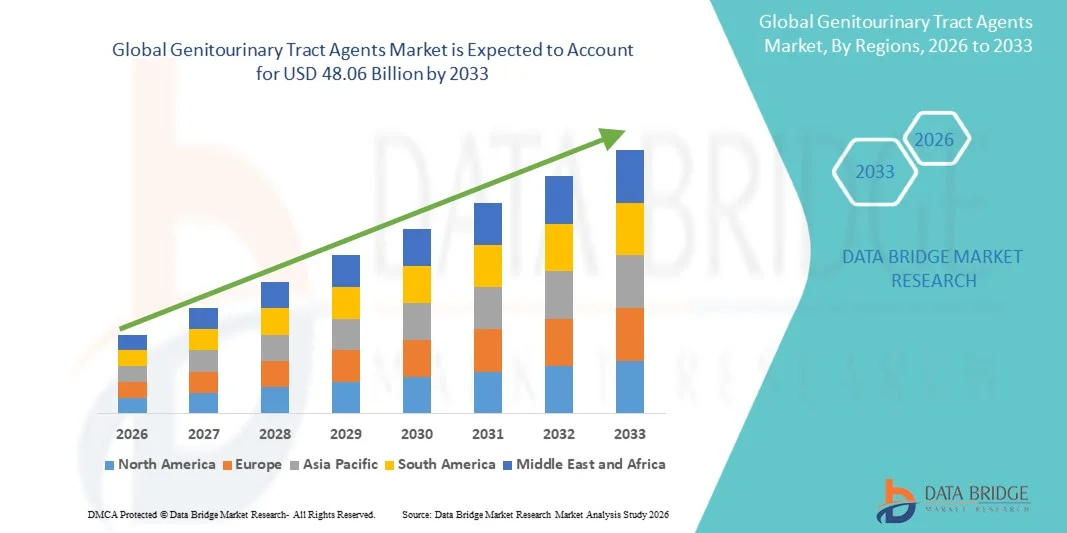
- The global genitourinary tract agents market size was valued at USD 35.94 billion in 2025 and is expected to reach USD 48.06 billion by 2033, at a CAGR of 3.70% during the forecast period
- The market growth is largely fueled by the increasing prevalence of genitourinary disorders such as urinary tract infections, overactive bladder, and kidney-related conditions, along with continuous advancements in drug development and treatment options, leading to greater adoption of genitourinary tract agents in clinical practice
- Furthermore, rising demand for effective, safe, and targeted therapies among patients and healthcare providers is positioning genitourinary tract agents as a preferred treatment choice. These factors are accelerating the uptake of Genitourinary Tract Agents, thereby significantly boosting market growth
Market Size & Forecast
- Global Market Value (2025): USD 35.94 billion
- Expected Market Value (2033): USD 48.06 billion
- Forecast CAGR (2026-2033): 3.70%
What are the Major Takeaways of the Genitourinary Tract Agents Market?
- Genitourinary tract agents, used for the treatment of conditions such as urinary tract infections, overactive bladder, kidney disorders, and benign prostatic hyperplasia, play a vital role in improving patient outcomes and quality of life, making them essential in modern therapeutic care
- The increasing demand for genitourinary tract agents is primarily driven by the rising prevalence of urinary and renal disorders, aging population, lifestyle-related health issues, and advancements in pharmaceutical treatments offering improved efficacy and safety
- North America dominated the genitourinary tract agents market with the largest revenue share of 37.8% in 2025, supported by advanced healthcare infrastructure, high diagnosis rates, strong presence of key pharmaceutical companies, and widespread adoption of innovative therapies in the U.S.
- Asia-Pacific is expected to be the fastest-growing region in the genitourinary tract agents market during the forecast period, driven by increasing healthcare awareness, large patient population, improving medical infrastructure, and rising healthcare expenditure
- The Oral segment held the largest market revenue share of 57.4% in 2025, driven by the high preference for convenient and non-invasive drug administration methods
Report Scope and Genitourinary Tract Agents Market Segmentation
|
Attributes |
Genitourinary Tract Agents Key Market Insights |
|
Segments Covered |
|
|
Countries Covered |
North America
Europe
Asia-Pacific
Middle East and Africa
South America
|
|
Key Market Players |
|
|
Market Opportunities |
|
|
Value Added Data Infosets |
In addition to the insights on market scenarios such as market value, growth rate, segmentation, geographical coverage, and major players, the market reports curated by the Data Bridge Market Research also include in-depth expert analysis, patient epidemiology, pipeline analysis, pricing analysis, and regulatory framework. |
What is the Key Trend in the Genitourinary Tract Agents Market?
“Advancements in Targeted Therapies and Rising Focus on Urological Health”
- A significant and accelerating trend in the global Genitourinary Tract Agents market is the increasing development of targeted therapies aimed at improving treatment outcomes for urological and reproductive system disorders, including urinary tract infections (UTIs), benign prostatic hyperplasia (BPH), overactive bladder, and prostate cancer
- For instance, medications such as Tamsulosin are widely prescribed to improve urinary flow in BPH patients, while Oxybutynin is commonly used to manage bladder control issues, demonstrating the growing reliance on specialized pharmacological treatments
- Increasing research and development activities are leading to the introduction of novel drug classes and combination therapies that offer enhanced efficacy with fewer side effects, particularly in chronic urological conditions
- The growing adoption of personalized medicine, supported by improved diagnostic techniques, is enabling healthcare providers to tailor treatments based on patient-specific conditions and disease severity
- In addition, the rising integration of minimally invasive treatment approaches alongside pharmacological therapies is improving patient outcomes and expanding the scope of genitourinary care
- This trend towards more effective, patient-centric, and targeted treatment solutions is significantly shaping the future of the genitourinary tract agents market
Genitourinary Tract Agents Market Dynamics
Driver
“Increasing Prevalence of Urological Disorders and Aging Population”
- The rising prevalence of urological disorders such as urinary tract infections, kidney diseases, bladder dysfunction, and prostate-related conditions is a major driver for the growth of the genitourinary tract agents market
- For instance, urinary tract infections (UTIs) are among the most common bacterial infections globally, particularly affecting women, leading to high demand for antibiotics such as Nitrofurantoin and other therapeutic agents for effective management
- The rapidly growing aging population, especially among men, is contributing to a higher incidence of conditions such as benign prostatic hyperplasia (BPH) and prostate cancer, thereby increasing the need for long-term treatment solutions
- Increasing awareness regarding early diagnosis and treatment of urological conditions, supported by healthcare campaigns and improved access to medical services, is encouraging patients to seek timely care
- Furthermore, advancements in healthcare infrastructure and the availability of a wide range of treatment options are supporting the adoption of genitourinary drugs across both developed and developing regions
- The expansion of pharmaceutical pipelines and increasing investment in drug development are also contributing to the introduction of innovative therapies, further driving market growth
Restraint/Challenge
“Antibiotic Resistance, Side Effects, and High Treatment Costs”
- The growing concern of antibiotic resistance, particularly in the treatment of recurrent urinary tract infections, poses a significant challenge to the effectiveness of existing therapies in the genitourinary tract agents market
- For instance, resistance to commonly used antibiotics such as Nitrofurantoin and other antimicrobial agents has been increasingly reported, limiting their long-term efficacy and complicating treatment strategies
- Many genitourinary drugs are associated with side effects such as dizziness, dry mouth, hormonal imbalances, or gastrointestinal issues, which can affect patient compliance and limit prolonged usage
- High costs associated with advanced therapies, particularly in the treatment of prostate cancer and chronic kidney diseases, can restrict access for patients in low- and middle-income regions
- Regulatory challenges and stringent approval processes for new drugs can delay the introduction of innovative therapies into the market
- Limited awareness and underdiagnosis of certain urological conditions, especially in rural and underserved areas, further hinder market growth
- Addressing these challenges requires the development of new drug classes, improved antimicrobial stewardship, enhanced patient education, and increased focus on affordable treatment solutions
How is the Genitourinary Tract Agents Market Segmented?
The market is segmented on the basis of drug class, route of administration, end-users, and distribution channel.
• By Drug Class
On the basis of drug class, the Genitourinary Tract Agents market is segmented into Impotence Agents, Tocolytic Agents, Urinary Antispasmodics, Uterotonic Agents, and Others. The Impotence Agents segment dominated the largest market revenue share of 38.9% in 2025, driven by the rising prevalence of erectile dysfunction and increasing awareness regarding men’s health. The widespread availability of effective oral therapies and growing acceptance of treatment further support segment growth. Increasing lifestyle-related disorders such as diabetes and hypertension also contribute significantly to demand. Physicians commonly prescribe these agents due to their proven efficacy and rapid onset of action. Expanding aging male population globally further strengthens the patient pool. The presence of generic drugs enhances affordability and accessibility. Strong marketing initiatives by pharmaceutical companies increase awareness and adoption. Rising telehealth consultations are also supporting prescription rates. Improved diagnosis rates and reduced social stigma further contribute to market expansion. Availability across multiple distribution channels ensures easy access. Continuous product innovation enhances therapeutic outcomes. Overall, strong demand fundamentals ensure continued dominance of this segment.
The Urinary Antispasmodics segment is anticipated to witness the fastest growth rate of 17.8% from 2026 to 2033, fueled by the increasing prevalence of overactive bladder and urinary incontinence conditions. Rising geriatric population significantly contributes to higher incidence rates of such disorders. Growing awareness about urinary health encourages patients to seek treatment. Advancements in drug formulations with improved safety profiles support adoption. Healthcare providers increasingly recommend these therapies for long-term symptom management. Expansion of healthcare infrastructure in emerging markets boosts accessibility. Increasing female patient population further drives demand. Improved diagnostic capabilities enhance early detection and treatment. Pharmaceutical companies are investing in research and development for better therapies. Rising healthcare expenditure supports treatment uptake. Favorable reimbursement policies in developed regions also aid growth. Increasing patient preference for effective and convenient therapies strengthens adoption. Overall, demographic and clinical trends position this segment as the fastest growing.
• By Route of Administration
On the basis of route of administration, the Genitourinary Tract Agents market is segmented into Oral, Parenteral, and Others. The Oral segment held the largest market revenue share of 57.4% in 2025, driven by the high preference for convenient and non-invasive drug administration methods. Oral medications are widely prescribed due to ease of use and high patient compliance. The availability of a wide range of oral formulations supports segment growth. Patients prefer oral drugs for chronic conditions requiring long-term treatment. Pharmaceutical companies focus heavily on oral drug development due to strong demand. Increasing outpatient treatment trends further boost adoption. The cost-effectiveness of oral medications enhances accessibility. Availability of generics contributes to affordability. Growing awareness about self-medication supports usage. Physicians often recommend oral therapies as first-line treatment. Expansion of retail and online pharmacies ensures widespread availability. Continuous innovation improves drug efficacy and tolerability. Overall, convenience and accessibility ensure segment dominance.
The Parenteral segment is expected to witness the fastest CAGR of 15.9% from 2026 to 2033, driven by increasing use in acute and severe conditions requiring rapid drug action. Parenteral administration ensures faster onset and higher bioavailability compared to oral routes. Hospitals and specialty clinics prefer injectable therapies for critical care. Advancements in drug delivery technologies improve patient outcomes. Increasing hospital admissions for genitourinary disorders support demand. Development of long-acting injectables enhances treatment adherence. Rising investments in healthcare infrastructure boost segment growth. Healthcare professionals favor parenteral routes for controlled dosing. Growing prevalence of complex conditions drives need for effective therapies. Improved safety and efficacy profiles encourage adoption. Expansion in emerging markets further contributes to growth. Continuous innovation in biologics also supports segment expansion. Overall, clinical advantages position this segment as the fastest growing.
• By End-Users
On the basis of end-users, the Genitourinary Tract Agents market is segmented into Hospitals, Homecare, Specialty Clinics, and Others. The Hospitals segment accounted for the largest market revenue share of 46.5% in 2025, driven by the availability of advanced healthcare infrastructure and skilled professionals. Hospitals serve as primary centers for diagnosis and treatment of genitourinary disorders. High patient inflow contributes to increased drug utilization. Availability of comprehensive care supports effective treatment outcomes. Government and private investments enhance hospital capabilities. Strong reimbursement frameworks in hospitals improve affordability. Integration of advanced technologies supports diagnosis and therapy. Hospitals also conduct clinical trials, boosting adoption of new drugs. Increasing prevalence of chronic diseases leads to higher hospital visits. Multidisciplinary care approaches enhance treatment efficiency. Rising healthcare expenditure further supports growth. Availability of emergency care strengthens reliance on hospitals. Overall, hospitals remain the dominant end-user segment.
The Homecare segment is expected to witness the fastest CAGR of 16.7% from 2026 to 2033, driven by increasing preference for home-based treatment and long-term care. Patients prefer homecare due to comfort and reduced hospital visits. Growing adoption of oral and self-administered therapies supports segment growth. Aging population significantly contributes to demand. Technological advancements enable remote monitoring and telehealth services. Healthcare systems are promoting cost-effective care solutions. Increased awareness about self-care supports adoption. Availability of support services enhances patient compliance. Chronic disease management trends favor homecare settings. Rising healthcare costs encourage shift toward home-based care. Pharmaceutical companies are offering patient assistance programs. Improved access to medications through pharmacies supports growth. Overall, patient-centric trends drive this segment’s rapid expansion.
• By Distribution Channel
On the basis of distribution channel, the Genitourinary Tract Agents market is segmented into Hospital Pharmacy, Online Pharmacy, and Retail Pharmacy. The Hospital Pharmacy segment held the largest market revenue share of 45.2% in 2025, driven by direct drug dispensing within hospital settings. Patients undergoing treatment rely on hospital pharmacies for immediate access to prescribed medications. Strong coordination between healthcare providers and pharmacies ensures efficient drug delivery. Availability of specialized medications supports segment growth. Reimbursement policies in hospitals enhance affordability. Increasing hospital admissions contribute to higher sales volumes. Pharmacist supervision improves patient adherence. Expansion of hospital infrastructure strengthens distribution networks. Reliable supply chains ensure consistent availability. Growing prevalence of chronic diseases increases demand. Hospitals remain primary points of care for severe conditions. Integration with treatment protocols ensures steady usage. Overall, hospital pharmacies dominate due to their central role in treatment pathways.
The Online Pharmacy segment is expected to witness the fastest CAGR of 19.6% from 2026 to 2033, driven by rapid digitalization and increasing adoption of e-commerce in healthcare. Rising internet penetration supports online medicine purchases. Patients prefer home delivery for convenience and accessibility. Competitive pricing and discounts attract more consumers. Expansion of digital payment systems facilitates transactions. Growth of telemedicine complements online pharmacy adoption. Availability of a wide range of drugs enhances consumer choice. Improved logistics ensure timely delivery services. Regulatory support in several regions encourages digital platforms. Increasing awareness about online services boosts usage. Busy lifestyles drive demand for convenient solutions. Pharmaceutical companies are partnering with digital platforms. Overall, digital transformation positions online pharmacies as the fastest growing segment.
Which Region Holds the Largest Share of the Genitourinary Tract Agents Market?
- North America dominated the genitourinary tract agents market with the largest revenue share of 37.8% in 2025, supported by advanced healthcare infrastructure, high diagnosis rates, strong presence of key pharmaceutical companies, and widespread adoption of innovative therapies in the U.S.
- For instance, the extensive use of medications such as Tamsulosin for benign prostatic hyperplasia and Nitrofurantoin for urinary tract infections highlights the region’s strong clinical adoption and accessibility to effective treatment options
- This dominance is further reinforced by favorable reimbursement policies, ongoing clinical research, and the presence of specialized healthcare facilities focused on urological and nephrological care
U.S. Genitourinary Tract Agents Market Insight
The U.S. genitourinary tract agents market captured the largest revenue share in 2025 within North America, driven by a high prevalence of urological disorders and strong awareness among patients and healthcare providers. The country benefits from advanced diagnostic capabilities and early screening programs, enabling timely identification and treatment of conditions such as urinary tract infections, prostate disorders, and kidney diseases. Furthermore, the presence of leading pharmaceutical companies and continuous investment in research and development are accelerating the introduction of innovative therapies. Favorable reimbursement frameworks and widespread access to healthcare services further support market growth in the U.S.
Europe Genitourinary Tract Agents Market Insight
The Europe genitourinary tract agents market is projected to expand at a substantial CAGR throughout the forecast period, primarily driven by increasing prevalence of urological conditions and rising awareness regarding early diagnosis and treatment. The region benefits from well-established healthcare systems and standardized clinical guidelines for managing genitourinary disorders. In addition, government initiatives supporting chronic disease management and increasing adoption of advanced therapies are contributing to steady market growth. The growing emphasis on patient-centric care and preventive healthcare further supports the expansion of the market across Europe.
U.K. Genitourinary Tract Agents Market Insight
The U.K. genitourinary tract agents market is anticipated to grow at a noteworthy CAGR during the forecast period, driven by improved access to healthcare services through the National Health Service (NHS) and increasing awareness of urological health. The country’s focus on early diagnosis and structured treatment pathways is enabling effective management of conditions such as urinary incontinence and prostate disorders. In addition, ongoing research initiatives and the adoption of advanced therapeutic options are expected to further stimulate market growth in the U.K.
Germany Genitourinary Tract Agents Market Insight
The Germany genitourinary tract agents market is expected to expand at a considerable CAGR during the forecast period, fueled by a strong healthcare system and high healthcare expenditure. Germany’s emphasis on clinical research and innovation supports the adoption of advanced treatment options for urological diseases. Increasing awareness among patients and healthcare professionals, along with the availability of specialized care centers, is further contributing to market growth.
Asia-Pacific Genitourinary Tract Agents Market Insight
The Asia-Pacific genitourinary tract agents market is expected to be the fastest-growing region during the forecast period, driven by increasing healthcare awareness, large patient population, improving medical infrastructure, and rising healthcare expenditure. Rapid urbanization and expanding access to healthcare services are enabling better diagnosis and treatment of urological conditions across the region. In addition, government initiatives aimed at strengthening healthcare systems and increasing investment in pharmaceutical development are supporting market expansion.
Japan Genitourinary Tract Agents Market Insight
The Japan genitourinary tract agents market is gaining momentum due to the country’s advanced healthcare system and increasing prevalence of age-related urological conditions. The growing elderly population is driving demand for effective treatments for disorders such as benign prostatic hyperplasia and overactive bladder. Japan’s strong focus on research and adoption of innovative therapies is further supporting market growth. In addition, improved access to diagnostic services is enabling early detection and treatment of genitourinary diseases.
China Genitourinary Tract Agents Market Insight
The China genitourinary tract agents market accounted for the largest market revenue share in Asia Pacific in 2025, attributed to the country’s large population base and rapidly expanding healthcare infrastructure. Increasing awareness of urological health, along with rising healthcare expenditure, is driving demand for effective treatment options. Furthermore, government initiatives aimed at improving healthcare access and the growing presence of domestic and international pharmaceutical companies are significantly contributing to market growth in China.
Which are the Top Companies in Genitourinary Tract Agents Market?
The Genitourinary Tract Agents industry is primarily led by well-established companies, including:
- Pfizer (U.S.)
- GSK (U.K.)
- AstraZeneca (U.K.)
- Novartis (Switzerland)
- F. Hoffmann-La Roche (Switzerland)
- Sanofi (France)
- Johnson & Johnson (U.S.)
- Merck & Co. (U.S.)
- AbbVie (U.S.)
- Eli Lilly and Company (U.S.)
- Teva Pharmaceutical Industries (Israel)
- Sun Pharmaceutical Industries (India)
- Cipla (India)
- Dr. Reddy's Laboratories (India)
- Lupin (India)
- Aurobindo Pharma (India)
- Zydus Lifesciences (India)
- Amgen (U.S.)
- Bayer (Germany)
- Gilead Sciences (U.S.)
What are the Recent Developments in Global Genitourinary Tract Agents Market?
- In September 2023, the U.S. Food and Drug Administration approved multiple urology-related therapies, including new treatments targeting urinary tract infections and prostate conditions, reflecting continued regulatory momentum in genitourinary therapeutics and expanding treatment options for patients with urological disorders
- In February 2024, the U.S. Food and Drug Administration reported a series of approvals for urology drugs addressing conditions such as urinary tract infections, benign prostatic hyperplasia, and kidney-related disorders, highlighting strong innovation and pipeline advancement in the genitourinary tract agents market
- In March 2025, GlaxoSmithKline announced that the U.S. Food and Drug Administration approved Blujepa (gepotidacin) for the treatment of uncomplicated urinary tract infections in women and adolescent girls, marking the first new class of oral antibiotics for UTIs in nearly 30 years and addressing growing concerns over antimicrobial resistance
- In November 2025, Meitheal Pharmaceuticals received U.S. FDA approval for CONTEPO (fosfomycin for injection) for the treatment of complicated urinary tract infections, including acute pyelonephritis, strengthening hospital-based treatment options for severe genitourinary infections
- In November 2025, Nanopath received U.S. FDA breakthrough device designation for its molecular diagnostic platform for urinary tract infections, enabling rapid and precise pathogen detection and supporting improved clinical decision-making in genitourinary care
- In December 2025, the U.S. Food and Drug Administration approved multiple genitourinary-related innovations, including new oral therapies for gonorrhea and advanced treatment systems for benign prostatic hyperplasia, demonstrating continued technological and therapeutic advancements in the genitourinary tract agents market
- In December 2025, the U.S. Food and Drug Administration approved Nuzolence (zoliflodacin) for the treatment of uncomplicated urogenital gonorrhea, introducing a novel antibiotic option and strengthening the pipeline of therapies targeting sexually transmitted infections within the genitourinary segment

- Interactive Data Analysis Dashboard
- Company Analysis Dashboard for high growth potential opportunities
- Research Analyst Access for customization & queries
- Competitor Analysis with Interactive dashboard
- Latest News, Updates & Trend analysis
- Harness the Power of Benchmark Analysis for Comprehensive Competitor Tracking
Data collection and base year analysis are done using data collection modules with large sample sizes. The stage includes obtaining market information or related data through various sources and strategies. It includes examining and planning all the data acquired from the past in advance. It likewise envelops the examination of information inconsistencies seen across different information sources. The market data is analysed and estimated using market statistical and coherent models. Also, market share analysis and key trend analysis are the major success factors in the market report. To know more, please request an analyst call or drop down your inquiry.
The key research methodology used by DBMR research team is data triangulation which involves data mining, analysis of the impact of data variables on the market and primary (industry expert) validation. Data models include Vendor Positioning Grid, Market Time Line Analysis, Market Overview and Guide, Company Positioning Grid, Patent Analysis, Pricing Analysis, Company Market Share Analysis, Standards of Measurement, Global versus Regional and Vendor Share Analysis. To know more about the research methodology, drop in an inquiry to speak to our industry experts.
Data Bridge Market Research is a leader in advanced formative research. We take pride in servicing our existing and new customers with data and analysis that match and suits their goal. The report can be customized to include price trend analysis of target brands understanding the market for additional countries (ask for the list of countries), clinical trial results data, literature review, refurbished market and product base analysis. Market analysis of target competitors can be analyzed from technology-based analysis to market portfolio strategies. We can add as many competitors that you require data about in the format and data style you are looking for. Our team of analysts can also provide you data in crude raw excel files pivot tables (Fact book) or can assist you in creating presentations from the data sets available in the report.












