


What is the Glazing for Automotive Market Size and Growth Rate?
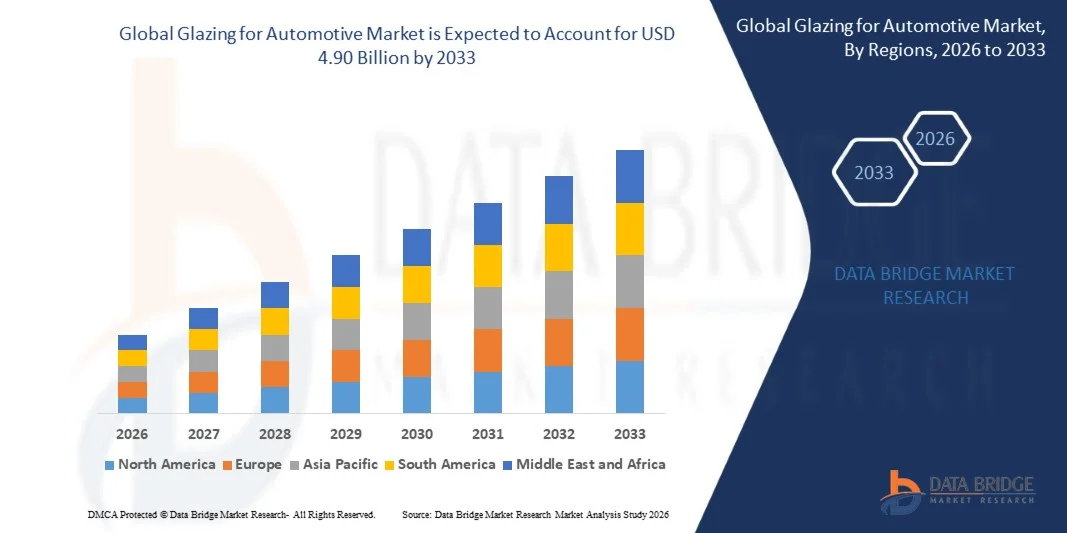
- As per Data Bridge Market Research analysis, the glazing for automotive market was valued at USD 2.68 billion in 2025 and is projected to reach USD 4.90 billion by 2033, growing at a CAGR of 7.85% from 2026 to 2033.
- The market is experiencing consistent growth driven by escalating vehicle production, particularly in the passenger car segment, growing consumer preference for advanced features such as sunroofs and panoramic windows, and innovations in glass manufacturing that are enabling lighter, stronger, and more energy-efficient glazing solutions
- The burgeoning electric vehicle (EV) sector, combined with increasing demand for lightweight glazing to improve vehicle range and efficiency, is creating significant growth opportunities. The growing emphasis on safety, fuel efficiency, passenger comfort, and premium vehicle features is further encouraging automakers to adopt advanced glazing solutions. The development of lighter and more durable glass, panoramic sunroofs, specialized backlites, ADAS-integrated windshields, and smart glass technologies as important areas of innovation
Market Size & Forecast
- Global Market Value (2025): USD 2.68 Billion
- Expected Market Value (2033): USD 4.90 Billion
- Forecast CAGR (2026–2033): 7.85%
- Leading Region in 2025: North America
- Fastest Growing Region: Asia Pacific
What are the Major Takeaways of the Glazing for Automotive Market?
- North America dominated the automotive glazing market with the largest revenue share of 35.6% in 2025, supported by established automotive manufacturing, strong demand for advanced glazing systems, and continued adoption of glazing technologies across passenger and commercial vehicles
- Asia-Pacific is expected to be the fastest-growing region at a CAGR of 7.31% from 2026 to 2033, fueled by the surge in battery electric vehicles in China, increasing production in India, and technological exchange from Japan and South Korea
- The construction equipment segment led the market with a 60.5% share in 2025, driven by increasing demand for glazing solutions in excavators, loaders, cranes, and other heavy machinery
- Agricultural tractors are the fastest-growing off-highway vehicle type, projected to register a CAGR of 8.9%, reflecting the surge in agricultural mechanization and modernization of farm equipment.
- The battery electric vehicle (BEV) segment dominated the electric vehicle category with a 45.0% revenue share in 2025, led by the rapid expansion of battery-powered mobility and increasing production of electric passenger vehicles.
- Single glazing accounted for 55.0% of the market share in 2025, preferred by its simple construction, lower cost, lighter weight, and extensive application across conventional vehicles
- The sunroof segment is the fastest-growing application category, with a CAGR of 9.0%, driven by increasing consumer preference for premium vehicle features and panoramic roof designs.
Report Scope and Glazing for Automotive Market Segmentation
|
Attributes |
Glazing for Automotive Key Market Insights |
|
Segments Covered |
|
|
Countries Covered |
North America
Europe
Asia-Pacific
Middle East and Africa
South America
|
|
Key Market Players |
|
|
Market Opportunities |
|
|
Value Added Data Infosets |
In addition to the market insights such as market value, growth rate, market segments, geographical coverage, market players, and market scenario, the market report curated by the Data Bridge Market Research team includes in-depth expert analysis, import/export analysis, pricing analysis, production consumption analysis, and pestle analysis. |
What is the Key Trend in the Glazing for Automotive Market?
- Automotive glazing is increasingly shifting toward smart and dimmable glass technologies, particularly panoramic fixed sunroofs, as automakers seek to enhance cabin spaciousness, aesthetics, thermal comfort, and the premium vehicle experience.
- For instance, in January 2025, BMW Group unveiled its Panoramic Vision display for the Neue Klasse, integrating a head-up display across the lower windshield from A-pillar to A-pillar, demonstrating the growing integration of advanced display functions into automotive glazing.
- The increasing adoption of panoramic glass roofs in new energy vehicles is supporting this trend, as large-size fixed sunroofs help create a greater sense of cabin space while complementing the design characteristics of electric vehicles.
- Dimmable glazing is gaining attention because it can provide active heat insulation and sun protection, allowing vehicle occupants to control the optical properties of the glass according to changing environmental conditions.
- Automotive glazing is also becoming increasingly integrated with advanced display and sensing functions, including head-up displays, antiglare systems, and technologies that support driver information and safety functions.
- For instance, in March 2025, Webasto and Mahindra launched the “Infinity Roof” panoramic glass roof for the BE 6 and XEV 9e, integrating ambient lighting into the panoramic glazing to provide customizable interior illumination and enhance comfort and aesthetics
- As automakers continue prioritizing premium cabin experiences, intelligent vehicle functions, thermal comfort, and integrated displays, smart glazing is expected to become an increasingly important component of next-generation vehicle architectures.
What are the Key Drivers of the Glazing for Automotive Market?
- The rapid expansion of electric and lightweight vehicles is increasing demand for lightweight automotive glazing, as reducing vehicle mass can improve energy efficiency and support longer driving ranges.
- For instance, in April 2024, LG Chem announced the development of its Switchable Glazing Film (SGF) and a nomination agreement with Webasto, with the electrically controlled film designed for automotive sunroof glass to regulate light and heat transmission, supporting the growing adoption of smart glazing in next-generation vehicles
- The continued growth of global vehicle production is directly supporting glazing demand, with global vehicle production reaching 92.5 million units in 2024, increasing the requirement for windscreens, windows, sunroofs, and other glazing components.
- Increasing consumer preference for premium comfort and advanced vehicle features is encouraging automakers to incorporate panoramic roofs, acoustic glazing, tinted sidelights, and other sophisticated glazing specifications across vehicle platforms.
- The integration of ADAS and head-up-display technologies into windshields is creating demand for glazing capable of supporting cameras, displays, sensors, and other intelligent cockpit functions without compromising optical performance.
- For instance, in March 2024, AGC reported that its Low-E-coated panoramic roof glass had been adopted in the Lexus RZ, Toyota’s first dedicated battery electric vehicle, where its heat-shielding and insulation properties reduce air-conditioning load, support EV cruising range, and enable a shade-less roof configuration that reduces vehicle weight.
- With vehicle manufacturers increasingly combining lightweight construction, electric mobility, premium interiors, and intelligent cockpit technologies, advanced glazing will remain an important enabler of vehicle efficiency, safety, comfort, and functionality
Which Factors are Challenging the Growth of the Glazing for Automotive Market?
- Automotive glass manufacturing remains highly energy-intensive, while volatile energy and raw-material prices, including soda ash and silica-based inputs, can increase production costs and place pressure on manufacturers' margins.
- For instance, in March 2025, AGC inaugurated its Volta R&D production line in the Czech Republic, featuring a hybrid furnace developed with Saint-Gobain that combines 50% electrification with oxygen/gas combustion, highlighting the substantial technological investment required to reduce the energy intensity and carbon footprint of flat-glass manufacturing.
- The automotive glazing industry also faces challenges from fragile and bulky products, making transportation relatively expensive and increasing the risk of breakage throughout complex supply-chain networks.
- Advanced glazing technologies require additional components and specialized manufacturing processes, while the higher cost of technologies such as acoustic insulation, smart glass, and head-up displays can delay mass-market standardization.
- In the aftermarket, increasing integration of cameras and sensors with windshields makes replacement more technically complex because ADAS systems may require recalibration after automotive glass replacement.
- For instance, in June 2026, Saint-Gobain reported that scaling the Volta hybrid-glass technology would require substantial investment and continued optimization of the electricity-to-gas balance, illustrating the financial and operational challenges associated with transitioning energy-intensive glass production toward lower-carbon manufacturing.
- The combination of high energy consumption, raw-material volatility, transportation costs, specialized manufacturing requirements, and ADAS-related replacement complexity continues to create cost pressures and technical barriers for automotive glazing manufacturers.
How is the Glazing for Automotive Market Segmented?
The glazing for automotive market is segmented on the basis of off-highway vehicle, electric vehicle, type, application, and vehicle type.
- By Off-Highway Vehicle
On the basis of off-highway vehicle, the glazing for automotive market is segmented into construction equipment and agricultural tractors. The construction equipment segment dominated the market with an estimated 60.5% share, owing to increasing demand for glazing solutions in excavators, loaders, cranes, and other heavy machinery. These vehicles require durable glazing systems that provide operators with clear visibility and protection from dust, debris, and harsh working environments. Increasing construction activity and infrastructure development are supporting demand for advanced glazing in heavy equipment. Rising adoption of enclosed operator cabins is further strengthening the requirement for high-quality glazing systems. Growing emphasis on operator safety and comfort is also encouraging equipment manufacturers to adopt improved glazing technologies. The segment benefits from the broad application of glazing across construction and industrial machinery.
The agricultural tractors segment is projected to register the fastest growth at 8.9% CAGR during forecast period, driven by increasing agricultural mechanization and modernization of farm equipment. Modern tractors are increasingly equipped with enclosed cabins that improve operator safety and protection from environmental conditions. Rising adoption of technologically advanced agricultural machinery is creating additional demand for durable and high-visibility glazing solutions. Increasing farm productivity requirements are encouraging farmers to adopt sophisticated tractors with improved operator environments. Growing investments in agricultural mechanization across emerging economies are further supporting segment expansion. The development of larger and higher-performance tractors is also creating opportunities for advanced glazing systems.
- By Electric Vehicle
On the basis of electric vehicle, the glazing for automotive market is segmented into battery electric vehicle (BEV), hybrid electric vehicle (HEV), and plug-in hybrid electric vehicle (PHEV). The battery electric vehicle (BEV) segment dominated the electric vehicle category with an estimated 45.0% share, supported by the rapid expansion of battery-powered mobility and increasing production of electric passenger vehicles. BEVs increasingly incorporate advanced glazing features such as panoramic roofs, lightweight glass, and energy-efficient glazing systems. Lightweight glazing is particularly important for electric vehicles because reducing vehicle weight can contribute to improved driving range and energy efficiency. Growing investments by automotive manufacturers in electric vehicle platforms are strengthening demand for specialized glazing solutions. Increasing consumer preference for technologically advanced electric vehicles is further supporting segment growth. The expanding global BEV production base provides significant opportunities for automotive glazing manufacturers.
The battery electric vehicle (BEV) segment is projected to register the fastest growth at 9.10% CAGR during forecast period, driven by accelerating vehicle electrification and increasing BEV production worldwide. Automakers are increasingly integrating panoramic roofs, smart glass, and advanced windshield technologies into electric vehicle platforms. Lightweight glazing materials are gaining importance as manufacturers seek to improve vehicle efficiency and driving range. Growing consumer demand for premium features in electric vehicles is creating additional opportunities for advanced glazing solutions. Integration of sensors, displays, and other technologies into automotive glass is further increasing the value of glazing in next-generation BEVs. Continued expansion of electric vehicle manufacturing is expected to sustain strong demand for glazing technologies.
- By Type
On the basis of type, the glazing for automotive market is segmented into single glazing, double glazing, and triple Low-E glazing. The single glazing segment dominated the market with an estimated 55.0% share, owing to its simple construction, lower cost, lighter weight, and extensive application across conventional vehicles. Single glazing provides the transparency, visibility, and protection required for a wide range of automotive applications. Its relatively simple manufacturing process supports high-volume production and broad adoption across vehicle platforms. Cost-sensitive vehicle manufacturers continue to use conventional glazing where advanced thermal and acoustic performance is not required. Established manufacturing capabilities and widespread availability across automotive supply chains further support the segment. These characteristics enable single glazing to maintain its position across mainstream automotive applications.
The triple Low-E glazing segment is projected to register the fastest growth at 10% CAGR during forecast period, driven by increasing demand for improved thermal performance and energy efficiency. Low-E coatings help control heat transfer and solar radiation through automotive glass, supporting improved cabin temperature management. Triple glazing can provide enhanced insulation compared with conventional glazing and is therefore gaining attention in premium and technologically advanced vehicles. Growing electric vehicle adoption is creating additional interest in glazing technologies that can reduce cabin heating and cooling requirements. Increasing consumer demand for comfort and premium vehicle features is also supporting adoption of advanced glazing. Although higher manufacturing costs can limit penetration, continued technological development is expected to create growth opportunities.
- By Application
On the basis of application, the market is segmented into windscreen, sidelite, backlite, rear quarter glass, sunroof, front lighting, rear lighting, front windshield, and rear windshield. The front windshield segment dominated the market with an estimated 30.5% share, owing to its critical role in driver visibility, occupant protection, and vehicle structural integrity. Front windshields increasingly incorporate advanced technologies such as heads-up displays, cameras, sensors, and ADAS functions. Laminated glazing is widely used in windshield applications because of its impact-retention and safety characteristics. Rising vehicle production and stringent vehicle safety requirements are supporting demand for high-performance windshield systems. Increasing deployment of ADAS and autonomous-driving technologies is further increasing the technological importance of front glazing. These factors continue to make front windshields a major application for automotive glazing.
The sunroof segment is projected to register the fastest growth at 9.0% CAGR during forecast period, supported by increasing consumer preference for premium vehicle features and panoramic roof designs. Panoramic sunroofs provide a greater sense of cabin space while enhancing vehicle aesthetics and passenger experience. The growing popularity of electric vehicles is further supporting adoption because many new EV models incorporate large panoramic glass roofs. Advanced glazing technologies can provide solar-control, thermal-management, and acoustic benefits in sunroof applications. Automakers are increasingly using larger glass areas to differentiate premium and electric vehicle models. Rising demand for sophisticated vehicle interiors and premium features is expected to further accelerate sunroof adoption.
- By Vehicle Type
On the basis of vehicle type, the glazing for automotive market is segmented into passenger car, light commercial vehicle (LCV), truck, and bus. The passenger car segment dominated the market with an estimated 70% share in 2025, supported by high global passenger vehicle production and strong consumer demand for advanced glazing features. Passenger cars increasingly incorporate sunroofs, panoramic roofs, acoustic glazing, and advanced windshields to improve comfort, safety, and aesthetics. Rising vehicle production in emerging economies is supporting continued demand for automotive glazing. Premium passenger vehicles are also adopting increasingly sophisticated glazing technologies as manufacturers compete through comfort and design features. The large production volume of passenger cars provides glazing manufacturers with a substantial and recurring demand base. Increasing adoption of electric passenger vehicles is further creating opportunities for advanced glazing technologies.
The truck segment is projected to register the fastest growth at 8.9% CAGR during forecast period, supported by increasing demand for lightweight and safety-oriented glazing solutions in commercial transportation. Trucks require glazing that provides durability, visibility, and resistance to demanding operating environments. Growing logistics activity and increasing freight transportation requirements are supporting continued investment in commercial vehicle fleets. Manufacturers are increasingly focusing on vehicle efficiency, creating opportunities for lightweight glazing solutions that can contribute to overall vehicle weight reduction. Advanced glazing can also improve driver visibility and cabin comfort in long-haul applications. Increasing adoption of ADAS technologies in commercial vehicles is creating additional requirements for technologically compatible windshields and other glazing components
Which Region Holds the Largest Share of the Glazing for Automotive Market?
- North America dominated the automotive glazing market with the largest revenue share of 35.6% in 2025, supported by established automotive manufacturing, strong demand for advanced glazing systems, and continued adoption of glazing technologies across passenger and commercial vehicles
- The region also benefits from stringent vehicle safety regulations, early adoption of advanced glass glazing techniques, increasing electric vehicle production, and growing demand for laminated windshields, lightweight glazing, and sensor-compatible automotive glass. The United States represents the major market within North America, while increasing adoption of ADAS and advanced vehicle technologies continues to strengthen regional demand for innovative automotive glazing solutions.
U.S. Glazing for Automotive Market Insight
U.S. glazing for automotive market is witnessing strong growth due to its established automotive manufacturing base, increasing adoption of advanced glazing technologies, and rising demand for windshields, sidelites, sunroofs, and other high-performance glass applications. The country’s mature automotive ecosystem is supporting the integration of lightweight, laminated, acoustic, and smart glazing solutions across passenger and commercial vehicles. In addition, growing adoption of electric vehicles and advanced driver-assistance systems is creating demand for glazing compatible with cameras, sensors, displays, and other vehicle technologies. The U.S. market is also benefiting from increasing consumer preference for premium vehicle features, including panoramic roofs and advanced thermal-control glazing. Furthermore, AGC identifies North America as one of its major automotive glass production regions and supplies glazing technologies to vehicle manufacturers worldwide.
Asia-Pacific Glazing for Automotive Market Insight
The Asia-Pacific glazing for automotive market is expected to witness rapid growth, driven by expanding automotive production, increasing electric vehicle adoption, and rising demand for advanced vehicle glazing across countries such as China, Japan, and India. The region benefits from a strong automotive manufacturing ecosystem and the presence of established automotive glass suppliers developing next-generation glazing technologies. Increasing vehicle electrification is further encouraging manufacturers to adopt lightweight and energy-efficient glazing solutions to support vehicle efficiency. In addition, rising consumer demand for technologically advanced and premium vehicles is increasing the use of multifunctional automotive glass. AGC operates automotive glass technology development sites in Japan, China, Europe, and North America, reflecting the importance of these markets to advanced automotive glazing development.
Japan Glazing for Automotive Market Insight
The Japan glazing for automotive market is witnessing consistent growth due to the country’s advanced automotive manufacturing capabilities, strong focus on vehicle safety, and continued development of high-performance glazing technologies. Japanese automotive manufacturers and glass suppliers are increasingly developing glazing that combines safety, thermal comfort, connectivity, sensing, and display functions. AGC, a major Japanese glass manufacturer, provides laminated and tempered automotive glass and has developed technologies including integrated glass antennas, LiDAR-compatible glass, display glazing, and sensor-enabled windshields. The company has also validated embedded 5G antenna functionality in automotive glass in collaboration with NTT DOCOMO and Ericsson Japan, supporting the development of connected mobility solutions. Moreover, increasing integration of displays, sensors, and communication technologies into vehicle glass is strengthening demand for multifunctional glazing in Japan.
China Glazing for Automotive Market Insight
The China glazing for automotive market is growing rapidly, driven by its large automotive manufacturing base, accelerating electric vehicle production, and increasing adoption of advanced vehicle technologies. Growing production of electric and new-energy vehicles is creating demand for lightweight glazing, panoramic roofs, smart glass, and glazing capable of integrating sensors and communication technologies. Increasing integration of connected-vehicle technologies is creating opportunities for glass antennas, sensor covers, and other multifunctional glazing solutions. Rising demand for premium features and advanced vehicle interiors is further supporting adoption of panoramic and display-enabled glass. Continued development of intelligent and electrified mobility is expected to strengthen China's position as a major market for advanced automotive glazing
U.K. Glazing for Automotive Market Insight
The U.K. glazing for automotive market is experiencing steady growth, supported by established automotive manufacturing, demand for advanced vehicle glazing, and increasing adoption of sophisticated windscreen and sidelite technologies. Increasing demand for advanced vehicle safety and comfort features is supporting the adoption of laminated, acoustic, thermal-control, and other specialized glazing solutions. The country's automotive industry is also increasingly adopting electric and technologically advanced vehicles, creating opportunities for lightweight and multifunctional glazing. In addition, smart glazing technologies that provide thermal control, privacy, and improved passenger comfort are creating new opportunities across premium vehicle applications.
Germany Glazing for Automotive Market Insight
The Germany glazing for automotive market is expanding steadily due to the country’s strong automotive manufacturing base, advanced vehicle engineering capabilities, and focus on safety, efficiency, and premium vehicle technologies. German automotive manufacturers are increasingly incorporating advanced windshields, panoramic roofs, acoustic glass, and glazing compatible with sensors and driver-assistance systems. The country’s strong premium vehicle industry is also supporting demand for high-performance glazing that improves passenger comfort, thermal management, aesthetics, and acoustic insulation. AGC notes that automotive glass has evolved toward active functions such as displays, sensors, antennas, and connectivity, supporting the broader shift toward multifunctional vehicle glazing. These developments are strengthening demand for technologically advanced automotive glass across Germany’s automotive ecosystem.
Which are the Top Companies in Glazing for Automotive Market?
The glazing for automotive industry is primarily led by well-established companies, including:
- AGC Inc. (Japan)
- Saint-Gobain (France)
- Fuyao Glass Industry Group Co., Ltd. (China)
- Nippon Sheet Glass Co., Ltd. (Japan)
- Vitro, S.A.B. de C.V. (Mexico)
- Xinyi Glass Holdings Limited (China)
- Şişecam (Türkiye)
- Central Glass Co., Ltd. (Japan)
- Taiwan Glass Ind. Corp. (Taiwan)
- CSG Holding Co., Ltd. (China)
- AGP Group (Luxembourg)
- Carlex Glass America, LLC (U.S.)
- Corning Incorporated (U.S.)
- Webasto Group (Germany)
- Gauzy Ltd. (Israel)
- Eastman Chemical Company (U.S.)
- Kuraray Co., Ltd. (Japan)
- Glas Trösch Holding AG (Switzerland)
- Shenzhen Benson Automobile Glass Co., Ltd. (China)
- Sika AG (Switzerland)
What are Latest Developments in Glazing for Automotive Market?
- In July 2025, Gauzy announced the first prefabricated smart glass stack for automotive applications, combining dimmable smart glass films, conductive elements, and adhesive interlayers into a single industrialized unit designed for Tier-1 suppliers and OEM glass fabricators. The solution is intended to simplify manufacturing, reduce post-processing requirements, and support scalable adoption of smart glazing across vehicle platforms.
- In April 2025, Gauzy announced that Mercedes-Benz had incorporated its dual smart glass technology into approximately 75% of the glazing of the Vision V show car, combining suspended particle device (SPD) and polymer dispersed liquid crystal (PDLC) technologies. The development demonstrated the integration of advanced light-control glazing across multiple areas of a vehicle and highlighted the increasing use of smart glass for comfort, privacy, and design.
- In March 2024, AGC highlighted its development of innovative glass materials for next-generation mobility, focusing on automotive glazing technologies supporting connected, autonomous, shared, and electric vehicles. The company emphasized the evolution of automotive glass from a conventional vehicle component toward multifunctional solutions incorporating sensing, connectivity, display, and comfort functions for future mobility.
- In September 2023, AGC announced that its Digital Curtain light-control glass had been adopted for Toyota’s Century model, enabling instantaneous control of light transmission and visibility in the rear-seat door sections. The technology reduces sunlight and glare while providing privacy in dimmed mode and openness in transparent mode, marking the first application of light-control glass in automobile door sections.
- In September 2021, Gauzy showcased active smart-glass applications at the IAA Mobility show in Munich, demonstrating SPD and PDLC technologies for automotive and transportation applications. The technologies enabled vehicle glazing to provide shading, glare mitigation, temperature control, infotainment, advertising, and vehicle-to-vehicle and vehicle-to-pedestrian messaging, illustrating the transition toward multifunctional automotive glazing.

- Interactive Data Analysis Dashboard
- Company Analysis Dashboard for high growth potential opportunities
- Research Analyst Access for customization & queries
- Competitor Analysis with Interactive dashboard
- Latest News, Updates & Trend analysis
- Harness the Power of Benchmark Analysis for Comprehensive Competitor Tracking
Data collection and base year analysis are done using data collection modules with large sample sizes. The stage includes obtaining market information or related data through various sources and strategies. It includes examining and planning all the data acquired from the past in advance. It likewise envelops the examination of information inconsistencies seen across different information sources. The market data is analysed and estimated using market statistical and coherent models. Also, market share analysis and key trend analysis are the major success factors in the market report. To know more, please request an analyst call or drop down your inquiry.
The key research methodology used by DBMR research team is data triangulation which involves data mining, analysis of the impact of data variables on the market and primary (industry expert) validation. Data models include Vendor Positioning Grid, Market Time Line Analysis, Market Overview and Guide, Company Positioning Grid, Patent Analysis, Pricing Analysis, Company Market Share Analysis, Standards of Measurement, Global versus Regional and Vendor Share Analysis. To know more about the research methodology, drop in an inquiry to speak to our industry experts.
Data Bridge Market Research is a leader in advanced formative research. We take pride in servicing our existing and new customers with data and analysis that match and suits their goal. The report can be customized to include price trend analysis of target brands understanding the market for additional countries (ask for the list of countries), clinical trial results data, literature review, refurbished market and product base analysis. Market analysis of target competitors can be analyzed from technology-based analysis to market portfolio strategies. We can add as many competitors that you require data about in the format and data style you are looking for. Our team of analysts can also provide you data in crude raw excel files pivot tables (Fact book) or can assist you in creating presentations from the data sets available in the report.













