Global Glomerular Disease Therapeutics Market
Market Size in USD Billion
CAGR :
% 
 USD
15.30 Billion
USD
22.60 Billion
2025
2033
USD
15.30 Billion
USD
22.60 Billion
2025
2033
 Forecast Period Forecast Period |
2026 –2033 |
 Market Size (Base Year) Market Size (Base Year) |
USD 15.30 Billion |
 Market Size (Forecast Year) Market Size (Forecast Year) |
USD 22.60 Billion |
 CAGR CAGR |
% |
| Major Markets Players |
|
Glomerular Disease Therapeutics Market Size
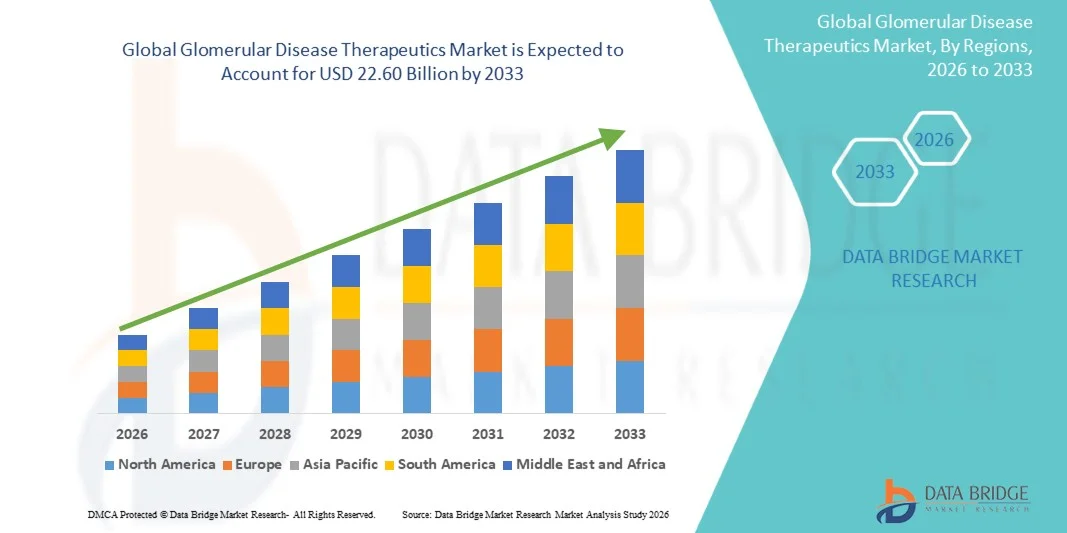
- The global glomerular disease therapeutics market size was valued at USD 15.30 billion in 2025and is expected to reach USD 22.60 billion by 2033, at a CAGR of5.00% during the forecast period
- The market growth is largely fueled by the increasing prevalence of chronic kidney disorders and the growing advancement of targeted renal therapies, leading to greater adoption of innovative treatment approaches across hospitals and specialty care settings
- Furthermore, rising demand for effective and long-term disease management solutions, along with increasing investments in nephrology research and biologic drug development, is establishing advanced therapeutics as the preferred treatment approach for glomerular diseases. These converging factors are accelerating the uptake of Nephrology-based therapeutic solutions, thereby significantly boosting the industry’s growth
Glomerular Disease Therapeutics Market Analysis
- Nephrology therapeutics are increasingly vital in the management of chronic and immune-mediated kidney disorders across hospitals and specialty care settings due to their ability to reduce disease progression, improve renal outcomes, and support long-term patient management
- The escalating demand for Glomerular Disease Therapeutics is primarily fueled by the rising prevalence of chronic kidney diseases, increasing awareness regarding early diagnosis, and growing adoption of targeted biologics and immunosuppressive therapies
- North America dominated the glomerular disease therapeutics market with the largest revenue share of 42.4% in 2025, characterized by advanced healthcare infrastructure, high healthcare expenditure, and a strong presence of leading biopharmaceutical companies, with the U.S. experiencing substantial growth in the adoption of innovative renal therapies driven by increasing clinical research activities and regulatory approvals for novel biologic treatments
- Asia-Pacific is expected to be the fastest growing region in the glomerular disease therapeutics market during the forecast period due to rising healthcare investments, increasing prevalence of kidney disorders, and improving access to specialty nephrology care
- The oral segment accounted for the largest market revenue share of 62.9% in 2025, driven by the convenience, affordability, and ease of long-term treatment administration associated with oral medications
Report Scope and Glomerular Disease Therapeutics Market Segmentation
|
Attributes |
Glomerular Disease Therapeutics Key Market Insights |
|
Segments Covered |
|
|
Countries Covered |
North America · U.S. · Canada · Mexico Europe · Germany · France · U.K. · Netherlands · Switzerland · Belgium · Russia · Italy · Spain · Turkey · Rest of Europe Asia-Pacific · China · Japan · India · South Korea · Singapore · Malaysia · Australia · Thailand · Indonesia · Philippines · Rest of Asia-Pacific Middle East and Africa · Saudi Arabia · U.A.E. · South Africa · Egypt · Israel · Rest of Middle East and Africa South America · Brazil · Argentina · Rest of South America |
|
Key Market Players |
· Novartis AG (Switzerland) · F. Hoffmann-La Roche Ltd. (Switzerland) · Pfizer Inc. (U.S.) · AstraZeneca (U.K.) · Bristol Myers Squibb (U.S.) · Amgen Inc. (U.S.) · AbbVie Inc. (U.S.) · Sanofi (France) · Takeda Pharmaceutical Company Limited (Japan) · Eli Lilly and Company (U.S.) · Johnson & Johnson Services, Inc. (U.S) · Merck & Co., Inc. (U.S.) · Otsuka Pharmaceutical Co., Ltd. (Japan) · Travere Therapeutics, Inc. (U.S.) · Aurinia Pharmaceuticals Inc. (Canada) · CSL Limited (Australia) · Biogen Inc. (U.S.) · Regeneron Pharmaceuticals, Inc. (U.S.) · Apellis Pharmaceuticals, Inc. (U.S.) · Alexion Pharmaceuticals, Inc. (U.S.) |
|
Market Opportunities |
· Increasing advancements in biologics and targeted immunotherapy development · Expanding healthcare infrastructure and growing awareness regarding early diagnosis |
|
Value Added Data Infosets |
In addition to the insights on market scenarios such as market value, growth rate, segmentation, geographical coverage, and major players, the market reports curated by the Data Bridge Market Research also include in-depth expert analysis, patient epidemiology, pipeline analysis, pricing analysis, and regulatory framework. |
Glomerular Disease Therapeutics Market Trends
“Increasing Focus on Precision Medicine and Complement Pathway-Targeted Therapies”
- A significant and rapidly emerging trend in the global glomerular disease therapeutics market is the growing focus on precision medicine and complement pathway-targeted therapies aimed at improving treatment outcomes for patients suffering from complex glomerular disorders
- Pharmaceutical and biotechnology companies are increasingly investing in the development of advanced biologics, monoclonal antibodies, and complement inhibitors designed to specifically target the underlying immune and inflammatory mechanisms associated with glomerular diseases
- For instance, several investigational therapies targeting complement proteins such as C3, C5, factor B, and factor D are being evaluated for the treatment of diseases such as IgA nephropathy, C3 glomerulopathy, and membranous nephropathy, reflecting the industry's transition toward targeted treatment approaches
- The growing adoption of precision medicine is enabling healthcare providers to personalize therapies based on genetic profiling, biomarker analysis, and disease severity, thereby improving treatment efficacy and reducing complications associated with generalized immunosuppressive therapies
- Furthermore, advancements in diagnostic technologies including next-generation sequencing, biomarker testing, and kidney biopsy interpretation are improving early detection and disease monitoring capabilities, allowing physicians to implement more targeted therapeutic interventions
- The increasing collaboration between research institutes, pharmaceutical companies, and nephrology centers is accelerating innovation in novel therapeutic development and expanding clinical trial activities for rare and chronic glomerular diseases
- This trend toward targeted biologics, individualized treatment strategies, and advanced diagnostic integration is transforming the therapeutic landscape of glomerular diseases and improving long-term patient management globally
Glomerular Disease Therapeutics Market Dynamics
Driver
“Growing Need Due to Rising Prevalence of Chronic Kidney Disorders and Increasing Research Investments”
- The increasing prevalence of chronic kidney diseases and glomerular disorders worldwide is a major factor driving the growth of the global Glomerular Disease Therapeutics market
- Rising incidences of conditions such as IgA nephropathy, focal segmental glomerulosclerosis (FSGS), membranous nephropathy, and lupus nephritis are creating substantial demand for effective and long-term treatment solutions
- For instance, increasing investments by pharmaceutical and biotechnology companies in nephrology-focused drug development and clinical research are accelerating the introduction of innovative therapies for glomerular diseases. Regulatory support for orphan drugs and rare disease therapies is also encouraging market expansion during the forecast period
- As awareness regarding kidney health and early diagnosis improves, healthcare providers are increasingly adopting advanced therapeutic approaches to slow disease progression, reduce proteinuria, and prevent kidney failure
- Furthermore, advancements in biologics, immunosuppressive therapies, and complement inhibitors are significantly improving treatment outcomes for patients with chronic glomerular diseases. The expansion of specialized nephrology clinics and improved access to diagnostic services are also supporting greater treatment adoption
- In addition, growing healthcare expenditure, increasing patient awareness programs, and supportive government initiatives for rare disease management are further contributing to the expansion of the Glomerular Disease Therapeutics market globally
Restraint/Challenge
“High Treatment Costs and Limited Availability of Approved Therapies”
- The high cost associated with advanced biologic therapies, immunosuppressive drugs, and complement-targeted treatments remains a major challenge restraining the widespread growth of the Glomerular Disease Therapeutics market
- Many glomerular diseases require long-term treatment, continuous monitoring, and specialized diagnostic procedures, which can impose significant financial burdens on patients and healthcare systems, particularly in developing and underdeveloped regions
- For instance, several novel therapies under development for rare glomerular diseases involve complex manufacturing processes and extensive clinical trials, contributing to high treatment pricing and limited accessibility for patients
- In addition, the limited availability of approved therapies for certain rare glomerular disorders creates treatment gaps, as many patients continue to rely on generalized immunosuppressive therapies that may cause severe side effects and inconsistent treatment responses
- Furthermore, delayed diagnosis and limited awareness among general healthcare practitioners regarding rare glomerular diseases can hinder timely treatment initiation and effective disease management
- The lack of comprehensive reimbursement policies and unequal access to specialized nephrology care across regions also pose challenges to broader market penetration
- Addressing these challenges through increased research funding, improved reimbursement frameworks, expanded awareness initiatives, and the development of cost-effective therapeutic options will be essential for sustaining long-term growth in the global Glomerular Disease Therapeutics market
Glomerular Disease Therapeutics Market Scope
The market is segmented on the basis of indication, treatment, route of administration, end-users, and distribution channel.
By Indication
On the basis of indication, the Glomerular Disease Therapeutics market is segmented into glomerulonephritis, nephropathy, Goodpasture syndrome, and others. The glomerulonephritis segment dominated the largest market revenue share of 44.3% in 2025, driven by the increasing prevalence of inflammatory kidney disorders and rising diagnosis rates across both developed and emerging healthcare markets. Glomerulonephritis represents one of the most common forms of glomerular disease requiring long-term therapeutic management, thereby significantly contributing to market demand. Healthcare professionals widely utilize corticosteroids, immunosuppressive agents, and supportive therapies for managing disease progression and reducing renal complications associated with glomerulonephritis. The growing burden of autoimmune disorders and chronic kidney diseases is also accelerating segment growth globally. In addition, advancements in renal diagnostic procedures and improved awareness regarding early disease intervention are contributing to increased treatment adoption. Favorable reimbursement support for renal therapies and expanding nephrology care infrastructure further strengthen the segment’s dominance. Rising investments in biologic therapies and complement-targeted drugs are also expected to support long-term market expansion for glomerulonephritis treatment.
The nephropathy segment is anticipated to witness the fastest growth rate with a CAGR of 22.4% from 2026 to 2033, fueled by the increasing prevalence of diabetic nephropathy and hypertension-related kidney disorders worldwide. The growing diabetic population and rising incidence of obesity are significantly contributing to the increasing burden of nephropathy cases globally. Healthcare providers are increasingly adopting advanced therapeutics and combination treatment approaches for effective disease management and renal protection. In addition, continuous advancements in precision medicine and targeted biologic therapies are expected to accelerate segment growth during the forecast period. Increased healthcare expenditure on chronic kidney disease management and growing awareness regarding preventive nephrology care are further supporting demand for nephropathy therapeutics. The expansion of clinical research programs focused on novel renal therapies is also expected to create substantial growth opportunities for this segment.
By Treatment
On the basis of treatment, the Glomerular Disease Therapeutics market is segmented into corticosteroids, ACE inhibitors, immunosuppressive therapy, and others. The corticosteroids segment held the largest market revenue share of 40.8% in 2025, driven by their widespread use as first-line therapy for reducing inflammation and controlling immune-mediated renal damage. Corticosteroids remain one of the most commonly prescribed therapeutic classes for glomerular diseases due to their rapid therapeutic response and broad clinical applicability. Physicians frequently utilize corticosteroids for managing proteinuria, nephrotic syndrome, and autoimmune kidney inflammation associated with glomerular disorders. Their affordability and easy accessibility across hospitals and specialty clinics further contribute to strong market demand. In addition, corticosteroids are often combined with supportive therapies such as ACE inhibitors and immunosuppressive drugs to improve treatment outcomes. Growing awareness regarding early diagnosis and timely therapeutic intervention is also supporting segment growth globally. Furthermore, increasing clinical experience and established treatment guidelines continue to strengthen the adoption of corticosteroid therapies in renal disease management.
The immunosuppressive therapy segment is expected to witness the fastest CAGR of 22.6% from 2026 to 2033, driven by the increasing focus on targeted immune modulation and advanced renal treatment strategies. Immunosuppressive agents are gaining significant traction among nephrologists due to their ability to reduce autoimmune-mediated kidney injury and prevent disease progression. Rising clinical research activities focused on complement inhibitors and biologic therapies are accelerating segment expansion globally. These therapies are increasingly preferred for patients who show inadequate response to conventional corticosteroid treatment. In addition, growing investments in rare kidney disease therapeutics and advancements in personalized medicine are supporting broader adoption of immunosuppressive drugs. Increasing collaborations between pharmaceutical companies and research institutions are also contributing to the development of innovative renal therapies. The expanding pipeline of targeted immunomodulatory agents is expected to create substantial growth opportunities during the forecast period.
By Route of Administration
- On the basis of route of administration, the Glomerular Disease Therapeutics market is segmented into oral and parenteral. The oral segment accounted for the largest market revenue share of 62.9% in 2025, driven by the convenience, affordability, and ease of long-term treatment administration associated with oral medications. Oral therapies are highly preferred by patients and healthcare providers because they enable self-administration and reduce dependency on hospital-based care. The widespread availability of corticosteroids, ACE inhibitors, and supportive renal medications in oral formulations significantly contributes to segment dominance. Oral administration also improves patient adherence and minimizes healthcare costs related to injectable therapies and inpatient procedures. Increasing prevalence of chronic kidney diseases and growing awareness regarding early disease management are further supporting segment growth globally. In addition, pharmaceutical companies continue to invest in the development of advanced oral drug formulations with improved efficacy and reduced side effects. The rising demand for convenient home-based treatment solutions is also positively influencing market expansion.
The parenteral segment is anticipated to witness the fastest CAGR of 21.7% from 2026 to 2033, fueled by the growing use of biologics, monoclonal antibodies, and advanced complement inhibitor therapies delivered through injections and infusions. Parenteral administration offers enhanced bioavailability and rapid therapeutic action, making it suitable for severe and rapidly progressing renal conditions. Hospitals and specialty clinics are increasingly utilizing injectable therapies for intensive disease management and targeted immune suppression. Rising clinical trials focused on innovative biologic treatments for glomerular disorders are further accelerating segment growth. In addition, increasing investments in specialty pharmaceuticals and personalized medicine approaches are supporting higher demand for parenteral therapies globally. The expansion of infusion centers and improvements in healthcare infrastructure across emerging economies are also expected to contribute significantly to market growth during the forecast period.
By End-Users
On the basis of end-users, the Glomerular Disease Therapeutics market is segmented into hospitals, homecare, specialty clinics, and others. The hospitals segment dominated the largest market revenue share of 47.2% in 2025, driven by the availability of specialized nephrology departments, advanced diagnostic infrastructure, and comprehensive renal care services. Hospitals remain the primary treatment centers for patients suffering from complex glomerular diseases due to their multidisciplinary treatment capabilities and access to experienced healthcare professionals. Increasing hospital admissions related to chronic kidney disorders and autoimmune renal diseases are significantly contributing to segment growth. In addition, hospitals are the leading providers of biologic therapies, immunosuppressive treatments, and advanced renal monitoring services requiring continuous patient supervision. Government investments in healthcare infrastructure and expansion of renal care facilities are further strengthening market demand. Hospitals also participate extensively in clinical research programs and rare disease therapeutic studies, supporting broader treatment adoption globally. The availability of advanced laboratory testing and renal biopsy procedures further contributes to the dominance of this segment.
The specialty clinics segment is expected to witness the fastest CAGR of 20.9% from 2026 to 2033, driven by the increasing demand for personalized nephrology care and specialized treatment solutions. Specialty clinics provide focused expertise in glomerular diseases, enabling faster diagnosis and customized treatment planning for patients. Rising preference for outpatient care settings and shorter waiting times are contributing to increased patient adoption globally. In addition, these clinics offer cost-effective treatment services and improved accessibility to nephrology specialists. Technological advancements in diagnostic procedures and increasing awareness regarding early kidney disease detection are further supporting market growth. The expansion of private nephrology centers and specialized renal care facilities is also expected to accelerate the adoption of specialty clinic services during the forecast period.
By Distribution Channel
On the basis of distribution channel, the Glomerular Disease Therapeutics market is segmented into hospital pharmacy, online pharmacy, and retail pharmacy. The hospital pharmacy segment held the largest market revenue share of 49.1% in 2025, driven by the high volume of prescriptions generated within hospital settings and the increasing use of specialty medications for renal disease management. Hospital pharmacies play a critical role in dispensing immunosuppressive therapies, biologics, and injectable medications requiring professional supervision and controlled handling. The presence of trained pharmacists and integrated patient monitoring systems further strengthens segment dominance. In addition, hospital pharmacies ensure timely access to advanced therapies for critically ill patients undergoing intensive renal treatment. Rising hospitalization rates related to chronic kidney diseases and increasing healthcare expenditure on rare renal disorders are also contributing to market expansion. Collaborations between pharmaceutical manufacturers and hospital networks for specialty drug supply continue to strengthen the segment’s market presence globally. Furthermore, favorable reimbursement support for high-cost biologic therapies further drives segment growth.
The online pharmacy segment is anticipated to witness the fastest CAGR of 23.4% from 2026 to 2033, fueled by the rapid adoption of digital healthcare services and increasing consumer preference for convenient medicine purchasing platforms. Online pharmacies provide benefits such as home delivery, discounted pricing, and improved accessibility to long-term renal medications. Rising internet penetration and growing smartphone usage are significantly contributing to the expansion of e-pharmacy services worldwide. Patients increasingly prefer online platforms for repeat prescription purchases due to convenience and reduced travel requirements. In addition, supportive government initiatives promoting telemedicine and digital healthcare ecosystems are accelerating market growth. The expansion of secure payment systems and improvements in pharmaceutical logistics infrastructure are also supporting broader adoption of online pharmacy platforms globally.
Glomerular Disease Therapeutics Market Regional Analysis
- North America dominated the glomerular disease therapeutics market with the largest revenue share of 42.4% in 2025, characterized by advanced healthcare infrastructure, high healthcare expenditure, and a strong presence of leading biopharmaceutical companies. The region is witnessing substantial growth in the adoption of innovative renal therapies, driven by increasing clinical research activities and regulatory approvals for novel biologic treatments targeting glomerular diseases
- The growing prevalence of chronic kidney disorders, rising awareness regarding early diagnosis and treatment, and expanding access to specialized nephrology care are further contributing to market growth across North America. In addition, favorable reimbursement policies and increasing investments in precision medicine are supporting the adoption of advanced therapeutics for glomerular diseases
- The region also benefits from strong collaborations between research institutions, pharmaceutical companies, and healthcare providers, accelerating the development and commercialization of innovative treatment options for patients suffering from glomerular disorders
U.S. Glomerular Disease Therapeutics Market Insight
The U.S. glomerular disease therapeutics market captured the largest revenue share in 2025 within North America, fueled by the increasing prevalence of kidney diseases and the rapid adoption of advanced biologic and immunosuppressive therapies. The country is experiencing significant growth in clinical trials and regulatory approvals for innovative renal therapeutics, supported by robust investments in nephrology research and development. Furthermore, the strong presence of specialty healthcare providers, rising awareness regarding rare renal diseases, and expanding use of precision medicine approaches are contributing substantially to market expansion in the U.S.
Europe Glomerular Disease Therapeutics Market Insight
The Europe glomerular disease therapeutics market is projected to expand at a substantial CAGR throughout the forecast period, primarily driven by increasing awareness regarding chronic kidney diseases and growing investments in renal healthcare infrastructure. The region’s strong regulatory framework, supportive government initiatives for rare disease management, and increasing availability of advanced biologic therapies are fostering market growth. Additionally, the growing focus on early diagnosis and personalized treatment approaches is accelerating the adoption of innovative therapeutics across Europe.
U.K. Glomerular Disease Therapeutics Market Insight
The U.K. glomerular disease therapeutics market is anticipated to grow at a noteworthy CAGR during the forecast period, driven by increasing healthcare expenditure and rising awareness regarding glomerular diseases. The country’s strong clinical research ecosystem and expanding adoption of targeted biologic therapies are supporting market development. Moreover, favorable reimbursement policies and growing investments in specialty nephrology services are expected to further enhance access to advanced treatment solutions across the U.K. market.
Germany Glomerular Disease Therapeutics Market Insight
The Germany glomerular disease therapeutics market is expected to expand at a considerable CAGR during the forecast period, fueled by the country’s advanced healthcare system and increasing focus on innovative renal care solutions. Germany’s strong emphasis on medical research, precision medicine, and biotechnology development is encouraging the adoption of advanced therapeutic approaches for glomerular diseases. In addition, rising collaborations between pharmaceutical companies and academic institutions are supporting the development of novel treatment options and improving patient care outcomes.
Asia-Pacific Glomerular Disease Therapeutics Market Insight
The Asia-Pacific glomerular disease therapeutics market is expected to be the fastest growing region during the forecast period due to rising healthcare investments, increasing prevalence of kidney disorders, and improving access to specialty nephrology care. Rapidly expanding healthcare infrastructure in countries such as China, Japan, and India is facilitating earlier diagnosis and better treatment accessibility for glomerular diseases. Furthermore, increasing government initiatives aimed at strengthening renal healthcare services, combined with rising awareness regarding chronic kidney conditions, are driving significant market growth across the region.
Japan Glomerular Disease Therapeutics Market Insight
The Japan glomerular disease therapeutics market is gaining momentum due to the country’s advanced healthcare infrastructure, growing elderly population, and increasing burden of chronic kidney diseases. Japan’s strong focus on research and innovation in biologic therapies and precision medicine is supporting the adoption of advanced treatment solutions for glomerular disorders. Additionally, the increasing availability of specialized nephrology care services and improved patient awareness regarding renal health are contributing to market expansion in the country.
China Glomerular Disease Therapeutics Market Insight
The China glomerular disease therapeutics market accounted for the largest market revenue share in Asia-Pacific in 2025, attributed to the country’s rapidly improving healthcare infrastructure, growing prevalence of kidney disorders, and increasing healthcare expenditure. China is witnessing rising investments in biotechnology and pharmaceutical research focused on renal diseases, which is accelerating the development and adoption of innovative therapeutics. Moreover, expanding access to specialty nephrology care, increasing awareness regarding chronic kidney diseases, and supportive government healthcare initiatives are key factors propelling market growth in China.
Glomerular Disease Therapeutics Market Share
The Glomerular Disease Therapeutics industry is primarily led by well-established companies, including:
- Novartis AG (Switzerland)
- Hoffmann-La Roche Ltd. (Switzerland)
- Pfizer Inc. (U.S.)
- AstraZeneca (U.K.)
- Bristol Myers Squibb (U.S.)
- Amgen Inc. (U.S.)
- AbbVie Inc. (U.S.)
- Sanofi (France)
- Takeda Pharmaceutical Company Limited (Japan)
- Eli Lilly and Company (U.S.)
- Johnson & Johnson Services, Inc. (U.S)
- Merck & Co., Inc. (U.S.)
- Otsuka Pharmaceutical Co., Ltd. (Japan)
- Travere Therapeutics, Inc. (U.S.)
- Aurinia Pharmaceuticals Inc. (Canada)
- CSL Limited (Australia)
- Biogen Inc. (U.S.)
- Regeneron Pharmaceuticals, Inc. (U.S.)
- Apellis Pharmaceuticals, Inc. (U.S.)
- Alexion Pharmaceuticals, Inc. (U.S.)
Latest Developments in Global Glomerular Disease Therapeutics Market
- In October 2021, Novartis announced positive Phase II study results for investigational iptacopan in patients with IgA nephropathy (IgAN), demonstrating significant reduction in proteinuria through inhibition of the alternative complement pathway. The development highlighted growing industry focus on targeted complement therapies for glomerular diseases
- In October 2023, Novartis announced that its Phase III APPLAUSE-IgAN study met the primary endpoint, with investigational iptacopan showing clinically meaningful and statistically significant proteinuria reduction in patients with IgA nephropathy. The study reinforced the potential of complement pathway inhibitors in the treatment of glomerular diseases and supported future regulatory submissions
- In May 2024, Novartis presented Phase III APPEAR-C3G study results showing that Fabhalta (iptacopan) achieved a 35.1% reduction in proteinuria versus placebo in patients with C3 Glomerulopathy (C3G). The data demonstrated promising efficacy in treating ultra-rare glomerular diseases by selectively targeting the alternative complement pathway
- In August 2024, Novartis announced that the U.S. Food and Drug Administration granted accelerated approval to Fabhalta® (iptacopan) for reducing proteinuria in adults with primary IgA nephropathy at risk of rapid disease progression. The approval marked a major advancement in targeted therapeutics for glomerular kidney diseases
- In February 2025, Novartis announced that the European Medicines Agency’s Committee for Medicinal Products for Human Use adopted a positive opinion recommending approval of Fabhalta (iptacopan) for adults with C3 Glomerulopathy. The development represented a significant regulatory milestone for the first oral Factor B inhibitor targeting complement-mediated glomerular diseases
- In March 2025, Novartis received U.S. FDA approval for Fabhalta (iptacopan) as the first and only approved treatment for adults with C3 Glomerulopathy (C3G). The approval was supported by Phase III APPEAR-C3G trial data demonstrating substantial proteinuria reduction and stabilization of kidney function.
- In April 2025, Novartis announced plans to acquire Regulus Therapeutics for up to USD 1.7 billion to strengthen its kidney disease and glomerular therapeutics pipeline. The acquisition focused on Regulus’ investigational renal disease therapy farabursen, reflecting increasing pharmaceutical investment in nephrology therapeutics
SKU-
Get online access to the report on the World's First Market Intelligence Cloud

- Interactive Data Analysis Dashboard
- Company Analysis Dashboard for high growth potential opportunities
- Research Analyst Access for customization & queries
- Competitor Analysis with Interactive dashboard
- Latest News, Updates & Trend analysis
- Harness the Power of Benchmark Analysis for Comprehensive Competitor Tracking
Research Methodology
Data collection and base year analysis are done using data collection modules with large sample sizes. The stage includes obtaining market information or related data through various sources and strategies. It includes examining and planning all the data acquired from the past in advance. It likewise envelops the examination of information inconsistencies seen across different information sources. The market data is analysed and estimated using market statistical and coherent models. Also, market share analysis and key trend analysis are the major success factors in the market report. To know more, please request an analyst call or drop down your inquiry.
The key research methodology used by DBMR research team is data triangulation which involves data mining, analysis of the impact of data variables on the market and primary (industry expert) validation. Data models include Vendor Positioning Grid, Market Time Line Analysis, Market Overview and Guide, Company Positioning Grid, Patent Analysis, Pricing Analysis, Company Market Share Analysis, Standards of Measurement, Global versus Regional and Vendor Share Analysis. To know more about the research methodology, drop in an inquiry to speak to our industry experts.
Customization Available
Data Bridge Market Research is a leader in advanced formative research. We take pride in servicing our existing and new customers with data and analysis that match and suits their goal. The report can be customized to include price trend analysis of target brands understanding the market for additional countries (ask for the list of countries), clinical trial results data, literature review, refurbished market and product base analysis. Market analysis of target competitors can be analyzed from technology-based analysis to market portfolio strategies. We can add as many competitors that you require data about in the format and data style you are looking for. Our team of analysts can also provide you data in crude raw excel files pivot tables (Fact book) or can assist you in creating presentations from the data sets available in the report.