


Global Glutamic Acid Market Size
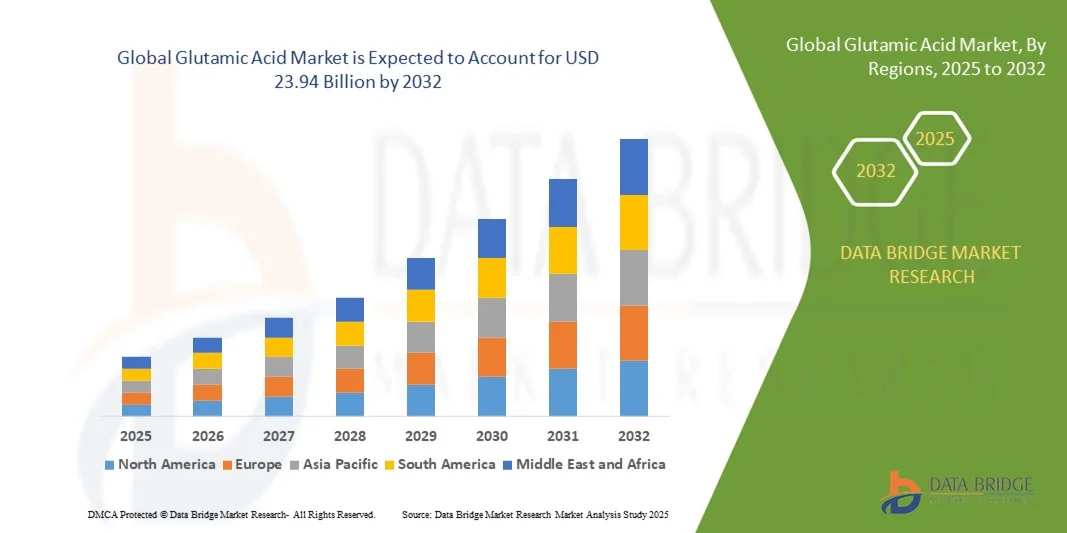
- The global Glutamic Acid Market size was valued at USD 14.52 billion in 2024 and is projected to reach USD 23.94 billion by 2032, growing at a CAGR of 6.45% during the forecast period.
- The market growth is primarily driven by increasing demand from the food and beverage industry, where glutamic acid is widely used as a flavor enhancer and nutritional supplement.
- Additionally, expanding applications in pharmaceuticals and animal feed, coupled with advancements in fermentation technology, are further propelling the market growth, supporting the rising consumer preference for natural and functional ingredients.
Global Glutamic Acid Market Analysis
- Glutamic acid, an amino acid widely used as a flavor enhancer and nutritional supplement, plays a crucial role in the food, pharmaceutical, and animal feed industries, driven by its functional properties and health benefits in both human and animal nutrition.
- The increasing demand for natural additives and clean-label products, along with technological advancements in fermentation and extraction processes, is fueling market expansion globally.
- North America led the Global Glutamic Acid Market with a revenue share of 32.8% in 2024, supported by well-established food processing industries, high consumer awareness of health supplements, and strong R&D activities focused on bio-based glutamic acid production.
- Asia-Pacific is projected to be the fastest-growing region during the forecast period, driven by rapid urbanization, expanding food and pharmaceutical sectors, and rising disposable incomes, particularly in countries like China and India.
- The biosynthesis segment dominated the market with the largest revenue share of 62.5% in 2024, driven by growing consumer preference for naturally derived glutamic acid products
Report Scope and Global Glutamic Acid Market Segmentation
|
Attributes |
Glutamic Acid Key Market Insights |
|
Segments Covered |
|
|
Countries Covered |
North America
Europe
Asia-Pacific
Middle East and Africa
South America
|
|
Key Market Players |
|
|
Market Opportunities |
|
|
Value Added Data Infosets |
In addition to the insights on market scenarios such as market value, growth rate, segmentation, geographical coverage, and major players, the market reports curated by the Data Bridge Market Research also include in-depth expert analysis, pricing analysis, brand share analysis, consumer survey, demography analysis, supply chain analysis, value chain analysis, raw material/consumables overview, vendor selection criteria, PESTLE Analysis, Porter Analysis, and regulatory framework. |
Global Glutamic Acid Market Trends
Enhanced Production Efficiency Through Biotechnological Advances
- A significant and accelerating trend in the global Glutamic Acid Market is the increasing application of advanced biotechnological methods, such as microbial fermentation and genetic engineering, to enhance production efficiency and product quality. These innovations are enabling manufacturers to produce glutamic acid more sustainably and cost-effectively.
- For instance, companies are leveraging genetically modified strains of Corynebacterium glutamicum to optimize yield and reduce by-products, resulting in higher purity glutamic acid suitable for food and pharmaceutical applications.
- Advances in fermentation technology also allow continuous monitoring and control of production parameters, improving consistency and scalability. Some manufacturers are integrating AI-driven process optimization systems that analyze real-time data to adjust fermentation conditions, maximizing output and reducing resource consumption.
- This trend toward biotechnological innovation supports the growing demand for naturally derived and clean-label glutamic acid products, aligning with consumer preferences for health-conscious and environmentally friendly ingredients.
- The adoption of biotechnological improvements is fostering collaborations between biotech firms and traditional chemical producers, driving further research and development in strain improvement and process intensification.
- The demand for glutamic acid produced via advanced biotechnological methods is rapidly increasing across food, pharmaceutical, and animal feed industries, as companies prioritize product quality, sustainability, and cost efficiency.
Global Glutamic Acid Market Dynamics
Driver
Growing Demand Driven by Expanding Food and Pharmaceutical Industries
- The rising global demand for glutamic acid is significantly driven by its widespread use in the food and beverage sector as a natural flavor enhancer, along with expanding applications in pharmaceuticals and animal nutrition. This growth is further supported by increasing consumer preference for natural and functional ingredients.
- For instance, in 2024, several key producers invested in scaling up fermentation facilities to meet growing demand from processed food manufacturers seeking clean-label additives. Such strategic expansions are expected to drive the glutamic acid market through the forecast period.
- As awareness of health and nutrition grows, glutamic acid’s role in enhancing taste and nutritional value makes it a preferred additive, encouraging food companies to reformulate products with improved flavor profiles and health benefits.
- Furthermore, increasing demand for amino acids in animal feed for improved livestock growth and health is contributing to the market’s expansion. The pharmaceutical industry’s use of glutamic acid derivatives for drug synthesis also supports this upward trend.
- Innovations in production techniques, such as bio-fermentation, and the rise of natural ingredient sourcing are attracting more manufacturers and consumers, further propelling the market growth globally.
Restraint/Challenge
Raw Material Price Volatility and Production Cost Constraints
- Fluctuations in the prices of raw materials used in glutamic acid production, such as glucose and corn syrup, pose a significant challenge to manufacturers, impacting production costs and profit margins.
- For Instance, global supply chain disruptions and agricultural yield variability have led to periodic spikes in raw material prices, causing uncertainty in manufacturing expenses and product pricing.
- Additionally, the complexity and cost associated with advanced fermentation technology and purification processes add to the overall production expenses, making glutamic acid products relatively costly for some end-users.
- While efforts to improve fermentation efficiency and explore alternative feedstocks are underway, these challenges continue to affect market accessibility, particularly in price-sensitive regions.
- Addressing these issues through stable raw material sourcing, investment in cost-effective technologies, and development of value-added products will be critical to maintaining competitive pricing and supporting market growth.
Global Glutamic Acid Market Scope
The glutamic acid market is segmented on the basis of product and application
- By Product
On the basis of product, the Global Glutamic Acid Market is segmented into biosynthesis and industrial synthesis. The biosynthesis segment dominated the market with the largest revenue share of 62.5% in 2024, driven by growing consumer preference for naturally derived glutamic acid products. Biosynthesis, primarily through microbial fermentation, offers a more sustainable and environmentally friendly method compared to chemical synthesis. This method produces high-purity glutamic acid widely used in food additives and pharmaceuticals. Additionally, the biosynthesis process supports the increasing demand for clean-label and organic food ingredients, which is fueling market growth.
The industrial synthesis segment is expected to witness the fastest CAGR of 18.3% during the forecast period from 2025 to 2032. This growth is attributed to the cost-effectiveness and scalability of chemical synthesis methods, which cater to the growing industrial demand, particularly in regions with established chemical manufacturing infrastructures. Industrial synthesis remains essential for meeting the rising glutamic acid requirements in animal feed and certain pharmaceutical applications, where bulk quantities are required.
- By Application
On the basis of application, the Global Glutamic Acid Market is segmented into food additives, pharmaceutical, and animal & pet food. The food additives segment held the largest market revenue share of 54.7% in 2024, largely due to the widespread use of glutamic acid as a flavor enhancer (commonly in the form of monosodium glutamate) in processed foods and snacks. The rising consumer demand for tastier and more natural food products is driving the expansion of this segment globally. Moreover, the trend toward clean-label ingredients is encouraging food manufacturers to use glutamic acid derived from natural fermentation processes.
The pharmaceutical segment is expected to register the fastest CAGR of 20.4% from 2025 to 2032. This rapid growth is driven by increasing applications of glutamic acid and its derivatives in drug formulation, including treatments for neurological disorders and nutritional supplements. Additionally, the growing focus on amino acids for therapeutic and health benefits is fueling demand in this sector. The animal & pet food segment is also expanding steadily, supported by the rising pet ownership and demand for enhanced animal nutrition.
Global Glutamic Acid Market Regional Analysis
- North America dominated the Global Glutamic Acid Market with the largest revenue share of 32.8% in 2024, driven by increasing demand from the food processing and pharmaceutical sectors, as well as the growing trend toward natural and functional ingredients.
- Consumers in the region highly value clean-label products and nutritional additives, encouraging food manufacturers to incorporate glutamic acid as a flavor enhancer and health-supporting compound in various processed foods and dietary supplements.
- This widespread adoption is further supported by high disposable incomes, a well-regulated food and drug industry, and advanced biotechnological capabilities, enabling large-scale production of high-purity glutamic acid. As a result, North America remains a key market for both domestic consumption and international export, reinforcing its leadership position in the global glutamic acid industry.
U.S. Glutamic Acid Market Insight
The U.S. glutamic acid market captured the largest revenue share of 78% within North America in 2024, fueled by the growing demand for natural flavor enhancers in processed and convenience foods. The market is further driven by rising consumer awareness about amino acid supplementation and increased utilization in pharmaceuticals and nutraceuticals. The food industry’s shift toward clean-label formulations has encouraged manufacturers to adopt glutamic acid produced through fermentation, aligning with consumer preferences for natural ingredients. Additionally, robust R&D infrastructure and investments in biotech processes are enabling the U.S. to maintain its leadership in high-purity glutamic acid production for both domestic consumption and export.
Europe Glutamic Acid Market Insight
The Europe glutamic acid market is projected to expand at a substantial CAGR throughout the forecast period, driven by the strong demand for natural food additives and the increasing use of amino acids in dietary and pharmaceutical applications. Stringent food safety and labeling regulations have propelled the demand for naturally derived glutamic acid, particularly in countries like Germany, France, and the Netherlands. Rising health consciousness and the shift toward plant-based diets are also influencing consumption patterns across the region. The presence of advanced fermentation facilities and supportive regulatory frameworks further support the market’s long-term growth across food, pharma, and feed sectors.
U.K. Glutamic Acid Market Insight
The U.K. glutamic acid market is anticipated to grow at a noteworthy CAGR during the forecast period, supported by the rising popularity of vegan and vegetarian diets, which demand enhanced flavoring solutions without synthetic additives. The increasing emphasis on clean-label food products and naturally fermented amino acids is contributing to greater market penetration of glutamic acid in food and beverage formulations. Furthermore, the growing interest in health supplements and functional foods is driving glutamic acid consumption in pharmaceutical-grade applications. The U.K.'s mature food processing industry and proactive food safety standards make it a favorable market for glutamic acid producers.
Germany Glutamic Acid Market Insight
The Germany glutamic acid market is expected to expand at a considerable CAGR during the forecast period, driven by the country’s strong biotechnology sector and a rising focus on sustainable and plant-based nutrition. German consumers are increasingly favoring natural food ingredients, boosting demand for bio-based glutamic acid in flavor enhancement and dietary supplements. Additionally, the pharmaceutical and animal feed industries are adopting high-grade glutamic acid for specialized formulations. Germany’s emphasis on product innovation, quality assurance, and eco-friendly production methods positions it as a key growth driver within the European glutamic acid market.
Asia-Pacific Glutamic Acid Market Insight
The Asia-Pacific glutamic acid market is poised to grow at the fastest CAGR of 24% from 2025 to 2032, driven by rapid urbanization, rising incomes, and the expanding food and pharmaceutical industries across countries such as China, India, and Japan. The region is a major hub for MSG production and consumption, and increasing investments in fermentation technology are expanding applications into pharmaceuticals and animal feed. Government initiatives to improve food safety and nutrition, along with growing demand for affordable protein sources, are also supporting market growth. The abundant availability of raw materials and cost-effective manufacturing enhances the region’s global competitiveness.
Japan Glutamic Acid Market Insight
The Japan glutamic acid market is gaining momentum due to the country’s established food processing sector and long-standing use of MSG in traditional cuisine. With a strong cultural acceptance of umami flavor, Japan remains a significant consumer of glutamic acid, especially in ready-to-eat and processed foods. The pharmaceutical sector is also expanding its use of glutamic acid derivatives in medical and nutritional applications. Technological advancements in fermentation and increasing focus on clean-label product development are further accelerating growth. Additionally, Japan’s aging population is driving demand for functional foods, contributing to sustained market expansion.
China Glutamic Acid Market Insight
The China glutamic acid market accounted for the largest revenue share in Asia-Pacific in 2024, supported by the country’s vast food manufacturing base, high consumption of MSG, and rapid industrialization. China remains a global leader in glutamic acid production due to its extensive fermentation infrastructure and strong domestic demand. Rising awareness about food safety and nutrition, along with the increasing demand for cost-effective amino acid supplements, is further boosting the market. In addition to food, glutamic acid use in animal feed and pharmaceuticals is expanding, driven by supportive government policies and a robust supply chain ecosystem.
Global Glutamic Acid Market Share
The Glutamic Acid industry is primarily led by well-established companies, including:
- Global Bio-chem Technology Group Co., Ltd. (Hong Kong)
- Hefei TNJ Chemical Industry Co., Ltd. (China)
- Ottokemi Ltd. (Turkey)
- Bio-chem Technology Group Company (China)
- Bachem AG (Switzerland)
- Ningxia EPPEN Bioengineering Stock Co., Ltd (China)
- Kyowa Hakko Bio Co., Ltd (Japan)
- Sichuan Tongsheng Amino Acid Co., Ltd (China)
- Iris Biotech GmbH (Germany)
- Suzhou Yuanfang Chemical Co., Ltd. (China)
- Ajinomoto Co., Inc. (Japan)
- Akzo Nobel N.V. (Netherlands)
- Evonik Industries AG (Germany)
What are the Recent Developments in Global Glutamic Acid Market?
- In April 2023, Ajinomoto Co., Inc., a global leader in amino acids and food seasonings, announced the expansion of its fermentation-based glutamic acid production facility in Thailand. This initiative aims to meet rising global demand for naturally derived flavor enhancers and reflects Ajinomoto’s commitment to sustainable production methods. By enhancing production capacity in Southeast Asia, the company is positioning itself to cater more efficiently to growing consumer markets while reducing its environmental footprint through energy-efficient technologies.
- In March 2023, Evonik Industries AG unveiled a new R&D collaboration with a leading biotech firm to develop advanced microbial strains for the more efficient biosynthesis of glutamic acid. The initiative is part of Evonik’s broader strategy to accelerate innovation in amino acid production using precision fermentation. This partnership aims to lower production costs and carbon emissions, reinforcing the company’s long-term sustainability goals and strengthening its position in the pharmaceutical and animal nutrition sectors.
- In March 2023, Global Bio-chem Technology Group Co., Ltd. resumed full-scale operations at one of its major production plants in Jilin, China, following a series of upgrades to its fermentation systems. The modernization project includes the integration of smart manufacturing and real-time monitoring technologies to improve yield and reduce waste. This move is expected to significantly increase the company’s output capacity and better serve growing demand in Asian markets.
- In February 2023, Kyowa Hakko Bio Co., Ltd. launched a new pharmaceutical-grade glutamic acid product aimed at addressing the needs of clinical nutrition and neurological treatments. Developed at its state-of-the-art facility in Yamaguchi, Japan, the product meets stringent purity and quality standards. This release highlights the company’s focus on high-value, health-driven applications of amino acids and strengthens its foothold in the global pharmaceutical market.
- In January 2023, Sichuan Tongsheng Amino Acid Co., Ltd. announced the completion of a new automated production line dedicated to food-grade glutamic acid at its Chengdu plant. This expansion increases its annual production capacity and improves operational efficiency. The new facility utilizes eco-friendly practices and advanced fermentation technologies, aligning with the company’s sustainability commitments and growing global demand for natural flavoring agents in processed foods and instant meals.

- Interactive Data Analysis Dashboard
- Company Analysis Dashboard for high growth potential opportunities
- Research Analyst Access for customization & queries
- Competitor Analysis with Interactive dashboard
- Latest News, Updates & Trend analysis
- Harness the Power of Benchmark Analysis for Comprehensive Competitor Tracking
Global Glutamic Acid Market, Supply Chain Analysis and Ecosystem Framework
To support market growth and help clients navigate the impact of geopolitical shifts, DBMR has integrated in-depth supply chain analysis into its Global Glutamic Acid Market research reports. This addition empowers clients to respond effectively to global changes affecting their industries. The supply chain analysis section includes detailed insights such as Global Glutamic Acid Market consumption and production by country, price trend analysis, the impact of tariffs and geopolitical developments, and import and export trends by country and HSN code. It also highlights major suppliers with data on production capacity and company profiles, as well as key importers and exporters. In addition to research, DBMR offers specialized supply chain consulting services backed by over a decade of experience, providing solutions like supplier discovery, supplier risk assessment, price trend analysis, impact evaluation of inflation and trade route changes, and comprehensive market trend analysis.
Data collection and base year analysis are done using data collection modules with large sample sizes. The stage includes obtaining market information or related data through various sources and strategies. It includes examining and planning all the data acquired from the past in advance. It likewise envelops the examination of information inconsistencies seen across different information sources. The market data is analysed and estimated using market statistical and coherent models. Also, market share analysis and key trend analysis are the major success factors in the market report. To know more, please request an analyst call or drop down your inquiry.
The key research methodology used by DBMR research team is data triangulation which involves data mining, analysis of the impact of data variables on the market and primary (industry expert) validation. Data models include Vendor Positioning Grid, Market Time Line Analysis, Market Overview and Guide, Company Positioning Grid, Patent Analysis, Pricing Analysis, Company Market Share Analysis, Standards of Measurement, Global versus Regional and Vendor Share Analysis. To know more about the research methodology, drop in an inquiry to speak to our industry experts.
Data Bridge Market Research is a leader in advanced formative research. We take pride in servicing our existing and new customers with data and analysis that match and suits their goal. The report can be customized to include price trend analysis of target brands understanding the market for additional countries (ask for the list of countries), clinical trial results data, literature review, refurbished market and product base analysis. Market analysis of target competitors can be analyzed from technology-based analysis to market portfolio strategies. We can add as many competitors that you require data about in the format and data style you are looking for. Our team of analysts can also provide you data in crude raw excel files pivot tables (Fact book) or can assist you in creating presentations from the data sets available in the report.













