


What is the Glycosyltransferase Market Size and Overview?
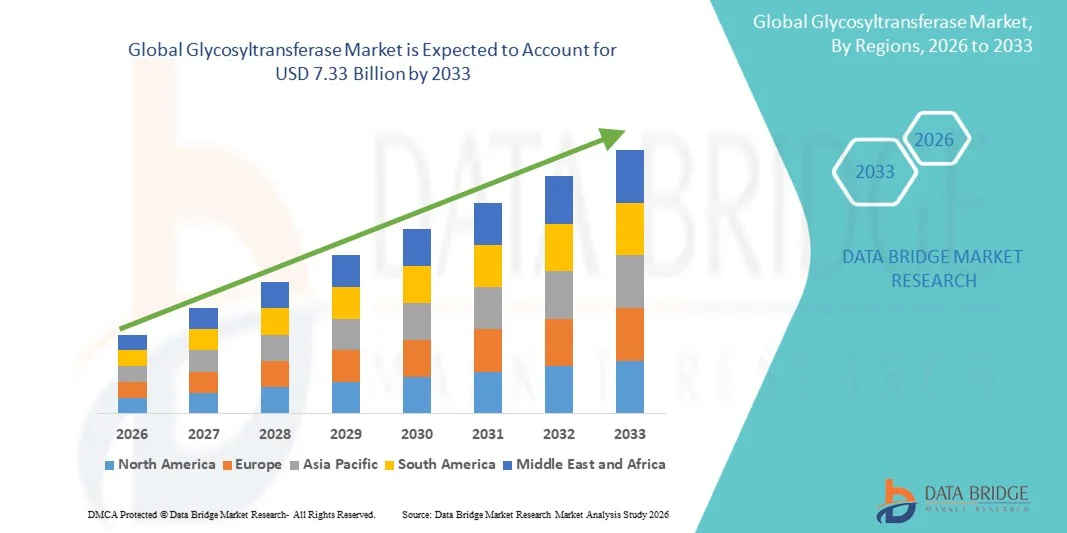
As per Data Bridge Market Research Analysis the Glycosyltransferase Market was valued at USD 2.45 billion in 2025 and is projected to reach USD 7.33 billion by 2033, growing at a CAGR of 14.70% from 2026 to 2033. The Glycosyltransferase Market is experiencing consistent growth driven by increasing demand for advanced enzyme-based therapeutics, rising applications in biopharmaceutical development, and expanding research activities in glycan engineering, diagnostics, and personalized medicine. The growing importance of glycosyltransferases in protein modification, drug discovery, and development of biologics is encouraging pharmaceutical and biotechnology companies to invest in enzyme technologies and glycoscience research.
The increasing prevalence of chronic diseases, combined with rising adoption of biologics, monoclonal antibodies, and targeted therapies, is accelerating the demand for glycosyltransferase-based solutions across pharmaceutical and research applications. Advancements in recombinant enzyme production, synthetic biology, and molecular engineering are enhancing the efficiency and scalability of glycosyltransferase technologies. In addition, expanding applications in cancer research, biomarker discovery, vaccine development, and precision medicine are creating new growth opportunities for market participants globally.
Key Market Trends & Insights
- North America dominated the Glycosyltransferase Market with the largest revenue share of 37.18% in 2025, supported by strong biotechnology infrastructure, significant investments in glycomics research, increasing pharmaceutical R&D activities, and the presence of major life science companies. The region benefits from advanced molecular biology laboratories, high adoption of enzyme research technologies, and growing demand for glycosyltransferase applications in biologics development, precision medicine, and disease biomarker discovery.
- The Drug Discovery and Development segment dominated the market with a 45.7% share in 2025, supported by the increasing role of glycosylation in therapeutic protein development, monoclonal antibody optimization, and biologics manufacturing.
- Asia-Pacific is expected to be the fastest-growing region at a CAGR of 8.4% from 2026 to 2033, fueled by increasing biotechnology investments, expanding pharmaceutical manufacturing capabilities, rising research activities in genomics and proteomics, and growing adoption of advanced molecular tools across China, India, Japan, and South Korea. Government initiatives supporting life science innovation and increasing healthcare research expenditure are further driving regional expansion.
- The Kits segment is projected to be the fastest-growing product category, registering a CAGR of 9.1% from 2026 to 2033, supported by increasing demand for simplified enzyme assay workflows, growing adoption of ready-to-use glycosyltransferase testing solutions, and rising research activities in glycan profiling and carbohydrate analysis. The convenience and reproducibility offered by commercial kits are accelerating their adoption in research laboratories.
- Disease Diagnostics is expected to be the fastest-growing application segment with a CAGR from 2026 to 2033, driven by increasing research on glycan biomarkers, rising adoption of molecular diagnostic approaches, and growing applications in cancer detection, infectious disease analysis, and personalized medicine.
- Pharmaceutical and Biotechnology Companies dominated the end-user segment with a revenue share in 2025, supported by extensive utilization of glycosyltransferase technologies in biologics development, enzyme engineering, and advanced therapeutic research. Increasing investments in antibody-based therapies and recombinant protein production are further strengthening demand from this segment.
- Academic Research Institutes accounted for % share in 2025, supported by expanding glycobiology research, increasing government-funded life science programs, and rising collaborations between universities and biotechnology companies. These institutions continue to play a key role in advancing understanding of glycosylation mechanisms and enzyme functions.
Market Size & Forecast
- Global Market Value (2025): USD 2.45 Billion
- Expected Market Value (2033): USD 7.33 Billion
- Forecast CAGR (2026–2033): 14.70%
- Leading Region in 2025: North America
- Fastest Growing Region: Asia-Pacific
Report Scope and Glycosyltransferase Market Segmentation
|
Attributes |
Glycosyltransferase Key Market Insights |
|
Segments Covered |
|
|
Countries Covered |
North America · U.S. · Canada · Mexico Europe · Germany · France · U.K. · Netherlands · Switzerland · Belgium · Russia · Italy · Spain · Turkey · Rest of Europe Asia-Pacific · China · Japan · India · South Korea · Singapore · Malaysia · Australia · Thailand · Indonesia · Philippines · Rest of Asia-Pacific Middle East and Africa · Saudi Arabia · U.A.E. · South Africa · Egypt · Israel · Rest of Middle East and Africa South America · Brazil · Argentina · Rest of South America |
|
Key Market Players |
• Thermo Fisher Scientific Inc. (U.S.) |
|
Market Opportunities |
· Expansion in Biologics and Monoclonal Antibody Development · Rising Adoption in Precision Medicine and Biomarker Discovery · Growth in Glycomics Research and Academic Collaborations |
|
Value Added Data Infosets |
In addition to the insights on market scenarios such as market value, growth rate, segmentation, geographical coverage, and major players, the market reports curated by the Data Bridge Market Research also include in-depth expert analysis, geographically represented company-wise production and capacity, network layouts of distributors and partners, detailed and updated price trend analysis and deficit analysis of supply chain and demand. |
What is the Key Trend in the Glycosyltransferase Market?
Trend: Increasing Adoption of Glycosyltransferases in Biologics Development and Glycoengineering
Pharmaceutical and biotechnology companies are increasingly adopting glycosyltransferase technologies to support the development and optimization of advanced biologics, including monoclonal antibodies, recombinant proteins, vaccines, and next-generation therapeutics. Glycosylation plays a critical role in improving protein stability, efficacy, half-life, and immune response, making glycosyltransferase-based research an important component of modern drug development.
The growing expansion of the biologics market is accelerating demand for glycan analysis tools, enzyme-based modification technologies, and glycosyltransferase assays. For example, the increasing development of therapeutic antibodies and engineered proteins has encouraged researchers to utilize glycoengineering approaches to enhance clinical performance and reduce immunogenicity. In addition, advancements in mass spectrometry, genomic technologies, and automated glycan profiling platforms are improving the efficiency of glycosyltransferase research across pharmaceutical and academic laboratories.
Glycosyltransferase Market Dynamics
Key Market Driver: Rising Demand for Glycosyltransferase Applications in Drug Discovery and Precision Medicine
The increasing focus on targeted therapies, personalized medicine, and biologics manufacturing is a major factor driving the Glycosyltransferase Market. Glycosyltransferases are essential enzymes involved in carbohydrate modification pathways that influence protein function, cellular communication, and disease mechanisms. Their applications in antibody engineering, biomarker discovery, and therapeutic development are expanding rapidly.
Pharmaceutical and biotechnology companies are increasingly investing in glycosyltransferase-based platforms to improve biologic drug quality and optimize therapeutic performance. For instance, monoclonal antibody manufacturers use glycoengineering strategies to modify Fc-region glycosylation patterns, which can improve antibody activity and therapeutic outcomes. Increasing research funding in glycobiology, advancements in enzyme engineering, and rising collaborations between academic institutes and biotechnology companies are further supporting market growth.
Key Restraint/Challenge: High Research Complexity and Limited Availability of Skilled Glycobiology Expertise
A significant challenge in the Glycosyltransferase Market is the complexity associated with glycosylation analysis and enzyme characterization. Unlike simpler molecular modifications, glycan structures are highly diverse and require advanced analytical techniques, specialized instruments, and experienced researchers for accurate interpretation.
The high cost of advanced analytical platforms such as mass spectrometry systems, specialized reagents, and glycan profiling technologies can limit adoption among smaller research laboratories and institutions with limited funding. In addition, a shortage of skilled professionals with expertise in glycobiology, enzymology, and carbohydrate chemistry remains a barrier to broader implementation. These challenges can slow research timelines and increase operational costs, particularly in emerging markets.
Key Market Opportunity: Integration of Artificial Intelligence and Advanced Glycomics Platforms
The integration of artificial intelligence (AI), machine learning, and advanced bioinformatics platforms presents a significant opportunity for the Glycosyltransferase market. AI-enabled glycomics solutions can accelerate glycan structure prediction, enzyme activity analysis, biomarker identification, and therapeutic optimization by processing large-scale biological datasets.
The development of automated glycan analysis workflows and high-throughput screening platforms is creating new opportunities for pharmaceutical and biotechnology companies. For example, AI-based approaches are increasingly being explored for predicting protein glycosylation patterns and optimizing biologic manufacturing processes. Furthermore, growing investments in precision medicine, synthetic biology, and biotechnology research across North America, Europe, and Asia-Pacific are expected to expand the adoption of glycosyltransferase technologies in drug discovery, diagnostics, and therapeutic innovation.
How is the Glycosyltransferase Market Segmented?
The Glycosyltransferase market is segmented on the basis of product, application, and end user.
By Product
On the basis of product, the Glycosyltransferase Market is segmented into instruments, kits, carbohydrates, reagents, and chemicals. The Reagents and Chemicals segment dominated the market with a 38.6% share in 2025, owing to their extensive utilization in glycosyltransferase assays, enzyme activity studies, glycan analysis, and molecular biology research. Reagents and chemicals are essential components in glycosylation experiments, enabling researchers to study enzyme functions, carbohydrate interactions, and protein modifications. The increasing demand for glycan profiling, biomarker identification, and therapeutic protein characterization is supporting segment growth. In addition, rising investments in biotechnology research, expansion of pharmaceutical R&D activities, and growing adoption of enzyme-based analytical workflows are strengthening the leading position of this segment globally.
The Kits segment is expected to witness the fastest growth with a CAGR of 9.2% from 2026 to 2033, driven by increasing demand for ready-to-use solutions that simplify glycosyltransferase analysis and improve research efficiency. Pre-packaged assay kits reduce experimental complexity, enhance reproducibility, and enable faster screening in academic, pharmaceutical, and clinical research settings. The growing adoption of high-throughput screening platforms, increasing focus on glycosylation-based drug development, and rising demand for user-friendly diagnostic and research tools are accelerating segment expansion. Furthermore, advancements in enzyme assay technologies and increasing commercialization of specialized glycosyltransferase kits are expected to create significant growth opportunities during the forecast period.
By Application
On the basis of application, the Glycosyltransferase Market is segmented into drug discovery and development, disease diagnostics, and other applications. The Drug Discovery and Development segment dominated the market with a 45.7% share in 2025, supported by the increasing role of glycosylation in therapeutic protein development, monoclonal antibody optimization, and biologics manufacturing. Glycosyltransferases play a critical role in modifying carbohydrate structures that influence drug stability, efficacy, and immune response, making them valuable tools in pharmaceutical research. The growing pipeline of biologic drugs, rising investment in precision medicine, and increasing adoption of glycan engineering technologies are driving demand across pharmaceutical and biotechnology companies. In addition, advancements in recombinant enzyme technologies and protein engineering are further supporting the expansion of this segment.
The Disease Diagnostics segment is expected to register the fastest growth with a CAGR of 10.1% from 2026 to 2033, driven by increasing applications of glycosyltransferase analysis in biomarker discovery, disease detection, and personalized medicine. Changes in glycosylation patterns are increasingly being studied as indicators of cancer, inflammatory diseases, and other complex disorders, creating demand for advanced diagnostic approaches. Growing adoption of molecular diagnostics, increasing healthcare focus on early disease detection, and advancements in glycan-based diagnostic platforms are supporting segment growth. Furthermore, rising research collaborations between academic institutions, diagnostic companies, and biotechnology firms are accelerating the development of glycosyltransferase-based diagnostic solutions.
By End User
On the basis of end user, the Glycosyltransferase Market is segmented into academic research institutes, pharmaceutical and biotechnology companies, and clinical laboratories. The Pharmaceutical and Biotechnology Companies segment dominated the market with a 52.3% share in 2025, due to extensive utilization of glycosyltransferase technologies in biologics development, drug optimization, and therapeutic protein manufacturing. Pharmaceutical companies are increasingly investing in glycan analysis and enzyme engineering to improve the effectiveness, safety, and production efficiency of advanced therapies. The expansion of biologics pipelines, rising adoption of monoclonal antibodies, and increasing focus on targeted therapies are major factors supporting segment dominance. In addition, collaborations between biotechnology companies and research organizations are accelerating innovation in glycosylation-based drug development.
The Academic Research Institutes segment is expected to witness the fastest growth with a CAGR of 9.8% from 2026 to 2033, driven by increasing research activities in glycoscience, molecular biology, and enzyme engineering. Universities and research institutions are expanding studies related to carbohydrate biology, disease mechanisms, and therapeutic discovery, increasing demand for glycosyltransferase tools and technologies. Growing government funding for life sciences research, rising publication activity in glycomics, and increasing collaborations with biotechnology companies are further supporting market expansion. In addition, the growing importance of glycosylation research in understanding complex biological processes is expected to accelerate adoption across academic research environments.
Which Region Holds the Largest Share of the Glycosyltransferase Market?
North America dominated the Glycosyltransferase Market with the largest revenue share of 37.18% in 2025, supported by strong biotechnology infrastructure, significant investments in glycomics research, increasing pharmaceutical R&D activities, and the presence of major life science companies. The region benefits from advanced molecular biology laboratories, high adoption of enzyme research technologies, and growing demand for glycosyltransferase applications in biologics development, precision medicine, and disease biomarker discovery. The U.S. and Canada are witnessing increasing utilization of glycosyltransferase platforms in therapeutic protein engineering, monoclonal antibody development, and advanced diagnostics. Furthermore, strong academic-industry collaborations and continuous innovation in biotechnology are strengthening North America’s leading position in the global market.
U.S. Glycosyltransferase Market Insight
The U.S. Glycosyltransferase market is experiencing significant growth due to rising investments in biotechnology research, expansion of biologics development pipelines, and increasing adoption of glycomics technologies in pharmaceutical applications. The country’s strong pharmaceutical and biotechnology ecosystem, supported by leading research institutions and advanced laboratory infrastructure, is driving demand for glycosyltransferase enzymes, reagents, and analytical solutions. Increasing focus on precision medicine, therapeutic antibody optimization, and biomarker discovery is further accelerating market growth. In addition, government and private-sector investments in life science innovation are supporting advancements in glycan analysis and enzyme engineering applications.
Europe Glycosyltransferase Market Insight
The Europe Glycosyltransferase market remains a major contributor to global revenue, driven by strong research capabilities, increasing adoption of advanced biotechnology tools, and growing investments in pharmaceutical innovation. Countries across the region are actively involved in glycobiology research, biologics manufacturing, and development of advanced therapeutic solutions. Increasing demand for glycosyltransferase-based technologies in drug discovery, disease diagnostics, and protein engineering is supporting regional growth. Furthermore, collaborations between academic institutions, biotechnology companies, and research organizations are enhancing innovation in glycan-based applications throughout Europe.
U.K. Glycosyltransferase Market Insight
The U.K. Glycosyltransferase market is witnessing steady growth, supported by increasing investments in life science research, biotechnology innovation, and advanced molecular biology applications. Academic institutions and biotechnology companies are increasingly adopting glycosyltransferase technologies for studying disease mechanisms, developing biomarkers, and improving therapeutic proteins. The country’s strong research ecosystem, government support for biotechnology development, and growing focus on precision medicine are contributing to market expansion. In addition, increasing collaborations between universities and pharmaceutical companies are accelerating advancements in glycobiology research.
Germany Glycosyltransferase Market Insight
The Germany Glycosyltransferase market is expanding steadily due to its strong pharmaceutical industry, advanced research infrastructure, and increasing focus on biotechnology innovation. Pharmaceutical companies and research institutes are utilizing glycosyltransferase technologies for biologics development, enzyme engineering, and glycan analysis applications. Germany’s strong presence in life science research, increasing investments in molecular diagnostics, and focus on advanced therapeutic development are supporting market growth. Furthermore, ongoing developments in synthetic biology and protein engineering are creating new opportunities for glycosyltransferase applications.
Asia-Pacific Glycosyltransferase Market Insight
The Asia-Pacific Glycosyltransferase market is expected to witness rapid growth, registering a CAGR of 8.4% from 2026 to 2033, fueled by increasing biotechnology investments, expanding pharmaceutical manufacturing capabilities, rising research activities in genomics and proteomics, and growing adoption of advanced molecular tools across China, India, Japan, and South Korea. The region is benefiting from increasing healthcare research expenditure, government initiatives supporting biotechnology innovation, and expansion of pharmaceutical R&D activities. Growing demand for biologics, increasing investments in life science infrastructure, and rising adoption of advanced research technologies are accelerating regional market expansion.
Japan Glycosyltransferase Market Insight
The Japan Glycosyltransferase market is witnessing consistent growth due to its advanced biotechnology sector, strong pharmaceutical research capabilities, and increasing focus on precision medicine. Japanese pharmaceutical companies and research institutions are actively adopting glycosyltransferase technologies for biologics development, therapeutic optimization, and molecular research applications. The country’s emphasis on healthcare innovation, advanced laboratory infrastructure, and growing investment in genomics and proteomics research are contributing to market growth.
China Glycosyltransferase Market Insight
The China Glycosyltransferase market is growing rapidly, driven by expanding pharmaceutical manufacturing, increasing biotechnology investments, and rising research activities in molecular biology and glycobiology. Government initiatives supporting biotechnology development, healthcare innovation, and domestic pharmaceutical research are strengthening market opportunities. Increasing adoption of glycosyltransferase technologies in drug discovery, biologics production, and disease diagnostics is boosting demand across academic and industrial sectors. China’s growing focus on advanced therapeutic development and life science research is positioning it as one of the fastest-growing markets for Glycosyltransferase globally.
Which are the Top Companies in Glycosyltransferase Market?
The Glycosyltransferase industry is primarily led by well-established companies, including:
- Moog Inc. (U.S.)
- Dallara (Italy)
- Exail (France)
- IPG Automotive GmbH (Germany)
- aiMotive (Hungary)
- VI‑grade GmbH (Germany)
- Cruden B.V. (Netherlands)
- Dynisma Ltd. (UK)
- Applied Intuition Inc. (U.S.)
- rFpro (rFpro Limited) (England)
- Siemens AG (Germany)
- Dassault Systèmes SE (France)
- MTS Systems Corporation (U.S.)
- CAE Inc. (Canada)
- NVIDIA Corporation (U.S.)
- AB Dynamics PLC (U.K.)
- Forum8 (Japan)
- Mitsubishi Precision Co., Ltd. (Japan)
- FAAC Incorporated (U.S.)
- DriveSafety (U.S.)
- Simtec Simulation Technology GmbH (Germany)
- MB Dynamics Inc. (U.S.)
- Sanlab Simulation (India)
- SimCraft (U.S.)
- CXC Simulations (U.S.)
- XPI Simulation (United Kingdom)
- Tecknotrove Simulator Systems Pvt. Ltd. (India)
- Zhejiang Kechi Intelligent Technology Co., Ltd. (China)
- Shenzhen Zhongzhi Simulation (China)
- Hindustan Simulators (India)
- DriveSimSolutions (U.S.)
- Teksim Technologies (India)
- iMVR Inc. (U.S.)
- SimXperience (U.S.)
What are Latest Developments in Glycosyltransferase Market?
- In June 2021, Thermo Fisher Scientific and other life science companies expanded their glycomics and glycoproteomics workflows by upgrading mass spectrometry (LC-MS) platforms for improved glycan and glycosylation analysis. These advancements enabled higher-resolution detection of glycosylation patterns used in biologics characterization and enzyme research, strengthening glycosyltransferase-related analytical capabilities in pharmaceutical R&D laboratories
- In April 2021, the Canadian Glycomics Network (GlycoNet) partnered with BridgeBio Pharma to accelerate translational research in glycomics for rare genetic diseases. The collaboration focused on applying glycan biology and glycosyltransferase pathway insights to develop potential therapeutic solutions, reinforcing academic–industry integration in glycoscience innovation
- In July 2022, Vector Laboratories launched the Glysite Scout Glycan Screening Kits for tissue-based glycan detection and profiling. The kits enabled improved immunofluorescence-based analysis of glycan expression, supporting glycosyltransferase-related research in disease biomarker discovery and glycoprotein characterization
- In May 2023, LC-MS compatible glycan labeling and purification kits were increasingly adopted across pharmaceutical and biotechnology laboratories. These workflow improvements reduced sample preparation time by approximately 15–25% and improved reproducibility in glycan analysis, strengthening glycosyltransferase research efficiency in drug discovery and biologics development
- In October 2024, Bruker Corporation introduced advancements in glycoproteomics using its 4D-Proteomics technology and glyco-PASEF workflow enhancements. These developments enabled faster and more sensitive glycopeptide identification, improving structural glycan analysis and supporting glycosyltransferase pathway research in precision medicine and biomarker discovery
- In July 2024, Thermo Fisher Scientific completed the acquisition of Olink Holding AB for approximately US$3.1 billion, strengthening its proteomics and biomarker discovery capabilities. This acquisition enhanced multi-omics integration, including glycoproteomics and glycosylation research workflows, expanding applications relevant to glycosyltransferase-driven biomolecular analysis
- In April 2024, Merck KGaA announced a €300 million investment in a new Advanced Research Center in Darmstadt, Germany. The facility focuses on antibody development, mRNA technologies, and advanced life science research, strengthening infrastructure for glycomics and glycosyltransferase-based therapeutic innovation
- In January 2025, Waters Corporation launched BioResolve Protein A Affinity Columns designed to improve antibody titer measurement accuracy and workflow efficiency. This innovation supports glycoprotein and glycosylation research workflows, which are closely linked to glycosyltransferase applications in biologics manufacturing and drug development
- In March 2025, Bruker Corporation introduced the glyco-PASEF workflow and Spectronaut 18 software for ultra-sensitive glycopeptide analysis. This advancement significantly improved glycosylation profiling speed and accuracy, supporting high-resolution glycosyltransferase-related research in pharmaceutical and biotechnology applications

- Interactive Data Analysis Dashboard
- Company Analysis Dashboard for high growth potential opportunities
- Research Analyst Access for customization & queries
- Competitor Analysis with Interactive dashboard
- Latest News, Updates & Trend analysis
- Harness the Power of Benchmark Analysis for Comprehensive Competitor Tracking
Data collection and base year analysis are done using data collection modules with large sample sizes. The stage includes obtaining market information or related data through various sources and strategies. It includes examining and planning all the data acquired from the past in advance. It likewise envelops the examination of information inconsistencies seen across different information sources. The market data is analysed and estimated using market statistical and coherent models. Also, market share analysis and key trend analysis are the major success factors in the market report. To know more, please request an analyst call or drop down your inquiry.
The key research methodology used by DBMR research team is data triangulation which involves data mining, analysis of the impact of data variables on the market and primary (industry expert) validation. Data models include Vendor Positioning Grid, Market Time Line Analysis, Market Overview and Guide, Company Positioning Grid, Patent Analysis, Pricing Analysis, Company Market Share Analysis, Standards of Measurement, Global versus Regional and Vendor Share Analysis. To know more about the research methodology, drop in an inquiry to speak to our industry experts.
Data Bridge Market Research is a leader in advanced formative research. We take pride in servicing our existing and new customers with data and analysis that match and suits their goal. The report can be customized to include price trend analysis of target brands understanding the market for additional countries (ask for the list of countries), clinical trial results data, literature review, refurbished market and product base analysis. Market analysis of target competitors can be analyzed from technology-based analysis to market portfolio strategies. We can add as many competitors that you require data about in the format and data style you are looking for. Our team of analysts can also provide you data in crude raw excel files pivot tables (Fact book) or can assist you in creating presentations from the data sets available in the report.













