


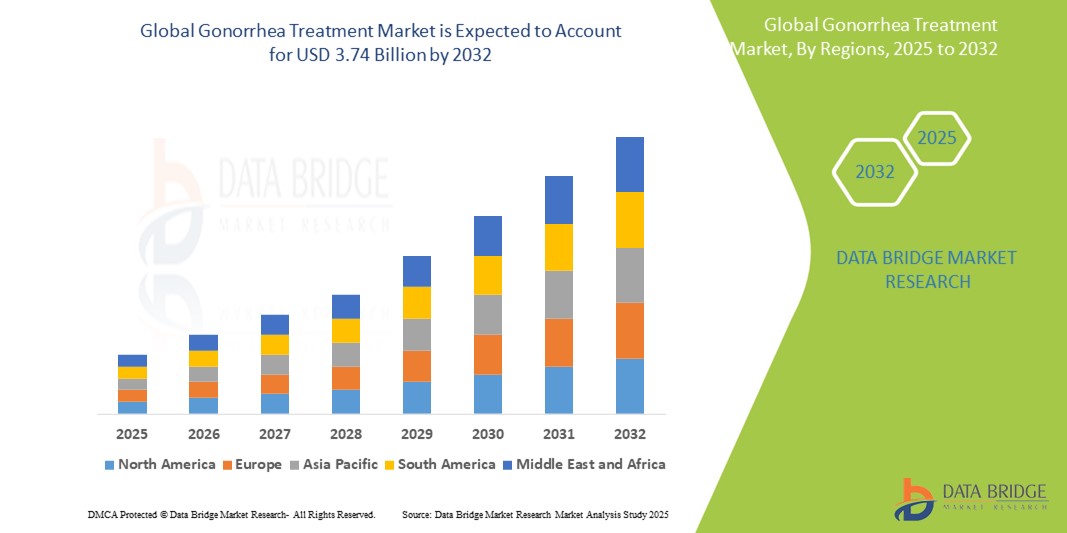
Gonorrhea Treatment Market Size
- The global gonorrhea treatment market size was valued at USD 1.31 billion in 2024 and is expected to reach USD 3.74 billion by 2032, exhibiting a compound annual growth rate (CAGR) of 4.0% during the forecast period
- Market growth is primarily driven by the increasing global prevalence of gonorrhea, the rising incidence of antibiotic-resistant strains, and growing public health initiatives aimed at sexually transmitted infection (STI) prevention and control.
- Furthermore, enhanced diagnostic capabilities leading to earlier detection and the continuous development of novel antibiotic therapies are establishing effective gonorrhea treatment as a critical component of global public health strategies. These converging factors are accelerating the demand for and uptake of gonorrhea treatment solutions, thereby significantly boosting the industry's growth
Gonorrhea Treatment Market Analysis
- Gonorrhea, a common sexually transmitted infection caused by the bacterium Neisseria gonorrhoeae, requires prompt and effective treatment to prevent serious health complications, including infertility, pelvic inflammatory disease, and increased risk of HIV transmission
- The escalating demand for Gonorrhea Treatment is primarily fueled by the global rise in incidence rates, the emergence and spread of multidrug-resistant strains, and increased efforts in screening and diagnosis
- North America dominates the gonorrhea treatment market with the largest revenue share of 34.47% in 2024, characterized by robust public health infrastructure, high awareness regarding STIs, and significant investments in healthcare R&D
- The U.S. is experiencing substantial growth in gonorrhea treatment, particularly in public health clinics and specialized infectious disease centers, driven by surveillance programs, updated treatment guidelines, and the presence of key pharmaceutical companies involved in antibiotic development
- Asia-Pacific is expected to be the fastest-growing region in the gonorrhea treatment market during the forecast period due to increasing population, rising awareness campaigns, and improving healthcare access in developing economies
- The cephalosporins segment is expected to dominate the gonorrhea treatment market with a market share of 41.51% in 2024, driven by its established efficacy as a first-line treatment and its widespread recmmendation by global health organizations
Report Scope and Gonorrhea Treatment Market Segmentation
|
Attributes |
Gonorrhea Treatment Key Market Insights |
|
Segments Covered |
|
|
Countries Covered |
North America
Europe
Asia-Pacific
Middle East and Africa
South America
|
|
Key Market Players |
|
|
Market Opportunities |
|
|
Value Added Data Infosets |
In addition to the insights on market scenarios such as market value, growth rate, segmentation, geographical coverage, and major players, the market reports curated by the Data Bridge Market Research also include depth expert analysis, patient epidemiology, pipeline analysis, pricing analysis, and regulatory framework. |
Gonorrhea Treatment Market Trends
“Combating antimicrobial resistance through novel therapies and combination regimens”
- A significant and accelerating trend in the global gonorrhea treatment market is the intensified focus on combating antimicrobial resistance (AMR) through the development of novel antibiotic therapies and the adoption of updated combination treatment regimens
- The emergence of multidrug-resistant Neisseria gonorrhoeae strains poses a severe public health threat, driving the urgent need for new solutions
- For instance, pharmaceutical companies are investing heavily in research and development to discover and bring to market antibiotics with new mechanisms of action to overcome existing resistance. Similarly, health organizations worldwide are advocating for dual therapy approaches (e.g., ceftriaxone plus azithromycin) to enhance treatment efficacy and slow the development of further resistance.
- Novel therapies and combination regimens in gonorrhea treatment enable features such as overcoming resistance to conventional antibiotics and providing more intelligent strategies to minimize treatment failures
- For instance, some new drugs specifically target resistant bacterial enzymes to improve treatment outcomes and can be combined with existing agents for synergistic effects. furthermore, specialized surveillance networks offer public health agencies the ease of monitoring resistance patterns globally, allowing them to rapidly adapt treatment guidelines and implement effective control measures
- The seamless integration of new drugs into clinical practice guidelines facilitates centralized control over various aspects of STI management through a single interface, healthcare providers can access updated recommendations, manage patient data, and monitor treatment effectiveness, creating a unified and highly effective public health response system
- This trend towards more intelligent, proactive, and interconnected treatment strategies is fundamentally reshaping the approach to managing gonorrhea. consequently, companies are developing antibiotic candidates with features such as broad-spectrum activity against resistant strains and copatibility with existing clinical workflows. the demand for gonorrhea treatments that offer seamless integration of novel approaches to combat resistance is growing rapidly, as public health authorities and clinicians increasingly prioritize effective and sustainable solutions
Gonorrhea Treatment Market Dynamics
Driver
“Growing Need Due to Rising Global Incidence and Antibiotic Resistance”
- The increasing global incidence of gonorrhea and the alarming rise in antibiotic-resistant Neisseria gonorrhoeae strains are significant drivers for the heightened demand for Gonorrhea Treatment.
- For instance, in April 2024, the World Health Organization (WHO) released updated guidelines for gonorrhea treatment, emphasizing combination therapies due to widespread resistance, looking forward to integrating novel antibiotic strategies more widely into clinical practice. Such recommendations by key international health organizations are expected to drive the Gonorrhea Treatment industry growth in the forecast period.
- As healthcare providers become more aware of the challenges posed by resistant strains and seek enhanced management for their patients, advanced treatment solutions offer features such as broader spectrum of activity, improved efficacy against resistant infections, and reduced risk of treatment failure, providing a compelling upgrade over older, less effective single-drug regimens.
- Furthermore, the growing popularity of comprehensive STI screening programs and the desire for improved public health outcomes are making Gonorrhea Treatment an integral component of infectious disease management systems, offering seamless integration with other diagnostic tools and public health initiatives.
- The convenience of updated treatment guidelines, improved access to new therapies, and the ability to control the spread of resistant infections are key factors propelling the adoption of Gonorrhea Treatment. The trend towards evidence-based medicine and the increasing availability of sophisticated diagnostic tests further contribute to market growth.
Restraint/Challenge
“Concerns Regarding Limited Treatment Options and Diagnostic Delays”
- As existing first-line treatments face increasing resistance, the lack of readily available novel, effective, and affordable alternatives creates a critical treatment gap, raising anxieties among public health authorities about managing widespread outbreaks.
- For instance, reports highlighting the dwindling number of new antibiotics for stis have made some clinicians hesitant about future treatment options. addressing these concerns through robust public-private partnerships for antibiotic development and incentive programs for pharmaceutical companies is crucial for replenishing the treatment arsenal.
- Companies such as Shionogi & Co., Ltd. and Paratek Pharmaceuticals, Inc. emphasize their R&D efforts in their marketing to reassure public health stakeholders.
- The delays in diagnosis, often due to asymptomatic infections or lack of access to testing, can lead to prolonged transmission and complications. While rapid diagnostic tests are emerging, their widespread availability and integration into routine clinical practice, particularly in resource-limited settings, remain a challenge. Overcoming these challenges through accelerated antibiotic development, improved diagnostic accessibility, and widespread public health education will be vital for sustained market growth.
Gonorrhea Treatment Market Scope
The market is segmented on the basis of drug class,drugs, disease stage, route of administration, end-user, and distribution channel.
By Drug Class
On the basis of drug class, the gonorrhea treatment market is segmented into sulfonamides, tetracycline, aminopenicillins, and macrolides. The sulfonamides segment dominates the largest market revenue share of 41.51% in 2025, driven by its established reputation as the cornerstone of first-line treatment for uncomplicated gonorrhea, its high efficacy, and its widespread recommendation by global health authorities. Healthcare providers often prioritize Ceftriaxone for its proven effectiveness and its relatively low resistance rates compared to older antibiotics Macrolides are preferred for their broad-spectrum activity, convenient dosing, and high patient compliance, particularly in outpatient settings. The tetracycline segment is expected to witness the fastest CAGR from 2025 to 2032, supported by growing research into overcoming antimicrobial resistance and renewed interest in older drug classes as viable alternatives. The increasing need for effective second-line therapies in resistant gonorrhea cases is anticipated to further propel the adoption of tetracycline-based treatments.
By Drug
On the basis of drugs, the gonorrhea treatment market is segmented into erythromycin, clarithromycin, azithromycin, roxithromycin, and others. The azithromycin segment held the dominant share in 2024, driven by its inclusion in first-line dual therapy and its effectiveness against a broad range of Neisseria gonorrhoeae strains. Its once-daily dosing and favorable safety profile contribute to its continued dominance in clinical practice. However, due to rising resistance concerns, the roxithromycin segment is expected to grow at the fastest CAGR from 2025 to 2032 as it gains attention in treatment protocols and clinical trials as a potential alternative to existing macrolide therapies.
By Disease Stage
On the basis of disease stage, the gonorrhea treatment market is segmented into uncomplicated gonorrhea and complicated gonorrhea. The uncomplicated gonorrhea segment held the largest market revenue share in 2025, driven by the higher prevalence of asymptomatic and uncomplicated infections, which are often the initial presentation of the disease and are readily diagnosed and treated in various clinical settings. Early and effective treatment of uncomplicated cases is crucial for preventing progression to more severe forms and limiting transmission. The complicated gonorrhea segment is expected to witness the fastest CAGR from 2025 to 2032, driven by the increasing incidence of multidrug-resistant strains leading to more complex infections (e.g., pelvic inflammatory disease, epididymitis, disseminated gonococcal infection) that require more intensive and often longer-duration treatment regimens. The rising need for inpatient care and specialized antibiotic combinations for these severe cases propels the growth of this segment.
By Route of Administration
On the basis of route of administration, the gonorrhea treatment market is segmented into injectable and oral. The injectable segment held the largest market revenue share in 2025, driven by the critical need for rapid and reliable systemic drug delivery, particularly for first-line treatments like ceftriaxone. Injectable administration ensures optimal drug concentrations to effectively eliminate the Neisseria gonorrhoeae bacteria, especially in cases of suspected resistance or complicated infections. The oral segment is expected to witness the fastest CAGR from 2025 to 2032, driven by the convenience of oral medications for patient compliance and outpatient treatment, particularly for uncomplicated cases or as part of dual therapy regimens. The development of new oral antibiotics effective against resistant strains further contributes to the growth of this segment.
By End-User
On the basis of end-user, the gonorrhea treatment market is segmented into hospitals, clinics, specialty centers (e.g., STI Clinics), diagnostic laboratories, and public health agencies. The hospitals segment accounted for the largest market revenue share in 2024, driven by the increasing number of patients requiring emergency care for complicated gonorrhea, the availability of comprehensive medical facilities including inpatient services, and their role in managing severe infections. Hospitals are equipped to handle complex cases and provide necessary diagnostic and treatment support. The specialty centers (e.g., STI Clinics) segment is expected to witness the fastest CAGR from 2025 to 2032, driven by their specialized focus on STI diagnosis, treatment, and prevention, offering tailored and confidential services to at-risk populations. These clinics are often at the forefront of implementing new treatment guidelines and managing resistant cases, leading to high patient volumes.
By Distribution Channel
On the basis of distribution channel, the gonorrhea treatment market is segmented into hospital pharmacies, retail pharmacies, online pharmacies, and government supply & direct sales. The hospital pharmacies held the largest market revenue share in 2025, driven by the immediate availability of essential antibiotics for both inpatient and emergency department use, especially for injectable formulations. Hospital pharmacies maintain inventories of critical medications and ensure their proper handling and dispensing. The government supply & direct sales segment is expected to witness the fastest CAGR from 2025 to 2032, primarily due to large-scale procurement and distribution of antibiotics by public health agencies for national STI control programs and emergency stockpiles, particularly for first-line and highly effective treatments. This channel facilitates broad access and ensures preparedness for public health initiatives.
Gonorrhea Treatment Market Regional Analysis
- North America dominates the gonorrhea treatment market with the largest revenue share of 34.47% in 2024, driven by a high prevalence of gonorrhea, well-established public health surveillance systems, and proactive implementation of national treatment guidelines
- The region benefits from significant investments in antibiotic research and development, strong collaborations between public health agencies and pharmaceutical companies, and widespread access to healthcare facilities
- This widespread adoption is further supported by high awareness campaigns and a robust regulatory environment that facilitates the approval and distribution of new therapies.
U.S. Gonorrhea Treatment Market Insight
- The U.S. gonorrhea treatment market captured the largest revenue share of 81% within North America in 2024, fueled by high incidence rates of gonorrhea, particularly among specific demographic groups, and robust public health responses to control the spread of STIs. Continuous updates to treatment guidelines by organizations like the CDC, coupled with ongoing research into antibiotic resistance, drive demand for effective therapeutic options. The presence of major pharmaceutical companies and a strong emphasis on antimicrobial stewardship further propel the market.
Europe Gonorrhea Treatment Market Insight
The European gonorrhea treatment market is projected to expand at a substantial CAGR throughout the forecast period, primarily driven by increasing awareness campaigns, enhanced sti surveillance systems, and rising incidence of gonorrhea in several countries. European public health bodies are actively engaged in monitoring resistance patterns and promoting appropriate treatment regimens. The market benefits from well-developed healthcare systems and collaborative efforts to address public health challenges across the region.
U.K. Gonorrhea Treatment Market Insight
The U.K. gonorrhea treatment market is anticipated to grow at a noteworthy CAGR during the forecast period, driven by a rising number of diagnoses, active national STI screening programs, and a commitment to combating antibiotic resistance through research and updated treatment protocols. The National Health Service (NHS) plays a crucial role in delivering treatment and implementing public health initiatives.
Germany Gonorrhea Treatment Market Insight
The German gonorrhea treatment market is expected to expand at a considerable cagr during the forecast period, fueled by a sophisticated healthcare system, strong public health emphasis on sti control, and active participation in international efforts to monitor and manage antibiotic resistance. Germany's focus on evidence-based medicine and comprehensive patient care contributes to the adoption of effective treatment strategies.
Asia-Pacific Gonorrhea Treatment Market Insight
The Asia-pacific gonorrhea treatment market is poised to grow at the fastest CAGR of over 24% in 2024, driven by increasing population density, rising awareness about STIs, improving healthcare infrastructure, and government initiatives aimed at controlling infectious diseases in countries such as China, India, and Southeast Asian nations. The expansion of access to diagnostic testing and treatment in urban and semi-urban areas is a key factor.
Japan Gonorrhea Treatment Market Insight
The Japan gonorrhea treatment market is gaining momentum due to a high level of healthcare access, sophisticated diagnostic capabilities, and a focus on public health surveillance for STIs. The Japanese market emphasizes effective and safe treatment options, and continuous efforts to monitor antibiotic resistance patterns influence treatment guidelines and market demand.
China Gonorrhea Treatment Market Insight
The China gonorrhea treatment market accounted for the largest market revenue share in Asia Pacific in 2024, attributed to its vast population, increasing urbanization, and expanding healthcare infrastructure. Government campaigns to improve public health awareness and control infectious diseases, coupled with growing access to diagnostic and treatment services, are key factors propelling the market in China.
Gonorrhea Treatment Market Share
The gonorrhea treatment industry is primarily led by well-established companies, including:
- Pfizer Inc. (U.S.)
- GSK Plc (U.K.),
- Merck & Co., Inc. (U.S.)
- F. Hoffmann-La Roche Ltd (Switzerland)
- Sanofi (France)
- Johnson & Johnson (U.S.)
- Bristol-Myers Squibb Company (U.S.)
- AstraZeneca Plc (U.K.)
- Lupin Limited (India)
- Teva Pharmaceutical Industries Ltd. (Israel)
- Sandoz International GmbH (Germany)
- Cipla Inc. (India)
- Aurobindo Pharma Limited (India)
- Shionogi & Co., Ltd. (Japan)
- Allecra Therapeutics GmbH (Germany)
- Paratek Pharmaceuticals, Inc. (U.S.)
- Venatorx Pharmaceuticals, Inc. (U.S.)
- Wockhardt Ltd. (India)
- Aridis Pharmaceuticals, Inc. (U.S.)
- Summit Therapeutics Inc. (U.S.)
Latest Developments in Global Gonorrhea Treatment Market
- In April 2023, Pfizer Inc., a global pharmaceutical leader, announced the initiation of a new Phase 3 clinical trial for a novel antibiotic candidate specifically designed to treat multidrug-resistant gonorrhea. This significant investment in R&D aims to address the growing public health crisis of antibiotic resistance, reinforcing Pfizer's commitment to infectious disease treatment and potentially securing a major share in future gonorrhea treatment markets.
- In March 2023, GlaxoSmithKline Plc (GSK) launched a new global public awareness campaign focused on STI prevention and treatment, including gonorrhea, alongside enhanced access programs for its antibiotic portfolio. This initiative underscores GSK's dedication to public health and aims to improve patient outcomes worldwide, thereby consolidating its market presence in the infectious disease sector.
- In March 2023, Merck & Co., Inc. announced a strategic partnership with a leading academic research institution to explore new therapeutic approaches, including host-directed therapies, for severe or complicated gonorrhea infections. This collaboration is designed to accelerate the discovery of innovative treatment modalities, highlighting Merck's commitment to advancing the science of infectious disease management.
- In February 2023, Shionogi & Co., Ltd., a Japanese pharmaceutical company, reported positive Phase 2 clinical trial results for a new oral antibiotic in treating uncomplicated gonorrhea, showcasing potential for a more convenient and accessible treatment option. This development could pave the way for a new therapy, expanding Shionogi's footprint in the global gonorrhea treatment market.
- In January 2023, Allecra Therapeutics GmbH, a European biopharmaceutical company, received Fast Track designation from the FDA for its investigational antibiotic combination targeting resistant Gram-negative bacteria, including Neisseria gonorrhoeae. This designation is expected to expedite the development and review process, signaling a potential new treatment option and highlighting Allecra Therapeutics' role in combating antimicrobial resistance

- Interactive Data Analysis Dashboard
- Company Analysis Dashboard for high growth potential opportunities
- Research Analyst Access for customization & queries
- Competitor Analysis with Interactive dashboard
- Latest News, Updates & Trend analysis
- Harness the Power of Benchmark Analysis for Comprehensive Competitor Tracking
Data collection and base year analysis are done using data collection modules with large sample sizes. The stage includes obtaining market information or related data through various sources and strategies. It includes examining and planning all the data acquired from the past in advance. It likewise envelops the examination of information inconsistencies seen across different information sources. The market data is analysed and estimated using market statistical and coherent models. Also, market share analysis and key trend analysis are the major success factors in the market report. To know more, please request an analyst call or drop down your inquiry.
The key research methodology used by DBMR research team is data triangulation which involves data mining, analysis of the impact of data variables on the market and primary (industry expert) validation. Data models include Vendor Positioning Grid, Market Time Line Analysis, Market Overview and Guide, Company Positioning Grid, Patent Analysis, Pricing Analysis, Company Market Share Analysis, Standards of Measurement, Global versus Regional and Vendor Share Analysis. To know more about the research methodology, drop in an inquiry to speak to our industry experts.
Data Bridge Market Research is a leader in advanced formative research. We take pride in servicing our existing and new customers with data and analysis that match and suits their goal. The report can be customized to include price trend analysis of target brands understanding the market for additional countries (ask for the list of countries), clinical trial results data, literature review, refurbished market and product base analysis. Market analysis of target competitors can be analyzed from technology-based analysis to market portfolio strategies. We can add as many competitors that you require data about in the format and data style you are looking for. Our team of analysts can also provide you data in crude raw excel files pivot tables (Fact book) or can assist you in creating presentations from the data sets available in the report.












