


Gut Microbiota-Derived Therapeutics Market Overview
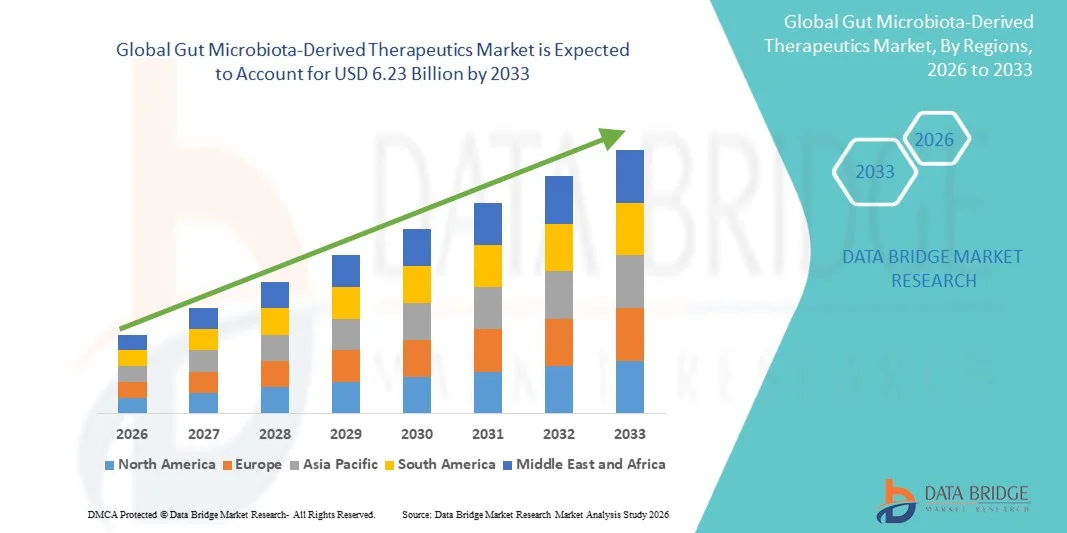
The global Gut Microbiota-Derived Therapeutics market was valued at USD 1.48 billion in 2025 and is projected to reach USD 6.23 billion by 2033, growing at a CAGR of 19.70% from 2026 to 2033. The Global Gut Microbiota-Derived Therapeutics Market is experiencing consistent growth driven by rising prevalence of gastrointestinal, metabolic, and immune-related disorders, increasing scientific understanding of the gut–brain axis, and rapid advancements in microbiome research and biotherapeutic development. The growing shift toward precision medicine and biologics-based treatment approaches is further accelerating the adoption of microbiota-derived therapeutics across clinical settings.
The increasing burden of conditions such as inflammatory bowel disease (IBD), irritable bowel syndrome (IBS), obesity, and Clostridioides difficile infections is compelling healthcare providers and pharmaceutical companies to adopt microbiome-targeted therapies, including probiotics, prebiotics, postbiotics, and fecal microbiota transplantation (FMT). In addition, expanding clinical trials, regulatory support for live biotherapeutic products, and growing investment in microbiome-based drug pipelines are strengthening market adoption across both developed and emerging healthcare systems.
Key Market Trends & Insights
- North America dominated the global Gut Microbiota-Derived Therapeutics market with the largest revenue share of 36.12% in 2025, supported by advanced microbiome research infrastructure, strong presence of biotechnology and pharmaceutical companies, and high adoption of microbiome-based therapeutics across hospitals and specialty clinics.
- The Probiotics segment led the market with a 43.28% share in 2025, driven by strong clinical adoption for gastrointestinal health management, widespread availability as over-the-counter supplements, and increasing use in restoring gut microbial balance.
- Asia-Pacific is expected to be the fastest-growing region at a CAGR of 8.1% from 2026 to 2033, fueled by rising prevalence of gastrointestinal disorders, increasing investments in biotechnology research, and expanding access to microbiome-based therapies in China, India, and Japan.
- The Fecal Microbiota Transplantation (FMT) segment is the fastest-growing therapeutic type, projected to register a CAGR of 8.1%, driven by increasing clinical success in treating recurrent Clostridioides difficile infections and expanding research in metabolic and neurological disorders.
- The Gastrointestinal Disorders segment dominates the application category with a 46.15% revenue share in 2025, led by high global prevalence of IBS, IBD, and antibiotic-associated gut dysbiosis.
- The Oral route of administration dominates the market with a 78.35% share in 2025, supported by high patient compliance, ease of use, and widespread adoption of probiotic and microbiome-modulating therapies.
- The Hospital Pharmacies segment dominates the distribution channel with a 42.18% revenue share in 2025, driven by strong prescription-based access, physician-led treatment protocols, and high patient inflow for gastrointestinal and metabolic disorders.
- The Gastrointestinal Disorders segment dominated the market with a 44.67% share in 2025, driven by the high global prevalence of IBS, IBD, diarrhea, constipation, and antibiotic-associated gut imbalance
Market Size & Forecast
- Global Market Value (2025): USD 1.48 Billion
- Expected Market Value (2033): USD 6.23 Billion
- Forecast CAGR (2026–2033): 19.70%
- Leading Region in 2025: North America
- Fastest Growing Region: Asia-Pacific
Report Scope and Global Gut Microbiota-Derived Therapeutics Market Segmentation
|
Attributes |
Gut Microbiota-Derived Therapeutics Key Market Insights |
|
Segments Covered |
|
|
Countries Covered |
North America · U.S. · Canada · Mexico Europe · Germany · France · U.K. · Netherlands · Switzerland · Belgium · Russia · Italy · Spain · Turkey · Rest of Europe Asia-Pacific · China · Japan · India · South Korea · Singapore · Malaysia · Australia · Thailand · Indonesia · Philippines · Rest of Asia-Pacific Middle East and Africa · Saudi Arabia · U.A.E. · South Africa · Egypt · Israel · Rest of Middle East and Africa South America · Brazil · Argentina · Rest of South America |
|
Key Market Players |
• Seres Therapeutics Inc. (U.S.) |
|
Market Opportunities |
· Expansion of Microbiome-Based Precision Medicine and Personalized Therapeutics · Rising opportunities in Fecal Microbiota Transplantation (FMT) standardization and commercialization · Increasing growth in Probiotic, Postbiotic, and Next-Generation Live Biotherapeutic Development |
|
Value Added Data Infosets |
In addition to the insights on market scenarios such as market value, growth rate, segmentation, geographical coverage, and major players, the market reports curated by the Data Bridge Market Research also include in-depth expert analysis, geographically represented company-wise production and capacity, network layouts of distributors and partners, detailed and updated price trend analysis and deficit analysis of supply chain and demand. |
Global Gut Microbiota-Derived Therapeutics Market Trends
Trend: Growth in Microbiome-Based Precision Medicine and Advanced Therapeutics
The global Gut Microbiota-Derived Therapeutics market is witnessing strong growth driven by increasing adoption of microbiome-based precision medicine approaches for managing gastrointestinal, metabolic, and immune-related disorders. Expanding research on the gut–brain axis is significantly improving understanding of microbial influence on neurological and psychiatric conditions, supporting development of targeted therapeutic interventions. Rising clinical interest in probiotics, prebiotics, postbiotics, and fecal microbiota transplantation (FMT) is further accelerating innovation in microbiome modulation therapies. In addition, advancements in next-generation sequencing (NGS) and metagenomic profiling are enabling deeper characterization of gut microbial ecosystems, improving diagnostic accuracy and treatment personalization across global healthcare systems.
Global Gut Microbiota-Derived Therapeutics Market Dynamics
Key Market Driver: Rising Burden of Chronic Gastrointestinal and Metabolic Disorders
The global Gut Microbiota-Derived Therapeutics market is primarily driven by the increasing prevalence of chronic gastrointestinal disorders such as inflammatory bowel disease (IBD), irritable bowel syndrome (IBS), and Clostridioides difficile infections. Growing incidence of metabolic conditions including obesity and type 2 diabetes is further boosting demand for microbiome-targeted therapies. Clinical studies indicate that microbiota modulation can improve gut health outcomes in a significant proportion of patients, supporting adoption in hospital and specialty care settings. Pharmaceutical and biotechnology companies are expanding microbiome-focused drug pipelines, while increasing clinical trials for live biotherapeutic products are accelerating therapeutic innovation globally.
Key Restraint/Challenge: Regulatory Complexity and Limited Standardization
A major challenge in the Gut Microbiota-Derived Therapeutics market is the lack of standardized regulatory frameworks for microbiome-based products, particularly live biotherapeutic organisms and fecal microbiota transplantation procedures. Variability in donor screening protocols, safety concerns, and inconsistent clinical guidelines across regions create barriers to large-scale commercialization. In addition, complex manufacturing requirements for maintaining microbial viability and stability increase production costs. Limited long-term clinical data on efficacy and safety in non-gastrointestinal indications further restrict widespread adoption, especially in emerging markets with less developed regulatory ecosystems.
Key Market Opportunity: Expansion of Personalized Microbiome Therapeutics and AI-Driven Microbiome Analysis
The market presents significant opportunities through the development of personalized microbiome therapeutics enabled by AI-driven microbiome profiling and metagenomic analysis. Integration of artificial intelligence with microbiome data is enabling predictive modeling of disease risk and treatment response, supporting precision medicine applications. Growing investment in engineered probiotics, synthetic biology-based microbiome modulation, and next-generation live biotherapeutic development is further expanding innovation pipelines. In addition, increasing adoption of digital health platforms and at-home microbiome testing kits is improving patient access to personalized gut health solutions, particularly across North America, Europe, and Asia-Pacific regions.
Global Gut Microbiota-Derived Therapeutics Market Scope
The Gut Microbiota-Derived Therapeutics market is segmented on the basis of therapeutic type and application.
By Therapeutic Type
On the basis of therapeutic type, the global Gut Microbiota-Derived Therapeutics market is segmented into probiotics, prebiotics, postbiotics, microbiome-based drugs, and fecal microbiota transplantation (FMT). The Probiotics segment dominated the market with a 38.42% share in 2025, owing to strong clinical adoption in gastrointestinal health management, wide OTC availability, and extensive use in preventive and supportive care. These live microbial formulations help restore gut microbial balance, reduce pathogenic bacterial overgrowth, and improve digestive health outcomes across multiple patient populations. Growing consumer awareness regarding gut health, immunity, and metabolic regulation is further strengthening demand. Increasing integration of probiotic therapy in functional foods and nutraceuticals is expanding market penetration globally. Rising incidence of IBS, diarrhea-related disorders, and antibiotic-associated dysbiosis further supports segment dominance. In addition, strong physician recommendation and established safety profiles enhance clinical acceptance. The segment benefits from low-cost production and easy accessibility across retail and hospital channels. Expansion of fermented food industries in Asia-Pacific further accelerates adoption. Continuous R&D in strain-specific probiotics is improving therapeutic precision. Increasing use in pediatric and geriatric populations is also boosting growth. Overall, probiotics remain the foundational therapy segment in microbiome-based treatment approaches.
The Microbiome-Based Drugs segment is expected to register the fastest growth at a CAGR of 12.8% from 2026 to 2033, driven by rapid advancements in precision medicine and regulatory approvals for next-generation live biotherapeutic products. These therapies are designed to target disease-specific microbial imbalances with high precision, offering superior outcomes compared to conventional treatments. Increasing clinical trials in metabolic, gastrointestinal, and oncology-related indications are accelerating innovation. Strong pipeline development from biotech companies and pharmaceutical firms is expanding commercialization potential. Rising FDA and EMA support for live biotherapeutic classifications is improving regulatory clarity. Growing investment in microbiome sequencing and metagenomic analysis is enhancing drug discovery. Integration of AI-based microbiome profiling is enabling patient-specific treatment design. Expanding applications in inflammatory bowel disease and cancer immunotherapy are strengthening adoption. Increasing partnerships between research institutes and pharma companies are driving innovation. Higher efficacy in treatment-resistant cases is boosting clinical preference. Rising venture capital funding in microbiome therapeutics startups is supporting market expansion. Overall, microbiome-based drugs represent the most transformative growth segment in the market.
By Application
On the basis of application, the global Gut Microbiota-Derived Therapeutics market is segmented into gastrointestinal disorders, metabolic disorders, neurological disorders, immune-related diseases, and oncology support therapies. The Gastrointestinal Disorders segment dominated the market with a 44.67% share in 2025, driven by the high global prevalence of IBS, IBD, diarrhea, constipation, and antibiotic-associated gut imbalance. Increasing patient reliance on microbiome restoration therapies is significantly supporting segment growth. Rising awareness of gut-brain axis interactions is further strengthening therapeutic adoption. Hospitals and specialty clinics are increasingly prescribing microbiota-based interventions for chronic GI conditions. Growing availability of probiotics, prebiotics, and FMT-based treatments is expanding treatment options. Strong clinical evidence supporting gut flora modulation is enhancing physician confidence. Increasing dietary changes and lifestyle disorders are contributing to higher disease incidence. Expanding diagnostic capabilities in gastroenterology are improving treatment targeting. Rising healthcare expenditure in developed regions is boosting access to advanced therapies. Increasing integration of microbiome-based approaches in standard GI treatment protocols is supporting demand. Continuous research in gut inflammation mechanisms is improving clinical outcomes. Overall, gastrointestinal disorders remain the core application area for this market.
The Oncology Support Therapies segment is expected to witness the fastest growth at a CAGR of 13.4% from 2026 to 2033, driven by increasing recognition of the gut microbiome’s role in cancer therapy response and immunotherapy effectiveness. Microbiota modulation is being widely explored to reduce chemotherapy side effects and enhance patient recovery outcomes. Rising adoption of immuno-oncology treatments is boosting demand for supportive microbiome-based interventions. Clinical studies show improved treatment response rates in patients with balanced gut microbiota profiles. Increasing integration of FMT in cancer care is expanding therapeutic applications. Growing collaboration between oncology and microbiome research centers is accelerating innovation. Expanding use of probiotics to manage chemotherapy-induced diarrhea is supporting demand. Advances in microbiome sequencing are enabling personalized oncology support strategies. Rising investment in cancer supportive care solutions is strengthening market growth. Increasing hospital adoption of adjunct microbiome therapies is improving patient quality of life. Regulatory interest in microbiome-cancer interaction studies is increasing globally. Overall, oncology support therapies represent the highest-growth application segment in the market.
Global Gut Microbiota-Derived Therapeutics Market Regional Analysis
North America dominated the global Gut Microbiota-Derived Therapeutics market and accounted for the largest revenue share of 36.12% in 2025, supported by advanced microbiome research infrastructure, strong presence of biotechnology and pharmaceutical companies, and high adoption of microbiome-based therapeutics across hospitals and specialty clinics. The region also benefits from early clinical adoption of fecal microbiota transplantation (FMT), robust investment in gut–brain axis research, and strong integration of precision medicine approaches across healthcare systems. Increasing prevalence of gastrointestinal, metabolic, and immune-related disorders, along with rising clinical trial activity in the United States and Canada, continues to strengthen North America’s leadership position in the global market.
U.S. Gut Microbiota-Derived Therapeutics Market Insight
The U.S. Gut Microbiota-Derived Therapeutics market is witnessing strong growth due to rising prevalence of gastrointestinal and metabolic disorders, increasing adoption of microbiome-based precision therapies, and strong investment in biotechnology and pharmaceutical R&D. The country’s advanced clinical trial ecosystem, along with high utilization of probiotics, prebiotics, and live biotherapeutic products, is driving demand across hospitals, specialty clinics, and research institutions. In addition, growing integration of AI-driven microbiome analysis and personalized medicine approaches is further accelerating market expansion across the United States.
Europe Gut Microbiota-Derived Therapeutics Market Insight
Europe Gut Microbiota-Derived Therapeutics market remains a major contributor to global revenue, driven by strong regulatory support for biologics, advanced microbiome research capabilities, and increasing adoption of gut health therapeutics in clinical practice. Widespread use of microbiome-based interventions in gastrointestinal disorder management and expanding fecal microbiota transplantation programs are supporting regional growth. Furthermore, rising investments in next-generation biotherapeutics and precision medicine initiatives continue to enhance Europe’s position in the global market.
U.K. Gut Microbiota-Derived Therapeutics Market Insight
The U.K. Gut Microbiota-Derived Therapeutics market is experiencing steady growth, supported by increasing clinical research in microbiome science, rising adoption of microbiota-based therapies in gastrointestinal care, and strong academic–industry collaboration. Growing investments in biotechnology innovation and expanding use of personalized gut health solutions in clinical settings are contributing to market expansion. Additionally, integration of advanced diagnostic tools and AI-based microbiome analysis is improving treatment precision and supporting healthcare adoption in the United Kingdom.
Germany Gut Microbiota-Derived Therapeutics Market Insight
The Germany Gut Microbiota-Derived Therapeutics market is expanding steadily due to strong pharmaceutical manufacturing capabilities, advanced biomedical research infrastructure, and increasing focus on microbiome-based drug development. Rising adoption of live biotherapeutic products and growing clinical research in gastrointestinal and metabolic disorders are driving market growth. Continuous advancements in precision medicine and strong government support for life sciences innovation further reinforce Germany’s position in the regional market.
Asia-Pacific Gut Microbiota-Derived Therapeutics Market Insight
Asia-Pacific Gut Microbiota-Derived Therapeutics market is expected to witness rapid growth at a CAGR of 8.1% from 2026 to 2033, fueled by rising prevalence of gastrointestinal diseases, increasing awareness of gut health, and expanding biotechnology research investments across China, India, and Japan. Growing access to microbiome-based therapies, increasing clinical adoption of probiotics and FMT, and supportive government healthcare initiatives are further accelerating regional market expansion.
Japan Gut Microbiota-Derived Therapeutics Market Insight
The Japan Gut Microbiota-Derived Therapeutics market is witnessing consistent growth due to strong focus on advanced biomedical research, increasing clinical application of microbiome therapies, and rising prevalence of lifestyle-related gastrointestinal disorders. Growing integration of precision medicine approaches and advanced diagnostic technologies is further supporting adoption across healthcare institutions and research centers in Japan.
China Gut Microbiota-Derived Therapeutics Market Insight
The China Gut Microbiota-Derived Therapeutics market is growing rapidly due to expanding biotechnology investments, rising awareness of microbiome-based health solutions, and increasing burden of gastrointestinal disorders. Strong government support for life sciences innovation, expanding clinical research programs, and growing adoption of precision therapeutics are significantly boosting market demand across hospitals, research institutions, and specialty care centers in China.
Global Gut Microbiota-Derived Therapeutics Market Share
The Gut Microbiota-Derived Therapeutics industry is primarily led by well-established companies, including:
- Seres Therapeutics Inc. (U.S.)
- Ferring Pharmaceuticals (Switzerland)
- Rebiotix Inc. (U.S.)
- Enterome Bioscience (France)
- 4D Pharma plc (U.K.)
- Synlogic Inc. (U.S.)
- Aziyo Biologics Inc. (U.S.)
- Sebela Pharmaceuticals Inc. (U.S.)
- Osel Inc. (U.S.)
- Microbiotica Ltd. (U.K.)
- Danone S.A. (France)
- Biocodex (France)
- Axial Biotherapeutics Inc. (U.S.)
- Nestlé Health Science (Switzerland)
- Viome Life Sciences (U.S.)
- BiomX Ltd. (Israel)
- OpenBiome (U.S.)
- Second Genome Inc. (U.S.)
- Achilles Therapeutics plc (U.K.)
- Maat Pharma (France)
- Synbiotic Health (Germany)
- PharmaBiome AG (Switzerland)
- Probi AB (Sweden)
- Lallemand Health Solutions (Canada)
- Novo Nordisk (Denmark)
Latest Developments in Global Gut Microbiota-Derived Therapeutics Market
- In January 2022, Seres Therapeutics announced positive Phase III ECOSPOR III clinical trial results for its microbiome therapeutic SER-109 (later branded as VOWST), demonstrating significant reduction in recurrent Clostridioides difficile infection compared to placebo. The study confirmed the clinical efficacy of oral microbiome restoration therapy and marked a major advancement toward regulatory approval of live biotherapeutic products for gut microbiome disorders
- In November 2022, Ferring Pharmaceuticals received U.S. FDA approval for REBYOTA (fecal microbiota, live-jslm), the first single-dose rectally administered microbiota-based therapy for the prevention of recurrent Clostridioides difficile infection in adults. This approval marked the first FDA-authorized microbiome restoration therapy, establishing a new class of gut microbiota-derived therapeutics
- In April 2023, the U.S. Food and Drug Administration (FDA) approved VOWST (fecal microbiota spores, live-brpk; formerly SER-109), developed by Seres Therapeutics and Nestlé Health Science, as the first orally administered microbiota-based therapeutic for prevention of recurrent C. difficile infection. The therapy represented a major breakthrough in gut microbiome restoration by enabling capsule-based delivery of purified bacterial spores
- In June 2023, the U.S. Food and Drug Administration issued regulatory framework updates on fecal microbiota products under biologics oversight, reinforcing safety, donor screening, and manufacturing requirements for live biotherapeutic products. This strengthened regulatory clarity for microbiome-based therapeutic developers and supported commercialization pathways
- In April 2024, clinical reviews and comparative studies of REBYOTA and VOWST highlighted real-world effectiveness data showing sustained reduction in recurrent C. difficile infection rates and expanding adoption of microbiota-based therapies in hospital settings. These studies reinforced clinical confidence in FDA-approved gut microbiome restoration products
- In July 2025, updated clinical evidence from long-term fecal microbiota therapy studies demonstrated improved patient outcomes in recurrent Clostridioides difficile infection, supporting the durability and safety of microbiome-based live biotherapeutics compared to conventional antibiotic-only approaches

- Interactive Data Analysis Dashboard
- Company Analysis Dashboard for high growth potential opportunities
- Research Analyst Access for customization & queries
- Competitor Analysis with Interactive dashboard
- Latest News, Updates & Trend analysis
- Harness the Power of Benchmark Analysis for Comprehensive Competitor Tracking
Data collection and base year analysis are done using data collection modules with large sample sizes. The stage includes obtaining market information or related data through various sources and strategies. It includes examining and planning all the data acquired from the past in advance. It likewise envelops the examination of information inconsistencies seen across different information sources. The market data is analysed and estimated using market statistical and coherent models. Also, market share analysis and key trend analysis are the major success factors in the market report. To know more, please request an analyst call or drop down your inquiry.
The key research methodology used by DBMR research team is data triangulation which involves data mining, analysis of the impact of data variables on the market and primary (industry expert) validation. Data models include Vendor Positioning Grid, Market Time Line Analysis, Market Overview and Guide, Company Positioning Grid, Patent Analysis, Pricing Analysis, Company Market Share Analysis, Standards of Measurement, Global versus Regional and Vendor Share Analysis. To know more about the research methodology, drop in an inquiry to speak to our industry experts.
Data Bridge Market Research is a leader in advanced formative research. We take pride in servicing our existing and new customers with data and analysis that match and suits their goal. The report can be customized to include price trend analysis of target brands understanding the market for additional countries (ask for the list of countries), clinical trial results data, literature review, refurbished market and product base analysis. Market analysis of target competitors can be analyzed from technology-based analysis to market portfolio strategies. We can add as many competitors that you require data about in the format and data style you are looking for. Our team of analysts can also provide you data in crude raw excel files pivot tables (Fact book) or can assist you in creating presentations from the data sets available in the report.













