


Hazardous Disposal Bag Market Overview
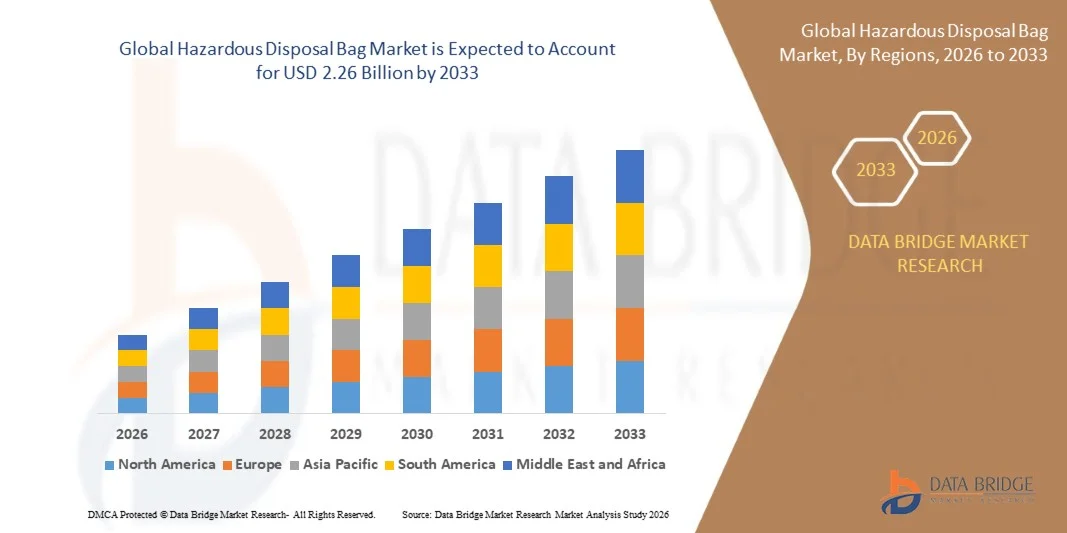
The Hazardous Disposal Bag Market was valued at USD 1.52 billion in 2025 and is projected to reach USD 2.26 billion by 2033, growing at a CAGR of 5.10% from 2026 to 2033. The market is witnessing steady growth driven by increasing volumes of hazardous medical, industrial, and laboratory waste, stringent regulatory requirements for safe waste handling, and rising awareness regarding environmental protection and workplace safety.
The growing generation of infectious, chemical, pharmaceutical, and biohazardous waste across healthcare facilities, research laboratories, manufacturing plants, and waste management centers is accelerating demand for specialized disposal bags designed to ensure safe containment, transportation, and disposal. Governments and environmental agencies worldwide are implementing stricter waste segregation and disposal regulations, encouraging organizations to adopt high-performance hazardous disposal bags that comply with safety and contamination control standards.
Advancements in material technology, including puncture-resistant, leak-proof, and eco-friendly disposal bags, are further supporting market expansion. In addition, increasing healthcare infrastructure investments, rising hospital admissions, expanding diagnostic testing activities, and growing industrialization in emerging economies are creating sustained demand for hazardous disposal solutions. The market is also benefiting from the increasing adoption of color-coded waste management systems and heightened focus on infection prevention practices across healthcare and industrial environments.
Key Market Trends & Insights
- North America dominated the hazardous disposal bag market with the largest revenue share of 38.92% in 2025, supported by well-established healthcare infrastructure, strict medical waste disposal regulations, and high adoption of compliant hazardous waste management solutions.
- Asia-Pacific is expected to be the fastest-growing region, recording a CAGR of 6.1% from 2026 to 2033. Growth is driven by expanding healthcare infrastructure, rising population, increasing healthcare expenditure, and growing awareness regarding safe medical waste disposal practices.
- The HDPE segment held the largest market revenue share of approximately 46.7% in 2025 driven by its superior tensile strength, puncture resistance, and chemical durability. HDPE hazardous disposal bags are widely used across hospitals, laboratories, and industrial facilities for the collection and transportation of infectious and hazardous waste due to their ability to withstand demanding handling and disposal conditions.
- The LLDPE segment is projected to register the fastest growth at a CAGR of 5.8% from 2026 to 2033, driven by increasing demand for flexible, tear-resistant, and leak-proof disposal bags. Growing adoption across healthcare and pharmaceutical facilities, coupled with advancements in multilayer film technologies, is supporting segment expansion.
- The Commercial segment held the largest market revenue share of approximately 51.9% in 2025 driven by extensive usage across hospitals, clinics, diagnostic laboratories, nursing homes, and pharmaceutical facilities. Rising healthcare waste generation, stricter waste segregation regulations, and growing infection control requirements continue to support demand from commercial establishments.
- The Industrial segment is projected to register the fastest growth at a CAGR of 5.9% from 2026 to 2033, driven by increasing hazardous waste generation from chemical manufacturing, biotechnology, research laboratories, and industrial processing facilities. Expanding industrial safety regulations and environmental compliance requirements are accelerating adoption across the segment.
- The Hypermarkets segment held the largest market revenue share of approximately 38.4% in 2025 driven by strong product availability, bulk purchasing options, and established procurement networks serving institutional and commercial buyers. Large retail chains continue to play an important role in supplying disposal and sanitation products to healthcare and commercial users.
- The Online Retail segment is projected to register the fastest growth at a CAGR of 6.4% from 2026 to 2033, driven by increasing digital procurement practices, wider product accessibility, competitive pricing, and growing adoption of e-commerce platforms among healthcare facilities and small businesses. The convenience of direct ordering and expanding online distribution networks is further supporting segment growth.
Market Size & Forecast
- Global Market Value (2025): USD 1.52 Billion
- Expected Market Value (2033): USD 2.26 Billion
- Forecast CAGR (2026–2033): 5.10%
- Leading Region in 2025: North America
- Fastest Growing Region: Asia-Pacific
Report Scope and Hazardous Disposal Bag Market Segmentation
|
Attributes |
Hazardous Disposal Bag Key Market Insights |
|
Segments Covered |
|
|
Countries Covered |
North America
Europe
Asia-Pacific
Middle East and Africa
South America
|
|
Key Market Players |
• Biomedical Waste Solutions, LLC. (U.S.) |
|
Market Opportunities |
• Increasing Adoption Of Sustainable And Biodegradable Hazardous Disposal Bags • Expansion Of Healthcare Infrastructure And Medical Waste Management Programs In Emerging Economies |
|
Value Added Data Infosets |
In addition to the insights on market scenarios such as market value, growth rate, segmentation, geographical coverage, and major players, the market reports curated by the Data Bridge Market Research also include import export analysis, production capacity overview, production consumption analysis, price trend analysis, climate change scenario, supply chain analysis, value chain analysis, raw material/consumables overview, vendor selection criteria, PESTLE Analysis, Porter Analysis, and regulatory framework. |
Hazardous Disposal Bag Market Trends
Trend: Increasing Adoption Of Sustainable And Regulatory-Compliant Medical Waste Management Solutions
The increasing volume of hazardous healthcare, pharmaceutical, laboratory, and industrial waste is driving demand for advanced disposal solutions that ensure safe handling, transportation, and containment of potentially infectious and hazardous materials. Growing environmental concerns and stricter waste segregation regulations are encouraging healthcare facilities and industries to adopt high-performance hazardous disposal bags designed to minimize contamination risks and support compliance with waste management standards.
Healthcare providers are increasingly implementing color-coded hazardous waste collection systems, For instance red and yellow biohazard disposal bags for infectious waste segregation, to improve operational efficiency and reduce exposure risks for healthcare workers. In addition, manufacturers are developing recyclable and biodegradable hazardous disposal bags to address sustainability goals while maintaining puncture resistance and leak-proof performance. The expansion of healthcare infrastructure and diagnostic testing activities is further supporting demand for these products across developed and emerging economies.
The growing focus on infection prevention and environmental safety is also accelerating adoption across pharmaceutical manufacturing facilities, research laboratories, and long-term care centers. In addition, regulatory agencies continue to strengthen medical waste disposal requirements, increasing demand for certified disposal products. Real-world healthcare waste management programs implemented across hospitals in India during 2024 reported medical waste generation levels exceeding 2 kg per bed per day in large urban facilities, increasing demand for compliant hazardous waste collection and disposal systems.
Hazardous Disposal Bag Market Dynamics
Key Market Driver: Rising Generation Of Hazardous Medical And Industrial Waste
The rapid growth of healthcare services, pharmaceutical manufacturing, laboratory testing, and industrial production activities is significantly increasing the volume of hazardous waste requiring safe containment and disposal. Governments and environmental authorities worldwide are implementing stricter regulations regarding hazardous waste segregation, transportation, and treatment, creating strong demand for specialized disposal bags capable of preventing leaks, contamination, and occupational exposure.
Hospitals, diagnostic centers, and research institutions are increasingly using hazardous disposal bags, For instance biohazard and infectious waste bags, to comply with waste management protocols and reduce the risk of pathogen transmission. Similarly, chemical manufacturing facilities and industrial plants rely on hazardous waste containment solutions to ensure worker safety and environmental protection. The rising incidence of infectious diseases and growing healthcare expenditure are further contributing to increased waste generation and disposal requirements.
In addition, expanding vaccination programs, surgical procedures, and diagnostic testing activities are creating continuous demand for medical waste disposal products. According to healthcare waste management assessments conducted across major healthcare facilities in Asia during 2024, infectious and hazardous waste volumes increased by approximately 15–20% compared to pre-pandemic levels, supporting long-term demand for safe disposal solutions.
Key Restraint/Challenge: Environmental Concerns Associated With Plastic-Based Disposal Bags
Despite their critical role in hazardous waste management, most hazardous disposal bags are manufactured using plastic-based materials that contribute to environmental pollution when not properly treated or recycled. Increasing regulatory scrutiny regarding single-use plastics and growing sustainability concerns are creating challenges for manufacturers that rely on conventional polymer materials for product production.
In addition, fluctuating raw material prices and rising production costs can affect profitability and limit adoption in cost-sensitive healthcare facilities and developing regions. Disposal of contaminated plastic waste often requires incineration or specialized treatment processes, increasing operational costs for waste management providers and healthcare institutions. Limited availability of affordable biodegradable alternatives further constrains large-scale transition toward sustainable disposal solutions.
Commercial waste management studies indicate that plastic-based medical waste accounts for a significant share of healthcare waste streams, with some hospitals reporting plastics representing nearly 25–30% of total medical waste volume, increasing pressure on disposal infrastructure and environmental management systems.
Key Market Opportunity: Development Of Biodegradable And High-Performance Hazardous Disposal Bags
Growing emphasis on sustainable healthcare practices and environmentally responsible waste management is creating significant opportunities for manufacturers developing biodegradable, recyclable, and advanced-performance hazardous disposal bags. Healthcare organizations and government agencies are increasingly seeking products that maintain regulatory compliance while reducing environmental impact and waste treatment costs.
Manufacturers are investing in innovative materials, For instance biodegradable polymers and reinforced eco-friendly composites, to improve durability, puncture resistance, and leak-proof performance without compromising sustainability objectives. Hospitals and healthcare networks are increasingly evaluating environmentally friendly waste disposal programs to align with carbon reduction initiatives and green procurement policies. In addition, pharmaceutical companies and research laboratories are adopting advanced waste segregation systems that require specialized disposal solutions.
The expansion of healthcare infrastructure across Asia-Pacific, Latin America, and the Middle East is expected to generate substantial demand for next-generation hazardous waste management products. Pilot sustainability initiatives conducted by healthcare institutions in Europe during 2025 demonstrated reductions of approximately 20–25% in non-recyclable medical waste volumes after introducing biodegradable waste collection and segregation programs, highlighting significant growth opportunities for innovative hazardous disposal bag manufacturers.
Hazardous Disposal Bag Market Scope
The market is segmented on the basis of product type, application, and distribution channel.
• By Product Type
On the basis of product type, the hazardous disposal bag market is segmented into HDPE, LDPE, and LLDPE. The HDPE segment held the largest market revenue share of approximately 46.7% in 2025 driven by its superior tensile strength, puncture resistance, and chemical durability. HDPE hazardous disposal bags are widely used across hospitals, laboratories, and industrial facilities for the collection and transportation of infectious and hazardous waste due to their ability to withstand demanding handling and disposal conditions.
The LLDPE segment is projected to register the fastest growth at a CAGR of 5.8% from 2026 to 2033, driven by increasing demand for flexible, tear-resistant, and leak-proof disposal bags. Growing adoption across healthcare and pharmaceutical facilities, coupled with advancements in multilayer film technologies, is supporting segment expansion.
• By Application
On the basis of application, the hazardous disposal bag market is segmented into Residential, Commercial, Industrial, and Others. The Commercial segment held the largest market revenue share of approximately 51.9% in 2025 driven by extensive usage across hospitals, clinics, diagnostic laboratories, nursing homes, and pharmaceutical facilities. Rising healthcare waste generation, stricter waste segregation regulations, and growing infection control requirements continue to support demand from commercial establishments.
The Industrial segment is projected to register the fastest growth at a CAGR of 5.9% from 2026 to 2033, driven by increasing hazardous waste generation from chemical manufacturing, biotechnology, research laboratories, and industrial processing facilities. Expanding industrial safety regulations and environmental compliance requirements are accelerating adoption across the segment.
• By Distribution Channel
On the basis of distribution channel, the hazardous disposal bag market is segmented into Hypermarkets, Supermarkets, Online Retail, and Convenience Stores. The Hypermarkets segment held the largest market revenue share of approximately 38.4% in 2025 driven by strong product availability, bulk purchasing options, and established procurement networks serving institutional and commercial buyers. Large retail chains continue to play an important role in supplying disposal and sanitation products to healthcare and commercial users.
The Online Retail segment is projected to register the fastest growth at a CAGR of 6.4% from 2026 to 2033, driven by increasing digital procurement practices, wider product accessibility, competitive pricing, and growing adoption of e-commerce platforms among healthcare facilities and small businesses. The convenience of direct ordering and expanding online distribution networks is further supporting segment growth.
Hazardous Disposal Bag Market Regional Analysis
North America Hazardous Disposal Bag Market Insight
North America dominated the hazardous disposal bag market with the largest revenue share of 38.92% in 2025, supported by stringent medical waste management regulations, a well-established healthcare infrastructure, and increasing awareness regarding infection prevention and environmental safety. The region generates substantial volumes of hazardous healthcare and industrial waste, creating strong demand for compliant disposal solutions. The presence of advanced healthcare facilities, growing pharmaceutical production, and strict occupational safety standards further support widespread adoption of hazardous disposal bags across hospitals, laboratories, and industrial facilities.
U.S. Hazardous Disposal Bag Market Insight
The U.S. hazardous disposal bag market captured the largest revenue share in 2025 within North America, fueled by high healthcare expenditure, increasing hospital admissions, and extensive waste management requirements. Healthcare facilities are increasingly prioritizing safe handling of infectious and biohazardous waste to comply with federal and state regulations. The growing presence of pharmaceutical manufacturing facilities, diagnostic laboratories, and research institutions further drives product demand. Moreover, rising investments in healthcare infrastructure and infection control programs continue to contribute significantly to market expansion.
Europe Hazardous Disposal Bag Market Insight
The Europe hazardous disposal bag market is expected to witness the fastest growth rate from 2026 to 2033, primarily driven by stringent environmental regulations, increasing healthcare waste generation, and growing emphasis on sustainable waste management practices. The region is witnessing increased adoption of advanced waste segregation systems across hospitals, clinics, and research laboratories. Rising investments in healthcare modernization and growing demand for environmentally responsible disposal solutions are supporting market growth across both public and private healthcare sectors.
U.K. Hazardous Disposal Bag Market Insight
The U.K. hazardous disposal bag market is expected to witness the fastest growth rate from 2026 to 2033, driven by increasing healthcare waste volumes, strengthening infection prevention protocols, and growing regulatory focus on safe waste disposal. Healthcare providers are increasingly implementing structured waste segregation programs to improve operational efficiency and regulatory compliance. In addition, the country's focus on sustainability initiatives and environmentally responsible healthcare operations is expected to stimulate demand for advanced hazardous disposal bag solutions.
Germany Hazardous Disposal Bag Market Insight
The Germany hazardous disposal bag market is expected to witness the fastest growth rate from 2026 to 2033, fueled by strict environmental compliance requirements, advanced healthcare infrastructure, and growing investments in waste management technologies. Germany’s strong focus on workplace safety and environmental protection is encouraging the adoption of high-performance hazardous waste containment products. The increasing use of specialized disposal systems across hospitals, pharmaceutical facilities, and industrial laboratories is further supporting market growth throughout the country.
Asia-Pacific Hazardous Disposal Bag Market Insight
The Asia-Pacific hazardous disposal bag market is expected to witness the fastest growth rate from 2026 to 2033, supported by expanding healthcare infrastructure, increasing population, and rising awareness regarding medical waste management. Growing healthcare expenditure and rapid industrialization in countries such as China, India, and Japan are contributing to increased hazardous waste generation. Government initiatives focused on improving sanitation, healthcare services, and environmental protection are further accelerating the adoption of hazardous disposal bags across the region.
Japan Hazardous Disposal Bag Market Insight
The Japan hazardous disposal bag market is expected to witness the fastest growth rate from 2026 to 2033 due to the country's advanced healthcare system, aging population, and strong emphasis on hygiene and infection control. Healthcare institutions are increasingly adopting specialized waste management solutions to ensure regulatory compliance and patient safety. The growing demand for efficient disposal of pharmaceutical, laboratory, and infectious waste, combined with technological advancements in waste handling practices, is supporting market growth in Japan.
China Hazardous Disposal Bag Market Insight
The China hazardous disposal bag market accounted for the largest market revenue share in Asia-Pacific in 2025, attributed to rapid healthcare infrastructure expansion, increasing hospital capacity, and growing medical waste generation. China remains one of the largest healthcare markets globally, creating substantial demand for hazardous waste management products across hospitals, clinics, and research facilities. The government's continued investments in healthcare modernization, environmental protection initiatives, and waste management infrastructure, alongside strong domestic manufacturing capabilities, are key factors propelling the market in China.
Hazardous Disposal Bag Market Share
The Hazardous Disposal Bag industry is primarily led by well-established companies, including:
• Biomedical Waste Solutions, LLC. (U.S.)
• Clean Harbors, Inc. (U.S.)
• Daniels Sharpsmart, Inc. (U.S.)
• B. Braun Melsungen AG (Germany)
• ALCARE Co., Ltd. (Japan)
• Salts Healthcare Ltd. (U.K.)
• Welland Medical Limited (U.K.)
• Hollister Incorporated (U.S.)
• REMONDIS SE & Co. KG (Germany)
• Republic Services, Inc. (U.S.)
• Sharps Compliance Medical Waste Disposal (U.S.)
• Stericycle, Inc. (U.S.)
• SUEZ (France)
• Veolia (France)
• Rishba Poly Product (India)
• Safetyware Sdn Bhd. (Malaysia)
• Bellcross Industries Private Limited. (India)
• Tufpak, Inc. (U.S.)
• Merck KGaA (Germany)

- Interactive Data Analysis Dashboard
- Company Analysis Dashboard for high growth potential opportunities
- Research Analyst Access for customization & queries
- Competitor Analysis with Interactive dashboard
- Latest News, Updates & Trend analysis
- Harness the Power of Benchmark Analysis for Comprehensive Competitor Tracking
Global Hazardous Disposal Bag Market, Supply Chain Analysis and Ecosystem Framework
To support market growth and help clients navigate the impact of geopolitical shifts, DBMR has integrated in-depth supply chain analysis into its Global Hazardous Disposal Bag Market research reports. This addition empowers clients to respond effectively to global changes affecting their industries. The supply chain analysis section includes detailed insights such as Global Hazardous Disposal Bag Market consumption and production by country, price trend analysis, the impact of tariffs and geopolitical developments, and import and export trends by country and HSN code. It also highlights major suppliers with data on production capacity and company profiles, as well as key importers and exporters. In addition to research, DBMR offers specialized supply chain consulting services backed by over a decade of experience, providing solutions like supplier discovery, supplier risk assessment, price trend analysis, impact evaluation of inflation and trade route changes, and comprehensive market trend analysis.
Data collection and base year analysis are done using data collection modules with large sample sizes. The stage includes obtaining market information or related data through various sources and strategies. It includes examining and planning all the data acquired from the past in advance. It likewise envelops the examination of information inconsistencies seen across different information sources. The market data is analysed and estimated using market statistical and coherent models. Also, market share analysis and key trend analysis are the major success factors in the market report. To know more, please request an analyst call or drop down your inquiry.
The key research methodology used by DBMR research team is data triangulation which involves data mining, analysis of the impact of data variables on the market and primary (industry expert) validation. Data models include Vendor Positioning Grid, Market Time Line Analysis, Market Overview and Guide, Company Positioning Grid, Patent Analysis, Pricing Analysis, Company Market Share Analysis, Standards of Measurement, Global versus Regional and Vendor Share Analysis. To know more about the research methodology, drop in an inquiry to speak to our industry experts.
Data Bridge Market Research is a leader in advanced formative research. We take pride in servicing our existing and new customers with data and analysis that match and suits their goal. The report can be customized to include price trend analysis of target brands understanding the market for additional countries (ask for the list of countries), clinical trial results data, literature review, refurbished market and product base analysis. Market analysis of target competitors can be analyzed from technology-based analysis to market portfolio strategies. We can add as many competitors that you require data about in the format and data style you are looking for. Our team of analysts can also provide you data in crude raw excel files pivot tables (Fact book) or can assist you in creating presentations from the data sets available in the report.













