


Hazardous Drug Safety Market Overview
The Hazardous Drug Safety Market was valued at USD 1.12 billion in 2025 and is projected to reach USD 2.95 billion by 2033, growing at a CAGR of 12.90% from 2026 to 2033. The market is experiencing steady growth driven by increasing use of hazardous drugs in oncology and specialty care, rising awareness regarding occupational exposure risks, and stringent regulatory guidelines governing the handling, preparation, administration, and disposal of hazardous medications.
The growing prevalence of cancer and other chronic diseases requiring treatment with cytotoxic and hazardous drugs, combined with enhanced workplace safety standards, is encouraging healthcare facilities to invest in advanced safety solutions. Closed system transfer devices (CSTDs), personal protective equipment (PPE), containment systems, and decontamination products are increasingly being adopted across hospitals, oncology centers, and pharmacies to minimize exposure risks for healthcare workers. Furthermore, evolving regulations from healthcare and occupational safety authorities, along with ongoing advancements in drug handling technologies, are supporting widespread adoption of hazardous drug safety solutions and strengthening market growth worldwide.
Key Market Trends & Insights
- North America dominated the Hazardous Drug Safety Market with the largest revenue share of 38.62% in 2025, supported by stringent occupational safety regulations, widespread adoption of closed system transfer devices (CSTDs), and a strong presence of leading healthcare institutions.
- The Closed System Transfer Devices segment led the market with a 43.18% share in 2025, driven by increasing regulatory emphasis on minimizing occupational exposure to hazardous drugs during preparation and administration.
- Asia-Pacific is expected to be the fastest-growing region at a CAGR of 8.1% from 2026 to 2033, fueled by expanding healthcare infrastructure, rising cancer incidence, increasing awareness of workplace safety, and growing investments in advanced drug handling solutions.
- Compounding & Containment Systems are the fastest-growing product type, projected to register a CAGR of 8.2%, reflecting the surge in investments in advanced pharmacy infrastructure and automated drug preparation technologies
- The Antineoplastic Drugs segment dominated the drug type category with a 58.46% revenue share in 2025, led by the extensive use of chemotherapy agents in cancer treatment and the high level of safety measures required during handling.
- On-Premise accounted for 55.24% of the market, preferred by widespread use in healthcare facilities requiring secure management of hazardous drug handling records, compliance documentation, and operational workflows.
- The Non-Antineoplastic Hazardous Drugs segment is the fastest-growing drug type category, with a CAGR of 7.8%, driven by increasing awareness regarding occupational exposure to a broader range of hazardous medications.
Market Size & Forecast
- Global Market Value (2025): USD 1.12 Billion
- Expected Market Value (2033): USD 2.95 Billion
- Forecast CAGR (2026–2033): 12.90%
- Leading Region in 2025: North America
- Fastest Growing Region: Asia Pacific
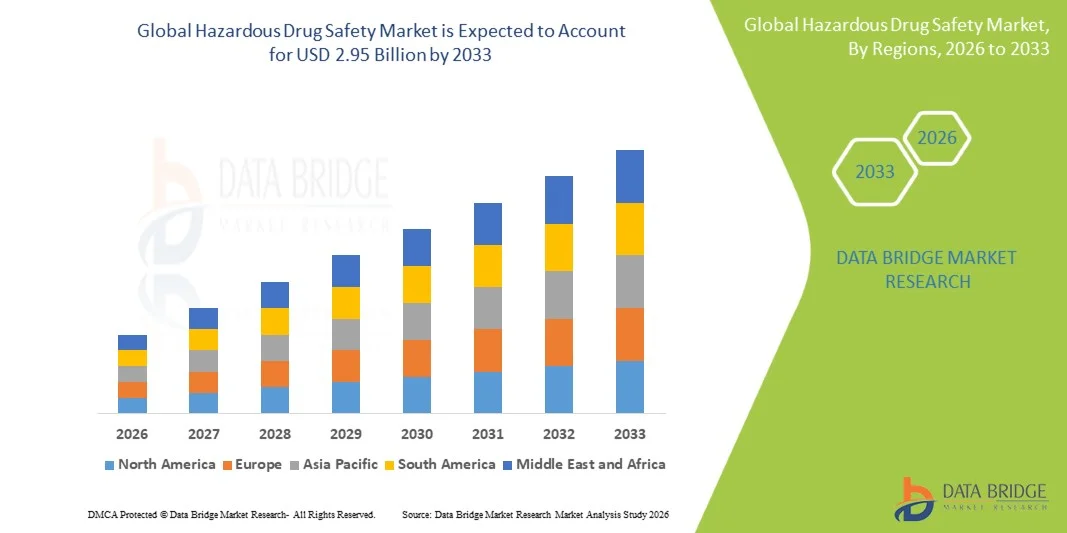
Report Scope and Hazardous Drug Safety Market Segmentation
|
Attributes |
Hazardous Drug Safety Key Market Insights |
|
Segments Covered |
|
|
Countries Covered |
North America · U.S. · Canada · Mexico Europe · Germany · France · U.K. · Netherlands · Switzerland · Belgium · Russia · Italy · Spain · Turkey · Rest of Europe Asia-Pacific · China · Japan · India · South Korea · Singapore · Malaysia · Australia · Thailand · Indonesia · Philippines · Rest of Asia-Pacific Middle East and Africa · Saudi Arabia · U.A.E. · South Africa · Egypt · Israel · Rest of Middle East and Africa South America · Brazil · Argentina · Rest of South America |
|
Key Market Players |
· B. Braun SE (U.S.) · BD (U.S.) · ICU Medical, Inc. (U.S.) · EQUASHIELD LLC (U.S.) · Simplivia Healthcare Ltd. (Israel) · Baxter (U.S.) · Ansell Limited (Australia) · Cardinal Health (U.S.) · West Pharmaceutical Services, Inc. (U.S.) · Yukon Medical (U.S.) · Vygon SAS (France) · Smiths Medical (U.K.) · Nipro Corporation (Japan) · Terumo Corporation (Japan) · Ecolab USA Inc. (U.S.) · Labconco Corporation (U.S.) · Esco Lifesciences Group (Singapore) · Envair Technology Ltd (U.K.) · Klenzaids Contamination Controls Pvt. Ltd. (India) · SCHOTT Pharma AG & Co. KGaA (Germany) |
|
Market Opportunities |
· Growing adoption of closed system transfer devices (CSTDs) in emerging healthcare · Expansion of oncology treatment centers worldwide · Increasing integration of automated pharmacy compounding and robotic drug preparation systems |
|
Value Added Data Infosets |
In addition to the insights on market scenarios such as market value, growth rate, segmentation, geographical coverage, and major players, the market reports curated by the Data Bridge Market Research also include in-depth expert analysis, patient epidemiology, pipeline analysis, pricing analysis, and regulatory framework. |
Hazardous Drug Safety Market Trends
Trend: Rising Adoption of Closed System Transfer Devices (CSTDs)
Healthcare facilities are increasingly adopting closed system transfer devices to minimize occupational exposure to hazardous drugs during preparation, transportation, and administration processes. The growing emphasis on worker safety, compliance with hazardous drug handling guidelines, and reduction of environmental contamination is accelerating demand for advanced containment technologies. Hospitals, oncology centers, and specialty pharmacies are implementing CSTDs as a standard safety measure, while technological advancements continue to improve usability, compatibility, and contamination prevention capabilities across diverse healthcare settings. For instance, in April 2024, the B. Braun OnGuard 2 Closed System Transfer Device continued expanding adoption across healthcare facilities seeking enhanced protection against hazardous drug exposure and contamination risks.
Hazardous Drug Safety Market Dynamics
Key Market Driver: Increasing Regulatory Focus on Healthcare Worker Protection
The growing regulatory focus on protecting healthcare workers from hazardous drug exposure has created substantial demand for advanced hazardous drug safety solutions across healthcare environments. Regulatory agencies and occupational safety organizations are strengthening guidelines covering drug compounding, administration, transportation, and disposal practices. Hospitals, pharmacies, and cancer treatment centers are investing in containment technologies, personal protective equipment, and monitoring systems to ensure compliance, reduce occupational risks, and improve workplace safety while maintaining high standards of patient care. For instance, the continued enforcement of hazardous drug handling requirements under standards issued by the United States Pharmacopeia has encouraged healthcare providers to expand investments in containment and safety technologies.
Key Restraint/Challenge: High Cost of Comprehensive Safety Infrastructure
A significant restraint in the Hazardous Drug Safety Market is the high cost associated with implementing comprehensive hazardous drug handling infrastructure. Advanced containment systems, closed system transfer devices, biological safety cabinets, and specialized pharmacy compounding equipment require considerable capital investment, installation, training, and ongoing maintenance. The total cost of ownership also includes compliance assessments, staff certification programs, and periodic equipment upgrades, making adoption challenging for smaller healthcare facilities, community pharmacies, and budget-constrained institutions.
For instance, many regional hospitals continue to face financial barriers when upgrading compounding facilities to meet evolving hazardous drug safety standards, delaying full-scale implementation of advanced protection systems.
Key Market Opportunity: Expansion of Automated Pharmacy Compounding Technologies
The expansion of automated pharmacy compounding technologies presents a significant market opportunity. Automated systems can reduce human exposure to hazardous drugs, improve dosing accuracy, enhance workflow efficiency, and strengthen regulatory compliance. The growing adoption of robotic compounding platforms, digital monitoring solutions, and integrated safety management systems is transforming hazardous drug handling practices. Increasing healthcare investments and modernization initiatives are further supporting deployment across hospitals, specialty pharmacies, and oncology treatment centers worldwide. For instance, healthcare providers are increasingly adopting robotic hazardous drug compounding platforms to improve worker safety and operational efficiency while meeting stringent regulatory and quality requirements.
Hazardous Drug Safety Market Scope
The hazardous drug safety market is segmented on the basis of product, drug type, deployment mode, and end user.
- By Product
On the basis of product, the Hazardous Drug Safety Market is segmented into closed system transfer devices, personal protective equipment, compounding & containment systems, spill control & decontamination products, and waste disposal systems. The Closed System Transfer Devices (CSTDs) segment dominated the market with an estimated 43.18% share in 2025, owing to increasing regulatory emphasis on minimizing occupational exposure to hazardous drugs during preparation and administration. CSTDs are widely adopted across hospitals, oncology centers, and specialty pharmacies due to their proven ability to prevent drug leakage and environmental contamination. Healthcare providers increasingly rely on these systems to comply with stringent hazardous drug handling standards and workplace safety requirements. Continuous product innovation has improved device compatibility, ease of use, and workflow efficiency, further supporting adoption. The rising volume of chemotherapy procedures globally is also strengthening demand for CSTDs. Their critical role in reducing exposure risks and enhancing healthcare worker safety continues to support their market leadership.
The Compounding & Containment Systems segment is projected to register the fastest growth at a CAGR of 8.2% from 2026 to 2033, driven by increasing investments in advanced pharmacy infrastructure and automated drug preparation technologies. These systems provide controlled environments for handling hazardous medications while reducing contamination risks and medication errors. Growing regulatory requirements for sterile compounding and occupational safety are encouraging healthcare facilities to upgrade existing infrastructure. Hospitals are increasingly integrating biological safety cabinets, isolators, and robotic compounding systems to improve operational efficiency and compliance. Rising cancer treatment volumes are further increasing the need for safe and accurate drug preparation processes. The segment is also benefiting from technological advancements that enhance productivity and worker protection.
- By Drug Type
On the basis of drug type, the Hazardous Drug Safety Market is segmented into antineoplastic drugs, non-antineoplastic hazardous drugs, and other hazardous drugs. The Antineoplastic Drugs segment dominated the market with an estimated 58.46% share in 2025 due to the extensive use of chemotherapy agents in cancer treatment and the high level of safety measures required during handling. These drugs pose significant health risks to healthcare workers if exposure occurs through inhalation, skin contact, or accidental spills. The growing global burden of cancer has increased the volume of hazardous drug preparation and administration activities across healthcare facilities. Regulatory agencies have established strict guidelines governing the safe handling of antineoplastic agents, further driving demand for safety products. Hospitals and oncology centers continue to prioritize investments in containment technologies for chemotherapy drugs. The segment’s dominance is reinforced by the widespread use of these medications in both inpatient and outpatient settings.
The Non-Antineoplastic Hazardous Drugs segment is expected to witness the fastest growth at a CAGR of 7.8% from 2026 to 2033, driven by increasing awareness regarding occupational exposure to a broader range of hazardous medications. These drugs include immunosuppressants, antiviral agents, hormones, and other compounds that may present reproductive, carcinogenic, or organ toxicity risks. Healthcare organizations are increasingly expanding safety protocols beyond oncology departments to address exposure risks associated with these medications. Growing regulatory recognition of non-antineoplastic hazards is supporting broader implementation of protective measures. Rising utilization of specialty pharmaceuticals is also contributing to increased handling requirements. The segment is benefiting from ongoing efforts to improve healthcare worker safety across multiple therapeutic areas.
- By Deployment Mode
On the basis of deployment mode, the Hazardous Drug Safety Market is segmented into on-premises, cloud-based, and hybrid. The On-Premises segment dominated the market with an estimated 55.24% share in 2025 owing to its widespread use in healthcare facilities requiring secure management of hazardous drug handling records, compliance documentation, and operational workflows. Healthcare organizations prefer on-premises systems due to enhanced control over sensitive patient and pharmacy data. These solutions offer reliable performance, easier integration with existing hospital infrastructure, and greater customization capabilities. Regulatory compliance requirements often encourage institutions to maintain direct oversight of safety-related information systems. Large hospitals and healthcare networks continue to invest in on-premises platforms to support hazardous drug monitoring and reporting functions. Their established presence and perceived security advantages contribute significantly to market leadership.
The Cloud-Based segment is anticipated to register the fastest growth at a CAGR of 8.5% from 2026 to 2033, driven by increasing digital transformation initiatives across healthcare systems. Cloud-based solutions enable centralized data management, real-time reporting, and easier access to compliance documentation across multiple facilities. Healthcare providers are adopting these platforms to improve operational efficiency and reduce infrastructure costs. Advances in cybersecurity and healthcare data protection technologies are strengthening confidence in cloud deployment models. The growing need for scalable safety management systems is also supporting adoption. Increasing integration with pharmacy automation and digital workflow platforms is expected to further accelerate segment growth during the forecast period.
- By End User
On the basis of end user, the Hazardous Drug Safety Market is segmented into hospitals, oncology centers, pharmacies, ambulatory surgical centers, and research & academic institutes. The Hospitals segment led the market with an estimated 46.37% share in 2025, driven by high volumes of hazardous drug preparation, compounding, administration, and disposal activities. Hospitals represent the primary setting for cancer treatment and the management of complex chronic diseases requiring hazardous medications. Stringent workplace safety regulations have encouraged healthcare institutions to adopt comprehensive hazardous drug safety programs. Investments in CSTDs, containment systems, PPE, and waste management solutions continue to increase across hospital environments. The presence of specialized pharmacy departments and oncology units further supports substantial product utilization. Their central role in healthcare delivery ensures continued dominance of this segment.
The Oncology Centers segment is expected to witness the fastest growth at a CAGR of 8.3% from 2026 to 2033, fueled by the global expansion of dedicated cancer treatment facilities and rising patient volumes. These centers handle large quantities of antineoplastic drugs and therefore require advanced safety solutions to protect healthcare professionals and patients. Growing demand for outpatient cancer care is increasing investments in hazardous drug handling infrastructure. Oncology centers are rapidly adopting innovative containment technologies and automated compounding systems to enhance efficiency and compliance. Rising cancer prevalence and expanding access to specialized treatment services are further supporting market growth. The segment is also benefiting from increasing awareness regarding occupational safety in oncology practice.
Hazardous Drug Safety Market Regional Analysis
North America dominated the Hazardous Drug Safety Market with the largest revenue share of 38.62% in 2025, supported by stringent occupational safety regulations, widespread adoption of closed system transfer devices (CSTDs), and a strong presence of leading healthcare institutions. The region also benefits from high cancer treatment volumes, strong compliance with hazardous drug handling standards, and significant investments in pharmacy automation and containment technologies. Growing awareness regarding healthcare worker safety, increasing implementation of USP and NIOSH guidelines, and rising adoption of advanced compounding systems continue to drive market growth. Expanding use of hazardous drug safety solutions across hospitals, oncology centers, and specialty pharmacies further strengthens North America’s leadership position in the global market.
U.S. Hazardous Drug Safety Market Insight
The U.S. hazardous drug safety market is witnessing strong growth due to rising cancer incidence, increasing adoption of hazardous drug handling standards, and growing investments in healthcare worker protection programs. The country’s advanced healthcare infrastructure, along with widespread implementation of closed system transfer devices, containment technologies, and pharmacy automation systems, is driving demand across hospitals, oncology centers, and specialty pharmacies. In addition, growing emphasis on occupational safety compliance and minimizing hazardous drug exposure risks is accelerating the adoption of advanced safety solutions across healthcare facilities.
Europe Hazardous Drug Safety Market Insight
The Europe hazardous drug safety market remains a major contributor to global revenue, driven by strong regulatory oversight, technological innovation, and increasing demand for workplace safety solutions. The widespread adoption of hazardous drug containment systems, personal protective equipment, and advanced compounding technologies is supporting market expansion across the region. Increasing investments in healthcare infrastructure, coupled with strict occupational safety regulations and growing awareness regarding hazardous drug exposure risks, continue to enhance the adoption of hazardous drug safety solutions throughout Europe.
U.K. Hazardous Drug Safety Market Insight
The U.K. hazardous drug safety market is experiencing steady growth, supported by rising adoption of safe drug handling practices, expanding oncology treatment services, and increasing investments in healthcare safety infrastructure. Growing demand for effective containment systems and exposure prevention technologies is contributing to market growth. Furthermore, integration of automated compounding systems, digital compliance monitoring tools, and advanced contamination control technologies is improving operational efficiency and workplace safety, positioning the U.K. as a key market for hazardous drug safety solutions.
Germany Hazardous Drug Safety Market Insight
The Germany hazardous drug safety market is expanding steadily due to the country’s advanced healthcare system, strong pharmaceutical sector, and increasing adoption of next-generation safety technologies. Hospitals, cancer treatment centers, and pharmacies are increasingly utilizing hazardous drug safety solutions for exposure prevention, regulatory compliance, and workflow optimization. Continuous advancements in pharmacy automation, containment technologies, and safety monitoring systems, along with strong government focus on healthcare quality and occupational safety, are further driving market growth in Germany.
Asia-Pacific Hazardous Drug Safety Market Insight
The Asia-Pacific hazardous drug safety market is expected to witness rapid growth, driven by expanding healthcare infrastructure, rising cancer prevalence, and increasing investments in healthcare worker safety across countries such as China, India, and Japan. Growing awareness regarding hazardous drug exposure risks, rising adoption of advanced containment technologies, and increasing demand for cost-effective safety solutions are supporting regional market expansion. In addition, the growing number of oncology treatment centers and hospital modernization initiatives is accelerating hazardous drug safety solution adoption across healthcare institutions.
Japan Hazardous Drug Safety Market Insight
The Japan hazardous drug safety market is witnessing consistent growth due to rising investments in healthcare quality improvement, oncology care services, and occupational safety initiatives. Hospitals, specialty pharmacies, and research institutes are increasingly adopting advanced hazardous drug safety solutions for drug preparation, handling, and administration activities. Moreover, increasing integration of automated compounding technologies and the country’s focus on patient and worker safety standards are further contributing to market growth.
China Hazardous Drug Safety Market Insight
The China hazardous drug safety market is growing rapidly, driven by expanding healthcare infrastructure, increasing cancer treatment volumes, and rising government focus on healthcare worker protection. Growing adoption of closed system transfer devices, pharmacy containment systems, and advanced personal protective equipment across hospitals and oncology centers is significantly boosting market demand. In addition, rising investments in healthcare modernization, increasing awareness regarding occupational exposure risks, and rapid advancements in medical safety technologies are positioning China as one of the fastest-growing markets for hazardous drug safety solutions globally.
Hazardous Drug Safety Market Share
The hazardous drug safety industry is primarily led by well-established companies, including:
- Braun SE (U.S.)
- BD (U.S.)
- ICU Medical, Inc. (U.S.)
- EQUASHIELD LLC (U.S.)
- Simplivia Healthcare Ltd. (Israel)
- Baxter (U.S.)
- Ansell Limited (Australia)
- Cardinal Health (U.S.)
- West Pharmaceutical Services, Inc. (U.S.)
- Yukon Medical (U.S.)
- Vygon SAS (France)
- Smiths Medical (U.K.)
- Nipro Corporation (Japan)
- Terumo Corporation (Japan)
- Ecolab USA Inc. (U.S.)
- Labconco Corporation (U.S.)
- Esco Lifesciences Group (Singapore)
- Envair Technology Ltd (U.K.)
- Klenzaids Contamination Controls Pvt. Ltd. (India)
- SCHOTT Pharma AG & Co. KGaA (Germany)
Latest Developments in Hazardous Drug Safety Market
- In February 2025, the United States Pharmacopeia and the National Institute for Occupational Safety and Health conducted a joint stakeholder webinar focused on the updated NIOSH List of Hazardous Drugs in Healthcare Settings, 2024. The initiative highlighted evolving hazardous drug handling requirements, workplace safety measures, and compliance strategies for healthcare organizations managing hazardous medications. This development reflects growing regulatory emphasis on strengthening occupational safety and hazardous drug exposure prevention across healthcare environments
- In February 2025, Wolters Kluwer published updated guidance on USP <800> risk assessment strategies, emphasizing comprehensive safety controls for hazardous drug storage, preparation, administration, and disposal. The guidance outlined the importance of ongoing staff training, environmental monitoring, engineering controls, and compliance audits to strengthen workplace protection. The update reflects increasing industry focus on maintaining long-term compliance with hazardous drug safety standards
- In December 2023, the American Society of Health-System Pharmacists highlighted growing industry efforts to address compliance gaps related to USP <800> hazardous drug standards during its Midyear Clinical Meeting. Discussions focused on improving hazardous drug handling procedures, administration practices, spill management, and cross-departmental compliance within healthcare facilities. The initiative underscored increasing industry attention toward strengthening hazardous drug safety programs and regulatory adherence
- In November 2023, the United States Pharmacopeia officially made General Chapter USP <800> compendially applicable, reinforcing national standards for handling hazardous drugs in healthcare settings. The implementation expanded compliance requirements covering facility controls, documentation, spill management, personnel responsibilities, and environmental protection. The milestone significantly accelerated investments in containment technologies, pharmacy upgrades, and hazardous drug safety solutions across healthcare facilities
- In December 2021, B. Braun announced the U.S. launch of the next-generation OnGuard® 2 Closed System Transfer Device (CSTD), designed to provide enhanced protection for healthcare workers handling hazardous drugs. The product introduced upgraded materials, improved usability, extended microbial ingress protection, and advanced vapor containment capabilities. The launch strengthened hazardous drug safety practices by supporting healthcare providers in meeting USP <800> handling requirements

- Interactive Data Analysis Dashboard
- Company Analysis Dashboard for high growth potential opportunities
- Research Analyst Access for customization & queries
- Competitor Analysis with Interactive dashboard
- Latest News, Updates & Trend analysis
- Harness the Power of Benchmark Analysis for Comprehensive Competitor Tracking
Data collection and base year analysis are done using data collection modules with large sample sizes. The stage includes obtaining market information or related data through various sources and strategies. It includes examining and planning all the data acquired from the past in advance. It likewise envelops the examination of information inconsistencies seen across different information sources. The market data is analysed and estimated using market statistical and coherent models. Also, market share analysis and key trend analysis are the major success factors in the market report. To know more, please request an analyst call or drop down your inquiry.
The key research methodology used by DBMR research team is data triangulation which involves data mining, analysis of the impact of data variables on the market and primary (industry expert) validation. Data models include Vendor Positioning Grid, Market Time Line Analysis, Market Overview and Guide, Company Positioning Grid, Patent Analysis, Pricing Analysis, Company Market Share Analysis, Standards of Measurement, Global versus Regional and Vendor Share Analysis. To know more about the research methodology, drop in an inquiry to speak to our industry experts.
Data Bridge Market Research is a leader in advanced formative research. We take pride in servicing our existing and new customers with data and analysis that match and suits their goal. The report can be customized to include price trend analysis of target brands understanding the market for additional countries (ask for the list of countries), clinical trial results data, literature review, refurbished market and product base analysis. Market analysis of target competitors can be analyzed from technology-based analysis to market portfolio strategies. We can add as many competitors that you require data about in the format and data style you are looking for. Our team of analysts can also provide you data in crude raw excel files pivot tables (Fact book) or can assist you in creating presentations from the data sets available in the report.













