


Healthcare Fabrics Market Size
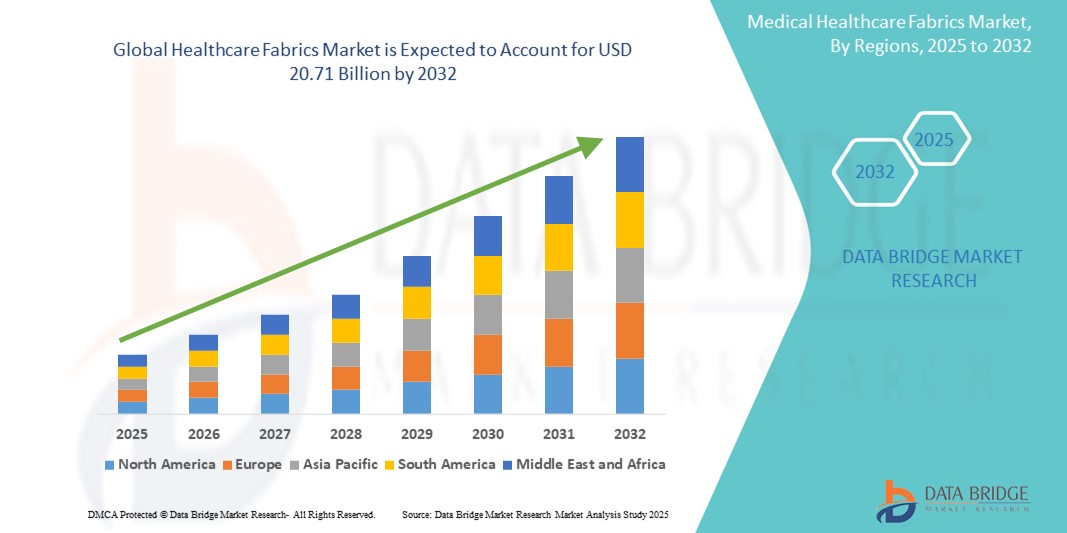
- The global healthcare fabrics market size was valued at USD 12.93 billion in 2024 and is expected to reach USD 20.71 billion by 2032, at a CAGR of 6.06% during the forecast period
- The market growth is largely fueled by the increasing demand for hygiene and infection prevention solutions in medical environments, coupled with advancements in fabric technologies including antimicrobial, breathable, and disposable textiles
- Furthermore, rising consumer awareness about healthcare safety, coupled with an expanding elderly population and growing hospital infrastructure, is establishing healthcare fabrics as essential components in patient care. These converging factors are accelerating the adoption of innovative medical textiles, thereby significantly boosting the industry's growth
Healthcare Fabrics Market Analysis
- Healthcare fabrics, encompassing a range of textiles used in hygiene, wound care, bedding, and surgical applications, are increasingly vital components of modern medical and caregiving environments due to their comfort, antimicrobial properties, and suitability for infection prevention and patient well-being
- The escalating demand for healthcare fabrics is primarily fueled by heightened awareness of hygiene standards, rising incidences of hospital-acquired infections, and growing utilization of advanced medical textiles in both hospital and home care settings
- North America dominated the healthcare fabrics market with the largest revenue share of 39.2% in 2024, characterized by stringent healthcare regulations, increasing elderly population, and a strong presence of key manufacturers, with the U.S. leading adoption due to advancements in nonwoven technologies and a growing focus on sustainable, skin-friendly fabric materials
- Asia-Pacific is expected to be the fastest growing region in the healthcare fabrics market during the forecast period due to expanding healthcare infrastructure, rising medical tourism, and increasing public and private investment in healthcare services
- Non-Woven fabric segment dominated the healthcare fabrics market with a market share of 46.8% in 2024, driven by its cost-effectiveness, disposable nature, and widespread use in wound dressings, surgical gowns, and hygiene products
Report Scope and Healthcare Fabrics Market Segmentation
|
Attributes |
Healthcare Fabrics Key Market Insights |
|
Segments Covered |
|
|
Countries Covered |
North America
Europe
Asia-Pacific
Middle East and Africa
South America
|
|
Key Market Players |
|
|
Market Opportunities |
|
|
Value Added Data Infosets |
In addition to the insights on market scenarios such as market value, growth rate, segmentation, geographical coverage, and major players, the market reports curated by the Data Bridge Market Research also include in-depth expert analysis, pricing analysis, brand share analysis, consumer survey, demography analysis, supply chain analysis, value chain analysis, raw material/consumables overview, vendor selection criteria, PESTLE Analysis, Porter Analysis, and regulatory framework. |
Healthcare Fabrics Market Trends
“Increased Adoption of Antimicrobial and Sustainable Fabrics”
- A significant and accelerating trend in the global healthcare fabrics market is the growing demand for antimicrobial and sustainable textile solutions, particularly in the wake of heightened infection control measures and environmental awareness. These fabrics play a critical role in reducing hospital-acquired infections and ensuring patient safety while aligning with the global push for eco-friendly materials
- For instance, companies such as Milsuch asn & Company have introduced healthcare fabrics with built-in antimicrobial technologies that inhibit the growth of bacteria on textiles used in hospital bedding, gowns, and privacy curtains. Similarly, Freudenberg Performance Materials offers advanced nonwoven fabrics developed using biodegradable fibers for single-use medical applications
- The integration of antimicrobial agents such as silver, copper, or zinc into healthcare fabrics enhances hygiene and reduces odor, especially in high-contact medical environments. These treated fabrics are being increasingly adopted in surgical drapes, uniforms, and wound care products
- In addition, sustainable innovations are becoming a defining feature of product development, with companies emphasizing recycled polyester, organic cotton, and low-impact dyeing methods to reduce environmental impact. This is particularly important in regions with strong environmental regulations and growing patient preference for “green” healthcare products
- Healthcare facilities are also looking for multi-functional fabrics that offer a combination of fluid resistance, breathability, durability, and comfort, catering to both patient and caregiver needs. The use of smart textile technologies to monitor patient vitals through fabric sensors is emerging as a nascent trend with significant long-term potential
- This shift toward safer, high-performance, and eco-conscious materials is fundamentally reshaping procurement and design strategies in healthcare institutions. Consequently, companies such as Ahlstrom and Suominen Corporation are expanding their portfolios of medical nonwovens and sustainable hygiene solutions to meet evolving customer needs and regulatory standards
- The demand for healthcare fabrics that combine hygiene, sustainability, and functionality is growing rapidly across hospitals, long-term care centers, and home healthcare settings, making them indispensable to modern medical textile solutions
Healthcare Fabrics Market Dynamics
Driver
“Heightened Infection Control Awareness and Expanding Healthcare Infrastructure”
- The increasing awareness of infection prevention in medical and home-care settings, coupled with a surge in hospital infrastructure development, is a major driver behind the rising demand for healthcare fabrics
- For instance, in 2024, Berry Global Inc. expanded its medical nonwoven capacity in Asia and North America to meet the surging demand for medical-grade hygiene materials. Such strategic moves by leading firms are expected to drive the market forward
- Healthcare fabrics offer advanced properties such as fluid repellency, antimicrobial protection, and comfort, making them indispensable in critical applications such as patient bedding, surgical gowns, wound care, and hygiene products
- Furthermore, the rise in elderly populations and the increased prevalence of chronic diseases globally have led to greater hospital admissions and long-term care, fueling demand for hygienic and high-performance textile solutions
- The rapid expansion of medical tourism, especially in emerging economies, and increased public and private investments in healthcare infrastructure are also boosting the adoption of high-quality medical fabrics
Restraint/Challenge
“Skin Sensitivities and Compliance with Stringent Regulatory Standards”
- Despite their growing popularity, certain healthcare fabrics can cause skin irritation or allergic reactions in sensitive patients, especially if they contain synthetic chemicals or poorly designed antimicrobial agents. This presents a challenge for manufacturers to balance functionality with dermatological safety
- In addition, the market is subject to stringent regulatory requirements regarding biocompatibility, sterilization, and disposal. Complying with international standards such as OEKO-TEX, ISO 10993, and FDA or CE certifications can be costly and time-consuming, particularly for smaller players or new entrants
- For instance, any new fabric intended for surgical or wound-care applications must undergo extensive safety and efficacy testing, which can delay market entry and increase development costs
- Another challenge is the cost pressure associated with producing high-performance, sustainable, and regulatory-compliant fabrics. Although demand is rising, price-sensitive healthcare providers, particularly in developing regions, may be hesitant to adopt premium products
- Overcoming these challenges requires manufacturers to invest in R&D, partner with dermatological institutions, and streamline compliance procedures to reduce time-to-market while ensuring patient safety. Continuous innovation in biocompatible and eco-friendly materials will be key to addressing these barriers and unlocking long-term growth
Healthcare Fabrics Market Scope
The market is segmented on the basis of raw material, fabric type, end-use, and application.
- By Raw Material
On the basis of raw material, the healthcare fabrics market is segmented into polypropylene, cotton, polyester, viscose, polyamide, and others. The polypropylene segment dominated the market with the largest market revenue share in 2024, owing to its widespread use in disposable medical products such as surgical masks, gowns, and drapes. Its lightweight, breathable, and fluid-resistant properties make it highly suitable for infection control purposes. In addition, polypropylene’s compatibility with nonwoven manufacturing techniques and its cost-effectiveness further strengthen its dominance in healthcare settings.
The cotton segment is expected to witness the fastest growth rate from 2025 to 2032, driven by rising demand for comfortable, skin-friendly, and biodegradable fabrics in patient care and long-term medical environments. Cotton-based fabrics are increasingly being used in hospital bedding, uniforms, and reusable hygiene products due to their softness, durability, and moisture-absorbing capabilities.
- By Fabric Type
On the basis of fabric type, the market is segmented into non-woven fabrics, woven fabrics, and knitted fabrics. The non-woven fabrics segment held the largest revenue share of 46.8% in 2024, attributed to their critical role in disposable healthcare applications such as surgical drapes, face masks, wound dressings, and hygiene products. Non-woven fabrics offer excellent barrier properties, low lint generation, and cost-effectiveness, making them indispensable in infection-prone environments.
The knitted fabrics segment is anticipated to grow at the fastest rate during the forecast period, due to increasing applications in compression garments, bandaging, and advanced wound care. Their elasticity, breathability, and ability to conform to body contours make them ideal for therapeutic and support applications.
- By End Use
On the basis of end-use, the healthcare fabrics market is segmented into hospitals, private clinics, nursing homes, ambulatory surgical centers, and others. The hospitals segment accounted for the largest market share in 2024 due to high demand for medical-grade textiles across various departments such as surgical wards, ICUs, and patient rooms. Hospitals consistently procure large volumes of both disposable and reusable healthcare fabrics, including gowns, sheets, and curtains, to maintain hygiene and infection control standards.
The nursing homes segment is projected to grow at the fastest pace from 2025 to 2032, supported by the global rise in the geriatric population and long-term care admissions. Increased focus on patient comfort, hygiene, and reusable fabric use in elderly care settings contributes to this segment's robust growth.
- By Application
On the basis of application, the market is segmented into implantable material, non-implantable material, extracorporeal devices, hygiene products, wound care material, bandaging & pressure garment, and others. The hygiene products segment dominated the market in 2024, driven by increased usage of medical textiles in diapers, adult incontinence products, and sanitary napkins, particularly in hospitals and home healthcare settings. Rising hygiene awareness and the growing aging population are key factors driving demand for high-performance hygiene fabrics.
The wound care material segment is expected to register the fastest CAGR during the forecast period, fueled by advances in wound management technologies and the need for fabrics that support healing while protecting against infection. Innovative wound dressings made from antimicrobial and absorbent fabrics are gaining traction, especially in chronic wound and surgical aftercare management.
Healthcare Fabrics Market Regional Analysis
- North America dominated the healthcare fabrics market with the largest revenue share of 39.2% in 2024, characterized by stringent healthcare regulations, increasing elderly population, and a strong presence of key manufacturers, with the U.S. leading adoption due to advancements in nonwoven technologies and a growing focus on sustainable, skin-friendly fabric materials
- Consumers and institutions in the region prioritize the use of antimicrobial, breathable, and skin-friendly fabrics that ensure patient safety and comfort, particularly in long-term care and surgical settings
- This strong market presence is further supported by increased healthcare spending, a growing elderly population, and continuous innovation from key players in the development of sustainable and technologically advanced healthcare fabrics, positioning the region as a global leader in medical textile adoption
U.S. Healthcare Fabrics Market Insight
The U.S. healthcare fabrics market captured the largest revenue share of 79.5% in 2024 within North America, driven by strong healthcare infrastructure, rising demand for high-performance medical textiles, and increased awareness around infection control. Hospitals and long-term care facilities are prioritizing fabrics with antimicrobial, breathable, and hypoallergenic properties. The growing use of advanced nonwoven materials in surgical applications, along with a shift toward sustainable and skin-friendly textiles, is further accelerating adoption. Government support for healthcare innovation and high healthcare spending continue to reinforce the market’s expansion.
Europe Healthcare Fabrics Market Insight
The Europe healthcare fabrics market is projected to expand at a substantial CAGR throughout the forecast period, fueled by stringent healthcare regulations, aging demographics, and a growing focus on hygiene in medical settings. Increasing demand for eco-friendly and reusable fabrics in hospitals and elderly care facilities is encouraging innovation in textile design and production. The region's advanced medical infrastructure and preference for high-quality patient care textiles are driving consistent growth, especially in countries with robust healthcare systems and regulatory frameworks that promote the use of certified medical fabrics.
U.K. Healthcare Fabrics Market Insight
The U.K. healthcare fabrics market is anticipated to grow at a noteworthy CAGR during the forecast period, supported by increasing investment in NHS infrastructure and hygiene-enhancing solutions. Rising awareness of hospital-acquired infections and the push toward sustainable healthcare are boosting the adoption of antimicrobial and biodegradable fabrics. In both public and private healthcare institutions, the focus on patient comfort, safety, and regulatory compliance is fostering demand for advanced textile products used in bedding, uniforms, wound care, and hygiene applications
Germany Healthcare Fabrics Market Insight
The Germany healthcare fabrics market is expected to expand at a considerable CAGR during the forecast period, driven by the country’s emphasis on technological innovation, healthcare excellence, and environmental responsibility. High demand for durable, biocompatible, and functional fabrics in hospitals and surgical settings is fueling growth. In addition, Germany’s leadership in medical textile manufacturing and its strict regulatory compliance framework are supporting the integration of advanced fabrics that enhance patient care and meet sustainability standards in both disposable and reusable formats.
Asia-Pacific Healthcare Fabrics Market Insight
The Asia-Pacific healthcare fabrics market is poised to grow at the fastest CAGR of 23.4% during the forecast period of 2025 to 2032, propelled by rising healthcare expenditures, urbanization, and an expanding population in countries such as China, India, and Japan. Government investments in hospital infrastructure and growing awareness of hygiene and infection control are accelerating market growth. The region’s emergence as a manufacturing hub for both raw materials and finished medical textiles is making healthcare fabrics more accessible and affordable, broadening their adoption across public and private healthcare systems.
Japan Healthcare Fabrics Market Insight
The Japan healthcare fabrics market is gaining momentum due to the country's aging population, high healthcare standards, and preference for technologically advanced medical solutions. Demand is rising for hypoallergenic, antimicrobial, and skin-sensitive fabrics, especially in elderly care and hospital bedding. Innovation in smart medical textiles and the adoption of sustainable materials are gaining traction. In addition, the focus on quality care and regulatory compliance is driving institutions to integrate high-performance fabrics into daily medical and hygiene practices
India Healthcare Fabrics Market Insight
The India healthcare fabrics market is expected to register robust growth, driven by increasing government focus on healthcare infrastructure, rising awareness of hygiene, and growing demand for cost-effective yet functional medical textiles. Rapid urbanization and the expansion of public health schemes are boosting the need for nonwoven and disposable healthcare fabrics across hospitals and rural clinics. The growing private healthcare sector and the emergence of local manufacturers are contributing to greater availability and affordability of advanced fabric solutions, supporting long-term market growth.
Healthcare Fabrics Market Share
The healthcare fabrics industry is primarily led by well-established companies, including:
- Freudenberg Performance Materials (Germany)
- Ahlstrom (Finland)
- Suominen Corporation (Finland)
- Berry Global Inc. (U.S.)
- Kimberly-Clark Corporation (U.S.)
- Cardinal Health, Inc. (U.S.)
- TORAY INDUSTRIES, INC. (Japan)
- Asahi Kasei Corporation (Japan)
- Milsuch asn & Company (U.S.)
- TWE Group GmbH (Germany)
- Hollingsworth & Vose (U.S.)
- Cerex Advanced Fabrics, Inc. (U.S.)
- PFNonwovens Holding s.r.o. (Czech Republic)
- Jacob Holm & Sons AG (Switzerland)
- Don & Low Ltd. (U.K.)
- Unitika Ltd. (Japan)
- Marusan Industry Co., Ltd. (Japan)
What are the Recent Developments in Global Healthcare Fabrics Market?
- In April 2023, Freudenberg Performance Materials, a global leader in technical textiles, introduced a new range of biodegradable nonwoven fabrics designed specifically for wound care and hygiene applications. These innovative fabrics combine skin compatibility with environmental sustainability, addressing the rising demand for eco-conscious medical textiles. This development reflects Freudenberg’s commitment to advancing healthcare outcomes while supporting global sustainability goals in the medical sector
- In March 2023, Ahlstrom, a key player in fiber-based materials, launched its expanded PureArmor surgical drape fabrics, offering enhanced fluid barrier protection and breathability. The improved material design caters to evolving surgical needs, ensuring both patient and clinician safety. This move underlines Ahlstrom’s dedication to continuous product innovation and the provision of high-performance medical fabrics tailored for complex healthcare environments
- In March 2023, Suominen Corporation, a prominent nonwoven fabric manufacturer, unveiled its FIBRELLA Lite fabric line aimed at lightweight hygiene and medical applications. These fabrics are engineered to deliver improved softness and comfort without compromising on strength or performance, making them ideal for patient-facing products. The development reinforces Suominen’s focus on delivering user-friendly, high-quality textile solutions for evolving healthcare demands
- In February 2023, Berry Global Inc. announced a significant expansion of its nonwoven production capacity in North America, aimed at meeting growing demand for disposable medical and hygiene fabrics. This strategic investment is expected to boost supply chain resilience and responsiveness, particularly for hospitals and long-term care facilities. Berry’s initiative illustrates its proactive approach to addressing rising healthcare fabric consumption through infrastructure enhancement
- In January 2023, Milsuch asn & Company introduced a new series of antimicrobial-treated reusable fabrics for use in healthcare uniforms and patient bedding. These textiles are engineered to maintain their antimicrobial properties after multiple laundering cycles, supporting long-term use and reducing replacement frequency. The launch signals Milsuch asn’s ongoing commitment to quality, durability, and infection control within healthcare environments

- Interactive Data Analysis Dashboard
- Company Analysis Dashboard for high growth potential opportunities
- Research Analyst Access for customization & queries
- Competitor Analysis with Interactive dashboard
- Latest News, Updates & Trend analysis
- Harness the Power of Benchmark Analysis for Comprehensive Competitor Tracking
Data collection and base year analysis are done using data collection modules with large sample sizes. The stage includes obtaining market information or related data through various sources and strategies. It includes examining and planning all the data acquired from the past in advance. It likewise envelops the examination of information inconsistencies seen across different information sources. The market data is analysed and estimated using market statistical and coherent models. Also, market share analysis and key trend analysis are the major success factors in the market report. To know more, please request an analyst call or drop down your inquiry.
The key research methodology used by DBMR research team is data triangulation which involves data mining, analysis of the impact of data variables on the market and primary (industry expert) validation. Data models include Vendor Positioning Grid, Market Time Line Analysis, Market Overview and Guide, Company Positioning Grid, Patent Analysis, Pricing Analysis, Company Market Share Analysis, Standards of Measurement, Global versus Regional and Vendor Share Analysis. To know more about the research methodology, drop in an inquiry to speak to our industry experts.
Data Bridge Market Research is a leader in advanced formative research. We take pride in servicing our existing and new customers with data and analysis that match and suits their goal. The report can be customized to include price trend analysis of target brands understanding the market for additional countries (ask for the list of countries), clinical trial results data, literature review, refurbished market and product base analysis. Market analysis of target competitors can be analyzed from technology-based analysis to market portfolio strategies. We can add as many competitors that you require data about in the format and data style you are looking for. Our team of analysts can also provide you data in crude raw excel files pivot tables (Fact book) or can assist you in creating presentations from the data sets available in the report.













