




Global Hematology Oncology Market
Market Size in USD Billion
CAGR :
% 
 USD
10.98 Billion
USD
20.02 Billion
2025
2033
USD
10.98 Billion
USD
20.02 Billion
2025
2033
 Forecast Period Forecast Period |
2026 –2033 |
 Market Size (Base Year) Market Size (Base Year) |
USD 10.98 Billion |
 Market Size (Forecast Year) Market Size (Forecast Year) |
USD 20.02 Billion |
 CAGR CAGR |
% |
| Major Markets Players |
|
Hematology Oncology Market Size
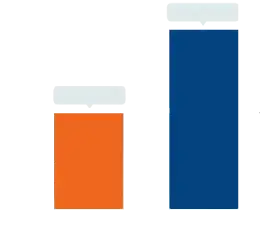
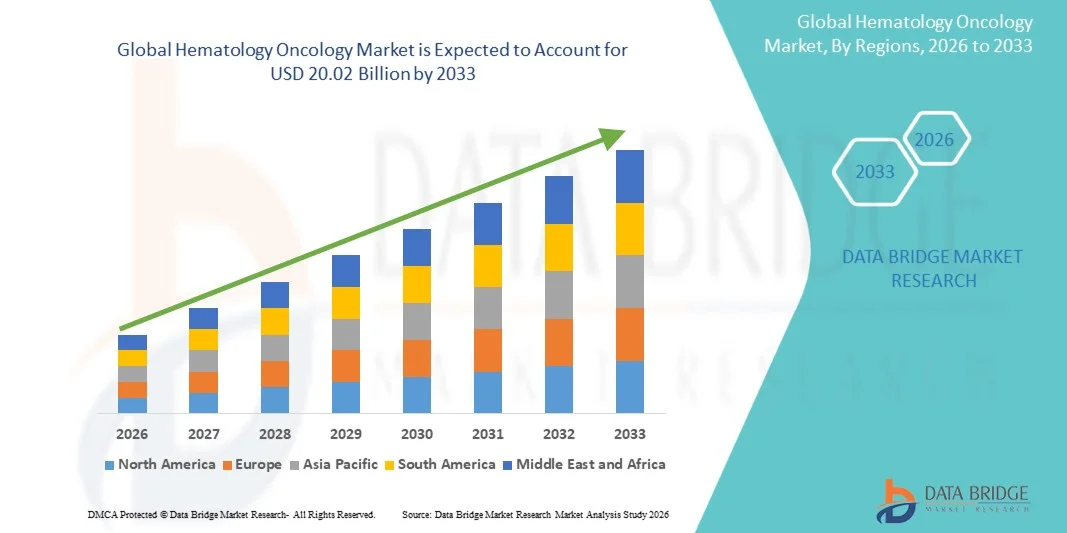
- The global hematology oncology market size was valued at USD 10.98 billion in 2025 and is expected to reach USD 20.02 billion by 2033, at a CAGR of 7.80% during the forecast period
- The market growth is largely fuelled by the increasing prevalence of blood cancers such as leukemia, lymphoma, and multiple myeloma, rising global cancer burden, and growing demand for targeted and precision therapies
- In addition, continuous advancements in immunotherapy, chemotherapy combinations, and novel biologics are significantly improving treatment outcomes and driving adoption of hematology oncology drugs across healthcare systems
Hematology Oncology Market Analysis
- The hematology oncology market is witnessing strong growth driven by increasing investment in cancer research and development activities, along with rising approvals of innovative oncology drugs across major regions
- Furthermore, expanding healthcare infrastructure, improved diagnostic capabilities for early cancer detection, and growing awareness about hematological malignancies are accelerating market expansion globally
- North America dominated the hematology oncology market with the largest revenue share in 2025, driven by a high prevalence of cancer cases, advanced healthcare infrastructure, and strong adoption of innovative diagnostic and therapeutic solutions
- The Asia-Pacific region is expected to witness the highest growth rate in the global hematology oncology market, driven by rapid urbanization, improving healthcare facilities, rising investments in oncology research, and increasing adoption of advanced diagnostic and therapeutic solutions across emerging economies
- The Hematology Analyzers segment held the largest market revenue share in 2025 driven by increasing demand for accurate and rapid blood disorder diagnosis in hospitals and diagnostic laboratories. These systems are widely adopted due to their efficiency in routine blood testing, automation capabilities, and high diagnostic precision. Growing prevalence of anemia, leukemia, and other blood disorders is further supporting segment growth. Continuous technological advancements in automated analyzers are also improving workflow efficiency and reducing diagnostic turnaround time. Increasing hospital laboratory modernization is In addition strengthening adoption
Report Scope and Hematology Oncology Market Segmentation
|
Attributes |
Hematology Oncology Key Market Insights |
|
Segments Covered |
|
|
Countries Covered |
North America
Europe
Asia-Pacific
Middle East and Africa
South America
|
|
Key Market Players |
• Illumina, Inc. (U.S.) |
|
Market Opportunities |
• Rising Adoption Of Personalized And Precision Medicine |
|
Value Added Data Infosets |
In addition to the insights on market scenarios such as market value, growth rate, segmentation, geographical coverage, and major players, the market reports curated by the Data Bridge Market Research also include depth expert analysis, patient epidemiology, pipeline analysis, pricing analysis, and regulatory framework. |
Hematology Oncology Market Trends
“Rising Adoption Of Precision Medicine And Targeted Therapies”
• The growing shift toward personalized and precision medicine is significantly shaping the hematology oncology market, as healthcare providers increasingly focus on patient-specific treatment approaches based on genetic and molecular profiling. Targeted therapies are gaining strong traction due to their ability to improve treatment outcomes while minimizing side effects compared to traditional chemotherapy. This trend is strengthening the adoption of advanced diagnostic tools and companion diagnostics across oncology care pathways
• Increasing prevalence of blood cancers and solid tumors has accelerated demand for innovative treatment options such as immunotherapy, CAR-T cell therapy, and next-generation biologics. Patients and healthcare systems are increasingly prioritizing therapies that offer improved survival rates and long-term disease control. This has encouraged pharmaceutical companies to invest heavily in R&D and clinical trials focused on novel oncology drugs and combination therapies
• Advancements in diagnostic technologies such as flow cytometry, molecular diagnostics, and automated hematology analyzers are influencing early detection and treatment planning. These technologies are enabling faster and more accurate identification of hematological disorders, improving clinical decision-making and patient outcomes. Growing integration of AI and data analytics in diagnostics is further enhancing efficiency and accuracy in oncology care
• For instance, in 2024, Roche in Switzerland and Bristol Myers Squibb in the U.S. expanded their oncology portfolios by introducing advanced immunotherapy and targeted therapy solutions for blood cancer treatment. These launches were supported by increasing demand for personalized treatment approaches and were widely adopted across hospitals and specialty cancer centers, improving patient response rates and treatment precision
• While demand for advanced hematology oncology solutions is rising, sustained market expansion depends on continued innovation in drug development, improved diagnostic accessibility, and affordability of advanced therapies. Strengthening clinical infrastructure and expanding precision medicine adoption will be critical for long-term market growth
Hematology Oncology Market Dynamics
Driver
“Rising Prevalence Of Cancer And Increasing Demand For Advanced Therapeutics”
• The growing global burden of hematological malignancies and solid tumors is a major driver for the hematology oncology market. Increasing incidence of diseases such as leukemia, lymphoma, breast cancer, and lung cancer is creating strong demand for advanced diagnostic and therapeutic solutions. Aging populations and lifestyle-related risk factors are further contributing to market expansion
• Expanding adoption of targeted therapy and immunotherapy is significantly driving market growth, as these treatment approaches offer improved efficacy and reduced toxicity compared to conventional chemotherapy. Healthcare providers are increasingly shifting toward precision-based treatment models to enhance patient outcomes and reduce relapse rates
• Rising investment in cancer research and increasing clinical trial activities are accelerating the development of novel oncology drugs and diagnostic technologies. Pharmaceutical companies and research institutes are collaborating to develop next-generation therapies, including biologics and gene-based treatments, to address unmet medical needs in hematology oncology
• For instance, in 2023, Novartis in Switzerland and Pfizer in the U.S. expanded their hematology oncology pipelines by advancing CAR-T therapies and targeted oncology drugs for blood cancer treatment. These developments were driven by increasing demand for innovative and effective treatment options, leading to improved survival outcomes and broader adoption in specialized oncology centers
• Although rising cancer prevalence supports market growth, expansion depends on improving affordability of advanced therapies, strengthening healthcare infrastructure, and ensuring wider access to diagnostic and treatment facilities across emerging regions
Restraint/Challenge
“High Treatment Costs And Limited Accessibility To Advanced Therapies”
• The high cost of advanced oncology treatments such as immunotherapy, targeted therapy, and CAR-T cell therapy remains a major challenge for the hematology oncology market. Expensive drug development, complex manufacturing processes, and long treatment cycles contribute to overall high healthcare expenditure, limiting accessibility for patients in low- and middle-income regions
• Limited availability of advanced diagnostic infrastructure in developing regions restricts early disease detection and effective treatment planning. Many healthcare facilities lack access to high-end hematology analyzers, flow cytometers, and molecular diagnostic tools, leading to delayed diagnosis and suboptimal treatment outcomes
• Regulatory complexities and lengthy approval processes for new oncology drugs also slow market entry and adoption. In addition, disparities in healthcare reimbursement policies across countries further restrict patient access to innovative therapies, creating inequality in treatment availability
• For instance, in 2024, healthcare providers in countries such as India and Brazil reported limited adoption of CAR-T cell therapy and advanced immunotherapy treatments due to high costs and insufficient reimbursement coverage. This resulted in restricted patient access despite growing demand for innovative cancer therapies
• Overcoming these challenges will require cost-reduction strategies, expansion of healthcare infrastructure, increased insurance coverage, and stronger government support for cancer care. Collaborative efforts between pharmaceutical companies, governments, and healthcare providers will be essential to improve affordability and accessibility of advanced hematology oncology treatments globally
Hematology Oncology Market Scope
The market is segmented on the basis of hematology product, oncology drug class type, oncology indication, applications, and end users.
• By Hematology Product
On the basis of hematology product, the global hematology oncology market is segmented into Hematology Analyzers, Hematology Reagents, Flow Cytometers, Hematology Cell Counters, Slide Strainers, Coagulation Analyzers, Hematology Testing, Centrifuges, Hemoglobin Meters, and Others. The Hematology Analyzers segment held the largest market revenue share in 2025 driven by increasing demand for accurate and rapid blood disorder diagnosis in hospitals and diagnostic laboratories. These systems are widely adopted due to their efficiency in routine blood testing, automation capabilities, and high diagnostic precision. Growing prevalence of anemia, leukemia, and other blood disorders is further supporting segment growth. Continuous technological advancements in automated analyzers are also improving workflow efficiency and reducing diagnostic turnaround time. Increasing hospital laboratory modernization is In addition strengthening adoption.
The Flow Cytometers segment is expected to witness the fastest growth rate from 2026 to 2033, driven by rising adoption in cancer research and advanced hematological diagnostics. Flow cytometry systems are increasingly used for identifying abnormal cell populations and supporting personalized treatment decisions in hematology oncology applications. Expanding use in immunophenotyping and minimal residual disease detection is further boosting demand. Rising investments in cancer research laboratories and academic institutes are accelerating product adoption. Technological improvements enabling multi-parameter analysis are also enhancing clinical accuracy and research efficiency.
• By Oncology Drug Class Type
On the basis of oncology drug class type, the market is segmented into Chemotherapy, Targeted Therapy, Immunotherapy, and Hormonal Therapy. The Chemotherapy segment held the largest market revenue share in 2025 driven by its widespread use as a first-line treatment option for multiple types of blood cancers and solid tumors. Chemotherapy remains a foundational treatment approach due to its broad applicability and established clinical effectiveness. Strong availability of generic chemotherapeutic drugs is supporting widespread usage across emerging economies. Hospitals continue to rely on chemotherapy due to cost-effectiveness and standardized treatment protocols. Despite newer therapies, it remains essential in combination treatment regimens.
The Immunotherapy segment is expected to witness the fastest growth rate from 2026 to 2033, driven by increasing approvals of immune checkpoint inhibitors and rising adoption of advanced cancer treatment approaches. Immunotherapy is gaining strong traction due to its ability to enhance the body’s immune response against cancer cells and improve long-term patient outcomes. Expanding clinical trials and pipeline drug developments are further supporting market expansion. Growing preference for personalized medicine is accelerating adoption across oncology centers. Increasing awareness among physicians and patients is also driving faster integration into treatment guidelines.
• By Oncology Indication
On the basis of oncology indication, the market is segmented into Lung Cancer, Stomach Cancer, Colorectal Cancer, Breast Cancer, Prostate Cancer, Liver Cancer, Esophagus Cancer, Cervical Cancer, Kidney Cancer, Bladder Cancer, and Others. The Lung Cancer segment held the largest market revenue share in 2025 driven by high global prevalence, late-stage diagnosis rates, and strong demand for advanced treatment options. Smoking prevalence and environmental factors further contribute to rising incidence rates. Increasing adoption of targeted therapies and immunotherapy in lung cancer treatment is strengthening segment dominance. Healthcare systems are focusing on early detection programs for better outcomes. Strong pipeline development in lung cancer drugs is further supporting market growth.
The Breast Cancer segment is expected to witness the fastest growth rate from 2026 to 2033, driven by increasing awareness, early screening programs, and rising adoption of targeted and personalized therapies. Continuous advancements in diagnostic imaging and biomarker testing are improving early detection rates. Expanding access to oncology care in developing regions is further boosting treatment demand. Increasing availability of novel biologics and hormone-based therapies is supporting improved survival outcomes. Government initiatives and awareness campaigns are also contributing to higher diagnosis rates.
• By Applications
On the basis of applications, the market is segmented into Infectious Diseases, Cancer, Cardiovascular Disorders, Blood Screening, Diabetes, HIV, and Auto-Immune Diseases. The Cancer segment held the largest market revenue share in 2025 driven by increasing incidence of hematological and solid tumors along with growing demand for advanced diagnostic and therapeutic solutions. Rising burden of cancer worldwide is significantly boosting demand for hematology oncology products. Increasing hospital admissions for cancer treatment is further strengthening segment dominance. Expansion of oncology care centers is also contributing to market growth. Continuous innovation in cancer diagnostics and therapies is enhancing treatment outcomes.
The Blood Screening segment is expected to witness the fastest growth rate from 2026 to 2033, driven by rising focus on early disease detection, preventive healthcare initiatives, and increasing adoption of automated hematology testing systems in diagnostic laboratories. Growing awareness about routine health checkups is supporting demand for screening services. Expansion of laboratory networks and diagnostic chains is further accelerating adoption. Technological advancements in high-throughput screening systems are improving efficiency. Government-led health screening programs are also contributing to rapid market expansion.
• By End Users
On the basis of end users, the market is segmented into Hospitals, Clinical Testing Institutes, Patient Self-Testing, and Other End Users. The Hospitals segment held the largest market revenue share in 2025 driven by high patient inflow, availability of advanced diagnostic infrastructure, and strong adoption of hematology and oncology treatment solutions. Hospitals serve as primary centers for cancer diagnosis and treatment delivery. Integration of advanced laboratory equipment is further strengthening hospital dominance. Increasing inpatient and outpatient cancer treatment volumes are boosting demand. Strong presence of skilled healthcare professionals is also supporting segment growth.
The Clinical Testing Institutes segment is expected to witness the fastest growth rate from 2026 to 2033, driven by increasing outsourcing of diagnostic services, rising demand for specialized cancer testing, and expansion of independent laboratory networks across developed and emerging regions. Growing preference for cost-efficient diagnostic services is supporting segment expansion. Rising adoption of advanced molecular and hematology testing platforms is further boosting growth. Expansion of private diagnostic chains is increasing accessibility. Technological advancements in automated testing systems are improving turnaround time and accuracy.
Hematology Oncology Market Regional Analysis
• North America dominated the hematology oncology market with the largest revenue share in 2025, driven by a high prevalence of cancer cases, advanced healthcare infrastructure, and strong adoption of innovative diagnostic and therapeutic solutions
• Healthcare providers in the region highly value the availability of advanced technologies such as precision medicine, immunotherapy, and automated hematology analyzers, which improve diagnosis accuracy and treatment outcomes
• This widespread adoption is further supported by high healthcare expenditure, strong presence of leading pharmaceutical companies, and continuous investment in cancer research and clinical trials, establishing advanced hematology oncology care as a standard across hospitals and specialty centers
U.S. Hematology Oncology Market Insight
The U.S. hematology oncology market captured the largest revenue share in 2025 within North America, fueled by the rapid adoption of advanced cancer therapies and strong presence of major biopharmaceutical companies. Patients and healthcare providers are increasingly focusing on early diagnosis and personalized treatment approaches for blood cancers and solid tumors. The growing use of immunotherapy, CAR-T cell therapy, and targeted therapies is significantly driving market expansion. Moreover, strong integration of advanced diagnostic tools, molecular testing, and AI-based oncology solutions is further enhancing clinical decision-making and improving survival outcomes.
Europe Hematology Oncology Market Insight
The Europe hematology oncology market is expected to witness the fastest growth rate from 2026 to 2033, primarily driven by rising cancer incidence, government-supported healthcare systems, and increasing adoption of advanced oncology treatments. The region is experiencing strong demand for precision medicine and biologics-based therapies across major economies. Expanding clinical research activities and favorable regulatory frameworks for drug approvals are further supporting market growth. In addition, increasing awareness of early cancer detection and rising healthcare investments are contributing to improved access to advanced hematology oncology solutions.
U.K. Hematology Oncology Market Insight
The U.K. hematology oncology market is expected to witness strong growth from 2026 to 2033, driven by increasing focus on cancer screening programs and rising adoption of innovative treatment options. The National Health Service is actively supporting early diagnosis initiatives and access to advanced oncology therapies. Growing prevalence of blood cancers and solid tumors is further increasing demand for targeted therapies and immunotherapy. In addition, strong research infrastructure and clinical trial activities are enhancing the availability of next-generation oncology treatments across the country.
Germany Hematology Oncology Market Insight
The Germany hematology oncology market is expected to witness steady growth from 2026 to 2033, fueled by strong healthcare infrastructure, high awareness of cancer care, and increasing adoption of technologically advanced treatment methods. Germany’s emphasis on precision medicine and digital healthcare integration is promoting the use of advanced diagnostic tools in oncology. Rising investments in cancer research and strong pharmaceutical manufacturing capabilities are further supporting market expansion. In addition, a growing elderly population is increasing demand for effective hematology oncology treatments.
Asia-Pacific Hematology Oncology Market Insight
The Asia-Pacific hematology oncology market is expected to witness the fastest growth rate from 2026 to 2033, driven by rising cancer burden, expanding healthcare infrastructure, and increasing access to advanced therapies in countries such as China, Japan, and India. The region is experiencing growing adoption of immunotherapy and targeted therapies due to improving affordability and awareness. Government initiatives supporting cancer screening and treatment are further accelerating market growth. In addition, the presence of cost-effective manufacturing capabilities is making advanced oncology solutions more accessible to a wider patient population.
Japan Hematology Oncology Market Insight
The Japan hematology oncology market is expected to witness steady growth from 2026 to 2033 due to its advanced healthcare system, high adoption of innovative medical technologies, and increasing focus on cancer treatment. The country places strong emphasis on early diagnosis and precision-based treatment approaches. Rising incidence of blood cancers among the aging population is further driving demand for advanced hematology and oncology solutions. Integration of AI-based diagnostics and personalized medicine is also improving treatment accuracy and patient outcomes.
China Hematology Oncology Market Insight
The China hematology oncology market accounted for the largest revenue share in Asia Pacific in 2025, attributed to rapid urbanization, expanding healthcare infrastructure, and increasing prevalence of cancer cases. The country is witnessing strong growth in demand for advanced diagnostics, immunotherapy, and targeted cancer treatments. Government initiatives supporting healthcare modernization and cancer screening programs are further boosting market expansion. In addition, strong domestic pharmaceutical manufacturing capabilities are improving availability and affordability of oncology treatments across the country.
Hematology Oncology Market Share
The Hematology Oncology industry is primarily led by well-established companies, including:
- Illumina, Inc. (U.S.)
- Thermo Fisher Scientific Inc. (U.S.)
- F. Hoffmann-La Roche Ltd. (Switzerland)
- Agilent Technologies Inc. (U.S.)
- Myriad Genetics Inc. (U.S.)
- Beijing Genomics Institute (BGI)
- Perkin Elmer Inc. (U.S.)
- Foundation Medicine Inc. (U.S.)
- PacBio (U.S.)
- Oxford Nanopore Technologies plc. (U.K.)
- Paradigm Diagnostics Inc. (U.S.)
- Caris Life Sciences (Japan)
- Partek, Incorporated (U.S.)
- Eurofins Scientific (Luxembourg)
- Qiagen (Germany)
SKU-
Get online access to the report on the World's First Market Intelligence Cloud

- Interactive Data Analysis Dashboard
- Company Analysis Dashboard for high growth potential opportunities
- Research Analyst Access for customization & queries
- Competitor Analysis with Interactive dashboard
- Latest News, Updates & Trend analysis
- Harness the Power of Benchmark Analysis for Comprehensive Competitor Tracking
Research Methodology
Data collection and base year analysis are done using data collection modules with large sample sizes. The stage includes obtaining market information or related data through various sources and strategies. It includes examining and planning all the data acquired from the past in advance. It likewise envelops the examination of information inconsistencies seen across different information sources. The market data is analysed and estimated using market statistical and coherent models. Also, market share analysis and key trend analysis are the major success factors in the market report. To know more, please request an analyst call or drop down your inquiry.
The key research methodology used by DBMR research team is data triangulation which involves data mining, analysis of the impact of data variables on the market and primary (industry expert) validation. Data models include Vendor Positioning Grid, Market Time Line Analysis, Market Overview and Guide, Company Positioning Grid, Patent Analysis, Pricing Analysis, Company Market Share Analysis, Standards of Measurement, Global versus Regional and Vendor Share Analysis. To know more about the research methodology, drop in an inquiry to speak to our industry experts.
Customization Available
Data Bridge Market Research is a leader in advanced formative research. We take pride in servicing our existing and new customers with data and analysis that match and suits their goal. The report can be customized to include price trend analysis of target brands understanding the market for additional countries (ask for the list of countries), clinical trial results data, literature review, refurbished market and product base analysis. Market analysis of target competitors can be analyzed from technology-based analysis to market portfolio strategies. We can add as many competitors that you require data about in the format and data style you are looking for. Our team of analysts can also provide you data in crude raw excel files pivot tables (Fact book) or can assist you in creating presentations from the data sets available in the report.












