


Hemochromatosis Treatment Market Size
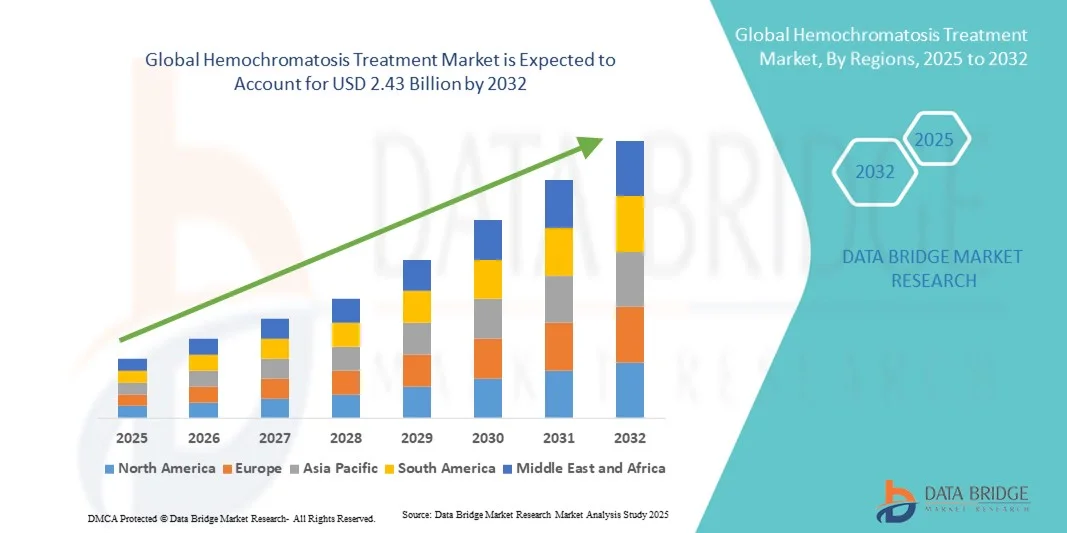
- The global Hemochromatosis treatment market size was valued at USD 1.81 billion in 2024 and is expected to reach USD 2.43 billion by 2032, at a CAGR of 3.80% during the forecast period
- The market's growth is primarily driven by the increasing prevalence of hereditary hemochromatosis, advancements in diagnostic techniques, and the development of innovative therapeutic options. Therapeutic phlebotomy remains the cornerstone of treatment, while oral chelation therapies and personalized medicine are gaining prominence, enhancing patient outcomes and adherence
- Furthermore, growing patient preference for timely diagnosis and effective treatment, coupled with healthcare infrastructure improvements and supportive government initiatives, is establishing comprehensive hemochromatosis management as the standard of care. These converging factors are accelerating the adoption of treatment solutions, thereby significantly boosting the industry's growth
Hemochromatosis Treatment Market Analysis
- The Hemochromatosis treatment market, offering therapeutic interventions for managing iron overload in patients, is increasingly vital in both hereditary and secondary hemochromatosis due to its proven efficacy, improved patient outcomes, and integration with personalized medicine approaches
- The escalating demand for Hemochromatosis treatment is primarily fueled by the rising prevalence of hereditary hemochromatosis, advancements in diagnostic technologies, growing awareness of iron overload disorders, and a preference for minimally invasive and targeted treatment options
- North America dominated the Hemochromatosis treatment market with the largest revenue share of 42.5% in 2024, characterized by early adoption of advanced healthcare technologies, high healthcare spending, and a strong presence of key pharmaceutical and biotech companies, with the U.S. experiencing substantial growth in treatment adoption, particularly in specialized clinics and hospitals, driven by innovations in therapeutic phlebotomy and chelation therapies
- Asia-Pacific is expected to be the fastest-growing region in the Hemochromatosis treatment market during the forecast period due to increasing awareness, rising healthcare expenditure, urbanization, and expansion of diagnostic and treatment facilities across emerging economies
- Phlebotomy segment dominated the Hemochromatosis treatment market with a market share of 44.8% in 2024, driven by its established reputation for safety, efficacy in reducing iron overload, and ease of integration into standard treatment protocols
Report Scope and Hemochromatosis Treatment Market Segmentation
|
Attributes |
Hemochromatosis Treatment Key Market Insights |
|
Segments Covered |
|
|
Countries Covered |
North America
Europe
Asia-Pacific
Middle East and Africa
South America
|
|
Key Market Players |
|
|
Market Opportunities |
|
|
Value Added Data Infosets |
In addition to the insights on market scenarios such as market value, growth rate, segmentation, geographical coverage, and major players, the market reports curated by the Data Bridge Market Research also include in-depth expert analysis, patient epidemiology, pipeline analysis, pricing analysis, and regulatory framework |
Hemochromatosis Treatment Market Trends
Advancements in Personalized and Targeted Therapies
- A significant and accelerating trend in the global Hemochromatosis treatment market is the increasing development of personalized and gene-targeted therapies that tailor treatment to patient-specific iron overload profiles
- For instance, novel oral chelation therapies are being designed to optimize iron removal while minimizing side effects, allowing physicians to customize treatment plans according to patient needs
- Integration of digital health tools, such as remote iron monitoring apps, enables more precise dosage adjustments and adherence tracking, improving treatment outcomes
- These innovations allow clinicians to monitor patient responses more effectively, reducing complications such as organ damage and enhancing quality of life
- This trend towards patient-centric, precision medicine in hemochromatosis management is driving demand for therapies that are both safer and more effective, reshaping standard care protocols
- The adoption of these advanced treatment approaches is increasing rapidly across both hereditary and secondary hemochromatosis cases, as healthcare providers prioritize outcomes and patient convenience
Hemochromatosis Treatment Market Dynamics
Driver
Rising Prevalence of Iron Overload Disorders and Awareness
- The increasing prevalence of hereditary and secondary hemochromatosis, along with greater awareness of early diagnosis benefits, is a significant driver for market growth
- For instance, routine genetic screening programs in North America and Europe are identifying patients earlier, prompting timely therapeutic interventions and increasing treatment adoption
- Patients and healthcare providers are more aware of the risks of untreated iron overload, such as liver cirrhosis and cardiac complications, boosting demand for effective treatment options
- Furthermore, rising healthcare expenditure and investments in specialized clinics are supporting the adoption of advanced therapies such as phlebotomy and oral chelation
- For instance, educational initiatives by hospitals and patient advocacy groups are increasing early diagnosis rates and adherence to prescribed therapies
- Increasing collaborations between pharmaceutical companies and healthcare providers are promoting wider availability and awareness of innovative treatment options
- The convenience and effectiveness of minimally invasive treatments, combined with digital monitoring tools, are making hemochromatosis management more accessible and appealing to patients
Restraint/Challenge
High Treatment Costs and Limited Access in Emerging Regions
- The relatively high cost of specialized hemochromatosis therapies and limited availability in developing regions pose significant challenges to market growth
- For instance, advanced chelation drugs and frequent phlebotomy sessions may not be affordable or accessible to patients in low-income areas, restricting widespread adoption
- Insurance coverage limitations and lack of awareness about treatment benefits in emerging markets further impede patient access to optimal therapies
- Addressing these challenges through cost reduction strategies, patient assistance programs, and broader healthcare infrastructure improvements is essential for market expansion
- While treatment options are improving globally, price sensitivity and regional disparities continue to hinder the universal adoption of advanced hemochromatosis management protocols
- For instance, inconsistent regulatory approvals across countries delay the launch of new therapies in certain markets, limiting patient access
- Limited availability of trained healthcare professionals skilled in administering phlebotomy or monitoring chelation therapy also restricts the effective management of hemochromatosis in some regions
Hemochromatosis Treatment Market Scope
The market is segmented on the basis of treatment type, diagnosis tests, and end user.
- By Treatment Type
On the basis of treatment type, the Hemochromatosis Treatment Market is segmented into phlebotomy, chelation therapy, and surgery. The phlebotomy segment dominated the market with the largest revenue share of 44.8% in 2024, driven by its established efficacy in reducing excess iron in patients safely and cost-effectively. Phlebotomy is widely recommended as the first-line treatment for hereditary hemochromatosis and is integrated into standard clinical protocols. Its non-invasive nature and ability to be administered in hospitals, clinics, and specialized centers contribute to its widespread adoption. Regular treatment schedules and minimal side effects make it the preferred choice among physicians and patients. The growing awareness of iron overload complications such as liver cirrhosis and cardiac disorders further reinforces the demand for phlebotomy. Hospitals and outpatient centers increasingly invest in phlebotomy infrastructure to cater to rising patient numbers.
The chelation therapy segment is expected to witness the fastest growth rate from 2025 to 2032, driven by increasing demand for oral chelation drugs in patients who are intolerant to frequent phlebotomy. Chelation therapy is particularly important in secondary hemochromatosis cases, such as those resulting from repeated blood transfusions. Advancements in oral chelation formulations with fewer side effects and improved bioavailability are fueling adoption. Growing patient preference for convenient, home-administered treatments also supports market expansion. Pharmaceutical companies are actively investing in R&D for next-generation chelation therapies targeting specific iron-binding pathways. Increasing awareness among healthcare providers regarding the effectiveness of chelation therapy is further contributing to its rapid uptake globally. Surgery, though less common, is used in severe cases with organ complications. It remains a smaller but important segment for specialized treatment centers dealing with complex hemochromatosis cases.
- By Diagnosis Tests
On the basis of diagnosis tests, the market is segmented into CT scan, chest radiography and echocardiography, and MRI. The MRI segment dominated the market in 2024, capturing the largest revenue share due to its ability to non-invasively quantify liver iron concentration, which is critical for accurate diagnosis and treatment monitoring. MRI is preferred over traditional methods because it reduces the need for invasive liver biopsies and offers precise assessment of iron overload in multiple organs. Advanced MRI techniques, combined with software for automated iron quantification, enhance diagnostic accuracy and patient comfort. Hospitals and imaging centers increasingly invest in MRI machines to meet the growing demand. Physicians favor MRI for treatment planning and monitoring therapy effectiveness, driving its widespread adoption. Patient awareness of non-invasive, accurate diagnostic options also contributes to MRI’s dominance.
The CT scan segment is expected to witness the fastest growth rate from 2025 to 2032, driven by increasing availability of high-resolution scanners and the rising need for comprehensive evaluation of organ damage caused by iron overload. CT scans provide detailed anatomical insights, aiding in early detection of complications in the liver, heart, and pancreas. Technological advancements have reduced radiation exposure, making CT a safer option for repeated monitoring. Hospitals and diagnostic centers in emerging economies are expanding their CT capabilities to cater to growing patient volumes. Increased physician preference for imaging-based assessment for treatment decisions further supports growth in this segment. Chest radiography and echocardiography are primarily used as supplementary tests, especially for assessing cardiac involvement in advanced hemochromatosis cases.
- By End User
On the basis of end user, the market is segmented into hospitals, clinics, ambulatory surgical centers (ASCs), and others. The hospital segment dominated the market with the largest revenue share in 2024, owing to their advanced infrastructure, access to trained specialists, and ability to provide comprehensive treatment including phlebotomy, chelation, and surgical interventions. Hospitals also serve as referral centers for complicated cases, driving higher patient volumes. Integration of diagnostic facilities such as MRI and CT within hospitals enables complete care under one roof. Rising patient preference for hospital-based treatments due to perceived reliability and quality of care contributes to dominance. In addition, hospitals lead in research collaborations and clinical trials, further reinforcing their central role in the market.
The clinics segment is expected to witness the fastest growth rate from 2025 to 2032, driven by the expansion of specialized hematology and outpatient clinics offering convenient phlebotomy and chelation therapy services. Clinics provide easier access for patients in urban and semi-urban regions and allow for flexible treatment schedules. Increasing awareness campaigns and partnerships with diagnostic centers are fueling patient inflow to clinics. Clinics also leverage digital health tools for monitoring iron levels, supporting remote patient management. The growth of clinic-based services is particularly notable in emerging markets where hospital access is limited. Ambulatory surgical centers and other smaller care facilities contribute to niche market demand.
Hemochromatosis Treatment Market Regional Analysis
- North America dominated the Hemochromatosis treatment market with the largest revenue share of 42.5% in 2024, characterized by early adoption of advanced healthcare technologies, high healthcare spending, and a strong presence of key pharmaceutical and biotech companies
- Patients and healthcare providers in the region highly value the accessibility of specialized treatments such as phlebotomy and chelation therapy, as well as advanced diagnostic options such as MRI and CT scans for monitoring iron overload effectively
- This widespread adoption is further supported by high healthcare spending, strong insurance coverage, and the presence of key pharmaceutical and biotech companies investing in innovative therapies, establishing North America as the leading region for hemochromatosis management in both hospitals and outpatient care facilities
U.S. Hemochromatosis Treatment Market Insight
The U.S. Hemochromatosis treatment market captured the largest revenue share of 39% in 2024 within North America, fueled by the rising prevalence of hereditary and secondary hemochromatosis and early adoption of advanced diagnostic and treatment solutions. Patients increasingly prioritize timely intervention through phlebotomy and chelation therapies to prevent complications such as liver cirrhosis and cardiac disorders. The growing integration of digital health tools for remote monitoring and personalized treatment management further propels market growth. Moreover, strong insurance coverage, well-established healthcare infrastructure, and the presence of key pharmaceutical and biotech players significantly contribute to the expansion of the U.S. market.
Europe Hemochromatosis Treatment Market Insight
The Europe Hemochromatosis treatment market is projected to expand at a substantial CAGR throughout the forecast period, primarily driven by government initiatives supporting early screening and management of iron overload disorders. Increasing urbanization, robust healthcare infrastructure, and rising awareness about hereditary hemochromatosis are fostering market adoption. European patients are also drawn to the convenience and safety of minimally invasive treatments such as phlebotomy and oral chelation. The region is experiencing significant growth across hospitals, clinics, and specialized diagnostic centers, with advanced MRI and CT-based monitoring being incorporated into routine patient care.
U.K. Hemochromatosis Treatment Market Insight
The U.K. Hemochromatosis treatment market is anticipated to grow at a noteworthy CAGR during the forecast period, driven by increasing awareness about hereditary hemochromatosis and early intervention benefits. In addition, rising cases of iron overload-related complications are encouraging both patients and healthcare providers to adopt timely treatment options. The U.K.’s strong healthcare infrastructure, government-supported screening programs, and high patient acceptance of advanced therapies such as phlebotomy and chelation therapy are expected to continue stimulating market growth.
Germany Hemochromatosis Treatment Market Insight
The Germany Hemochromatosis treatment market is expected to expand at a considerable CAGR during the forecast period, fueled by growing awareness of iron overload disorders and the demand for technologically advanced diagnostic and treatment solutions. Germany’s well-developed healthcare infrastructure, emphasis on precision medicine, and increasing availability of advanced phlebotomy and chelation facilities promote market adoption. Integration of digital monitoring tools and non-invasive diagnostic techniques such as MRI and CT scans is also becoming prevalent, with patients preferring effective and convenient treatment options that align with local healthcare standards.
Asia-Pacific Hemochromatosis Treatment Market Insight
The Asia-Pacific Hemochromatosis treatment market is poised to grow at the fastest CAGR of 22% during the forecast period of 2025 to 2032, driven by increasing urbanization, rising healthcare expenditure, and growing awareness of iron overload disorders in countries such as China, India, and Japan. The region’s expanding healthcare infrastructure, coupled with government initiatives promoting genetic screening and early diagnosis, is accelerating the adoption of phlebotomy and chelation therapies. Furthermore, increasing patient inclination towards preventive care and the availability of affordable treatment options are expanding access across both urban and semi-urban populations.
Japan Hemochromatosis Treatment Market Insight
The Japan Hemochromatosis treatment market is gaining momentum due to the country’s technologically advanced healthcare system, aging population, and rising emphasis on preventive care. The Japanese market places significant importance on early diagnosis and effective management of iron overload disorders. Adoption is driven by the integration of advanced diagnostic imaging, remote monitoring tools, and patient-centric therapies such as phlebotomy and oral chelation. Moreover, Japan’s focus on precision medicine and high patient awareness of hereditary hemochromatosis is fueling demand for safer and more effective treatment solutions across residential and clinical settings.
India Hemochromatosis Treatment Market Insight
The India Hemochromatosis treatment market accounted for the largest market revenue share in Asia-Pacific in 2024, attributed to rapid urbanization, growing middle-class population, and increasing healthcare awareness. India is emerging as a key market for early diagnosis and management of iron overload disorders, with expanding access to phlebotomy and oral chelation therapies across hospitals and clinics. The push towards improving preventive healthcare, rising patient inclination for minimally invasive treatment options, and the presence of domestic healthcare providers offering affordable solutions are key factors propelling the market in India.
Hemochromatosis Treatment Market Share
The Hemochromatosis Treatment industry is primarily led by well-established companies, including:
- CSL (Switzerland)
- Mayo Clinic (U.S.)
- The Johns Hopkins University (U.S.)
- Haemochromatosis UK (U.K.)
- Siamak Tabib, MD (U.S.)
- Vifor Pharma (Switzerland)
- Sanofi (France)
- Novartis (Switzerland)
- Bayer AG (Germany)
- Pfizer Inc. (U.S.)
- Roche Holding AG (Switzerland)
- GSK plc (U.K.)
- AbbVie Inc. (U.S.)
- Eli Lilly and Company (U.S.)
- AstraZeneca (U.K.)
What are the Recent Developments in Global Hemochromatosis Treatment Market?
- In September 2025, the U.S. Food and Drug Administration (FDA) approved a novel oral iron chelation therapy aimed at patients with hereditary hemochromatosis. This approval marks a significant step forward in non-invasive treatment options, potentially improving patient compliance and reducing the need for regular phlebotomy sessions
- In September 2025, the European Association for the Study of the Liver (EASL) released updated Clinical Practice Guidelines on hemochromatosis. These guidelines provide healthcare professionals with the latest evidence-based recommendations for diagnosing and managing hemochromatosis, emphasizing early detection and personalized treatment strategies
- In May 2025, a Phase 1b randomized clinical trial evaluated BBI-001, a non-absorbed oral therapeutic designed to bind dietary iron in the gut, preventing its absorption and promoting elimination through feces. The trial's results suggest that BBI-001 could offer a promising alternative for patients seeking non-invasive treatment options for iron overload
- In January 2024, Bond Biosciences announced a successful pre-Investigational New Drug (IND) meeting with the U.S. Food and Drug Administration (FDA) to advance the development of BBI-001, a non-absorbed oral therapeutic for the treatment of iron overload associated with hereditary hemochromatosis
- In October 2023, research emphasized the role of genetic screening in encouraging individuals with hereditary hemochromatosis to seek timely treatment and relevant management. Early genetic testing can lead to earlier interventions, potentially preventing severe complications associated with iron overload

- Interactive Data Analysis Dashboard
- Company Analysis Dashboard for high growth potential opportunities
- Research Analyst Access for customization & queries
- Competitor Analysis with Interactive dashboard
- Latest News, Updates & Trend analysis
- Harness the Power of Benchmark Analysis for Comprehensive Competitor Tracking
Data collection and base year analysis are done using data collection modules with large sample sizes. The stage includes obtaining market information or related data through various sources and strategies. It includes examining and planning all the data acquired from the past in advance. It likewise envelops the examination of information inconsistencies seen across different information sources. The market data is analysed and estimated using market statistical and coherent models. Also, market share analysis and key trend analysis are the major success factors in the market report. To know more, please request an analyst call or drop down your inquiry.
The key research methodology used by DBMR research team is data triangulation which involves data mining, analysis of the impact of data variables on the market and primary (industry expert) validation. Data models include Vendor Positioning Grid, Market Time Line Analysis, Market Overview and Guide, Company Positioning Grid, Patent Analysis, Pricing Analysis, Company Market Share Analysis, Standards of Measurement, Global versus Regional and Vendor Share Analysis. To know more about the research methodology, drop in an inquiry to speak to our industry experts.
Data Bridge Market Research is a leader in advanced formative research. We take pride in servicing our existing and new customers with data and analysis that match and suits their goal. The report can be customized to include price trend analysis of target brands understanding the market for additional countries (ask for the list of countries), clinical trial results data, literature review, refurbished market and product base analysis. Market analysis of target competitors can be analyzed from technology-based analysis to market portfolio strategies. We can add as many competitors that you require data about in the format and data style you are looking for. Our team of analysts can also provide you data in crude raw excel files pivot tables (Fact book) or can assist you in creating presentations from the data sets available in the report.












