


What is the Herbal Pain Relief Market Size and Growth Rate?
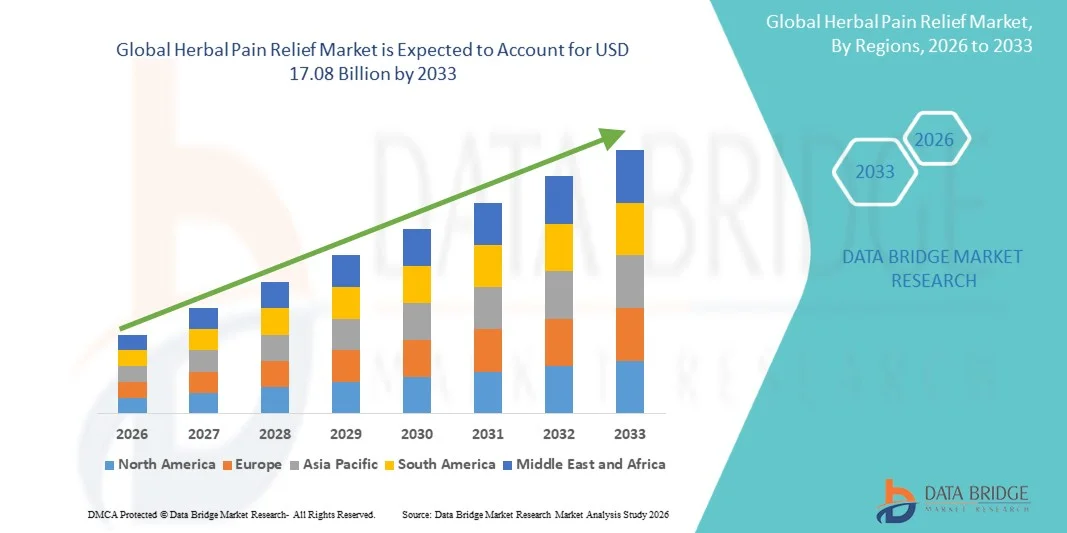
- As per Data Bridge Market Research Analysis the global Herbal Pain Relief Market size was valued at USD 12.84 billion in 2025 and is expected to reach USD 17.08 billion by 2033, at a CAGR of 3.6% during the forecast period
- The market growth is primarily driven by the rising prevalence of chronic pain disorders, increasing consumer preference for natural and plant-based therapies, and growing adoption of herbal pain relief products such as Ayurvedic formulations, essential oils, and herbal topical applications
- Additionally, increasing awareness regarding side effects associated with long-term opioid use, rising healthcare expenditure, expansion of wellness and alternative medicine practices, and continuous innovation in herbal extraction and formulation technologies are significantly contributing to sustained market expansion
Market Size & Forecast
Global Market Value (2025): USD 12.84 billion
Expected Market Value (2033): USD 17.08 billion
Forecast CAGR (2026–2033): 3.6%
What are the Major Takeaways of Herbal Pain Relief Market ?
- Herbal Pain Relief refers to plant-based therapeutic products and natural treatment solutions used to reduce and manage pain associated with arthritis, musculoskeletal disorders, migraine, neuropathic pain, and joint-related conditions
- The increasing demand for Herbal Pain Relief is driven by the growing burden of chronic pain disorders, rising aging population, increasing preference for holistic healthcare, and growing awareness regarding natural and non-invasive treatment approaches
- North America dominated the Herbal Pain Relief Market with the 36.90% revenue share in 2025, supported by high consumer awareness regarding herbal healthcare products, increasing adoption of alternative medicine therapies, and strong presence of wellness and nutraceutical companies
- Asia-Pacific is expected to witness the 4.6% growth during the forecast period due to rising popularity of Ayurvedic and traditional herbal medicine, increasing healthcare expenditure, expanding wellness infrastructure, and growing adoption of natural pain relief products in countries such as China, India, and Japan
- The herbal creams & gels segment dominated the market with a market share of 32.70% in 2025, driven by increasing preference for topical pain relief products, ease of application, rapid pain relief benefits, and growing consumer demand for non-invasive therapeutic solutions
Report Scope and Herbal Pain Relief Market Segmentation
|
Attributes |
Global Herbal Pain Relief Key Market Insights |
|
Segments Covered |
|
|
Countries Covered |
North America
Europe
Asia-Pacific
Middle East and Africa
South America
|
|
Key Market Players |
|
|
Market Opportunities |
|
|
Value Added Data Infosets |
In addition to the insights on market scenarios such as market value, growth rate, segmentation, geographical coverage, and major players, the market reports curated by the Data Bridge Market Research also include in-depth expert analysis, patient epidemiology, pipeline analysis, pricing analysis, and regulatory framework. |
What is the Key Trend in the Herbal Pain Relief Market ?
“Growing Shift Toward Natural, Holistic, and AI-Driven Herbal Pain Relief Solutions”
· A significant and accelerating trend in the global Herbal Pain Relief market is the increasing shift toward natural, holistic, and AI-driven pain management solutions, driven by the growing need for effective long-term pain relief, reduced opioid dependency, and improved patient wellness outcomes
· The adoption of advanced technologies such as artificial intelligence, machine learning, herbal extraction technologies, wearable pain relief devices, and digital wellness platforms is enabling healthcare providers to enhance treatment precision, improve therapy personalization, optimize pain assessment, and support faster clinical decision-making across rehabilitation and wellness centers
· Rising demand for integrated Herbal Pain Relief solutions is further driving market growth, as hospitals, rehabilitation centers, and wellness facilities increasingly prefer unified systems that combine herbal therapies, wellness monitoring, digital analytics, and patient wellness programs into a single platform
· Increasing focus on personalized and preventive healthcare is encouraging the development of advanced herbal therapeutic technologies capable of providing patient-specific treatment strategies and real-time wellness monitoring capabilities
· The expansion of digital healthcare infrastructure is boosting demand for Herbal Pain Relief solutions, particularly in emerging economies such as China and India, where investments in wellness services and healthcare modernization are rising significantly
· Continuous innovation in herbal formulations, wearable pain relief devices, and digital therapeutics, along with increasing regulatory emphasis on patient safety and natural healthcare solutions, is driving the transition toward more scalable, connected, and efficient Herbal Pain Relief solutions globally
Herbal Pain Relief Market Dynamics
Driver
“Growing Adoption of Advanced and AI-Integrated Herbal Pain Relief Technologies”
· A significant and accelerating trend in the global Herbal Pain Relief market is the increasing adoption of advanced and AI-integrated herbal pain management technologies, driven by the growing prevalence of chronic pain disorders and the rising need for effective and long-term natural treatment solutions
· The adoption of technologies such as artificial intelligence, machine learning, herbal extraction technologies, wearable healthcare devices, and digital therapeutic platforms is enabling healthcare providers to improve treatment precision, automate patient monitoring, reduce therapy response time, and enhance overall pain management efficiency
· Rising demand for integrated wellness and pain management systems is further driving market growth, as healthcare facilities increasingly prefer solutions that combine herbal therapies, rehabilitation programs, wellness services, and patient monitoring capabilities into unified treatment platforms
· Increasing focus on preventive healthcare and personalized treatment planning is encouraging the development of advanced herbal pain management systems capable of delivering patient-specific therapeutic solutions
· The expansion of healthcare infrastructure and increasing investments in digital therapeutics are boosting demand for Herbal Pain Relief solutions, particularly in emerging economies such as China and India, where awareness regarding natural pain therapies is increasing rapidly
· Continuous innovation in herbal formulation technologies and wearable therapeutic devices, along with increasing regulatory focus on patient safety and opioid reduction strategies, is driving the transition toward more advanced, scalable, and interoperable Herbal Pain Relief systems
Restraint / Challenge
“Limited Clinical Standardization and Regulatory Challenges”
· Limited clinical standardization associated with Herbal Pain Relief therapies remains a key challenge for healthcare providers and consumers, particularly in developing and price-sensitive regions
· Integration of Herbal Pain Relief technologies with existing healthcare systems and rehabilitation workflows can create operational complexities and require specialized technical expertise
· Lack of standardized dosage guidelines and varying regulatory frameworks for herbal and alternative therapies increase commercialization and adoption challenges for manufacturers and service providers
· Limited availability of scientifically validated clinical evidence for certain herbal formulations can restrict efficient utilization of advanced Herbal Pain Relief technologies in some regions
· Concerns related to product consistency, long-term effectiveness validation, and quality control of herbal ingredients continue to pose challenges, particularly as healthcare systems increasingly adopt natural and plant-based pain management solutions
How is the Herbal Pain Relief Market Segmented?
The market is segmented on the basis of product type, application, route of administration, end user, technology, and distribution channel
By Product Type
The herbal creams & gels segment dominated the market with a share of approximately 32.70% in 2025 due to increasing preference for topical pain relief products, ease of application, rapid therapeutic action, and growing demand for non-invasive herbal treatment solutions
Essential oils and Ayurvedic pain relief products segments are expected to witness steady growth at a CAGR of approximately 3.9% during the forecast period, supported by increasing consumer preference for holistic wellness and plant-based therapeutic solutions
By Application
The arthritis pain segment accounted for the largest market share of approximately 38.50% in 2025, driven by the increasing prevalence of arthritis, joint pain, and age-related musculoskeletal disorders
Applications such as neuropathic pain, migraine, and joint & back pain are expected to witness significant growth at a CAGR of approximately 4.1% during the forecast period due to rising adoption of personalized and non-pharmacological herbal pain treatment therapies
By End User
Home care settings dominated the market with a share of approximately 41.20% in 2025 due to increasing consumer preference for self-care pain management products, ease of accessibility, and growing adoption of herbal wellness therapies
Wellness centers and alternative therapy clinics are expected to grow rapidly at a CAGR of approximately 4.0% during the forecast period, supported by increasing preference for holistic rehabilitation therapies and personalized wellness solutions
By Distribution Channel
Retail pharmacies dominated the market with a share of approximately 53.40% in 2025 due to increasing accessibility of herbal pain relief products, topical therapies, and over-the-counter natural pain management solutions
Online pharmacies and specialty stores are expected to grow rapidly at a CAGR of approximately 4.2% during the forecast period due to expanding e-commerce healthcare services, increasing accessibility of herbal wellness products, and rising adoption of digital wellness platforms globally
Which Region Holds the Largest Share of the Herbal Pain Relief Market ?
· North America dominated the Herbal Pain Relief Market with the largest revenue share of approximately 36.90% in 2025, supported by advanced healthcare infrastructure, high consumer awareness regarding natural healthcare products, and increasing prevalence of chronic pain disorders across the region
· The region benefits from strong presence of leading herbal wellness and nutraceutical companies, rising investments in digital wellness technologies, and growing adoption of AI-enabled pain management solutions, which are driving large-scale implementation of advanced Herbal Pain Relief systems
· Asia-Pacific is expected to expand at the fastest CAGR of approximately 4.6% during the forecast period, driven by improving healthcare infrastructure, rising healthcare expenditure, and increasing awareness regarding herbal and natural pain management solutions in countries such as China, India, and Japan
· Europe is projected to witness moderate growth due to increasing focus on preventive healthcare, rising adoption of herbal wellness therapies, and strong regulatory frameworks supporting natural healthcare technologies
U.S. Herbal Pain Relief Market Insight
The U.S. Herbal Pain Relief Market captured the largest revenue share within North America in 2025, driven by high prevalence of chronic pain disorders, strong adoption of natural wellness solutions, and increasing demand for long-term non-opioid treatment approaches
Furthermore, rising investments in research and development, along with growing integration of artificial intelligence and advanced analytics in wellness workflows, are enhancing treatment accuracy and operational efficiency. Expansion of specialized wellness centers and increasing healthcare spending continue to support market growth in the U.S.
Europe Herbal Pain Relief Market Insight
The Europe Herbal Pain Relief Market is projected to expand steadily during the forecast period, supported by increasing adoption of digital healthcare systems, growing awareness regarding holistic pain management, and strong focus on advanced herbal wellness technologies
In addition, the presence of well-established healthcare infrastructure and increasing investments in rehabilitation and alternative therapies are contributing to market growth. Continuous innovation in herbal pain treatment technologies and growing preference for opioid-free therapies further support the expansion of the market in Europe
U.K. Herbal Pain Relief Market Insight
The U.K. Herbal Pain Relief Market is anticipated to grow at a notable CAGR during the forecast period, supported by increasing prevalence of chronic pain disorders and strong focus on preventive healthcare and natural wellness initiatives
The country’s advanced healthcare ecosystem, along with rising investments in digital therapeutics and Herbal Pain Relief technologies, is further supporting market expansion. Increasing emphasis on AI-assisted wellness planning is enhancing overall market growth
Germany Herbal Pain Relief Market Insight
The Germany Herbal Pain Relief Market is expected to expand at a considerable CAGR during the forecast period, driven by the country’s strong healthcare infrastructure and focus on technological innovation in herbal wellness and rehabilitation therapies
Germany’s emphasis on advanced rehabilitation programs, integration of AI-based wellness systems, and expansion of specialized wellness centers is promoting the adoption of Herbal Pain Relief technologies. Strong government support and increasing healthcare expenditure further strengthen the country’s position in the market
Asia Pacific Herbal Pain Relief Market Insight
The Asia Pacific Herbal Pain Relief Market is poised to grow at the fastest CAGR of approximately 4.6% during the forecast period of 2026 to 2033, driven by rising prevalence of chronic pain disorders, expanding healthcare infrastructure, and increasing adoption of herbal wellness technologies across countries such as China, India, and Japan
Growing population, increasing healthcare expenditure, and government initiatives aimed at improving preventive healthcare and wellness services are accelerating the demand for Herbal Pain Relief solutions in this region
Japan Herbal Pain Relief Market Insight
The Japan Herbal Pain Relief Market is gaining momentum due to the country’s strong focus on advanced healthcare technologies and natural wellness solutions
Increasing adoption of AI-enabled wellness platforms and integration of advanced wearable pain relief technologies are driving steady market growth. Strong regulatory standards and emphasis on technological excellence further support long-term market development
India Herbal Pain Relief Market Insight
The India Herbal Pain Relief Market accounted for a significant revenue share in Asia Pacific in 2025, attributed to increasing prevalence of chronic pain disorders, improving healthcare infrastructure, and rising adoption of Ayurvedic and herbal wellness technologies
Growing government initiatives, expansion of wellness centers, and increasing investments in preventive healthcare and herbal medicine services are key factors driving market expansion. In addition, rising awareness regarding natural therapies and long-term wellness solutions is further accelerating the adoption of Herbal Pain Relief technologies across the country
Which are the Top Companies in Herbal Pain Relief Market ?
The Herbal Pain Relief industry is primarily led by well-established companies, including:
· Himalaya Wellness Company (India)
· Dabur India Ltd. (India)
· Patanjali Ayurved Limited (India)
· Emami Limited (India)
· Herbalife Ltd. (U.S.)
· Amway Corporation (U.S.)
· Blackmores Limited (Australia)
· Nature's Way Products, LLC (U.S.)
· NOW Health Group, Inc. (U.S.)
· Gaia Herbs, Inc. (U.S.)
· Traditional Medicinals, Inc. (U.S.)
· Bioforce AG (Switzerland)
What are Latest Developments in Herbal Pain Relief Market ?
- In December 2025, Himalaya Wellness Company expanded its herbal wellness portfolio by introducing advanced Ayurvedic pain relief formulations integrated with AI-assisted wellness monitoring technologies, improving treatment effectiveness and long-term pain management outcomes
- In October 2025, Dabur India Ltd. launched upgraded Herbal Pain Relief solutions featuring enhanced herbal extraction technologies and digital wellness integration, enabling improved pain assessment and personalized herbal treatment approaches across wellness and rehabilitation centers
- In July 2025, Herbalife Ltd. introduced advanced integrated Herbal Pain Relief platforms featuring AI-enabled wellness optimization and improved interoperability, supporting precision herbal therapy management and enhanced patient wellness outcomes
- In May 2025, Blackmores Limited strengthened its Herbal Pain Relief product portfolio by integrating scalable natural ingredient technologies and advanced wellness management capabilities, enabling efficient therapy optimization and improved consumer outcomes
- In March 2024, Gaia Herbs, Inc. expanded its herbal wellness capabilities by incorporating advanced botanical extraction technologies and cloud-based wellness management solutions, supporting improved chronic pain management and long-term therapeutic decision-making

- Interactive Data Analysis Dashboard
- Company Analysis Dashboard for high growth potential opportunities
- Research Analyst Access for customization & queries
- Competitor Analysis with Interactive dashboard
- Latest News, Updates & Trend analysis
- Harness the Power of Benchmark Analysis for Comprehensive Competitor Tracking
Data collection and base year analysis are done using data collection modules with large sample sizes. The stage includes obtaining market information or related data through various sources and strategies. It includes examining and planning all the data acquired from the past in advance. It likewise envelops the examination of information inconsistencies seen across different information sources. The market data is analysed and estimated using market statistical and coherent models. Also, market share analysis and key trend analysis are the major success factors in the market report. To know more, please request an analyst call or drop down your inquiry.
The key research methodology used by DBMR research team is data triangulation which involves data mining, analysis of the impact of data variables on the market and primary (industry expert) validation. Data models include Vendor Positioning Grid, Market Time Line Analysis, Market Overview and Guide, Company Positioning Grid, Patent Analysis, Pricing Analysis, Company Market Share Analysis, Standards of Measurement, Global versus Regional and Vendor Share Analysis. To know more about the research methodology, drop in an inquiry to speak to our industry experts.
Data Bridge Market Research is a leader in advanced formative research. We take pride in servicing our existing and new customers with data and analysis that match and suits their goal. The report can be customized to include price trend analysis of target brands understanding the market for additional countries (ask for the list of countries), clinical trial results data, literature review, refurbished market and product base analysis. Market analysis of target competitors can be analyzed from technology-based analysis to market portfolio strategies. We can add as many competitors that you require data about in the format and data style you are looking for. Our team of analysts can also provide you data in crude raw excel files pivot tables (Fact book) or can assist you in creating presentations from the data sets available in the report.













