


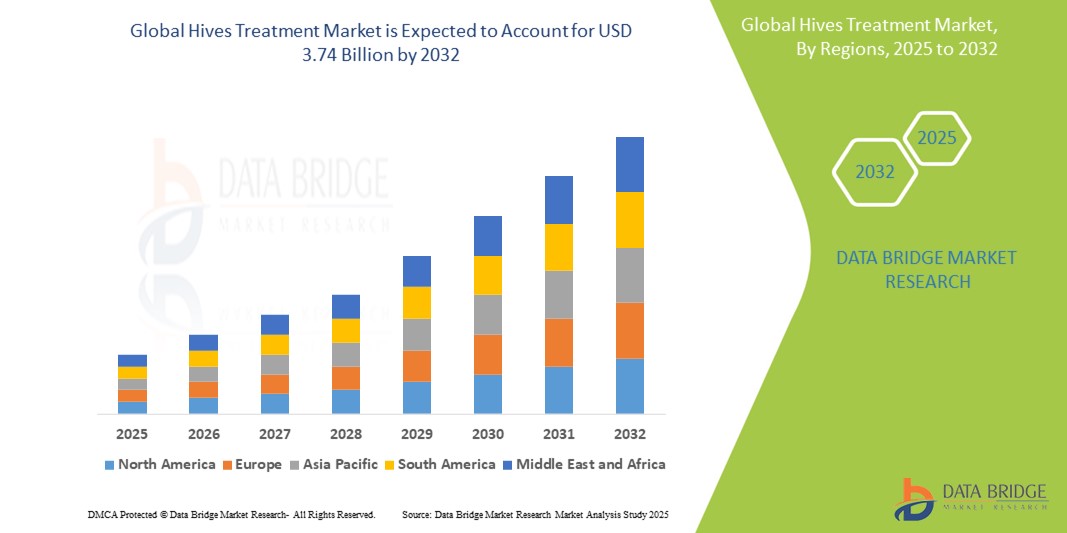
Hives Treatment Market Size
- The global Hives Treatment market size was valued at USD 2.22 billion in 2024 and is expected to reach USD 3.74 billion by 2032, at a CAGR of 6.73% during the forecast period (2025–2032)
- The market growth is primarily driven by the rising prevalence of urticaria (hives), increasing awareness about dermatological disorders, and expanding access to advanced treatment options across both developed and emerging economies
- Additionally, growing demand for fast-acting, safe, and effective therapies—particularly antihistamines, H2 antagonists, and other supportive medications—is propelling market expansion. The emergence of oral and injectable treatment forms, combined with digital health platforms for dermatology consultations, is further enhancing patient access and compliance. These converging trends are expected to significantly boost the global demand for hives treatment over the coming decade
Hives Treatment Market Analysis
- Hives treatment encompasses a wide range of therapeutic options designed to relieve symptoms such as itching, redness, and swelling caused by acute or chronic urticaria. Treatment approaches include oral antihistamines, H2 antagonists, and other medications, offering both immediate relief and long-term management, depending on the severity and underlying cause
- The rising demand for hives treatment is largely driven by increasing awareness of dermatological conditions, the growing prevalence of allergic reactions and autoimmune disorders, and the availability of effective over-the-counter and prescription medications. A surge in teledermatology platforms is also making treatment more accessible, particularly in remote and underserved areas
- North America dominates the hives treatment market with the largest revenue share of 38.4% in 2025, attributed to the high prevalence of chronic urticaria, advanced healthcare infrastructure, and a strong presence of pharmaceutical leaders focusing on dermatology. The U.S. leads regional growth due to continuous innovation in drug development and strong patient awareness initiatives
- Asia-Pacific is projected to be the fastest-growing region during the forecast period, fueled by a growing patient pool, increased access to healthcare, and rising healthcare expenditures across countries like India and China
- The oral segment is expected to dominate the hives treatment market with a market share of 57.6% in 2025, owing to its ease of administration, patient preference, and widespread availability of antihistamines and other supportive oral drugs in both prescription and non-prescription formats
Report Scope and Hives Treatment Market Segmentation
|
Attributes |
Hives Treatment Key Market Insights |
|
Segments Covered |
|
|
Countries Covered |
North America
Europe
Asia-Pacific
Middle East and Africa
South America
|
|
Key Market Players |
|
|
Market Opportunities |
|
|
Value Added Data Infosets |
In addition to the insights on market scenarios such as market value, growth rate, segmentation, geographical coverage, and major players, the market reports curated by the Data Bridge Market Research also include in-depth expert analysis, pricing analysis, brand share analysis, consumer survey, demography analysis, supply chain analysis, value chain analysis, raw material/consumables overview, vendor selection criteria, PESTLE Analysis, Porter Analysis, and regulatory framework. |
Hives Treatment Market Trends
“Rising Shift Toward Biologic Therapies and Personalized Dermatological Care”
- A significant and accelerating trend in the global hives treatment market is the increasing shift toward biologic therapies and targeted treatments, especially for patients with chronic spontaneous urticaria (CSU) who are unresponsive to traditional antihistamines. These biologics offer a more personalized and immune-targeted approach, improving both treatment outcomes and patient quality of life
- For instance, omalizumab, an anti-IgE monoclonal antibody, has gained traction as a second-line therapy for chronic hives. Companies like Novartis are leading the way in biologic drug development for dermatological conditions, with expanding clinical trials for newer indications and patient subgroups
- Biologics also offer the advantage of fewer side effects, longer duration of action, and targeted mechanisms, making them ideal for long-term management of chronic cases. Additionally, ongoing research into new pathways like interleukin inhibition is paving the way for the next generation of therapies
- The trend toward personalized medicine in dermatology, supported by innovations in diagnostic tools and biomarkers, is allowing clinicians to tailor hives treatments more precisely based on patient profiles. With the support of telehealth platforms, dermatologists can now track patient progress remotely and adjust regimens accordingly, further improving treatment adherence
- As pharmaceutical and biotech firms invest heavily in R&D for biologics, there is an increasing focus on bringing cost-effective biosimilars to emerging markets, making high-end therapy more accessible globally. These developments are fundamentally reshaping how chronic urticaria is managed across both developed and developing regions
- The demand for targeted, effective, and long-acting treatment options is rapidly growing as patients and healthcare providers seek better control over recurring symptoms and reduced reliance on daily antihistamines
Hives Treatment Market Dynamics
Driver
“Increasing Global Incidence of Allergic Disorders and Urticaria”
- The rising prevalence of allergic conditions and autoimmune skin diseases is a major driver fueling demand in the global hives treatment market. Environmental pollution, climate change, stress, and changing dietary habits are all contributing factors that are exacerbating skin hypersensitivity and allergic reactions
- For instance, according to the World Allergy Organization, chronic urticaria affects approximately 1% of the global population, with a higher burden among females and middle-aged adults. This increasing patient pool presents substantial growth opportunities for treatment providers
- With growing awareness, more patients are seeking timely medical intervention, especially in urban settings where access to dermatologists and over-the-counter options is increasing. Pharmaceutical companies are responding with faster-acting antihistamines, combination therapies, and long-term care solutions tailored to individual needs
- Moreover, retail and online pharmacy expansion, especially in emerging economies, is making hives treatment more accessible. The convenience of oral medications and recent approvals of injectable biologics are helping to broaden the treatment landscape
- The inclusion of hives treatment in national health insurance programs in countries like the U.K., Germany, and Canada is also aiding market penetration and expanding patient reach
Restraint/Challenge
“Underdiagnosis and Treatment Gaps in Chronic Urticaria Management”
- Despite rising prevalence, the global hives treatment market faces a major challenge in the underdiagnosis and mismanagement of chronic urticaria, particularly in low- and middle-income countries. Many cases are mistaken for temporary allergic reactions and not treated adequately, leading to prolonged patient discomfort and decreased quality of life
- A lack of specialist access, especially in rural areas, and limited awareness among general practitioners about chronic urticaria treatment guidelines are contributing to these gaps
- Furthermore, cost-related barriers to advanced therapies such as biologics continue to restrict access, especially in markets where healthcare spending is limited or out-of-pocket
- For instance, biologics like omalizumab are priced at a premium, making them inaccessible for many patients in regions without reimbursement policies. While generics and antihistamines dominate the current treatment landscape, they often fall short for chronic or severe cases
- Inconsistent treatment adherence and self-medication with over-the-counter antihistamines also pose challenges, often leading to delayed specialist intervention and poor outcomes
- To overcome these issues, stakeholders must invest in educational campaigns, training for primary care providers, and greater insurance coverage for chronic hives treatments. Pharmaceutical firms must also focus on the development of affordable biosimilars and generics, especially in high-burden countries.
Hives Treatment Market Scope
The market is segmented on the basis of type, drug class, mode of administration, distribution channel, and end user.
- By Type
On the basis of type, the hives treatment market is segmented into acute urticaria and chronic urticaria. The acute urticaria segment held the largest market revenue share of 62.7% in 2025, primarily due to the higher incidence of short-term allergic reactions triggered by infections, medications, or environmental allergens. The relatively quick onset and short duration of acute hives often result in increased demand for immediate-relief therapies like over-the-counter antihistamines. This segment benefits from strong consumer reliance on readily accessible oral antihistamines and minimal need for specialist consultations.
The chronic urticaria segment is anticipated to witness the fastest CAGR of 7.8% from 2025 to 2032, driven by the increasing diagnosis of autoimmune and idiopathic forms of hives that require long-term treatment. The growing awareness among patients and clinicians, coupled with rising demand for biologic therapies like omalizumab, is expected to drive this segment forward, particularly in North America and Europe, where advanced healthcare infrastructure and higher diagnosis rates support sustained growth.
By Drug Class
On the basis of drug class, the market is segmented into antihistamines, H2 antagonists, tricyclic antidepressants, and others. The antihistamines segment is projected to dominate the market in 2025, owing to their widespread availability, affordability, and effectiveness in relieving common symptoms such as itching and swelling. Both first- and second-generation antihistamines are used extensively for treating acute and mild chronic urticaria.
The tricyclic antidepressants segment is expected to witness the fastest CAGR during the forecast period, as certain medications like doxepin have shown effectiveness in severe chronic cases unresponsive to standard therapy. Their dual action in managing hives and anxiety-related conditions makes them a niche but expanding area in treatment protocols.
• By Mode of Administration
On the basis of mode of administration, the hives treatment market is segmented into injectable, oral, and others. The oral segment accounted for the largest revenue share in 2025, due to patient preference, ease of self-administration, and the availability of a wide range of oral antihistamines and adjunct therapies.
The injectable segment is expected to witness the fastest growth rate during the forecast period, driven by increasing use of biologic therapies such as omalizumab for chronic and refractory cases. The rise in hospital-administered and home-based biologic injections also supports this segment’s expansion.
• By Distribution Channel
On the basis of distribution channel, the market is segmented into hospital pharmacies, retail pharmacies, and online pharmacies. Retail pharmacies held the largest market share in 2025 due to the over-the-counter availability of antihistamines and convenience for patients managing mild to moderate symptoms.
The online pharmacies segment is expected to experience the fastest growth during the forecast period, fueled by the expansion of e-commerce platforms, telehealth services, and increasing consumer preference for doorstep delivery and virtual prescriptions—especially in Asia-Pacific and North America.
• By End User
On the basis of end user, the hives treatment market is segmented into hospitals, homecare, specialty clinics, and others. Hospitals accounted for the largest market share in 2025, owing to the higher volume of patients with severe or chronic cases requiring professional intervention, biologic injections, and diagnostic evaluations.
The homecare segment is expected to grow at the fastest CAGR from 2025 to 2032, as more patients turn to long-term self-management of chronic urticaria using oral medications and at-home biologic therapies. Increasing awareness, better disease monitoring tools, and remote consultations are driving this trend across both developed and emerging economies.
Hives Treatment Market Regional Analysis
- North America dominates the hives treatment market with the largest revenue share of 38.4% in 2025, driven by a high prevalence of allergic disorders, advanced healthcare infrastructure, and widespread availability of both over-the-counter and prescription therapies
- Consumers and healthcare providers in the region prioritize effective, fast-acting treatment options, with strong adoption of second-generation antihistamines, injectable biologics, and combination therapies for chronic urticaria
- The market growth is further supported by high health awareness, strong insurance coverage, and increased dermatology consultations through telehealth platforms, making hives treatment more accessible and patient-centered across both urban and rural populations
U.S. Hives Treatment Market Insight
The U.S. hives treatment market captured the largest revenue share of 79% within North America in 2025, driven by high disease awareness, strong healthcare infrastructure, and the widespread availability of over-the-counter and prescription therapies. The country sees a high diagnosis rate for both acute and chronic urticaria, with increasing demand for biologic therapies like omalizumab for treatment-resistant cases. The growing use of teledermatology and direct-to-consumer online pharmacy platforms further supports market growth, offering convenience and timely access to effective treatment.
Europe Hives Treatment Market Insight
The European hives treatment market is projected to expand at a substantial CAGR throughout the forecast period, supported by growing awareness of skin allergies, favorable reimbursement policies, and the rising prevalence of chronic urticaria. Countries across Western Europe are increasingly adopting personalized treatment protocols, including second-line therapies and biologics for persistent cases. The region also benefits from strong dermatology networks and widespread access to specialist care, particularly in Germany, France, and Italy.
U.K. Hives Treatment Market Insight
The U.K. hives treatment market is anticipated to grow at a noteworthy CAGR during the forecast period, driven by the increasing burden of allergic skin diseases and growing demand for long-term management solutions. National healthcare guidelines promoting early diagnosis and stepwise treatment protocols are improving disease outcomes. Moreover, NHS initiatives supporting virtual consultations and prescription services are helping expand access to both antihistamines and advanced biologic options.
Germany Hives Treatment Market Insight
The German hives treatment market is expected to expand at a considerable CAGR, fueled by rising healthcare expenditures, high rates of chronic urticaria diagnosis, and strong government support for biologic therapies. Germany’s emphasis on innovative healthcare and patient-centered care encourages early intervention and compliance with prescribed regimens. Increasing demand for dermatologist-recommended therapies and high insurance coverage for chronic conditions contribute to strong growth potential in the market.
Asia-Pacific Hives Treatment Market Insight
The Asia-Pacific hives treatment market is poised to grow at the fastest CAGR of over 7.5% in 2025, driven by increasing urbanization, growing patient awareness, and expanded access to healthcare services in countries such as China, India, and Japan. Rising allergic responses due to pollution and environmental triggers are escalating demand for rapid-relief therapies. Government efforts to strengthen dermatological care, especially through telemedicine and affordable generics, are expanding reach across rural and semi-urban populations.
Japan Hives Treatment Market Insight
The Japan hives treatment market is gaining momentum due to its aging population, highly developed healthcare infrastructure, and growing prevalence of chronic dermatological conditions. Increased awareness of autoimmune-related urticaria and greater access to specialists are encouraging the use of biologic therapies. Japan's progressive health insurance system supports early adoption of innovative drugs, while its focus on technological healthcare solutions is boosting home-based management of chronic urticaria.
China Hives Treatment Market Insight
The China hives treatment market accounted for the largest market revenue share in Asia Pacific in 2025, supported by rapid urbanization, rising disposable incomes, and an expanding healthcare system. China is witnessing a surge in allergic skin conditions due to environmental factors and lifestyle changes. Growing consumer preference for branded oral antihistamines and the expansion of domestic pharmaceutical companies offering cost-effective therapies are key drivers. Increased adoption of online pharmacies and government-backed health initiatives are also contributing to market expansion.
Hives Treatment Market Share
The Hives Treatment industry is primarily led by well-established companies, including:
- Novartis AG (Switzerland)
- F. Hoffmann-La Roche Ltd (Switzerland)
- Elorac (U.S.)
- GlaxoSmithKline PLC (U.K.)
- CELLTRION INC (South Korea)
- Teva Pharmaceutical Industries Ltd (Israel)
- LANNETT (U.S.)
- WOCKHARDT (India)
- Amneal Pharmaceuticals LLC (U.S.)
- Aurobindo Pharma (India)
- Sun Pharmaceutical Industries Ltd (India)
- Zydus Cadila (India)
- Dr. Reddy’s Laboratories Ltd (India)
- Torrent Pharmaceuticals Ltd (India)
- Breckenridge Pharmaceutical, Inc (U.S.)

- Interactive Data Analysis Dashboard
- Company Analysis Dashboard for high growth potential opportunities
- Research Analyst Access for customization & queries
- Competitor Analysis with Interactive dashboard
- Latest News, Updates & Trend analysis
- Harness the Power of Benchmark Analysis for Comprehensive Competitor Tracking
Data collection and base year analysis are done using data collection modules with large sample sizes. The stage includes obtaining market information or related data through various sources and strategies. It includes examining and planning all the data acquired from the past in advance. It likewise envelops the examination of information inconsistencies seen across different information sources. The market data is analysed and estimated using market statistical and coherent models. Also, market share analysis and key trend analysis are the major success factors in the market report. To know more, please request an analyst call or drop down your inquiry.
The key research methodology used by DBMR research team is data triangulation which involves data mining, analysis of the impact of data variables on the market and primary (industry expert) validation. Data models include Vendor Positioning Grid, Market Time Line Analysis, Market Overview and Guide, Company Positioning Grid, Patent Analysis, Pricing Analysis, Company Market Share Analysis, Standards of Measurement, Global versus Regional and Vendor Share Analysis. To know more about the research methodology, drop in an inquiry to speak to our industry experts.
Data Bridge Market Research is a leader in advanced formative research. We take pride in servicing our existing and new customers with data and analysis that match and suits their goal. The report can be customized to include price trend analysis of target brands understanding the market for additional countries (ask for the list of countries), clinical trial results data, literature review, refurbished market and product base analysis. Market analysis of target competitors can be analyzed from technology-based analysis to market portfolio strategies. We can add as many competitors that you require data about in the format and data style you are looking for. Our team of analysts can also provide you data in crude raw excel files pivot tables (Fact book) or can assist you in creating presentations from the data sets available in the report.












