


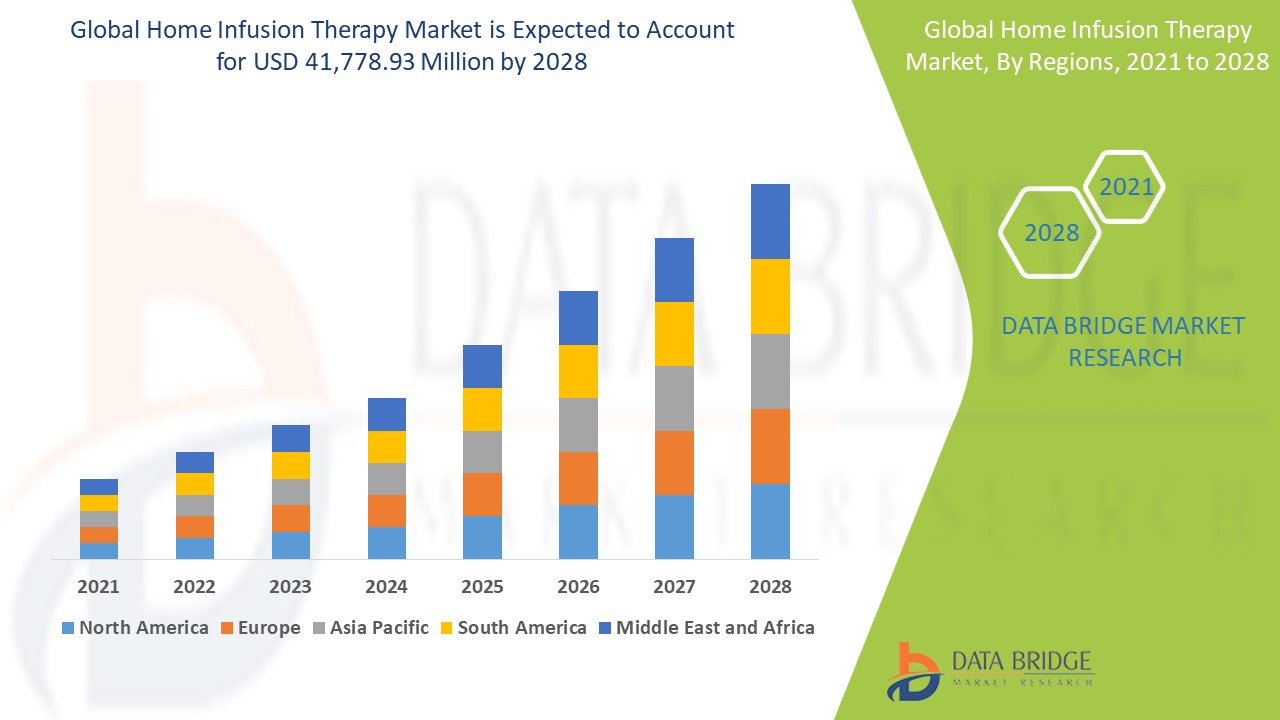
Home Infusion Therapy Market Analysis
The home infusion therapy market has seen significant growth in recent years, driven by the increasing preference for in-home care and advancements in medical technologies. This trend is largely fuelled by patients seeking convenience, reduced healthcare costs, and personalized treatment plans. Home infusion therapy allows patients to receive treatments for various conditions, such as infections, chronic illnesses, and pain management, in the comfort of their homes instead of being hospitalized. This shift is benefiting both patients and healthcare providers, as it helps alleviate the burden on hospitals and healthcare facilities.
The market is diverse, encompassing a wide range of products and services, including infusion pumps, nutritional products, and various medications. As more people gain access to advanced home care services, the demand for home infusion therapy continues to rise. In addition, the market is expanding with the development of more sophisticated equipment, making treatments safer and more efficient for patients and healthcare professionals.
The increasing number of elderly individuals, coupled with the growing prevalence of chronic diseases, has further contributed to the rise in demand for home infusion services. As the healthcare industry continues to evolve, the home infusion therapy market is expected to maintain its growth trajectory, providing patients with greater access to high-quality care at home.
Home Infusion Therapy Market Size
The home infusion therapy market size was valued at USD 28.25 billion in 2024 and is projected to reach USD 61.77 billion by 2032, with a CAGR of 10.27% during the forecast period of 2025 to 2032. In addition to the insights on market scenarios such as market value, growth rate, segmentation, geographical coverage, and major players, the market reports curated by the Data Bridge Market Research also include depth expert analysis, patient epidemiology, pipeline analysis, pricing analysis, and regulatory framework.
Home Infusion Therapy Market Trends
"Increasing Adoption of Advanced Infusion Devices”
The increasing adoption of advanced infusion devices is a key trend in the home infusion therapy market. These devices, including infusion pumps and portable infusion systems, have become more sophisticated and user-friendly, making home-based treatments more accessible and safer for patients. Infusion pumps, in particular, have seen advancements in both technology and design, making them more compact, accurate, and easier to operate. These pumps allow for precise delivery of medications, including antibiotics, pain management drugs, and nutrients, ensuring patients receive the correct dosage over a set period.
The newer infusion devices also come with enhanced safety features, such as alarms for potential malfunctions or interruptions, and are often equipped with monitoring systems that allow healthcare providers to track patient progress remotely. This remote monitoring capability helps clinicians to make real-time adjustments to the treatment plan without the need for the patient to visit a healthcare facility, improving both convenience and outcomes.
Furthermore, portable infusion devices have made it easier for patients to receive treatment while maintaining their daily routines. These devices are often smaller and more lightweight, allowing patients to move around freely while undergoing therapy. The continuous development and availability of these advanced devices are playing a crucial role in the growing preference for home infusion therapy, offering more efficient, reliable, and comfortable care at home.
Report Scope Home Infusion Therapy Market Segmentation
|
Attributes |
Home Infusion Therapy Key Market Insights |
|
Segments Covered |
|
|
Countries Covered |
U.S., Canada and Mexico in North America, Germany, France, U.K., Netherlands, Switzerland, Belgium, Russia, Italy, Spain, Turkey, Rest of Europe in Europe, China, Japan, India, South Korea, Singapore, Malaysia, Australia, Thailand, Indonesia, Philippines, Rest of Asia-Pacific (APAC) in the Asia-Pacific (APAC), Saudi Arabia, U.A.E, South Africa, Egypt, Israel, Rest of Middle East and Africa (MEA) as a part of Middle East and Africa (MEA), Brazil, Argentina and Rest of South America as part of South America |
|
Key Market Players |
BD (U.S.), Lilly (U.S.), Baxter (U.S.), B. Braun SE (Germany), Fresenius Kabi AG (Germany), ICU Medical, Inc. (U.S.), JMS Co. Ltd. (U.S.), Smiths Group plc (U.K.), Terumo Corporation (Japan), COSMED srl (Italy), Optum, Inc. (U.S.), Option Care Health Inc. (U.S.), Moog Inc. (U.S.), CareCentrix, Inc. (U.S.), Lincare Holdings Inc. (U.S.), Nipro Europe Group Companies (Japan), NewIV Medical Corp. (U.S.) |
|
Market Opportunities |
|
|
Value Added Data Infosets |
In addition to the insights on market scenarios such as market value, growth rate, segmentation, geographical coverage, and major players, the market reports curated by the Data Bridge Market Research also include depth expert analysis, patient epidemiology, pipeline analysis, pricing analysis, and regulatory framework. |
Home Infusion Therapy Market Definition
Home infusion therapy refers to the administration of intravenous (IV) medications, fluids, or nutrients at a patient's home instead of a hospital or healthcare facility. This type of therapy is typically used for individuals who need long-term or continuous treatment for various medical conditions, such as infections, chronic illnesses, or pain management. It involves using specialized equipment such as infusion pumps, IV lines, and other medical devices to deliver prescribed treatments directly into the bloodstream.
Home Infusion Therapy Market Dynamics
Drivers
- Increasing Demand for Home Healthcare Services
The growing demand for home healthcare services is one of the primary drivers of the home infusion therapy market. As healthcare costs continue to rise, patients and healthcare providers are seeking more affordable alternatives to hospital stays. Home infusion therapy allows patients to receive necessary treatments in a more cost-effective and comfortable environment, avoiding the higher costs associated with inpatient care. The convenience of receiving medical treatments at home, along with the desire for personalized care, is leading more individuals to opt for home-based therapy. This trend is particularly prominent among elderly individuals and those with chronic conditions who require ongoing treatments, making home infusion therapy an increasingly popular choice.
- Advancements in Medical Technology
Advancements in infusion devices and medical technologies are significantly driving the growth of the home infusion therapy market. Modern infusion pumps are now more portable, user-friendly, and accurate, making them ideal for home use. These devices allow for precise medication delivery, ensuring patient safety and treatment efficacy. In addition, with advancements in remote monitoring technologies, healthcare providers can track patient progress from a distance, making it easier to manage treatments at home. The improved safety features, such as alarms for malfunctioning or dosage errors, have also contributed to the growing trust in home infusion therapy. These technological advancements make it more feasible for patients to receive complex treatments at home rather than in a hospital setting.
Opportunities
- Rising Prevalence of Chronic Diseases
As the global population ages, there is a rising prevalence of chronic diseases such as diabetes, cardiovascular diseases, and autoimmune disorders, which require long-term treatment regimens. Home infusion therapy offers an opportunity to manage these conditions effectively by delivering continuous or intermittent treatments in the comfort of a patient's home. Chronic disease management often involves regular infusions, and the convenience of receiving therapy at home rather than in a hospital or clinic can improve patient compliance and outcomes. This growing need for ongoing care presents a significant opportunity for the home infusion therapy market to expand its reach and cater to a broader patient base.
- Increasing Focus on Personalized and Convenient Care
There is a growing focus on patient-centred care, with an emphasis on providing more personalized and convenient healthcare services. As patients increasingly seek individualized treatment plans that align with their lifestyles, home infusion therapy offers a valuable solution. Home infusion allows for tailored treatment regimens that consider the patient's specific medical needs, preferences, and daily routines. This flexibility, combined with the ability to monitor and adjust treatment plans remotely, presents an opportunity for the home infusion market to provide more personalized care. Moreover, healthcare providers can offer enhanced support to patients at home, leading to better patient satisfaction and improved clinical outcomes.
Restraints/Challenges
- Regulatory and Reimbursement Challenges
A key restraint in the home infusion therapy market is the regulatory and reimbursement challenges that healthcare providers and patients often face. The regulatory framework for home infusion therapy can be complex, with varying standards and guidelines across different countries or regions. This makes it difficult for companies to standardize their products and services. In addition, reimbursement policies for home-based therapies are often more restrictive compared to hospital-based treatments. In many cases, insurance providers may not fully cover home infusion services or may limit the types of therapies that can be administered at home. This lack of comprehensive reimbursement can pose a barrier to broader adoption and market growth.
- Lack of Skilled Workforce for Home Care
A significant challenge in the home infusion therapy market is the shortage of skilled healthcare professionals trained to administer complex infusions in a home setting. Home infusion therapy requires a high level of technical expertise, particularly when it comes to managing infusion pumps, monitoring treatment progress, and handling potential complications. The shortage of trained professionals to visit patients' homes and oversee the therapy can limit the growth of the market. Moreover, the need for continuous education and training for healthcare workers to manage home infusion cases adds another layer of complexity for service providers. Ensuring a skilled and sufficient workforce to meet the growing demand for home infusion services remains a critical challenge for the industry.
This market report provides details of new recent developments, trade regulations, import-export analysis, production analysis, value chain optimization, market share, impact of domestic and localized market players, analyses opportunities in terms of emerging revenue pockets, changes in market regulations, strategic market growth analysis, market size, category market growths, application niches and dominance, product approvals, product launches, geographic expansions, technological innovations in the market. To gain more info on the market contact Data Bridge Market Research for an Analyst Brief, our team will help you take an informed market decision to achieve market growth.
Home Infusion Therapy Market Scope
The market is segmented on the basis of product, application, and route of administration growth amongst these segments will help you analyze meagre growth segments in the industries and provide the users with a valuable market overview and market insights to help them make strategic decisions for identifying core market applications.
Product
- Infusion Pumps
- Elastomeric
- Electromechanical
- Gravity
- Others
- Intravenous Sets
- IV Cannulas
- Needleless Connectors
Application
- Anti-Infective
- Endocrinology
- Diabetes
- Others
- Hydration Therapy
- Athletes
- Others
- Chemotherapy
- Enteral Nutrition
- Parenteral Nutrition
- Specialty Pharmaceuticals
- Others
Route of Administration
- Intramuscular
- Subcutaneously
- Epidural
Home Infusion Therapy Market Regional Analysis
The market is analysed and market size insights and trends are provided by country, product, application, and route of administration as referenced above.
The countries covered in the market report are U.S., Canada, Mexico in North America, Germany, Sweden, Poland, Denmark, Italy, U.K., France, Spain, Netherland, Belgium, Switzerland, Turkey, Russia, Rest of Europe in Europe, Japan, China, India, South Korea, New Zealand, Vietnam, Australia, Singapore, Malaysia, Thailand, Indonesia, Philippines, Rest of Asia-Pacific (APAC) in Asia-Pacific (APAC), Brazil, Argentina, Rest of South America as a part of South America, U.A.E, Saudi Arabia, Oman, Qatar, Kuwait, South Africa, Rest of Middle East and Africa (MEA) as a part of Middle East and Africa (MEA).
North America dominates the home infusion therapy market due to several factors, including the growing rate of research and development activities, an increasing need for long-term therapy for patients with chronic conditions, and the adoption of advanced infusion pump technologies. In addition, there is a significant shift from acute care settings to home care due to the cost-effectiveness, improved patient mobility, and the growing preference for treatments that can be administered at home. This shift has been further supported by the development of alternative healthcare settings and the expansion of home infusion services, which continue to enhance accessibility and convenience for patients. The well-established healthcare infrastructure, coupled with a strong reimbursement framework in North America, also contributes to the region's dominance.
Asia-Pacific is the fastest growing region in the Home Infusion Therapy market due to the rising prevalence of diabetes and other chronic conditions in the region. In addition, increasing patient awareness of the benefits of home infusion therapy, such as reduced hospital visits and improved treatment flexibility, is encouraging more people to choose home-based treatments over traditional in-hospital procedures. As healthcare systems in Asia-Pacific evolve and improve access to home care, the demand for home infusion therapy is expected to grow rapidly.
The country section of the report also provides individual market impacting factors and changes in regulation in the market domestically that impacts the current and future trends of the market. Data points such as down-stream and upstream value chain analysis, technical trends and porter's five forces analysis, case studies are some of the pointers used to forecast the market scenario for individual countries. Also, the presence and availability of global brands and their challenges faced due to large or scarce competition from local and domestic brands, impact of domestic tariffs and trade routes are considered while providing forecast analysis of the country data.
Home Infusion Therapy Market Share
The market competitive landscape provides details by competitor. Details included are company overview, company financials, revenue generated, market potential, investment in research and development, new market initiatives, global presence, production sites and facilities, production capacities, company strengths and weaknesses, product launch, product width and breadth, application dominance. The above data points provided are only related to the companies' focus related to market.
Home Infusion Therapy Market Leaders Operating in the Market Are:
- BD (U.S.)
- Lilly (U.S.)
- Baxter (U.S.)
- B. Braun SE (Germany)
- Fresenius Kabi AG (Germany)
- ICU Medical, Inc. (U.S.)
- JMS Co.Ltd. (U.S.)
- Smiths Group plc (U.K.)
- Terumo Corporation (Japan)
- COSMED srl (Italy)
- Optum, Inc. (U.S.)
- Option Care Health Inc. (U.S.)
- Moog Inc. (U.S.)
- CareCentrix, Inc. (U.S.)
- Lincare Holdings Inc. (U.S.)
- Nipro Europe Group Companies (Japan)
- NewIV Medical Corp. (U.S.)
Latest Developments in Home Infusion Therapy Market
- In June 2023, Baxter, a global healthcare company, launched the Progressa Next-Gen ICU Bed, a new development aimed at addressing the complex needs of critical care. This innovative ICU bed is designed to enhance patient care by improving comfort, safety, and mobility. The Progressa bed features advanced technology that supports better patient positioning, minimizes pressure injuries, and assists healthcare professionals in managing critically ill patients more efficiently. The bed's design also enables easier access to patients for medical procedures, which can improve treatment outcomes and reduce the burden on healthcare providers. Ultimately, it is expected to enhance the overall ICU experience for both patients and healthcare teams, contributing to better care and faster recovery
- In May 2023, Option Care Health, a leader in home and alternate site infusion services, announced its merger with Amedisys, a leading provider of home health care services. This strategic combination aims to create a leading provider of integrated home-based healthcare solutions. The merger will enhance the companies' ability to offer comprehensive care, improving patient outcomes while reducing healthcare costs. By combining their resources and expertise, Option Care Health and Amedisys plan to expand their reach, providing more patients with access to high-quality home infusion and home health care services. This collaboration is expected to drive growth, improve operational efficiencies, and better address the growing demand for home-based care
- In March 2023, Fresenius Kabi, a global healthcare company, was awarded a technology breakthrough agreement with Premier Inc., a leading healthcare improvement company. This agreement focuses on enhancing the adoption of innovative healthcare technologies in hospitals and healthcare facilities. Through this collaboration, Fresenius Kabi will provide advanced medical devices and infusion technologies, improving efficiency and patient outcomes. The partnership is expected to streamline supply chains and optimize the delivery of care, benefiting both healthcare providers and patients by reducing costs and improving treatment precision. The agreement underscores Fresenius Kabi’s commitment to advancing patient care through innovative technologies and strategic partnerships
- In January 2022, ICU Medical, a global leader in infusion therapy, completed the acquisition of Smiths Medical, a division of Smiths Group plc. This strategic acquisition aims to expand ICU Medical's product portfolio and strengthen its position in the infusion and critical care markets. By integrating Smiths Medical’s extensive range of medical devices and infusion systems, ICU Medical will enhance its ability to provide innovative and high-quality solutions to healthcare providers worldwide. This merger is expected to improve patient care by offering a broader range of advanced products, streamline operational efficiencies, and drive growth in the global healthcare market. The acquisition also positions ICU Medical as a more comprehensive provider of critical care solutions, benefiting both patients and healthcare professionals

- Interactive Data Analysis Dashboard
- Company Analysis Dashboard for high growth potential opportunities
- Research Analyst Access for customization & queries
- Competitor Analysis with Interactive dashboard
- Latest News, Updates & Trend analysis
- Harness the Power of Benchmark Analysis for Comprehensive Competitor Tracking
Table of Content
1 INTRODUCTION
1.1 OBJECTIVES OF THE STUDY
1.2 MARKET DEFINITION
1.3 OVERVIEW OF GLOBAL HOME INFUSION THERAPY MARKET
1.4 CURRENCY AND PRICING
1.5 LIMITATION
1.6 MARKETS COVERED
2 MARKET SEGMENTATION
2.1 KEY TAKEAWAYS
2.2 ARRIVING AT THE GLOBAL HOME INFUSION THERAPY MARKET SIZE
2.2.1 VENDOR POSITIONING GRID
2.2.2 TECHNOLOGY LIFE LINE CURVE
2.2.3 TRIPOD DATA VALIDATION MODEL
2.2.4 MARKET GUIDE
2.2.5 MULTIVARIATE MODELLING
2.2.6 TOP TO BOTTOM ANALYSIS
2.2.7 CHALLENGE MATRIX
2.2.8 APPLICATION COVERAGE GRID
2.2.9 STANDARDS OF MEASUREMENT
2.2.10 VENDOR SHARE ANALYSIS
2.2.11 DATA POINTS FROM KEY PRIMARY INTERVIEWS
2.2.12 DATA POINTS FROM KEY SECONDARY DATABASES
2.3 GLOBAL HOME INFUSION THERAPY MARKET: RESEARCH SNAPSHOT
2.4 ASSUMPTIONS
3 MARKET OVERVIEW
3.1 DRIVERS
3.2 RESTRAINTS
3.3 OPPORTUNITIES
3.4 CHALLENGES
4 EXECUTIVE SUMMARY
5 PREMIUM INSIGHTS
6 INDUSTRY INSIGHTS
7 REGULATORY FRAMWORK
8 IMPACT OF COVID-19 PANDEMIC ON THE MARKET
8.1 PRICE IMPACT
8.2 IMPACT ON DEMAND
8.3 IMPACT ON SUPPLY CHAIN
8.4 STRATEGIC DECISION FOR MANUFACTURER/SERVICE PROVIDER
8.5 CONCLUSION
9 GLOBAL HOME INFUSION THERAPY MARKET, BY PRODUCT
9.1 OVERVIEW
9.2 INFUSION PUMPS
9.2.1 BY FUNCTION
9.2.1.1. SPECIALTY PUMPS
9.2.1.1.1. PATIENT CONTROLLED ANALGESICS (PCA) AND VOLUMETRIC PUMPS
9.2.1.1.2. ENTERAL INFUSION PUMPS
9.2.1.1.3. INSULIN INFUSION PUMPS
9.2.1.2. TRADITIONAL INFUSION PUMPS
9.2.1.2.1. SYRINGE INFUSION PUMPS
9.2.1.2.2. DISPOSABLE PUMPS
9.2.1.2.3. LARGE VOLUME PUMPS
9.2.1.2.4. ELASTOMERIC PUMPS
9.2.1.3. SMART PUMPS
9.2.2 BY MOBILITY
9.2.2.1. AMBULATORY INFUSION PUMPS
9.2.2.2. STATIONARY INFUSION PUMPS
9.2.3 BY INFUSION CHANNELS
9.2.3.1. 2 INFUSION CHANNELS
9.2.3.2. 4 INFUSION CHANNELS
9.2.3.3. MULTIPLE INFUSION CHANNELS
9.2.3.4. OTHERS
9.3 INTRAVENOUS SETS
9.3.1 FILTERED IV SETS
9.3.2 VENTED IV SETS
9.3.3 NON-VENTED IV SETS
9.3.4 GRAVITY TUBING
9.4 IV CANNULAS
9.4.1 BY TYPE
9.4.1.1. PEN-LIKE MODEL
9.4.1.2. WINGS MODEL
9.4.1.3. INJECTION PORT MODEL
9.4.1.4. Y-TYPE MODEL
9.4.2 IV THERAPY
9.4.2.1. CENTRAL IV CANNULA
9.4.2.2. MID-LINE IV CANNULA
9.4.2.3. PERIPHERAL IV CANNULA
9.5 NEEDLELESS CONNECTORS
9.5.1 NEUTRAL FLUID DISPLACEMENT
9.5.2 POSITIVE FLUID DISPLACEMENT
9.5.3 NEGATIVE FLUID DISPLACEMENT
10 GLOBAL HOME INFUSION THERAPY MARKET, BY AGE GROUP
10.1 OVERVIEW
10.2 PEDIATRICS
10.3 ADULTS
11 GLOBAL HOME INFUSION THERAPY MARKET, BY APPLICATION
11.1 OVERVIEW
11.2 ANTI-INFECTIVE
11.3 ENDOCRINOLOGY
11.3.1 DIABETES
11.3.2 OTHERS
11.4 HYDRATION THERAPY
11.4.1 ATHLETES
11.4.2 OTHERS
11.5 CHEMOTHERAPY
11.6 ENTERAL NUTRITION
11.7 PARENTERAL NUTRITION
11.8 SPECIALTY PHARMACEUTICALS
11.9 IMMUNOGLOBULIN THERAPY
11.1 OTHERS
12 GLOBAL HOME INFUSION THERAPY MARKET, BY DISTRIBUTION CHANNEL
12.1 OVERVIEW
12.2 DIRECT TENDERS
12.3 RETAILS SALES
12.4 THIRD PARTY DISTRIBUTION
13 GLOBAL HOME INFUSION THERAPY MARKET, BY COUNTRY
13.1 GLOBAL HOME INFUSION THERAPY MARKET (ALL SEGMENTATION PROVIDED ABOVE IS REPRESENTED IN THIS CHAPTER BY COUNTRY)
13.1.1 NORTH AMERICA
13.1.1.1. U.S.
13.1.1.2. CANADA
13.1.1.3. MEXICO
13.1.2 EUROPE
13.1.2.1. GERMANY
13.1.2.2. FRANCE
13.1.2.3. U.K.
13.1.2.4. ITALY
13.1.2.5. SPAIN
13.1.2.6. RUSSIA
13.1.2.7. TURKEY
13.1.2.8. BELGIUM
13.1.2.9. NETHERLANDS
13.1.2.10. SWITZERLAND
13.1.2.11. REST OF EUROPE
13.1.3 ASIA-PACIFIC
13.1.3.1. JAPAN
13.1.3.2. CHINA
13.1.3.3. SOUTH KOREA
13.1.3.4. INDIA
13.1.3.5. AUSTRALIA
13.1.3.6. SINGAPORE
13.1.3.7. THAILAND
13.1.3.8. MALAYSIA
13.1.3.9. INDONESIA
13.1.3.10. PHILIPPINES
13.1.3.11. REST OF ASIA-PACIFIC
13.1.4 SOUTH AMERICA
13.1.4.1. BRAZIL
13.1.4.2. ARGENTINA
13.1.4.3. REST OF SOUTH AMERICA
13.1.5 MIDDLE EAST AND AFRICA
13.1.5.1. SOUTH AFRICA
13.1.5.2. SAUDI ARABIA
13.1.5.3. UAE
13.1.5.4. EGYPT
13.1.5.5. ISRAEL
13.1.5.6. REST OF MIDDLE EAST AND AFRICA
13.1.6 KEY PRIMARY INSIGHTS: BY MAJOR COUNTRIES
14 GLOBAL HOME INFUSION THERAPY MARKET, COMPANY LANDSCAPE
14.1 COMPANY SHARE ANALYSIS: GLOBAL
14.2 COMPANY SHARE ANALYSIS: NORTH AMERICA
14.3 COMPANY SHARE ANALYSIS: EUROPE
14.4 COMPANY SHARE ANALYSIS: ASIA-PACIFIC
14.5 MERGERS & ACQUISITIONS
14.6 NEW PRODUCT DEVELOPMENT & APPROVALS
14.7 EXPANSIONS
14.8 REGULATORY CHANGES
14.9 PARTNERSHIP AND OTHER STRATEGIC DEVELOPMENTS
15 GLOBAL HOME INFUSION THERAPY MARKET, SWOT AND DBR ANALYSIS
16 GLOBAL HOME INFUSION THERAPY MARKET, COMPANY PROFILE
16.1 CAESAREA MEDICAL ELECTRONICS
16.1.1 COMPANY OVERVIEW
16.1.2 REVENUE ANALYSIS
16.1.3 GEOGRAPHIC PRESENCE
16.1.4 PRODUCT PORTFOLIO
16.1.5 RECENT DEVELOPMENTS
16.2 BD
16.2.1 COMPANY OVERVIEW
16.2.2 REVENUE ANALYSIS
16.2.3 GEOGRAPHIC PRESENCE
16.2.4 PRODUCT PORTFOLIO
16.2.5 RECENT DEVELOPMENTS
16.3 BAXTER
16.3.1 COMPANY OVERVIEW
16.3.2 REVENUE ANALYSIS
16.3.3 GEOGRAPHIC PRESENCE
16.3.4 PRODUCT PORTFOLIO
16.3.5 RECENT DEVELOPMENTS
16.4 B. BRAUN MELSUNGEN AG
16.4.1 COMPANY OVERVIEW
16.4.2 REVENUE ANALYSIS
16.4.3 GEOGRAPHIC PRESENCE
16.4.4 PRODUCT PORTFOLIO
16.4.5 RECENT DEVELOPMENTS
16.5 FRESENIUS KABI AG
16.5.1 COMPANY OVERVIEW
16.5.2 REVENUE ANALYSIS
16.5.3 GEOGRAPHIC PRESENCE
16.5.4 PRODUCT PORTFOLIO
16.5.5 RECENT DEVELOPMENTS
16.6 ICU MEDICAL
16.6.1 COMPANY OVERVIEW
16.6.2 REVENUE ANALYSIS
16.6.3 GEOGRAPHIC PRESENCE
16.6.4 PRODUCT PORTFOLIO
16.6.5 RECENT DEVELOPMENTS
16.7 JMS CO.LTD.
16.7.1 COMPANY OVERVIEW
16.7.2 REVENUE ANALYSIS
16.7.3 GEOGRAPHIC PRESENCE
16.7.4 PRODUCT PORTFOLIO
16.7.5 RECENT DEVELOPMENTS
16.8 SMITHS MEDICAL
16.8.1 COMPANY OVERVIEW
16.8.2 REVENUE ANALYSIS
16.8.3 GEOGRAPHIC PRESENCE
16.8.4 PRODUCT PORTFOLIO
16.8.5 RECENT DEVELOPMENTS
16.9 TERUMO CORPORATION
16.9.1 COMPANY OVERVIEW
16.9.2 REVENUE ANALYSIS
16.9.3 GEOGRAPHIC PRESENCE
16.9.4 PRODUCT PORTFOLIO
16.9.5 RECENT DEVELOPMENTS
16.1 COSMED SRL
16.10.1 COMPANY OVERVIEW
16.10.2 REVENUE ANALYSIS
16.10.3 GEOGRAPHIC PRESENCE
16.10.4 PRODUCT PORTFOLIO
16.10.5 RECENT DEVELOPMENTS
16.11 OPTUM, INC.
16.11.1 COMPANY OVERVIEW
16.11.2 REVENUE ANALYSIS
16.11.3 GEOGRAPHIC PRESENCE
16.11.4 PRODUCT PORTFOLIO
16.11.5 RECENT DEVELOPMENTS
16.12 INFUSYSTEM
16.12.1 COMPANY OVERVIEW
16.12.2 REVENUE ANALYSIS
16.12.3 GEOGRAPHIC PRESENCE
16.12.4 PRODUCT PORTFOLIO
16.12.5 RECENT DEVELOPMENTS
16.13 OPTION CARE HEALTH INC.
16.13.1 COMPANY OVERVIEW
16.13.2 REVENUE ANALYSIS
16.13.3 GEOGRAPHIC PRESENCE
16.13.4 PRODUCT PORTFOLIO
16.13.5 RECENT DEVELOPMENTS
16.14 MOOG INC.
16.14.1 COMPANY OVERVIEW
16.14.2 REVENUE ANALYSIS
16.14.3 GEOGRAPHIC PRESENCE
16.14.4 PRODUCT PORTFOLIO
16.14.5 RECENT DEVELOPMENTS
16.15 CARECENTRIX, INC.
16.15.1 COMPANY OVERVIEW
16.15.2 REVENUE ANALYSIS
16.15.3 GEOGRAPHIC PRESENCE
16.15.4 PRODUCT PORTFOLIO
16.15.5 RECENT DEVELOPMENTS
16.16 LINCARE HOLDINGS INC.
16.16.1 COMPANY OVERVIEW
16.16.2 REVENUE ANALYSIS
16.16.3 GEOGRAPHIC PRESENCE
16.16.4 PRODUCT PORTFOLIO
16.16.5 RECENT DEVELOPMENTS
16.17 PROMPTCARE RESPIRATORY
16.17.1 COMPANY OVERVIEW
16.17.2 REVENUE ANALYSIS
16.17.3 GEOGRAPHIC PRESENCE
16.17.4 PRODUCT PORTFOLIO
16.17.5 RECENT DEVELOPMENTS
16.18 NIPRO
16.18.1 COMPANY OVERVIEW
16.18.2 REVENUE ANALYSIS
16.18.3 GEOGRAPHIC PRESENCE
16.18.4 PRODUCT PORTFOLIO
16.18.5 RECENT DEVELOPMENTS
16.19 NEWIV MEDICAL, INC
16.19.1 COMPANY OVERVIEW
16.19.2 REVENUE ANALYSIS
16.19.3 GEOGRAPHIC PRESENCE
16.19.4 PRODUCT PORTFOLIO
16.19.5 RECENT DEVELOPMENTS
16.2 ELI LILLY AND COMPANY
16.20.1 COMPANY OVERVIEW
16.20.2 REVENUE ANALYSIS
16.20.3 GEOGRAPHIC PRESENCE
16.20.4 PRODUCT PORTFOLIO
16.20.5 RECENT DEVELOPMENTS
NOTE: THE COMPANIES PROFILED IS NOT EXHAUSTIVE LIST AND IS AS PER OUR PREVIOUS CLIENT REQUIREMENT. WE PROFILE MORE THAN 100 COMPANIES IN OUR STUDY AND HENCE THE LIST OF COMPANIES CAN BE MODIFIED OR REPLACED ON REQUEST RELATED REPORTS
17 CONCLUSION
18 QUESTIONNAIRE
19 ABOUT DATA BRIDGE MARKET RESEARCH

Data collection and base year analysis are done using data collection modules with large sample sizes. The stage includes obtaining market information or related data through various sources and strategies. It includes examining and planning all the data acquired from the past in advance. It likewise envelops the examination of information inconsistencies seen across different information sources. The market data is analysed and estimated using market statistical and coherent models. Also, market share analysis and key trend analysis are the major success factors in the market report. To know more, please request an analyst call or drop down your inquiry.
The key research methodology used by DBMR research team is data triangulation which involves data mining, analysis of the impact of data variables on the market and primary (industry expert) validation. Data models include Vendor Positioning Grid, Market Time Line Analysis, Market Overview and Guide, Company Positioning Grid, Patent Analysis, Pricing Analysis, Company Market Share Analysis, Standards of Measurement, Global versus Regional and Vendor Share Analysis. To know more about the research methodology, drop in an inquiry to speak to our industry experts.
Data Bridge Market Research is a leader in advanced formative research. We take pride in servicing our existing and new customers with data and analysis that match and suits their goal. The report can be customized to include price trend analysis of target brands understanding the market for additional countries (ask for the list of countries), clinical trial results data, literature review, refurbished market and product base analysis. Market analysis of target competitors can be analyzed from technology-based analysis to market portfolio strategies. We can add as many competitors that you require data about in the format and data style you are looking for. Our team of analysts can also provide you data in crude raw excel files pivot tables (Fact book) or can assist you in creating presentations from the data sets available in the report.













