


Human Microbiome Modulators Market Size
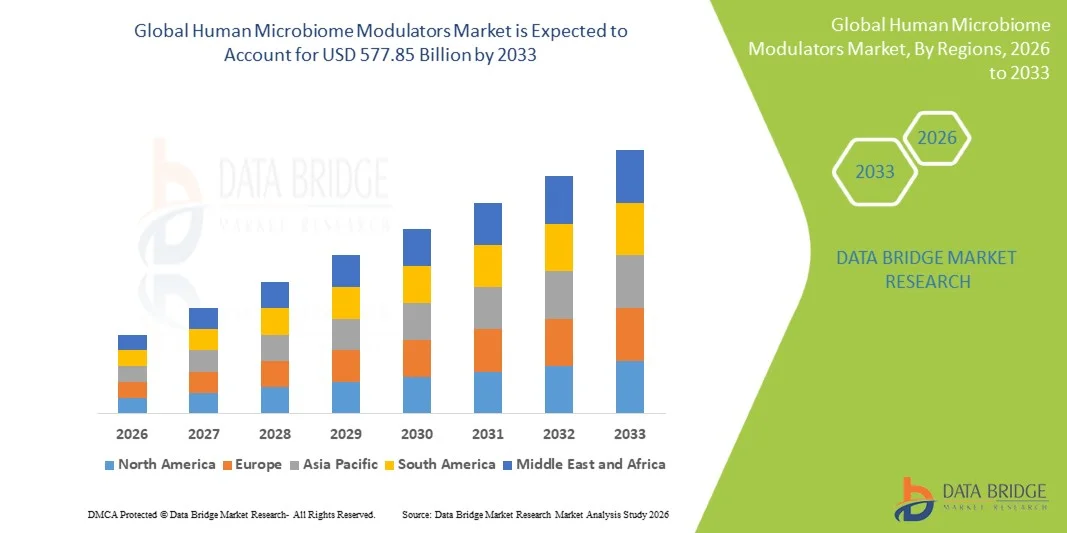
- The global human microbiome modulators market size was valued at USD 207.32 billion in 2025and is expected to reach USD 577.85 billion by 2033, at a CAGR of 15.77% during the forecast period
- The market growth is primarily driven by increasing research into the human microbiome and its role in disease management, along with rising clinical adoption of microbiome-based therapeutics, probiotics, prebiotics, and postbiotics across metabolic, gastrointestinal, and immune-related disorders
- Furthermore, growing consumer and healthcare provider awareness regarding gut health, coupled with advancements in precision medicine and microbiome sequencing technologies, is positioning microbiome modulators as a key component of next-generation therapeutic strategies, thereby significantly accelerating market expansion
Human Microbiome Modulators Market Analysis
- Human microbiome modulators, including probiotics, prebiotics, postbiotics, and microbiome-derived therapeutics, are emerging as key interventions that regulate gut flora and influence metabolic, immune, and neurological health, making them increasingly important in preventive healthcare and precision medicine applications across both clinical and consumer wellness settings
- The escalating demand for microbiome modulators is primarily driven by rising prevalence of gastrointestinal and metabolic disorders, growing clinical validation of microbiome-based therapies, and increasing consumer awareness of gut health and its link to overall immunity and chronic disease management
- North America dominated the human microbiome modulators market with the largest revenue share of 42.6% in 2025, supported by strong biotechnology research infrastructure, high healthcare expenditure, and early adoption of microbiome therapeutics, with the U.S. leading advancements through active clinical trials, startup innovation, and pharmaceutical investments in microbiome-based drug development
- Asia-Pacific is expected to be the fastest growing region in the human microbiome modulators market during the forecast period due to expanding healthcare access, rising disposable incomes, rapid growth in nutraceutical consumption, and increasing awareness of preventive healthcare and digestive wellness solutions
- Probiotics and Creams segment dominated the human microbiome modulators market in 2025 with a market share of 46.8%, driven by widespread consumer acceptance, strong presence in functional foods and dietary supplements, and extensive clinical use in supporting gut health, immunity enhancement, and antibiotic-associated microbiome restoration
Report Scope and Human Microbiome Modulators Market Segmentation
|
Attributes |
Human Microbiome Modulators Key Market Insights |
|
Segments Covered |
|
|
Countries Covered |
North America · U.S. · Canada · Mexico Europe · Germany · France · U.K. · Netherlands · Switzerland · Belgium · Russia · Italy · Spain · Turkey · Rest of Europe Asia-Pacific · China · Japan · India · South Korea · Singapore · Malaysia · Australia · Thailand · Indonesia · Philippines · Rest of Asia-Pacific Middle East and Africa · Saudi Arabia · U.A.E. · South Africa · Egypt · Israel · Rest of Middle East and Africa South America · Brazil · Argentina · Rest of South America |
|
Key Market Players |
|
|
Market Opportunities |
· Expansion of microbiome-based therapeutics in oncology and immunotherapy as adjunct treatments · Rising integration of AI-driven metagenomic analysis platforms |
|
Value Added Data Infosets |
In addition to the insights on market scenarios such as market value, growth rate, segmentation, geographical coverage, and major players, the market reports curated by the Data Bridge Market Research also include in-depth expert analysis, patient epidemiology, pipeline analysis, pricing analysis, and regulatory framework |
Human Microbiome Modulators Market Trends
“Rising Shift Toward Precision Microbiome-Based Therapeutics”
- A significant and accelerating trend in the global human microbiome modulators market is the growing shift toward precision microbiome-based therapeutics, driven by advances in microbiome sequencing and personalized medicine approaches across metabolic, gastrointestinal, and immune-related disorders
- For instance, Seres Therapeutics is developing microbiome restoration therapies targeting recurrent Clostridioides difficile infections using defined bacterial consortia designed for specific patient microbiome profiles
- Integration of AI and multi-omics technologies is enabling deeper microbiome analysis, allowing researchers to identify microbial signatures linked to disease progression and therapeutic response, thereby improving treatment accuracy and outcomes
- The convergence of microbiome science with drug development platforms is facilitating the creation of next-generation biotherapeutics that target gut-brain and gut-metabolism axes, expanding applications beyond traditional digestive health
- Companies such as Nestlé Health Science are increasingly investing in clinically validated microbiome-based nutrition and therapeutic solutions, strengthening the bridge between functional foods and medical-grade microbiome interventions
- The demand for targeted microbiome modulators is rapidly increasing across clinical and consumer health sectors, as patients and healthcare providers prioritize personalized, mechanism-driven interventions over conventional broad-spectrum treatments
- Growing adoption of live biotherapeutic products (LBPs) is accelerating, as pharmaceutical companies focus on standardized microbial strains to ensure reproducibility and regulatory compliance in therapeutic applications
Human Microbiome Modulators Market Dynamics
Driver
“Rising Burden of Chronic Diseases and Growing Clinical Validation of Microbiome Therapies”
- The increasing prevalence of chronic diseases such as inflammatory bowel disease, obesity, diabetes, and autoimmune disorders, coupled with expanding clinical validation of microbiome-based therapies, is a key driver for heightened demand in the human microbiome modulators market
- For instance, in March 2025, Ferring Pharmaceuticals advanced its microbiome therapeutic pipeline by expanding commercialization efforts for REBYOTA, targeting recurrent Clostridioides difficile infections with demonstrated clinical efficacy
- As scientific understanding of gut microbiota interactions with immune and metabolic systems deepens, microbiome modulators are increasingly being recognized as viable therapeutic options in mainstream clinical practice
- Furthermore, growing investment from pharmaceutical and biotechnology companies in microbiome drug discovery is accelerating the development of standardized, regulatory-approved microbial therapies
- The increasing use of microbiome-based interventions in combination with conventional treatments is further supporting adoption in hospitals and specialty clinics worldwide
- Rising healthcare expenditure and supportive funding for microbiome research from public and private institutions are further accelerating clinical trials and commercialization of microbiome-based products
Restraint/Challenge
“Complex Regulatory Pathways and Limited Standardization of Microbiome Therapies”
- Challenges related to complex regulatory frameworks and lack of standardized guidelines for microbiome-based therapeutics pose a significant barrier to market expansion
- For instance, variability in classification of microbiome products across regulatory agencies such as the FDA and EMA creates delays in approval and commercialization of novel therapies
- As microbiome modulators involve live organisms and complex biological interactions, ensuring consistency, safety, and reproducibility remains a major scientific and regulatory challenge
- Furthermore, limited long-term clinical data on efficacy and microbiome stability after treatment raises concerns among healthcare providers regarding widespread clinical adoption
- Companies such as Enterome and Viome continue to invest in clinical validation and standardized manufacturing processes, but regulatory uncertainty still slows down large-scale market penetration
- High production complexity and stringent cold-chain requirements for live biotherapeutics further increase operational costs, limiting accessibility in cost-sensitive and emerging markets
Human Microbiome Modulators Market Scope
The market is segmented on the basis of product and application.
- By Product
On the basis of product, the human microbiome modulators market is segmented into probiotics and creams, prebiotics, dietary supplements, and drugs. The probiotics and creams segment dominated the market with the largest market revenue share of 46.8% in 2025, driven by strong consumer acceptance, widespread availability in functional foods, and increasing clinical use in restoring gut microbiota balance. Probiotics are extensively used for digestive health improvement, immunity enhancement, and antibiotic-associated microbiome restoration, making them a first-line choice in both preventive and therapeutic applications. The segment also benefits from growing awareness of gut-brain axis health and rising demand for natural, non-invasive health solutions. In addition, product innovation in multi-strain formulations and targeted delivery systems is further strengthening its dominance across global markets.
The prebiotics and dietary supplements segment is anticipated to witness the fastest growth rate of 22.4% from 2026 to 2033, fueled by increasing consumer shift toward preventive healthcare and microbiome nourishment strategies. Prebiotics act as functional substrates that selectively promote beneficial bacterial growth, making them highly attractive in chronic disease prevention and metabolic health management. Rising demand for clean-label, plant-based, and fiber-rich supplements is also accelerating segment expansion. Furthermore, growing integration of prebiotics in personalized nutrition plans and clinical dietary interventions is enhancing adoption across healthcare and wellness sectors globally
- By Application
On the basis of application, the human microbiome modulators market is segmented into digestive health, immune health, women’s health, oral health, and others. The digestive health segment dominated the market with the largest market revenue share of 52.1% in 2025, driven by the high global prevalence of gastrointestinal disorders such as irritable bowel syndrome, inflammatory bowel disease, and constipation. Microbiome modulators are widely used to restore gut microbial balance, improve nutrient absorption, and reduce gastrointestinal inflammation, making them a primary therapeutic focus area. Increasing clinical validation of microbiome-gut interactions has further strengthened their use in both prescription-based and over-the-counter formulations. The segment also benefits from strong consumer awareness of gut health as a foundation of overall wellness, significantly supporting sustained demand.
The immune health segment is expected to witness the fastest CAGR of 23.1% from 2026 to 2033, driven by rising awareness of the microbiome’s role in regulating immune response and disease resistance. Microbiome modulators are increasingly being used to enhance immune modulation, particularly in preventing infections and managing autoimmune conditions. The growing burden of lifestyle-related disorders and post-pandemic focus on immunity have significantly boosted demand. In addition, advancements in microbiome-based immunotherapies and functional nutrition products are accelerating adoption across clinical and consumer healthcare settings worldwide.
Human Microbiome Modulators Market Regional Analysis
- North America dominated the human microbiome modulators market with the largest revenue share of 42.6% in 2025, supported by strong biotechnology research infrastructure, high healthcare expenditure, and early adoption of microbiome therapeutics
- Consumers and healthcare providers in the region increasingly value advanced microbiome solutions for digestive health, immune modulation, and chronic disease management, supported by rising clinical validation and FDA-backed microbiome therapeutic developments
- This widespread adoption is further supported by strong presence of key pharmaceutical and biotechnology companies, high awareness of gut health science, and significant investment in microbiome R&D, establishing North America as the leading hub for microbiome innovation
U.S. Human Microbiome Modulators Market Insight
The United States human microbiome modulators market captured the largest revenue share of 81% in North America in 2025, fueled by advanced microbiome research ecosystems and early commercialization of microbiome-based therapeutics. Consumers increasingly adopt probiotics, prebiotics, and clinically validated microbiome drugs for digestive health, immunity support, and metabolic disorder management. The growing focus on precision medicine and personalized healthcare is further driving demand for microbiome modulation solutions. In addition, strong investment from biotechnology firms and pharmaceutical companies, along with increasing FDA-supported clinical trials, is significantly contributing to market expansion.
Europe Human Microbiome Modulators Market Insight
The Europe human microbiome modulators market is projected to expand at a substantial CAGR throughout the forecast period, primarily driven by increasing focus on preventive healthcare and rising acceptance of microbiome-based therapies. Strong regulatory frameworks supporting clinical research and growing demand for functional foods are encouraging product development. Consumers are increasingly adopting probiotics and prebiotics for digestive and immune health benefits. Furthermore, rising investments in microbiome research and expanding integration of medical nutrition solutions are strengthening regional market growth.
U.K. Human Microbiome Modulators Market Insight
The U.K. human microbiome modulators market is anticipated to grow at a noteworthy CAGR during the forecast period, driven by rising awareness of gut health and increasing demand for microbiome-based dietary supplements. Consumers are increasingly focusing on preventive healthcare solutions for digestive and immune disorders. The strong biotechnology ecosystem and collaborations between research institutions and pharmaceutical companies are accelerating innovation. In addition, growing availability of probiotic products and increasing clinical research activities are supporting market expansion.
Germany Human Microbiome Modulators Market Insight
The Germany human microbiome modulators market is expected to expand at a considerable CAGR during the forecast period, fueled by strong healthcare infrastructure and demand for scientifically validated microbiome therapies. Consumers are increasingly adopting probiotics and prebiotics for metabolic and digestive health management. Germany’s focus on research-driven healthcare and innovation is promoting microbiome-based therapeutic development. Furthermore, integration of microbiome science into personalized nutrition and pharmaceutical applications is driving market expansion.
Asia-Pacific Human Microbiome Modulators Market Insight
The Asia-Pacific human microbiome modulators market is poised to grow at the fastest CAGR of 23.8% during 2026 to 2033, driven by rising healthcare awareness, increasing gastrointestinal disease burden, and expanding nutraceutical consumption. Consumers are increasingly adopting probiotics and dietary supplements due to rising disposable incomes and lifestyle changes. Government initiatives promoting functional foods and preventive healthcare are further accelerating adoption. In addition, growing investments from global companies and expansion of local manufacturing are improving accessibility and affordability of microbiome products.
Japan Human Microbiome Modulators Market Insight
The Japan human microbiome modulators market is gaining momentum due to its advanced healthcare system and strong focus on longevity and preventive medicine. Consumers are highly inclined toward clinically validated probiotics for digestive and immune health management. The country’s strong biotech ecosystem is driving microbiome-based therapeutic innovation. Moreover, increasing research on gut-brain axis health and aging-related disorders is further supporting market growth.
India Human Microbiome Modulators Market Insight
The India human microbiome modulators market accounted for the largest market revenue share in Asia-Pacific in 2025, attributed to rapid urbanization, expanding middle-class population, and increasing awareness of gut health. Consumers are increasingly adopting probiotics and dietary supplements for digestive wellness and immunity enhancement. The market is further driven by rising availability of affordable microbiome products and strong growth in nutraceutical consumption. In addition, government support for healthcare modernization and expansion of domestic manufacturing capabilities are key growth drivers.
Human Microbiome Modulators Market Share
The Human Microbiome Modulators industry is primarily led by well-established companies, including:
- Seres Therapeutics, Inc. (U.S.)
- Vedanta Biosciences, Inc. (U.S.)
- Enterome (France)
- Ferring Pharmaceuticals (Switzerland)
- Nestlé Health Science (Switzerland)
- 4D pharma plc (U.K.)
- Second Genome, Inc. (U.S.)
- MaaT Pharma (France)
- Synlogic, Inc. (U.S.)
- Finch Therapeutics Group, Inc. (U.S.)
- AOBiome LLC (U.S.)
- BiomeBank Pty Ltd (Australia)
- Microbiotica Ltd (U.K.)
- Seed Health, Inc. (U.S.)
- Pendulum Therapeutics, Inc. (U.S.)
- Viome Life Sciences, Inc. (U.S.)
- OptiBiotix Health Plc (U.K.)
- BioGaia AB (Sweden)
- Eligo Bioscience (France)
- Locus Biosciences, Inc. (U.S.)
What are the Recent Developments in Global Human Microbiome Modulators Market?
- In March 2025, Ferring Pharmaceuticals received Health Canada approval for REBYOTA for prevention of recurrent C. difficile infection. This expanded the geographic footprint of microbiome therapeutics and demonstrated growing international regulatory acceptance of microbiome restoration treatments in clinical practice
- In January 2024, BiomeBank received approval from Australia’s Therapeutic Goods Administration (TGA) for its microbiota-based therapy “BIOMICTRA” for treating recurrent Clostridioides difficile infection. This approval marked one of the first regulatory authorizations of a microbiome-based live biotherapeutic product in Australia, strengthening global acceptance of microbiome modulators as standardized medical treatments
- In April 2023, ADM and Brightseed announced a global partnership to develop microbiome-targeted functional synbiotic products using bioactive plant compounds. This collaboration highlighted increasing convergence between food, nutrition, and microbiome science, expanding applications beyond pharmaceuticals into preventive health and functional nutrition markets
- In April 2023, Seres Therapeutics received U.S. FDA approval for VOWST, the first orally administered microbiome therapeutic for recurrent C. difficile infection. This milestone strengthened the clinical credibility of microbiome-based drugs and demonstrated the scalability of oral microbiome modulation therapies beyond traditional fecal transplant methods
- In November 2022, Ferring Pharmaceuticals announced U.S. FDA approval of REBYOTA (fecal microbiota, live-jslm), a first-in-class microbiota-based live biotherapeutic for preventing recurrence of Clostridioides difficile infection. This marked the first FDA-approved microbiome restoration therapy in the U.S., validating the clinical potential of microbiome modulators and opening the pathway for regulatory acceptance of live biotherapeutics

- Interactive Data Analysis Dashboard
- Company Analysis Dashboard for high growth potential opportunities
- Research Analyst Access for customization & queries
- Competitor Analysis with Interactive dashboard
- Latest News, Updates & Trend analysis
- Harness the Power of Benchmark Analysis for Comprehensive Competitor Tracking
Data collection and base year analysis are done using data collection modules with large sample sizes. The stage includes obtaining market information or related data through various sources and strategies. It includes examining and planning all the data acquired from the past in advance. It likewise envelops the examination of information inconsistencies seen across different information sources. The market data is analysed and estimated using market statistical and coherent models. Also, market share analysis and key trend analysis are the major success factors in the market report. To know more, please request an analyst call or drop down your inquiry.
The key research methodology used by DBMR research team is data triangulation which involves data mining, analysis of the impact of data variables on the market and primary (industry expert) validation. Data models include Vendor Positioning Grid, Market Time Line Analysis, Market Overview and Guide, Company Positioning Grid, Patent Analysis, Pricing Analysis, Company Market Share Analysis, Standards of Measurement, Global versus Regional and Vendor Share Analysis. To know more about the research methodology, drop in an inquiry to speak to our industry experts.
Data Bridge Market Research is a leader in advanced formative research. We take pride in servicing our existing and new customers with data and analysis that match and suits their goal. The report can be customized to include price trend analysis of target brands understanding the market for additional countries (ask for the list of countries), clinical trial results data, literature review, refurbished market and product base analysis. Market analysis of target competitors can be analyzed from technology-based analysis to market portfolio strategies. We can add as many competitors that you require data about in the format and data style you are looking for. Our team of analysts can also provide you data in crude raw excel files pivot tables (Fact book) or can assist you in creating presentations from the data sets available in the report.













