


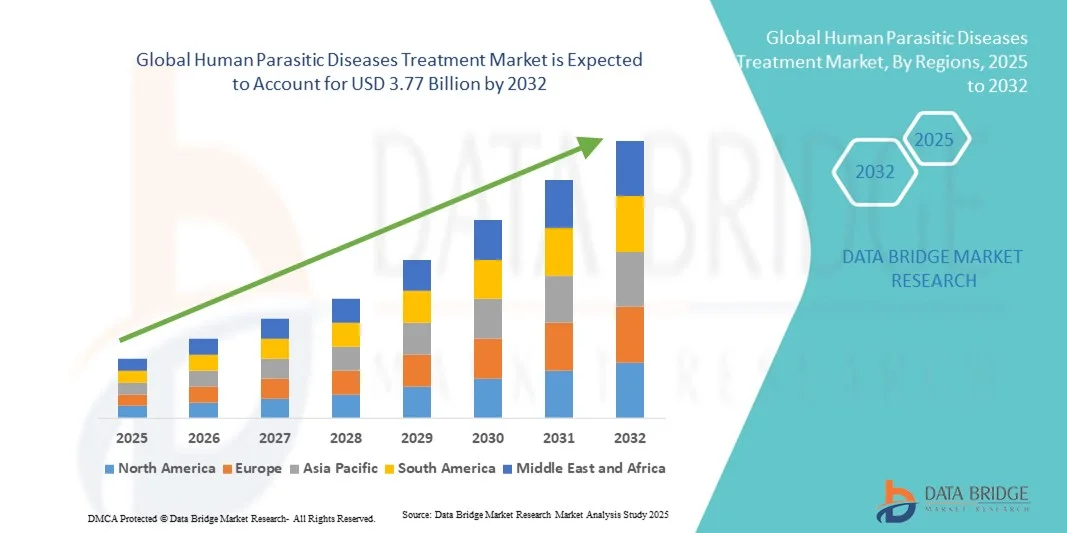
Human Parasitic Diseases Treatment Market Size
- The global human parasitic diseases treatment market size was valued at USD 2.30 billion in 2024 and is expected to reach USD 3.77 billion by 2032, at a CAGR of 6.40% during the forecast period
- The market growth is largely fueled by the rising prevalence of human parasitic infections worldwide, coupled with increasing awareness of prevention and treatment options. Advancements in diagnostic tools, therapeutic formulations, and delivery methods are further supporting effective disease management
- Furthermore, growing consumer and healthcare demand for safe, efficient, and accessible treatment solutions is establishing modern parasitic disease therapies as the preferred choice for patients and healthcare providers. These converging factors are accelerating the adoption of innovative treatment solutions, thereby significantly boosting the industry's growth
Human Parasitic Diseases Treatment Market Analysis
- The Human Parasitic Diseases Treatment market is witnessing significant growth due to the rising prevalence of parasitic infections globally, increasing awareness about preventive measures, and the development of advanced therapeutics and diagnostic tools that improve treatment outcomes
- The market expansion is further supported by growing demand for safe, effective, and accessible treatment options across healthcare systems, along with increased investment in R&D for novel antiparasitic drugs and formulations targeting both endemic and emerging parasitic diseases
- North America dominated the human parasitic diseases treatment market with the largest revenue share of 41.5% in 2024, driven by well-established healthcare infrastructure, early adoption of advanced therapeutic solutions, high healthcare spending, and the presence of key pharmaceutical companies. The U.S. remains the primary contributor, with strong growth in the development and deployment of new treatment protocols for parasitic diseases, supported by public health initiatives and clinical research
- Asia-Pacific is expected to be the fastest-growing region in the human parasitic diseases treatment market during the forecast period, owing to increasing population density, urbanization, rising healthcare awareness, and improving access to healthcare services. Countries such as India, China, and Southeast Asian nations are witnessing increasing investments in healthcare infrastructure and antiparasitic drug availability, fueling regional growth
- The Oral segment dominated the largest market revenue share of 61.2% in 2024 due to convenience, high patient compliance, cost-effectiveness, and broad availability
Report Scope and Human Parasitic Diseases Treatment Market Segmentation
|
Attributes |
Human Parasitic Diseases Treatment Key Market Insights |
|
Segments Covered |
|
|
Countries Covered |
North America
Europe
Asia-Pacific
Middle East and Africa
South America
|
|
Key Market Players |
|
|
Market Opportunities |
|
|
Value Added Data Infosets |
In addition to the insights on market scenarios such as market value, growth rate, segmentation, geographical coverage, and major players, the market reports curated by the Data Bridge Market Research also include in-depth expert analysis, patient epidemiology, pipeline analysis, pricing analysis, and regulatory framework. |
Human Parasitic Diseases Treatment Market Trends
Focus on Novel Therapies and Combination Treatments
- A notable trend in the human parasitic diseases treatment market is the development of innovative therapeutic approaches, including combination therapies and targeted treatments for multi-parasitic infections
- Pharmaceutical companies are increasingly investing in research to develop drugs that reduce treatment duration, improve patient compliance, and minimize side effects
- For instance, in January 2025, GlaxoSmithKline introduced a fixed-dose combination therapy for soil-transmitted helminths, aiming to simplify treatment regimens and improve cure rates.
- There is also a growing emphasis on personalized treatment approaches based on the type of parasitic infection, severity, and patient health profile, which is shaping the future of care delivery
- Furthermore, partnerships between governments, NGOs, and private companies are driving the adoption of mass drug administration programs in endemic regions, highlighting a trend toward large-scale preventive strategies alongside therapeutic interventions
- Increasing use of rapid diagnostic tools and point-of-care testing is helping clinicians quickly identify parasitic infections, enabling timely and more effective treatment
- Integration of digital health platforms and telemedicine for monitoring patient progress and treatment adherence is becoming more common, particularly in remote or underserved regions
- There is a rising trend in combining traditional therapies with complementary approaches, such as probiotics or nutritional supplements, to improve recovery and overall patient health.
- Research efforts are focusing on developing treatments that address emerging drug resistance in parasites, ensuring long-term efficacy and sustainability of therapies
- Public-private collaborations are promoting educational campaigns to raise awareness about prevention, early diagnosis, and proper treatment, which is helping to expand the market and improve patient outcomes
Human Parasitic Diseases Treatment Market Dynamics
Driver
Increasing Prevalence of Parasitic Infections and Rising Healthcare Awareness
- The growing prevalence of human parasitic diseases worldwide, coupled with heightened awareness of their health impacts, is a key driver for the rising demand for effective treatments
- For instance, in March 2024, Bayer launched an advanced combination therapy for intestinal parasitic infections, aiming to improve treatment efficacy and patient outcomes. Such innovations by leading pharmaceutical companies are expected to propel the Human Parasitic Diseases Treatment market growth during the forecast period
- Increasing investments in public health initiatives, awareness campaigns, and screening programs are contributing to early diagnosis and timely treatment, further boosting market demand
- The convenience of accessible treatment options, including oral medications and combination therapies, along with expanding distribution through hospitals, clinics, and retail pharmacies, is driving adoption across both urban and rural populations
- Rising government and NGO focus on combating parasitic diseases in endemic regions is fostering market expansion by supporting treatment availability and affordability
Restraint/Challenge
High Treatment Costs and Limited Access in Developing Regions
- The high cost of certain advanced therapeutic regimens and limited access to healthcare facilities in low-resource settings pose significant challenges to market growth
- For instance, premium combination therapies for multi-parasitic infections can be prohibitively expensive for patients in developing countries, limiting widespread adoption
- In addition, issues such as drug resistance and the need for ongoing research to develop more effective treatments create hurdles for consistent market penetration
- Addressing these challenges through affordable generic options, government subsidy programs, and improved healthcare infrastructure is critical to ensuring broader accessibility and sustained market growth
- Patient education, awareness campaigns, and training healthcare providers on updated treatment protocols are essential strategies to enhance adoption rates and treatment compliance
- Regulatory hurdles and lengthy approval processes for new therapies can delay market entry, limiting the availability of innovative treatments in certain regions
- Supply chain disruptions, particularly in remote or rural areas, can impede the consistent distribution of medications, affecting treatment continuity
- Cultural beliefs and lack of awareness about parasitic diseases may discourage patients from seeking timely treatment, reducing overall market potential
- Limited financial support for public health programs in low-income countries can hinder large-scale preventive initiatives, restricting the reach of treatment campaigns
- Inadequate infrastructure for storage and transportation of sensitive pharmaceutical products can compromise drug efficacy, creating additional barriers to adoption
Human Parasitic Diseases Treatment Market Scope
The market is segmented on the basis of type, population type, drug class, drug type, route of administration, end user, and distribution channel.
- By Type
On the basis of type, the Human Parasitic Diseases Treatment market is segmented into Protozoa, Helminths, and Ectoparasite. The Helminths segment dominated the largest market revenue share of 45.6% in 2024, driven by the widespread prevalence of soil-transmitted helminth infections across multiple regions. Extensive government and NGO-supported mass deworming programs contribute significantly to market penetration. Hospitals and clinics prefer helminth-targeted drugs due to proven efficacy, low side-effect profiles, and repeatable treatment cycles. Urban and rural healthcare programs further boost accessibility, ensuring sustained adoption. Bulk drug distribution in endemic areas allows large-scale administration. Ongoing research in combination therapies and improved formulations enhances therapeutic outcomes. Awareness campaigns and hygiene programs elevate demand. Both inpatient and outpatient treatment facilities support helminth drug utilization. Patient adherence is strengthened by simplified dosing regimens. High prevalence in school and community settings reinforces continuous demand. Cost-effectiveness of anthelmintic drugs makes them highly accessible.
The Protozoa segment is anticipated to witness the fastest CAGR of 19.2% from 2025 to 2032, driven by rising cases of malaria, giardiasis, amoebiasis, and other protozoan infections. Urbanization, global travel, and migration increase exposure, creating higher treatment demand. Innovative antiprotozoal therapies, including combination drugs and advanced drug delivery systems, improve clinical outcomes. Early diagnosis programs in endemic regions enhance timely intervention. NGO and government health initiatives expand access in underserved areas. Increasing patient awareness about protozoan disease symptoms fuels treatment-seeking behavior. Hospitals and specialty clinics are adopting newer antiprotozoal formulations rapidly. Pharmaceutical R&D focusing on resistant protozoan strains accelerates drug introduction. Digital health campaigns promote adherence and monitoring. Private and public healthcare collaborations improve distribution networks. Improved patient compliance through simplified dosing supports faster uptake. Rising incidence of protozoan diseases in children and adults alike strengthens growth prospects.
- By Population Type
On the basis of population type, the Human Parasitic Diseases Treatment market is segmented into Children and Adults. The Adults segment accounted for the largest market revenue share of 52.3% in 2024, driven by higher occupational, agricultural, and urban exposure to parasitic infections. Adults often require repeated treatment cycles, particularly for chronic or reinfection-prone diseases. Urban healthcare facilities and clinics support prescription adherence. Government health programs targeting adult populations increase mass treatment coverage. Insurance schemes in urban and semi-urban regions improve accessibility. Awareness campaigns educate adults on preventive measures and early treatment. Workplace hygiene initiatives further contribute to demand. Hospitals ensure steady supply through bulk procurement programs. Clinical trials and adult-focused drug formulations enhance efficacy. NGO-led health programs supplement treatment efforts. Higher disposable income in urban adult populations encourages adoption. Treatment adherence is reinforced through patient education programs.
The Children segment is expected to witness the fastest CAGR of 18.5% from 2025 to 2032. School-based deworming programs and vaccination-linked initiatives drive adoption. Pediatric formulations with improved palatability and dosing convenience increase compliance. Early intervention reduces long-term disease burden. Awareness campaigns targeting parents enhance understanding of preventive care. Government and NGO outreach programs improve accessibility in rural and urban areas. Pediatric treatment adoption benefits from global initiatives focusing on childhood health. Hospitals and specialty clinics provide structured follow-up and monitoring. Clinical research supports development of child-specific formulations. Digital health education campaigns reinforce awareness. Children in endemic regions receive prioritized treatment through targeted programs. Combination therapies in pediatric-friendly formats increase effectiveness. Community-based health interventions strengthen sustained adoption.
- By Drug Class
On the basis of drug class, the Human Parasitic Diseases Treatment market is segmented into Anthelmintics, Antiprotozoals, and Others. The Anthelmintics segment dominated the largest market revenue share of 48.9% in 2024 due to high prevalence of helminth infections and inclusion in government mass drug administration programs. Oral and combination formulations increase accessibility. Hospitals and clinics rely on proven efficacy and low side-effect profiles. Bulk procurement in endemic regions ensures widespread distribution. Awareness campaigns highlight safe use and reinforce adoption. Cost-effectiveness enhances accessibility in low- and middle-income countries. Repeat treatments maintain steady demand. Pharmaceutical companies continue to develop improved formulations and combination therapies. Urban and rural populations both benefit from wide availability. NGO-supported programs increase reach. Patient adherence is enhanced through simplified dosing. Clinical studies confirm efficacy and safety profiles.
The Antiprotozoals segment is expected to witness the fastest CAGR of 20.1% from 2025 to 2032, driven by rising cases of protozoan infections such as malaria, leishmaniasis, and giardiasis. Novel drug delivery technologies enhance effectiveness and patient adherence. Resistant strains create demand for new therapies. Early diagnosis initiatives in endemic regions improve treatment uptake. Urbanization, international travel, and migration increase exposure. NGO-supported health programs and government policies improve accessibility in underserved regions. Hospitals and specialty clinics are rapidly adopting new antiprotozoal formulations. Combination therapies enhance treatment outcomes. Patient education programs support adherence. Pharmaceutical R&D focuses on innovative formulations for resistant infections. Improved bioavailability and safety profiles accelerate adoption. Public-private partnerships expand distribution networks. Awareness campaigns promote timely intervention and compliance.
- By Drug Type
On the basis of drug type, the Human Parasitic Diseases Treatment market is segmented into Branded and Generics. The Generics segment accounted for the largest market revenue share of 55.7% in 2024, owing to affordability, government subsidies, and inclusion in mass drug administration programs. Generics are widely distributed through hospitals, clinics, and retail pharmacies. Low cost ensures accessibility in low- and middle-income regions. Bulk procurement programs support consistent supply. NGO initiatives enhance adoption in underserved areas. Proven efficacy and safety encourage prescribing. Patient adherence is improved through simplified dosing. Local manufacturing reduces costs and ensures availability. Urban and rural populations both benefit from accessibility. Repeat treatments maintain stable demand. Health policy support reinforces market penetration. Awareness campaigns highlight affordability and effectiveness.
The Branded segment is expected to witness the fastest CAGR of 17.8% from 2025 to 2032, driven by urban and high-income patient preference for brand trust and perceived efficacy. Specialty clinics and hospitals recommend branded drugs due to combination therapies and advanced delivery systems. Marketing campaigns and R&D investments accelerate growth. Patient support programs enhance adherence and education. Novel formulations with higher bioavailability improve treatment outcomes. Physicians increasingly prescribe branded options for resistant or complicated cases. Urban adoption rises with increased awareness of brand benefits. Hospitals and specialty clinics ensure reliable supply. Regulatory approvals of innovative formulations support market expansion. Enhanced safety and monitoring encourage adoption. Combination therapies increase clinical efficacy. Digital campaigns raise awareness among patients and healthcare providers. Growth is further supported by improved patient convenience and adherence programs.
- By Route of Administration
On the basis of route of administration, the Human Parasitic Diseases Treatment market is segmented into Oral, Injectable, and Topical. The Oral segment dominated the largest market revenue share of 61.2% in 2024 due to convenience, high patient compliance, cost-effectiveness, and broad availability. Oral tablets, capsules, and syrups are suitable for both mass public health campaigns and individual treatments. Hospitals and clinics favor oral formulations for both inpatient and outpatient care. Improved palatability, taste, and bioavailability enhance adherence. Bulk procurement ensures continuous supply in endemic regions. Awareness campaigns reinforce usage. Simplified dosing regimens encourage compliance. Clinical studies confirm efficacy and safety. Repeat treatments maintain steady demand. Urban and rural populations both benefit from availability. NGO-supported programs increase adoption. Cost-effectiveness strengthens accessibility.
The Injectable segment is expected to witness the fastest CAGR of 19.5% from 2025 to 2032, primarily for severe or resistant parasitic infections. Rapid therapeutic action is preferred in hospitals and clinics. Long-acting injectable formulations enhance treatment outcomes. Awareness of complications encourages adoption. Hospitals provide infrastructure for safe administration. Specialized staff and training increase reliability. Endemic regions adopt injectable treatments for critical cases. Resistant infections drive development of novel injectable formulations. Government and NGO programs support access. Early intervention and treatment monitoring improve outcomes. Clinical research focuses on safer, more effective formulations. Combination therapies in injectable form enhance efficacy. Increased hospital adoption accelerates market growth.
- By End User
On the basis of end user, the Human Parasitic Diseases Treatment market is segmented into Hospitals, Specialty Clinics, and Others. The Hospitals segment accounted for the largest market revenue share of 57.4% in 2024, driven by comprehensive infrastructure, bulk procurement, insurance coverage, and capacity to manage severe and chronic infections. Hospitals provide both inpatient and outpatient care, ensuring reliable drug distribution. Established protocols and experienced staff enhance treatment efficacy. Awareness campaigns in hospitals promote adherence. Government and NGO collaborations improve mass treatment. Urban and semi-urban hospitals dominate consumption. Repeat treatments for chronic infections support consistent demand. Clinical guidelines ensure standardized therapy. Specialized hospital programs support patient follow-up. High patient footfall increases adoption. Large-scale procurement supports consistent availability. Hospitals remain the primary point of care for parasitic disease treatment.
The Specialty Clinics segment is expected to witness the fastest CAGR of 18.7% from 2025 to 2032, fueled by growing numbers of clinics specializing in tropical and parasitic diseases. Clinics focus on targeted diagnosis and treatment with specialized staff. Urban expansion increases access to such clinics. Rapid adoption of new drug formulations accelerates growth. Advanced diagnostic tools improve early detection. Patient awareness campaigns promote clinic utilization. Combination therapies and innovative drug delivery systems support effective treatment. NGO and government collaborations expand reach in semi-urban areas. Enhanced patient education improves adherence. Telemedicine and digital monitoring enhance treatment outcomes. Private clinics attract high-income patient segments. Repeat visits for chronic management increase consumption. Regulatory support and approvals facilitate new drug adoption.
- By Distribution Channel
On the basis of distribution channel, the Human Parasitic Diseases Treatment market is segmented into Hospital Pharmacies, Retail Pharmacies, Online Pharmacies, and Others. The Hospital Pharmacies segment dominated the largest market revenue share of 53.6% in 2024 due to integrated treatment programs, bulk procurement, and reliable supply of critical drugs. Hospitals act as primary points for both inpatient and outpatient treatment. Endemic region programs ensure high-volume distribution. Repeat treatments and consistent patient flow maintain stable demand. Awareness campaigns in hospitals improve adherence. Urban and semi-urban populations benefit from accessibility. NGO-supported programs increase penetration. Pharmaceutical partnerships ensure drug availability. Hospitals maintain standardized protocols. Cost-effectiveness encourages adoption. Specialized hospital pharmacies support high-demand areas.
The Online Pharmacies segment is expected to witness the fastest CAGR of 21.4% from 2025 to 2032, driven by digital penetration, convenience of home delivery, and telemedicine integration. Urban and semi-urban populations increasingly adopt online platforms. Access to specialty drugs and subscription-based treatment plans enhances growth. Patients prefer home delivery for convenience and time savings. Online pharmacies improve adherence through reminders and digital tracking. Urban healthcare infrastructure supports faster delivery. Marketing campaigns and digital awareness programs encourage adoption. Regulatory support ensures safe distribution. Telemedicine consultations increase online pharmacy utilization. Improved logistics enhance service reliability. Cost-effective options attract high-volume users. Technology-enabled patient support strengthens market penetration.
Human Parasitic Diseases Treatment Market Regional Analysis
- North America dominated the human parasitic diseases treatment market with the largest revenue share of 41.5% in 2024, driven by well-established healthcare infrastructure, early adoption of advanced therapeutic solutions, high healthcare spending, and the presence of key pharmaceutical companies
- Increasing investments in R&D, the availability of high-quality antiparasitic drugs, and collaborations between pharmaceutical companies and healthcare providers are further fueling market expansion. Rising awareness of parasitic infections and preventive healthcare programs supports higher treatment adoption. North America benefits from a skilled workforce, advanced laboratories, and technological innovations in drug development
- Expansion of hospital networks and specialty clinics enhances treatment accessibility. Government programs targeting neglected tropical diseases reinforce market demand. Strategic partnerships with global players strengthen supply chains. The increasing prevalence of parasitic diseases among specific population groups maintains consistent demand. Access to cutting-edge therapies and clinical trials also stimulates market growth
U.S. Human Parasitic Diseases Treatment Market Insight
The U.S. human parasitic diseases treatment market captured the largest revenue share in 2024 within North America, making it the dominant contributor to the Human Parasitic Diseases Treatment market. Growth is fueled by the country’s advanced healthcare infrastructure, high healthcare spending, and the presence of leading pharmaceutical companies specializing in antiparasitic therapies. Strong investments in R&D and clinical research support the development and deployment of new treatment protocols for parasitic infections. Public health initiatives, awareness programs, and government support encourage early diagnosis and preventive care, driving higher adoption of treatments. Expansion of hospital networks, specialty clinics, and pharmacies improves accessibility of antiparasitic drugs. The increasing prevalence of parasitic infections in specific populations, including travelers and at-risk communities, sustains demand for effective therapies. Availability of both branded and generic drugs ensures wider patient reach. Technological advancements in drug delivery, formulation, and monitoring enhance treatment efficacy and patient compliance. Collaborations between domestic and international pharmaceutical companies strengthen supply chains and therapy availability.
Europe Human Parasitic Diseases Treatment Market Insight
The Europe human parasitic diseases treatment market is projected to expand at a substantial CAGR during the forecast period, driven by increasing healthcare awareness, well-established medical infrastructure, and government initiatives promoting preventive treatment. Rising urbanization, coupled with an aging population, is boosting demand for effective antiparasitic therapies. Strong presence of pharmaceutical companies and advanced research facilities supports innovation and adoption of new treatments. Investments in public health campaigns and clinical research contribute to market growth. European consumers benefit from easy access to healthcare services and high-quality treatment options. Expansion in hospital networks and specialty clinics facilitates the delivery of antiparasitic drugs. Rising prevalence of parasitic infections in certain regions encourages proactive treatment. Regulatory frameworks ensure safety, efficacy, and compliance with international standards. Increased awareness through educational programs fosters early diagnosis and treatment. Collaborations between pharmaceutical companies and healthcare providers enhance therapy availability. Technological advancements in drug formulation improve efficacy and patient compliance. Growth is observed across both urban and rural healthcare settings.
U.K. Human Parasitic Diseases Treatment Market Insight
The U.K human parasitic diseases treatment market is anticipated to grow at a noteworthy CAGR during the forecast period, supported by a strong healthcare system, rising awareness of parasitic diseases, and increasing adoption of advanced therapeutic solutions. Public health initiatives and preventive care programs are accelerating the uptake of antiparasitic treatments. The presence of leading pharmaceutical companies, robust clinical research infrastructure, and high healthcare spending further strengthen market growth. Increasing prevalence of parasitic infections in travelers and at-risk populations is driving treatment demand. Expansion of hospital networks, specialty clinics, and retail pharmacies enhances accessibility. Government programs and educational campaigns encourage early diagnosis and treatment. Continuous R&D in new drug formulations ensures efficacy and safety. Market growth is also supported by adoption of combination therapies and improved drug delivery systems. Collaborative efforts between public and private healthcare sectors expand treatment outreach. Rising disposable incomes allow patients to access high-quality therapies. Focus on preventive healthcare programs strengthens the overall market ecosystem.
Germany Human Parasitic Diseases Treatment Market Insight
The Germany human parasitic diseases treatment market is expected to expand at a considerable CAGR during the forecast period, fueled by a strong healthcare infrastructure, rising awareness about parasitic diseases, and demand for innovative and effective treatment options. The country’s emphasis on research, development, and sustainability in pharmaceutical manufacturing supports market growth. Expansion in hospital networks and specialty clinics ensures widespread accessibility of antiparasitic drugs. Growing investments in public health campaigns and clinical research enhance early diagnosis and treatment rates. Regulatory frameworks ensure high-quality, safe, and effective therapies. Rising urbanization and technological advancements improve treatment delivery and patient compliance. Pharmaceutical collaborations and partnerships strengthen supply chains and availability. Germany’s focus on preventive healthcare supports adoption of antiparasitic treatments. Increasing clinical trials for new drug formulations further boost market expansion. Availability of both branded and generic drugs provides affordability and choice. Continuous innovation in treatment protocols reinforces Germany’s position as a key market in Europe.
Asia-Pacific Human Parasitic Diseases Treatment Market Insight
Asia-Pacific human parasitic diseases treatment market is expected to be the fastest-growing region in the Human Parasitic Diseases Treatment market during the forecast period, owing to increasing population density, urbanization, rising healthcare awareness, and improving access to healthcare services. Countries such as India, China, and Southeast Asian nations are witnessing increasing investments in healthcare infrastructure, public health programs, and antiparasitic drug availability, fueling regional growth. Expansion in hospital networks, specialty clinics, and retail pharmacies enhances treatment access. Rising prevalence of parasitic infections in endemic areas drives demand for effective therapies. Government initiatives and awareness campaigns promote early diagnosis and preventive care. Growth is supported by increasing availability of both branded and generic drugs. Technological advancements in drug formulation, delivery, and patient monitoring improve treatment outcomes. Collaborations between domestic and international pharmaceutical companies strengthen supply chains. Growing disposable incomes and improved healthcare insurance coverage expand patient reach. Rising clinical trials and R&D investments introduce innovative therapies. Focus on pediatric and adult population treatment further accelerates market adoption.
Japan Human Parasitic Diseases Treatment Market Insight
The Japan human parasitic diseases treatment market is gaining momentum due to the country’s high-quality healthcare system, rapid urbanization, and rising awareness of parasitic infections. Strong government initiatives and preventive healthcare programs support treatment adoption. The country’s emphasis on R&D, innovative drug formulations, and clinical trials enhances therapy availability and effectiveness. Expansion of hospital networks, specialty clinics, and pharmacies improves patient access. Aging population and increasing healthcare spending drive demand for antiparasitic treatments. Collaboration between domestic and international pharmaceutical companies ensures advanced treatment options. Continuous monitoring and early diagnosis programs promote timely therapy initiation. Rising adoption of both branded and generic drugs enhances market penetration. Public health awareness campaigns improve patient compliance and engagement. Japan’s focus on preventive healthcare supports long-term market growth. Technological advancements in diagnostics and drug delivery further strengthen market expansion.
China Human Parasitic Diseases Treatment Market Insight
The China human parasitic diseases treatment market accounted for the largest market revenue share in Asia-Pacific in 2024, driven by rapid urbanization, growing population, rising healthcare awareness, and increasing healthcare infrastructure investments. Expansion of hospital networks, specialty clinics, and retail pharmacies enhances accessibility of antiparasitic drugs. The rising prevalence of parasitic infections in rural and urban regions boosts treatment demand. Government initiatives, public health programs, and collaborations with pharmaceutical companies support early diagnosis and effective therapy. Growing middle-class population and improved disposable incomes increase access to quality healthcare. Technological advancements in drug formulation, delivery, and monitoring enhance treatment outcomes. Availability of both branded and generic drugs strengthens market penetration. Increasing R&D investments and clinical trials introduce innovative therapies. Partnerships with domestic and international pharmaceutical companies improve supply chain efficiency. Rising awareness campaigns and preventive healthcare initiatives further stimulate market growth. Expansion across both pediatric and adult populations ensures comprehensive coverage of treatment needs.
Human Parasitic Diseases Treatment Market Share
The Human Parasitic Diseases Treatment industry is primarily led by well-established companies, including:
- GSK Plc (U.K.)
- Pfizer Inc. (U.S.)
- Johnson & Johnson and its affiliates (U.S.)
- Novartis AG (Switzerland)
- Merck & Co., Inc. (U.S.)
- Sanofi (France)
- Bayer AG (Germany)
- AbbVie Inc. (U.S.)
- Lupin Limited (India)
- Cipla Limited (India)
- Gilead Sciences (U.S.)
- F. Hoffmann-La Roche AG (Switzerland)
- Takeda Pharmaceutical Company (Japan)
- Boehringer Ingelheim (Germany)
- Teva Pharmaceutical Industries (Israel)
Latest Developments in Global Human Parasitic Diseases Treatment Market
- In February 2025, the European Medicines Agency (EMA) issued a positive scientific opinion for a fixed-dose combination (FDC) of albendazole and ivermectin. This combination is intended for the treatment of soil-transmitted helminths and lymphatic filariasis in individuals aged 5 years and older. The FDC aims to simplify treatment regimens and improve control programs in endemic regions
- In May 2025, the Drugs for Neglected Diseases initiative (DNDi) reported the availability of the first all-oral treatment for Trypanosoma brucei rhodesiense, the causative agent of acute sleeping sickness. This new regimen is now being administered free of charge to patients in specialized treatment centers in Ethiopia, Malawi, and Zimbabwe, marking a significant advancement in patient care for this neglected disease
- In July 2025, researchers from the University of Calgary identified a new parasitic roundworm infecting humans in West Africa. This discovery highlights the ongoing challenges in parasitic disease control and underscores the need for continuous surveillance and development of new therapeutic strategies
- In August 2025, a collaborative effort between Unlimit Health, The Life You Can Save, and Niger's Ministry of Health successfully delivered vital treatment to over a million children in response to a funding gap. This rapid response underscores the importance of partnerships in addressing urgent public health needs in resource-limited settings
- In July 2025, a concerning surge in cases of human alveolar echinococcosis (AE), also known as 'fox fever,' was reported across Europe. The disease, caused by the Echinococcus multilocularis tapeworm, can remain undetected in the human body for up to 15 years, slowly damaging organs. This increase highlights the need for enhanced surveillance and preventive measures in affected regions

- Interactive Data Analysis Dashboard
- Company Analysis Dashboard for high growth potential opportunities
- Research Analyst Access for customization & queries
- Competitor Analysis with Interactive dashboard
- Latest News, Updates & Trend analysis
- Harness the Power of Benchmark Analysis for Comprehensive Competitor Tracking
Data collection and base year analysis are done using data collection modules with large sample sizes. The stage includes obtaining market information or related data through various sources and strategies. It includes examining and planning all the data acquired from the past in advance. It likewise envelops the examination of information inconsistencies seen across different information sources. The market data is analysed and estimated using market statistical and coherent models. Also, market share analysis and key trend analysis are the major success factors in the market report. To know more, please request an analyst call or drop down your inquiry.
The key research methodology used by DBMR research team is data triangulation which involves data mining, analysis of the impact of data variables on the market and primary (industry expert) validation. Data models include Vendor Positioning Grid, Market Time Line Analysis, Market Overview and Guide, Company Positioning Grid, Patent Analysis, Pricing Analysis, Company Market Share Analysis, Standards of Measurement, Global versus Regional and Vendor Share Analysis. To know more about the research methodology, drop in an inquiry to speak to our industry experts.
Data Bridge Market Research is a leader in advanced formative research. We take pride in servicing our existing and new customers with data and analysis that match and suits their goal. The report can be customized to include price trend analysis of target brands understanding the market for additional countries (ask for the list of countries), clinical trial results data, literature review, refurbished market and product base analysis. Market analysis of target competitors can be analyzed from technology-based analysis to market portfolio strategies. We can add as many competitors that you require data about in the format and data style you are looking for. Our team of analysts can also provide you data in crude raw excel files pivot tables (Fact book) or can assist you in creating presentations from the data sets available in the report.












