


Global Hydraulic Fracturing Market Size
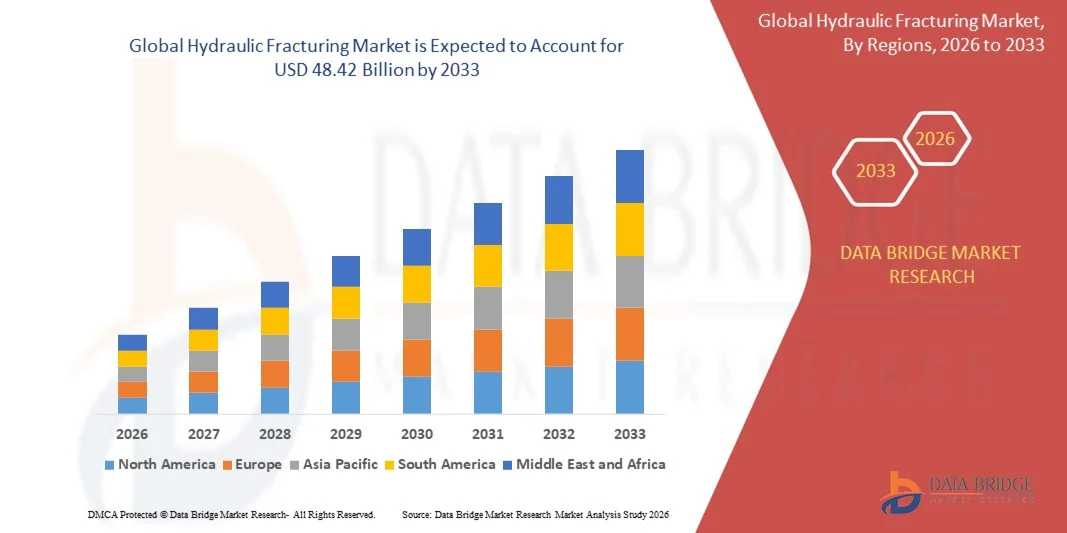
- The global Hydraulic Fracturing Market size was valued at USD 28.41 billion in 2025 and is expected to reach USD 48.42 billion by 2033, at a CAGR of 6.89% during the forecast period.
- The market growth is primarily driven by the increasing demand for unconventional oil and gas extraction methods, coupled with advancements in drilling technologies and enhanced recovery techniques, enabling more efficient and cost-effective operations.
- Additionally, supportive government policies, rising energy consumption, and the need to maximize existing hydrocarbon reserves are encouraging the adoption of hydraulic fracturing methods, further propelling market expansion and reinforcing its critical role in global energy supply.
Global Hydraulic Fracturing Market Analysis
- Hydraulic fracturing, a technique for extracting oil and natural gas from unconventional reservoirs, is becoming increasingly essential in the energy sector due to its ability to enhance hydrocarbon recovery, improve production efficiency, and support energy security in both onshore and offshore operations.
- The rising demand for hydraulic fracturing is primarily driven by the global need for increased oil and gas production, technological advancements in drilling and fracturing methods, and the push for maximizing output from existing reservoirs.
- North America dominated the Global Hydraulic Fracturing Market with the largest revenue share of 33.5% in 2025, attributed to the U.S. leading in shale gas development, a well-established energy infrastructure, and the presence of major industry players implementing advanced hydraulic fracturing techniques to optimize production.
- Asia-Pacific is expected to be the fastest-growing region in the Global Hydraulic Fracturing Market during the forecast period, supported by increasing energy demand, government initiatives to develop unconventional resources, and rising industrialization.
- The Plug and Perf segment dominated the market with a revenue share of 55.6% in 2025, due to its reliability, simplicity, and proven efficiency in completing multiple-stage fractures.
Report Scope and Global Hydraulic Fracturing Market Segmentation
|
Attributes |
Hydraulic Fracturing Key Market Insights |
|
Segments Covered |
|
|
Countries Covered |
North America
Europe
Asia-Pacific
Middle East and Africa
South America
|
|
Key Market Players |
|
|
Market Opportunities |
|
|
Value Added Data Infosets |
In addition to the insights on market scenarios such as market value, growth rate, segmentation, geographical coverage, and major players, the market reports curated by the Data Bridge Market Research also include import export analysis, production capacity overview, production consumption analysis, price trend analysis, climate change scenario, supply chain analysis, value chain analysis, raw material/consumables overview, vendor selection criteria, PESTLE Analysis, Porter Analysis, and regulatory framework. |
Global Hydraulic Fracturing Market Trends
Enhanced Efficiency Through AI and Digital Monitoring
- A significant and accelerating trend in the global Hydraulic Fracturing Market is the deepening integration of artificial intelligence (AI), machine learning, and advanced digital monitoring systems into fracturing operations. This fusion of technologies is significantly enhancing operational efficiency, real-time decision-making, and safety across drilling sites.
- For instance, AI-powered fracture simulation software allows operators to optimize fracture design and fluid usage, reducing costs while maximizing hydrocarbon recovery. Similarly, real-time monitoring systems can adjust pressure and flow rates dynamically, minimizing environmental risks and equipment wear.
- AI integration in hydraulic fracturing enables predictive maintenance of pumps, motors, and drilling equipment, identifying potential failures before they occur. For example, some Schlumberger and Halliburton solutions use machine learning algorithms to analyze sensor data and predict equipment downtime, improving operational continuity and reducing unplanned maintenance costs.
- The seamless integration of digital monitoring with hydraulic fracturing operations facilitates centralized control over multiple well sites and production units. Through a single interface, operators can monitor fracture performance, fluid usage, and production output simultaneously, enabling a more coordinated and efficient energy extraction process.
- This trend towards more intelligent, automated, and interconnected fracturing systems is fundamentally reshaping industry standards for productivity, safety, and environmental compliance. Consequently, companies such as Baker Hughes and Weatherford are developing AI-enabled hydraulic fracturing solutions that offer predictive analytics, automated adjustments, and integrated monitoring for enhanced operational outcomes.
- The demand for hydraulic fracturing systems that leverage AI and advanced monitoring is growing rapidly across both mature and emerging oil and gas regions, as operators increasingly prioritize efficiency, safety, and optimized resource recovery.
Global Hydraulic Fracturing Market Dynamics
Driver
Growing Need Due to Rising Energy Demand and Unconventional Resource Development
- The increasing global demand for energy, coupled with the growing development of unconventional oil and gas resources, is a significant driver for the heightened adoption of hydraulic fracturing.
- For instance, in 2025, Chevron and Halliburton announced joint initiatives to enhance shale gas production using advanced fracturing techniques, reflecting how key industry players are driving market growth during the forecast period.
- As energy consumption rises across industrial, commercial, and residential sectors, hydraulic fracturing offers enhanced hydrocarbon recovery from shale and tight reservoirs, providing a critical solution to meet growing energy needs.
- Furthermore, the expansion of unconventional resource exploration in regions such as North America, the Middle East, and Asia-Pacific is establishing hydraulic fracturing as a key component of modern energy extraction, supporting production efficiency and cost optimization.
- The ability to increase well productivity, optimize resource recovery, and integrate with digital monitoring systems are key factors propelling the adoption of hydraulic fracturing across both mature and emerging markets. Technological advancements, including high-precision fracturing fluids and multi-stage horizontal drilling, further contribute to market growth.
Restraint/Challenge
Environmental Concerns and Regulatory Constraints
- Environmental and regulatory challenges pose significant obstacles to broader market adoption of hydraulic fracturing. Concerns include groundwater contamination, induced seismic activity, and large water consumption, which have prompted stricter regulations in several countries.
- For instance, bans or moratoriums on hydraulic fracturing in certain U.S. states and European countries have limited operations despite the resource potential, affecting market expansion.
- Addressing these challenges through environmentally friendly fracturing fluids, water recycling technologies, and adherence to stringent regulatory guidelines is crucial for sustainable market growth. Companies such as Schlumberger and Baker Hughes emphasize their green fracturing technologies and compliance with local environmental standards to reassure stakeholders.
- Additionally, high operational costs, particularly for advanced fracturing techniques and deep shale formations, can be a barrier to adoption in price-sensitive or emerging markets. While operational efficiencies are improving, the perceived cost premium can still slow market penetration in some regions.
- Overcoming these challenges through technological innovation, environmentally responsible practices, and government-industry collaboration will be vital for sustaining long-term growth in the hydraulic fracturing market.
Global Hydraulic Fracturing Market Scope
Hydraulic fracturing market is segmented on the basis of technology, material and application.
- By Technology
On the basis of technology, the Global Hydraulic Fracturing Market is segmented into Plug and Perf and Sliding Sleeve. The Plug and Perf segment dominated the market with a revenue share of 55.6% in 2025, due to its reliability, simplicity, and proven efficiency in completing multiple-stage fractures. It is widely adopted for shale and tight formations, offering precise stage isolation and high production recovery. Its cost-effectiveness and ease of implementation have made it the preferred choice across North America and other mature markets.
The Sliding Sleeve segment is expected to witness the fastest CAGR of 22.1% from 2026 to 2033. This growth is driven by its flexibility in multi-zone completions, reduced operational downtime, and compatibility with complex well architectures. Operators increasingly prefer Sliding Sleeve systems for unconventional reservoirs, where precise control over fracture initiation and enhanced production optimization are critical for maximizing hydrocarbon output.
- By Material
On the basis of material, the Global Hydraulic Fracturing Market is segmented into Proppant and Others. The Proppant segment dominated the market in 2025 with a revenue share of 61.3%, owing to its essential role in maintaining fracture conductivity and maximizing hydrocarbon flow. High-quality proppants, including ceramic, resin-coated, and silica sands, are in strong demand for unconventional formations such as shale gas and tight oil. The segment’s dominance is supported by increasing drilling activity, higher recovery efficiency, and the growing importance of long-term well productivity.
The Others segment, comprising specialty additives and completion materials, is projected to witness the fastest CAGR of 20.8% from 2026 to 2033. Innovations in engineered proppants, fluid additives, and hybrid materials that enhance fracture efficiency, reduce environmental impact, and optimize resource extraction are driving adoption, especially in emerging markets and technically challenging reservoirs.
- By Application
On the basis of application, the Global Hydraulic Fracturing Market is segmented into Shale Gas, Tight Gas, Tight Oil, and Others. The Shale Gas segment dominated the market in 2025 with a revenue share of 48.7%, driven by extensive development in North America, where hydraulic fracturing is critical for economic gas extraction from low-permeability shale formations. Rising energy demand, favorable government policies, and technological advancements in horizontal drilling support this segment’s dominance.
The Tight Oil segment is expected to witness the fastest CAGR of 23.5% from 2026 to 2033, fueled by increasing global oil demand, enhanced fracturing technologies, and growing investments in tight oil plays across North America, South America, and the Middle East. Innovations in proppant design, completion methods, and stage-fracturing technology are boosting recovery rates and encouraging widespread adoption in this high-potential segment.
Global Hydraulic Fracturing Market Regional Analysis
- North America dominated the Global Hydraulic Fracturing Market with the largest revenue share of 33.5% in 2025, driven by extensive shale plays, advanced hydraulic fracturing infrastructure, and well-established oil and gas exploration activities.
- The region benefits from technological innovations in fracking equipment, high operational efficiency, and a strong presence of major service providers, which collectively support large-scale extraction and high recovery rates.
- This dominance is further reinforced by favorable government policies, substantial investment in upstream oil and gas projects, and growing energy demand across residential, commercial, and industrial sectors, making North America a key hub for hydraulic fracturing operations globally.
U.S. Hydraulic Fracturing Market Insight
The U.S. hydraulic fracturing market captured the largest revenue share of 72% in 2025 within North America, driven by the country’s abundant shale oil and gas reserves and strong energy demand. Technological advancements in horizontal drilling and fracturing techniques are enhancing extraction efficiency, while supportive government policies and investments in upstream infrastructure further stimulate market growth. The U.S. continues to be a global leader in unconventional oil and gas production, making hydraulic fracturing a key contributor to energy security.
Europe Hydraulic Fracturing Market Insight
The Europe hydraulic fracturing market is projected to grow at a moderate CAGR during the forecast period, primarily influenced by stringent environmental regulations and the need for energy diversification. While concerns regarding water usage and emissions present challenges, the adoption of advanced and environmentally responsible fracking techniques is fostering growth. Countries such as the U.K., Germany, and Poland are witnessing increasing implementation in commercial and industrial applications, driven by the push for energy independence and natural gas utilization.
U.K. Hydraulic Fracturing Market Insight
The U.K. hydraulic fracturing market is expected to grow steadily, fueled by government initiatives to explore domestic shale gas resources and reduce dependency on imports. Concerns regarding energy security and rising natural gas demand are prompting investments in unconventional extraction methods. Public awareness campaigns and adoption of safer, environmentally conscious fracturing technologies are supporting market expansion, particularly in northern England and other shale-rich regions.
Germany Hydraulic Fracturing Market Insight
The Germany hydraulic fracturing market is anticipated to expand at a cautious pace due to strict environmental regulations and public scrutiny. However, technological innovations that reduce water consumption and minimize environmental impact are encouraging limited adoption in industrial and energy sectors. Germany’s focus on energy transition and efficiency is gradually supporting hydraulic fracturing for niche applications, including natural gas production and energy storage projects.
Asia-Pacific Hydraulic Fracturing Market Insight
The Asia-Pacific hydraulic fracturing market is poised to grow at the fastest CAGR of 22% during the forecast period, driven by rising energy demand, industrialization, and investments in shale oil and gas exploration. Countries such as China, India, and Australia are investing heavily in unconventional hydrocarbon resources to reduce reliance on imports. Government support, coupled with the adoption of advanced fracturing technologies and infrastructure development, is accelerating market expansion across residential, commercial, and industrial energy sectors.
Japan Hydraulic Fracturing Market Insight
The Japan hydraulic fracturing market is witnessing gradual growth, driven by the country’s need to diversify energy sources and improve energy security. Japan is increasingly exploring unconventional gas reserves to complement LNG imports and reduce energy costs. The integration of safe and efficient hydraulic fracturing techniques, along with strict adherence to environmental standards, supports market development in both offshore and onshore projects.
China Hydraulic Fracturing Market Insight
The China hydraulic fracturing market accounted for the largest market revenue share in Asia-Pacific in 2025, attributed to the country’s vast shale gas reserves, rapid industrial growth, and government initiatives promoting domestic energy production. Technological advancements and strong investments from both domestic and international energy firms are boosting hydraulic fracturing adoption. Efforts toward sustainable extraction and the development of smart drilling techniques are further propelling market growth across residential, industrial, and energy sectors.
Global Hydraulic Fracturing Market Share
The Hydraulic Fracturing industry is primarily led by well-established companies, including:
• Halliburton (U.S.)
• Schlumberger (U.S.)
• Baker Hughes (U.S.)
• National Oilwell Varco (NOV) (U.S.)
• Weatherford International (U.S.)
• Chevron (U.S.)
• ExxonMobil (U.S.)
• ConocoPhillips (U.S.)
• TotalEnergies (France)
• Occidental Petroleum (U.S.)
• CNPC (China)
• Sinopec (China)
• Wood Group (U.K.)
• KCA Deutag (U.K.)
• TechnipFMC (France)
• Petrofac (U.K.)
• SLB (Schlumberger’s integrated services) (U.S.)
• HydroChemPSC (U.S.)
• Core Laboratories (U.S.)
• Precision Drilling (Canada)
What are the Recent Developments in Global Hydraulic Fracturing Market?
- In April 2024, Halliburton Company, a global leader in oilfield services, announced the launch of an advanced hydraulic fracturing program in the Permian Basin, U.S., aimed at increasing shale oil and gas production efficiency. The initiative leverages next-generation fracking fluids and high-performance proppants to optimize well output while minimizing environmental impact. This development underscores Halliburton’s commitment to innovation and operational excellence in the global hydraulic fracturing market.
- In March 2024, Schlumberger Limited deployed its new StimService™ integrated fracturing solution in the Marcellus Shale, designed to enhance recovery rates in unconventional reservoirs. The service combines real-time monitoring, advanced proppant technologies, and predictive analytics to improve fracture efficiency and reduce operational costs. This deployment highlights Schlumberger’s focus on driving technological advancement and sustainable growth in hydraulic fracturing operations worldwide.
- In March 2024, Baker Hughes Company successfully executed a large-scale hydraulic fracturing project in the Sichuan Basin, China, aimed at boosting natural gas output to meet rising domestic demand. The project utilizes eco-friendly fracturing fluids and automated pumping systems to optimize performance and reduce environmental impact. This initiative emphasizes Baker Hughes’ dedication to supporting energy security while advancing innovative hydraulic fracturing technologies.
- In February 2024, National Oilwell Varco (NOV) announced a strategic collaboration with Saudi Aramco to implement high-efficiency fracturing equipment in tight oil fields across the Middle East. This partnership focuses on improving operational productivity and reducing energy consumption during hydraulic fracturing operations. The initiative highlights NOV’s commitment to advancing cutting-edge solutions in the global hydraulic fracturing market.
- In January 2024, Weatherford International introduced its SmartFrac™ digital hydraulic fracturing solution at the Offshore Technology Conference (OTC) 2024. The system integrates IoT-enabled sensors, data analytics, and automated control to optimize fracture placement and resource recovery in unconventional reservoirs. SmartFrac™ underscores Weatherford’s strategy to enhance operational efficiency, environmental sustainability, and profitability in hydraulic fracturing projects worldwide.

- Interactive Data Analysis Dashboard
- Company Analysis Dashboard for high growth potential opportunities
- Research Analyst Access for customization & queries
- Competitor Analysis with Interactive dashboard
- Latest News, Updates & Trend analysis
- Harness the Power of Benchmark Analysis for Comprehensive Competitor Tracking
Global Hydraulic Fracturing Market, Supply Chain Analysis and Ecosystem Framework
To support market growth and help clients navigate the impact of geopolitical shifts, DBMR has integrated in-depth supply chain analysis into its Global Hydraulic Fracturing Market research reports. This addition empowers clients to respond effectively to global changes affecting their industries. The supply chain analysis section includes detailed insights such as Global Hydraulic Fracturing Market consumption and production by country, price trend analysis, the impact of tariffs and geopolitical developments, and import and export trends by country and HSN code. It also highlights major suppliers with data on production capacity and company profiles, as well as key importers and exporters. In addition to research, DBMR offers specialized supply chain consulting services backed by over a decade of experience, providing solutions like supplier discovery, supplier risk assessment, price trend analysis, impact evaluation of inflation and trade route changes, and comprehensive market trend analysis.
Data collection and base year analysis are done using data collection modules with large sample sizes. The stage includes obtaining market information or related data through various sources and strategies. It includes examining and planning all the data acquired from the past in advance. It likewise envelops the examination of information inconsistencies seen across different information sources. The market data is analysed and estimated using market statistical and coherent models. Also, market share analysis and key trend analysis are the major success factors in the market report. To know more, please request an analyst call or drop down your inquiry.
The key research methodology used by DBMR research team is data triangulation which involves data mining, analysis of the impact of data variables on the market and primary (industry expert) validation. Data models include Vendor Positioning Grid, Market Time Line Analysis, Market Overview and Guide, Company Positioning Grid, Patent Analysis, Pricing Analysis, Company Market Share Analysis, Standards of Measurement, Global versus Regional and Vendor Share Analysis. To know more about the research methodology, drop in an inquiry to speak to our industry experts.
Data Bridge Market Research is a leader in advanced formative research. We take pride in servicing our existing and new customers with data and analysis that match and suits their goal. The report can be customized to include price trend analysis of target brands understanding the market for additional countries (ask for the list of countries), clinical trial results data, literature review, refurbished market and product base analysis. Market analysis of target competitors can be analyzed from technology-based analysis to market portfolio strategies. We can add as many competitors that you require data about in the format and data style you are looking for. Our team of analysts can also provide you data in crude raw excel files pivot tables (Fact book) or can assist you in creating presentations from the data sets available in the report.













