


Hydroponic Under-floor Heating Systems Market Size
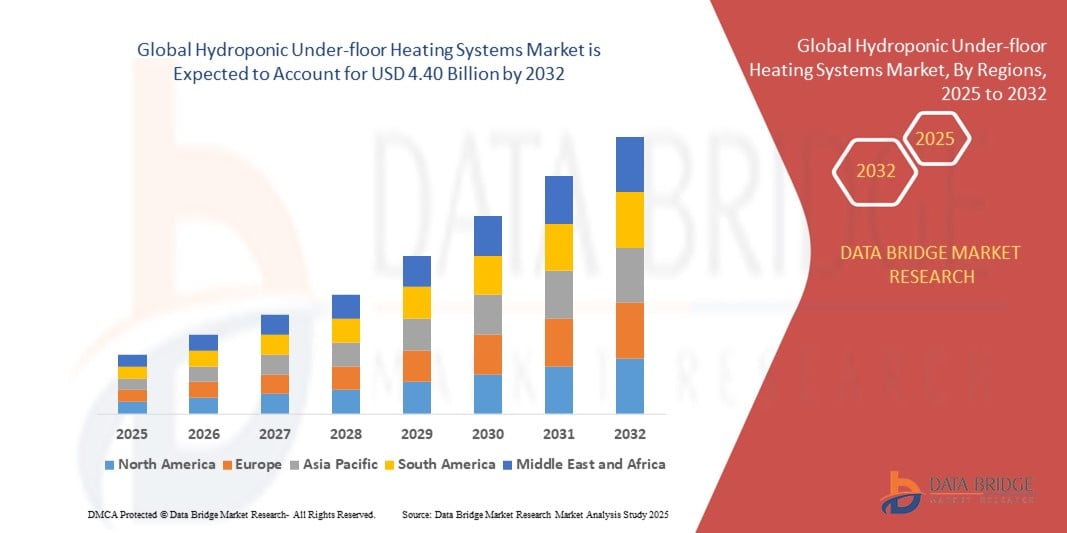
- The global hydroponic under-floor heating systems market size was valued at USD 3.09 billion in 2024 and is expected to reach USD 4.40 billion by 2032, at a CAGR of 4.50% during the forecast period
- The market growth is largely fueled by the increasing emphasis on energy efficiency and sustainable construction solutions, as hydroponic under-floor heating systems offer uniform heat distribution and reduced energy consumption compared to traditional heating systems. This demand is especially pronounced in colder climates and regions promoting green building codes
- Furthermore, the rising number of residential and commercial renovation projects, coupled with government incentives for energy-efficient installations, is driving the widespread adoption of hydroponic under-floor heating systems. These converging factors are accelerating the uptake of Hydroponic Under-floor Heating Systems solutions, thereby significantly boosting the industry's growth
Hydroponic Under-floor Heating Systems Market Analysis
- Hydroponic under-floor heating systems, which utilize water-based radiant heat technology, are increasingly vital components of modern residential, commercial, and industrial infrastructure due to their enhanced energy efficiency, uniform heat distribution, and low environmental impact
- The escalating demand for hydroponic under-floor heating systems is primarily fueled by rising awareness of energy-efficient HVAC solutions, stringent building energy regulations, and a growing consumer shift toward sustainable indoor climate control technologies
- North America dominated the hydroponic under-floor heating systems market with the largest revenue share of 37.8% in 2024, characterized by robust infrastructure investments, high heating demand in colder regions, and strong government incentives supporting green building practices. The U.S. continues to lead with widespread adoption in both residential and commercial new construction projects
- Asia-Pacific is expected to be the fastest growing region in the hydroponic under-floor heating systems market during the forecast period, projected to grow at a CAGR of 11.2% from 2025 to 2032, driven by rapid urbanization, growing disposable incomes, and increasing construction activities in countries such as China, India, and South Korea
- New Construction dominated the hydroponic under-floor heating systems market with a market revenue share of 52.3% in 2024, driven by rising trends in green buildings and sustainable architecture. As developers aim to meet stricter energy efficiency regulations and consumer demand for eco-friendly solutions, integrating underfloor heating at the construction phase proves cost-effective and efficient
Report Scope and Hydroponic Under-floor Heating Systems Market Segmentation
|
Attributes |
Hydroponic Under-floor Heating Systems Key Market Insights |
|
Segments Covered |
|
|
Countries Covered |
North America
Europe
Asia-Pacific
Middle East and Africa
South America
|
|
Key Market Players |
|
|
Market Opportunities |
|
|
Value Added Data Infosets |
In addition to the insights on market scenarios such as market value, growth rate, segmentation, geographical coverage, and major players, the market reports curated by the Data Bridge Market Research also include in-depth expert analysis, pricing analysis, brand share analysis, consumer survey, demography analysis, supply chain analysis, value chain analysis, raw material/consumables overview, vendor selection criteria, PESTLE Analysis, Porter Analysis, and regulatory framework. |
Hydroponic Under-floor Heating Systems Market Trends
Enhanced Energy Efficiency and Sustainable Indoor Climate Control
- A significant and accelerating trend in the global hydroponic under-floor heating systems market is the growing demand for low-energy and eco-friendly heating solutions that offer consistent and comfortable indoor temperatures, particularly in regions with colder climates
- Hydroponic under-floor heating systems operate by circulating warm water through a network of pipes installed beneath the floor, providing uniform heat distribution that enhances thermal comfort and reduces energy waste
- The rising adoption of green building certifications such as LEED and BREEAM is further encouraging the use of hydroponic heating systems in new construction and retrofit projects across residential, commercial, and industrial sectors
- Governments worldwide are offering incentives and rebates for energy-efficient HVAC upgrades, fueling market growth. For instance, Europe’s ongoing push for net-zero energy buildings is significantly boosting installations of water-based floor heating systems
- Integration of renewable energy sources such as geothermal heat pumps and solar thermal collectors with hydroponic under-floor systems is emerging as a key trend, allowing property owners to lower both carbon emissions and utility bills
- The convenience of silent operation, low maintenance requirements, and compatibility with modern thermostats are also contributing to the increasing popularity of hydroponic under-floor heating systems in both urban and rural developments
Hydroponic Under-floor Heating Systems Market Dynamics
Driver
Increasing Demand for Energy-Efficient Heating Solutions
- The growing global emphasis on sustainability and energy efficiency is a major driver of the hydroponic under-floor heating systems market. Consumers and businesses alike are seeking environmentally responsible heating alternatives that minimize energy consumption while delivering consistent comfort
- Hydroponic systems, which use warm water circulated through pipes beneath the floor, provide radiant heat that is evenly distributed across indoor spaces, resulting in superior thermal performance compared to conventional systems
- Supportive government policies and building codes promoting green construction are accelerating the adoption of these systems, especially in Europe and North America. Incentives for energy-efficient HVAC solutions are encouraging both residential and commercial property owners to retrofit or upgrade their heating infrastructure
- In addition, the integration of renewable energy sources such as geothermal and solar with hydroponic under-floor heating is driving innovation and adoption, aligning with global decarbonization targets and net-zero goals
Restraint/Challenge
High Initial Investment and Installation Complexity
- Despite their long-term cost savings, hydroponic under-floor heating systems require a high initial investment, especially for installation in existing buildings. This cost includes system components, labor, and flooring modifications, making it less accessible for price-sensitive consumers
- Installation is more complex than traditional radiators or air-based systems, often requiring specialized labor and extended timeframes, particularly in retrofit applications.
- Many potential users are also deterred by the lack of familiarity with water-based radiant heating systems, especially in regions where forced-air systems have been the norm
- There is a limited pool of trained installers in some developing and rural markets, which restricts adoption and leads to higher labor charges
- In addition, concerns regarding long-term maintenance and the need for proper insulation beneath floors to avoid heat loss can further complicate decision-making for consumers considering hydroponic heating solutions
- The system response time is slower compared to traditional HVAC systems. Since water takes longer to heat and cool, users may experience delays in adjusting indoor temperatures
- Flooring material compatibility is another constraint, as some flooring types (e.g., thick carpets or certain types of wood) can hinder heat transfer, reducing system efficiency
- Lack of consumer awareness and education regarding the long-term benefits of hydroponic under-floor heating continues to limit widespread adoption, particularly in regions with milder climates where heating needs are seasonal or minimal
Hydroponic Under-floor Heating Systems Market Scope
The market is segmented on the basis of type, application, end-user, pricing, and distribution channel.
- By Type
On the basis of type, the hydroponic under-floor heating systems market is segmented into hydronic radiant heating, electric radiant heating, and geothermal heating. The hydronic radiant heating segment dominated the market with the largest revenue share of 47.6% in 2024, owing to its superior energy efficiency and suitability for large-area applications. These systems use warm water circulated through pipes, delivering even heating and reducing operating costs over time, making them highly preferred for both residential and commercial construction projects.
The electric radiant heating segment is expected to witness the fastest growth rate of 11.2% from 2025 to 2032, driven by its ease of installation, especially in retrofit or small-space applications. These systems offer a flexible and low-maintenance solution with rapid heating capabilities, making them ideal for modern urban households seeking space-saving energy solutions.
- By Application
On the basis of application, the hydroponic under-floor heating systems market is segmented into new construction, retrofit/remodeling, and greenhouses. New construction held the largest market revenue share of 52.3% in 2024, driven by rising trends in green buildings and sustainable architecture. As developers aim to meet stricter energy efficiency regulations and consumer demand for eco-friendly solutions, integrating underfloor heating at the construction phase proves cost-effective and efficient.
The retrofit/remodeling segment is projected to register the fastest CAGR of 10.6% during the forecast period. Increased consumer interest in upgrading existing heating systems, combined with government rebates and energy-saving incentives, are encouraging homeowners to adopt these systems during renovations.
- By End-User
On the basis of end-user, the hydroponic under-floor heating systems market is segmented into residential, commercial, and industrial. The residential segment led the market with a revenue share of 44.8% in 2024, supported by growing consumer preference for silent, clean, and space-efficient heating systems. These systems enhance comfort and energy efficiency in homes, making them a popular choice for modern dwellings and apartment complexes.
The commercial segment is expected to grow at the fastest CAGR of 10.9% from 2025 to 2032, propelled by demand from hotels, office buildings, and retail outlets. Businesses are investing in underfloor heating not only for comfort but also to comply with energy regulations and improve their environmental credentials.
- By Pricing
On the basis of pricing, the hydroponic under-floor heating systems market is segmented into economy, mid-range, and premium. The mid-range category dominated the market with a share of 41.9% in 2024, reflecting a balanced offering of affordability and performance. These systems appeal to middle-income households and small businesses seeking long-term cost savings with moderate initial investment.
The premium segment is projected to grow at the fastest CAGR of 10.4%, driven by demand for advanced features such as smart thermostats, app-based controls, and integration with home automation systems. High-income consumers and luxury real estate developers are key drivers of this segment.
- By Distribution Channel
On the basis of distribution channel, the hydroponic under-floor heating systems market is segmented into Retail, Online, and HVAC Contractors. HVAC Contractors accounted for the largest market share of 48.6% in 2024, as professional installation remains crucial for the correct and efficient operation of these systems. Many consumers and businesses prefer experienced technicians to ensure long-term reliability and compliance with building codes.
The Online channel is expected to witness the fastest CAGR of 11.8% during the forecast period. Increased internet penetration, DIY culture, and the convenience of comparing products and prices online are encouraging consumers to explore e-commerce options for purchasing underfloor heating systems.
Hydroponic Under-floor Heating Systems Market Regional Analysis
- North America dominated the hydroponic under-floor heating systems market with the largest revenue share of 37.8% in 2024, owing to the region's robust investment in sustainable building technologies and a rising inclination towards eco-friendly heating solutions
- This growth is largely attributed to increasing awareness about energy efficiency, rising utility costs, and supportive government initiatives such as tax incentives and energy-saving rebates
- The market in this region is also being propelled by the growing trend of green residential and commercial construction projects, especially in the U.S. and Canada
U.S. Hydroponic Under-floor Heating Systems Market Insight
The U.S. hydroponic under-floor heating systems market maintained its dominance in North America, accounting for 88% of the regional market share in 2024. This leadership position stems from strong consumer demand for energy-efficient heating systems, particularly in newly constructed residential properties that adhere to green building codes. The rising cost of electricity and growing emphasis on sustainable heating options have encouraged builders and homeowners alike to adopt hydroponic floor heating, especially in colder states such as Minnesota, Illinois, and Colorado. Moreover, increased installations in commercial spaces such as hotels, hospitals, and schools are contributing to market growth.
Europe Hydroponic Under-floor Heating Systems Market Insight
The Europe hydroponic under-floor heating systems market remains a highly lucrative region for hydroponic under-floor heating systems, with strong growth supported by stringent EU energy-efficiency directives and the widespread adoption of heat pump-compatible radiant heating solutions. Governments across the continent are actively promoting low-carbon technologies to meet emission reduction targets. In addition, retrofitting activities in heritage and older buildings with under-floor heating systems are rising, particularly in Western European nations such as Germany, France, and the U.K.
U.K. Hydroponic Under-floor Heating Systems Market Insight
The U.K. hydroponic under-floor heating systems market, is expected to grow steadily due to favorable policy frameworks such as the Future Homes Standard, which mandates lower carbon emissions in new residential properties. Consumer preferences are shifting towards under-floor systems as they offer silent operation, improved space utilization, and better indoor air quality compared to radiators. The increasing number of residential renovations, coupled with a preference for under-floor heating in luxury and sustainable housing developments, is further fueling demand.
Germany Hydroponic Under-floor Heating Systems Market Insight
The Germany’s hydroponic under-floor heating systems market is flourishing due to the nation’s strong focus on environmental sustainability and smart energy solutions. Builders are increasingly incorporating under-floor heating into both single-family homes and multi-dwelling residential units. Government subsidies for integrating renewable energy with heating systems are also encouraging adoption. The German population's high environmental consciousness and demand for cutting-edge technologies in construction are key growth enablers.
Asia-Pacific Hydroponic Under-floor Heating Systems Market Insight
The Asia-Pacific hydroponic under-floor heating systems market is witnessing exponential growth, led by rising disposable incomes and growing awareness about indoor comfort and energy efficiency. Local governments in countries such as China and India are pushing energy-efficient housing initiatives as part of their green infrastructure goals. Builders in metropolitan cities such as Beijing, Tokyo, and New Delhi are incorporating under-floor heating in high-rise apartments and smart homes. Furthermore, the increasing availability of locally manufactured components is making these systems more affordable and accessible.
Japan Hydroponic Under-floor Heating Systems Market Insight
The Japan hydroponic under-floor heating systems market growth is driven by its advanced construction technologies and cultural preference for floor-based heating. In regions experiencing cold winters such as Hokkaido and Tohoku, hydroponic systems are being widely adopted in new residential and healthcare construction. The aging population is another factor pushing demand, as these systems offer safer and more consistent heating without exposed elements. Integration with solar-powered heating systems is also gaining traction, contributing to both cost savings and environmental benefits.
China Hydroponic Under-floor Heating Systems Market Insight
The China hydroponic under-floor heating systems market accounted for the largest market revenue share in the Asia-Pacific region in 2024, fueled by large-scale infrastructure projects and increasing urbanization. The government’s push for green buildings and energy efficiency, along with rising middle-class aspirations, is accelerating the uptake of hydroponic under-floor heating systems. The growth of the prefab housing market and the availability of cost-effective installation services by domestic manufacturers are also acting as strong market catalysts.
Hydroponic Under-floor Heating Systems Market Share
The hydroponic under-floor heating systems industry is primarily led by well-established companies, including:
- Uponor Corporation (Finland)
- Honeywell International Inc. (U.S.)
- Amuheat (Australia)
- REHAU AG (Switzerland)
- Schneider Electric (France)
- Mitsubishi Electric Corporation (Japan)
- Robert Bosch GmbH (Germany)
- Danfoss (Denmark)
- Warmup (U.K.)
- H2O Heating Pty. Ltd. (Australia)
- Hunt Heating (Australia)
- Hurlcon Hydronic Heating (Spain)
- Polypipe (U.K.)
- Schluter Systems (Germany)
- Warmboard Inc. (U.S.)
- Daikin (Japan)
Latest Developments in Global Hydroponic Under-floor Heating Systems Market
- In In September 2023, JDF Maintenance introduces Hydroponic Underfloor Heating Systems, which they believe is nothing short of revolutionary. The organization provides this cutting-edge technology to their loyal consumers. RWC's JG LowFit is meant to help both new construction and retrofit projects as low carbon heating systems continued to replace traditional gas boiler options
- In December 2021, RWC has introduced a new underfloor heating (UFH) solution, JG LowFit, to complement its existing JG Underfloor heating portfolio. It is precisely intended to limit total floor height to an absolute minimum while maintaining heat output

- Interactive Data Analysis Dashboard
- Company Analysis Dashboard for high growth potential opportunities
- Research Analyst Access for customization & queries
- Competitor Analysis with Interactive dashboard
- Latest News, Updates & Trend analysis
- Harness the Power of Benchmark Analysis for Comprehensive Competitor Tracking
Global Hydroponic Under Floor Heating Systems Market, Supply Chain Analysis and Ecosystem Framework
To support market growth and help clients navigate the impact of geopolitical shifts, DBMR has integrated in-depth supply chain analysis into its Global Hydroponic Under Floor Heating Systems Market research reports. This addition empowers clients to respond effectively to global changes affecting their industries. The supply chain analysis section includes detailed insights such as Global Hydroponic Under Floor Heating Systems Market consumption and production by country, price trend analysis, the impact of tariffs and geopolitical developments, and import and export trends by country and HSN code. It also highlights major suppliers with data on production capacity and company profiles, as well as key importers and exporters. In addition to research, DBMR offers specialized supply chain consulting services backed by over a decade of experience, providing solutions like supplier discovery, supplier risk assessment, price trend analysis, impact evaluation of inflation and trade route changes, and comprehensive market trend analysis.
Data collection and base year analysis are done using data collection modules with large sample sizes. The stage includes obtaining market information or related data through various sources and strategies. It includes examining and planning all the data acquired from the past in advance. It likewise envelops the examination of information inconsistencies seen across different information sources. The market data is analysed and estimated using market statistical and coherent models. Also, market share analysis and key trend analysis are the major success factors in the market report. To know more, please request an analyst call or drop down your inquiry.
The key research methodology used by DBMR research team is data triangulation which involves data mining, analysis of the impact of data variables on the market and primary (industry expert) validation. Data models include Vendor Positioning Grid, Market Time Line Analysis, Market Overview and Guide, Company Positioning Grid, Patent Analysis, Pricing Analysis, Company Market Share Analysis, Standards of Measurement, Global versus Regional and Vendor Share Analysis. To know more about the research methodology, drop in an inquiry to speak to our industry experts.
Data Bridge Market Research is a leader in advanced formative research. We take pride in servicing our existing and new customers with data and analysis that match and suits their goal. The report can be customized to include price trend analysis of target brands understanding the market for additional countries (ask for the list of countries), clinical trial results data, literature review, refurbished market and product base analysis. Market analysis of target competitors can be analyzed from technology-based analysis to market portfolio strategies. We can add as many competitors that you require data about in the format and data style you are looking for. Our team of analysts can also provide you data in crude raw excel files pivot tables (Fact book) or can assist you in creating presentations from the data sets available in the report.













