


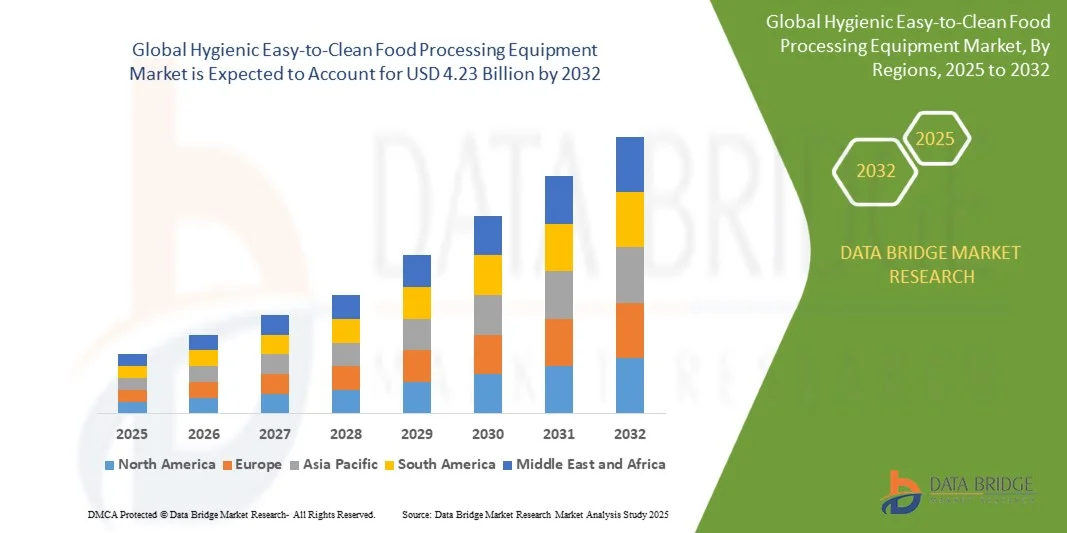
Hygienic Easy-to-Clean Food Processing Equipment Market Size
- The global hygienic easy-to-clean food processing equipment market size was valued at USD 2.98 billion in 2024 and is expected to reach USD 4.23 billion by 2032, at a CAGR of 4.5% during the forecast period
- The market growth is largely fuelled by the increasing demand for contamination-free food processing, stricter food safety regulations, and the need to minimize downtime through efficient cleaning procedures
- Rising adoption of automated and easy-to-maintain equipment in dairy, beverage, and processed food sectors is further supporting market expansion, ensuring operational efficiency and reduced labor costs
Hygienic Easy-to-Clean Food Processing Equipment Market Analysis
- Increasing emphasis on food safety and compliance with regulatory standards is promoting the adoption of hygienic and easy-to-clean equipment across the food processing industry, reducing contamination risks and improving product quality
- Technological advancements, such as modular designs, automated cleaning-in-place (CIP) systems, and corrosion-resistant materials, are enhancing the efficiency and durability of equipment, further boosting market demand
- North America dominated the hygienic easy-to-clean food processing equipment market with the largest revenue share in 2024, driven by increasing awareness of food safety regulations, adoption of advanced processing technologies, and a strong presence of organized food and beverage manufacturers
- Asia-Pacific region is expected to witness the highest growth rate in the global hygienic easy-to-clean food processing equipment market, driven by rising urbanization, growing disposable incomes, increasing adoption of automated processing systems, and expansion of food and beverage manufacturing across countries such as China, Japan, and Australia
- The Dairy Processing segment held the largest market revenue share in 2024, driven by the increasing demand for safe and contamination-free dairy products. Dairy plants are rapidly adopting stainless steel and CIP-compatible equipment to ensure compliance with stringent food safety standards, reduce microbial contamination, and maintain consistent product quality.
Report Scope and Hygienic Easy-to-Clean Food Processing Equipment Market Segmentation
|
Attributes |
Hygienic Easy-to-Clean Food Processing Equipment Key Market Insights |
|
Segments Covered |
|
|
Countries Covered |
North America
Europe
Asia-Pacific
Middle East and Africa
South America
|
|
Key Market Players |
|
|
Market Opportunities |
|
|
Value Added Data Infosets |
In addition to the insights on market scenarios such as market value, growth rate, segmentation, geographical coverage, and major players, the market reports curated by the Data Bridge Market Research also include in-depth expert analysis, pricing analysis, brand share analysis, consumer survey, demography analysis, supply chain analysis, value chain analysis, raw material/consumables overview, vendor selection criteria, PESTLE Analysis, Porter Analysis, and regulatory framework. |
Hygienic Easy-to-Clean Food Processing Equipment Market Trends
“Rising Adoption of Hygienic and Easy-to-Clean Equipment in Food Processing”
- The growing emphasis on food safety and hygiene is transforming the food processing industry by promoting the adoption of hygienic easy-to-clean equipment. These systems allow for quick sanitation, reducing microbial contamination and ensuring compliance with stringent food safety standards, which results in higher product quality and consumer confidence. In addition, they help food processors adhere to global certifications and audit requirements, supporting international trade and market expansion
- Increasing demand for efficient and low-maintenance equipment in remote or small-scale processing units is accelerating the adoption of modular and mobile hygienic systems. These solutions are particularly useful where cleaning infrastructure is limited, helping reduce downtime and improve operational efficiency. The flexibility of these systems also enables processors to quickly adapt production lines to varying product types without extensive retrofitting
- The affordability and user-friendly design of modern hygienic processing equipment are making them attractive for routine cleaning and maintenance, enabling processors to maintain high hygiene standards without significant labor or cost investment. Moreover, features such as automated cleaning cycles, corrosion-resistant surfaces, and minimal disassembly requirements enhance overall operational productivity
- For instance, in 2023, several dairy and beverage processing plants in Europe reported reduced contamination incidents and improved production efficiency after implementing stainless steel, CIP-compatible equipment designed for easy sanitation. These improvements also led to lower water and chemical usage during cleaning, contributing to more sustainable operations and reduced operational costs
- While these systems are enhancing operational efficiency and hygiene, their impact depends on continued innovation, regulatory compliance, and cost-effectiveness. Manufacturers must focus on modular, durable, and energy-efficient designs to fully capitalize on this growing demand. Integration with digital monitoring systems and IoT-enabled sensors is expected to further optimize cleaning schedules and enhance traceability
Hygienic Easy-to-Clean Food Processing Equipment Market Dynamics
Driver
“Increasing Regulatory Compliance and Food Safety Awareness”
- Growing awareness of foodborne illnesses and stringent hygiene regulations are driving the demand for hygienic easy-to-clean equipment, enabling processors to maintain safe production environments and meet global quality standards. The emphasis on minimizing cross-contamination and maintaining operational hygiene is fueling investment in advanced cleaning technologies
- Food manufacturers are increasingly prioritizing equipment that minimizes contamination risk, reduces cleaning time, and enhances overall operational efficiency, encouraging regular adoption across processing units. Features such as smooth surfaces, rounded corners, and minimal joints support easier cleaning and faster production turnaround
- Expansion in dairy, beverage, and packaged food sectors is promoting the use of hygienic easy-to-clean systems, ensuring higher throughput and product safety for end consumers. The growing demand for ready-to-eat and minimally processed foods further accelerates the need for robust sanitation equipment across the supply chain
- For instance, in 2022, several North American dairy plants upgraded to CIP-compatible stainless steel processing lines, improving hygiene standards, reducing cleaning cycles, and boosting productivity. The new systems also allowed processors to meet stricter FDA and USDA compliance requirements while reducing labor and chemical costs associated with manual cleaning
- While regulatory support and industry adoption are driving growth, there remains a need to develop cost-effective, customizable, and energy-efficient equipment to ensure long-term adoption and market penetration. Adoption of automated cleaning protocols, enhanced materials, and modular designs can further enhance scalability and reduce total cost of ownership
Restraint/Challenge
“High Initial Investment and Maintenance Requirements”
- The high upfront cost of advanced hygienic and easy-to-clean equipment limits adoption among small-scale food processors and cost-sensitive businesses, restricting widespread use in emerging markets. These costs often include specialized materials, automated cleaning systems, and compliance-related certifications that may be prohibitive for smaller operators
- In addition, technical expertise and proper maintenance are required to ensure equipment longevity and optimal sanitation performance, creating barriers for less experienced operators. Inadequate training or improper handling may compromise hygiene standards, negatively impacting product safety and brand reputation
- Limited availability of standardized equipment in certain regions can lead to supply chain challenges and delays in adoption, affecting timely implementation in processing units. Dependency on imported components or specialized service providers can result in longer lead times and increased operational costs
- For instance, in 2023, several small and medium-scale food processors in Asia-Pacific reported delayed installation of stainless steel and modular hygienic systems due to high costs and lack of local suppliers. These delays also affected production schedules, compliance reporting, and the ability to scale operations efficiently
- While hygienic processing technologies continue to evolve, addressing cost, technical, and supply constraints is critical. Manufacturers must focus on modular, scalable, and low-maintenance solutions to unlock long-term growth potential. Incorporating IoT-based maintenance alerts, remote monitoring, and energy-efficient designs can further reduce operational costs and improve return on investment
Hygienic Easy-to-Clean Food Processing Equipment Market Scope
The market is segmented on the basis of application, product type, material, and end use.
• By Application
On the basis of application, the hygienic easy-to-clean food processing equipment market is segmented into Meat Processing, Dairy Processing, Beverage Processing, Fruit and Vegetable Processing, and Bakery Processing. The Dairy Processing segment held the largest market revenue share in 2024, driven by the increasing demand for safe and contamination-free dairy products. Dairy plants are rapidly adopting stainless steel and CIP-compatible equipment to ensure compliance with stringent food safety standards, reduce microbial contamination, and maintain consistent product quality.
The Beverage Processing segment is expected to witness the fastest growth rate from 2025 to 2032, driven by rising consumer demand for packaged drinks and clean-label beverages. Beverage processors prefer easy-to-clean, modular equipment to reduce downtime during sanitation, improve operational efficiency, and ensure compliance with hygiene regulations, making it a favored choice for both small-scale and large-scale production units.
• By Product Type
On the basis of product type, the market is segmented into Mixers, Conveyors, Ovens, Washers, and Slicers. Mixers held the largest market revenue share in 2024, supported by the growing need for consistent and high-quality mixing operations in food and beverage manufacturing. Advanced mixers with easy-to-clean designs help minimize contamination risks, reduce labor costs, and improve throughput.
The Washers segment is expected to witness the fastest growth rate from 2025 to 2032, driven by the increasing adoption of automated cleaning systems in food processing plants. These washers enhance operational efficiency, ensure uniform sanitation, and support compliance with hygiene regulations across multiple processing applications.
• By Material
On the basis of material, the market is segmented into Stainless Steel, Plastic, Aluminum, and Composite Materials. Stainless Steel held the largest market revenue share in 2024 due to its corrosion resistance, durability, and ease of cleaning, which makes it ideal for high-hygiene food processing environments.
The Composite Materials segment is expected to witness the fastest growth rate from 2025 to 2032, driven by innovations in lightweight, durable, and easy-to-sanitize materials. These materials help reduce equipment weight, energy consumption, and cleaning time while maintaining food safety standards.
• By End Use
On the basis of end use, the market is segmented into Food and Beverage Manufacturers, Food Service Industry, and Retail Food. Food and Beverage Manufacturers held the largest market revenue share in 2024, fueled by the rapid expansion of dairy, meat, and beverage processing plants seeking hygienic and easy-to-clean solutions.
The Food Service Industry segment is expected to witness the fastest growth rate from 2025 to 2032, driven by the increasing adoption of efficient and low-maintenance equipment in restaurants, cafes, and catering services. The use of easy-to-clean equipment ensures hygiene compliance, reduces cleaning time, and improves overall operational efficiency.
Hygienic Easy-to-Clean Food Processing Equipment Market Regional Analysis
- North America dominated the hygienic easy-to-clean food processing equipment market with the largest revenue share in 2024, driven by increasing awareness of food safety regulations, adoption of advanced processing technologies, and a strong presence of organized food and beverage manufacturers
- Processors in the region highly value equipment that ensures rapid sanitation, reduces microbial contamination, and maintains compliance with stringent food safety standards
- This widespread adoption is further supported by high investment capacity, technologically advanced manufacturing facilities, and the growing preference for efficient and low-maintenance equipment, establishing hygienic easy-to-clean systems as a preferred solution across meat, dairy, and beverage processing units
U.S. Hygienic Easy-to-Clean Food Processing Equipment Market Insight
The U.S. market captured the largest revenue share in 2024 within North America, fueled by strong regulatory compliance requirements and the rising adoption of automated and modular processing systems. Food and beverage manufacturers are increasingly prioritizing equipment that minimizes downtime during cleaning, enhances operational efficiency, and ensures consistent product quality. Growing awareness of foodborne illness prevention and the integration of CIP-compatible stainless steel equipment is significantly contributing to market expansion.
Europe Hygienic Easy-to-Clean Food Processing Equipment Market Insight
The Europe market is expected to witness the fastest growth rate from 2025 to 2032, driven by stringent hygiene regulations, increasing urbanization, and growing investments in food processing infrastructure. European processors are adopting advanced hygienic equipment to improve productivity and ensure high food safety standards. The region is witnessing notable growth across dairy, bakery, and beverage processing applications, with emphasis on stainless steel and modular equipment.
U.K. Hygienic Easy-to-Clean Food Processing Equipment Market Insight
The U.K. market is expected to witness the fastest growth rate from 2025 to 2032, propelled by increasing adoption of food automation technologies and the rising demand for hygienic, easy-to-clean processing equipment. Concerns regarding contamination and consumer safety are motivating both large and small-scale processors to implement CIP-compatible and modular systems. The U.K.’s robust food industry and emphasis on regulatory compliance are expected to drive market expansion.
Germany Hygienic Easy-to-Clean Food Processing Equipment Market Insight
The Germany market is expected to witness the fastest growth rate from 2025 to 2032, fueled by the demand for technologically advanced, durable, and energy-efficient processing equipment. German processors are increasingly focused on sustainable operations and compliance with EU hygiene standards. Integration of modular stainless steel systems across meat, dairy, and beverage plants is enhancing efficiency and operational safety, promoting the adoption of hygienic easy-to-clean equipment.
Asia-Pacific Hygienic Easy-to-Clean Food Processing Equipment Market Insight
The Asia-Pacific market is expected to witness the fastest growth rate from 2025 to 2032, driven by rapid urbanization, increasing disposable incomes, and government initiatives promoting food safety. Rising investment in modern processing plants in countries such as China, Japan, and India is fostering demand for hygienic easy-to-clean equipment. APAC is also emerging as a manufacturing hub for food processing equipment, improving accessibility and affordability for local processors.
Japan Hygienic Easy-to-Clean Food Processing Equipment Market Insight
The Japan market is expected to witness the fastest growth rate from 2025 to 2032 due to the country’s high-tech manufacturing culture, strong emphasis on hygiene, and adoption of automated processing solutions. Japanese processors are increasingly implementing modular and CIP-compatible equipment to ensure product safety and operational efficiency. The growing focus on clean-label and high-quality food products is further driving market adoption.
China Hygienic Easy-to-Clean Food Processing Equipment Market Insight
The China market accounted for the largest revenue share in Asia-Pacific in 2024, driven by the expanding food and beverage sector, increasing adoption of modern hygienic equipment, and rapid urbanization. The push toward food safety compliance, smart factory integration, and availability of cost-effective stainless steel and modular systems are key factors propelling the market in China across meat, dairy, bakery, and beverage processing applications.
Hygienic Easy-to-Clean Food Processing Equipment Market Share
The Hygienic Easy-to-Clean Food Processing Equipment industry is primarily led by well-established companies, including:
- Charles Lawrence International (U.S.)
- Avery Weigh-Tronix (U.K.)
- Kraft Heinz (U.S.)
- Welbilt (U.S.)
- Marel (Iceland)
- Alfa Laval (Sweden)
- Baker Perkins (U.K.)
- Nestlé (Switzerland)
- GEA Group (Germany)
- Heat and Control (U.S.)
- FMC Technologies (U.S.)
- TNA Solutions (Australia)
- JBT Corporation (U.S.)
- Schneider Electric (France)
Latest Developments in Hygienic Easy-to-Clean Food Processing Equipment Market
- In October 2022, Tetra Pak launched its new bag tipping unit in the U.S., designed to enhance plant efficiency and ensure a safer working environment. The development focuses on improving food safety by providing an easy-to-use clean-in-place (CIP) solution for powder handling, bridging the gap between best-in-class operations and operational simplicity. This innovation helps processors reduce contamination risks, optimize workflow, and improve overall productivity, reinforcing Tetra Pak’s position in the hygienic processing equipment market
- In October 2023, GEA introduced its latest advancements in vibratory conveying and dosing, featuring the new scan-vibro LIW (loss-in-weight) feeder system FES, showcased at POWTECH 2023. The system is designed to provide precise material handling and accurate dosing, improving process efficiency and minimizing product waste. This development supports manufacturers in achieving higher operational consistency, reduced downtime, and enhanced food safety compliance, strengthening GEA’s market presence in hygienic and easy-to-clean processing equipment

- Interactive Data Analysis Dashboard
- Company Analysis Dashboard for high growth potential opportunities
- Research Analyst Access for customization & queries
- Competitor Analysis with Interactive dashboard
- Latest News, Updates & Trend analysis
- Harness the Power of Benchmark Analysis for Comprehensive Competitor Tracking
Global Hygienic Easy To Clean Food Processing Equipment Market, Supply Chain Analysis and Ecosystem Framework
To support market growth and help clients navigate the impact of geopolitical shifts, DBMR has integrated in-depth supply chain analysis into its Global Hygienic Easy To Clean Food Processing Equipment Market research reports. This addition empowers clients to respond effectively to global changes affecting their industries. The supply chain analysis section includes detailed insights such as Global Hygienic Easy To Clean Food Processing Equipment Market consumption and production by country, price trend analysis, the impact of tariffs and geopolitical developments, and import and export trends by country and HSN code. It also highlights major suppliers with data on production capacity and company profiles, as well as key importers and exporters. In addition to research, DBMR offers specialized supply chain consulting services backed by over a decade of experience, providing solutions like supplier discovery, supplier risk assessment, price trend analysis, impact evaluation of inflation and trade route changes, and comprehensive market trend analysis.
Data collection and base year analysis are done using data collection modules with large sample sizes. The stage includes obtaining market information or related data through various sources and strategies. It includes examining and planning all the data acquired from the past in advance. It likewise envelops the examination of information inconsistencies seen across different information sources. The market data is analysed and estimated using market statistical and coherent models. Also, market share analysis and key trend analysis are the major success factors in the market report. To know more, please request an analyst call or drop down your inquiry.
The key research methodology used by DBMR research team is data triangulation which involves data mining, analysis of the impact of data variables on the market and primary (industry expert) validation. Data models include Vendor Positioning Grid, Market Time Line Analysis, Market Overview and Guide, Company Positioning Grid, Patent Analysis, Pricing Analysis, Company Market Share Analysis, Standards of Measurement, Global versus Regional and Vendor Share Analysis. To know more about the research methodology, drop in an inquiry to speak to our industry experts.
Data Bridge Market Research is a leader in advanced formative research. We take pride in servicing our existing and new customers with data and analysis that match and suits their goal. The report can be customized to include price trend analysis of target brands understanding the market for additional countries (ask for the list of countries), clinical trial results data, literature review, refurbished market and product base analysis. Market analysis of target competitors can be analyzed from technology-based analysis to market portfolio strategies. We can add as many competitors that you require data about in the format and data style you are looking for. Our team of analysts can also provide you data in crude raw excel files pivot tables (Fact book) or can assist you in creating presentations from the data sets available in the report.













