


Hyperkalemia Market Overview
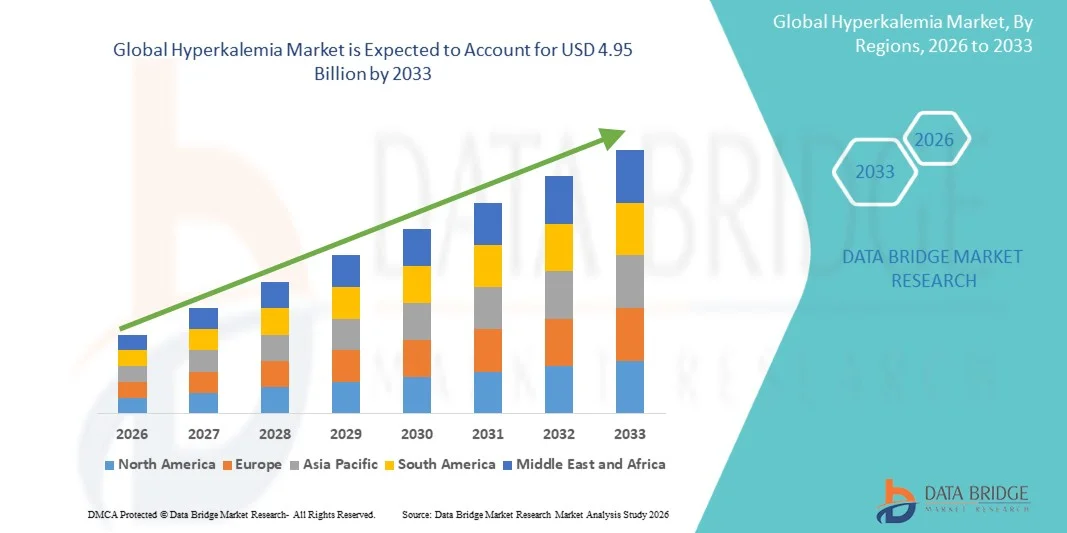
The Hyperkalemia Market was valued at USD 2.18 billion in 2025 and is projected to reach USD 4.95 billion by 2033, growing at a CAGR of 10.80% from 2026 to 2033. The Hyperkalemia Market is experiencing steady growth driven by the rising prevalence of chronic kidney disease (CKD), heart failure, and diabetes, which are major risk factors associated with elevated potassium levels in the blood. Increasing adoption of advanced potassium-lowering therapies, including novel potassium binders and rapid-acting emergency treatments, is significantly improving patient outcomes in both acute and chronic care settings.
The market is also being supported by growing awareness among healthcare professionals regarding early diagnosis and effective long-term management of hyperkalemia to prevent life-threatening cardiac complications. Expanding access to dialysis services, rising hospital admissions for renal and cardiovascular disorders, and continuous improvements in emergency care infrastructure are further strengthening demand.
Key Market Trends & Insights
- North America dominated the Hyperkalemia Market with the largest revenue share of 38.42% in 2025, supported by a high prevalence of chronic kidney disease (CKD), heart failure, and diabetes, along with strong adoption of advanced potassium-lowering therapies. The region benefits from well-established hospital infrastructure, advanced emergency care systems, and widespread availability of novel potassium binders such as sodium zirconium cyclosilicate and patiromer. Strong reimbursement frameworks, high healthcare spending, and early adoption of innovative nephrology treatments further reinforce regional dominance.
- The Potassium Binders segment dominated the market with a 44.62% share in 2025, driven by their widespread use as first-line therapy for managing mild to moderate hyperkalemia in both chronic kidney disease (CKD) and heart failure patients.
- Asia-Pacific is expected to be the fastest-growing region at a CAGR of 8.4% from 2026 to 2033, fueled by a rapidly increasing burden of chronic kidney disease, diabetes, and cardiovascular disorders, along with expanding healthcare infrastructure across China, India, and Japan. Rising healthcare expenditure, improving access to dialysis services, and growing awareness of early diagnosis and hyperkalemia management are significantly supporting market expansion. In addition, increasing adoption of modern potassium binders and gradual improvements in critical care facilities are accelerating regional growth.
- The Online Pharmacies segment is projected to register the fastest growth at a CAGR of 7.9% from 2026 to 2033, supported by increasing adoption of digital healthcare platforms, home-based chronic disease management, and rising demand for convenient medication access. Growing e-prescription systems and expanding telehealth services are further accelerating distribution channel expansion globally.
Market Size & Forecast
- Global Market Value (2025): USD 2.18 Billion
- Expected Market Value (2033): USD 4.95 Billion
- Forecast CAGR (2026–2033): 10.80%
- Leading Region in 2025: North America
- Fastest Growing Region: Asia-Pacific
Report Scope and Hyperkalemia Market Segmentation
|
Attributes |
Hyperkalemia Key Market Insights |
|
Segments Covered |
|
|
Countries Covered |
North America
Europe
Asia-Pacific
Middle East and Africa
South America
|
|
Key Market Players |
• AstraZeneca (U.K.) |
|
Market Opportunities |
|
|
Value Added Data Infosets |
In addition to the insights on market scenarios such as market value, growth rate, segmentation, geographical coverage, and major players, the market reports curated by the Data Bridge Market Research also include in-depth expert analysis, geographically represented company-wise production and capacity, network layouts of distributors and partners, detailed and updated price trend analysis and deficit analysis of supply chain and demand. |
Hyperkalemia Market Trends
Trend: Growth in Targeted Potassium Management & Chronic Disease Treatment
The Hyperkalemia Market is witnessing strong growth driven by increasing reliance on targeted potassium-lowering therapies for patients with chronic kidney disease (CKD), heart failure, and diabetes. Clinicians are increasingly shifting toward selective potassium binders such as sodium zirconium cyclosilicate (Lokelma) and patiromer (Veltassa), which enable long-term outpatient management while maintaining better gastrointestinal safety compared to older therapies like sodium polystyrene sulfonate. For example, clinical evidence from real-world studies has shown that modern potassium binders can reduce serum potassium levels to within normal range within hours to days while allowing continued use of life-saving RAAS inhibitor therapy. The rising global prevalence of CKD—estimated to affect nearly 10% of the global population (WHO)—is significantly increasing demand for structured hyperkalemia management strategies across hospital and homecare settings.
Hyperkalemia Market Dynamics
Key Market Driver: Rising Prevalence of CKD, Heart Failure, and Diabetes
The major driver of the hyperkalemia market is the growing global burden of chronic kidney disease, heart failure, and diabetes, all of which are strongly associated with elevated potassium levels. According to global epidemiological estimates, CKD affects over 800 million people worldwide, with a significant proportion at risk of developing hyperkalemia due to impaired renal potassium excretion. Hospital data also shows that hyperkalemia occurs in up to 10–15% of hospitalized CKD and heart failure patients, particularly those receiving renin-angiotensin-aldosterone system (RAAS) inhibitors. Drugs such as patiromer and sodium zirconium cyclosilicate are increasingly used to manage these patients without discontinuing cardioprotective therapy. For instance, the HARMONIZE trial demonstrated that sodium zirconium cyclosilicate maintained normal potassium levels in over 80% of patients within 48 hours, reinforcing its clinical value in acute and chronic settings.
Key Restraint/Challenge: Safety Concerns and High Treatment Dependency in Severe Cases
Despite therapeutic advancements, the hyperkalemia market faces challenges related to safety concerns, disease complexity, and dependence on hospital-based care in severe cases. Older treatments such as sodium polystyrene sulfonate (SPS) have been associated with gastrointestinal adverse effects, including rare cases of intestinal necrosis, limiting their use in some patient populations. In addition, severe hyperkalemia (serum potassium >6.5 mmol/L) often requires emergency interventions such as intravenous calcium administration, insulin-glucose therapy, or dialysis, increasing healthcare burden and limiting outpatient management options. Regulatory agencies such as the U.S. FDA and EMA continue to enforce strict monitoring requirements for potassium-lowering therapies, which can slow product approvals and market expansion. Cost considerations for newer branded potassium binders also remain a barrier in low- and middle-income countries.
Key Market Opportunity: Expansion of Long-Term Outpatient and Digital Disease Management Solutions
A major opportunity in the hyperkalemia market lies in the expansion of outpatient care models and digital health-enabled chronic disease management systems. With increasing adoption of telemedicine and remote monitoring, patients with CKD and heart failure can now be managed more efficiently outside hospital environments. For example, home-based potassium monitoring and e-prescription systems are improving adherence to therapies such as Lokelma and Veltassa, reducing hospitalization rates associated with recurrent hyperkalemia episodes. Pharmaceutical companies are also exploring combination strategies, such as potassium binders used alongside RAAS inhibitors, to improve long-term cardiovascular outcomes. Emerging markets in Asia-Pacific, particularly India and China, are witnessing rapid expansion of dialysis centers and nephrology clinics, creating significant growth potential for affordable potassium-lowering therapies and expanding access to life-saving treatment options.
Hyperkalemia Market Scope
The Hyperkalemia market is segmented on the basis of treatment type, end user, and distribution channel.
• By Treatment Type
On the basis of treatment type, the Hyperkalemia Market is segmented into Potassium Binders, Intravenous Therapies, and Dialysis-Based Management. The Potassium Binders segment dominated the market with a 44.62% share in 2025, driven by their widespread use as first-line therapy for managing mild to moderate hyperkalemia in both chronic kidney disease (CKD) and heart failure patients. These agents are increasingly preferred due to improved safety profiles, oral administration convenience, and the availability of newer generation binders with better efficacy and fewer gastrointestinal side effects. Rising prevalence of CKD and growing outpatient management of electrolyte disorders further support segment dominance. In addition, increasing physician preference for long-term potassium control therapies is reinforcing adoption across hospitals and specialty clinics. The segment continues to benefit from expanding clinical guidelines recommending early intervention for potassium imbalance. Growing awareness about preventing recurrent hyperkalemia episodes is also strengthening demand globally. Pharmaceutical innovation and introduction of advanced non-absorbed polymer binders are further accelerating usage. Increasing hospital prescriptions and inclusion in emergency treatment protocols are also contributing to market expansion. Strong clinical adoption across developed healthcare systems continues to support sustained leadership of this segment.
The Intravenous Therapies segment is expected to witness the fastest growth at a CAGR of 7.4% from 2026 to 2033, driven by its critical role in emergency and acute care settings for rapid potassium reduction. Increasing incidence of life-threatening hyperkalemia in intensive care units and emergency departments is significantly boosting demand for fast-acting IV treatments. Hospitals are increasingly adopting IV calcium, insulin-glucose therapy, and beta-agonist-based interventions for immediate stabilization of patients. Growing burden of cardiovascular diseases and renal failure is further accelerating usage. Rising hospitalization rates among high-risk patients is increasing reliance on emergency treatment protocols. Continuous improvements in hospital infrastructure, especially in emerging economies, are supporting adoption. Additionally, growing awareness among clinicians regarding rapid correction of severe electrolyte imbalance is driving uptake. Expanding critical care capacity in Asia-Pacific and Latin America is further strengthening growth momentum. Technological improvements in drug delivery systems are improving treatment precision. Increasing clinical emphasis on reducing mortality associated with acute hyperkalemia episodes is reinforcing this segment’s rapid expansion.
• By End User
On the basis of end user, the Hyperkalemia Market is segmented into Hospitals, Dialysis Centers, Specialty Clinics, and Homecare Settings. The Hospitals segment dominated the market with a 52.38% share in 2025, due to high patient inflow for emergency treatment of severe hyperkalemia and the availability of advanced diagnostic and critical care infrastructure. Hospitals serve as the primary point of care for acute electrolyte imbalance cases requiring immediate intervention. The presence of skilled healthcare professionals and access to intravenous therapies and dialysis equipment supports strong demand. Increasing admissions of CKD and heart failure patients further strengthens hospital dominance. Growing number of emergency department visits linked to cardiac arrhythmias is also contributing significantly. Hospitals are increasingly adopting standardized hyperkalemia management protocols, improving treatment efficiency. Strong reimbursement frameworks in developed markets further support patient inflow. Expansion of tertiary care hospitals in emerging regions is boosting access to advanced treatment. Integration of point-of-care testing systems is improving diagnosis speed. Rising focus on reducing in-hospital mortality rates is reinforcing hospital-based care dominance globally.
The Homecare Settings segment is expected to witness the fastest growth at a CAGR of 8.1% from 2026 to 2033, driven by increasing adoption of chronic disease management at home, especially among CKD patients. Growing preference for patient-centric care and reduced hospital visits is accelerating home-based treatment adoption. Availability of portable diagnostic devices and remote monitoring tools is improving treatment feasibility. Rising healthcare costs are encouraging shift from inpatient to homecare management. Telemedicine integration is enabling continuous physician supervision. Increasing elderly population with long-term kidney disorders is further driving demand. Pharmaceutical companies are developing patient-friendly oral therapies suitable for home use. Government initiatives promoting home-based chronic care are supporting expansion. Improved caregiver training programs are enhancing treatment compliance. Growing focus on quality of life improvement is further strengthening this segment’s rapid growth.
• By Distribution Channel
On the basis of distribution channel, the Hyperkalemia Market is segmented into Hospital Pharmacies, Retail Pharmacies, and Online Pharmacies. The Hospital Pharmacies segment dominated the market with a 48.73% share in 2025, due to high prescription volumes within hospital settings for emergency and inpatient hyperkalemia management. Hospital pharmacies ensure immediate availability of critical drugs such as potassium binders and IV therapies. Strong integration with hospital treatment protocols supports efficient drug dispensing. Increasing hospitalization rates for CKD and cardiac patients further boost demand. Presence of centralized procurement systems in hospitals improves supply chain efficiency. Clinical supervision ensures controlled and accurate medication use. Growing adoption of standardized treatment guidelines enhances hospital pharmacy utilization. Expansion of tertiary care hospitals globally is reinforcing segment dominance. Strong institutional purchasing power further supports large-scale procurement. Continuous availability of emergency medicines ensures reliability in critical care situations.
The Online Pharmacies segment is expected to witness the fastest growth at a CAGR of 9.2% from 2026 to 2033, driven by increasing digital healthcare adoption and rising demand for convenient medication access. Growing penetration of e-prescriptions is accelerating online drug purchases. Expanding telemedicine platforms are supporting remote prescription fulfillment. Patients with chronic conditions are increasingly opting for home delivery of medications. Rising smartphone and internet penetration is improving accessibility in emerging markets. Cost-effective pricing and discount availability are encouraging adoption. Increasing awareness of digital pharmacy services is boosting consumer trust. Regulatory support for online pharmaceutical distribution is expanding in several countries. Logistics improvements are ensuring timely and safe drug delivery. Growing preference for contactless healthcare solutions post-pandemic continues to support strong growth momentum.
Hyperkalemia Market Regional Analysis
North America dominated the Hyperkalemia Market and accounted for the largest revenue share of 38.42% in 2025, supported by a high burden of chronic kidney disease (CKD), heart failure, and diabetes, which significantly increases the incidence of elevated serum potassium levels. The region benefits from advanced hospital infrastructure, strong emergency care systems, and widespread availability of innovative potassium-lowering therapies. Early adoption of novel drugs such as sodium zirconium cyclosilicate and patiromer, along with strong reimbursement frameworks and high healthcare spending, further strengthens market dominance. In addition, well-established clinical guidelines for hyperkalemia management and rapid adoption of evidence-based nephrology treatments are driving consistent demand across hospital and specialty care settings. Continuous R&D activities by leading pharmaceutical companies and increasing integration of advanced diagnostic and monitoring tools are further supporting regional leadership in the global market.
U.S. Hyperkalemia Market Insight
The U.S. Hyperkalemia market is witnessing strong growth due to the rising prevalence of chronic kidney disease, diabetes, and cardiovascular disorders, which are key risk factors for elevated potassium levels. The country’s advanced healthcare infrastructure, strong presence of leading pharmaceutical companies, and high adoption of innovative potassium binders are driving market expansion. Increasing hospital admissions related to renal complications and heart failure are further boosting demand for effective hyperkalemia management therapies. In addition, growing awareness among physicians regarding early diagnosis and aggressive potassium control strategies is supporting treatment adoption. Strong clinical research activity and rapid integration of novel drug therapies into standard care protocols continue to enhance market growth across the United States.
Europe Hyperkalemia Market Insight
The Europe Hyperkalemia market remains a significant contributor to global revenue, supported by a high prevalence of CKD and cardiovascular diseases across major countries such as Germany, the U.K., France, and Italy. The region benefits from strong public healthcare systems, well-established nephrology care networks, and increasing adoption of advanced potassium-lowering therapies. Strict clinical guidelines and regulatory support for patient safety are encouraging early diagnosis and effective management of hyperkalemia. In addition, rising hospital admissions due to aging populations and chronic disease burden are further driving demand. Continuous adoption of innovative treatments and expanding access to modern emergency care services continue to strengthen market growth across Europe.
U.K. Hyperkalemia Market Insight
The U.K. Hyperkalemia market is experiencing steady growth driven by increasing cases of chronic kidney disease and heart failure, particularly among the aging population. The National Health Service (NHS) plays a critical role in ensuring widespread access to advanced treatment options, including modern potassium binders and emergency care protocols. Growing emphasis on early diagnosis, preventive nephrology care, and improved hospital management practices is supporting market expansion. In addition, strong clinical research activity and adoption of evidence-based treatment guidelines are enhancing patient outcomes. Increasing hospital awareness programs and improved critical care infrastructure further contribute to the country’s growing hyperkalemia treatment landscape.
Germany Hyperkalemia Market Insight
The Germany Hyperkalemia market is expanding steadily due to the country’s strong healthcare infrastructure, high burden of renal and cardiovascular diseases, and advanced clinical research ecosystem. German hospitals and specialty clinics are increasingly adopting innovative potassium-lowering therapies and digital monitoring systems for better patient management. Strong emphasis on precision medicine and early intervention strategies is supporting improved treatment outcomes. In addition, government-backed healthcare funding and continuous innovation in nephrology care are driving adoption of advanced therapies. The presence of leading pharmaceutical companies and strong hospital networks further strengthens Germany’s position in the European hyperkalemia market.
Asia-Pacific Hyperkalemia Market Insight
The Asia-Pacific Hyperkalemia market is expected to witness rapid growth, driven by a rising prevalence of chronic kidney disease, diabetes, and hypertension across countries such as China, India, and Japan. Expanding healthcare infrastructure, increasing hospital capacity, and improving access to diagnostic and treatment facilities are supporting regional market growth. Growing awareness of electrolyte imbalance complications and rising adoption of modern potassium-lowering therapies are further accelerating demand. In addition, increasing healthcare expenditure and government initiatives aimed at improving renal care services are strengthening market penetration. The region is also benefiting from expanding pharmaceutical distribution networks and improved availability of advanced treatment options.
Japan Hyperkalemia Market Insight
The Japan Hyperkalemia market is witnessing consistent growth due to a rapidly aging population and high prevalence of chronic diseases such as CKD and heart failure. The country’s advanced healthcare system ensures early diagnosis and effective management of electrolyte disorders. Widespread use of modern potassium binders and strong clinical adherence to treatment guidelines are supporting improved patient outcomes. In addition, continuous innovation in pharmaceutical therapies and strong hospital infrastructure are contributing to market expansion. Growing focus on preventive care and long-term disease management further strengthens Japan’s position in the Asia-Pacific region.
China Hyperkalemia Market Insight
The China Hyperkalemia market is growing rapidly, driven by a large patient population suffering from chronic kidney disease, diabetes, and cardiovascular disorders. Expanding healthcare infrastructure, increasing government investment in public health systems, and rising awareness of electrolyte imbalance conditions are key growth drivers. The adoption of modern potassium-lowering drugs is increasing across tertiary hospitals and specialty clinics. In addition, improvements in diagnostic capabilities and growing access to emergency care services are supporting timely treatment. Rapid urbanization, rising healthcare expenditure, and continuous pharmaceutical innovation are positioning China as one of the fastest-growing hyperkalemia markets globally.
Hyperkalemia Market Share
The Hyperkalemia industry is primarily led by well-established companies, including:
•AstraZeneca (U.K.)
• Vifor Pharma (Switzerland)
• Sanofi (France)
• Amgen Inc. (U.S.)
• Abbott Laboratories (U.S.)
• Baxter International Inc. (U.S.)
• Fresenius Medical Care (Germany)
• GlaxoSmithKline (GSK) (U.K.)
• Novartis AG (Switzerland)
• Merck & Co., Inc. (U.S.)
• Astellas Pharma Inc. (Japan)
• Otsuka Pharmaceutical Co., Ltd. (Japan)
• Akebia Therapeutics (U.S.)
• Zydus Lifesciences (India)
• Sun Pharmaceutical Industries Ltd. (India)
• Dr. Reddy’s Laboratories (India)
• Teva Pharmaceutical Industries Ltd. (Israel)
Latest Developments in Hyperkalemia Market
- In June 2021, Bayer announced continued global expansion and clinical evidence support for its non-steroidal mineralocorticoid receptor antagonist finerenone (Kerendia), following its FDA approval for chronic kidney disease associated with type 2 diabetes. The therapy is clinically relevant to hyperkalemia management because it demonstrated a controlled safety profile with monitored serum potassium levels in high-risk CKD patients. This development strengthened the therapeutic landscape for hyperkalemia-linked renal and cardiovascular conditions and expanded treatment options beyond traditional potassium binders
- In December 2021, multiple clinical reviews and meta-analyses confirmed the growing adoption of newer potassium binders such as patiromer and sodium zirconium cyclosilicate (SZC) for long-term hyperkalemia management in CKD and heart failure patients. These studies demonstrated sustained potassium reduction and improved safety compared to older resin-based therapies, supporting their increasing inclusion in clinical guidelines and hospital protocols globally
- In March 2023, AstraZeneca expanded global access to sodium zirconium cyclosilicate (Lokelma), a highly selective potassium binder indicated for hyperkalemia in adult patients. The drug works by exchanging potassium ions in the gastrointestinal tract, enabling rapid reduction in serum potassium levels and improved long-term control in CKD and heart failure populations. This expansion strengthened its commercial footprint across multiple regions as demand for safer potassium-lowering therapies increased
- In April 2024, clinical studies published in nephrology and emergency medicine journals demonstrated that sodium zirconium cyclosilicate (SZC) provides rapid potassium reduction within hours and achieves normokalemia in acute hyperkalemia cases in emergency settings. The findings supported broader hospital adoption of SZC as a frontline treatment option for both chronic and acute hyperkalemia management, especially in high-risk CKD patients
- In November 2025, AstraZeneca Pharma India announced a strategic partnership with Sun Pharmaceutical Industries to expand availability of sodium zirconium cyclosilicate (SZC) in India. The collaboration aims to improve access to advanced hyperkalemia treatment in a rapidly growing patient population with chronic kidney disease and cardiovascular disorders. This development reflects increasing commercialization and regional penetration of modern potassium-binding therapies in emerging markets

- Interactive Data Analysis Dashboard
- Company Analysis Dashboard for high growth potential opportunities
- Research Analyst Access for customization & queries
- Competitor Analysis with Interactive dashboard
- Latest News, Updates & Trend analysis
- Harness the Power of Benchmark Analysis for Comprehensive Competitor Tracking
Data collection and base year analysis are done using data collection modules with large sample sizes. The stage includes obtaining market information or related data through various sources and strategies. It includes examining and planning all the data acquired from the past in advance. It likewise envelops the examination of information inconsistencies seen across different information sources. The market data is analysed and estimated using market statistical and coherent models. Also, market share analysis and key trend analysis are the major success factors in the market report. To know more, please request an analyst call or drop down your inquiry.
The key research methodology used by DBMR research team is data triangulation which involves data mining, analysis of the impact of data variables on the market and primary (industry expert) validation. Data models include Vendor Positioning Grid, Market Time Line Analysis, Market Overview and Guide, Company Positioning Grid, Patent Analysis, Pricing Analysis, Company Market Share Analysis, Standards of Measurement, Global versus Regional and Vendor Share Analysis. To know more about the research methodology, drop in an inquiry to speak to our industry experts.
Data Bridge Market Research is a leader in advanced formative research. We take pride in servicing our existing and new customers with data and analysis that match and suits their goal. The report can be customized to include price trend analysis of target brands understanding the market for additional countries (ask for the list of countries), clinical trial results data, literature review, refurbished market and product base analysis. Market analysis of target competitors can be analyzed from technology-based analysis to market portfolio strategies. We can add as many competitors that you require data about in the format and data style you are looking for. Our team of analysts can also provide you data in crude raw excel files pivot tables (Fact book) or can assist you in creating presentations from the data sets available in the report.













