


What is the Hypersensitivity Market Size and Growth Rate?
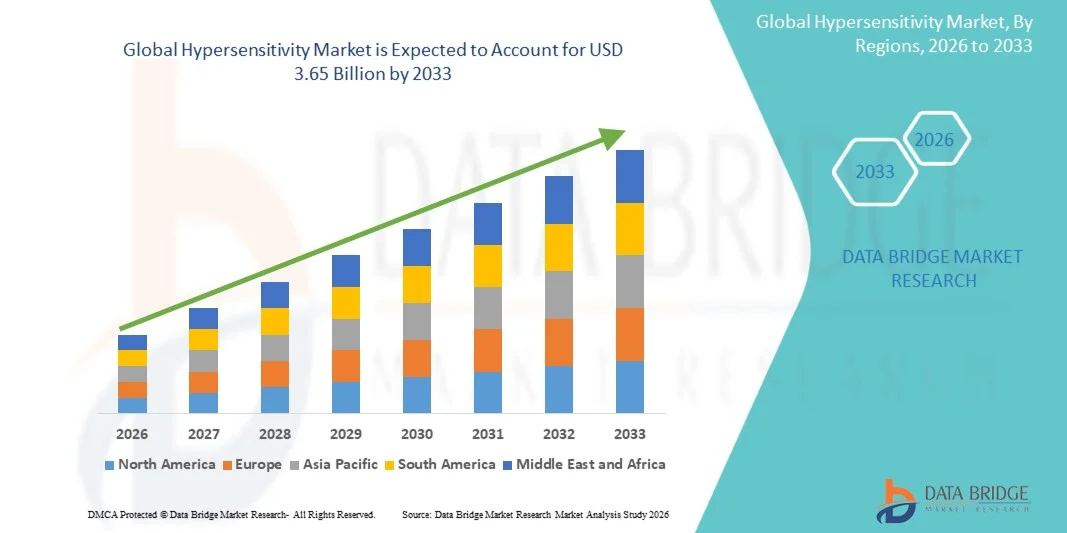
- As per Data Bridge Market Research analysis the hypersensitivity market was valued at USD 2.49 billion in 2025 and is projected to reach USD 3.65 billion by 2033, growing at a CAGR of 4.90% from 2026 to 2033.
- The market is experiencing consistent growth driven by the increasing prevalence of allergic and hypersensitivity disorders, rising awareness regarding early diagnosis and treatment, and growing demand for advanced diagnostic and therapeutic solutions.
- The increasing incidence of food allergies, drug hypersensitivity, respiratory allergies, and other immune-mediated conditions, combined with improvements in diagnostic technologies and healthcare infrastructure, is encouraging healthcare providers to adopt more effective hypersensitivity management solutions.
Market Size & Forecast
- Market Value (2025): USD 2.49 Billion
- Expected Market Value (2033): USD 3.65 Billion
- Forecast CAGR (2026–2033): 4.90%
- Leading Region in 2025: North America
- Fastest Growing Region: Asia-Pacific
What are the Major Takeaways of the Hypersensitivity Market?
- North America dominated the hypersensitivity market with the largest revenue share in 2025, supported by the high prevalence of allergic disorders, advanced healthcare infrastructure, and increasing awareness of allergy diagnosis and treatment.
- Asia-Pacific hypersensitivity market is expected to witness the fastest growth rate from 2026 to 2033, supported by increasing urbanization, changing environmental conditions, rising healthcare expenditure, and growing awareness of allergic diseases across China, Japan, and India.
- The type I-immediate hypersensitivity segment held the largest market revenue share in 2025, driven by the high prevalence of allergic conditions such as asthma, allergic rhinitis, urticaria, and food allergies. Type I hypersensitivity is widely associated with IgE-mediated immune responses and is therefore a major focus of allergy diagnosis and treatment.
- The type IV-delayed hypersensitivity segment is projected to register the fastest growth at a CAGR from 2026 to 2033, driven by increasing recognition of contact dermatitis, drug reactions, and other delayed immune-mediated conditions. Rising demand for specialized diagnostic testing and targeted treatment approaches is accelerating segment expansion.
- The asthma segment held the largest market revenue share in 2025, driven by the widespread prevalence of allergic and inflammatory respiratory conditions and increasing demand for effective long-term disease management.
- The urticaria segment is projected to register the fastest growth at a CAGR from 2026 to 2033, driven by increasing awareness of chronic urticaria, improved diagnosis, and rising adoption of antihistamines and biologic therapies. Growing availability of advanced treatment options is accelerating segment expansion.
Report Scope and Hypersensitivity Market Segmentation
|
Attributes |
Hypersensitivity Key Market Insights |
|
Segments Covered |
|
|
Countries Covered |
North America
Europe
Asia-Pacific
Middle East and Africa
South America
|
|
Key Market Players |
|
|
Market Opportunities |
|
|
Value Added Data Infosets |
In addition to the insights on market scenarios such as market value, growth rate, segmentation, geographical coverage, and major players, the market reports curated by the Data Bridge Market Research also include depth expert analysis, patient epidemiology, pipeline analysis, pricing analysis, and regulatory framework. |
What is the Key Trend in the Hypersensitivity Market?
- The hypersensitivity market is increasingly shifting toward targeted and preventive treatment approaches, with pharmaceutical companies developing therapies that reduce the severity of allergic reactions and improve patient protection against accidental allergen exposure.
- For instance, in February 2024, the U.S. Food and Drug Administration (FDA) approved Xolair (omalizumab) for IgE-mediated food allergy in certain adults and children aged one year and older, making it the first FDA-approved medication designed to reduce allergic reactions to multiple foods following accidental exposure.
- The growing focus on reducing anaphylaxis risk is encouraging the adoption of biologic therapies alongside allergen avoidance, emergency preparedness, and specialist-led allergy management.
- For instance, the American Academy of Allergy, Asthma and Immunology (AAAAI) recommends that people with confirmed IgE-mediated food allergies and systemic symptoms carry epinephrine because accidental exposure and reaction severity can be unpredictable
- As targeted biologics, immunotherapy, and improved allergy-management approaches continue to advance, the market is expected to increasingly focus on personalized treatment and reducing the health impact of severe hypersensitivity reactions.
What are the Key Drivers of the Hypersensitivity Market?
- The increasing prevalence and recognition of food, drug, respiratory, and other allergic conditions is driving demand for accurate diagnostic procedures and effective therapeutic solutions for hypersensitivity disorders.
- For instance, the FDA regulates allergenic products including allergen extracts, patch tests, and antigen skin tests, which are used for the diagnosis and treatment of several allergic diseases, including allergic rhinitis, sinusitis, conjunctivitis, insect venom allergy, and food allergy.
- avoidance, and preventive treatment to reduce severe reactions and improve long-term disease management.
- For instance, AAAAI states that accurate diagnosis by an allergist or immunologist is essential for managing food allergies, with skin tests, blood tests, and supervised food challenges used when appropriate to confirm allergy.
- With increasing awareness of allergic disorders and continued development of diagnostic and therapeutic technologies, demand for hypersensitivity management solutions is expected to remain a significant market growth driver.
Which Factors are Challenging the Growth of the Hypersensitivity Market?
- Hypersensitivity disorders can be difficult to diagnose accurately because symptoms may overlap with food intolerance and other medical conditions, while treatment often requires long-term allergen avoidance, monitoring, and specialist care.
- These complexities can delay diagnosis and increase healthcare costs, particularly where access to allergists, diagnostic testing, and specialized treatment remains limited.
- For instance, AAAAI notes that many people who believe they have a food allergy may actually have food intolerance or another condition, highlighting the importance of appropriate diagnostic testing and specialist evaluation before treatment.
- In addition, severe hypersensitivity reactions such as anaphylaxis require immediate treatment with epinephrine and emergency medical care, increasing the need for continuous patient preparedness and access to appropriate emergency therapies.
- The complexity of diagnosis, high costs associated with advanced therapies and specialist care, and the need for continuous management and emergency preparedness can therefore restrict treatment accessibility and slow market expansion, particularly in developing healthcare systems.
How is the Hypersensitivity Market Segmented?
The market is segmented on the basis of types, diseases, medication, end-users, and distribution channel.
- By Types
On the basis of types, the hypersensitivity market is segmented into type I-immediate hypersensitivity, type II-cytotoxic hypersensitivity, type III-immune-complex, type IV-delayed hypersensitivity, and others. The type I-immediate hypersensitivity segment held the largest market revenue share in 2025, driven by the high prevalence of allergic conditions such as asthma, allergic rhinitis, urticaria, and food allergies. Type I hypersensitivity is widely associated with IgE-mediated immune responses and is therefore a major focus of allergy diagnosis and treatment.
The type IV-delayed hypersensitivity segment is projected to register the fastest growth at a CAGR from 2026 to 2033, driven by increasing recognition of contact dermatitis, drug reactions, and other delayed immune-mediated conditions. Rising demand for specialized diagnostic testing and targeted treatment approaches is accelerating segment expansion.
- By Diseases
On the basis of diseases, the hypersensitivity market is segmented into urticaria, eczema, conjunctivitis, rhinorrhea, rhinitis, asthma, gastroenteritis, systemic lupus erythematosus, Arthurs reaction, lupus nephritis, aspergillosis, polyarteritis, rheumatoid arthritis, tuberculosis, leprosy, blastomycosis, histoplasmosis, toxoplasmosis, leishmaniasis, and others. The asthma segment held the largest market revenue share in 2025, driven by the widespread prevalence of allergic and inflammatory respiratory conditions and increasing demand for effective long-term disease management.
The urticaria segment is projected to register the fastest growth at a CAGR from 2026 to 2033, driven by increasing awareness of chronic urticaria, improved diagnosis, and rising adoption of antihistamines and biologic therapies. Growing availability of advanced treatment options is accelerating segment expansion.
- By Medication
On the basis of medication, the hypersensitivity market is segmented into anti-inflammatory, immunosuppressive, anti-histamines, corticosteroids, and others. The anti-histamines segment held the largest market revenue share in 2025, driven by their widespread use in managing allergic symptoms associated with urticaria, rhinitis, conjunctivitis, and other hypersensitivity conditions. Antihistamines are preferred due to their established efficacy, broad availability, and suitability for managing common allergy symptoms.
The immunosuppressive segment is projected to register the fastest growth at a CAGR from 2026 to 2033, driven by increasing use in severe immune-mediated and autoimmune hypersensitivity conditions. Rising demand for targeted disease management and advanced immunomodulatory therapies is accelerating segment expansion.
- By End-Users
On the basis of end-users, the hypersensitivity market is segmented into hospitals, homecare, specialty clinics, and others. The hospitals segment held the largest market revenue share in 2025, driven by the availability of specialized diagnostic facilities, emergency care, allergy testing, and advanced treatment options. Hospitals are widely preferred for managing severe hypersensitivity reactions and complex immune-mediated diseases requiring specialist supervision.
The specialty clinics segment is projected to register the fastest growth at a CAGR from 2026 to 2033, driven by increasing demand for specialized allergy diagnosis, immunotherapy, and personalized treatment. Growing patient preference for dedicated allergy and immunology services is accelerating segment expansion.
- By Distribution Channel
On the basis of distribution channel, the hypersensitivity market is segmented into hospital pharmacy, online pharmacy, and retail pharmacy. The hospital pharmacy segment held the largest market revenue share in 2025, driven by the widespread use of prescription medicines and emergency treatments in hospital-based hypersensitivity management. Hospital pharmacies provide convenient access to specialized medications required for severe allergic and immune-mediated conditions.
The online pharmacy segment is projected to register the fastest growth at a CAGR from 2026 to 2033, driven by increasing digitalization of healthcare, expanding e-commerce platforms, and growing consumer preference for convenient home delivery of medications. Rising internet penetration and wider availability of prescription and over-the-counter allergy medicines are accelerating segment expansion.
Which Region Holds the Largest Share of the Hypersensitivity Market?
- North America dominated the hypersensitivity market with the largest revenue share in 2025, supported by the high prevalence of allergic disorders, advanced healthcare infrastructure, and increasing awareness of allergy diagnosis and treatment.
- The region benefits from widespread access to allergists, immunologists, diagnostic testing, and advanced therapeutic options. Growing demand for biologic therapies, immunotherapy, antihistamines, and emergency treatments for severe allergic reactions is further strengthening the market, particularly across the U.S. and Canada.
U.S. Hypersensitivity Market Insight
U.S. hypersensitivity market captured the largest revenue share in 2025 within North America, fueled by the increasing prevalence of food allergies, asthma, allergic rhinitis, eczema, and other immune-mediated conditions. Growing awareness regarding early diagnosis and allergy management is encouraging patients to seek specialized healthcare services. Moreover, strong research and development activities, availability of advanced biologic therapies, and increasing adoption of personalized treatment approaches are significantly contributing to market expansion.
Europe Hypersensitivity Market Insight
Europe hypersensitivity market is expected to witness significant growth from 2026 to 2033, primarily driven by increasing awareness of allergic diseases, improving diagnostic capabilities, and rising demand for effective treatment options. The region's well-developed healthcare systems and growing emphasis on preventive healthcare are supporting the diagnosis and management of hypersensitivity conditions. Increasing adoption of immunotherapy, biologics, antihistamines, and corticosteroids across hospitals and specialty clinics is further supporting market growth.
U.K. Hypersensitivity Market Insight
U.K. hypersensitivity market is expected to witness strong growth from 2026 to 2033, driven by increasing awareness of food allergies, asthma, eczema, and other allergic conditions. The country's established healthcare infrastructure and growing focus on early diagnosis are encouraging greater utilization of allergy testing and specialist care. In addition, increasing availability of advanced therapies and growing patient awareness regarding allergy prevention and management are expected to stimulate market expansion.
Germany Hypersensitivity Market Insight
Germany hypersensitivity market is expected to witness steady growth from 2026 to 2033, fueled by increasing prevalence of allergic and immune-mediated diseases and the country's advanced healthcare infrastructure. Growing investments in medical research, diagnostic technologies, and innovative treatment approaches are supporting the management of hypersensitivity disorders. Furthermore, increasing demand for specialized allergy services, immunotherapy, and biologic treatments is contributing to market expansion across hospitals and specialty clinics.
Asia-Pacific Hypersensitivity Market Insight
The Asia-Pacific hypersensitivity market is expected to witness the fastest growth rate from 2026 to 2033, supported by increasing urbanization, changing environmental conditions, rising healthcare expenditure, and growing awareness of allergic diseases across China, Japan, and India. Improving healthcare infrastructure and expanding access to allergy diagnostics and treatment are encouraging earlier disease identification. Furthermore, increasing adoption of modern therapeutic approaches and expanding specialty healthcare services are creating significant opportunities for hypersensitivity management solutions.
Japan Hypersensitivity Market Insight
Japan hypersensitivity market is expected to witness strong growth from 2026 to 2033 due to increasing awareness of allergic diseases, an aging population, and the country's advanced healthcare and diagnostic infrastructure. Growing demand for effective management of allergic rhinitis, asthma, eczema, and other immune-mediated conditions is encouraging the adoption of specialized treatments. Moreover, Japan's focus on medical innovation and increasing availability of advanced pharmaceutical therapies are supporting market growth across hospitals and specialty clinics.
China Hypersensitivity Market Insight
China hypersensitivity market accounted for the largest market revenue share in Asia Pacific in 2025, attributed to the country's large patient population, increasing prevalence of allergic conditions, expanding healthcare expenditure, and improving diagnostic infrastructure. Growing urbanization and environmental changes are contributing to increasing awareness and diagnosis of allergic and respiratory disorders. The expansion of hospitals, specialty clinics, pharmaceutical development, and access to advanced allergy treatments is further propelling the hypersensitivity market in China.
Which are the Top Companies in Hypersensitivity Market?
The hypersensitivity industry is primarily led by well-established companies, including:
- Pfizer Inc. (U.S.)
- Sanofi S.A. (France)
- Merck KGaA (Germany)
- GSK plc (U.K.)
- AstraZeneca PLC (U.K.)
- Bristol-Myers Squibb Company (U.S.)
- AbbVie Inc. (U.S.)
- Bayer AG (Germany)
- Teva Pharmaceutical Industries Ltd. (Israel)
- Eli Lilly and Company (U.S.)
- Hikma Pharmaceuticals PLC (U.K.)
- Dr. Reddy's Laboratories Limited (India)
- Amneal Pharmaceuticals, Inc. (U.S.)
- Stallergenes Greer Ltd. (U.K.)
- ALK-Abelló A/S (Denmark)

- Interactive Data Analysis Dashboard
- Company Analysis Dashboard for high growth potential opportunities
- Research Analyst Access for customization & queries
- Competitor Analysis with Interactive dashboard
- Latest News, Updates & Trend analysis
- Harness the Power of Benchmark Analysis for Comprehensive Competitor Tracking
Data collection and base year analysis are done using data collection modules with large sample sizes. The stage includes obtaining market information or related data through various sources and strategies. It includes examining and planning all the data acquired from the past in advance. It likewise envelops the examination of information inconsistencies seen across different information sources. The market data is analysed and estimated using market statistical and coherent models. Also, market share analysis and key trend analysis are the major success factors in the market report. To know more, please request an analyst call or drop down your inquiry.
The key research methodology used by DBMR research team is data triangulation which involves data mining, analysis of the impact of data variables on the market and primary (industry expert) validation. Data models include Vendor Positioning Grid, Market Time Line Analysis, Market Overview and Guide, Company Positioning Grid, Patent Analysis, Pricing Analysis, Company Market Share Analysis, Standards of Measurement, Global versus Regional and Vendor Share Analysis. To know more about the research methodology, drop in an inquiry to speak to our industry experts.
Data Bridge Market Research is a leader in advanced formative research. We take pride in servicing our existing and new customers with data and analysis that match and suits their goal. The report can be customized to include price trend analysis of target brands understanding the market for additional countries (ask for the list of countries), clinical trial results data, literature review, refurbished market and product base analysis. Market analysis of target competitors can be analyzed from technology-based analysis to market portfolio strategies. We can add as many competitors that you require data about in the format and data style you are looking for. Our team of analysts can also provide you data in crude raw excel files pivot tables (Fact book) or can assist you in creating presentations from the data sets available in the report.












