


What is the Hypertension Management Devices Market Size and Growth Rate ?
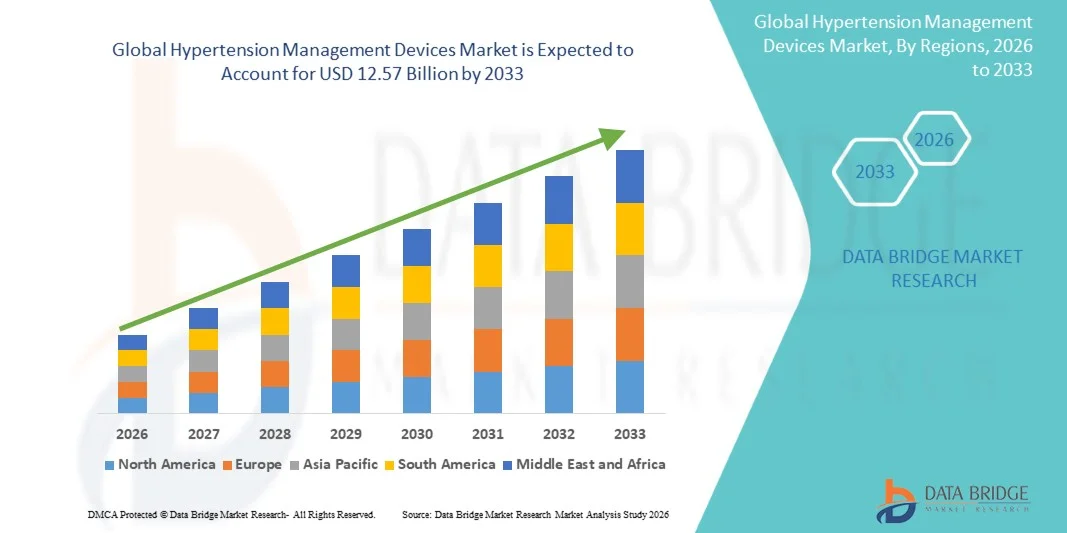
- As per Data Bridge Market Research Analysis the global hypertension management devices market size was valued at USD 7.17 billion in 2025 and is expected to reach USD 12.57 billion by 2033, at a CAGR of 7.27% during the forecast period
- The market growth is largely fuelled by the rising global prevalence of hypertension, cardiovascular disorders, and lifestyle-related diseases, increasing demand for early diagnosis and continuous blood pressure monitoring solutions
- Growing adoption of wearable blood pressure monitors, digital health platforms, and home-based hypertension management devices is significantly enhancing patient compliance, remote monitoring capabilities, and personalized treatment outcomes
Market Size & Forecast
- Global Market Value (2025): USD 7.17 billion
- Expected Market Value (2033): USD 12.57 billion
- Forecast CAGR (2026–2033): 7.27%
What are the Major Takeaways of Hypertension Management Devices Market ?
- The market is witnessing strong growth due to increasing healthcare investments, expanding preventive care initiatives, and rising adoption of non-invasive, portable, and connected hypertension monitoring technologies across homecare and clinical settings
- North America dominated the hypertension management devices market with the largest revenue share in 2025, driven by the high prevalence of hypertension, strong healthcare infrastructure, and rapid adoption of advanced medical technologies for cardiovascular disease management
- Asia-Pacific region is expected to witness the highest growth rate in the global hypertension management devices market, driven by rapid urbanization, rising chronic disease prevalence, expanding healthcare access, increasing awareness of preventive healthcare, and growing investments in advanced medical technologies across emerging economies
- The radiofrequency ablation segment held the largest market revenue share in 2025, driven by its proven effectiveness in renal denervation procedures for resistant hypertension management. This technology offers precise nerve ablation, long-term blood pressure reduction, and broad clinical validation, making it a preferred option in advanced healthcare settings. Its widespread adoption is further supported by increasing regulatory approvals, technological advancements, and growing physician confidence in minimally invasive hypertension therapies
Report Scope and Hypertension Management Devices Market Segmentation
|
Attributes |
Hypertension Management Devices Key Market Insights |
|
Segments Covered |
|
|
Countries Covered |
North America
Europe
Asia-Pacific
Middle East and Africa
South America
|
|
Key Market Players |
• Pfizer Inc. (U.S.) |
|
Market Opportunities |
• Expansion Of AI-Integrated Remote Blood Pressure Monitoring Solutions |
|
Value Added Data Infosets |
In addition to the insights on market scenarios such as market value, growth rate, segmentation, geographical coverage, and major players, the market reports curated by the Data Bridge Market Research also include depth expert analysis, patient epidemiology, pipeline analysis, pricing analysis, and regulatory framework. |
What is the Key Trend in the Hypertension Management Devices Market?
“Rising Adoption of Remote Monitoring and Digital Hypertension Care Solutions”
• The increasing prevalence of hypertension and cardiovascular disorders is significantly shaping the hypertension management devices market, as healthcare providers and patients increasingly prioritize early diagnosis, continuous monitoring, and proactive disease management. Hypertension management devices such as digital blood pressure monitors, wearable sensors, ambulatory monitoring systems, and connected health platforms are gaining traction due to their ability to provide real-time insights, improve treatment adherence, and reduce long-term cardiovascular risks. This trend is accelerating innovation across homecare, hospital, and telehealth ecosystems
• Growing awareness regarding preventive healthcare, chronic disease management, and digital therapeutics has accelerated demand for advanced hypertension monitoring devices across aging populations and high-risk patient groups. Consumers are increasingly adopting portable and wearable devices that enable convenient blood pressure tracking and personalized healthcare management, while healthcare institutions are integrating remote patient monitoring systems to improve patient outcomes and reduce hospital readmissions
• Digital transformation trends are strongly influencing purchasing decisions, with manufacturers emphasizing AI-powered analytics, smartphone integration, cloud-based monitoring, and telemedicine compatibility. These features are helping companies differentiate products in a competitive market, strengthen patient engagement, and improve physician decision-making. Healthcare systems are increasingly leveraging these technologies to expand value-based care models and improve long-term disease management efficiency
• For instance, in 2024, Omron Healthcare in Japan and Philips Healthcare in the Netherlands expanded their hypertension management portfolios through advanced wearable blood pressure monitors and connected cardiovascular monitoring solutions. These product expansions were introduced in response to increasing global demand for remote monitoring and preventive cardiovascular care, with strong penetration across retail, healthcare institutions, and digital health channels. These launches also reinforced patient convenience, clinical efficiency, and long-term adherence
• While demand for hypertension management devices is growing, sustained market expansion depends on technological innovation, affordability, patient compliance, and integration with broader digital healthcare systems. Manufacturers are increasingly focusing on scalable connected care ecosystems, enhanced sensor accuracy, and cost-effective solutions to support broader adoption across developed and emerging healthcare markets
Hypertension Management Devices Market Dynamics
Driver
“Growing Burden of Hypertension and Expansion of Remote Patient Monitoring”
• Rising global incidence of hypertension, obesity, cardiovascular disease, and aging populations is a major driver for the hypertension management devices market. Healthcare providers are increasingly adopting advanced monitoring technologies to improve early diagnosis, treatment optimization, and long-term disease management. This trend is also driving innovation in wearable devices, AI-enabled diagnostics, and connected health ecosystems
• Expanding applications across home healthcare, hospitals, ambulatory care centers, and preventive medicine are strongly influencing market growth. Hypertension management devices provide accurate, continuous, and personalized blood pressure monitoring while reducing dependency on traditional episodic clinical measurements. The increasing preference for home-based care and telehealth services globally further reinforces this growth trajectory
• Medical device manufacturers are actively promoting connected hypertension solutions through product innovation, digital integration, and strategic partnerships with healthcare providers. These efforts are supported by growing patient demand for personalized healthcare and increasing healthcare system focus on chronic disease prevention. Collaborations among medtech firms, software providers, and healthcare institutions are enhancing product performance and healthcare accessibility
• For instance, in 2023, Medtronic in Ireland and GE HealthCare in the U.S. reported expanded investment in remote cardiovascular monitoring platforms and digital blood pressure technologies. These expansions followed rising demand for chronic disease management solutions, improved healthcare accessibility, and preventive care initiatives. Both companies emphasized patient-centric innovation, data connectivity, and digital health integration to strengthen market competitiveness
• Although increasing hypertension prevalence and remote monitoring trends support growth, broader adoption depends on device affordability, reimbursement frameworks, regulatory compliance, and patient engagement. Continued investment in advanced monitoring technologies, digital therapeutics, and healthcare infrastructure will be essential for meeting global demand and maintaining long-term market leadership
Restraint/Challenge
“High Device Costs and Limited Accessibility in Developing Markets”
• The relatively high cost of advanced hypertension management devices compared to conventional blood pressure monitoring methods remains a key challenge, particularly in cost-sensitive healthcare systems. Premium wearable devices, AI-integrated platforms, and connected monitoring solutions often require significant upfront investment, limiting accessibility for certain patient populations. In addition, inconsistent reimbursement structures can further restrict market penetration
• Consumer awareness and healthcare infrastructure remain uneven, particularly in emerging economies where access to preventive cardiovascular technologies is still developing. Limited awareness of continuous monitoring benefits and lower healthcare digitization rates can slow adoption across underserved populations. This disparity also limits broader deployment of advanced hypertension management technologies in lower-income regions
• Supply chain complexity, regulatory approvals, and data privacy concerns also impact market growth, as digital hypertension devices require stringent clinical validation, cybersecurity measures, and compliance with healthcare regulations. Manufacturers must invest heavily in technology validation, data security, and scalable distribution networks to maintain trust and competitiveness
• For instance, in 2024, healthcare providers across Southeast Asia and Latin America reported slower adoption of connected hypertension management solutions due to high costs, limited reimbursement, and insufficient digital health infrastructure. Regulatory barriers and affordability concerns also restricted broader deployment in public healthcare systems, affecting growth potential in emerging markets
• Overcoming these challenges will require cost optimization, improved healthcare accessibility, expanded reimbursement coverage, and focused patient education initiatives. Collaboration with healthcare providers, policymakers, insurers, and digital health companies can help unlock the long-term growth potential of the global hypertension management devices market. Furthermore, enhancing affordability, strengthening healthcare infrastructure, and expanding awareness of preventive cardiovascular care will be critical for widespread global adoption
How is the Hypertension Management Devices Market Segmented ?
The hypertension management devices market is segmented on the basis of technology, product, and application.
• By Technology
On the basis of technology, the hypertension management devices market is segmented into Radiofrequency Ablation, Ultrasound, Micro-Infusion, and Others. The radiofrequency ablation segment held the largest market revenue share in 2025, driven by its proven effectiveness in renal denervation procedures for resistant hypertension management. This technology offers precise nerve ablation, long-term blood pressure reduction, and broad clinical validation, making it a preferred option in advanced healthcare settings. Its widespread adoption is further supported by increasing regulatory approvals, technological advancements, and growing physician confidence in minimally invasive hypertension therapies.
The ultrasound segment is expected to witness the fastest growth rate from 2026 to 2033, driven by its non-invasive approach, enhanced procedural safety, and ability to provide circumferential renal nerve disruption. Ultrasound-based hypertension management devices are gaining traction due to shorter treatment durations, improved patient comfort, and expanding clinical trials demonstrating positive outcomes. Rising investments in next-generation therapeutic platforms and increasing demand for safer treatment alternatives are accelerating segment growth.
• By Product
On the basis of product, the hypertension management devices market is segmented into Renal Denervation Devices, Carotid Sinus Stimulation Devices, and Respiratory Modulation Devices. The renal denervation devices segment accounted for the largest market revenue share in 2025 due to its strong clinical success in managing treatment-resistant hypertension and its growing adoption in interventional cardiology. These devices are increasingly utilized for their ability to provide sustained blood pressure control while reducing dependence on long-term pharmacological therapies.
The carotid sinus stimulation devices segment is anticipated to witness substantial growth during the forecast period, supported by advancements in neuromodulation technology and increasing focus on alternative hypertension therapies. These systems improve autonomic regulation and are gaining interest for patients who are unresponsive to conventional medications. Growing research initiatives and expanding clinical acceptance are expected to support broader commercialization.
• By Application
On the basis of application, the hypertension management devices market is segmented into Hospitals, Clinics, and Home Care. The hospitals segment dominated the market in 2025, driven by the availability of advanced medical infrastructure, skilled specialists, and increasing procedural volumes for device-based hypertension interventions. Hospitals remain the primary treatment centers for complex hypertension cases due to comprehensive patient monitoring capabilities and access to cutting-edge therapeutic technologies.
The home care segment is projected to witness the fastest growth rate from 2026 to 2033, fueled by rising adoption of remote blood pressure monitoring devices, increasing preference for personalized care, and growing awareness regarding early hypertension management. Home-based solutions provide convenience, cost efficiency, and continuous monitoring, making them increasingly popular among aging populations and patients managing chronic hypertension conditions.
Which Region Holds the Largest Share of the Hypertension Management Devices Market ?
• North America dominated the hypertension management devices market with the largest revenue share in 2025, driven by the high prevalence of hypertension, strong healthcare infrastructure, and rapid adoption of advanced medical technologies for cardiovascular disease management
• The region benefits from increasing awareness regarding early diagnosis and treatment of hypertension, along with widespread access to technologically advanced therapeutic devices such as renal denervation and remote monitoring systems
• Rising healthcare expenditures, favorable reimbursement frameworks, and the presence of leading medical device manufacturers further strengthen North America’s leadership, establishing the region as a major hub for innovative hypertension management solutions
U.S. Hypertension Management Devices Market Insight
The U.S. hypertension management devices market captured the largest revenue share in 2025 within North America, fueled by the country’s significant hypertensive patient population, increasing incidence of cardiovascular disorders, and robust adoption of technologically advanced treatment systems. Growing demand for minimally invasive procedures, remote patient monitoring, and home healthcare solutions continues to propel market growth. In addition, strong regulatory support, ongoing clinical research, and rapid integration of digital health platforms significantly contribute to the expansion of hypertension management technologies across hospitals, clinics, and residential settings.
Europe Hypertension Management Devices Market Insight
The Europe hypertension management devices market is expected to witness the fastest growth rate from 2026 to 2033, primarily driven by rising aging populations, increasing prevalence of hypertension-related disorders, and growing healthcare investments. Stringent cardiovascular disease prevention initiatives, coupled with the adoption of innovative therapeutic devices, are accelerating regional growth. European healthcare providers are increasingly focused on preventive care, digital monitoring, and minimally invasive treatment methods, fostering strong market penetration across multiple healthcare segments.
U.K. Hypertension Management Devices Market Insight
The U.K. hypertension management devices market is expected to witness notable growth during the forecast period, supported by increasing awareness of cardiovascular health, expanding home healthcare adoption, and government-backed health improvement programs. The country’s strong focus on digital transformation in healthcare, along with rising demand for continuous blood pressure monitoring solutions, is encouraging greater utilization of hypertension management technologies. Growth in telemedicine and connected healthcare infrastructure further supports market expansion.
Germany Hypertension Management Devices Market Insight
The Germany hypertension management devices market is expected to witness substantial growth from 2026 to 2033, fueled by advanced healthcare infrastructure, high healthcare spending, and increasing demand for innovative cardiovascular treatment technologies. Germany’s emphasis on precision medicine, technological innovation, and preventive healthcare supports strong adoption of hypertension management devices across hospitals and specialty clinics. The country’s focus on integrating digital monitoring systems and minimally invasive treatment solutions further enhances market potential.
Asia-Pacific Hypertension Management Devices Market Insight
The Asia-Pacific hypertension management devices market is expected to witness the fastest growth rate from 2026 to 2033, driven by rising hypertension prevalence, expanding healthcare infrastructure, and growing public awareness regarding cardiovascular disease prevention. Increasing urbanization, lifestyle-related health disorders, and supportive government healthcare reforms are significantly accelerating demand for hypertension management technologies across emerging economies such as China, India, and Japan. The region’s expanding medical device manufacturing capabilities also improve affordability and accessibility.
Japan Hypertension Management Devices Market Insight
The Japan hypertension management devices market is expected to witness strong growth due to the country’s aging population, increasing prevalence of chronic cardiovascular diseases, and strong adoption of technologically advanced healthcare solutions. Japan’s healthcare sector places significant emphasis on precision diagnostics, home healthcare monitoring, and patient-centric treatment solutions. Growing demand for remote monitoring devices and minimally invasive hypertension therapies is further driving market expansion, particularly among elderly populations requiring long-term disease management.
China Hypertension Management Devices Market Insight
The China hypertension management devices market accounted for the largest market revenue share in Asia-Pacific in 2025, attributed to rapid urbanization, increasing chronic disease burden, and substantial healthcare modernization efforts. China’s expanding middle-class population, rising healthcare awareness, and government-led investments in medical infrastructure are driving strong demand for hypertension management technologies. In addition, the country’s growing domestic medical device manufacturing sector and increasing adoption of digital health solutions are significantly contributing to market growth.
Which are the Top Companies in Hypertension Management Devices Market ?
The Hypertension Management Devices industry is primarily led by well-established companies, including:
• Pfizer Inc. (U.S.)
• Amgen Inc. (U.S.)
• Cytokinetics, Inc. (U.S.)
• Hikma Pharmaceuticals PLC (U.K.)
• AbbVie Inc. (U.S.)
• Lupin Ltd. (India)
• Wockhardt (India)
• Glenmark Pharmaceuticals (India)
• Zydus Pharmaceuticals Inc. (U.S.)
• Amneal Pharmaceuticals LLC (U.S.)
• Accord Healthcare (U.K.)
• Aurobindo Pharma (India)
• Abbott (U.S.)
• Medtronic (Ireland)
• BD (U.S.)
• Cook Medical (U.S.)
• Takeda Pharmaceutical Company Limited (Japan)
• Sun Pharmaceutical Industries Ltd. (India)

- Interactive Data Analysis Dashboard
- Company Analysis Dashboard for high growth potential opportunities
- Research Analyst Access for customization & queries
- Competitor Analysis with Interactive dashboard
- Latest News, Updates & Trend analysis
- Harness the Power of Benchmark Analysis for Comprehensive Competitor Tracking
Data collection and base year analysis are done using data collection modules with large sample sizes. The stage includes obtaining market information or related data through various sources and strategies. It includes examining and planning all the data acquired from the past in advance. It likewise envelops the examination of information inconsistencies seen across different information sources. The market data is analysed and estimated using market statistical and coherent models. Also, market share analysis and key trend analysis are the major success factors in the market report. To know more, please request an analyst call or drop down your inquiry.
The key research methodology used by DBMR research team is data triangulation which involves data mining, analysis of the impact of data variables on the market and primary (industry expert) validation. Data models include Vendor Positioning Grid, Market Time Line Analysis, Market Overview and Guide, Company Positioning Grid, Patent Analysis, Pricing Analysis, Company Market Share Analysis, Standards of Measurement, Global versus Regional and Vendor Share Analysis. To know more about the research methodology, drop in an inquiry to speak to our industry experts.
Data Bridge Market Research is a leader in advanced formative research. We take pride in servicing our existing and new customers with data and analysis that match and suits their goal. The report can be customized to include price trend analysis of target brands understanding the market for additional countries (ask for the list of countries), clinical trial results data, literature review, refurbished market and product base analysis. Market analysis of target competitors can be analyzed from technology-based analysis to market portfolio strategies. We can add as many competitors that you require data about in the format and data style you are looking for. Our team of analysts can also provide you data in crude raw excel files pivot tables (Fact book) or can assist you in creating presentations from the data sets available in the report.













