


Hypertriglyceridemia Market Size
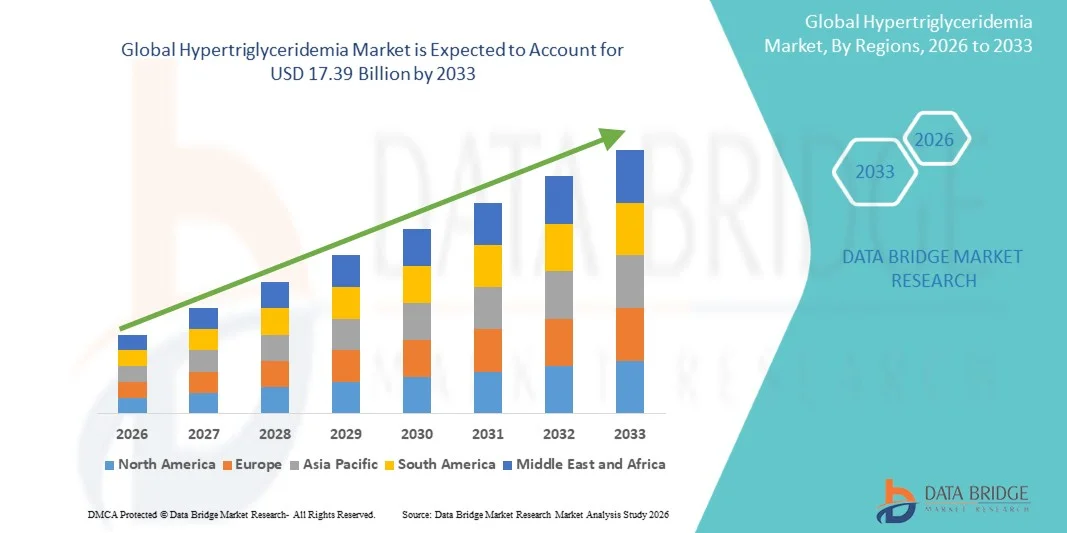
- The global hypertriglyceridemia market size was valued at USD 12.15 billion in 2025 and is expected to reach USD 17.39 billion by 2033, at a CAGR of 4.59% during the forecast period
- The market growth is largely fueled by the rising prevalence of obesity, diabetes, cardiovascular disorders, and unhealthy lifestyle patterns, leading to increasing demand for effective lipid-lowering therapies and preventive healthcare solutions across hospitals, clinics, and homecare settings
- Furthermore, growing awareness regarding the health risks associated with elevated triglyceride levels, rising demand for advanced therapeutics, and increasing focus on personalized treatment approaches are establishing Hypertriglyceridemia solutions as an essential component of modern metabolic disorder management. These converging factors are accelerating the uptake of Hypertriglyceridemia solutions, thereby significantly boosting the industry's growth
Hypertriglyceridemia Market Analysis
- Hypertriglyceridemia treatments, including lipid-lowering drugs, omega-3 fatty acid therapies, fibrates, statins, and lifestyle management solutions, are increasingly vital components of modern cardiovascular and metabolic disease management across hospitals, specialty clinics, and homecare settings due to their role in reducing triglyceride levels and preventing associated complications
- The escalating demand for Hypertriglyceridemia solutions is primarily fueled by the rising prevalence of obesity, diabetes, sedentary lifestyles, and cardiovascular disorders, along with growing awareness regarding the risks of pancreatitis and heart disease linked to elevated triglyceride levels
- North America dominated the hypertriglyceridemia market with the largest revenue share of approximately 42.1% in 2025, characterized by advanced healthcare infrastructure, high diagnosis rates, favorable reimbursement systems, and the presence of major pharmaceutical companies, with the U.S. experiencing substantial growth in prescription therapies and preventive lipid management programs
- Asia-Pacific is expected to be the fastest growing region in the Hypertriglyceridemia market during the forecast period due to increasing urbanization, changing dietary habits, rising disposable incomes, growing diabetic population, and expanding access to healthcare services across China, India, Japan, and Southeast Asia
- The secondary hypertriglyceridemia segment held the largest market revenue share of 57.4% in 2025, driven by the high prevalence of diabetes, obesity, metabolic syndrome, alcoholism, hypothyroidism, and medication-induced lipid disorders
Report Scope and Hypertriglyceridemia Market Segmentation
|
Attributes |
Hypertriglyceridemia Key Market Insights |
|
Segments Covered |
|
|
Countries Covered |
North America
Europe
Asia-Pacific
Middle East and Africa
South America
|
|
Key Market Players |
|
|
Market Opportunities |
|
|
Value Added Data Infosets |
In addition to the insights on market scenarios such as market value, growth rate, segmentation, geographical coverage, and major players, the market reports curated by the Data Bridge Market Research also include in-depth expert analysis, patient epidemiology, pipeline analysis, pricing analysis, and regulatory framework. |
Hypertriglyceridemia Market Trends
“Enhanced Disease Management Through AI Integration and Personalized Lipid Monitoring”
- A significant and accelerating trend in the global Hypertriglyceridemia market is the growing integration of artificial intelligence (AI), digital health tools, and precision medicine approaches to improve diagnosis, risk prediction, and long-term lipid management. These innovations are enhancing treatment outcomes and patient adherence
- AI-powered analytics are increasingly being used to assess cardiovascular risk, predict triglyceride response to therapy, and support treatment personalization based on patient profiles
- For instance, healthcare platforms developed by companies such as IQVIA and Oracle Health use predictive analytics to help clinicians identify high-risk metabolic patients requiring intensive lipid management
- The adoption of connected health devices and mobile applications is also improving patient engagement by enabling regular monitoring of weight, diet, physical activity, and medication adherence
- Another important trend is the increasing use of genetic testing and biomarker-based screening to identify inherited lipid disorders and severe triglyceride abnormalities at earlier stages. For instance, specialty clinics use familial chylomicronemia syndrome (FCS) screening programs to identify patients eligible for targeted therapies
- In addition, pharmaceutical companies are focusing on next-generation therapies such as APOC3 inhibitors, ANGPTL3 inhibitors, and omega-3-based treatments to address unmet needs in severe hypertriglyceridemia patients
- This shift toward personalized, preventive, and technology-enabled lipid care is fundamentally reshaping expectations in metabolic disease treatment and driving demand for advanced therapeutic solutions
Hypertriglyceridemia Market Dynamics
Driver
“Rising Prevalence of Obesity, Diabetes, and Cardiovascular Risk Factors”
- The increasing global prevalence of obesity, type 2 diabetes, metabolic syndrome, and sedentary lifestyles is a major driver for the Hypertriglyceridemia market, as these conditions are strongly associated with elevated triglyceride levels
- Growing awareness of cardiovascular disease prevention and routine lipid screening is further supporting early diagnosis and treatment adoption
- For instance, healthcare systems in the U.S., Europe, Japan, and India are expanding preventive screening programs that include triglyceride testing as part of metabolic health assessments
- Rising aging populations and unhealthy dietary habits, including high sugar and processed food intake, are also contributing to increasing patient volumes globally
- Furthermore, the expanding availability of prescription omega-3 drugs, fibrates, statins, and novel lipid-lowering biologics is strengthening treatment access across developed and emerging markets
- Increasing physician focus on reducing residual cardiovascular risk beyond LDL cholesterol control is expected to further drive demand over the forecast period
Restraint/Challenge
“Underdiagnosis, Poor Treatment Adherence, and High Cost of Novel Therapies”
- One of the major challenges restraining the Hypertriglyceridemia market is the underdiagnosis of elevated triglyceride levels, as many patients remain asymptomatic until complications such as pancreatitis or cardiovascular disease occur
- Poor long-term adherence to lifestyle modification and medication regimens continues to limit treatment success
- For instance, many patients discontinue fibrate or omega-3 therapy due to delayed visible benefits, pill burden, or inconsistent follow-up care
- High pricing of emerging biologics and targeted therapies may also restrict adoption, particularly in cost-sensitive healthcare markets with limited reimbursement coverage
- In addition, variability in treatment guidelines and physician focus primarily on LDL cholesterol management can reduce urgency around triglyceride-specific intervention
- Overcoming these barriers through broader screening programs, patient education, stronger reimbursement support, and improved access to innovative therapies will be essential for sustained market growth
Hypertriglyceridemia Market Scope
The market is segmented on the basis of drug class, type, treatment, end-users, and distribution channel.
• By Drug Class
On the basis of drug class, the Hypertriglyceridemia market is segmented into statins, fibrates, niacin, omega-3 fatty acids, and HMG-CoA reductase inhibitors. The statins segment dominated the largest market revenue share of 38.7% in 2025, driven by their widespread use as first-line lipid-lowering therapy and strong clinical evidence in reducing cardiovascular risk. Statins are commonly prescribed for patients with mixed dyslipidemia and elevated triglyceride levels alongside high LDL cholesterol. Their broad physician familiarity, favorable reimbursement availability, and inclusion in treatment guidelines supported segment leadership. Growing prevalence of obesity, diabetes, and sedentary lifestyles also increased prescription volumes globally. Generic availability of several statin drugs improved affordability and accessibility across emerging markets. Hospitals and primary care settings continued to rely heavily on statins for long-term lipid management. Increasing preventive healthcare awareness also encouraged earlier treatment initiation. Combination therapy involving statins and omega-3 products further expanded use cases. Strong safety data and regular monitoring protocols sustained confidence among clinicians. Expanding aging populations with cardiovascular comorbidities also contributed to growth. These factors collectively ensured segment dominance in 2025.
The omega-3 fatty acids segment is anticipated to witness the fastest growth rate of 9.6% from 2026 to 2033, fueled by rising demand for targeted triglyceride-lowering therapies with favorable tolerability profiles. Prescription omega-3 products are increasingly recommended for patients with severe triglyceride elevations and cardiovascular risk factors. Consumers are also becoming more aware of preventive heart health supplements and nutraceutical approaches. Growing clinical evidence supporting EPA-based formulations is accelerating physician adoption. Pharmaceutical companies are launching purified and high-potency products with improved efficacy. Demand is rising among patients intolerant to conventional therapies. Expanding retail availability and direct-to-consumer awareness campaigns are strengthening market penetration. Increasing preference for combination treatment regimens is another key factor. Emerging markets are witnessing improved access through online pharmacy channels. Aging populations seeking long-term lipid management further support growth. Continuous innovation in formulations is expected to sustain momentum. These trends position omega-3 fatty acids as the fastest-growing drug class segment.
• By Type
On the basis of type, the Hypertriglyceridemia market is segmented into primary hypertriglyceridemia, secondary hypertriglyceridemia, and others. The secondary hypertriglyceridemia segment held the largest market revenue share of 57.4% in 2025, driven by the high prevalence of diabetes, obesity, metabolic syndrome, alcoholism, hypothyroidism, and medication-induced lipid disorders. Secondary forms are more common in adult populations and are frequently diagnosed during routine metabolic screening. Rising global incidence of type 2 diabetes significantly increased patient volumes in this category. Physicians often identify secondary causes during cardiovascular risk assessments and chronic disease management visits. Urban lifestyles characterized by poor diet and low physical activity further contributed to segment expansion. Increasing awareness of lipid testing in primary care also supported diagnosis rates. Management typically combines lifestyle interventions with pharmacological therapy, generating recurring treatment demand. Hospitals and specialty clinics continue to treat large numbers of such patients annually. Improved diagnostic access in developing economies expanded market reach. Long-term management needs support consistent revenue generation. These factors secured segment leadership.
The primary hypertriglyceridemia segment is expected to witness the fastest CAGR of 8.8% from 2026 to 2033, driven by rising genetic screening awareness and improved diagnosis of inherited lipid disorders. Primary hypertriglyceridemia includes familial conditions often linked to severe triglyceride elevations and pancreatitis risk. Advancements in molecular diagnostics are enabling earlier identification of hereditary cases. Specialty clinics are increasingly offering personalized treatment strategies for rare lipid disorders. Growing awareness among physicians regarding unexplained triglyceride elevation is improving referrals. Research into gene-based and targeted therapies is creating future opportunities. Patient advocacy groups are supporting awareness and screening initiatives. Better access to specialist care in developed countries also aids adoption. Increasing use of precision medicine approaches supports long-term growth. Pharmaceutical innovation for orphan lipid disorders is another driver. Preventive management of complications is gaining focus. These factors are expected to accelerate segment expansion.
• By Treatment
On the basis of treatment, the Hypertriglyceridemia market is segmented into pharmacological, non-pharmacological, emerging treatments, and others. The pharmacological segment accounted for the largest market revenue share of 51.6% in 2025, driven by extensive use of statins, fibrates, niacin, and omega-3 prescription therapies. Drug therapy remains essential for moderate-to-severe triglyceride elevation and patients with cardiovascular risk factors. Physicians prefer medications when lifestyle modification alone is insufficient. Strong clinical guidelines recommending timely intervention supported segment demand. Rising diagnosis rates through preventive health screening increased prescription volumes. Generic medications improved affordability across cost-sensitive markets. Long-term adherence programs by healthcare providers further strengthened recurring sales. Hospitals and specialty clinics remain major prescribing centers. Combination therapies are increasingly used for difficult-to-control cases. Expanding insurance coverage in several countries also supported treatment uptake. Continuous physician education enhanced evidence-based prescribing patterns. These factors maintained market dominance.
The emerging treatments segment is projected to witness the fastest CAGR of 11.2% from 2026 to 2033, fueled by innovation in RNA-based therapies, ApoC-III inhibitors, ANGPTL3 inhibitors, and other targeted approaches. These next-generation therapies aim to significantly reduce triglycerides in severe and refractory patients. Biotechnology companies are increasing investments in advanced lipid metabolism treatments. Clinical trials are showing promising outcomes in high-risk populations. Growing demand for personalized medicine is accelerating adoption prospects. Regulators are granting orphan and fast-track designations in select cases. Physicians are showing interest in alternatives for patients with inadequate response to standard drugs. Partnerships between biotech firms and large pharma companies support commercialization. Rising focus on pancreatitis prevention adds urgency to innovation. Premium pricing potential attracts industry investment. Better understanding of genetic lipid pathways supports pipeline growth. These factors make emerging treatments the fastest-growing segment.
• By End-Users
On the basis of end-users, the Hypertriglyceridemia market is segmented into hospitals, homecare, specialty clinics, and others. The hospitals segment dominated the largest market revenue share of 42.9% in 2025, driven by high patient visits for cardiovascular risk management, diabetes care, and pancreatitis treatment. Hospitals serve as major centers for diagnosis, lipid profiling, and initiation of therapy for severe cases. Presence of multidisciplinary specialists improves treatment planning. Inpatient management of acute pancreatitis linked to high triglycerides further supports demand. Advanced laboratory infrastructure enables accurate and frequent monitoring. Hospitals also manage patients with multiple metabolic comorbidities. Strong reimbursement systems in many countries favor hospital-based care. Public health screening programs often route patients through hospitals. Availability of emergency care adds segment importance. Prescription conversion rates are high in hospital settings. Continuous patient inflow sustains revenues. These factors ensured leadership in 2025.
The homecare segment is anticipated to witness the fastest CAGR of 10.4% from 2026 to 2033, fueled by rising preference for long-term lipid management outside institutional settings. Hypertriglyceridemia often requires chronic monitoring, diet control, and regular medication use suitable for homecare models. Telehealth consultations are improving follow-up adherence and treatment continuity. Patients increasingly prefer home-based preventive care to reduce hospital visits. Availability of online diagnostics and doorstep medicine delivery supports convenience. Wearable health tools and digital coaching apps aid lifestyle management. Aging populations with chronic metabolic disorders also favor home treatment. Lower healthcare costs compared with repeated clinic visits encourage adoption. Nutrition counseling platforms are expanding rapidly. Insurance support for remote chronic care is improving. Preventive healthcare awareness continues rising. These factors drive strong future growth.
• By Distribution Channel
On the basis of distribution channel, the Hypertriglyceridemia market is segmented into hospital pharmacy, online pharmacy, and retail pharmacy. The retail pharmacy segment accounted for the largest market revenue share of 45.3% in 2025, driven by high prescription refill frequency for chronic lipid-lowering medications. Patients commonly purchase statins, fibrates, and omega-3 therapies through neighborhood pharmacies due to convenience and accessibility. Retail chains offer wide geographic coverage and pharmacist counseling services. Chronic therapy dependence supports recurring monthly purchases. Strong presence in urban and semi-urban markets enhances reach. Generic substitution options improve affordability for patients. Physician prescriptions are often routed to retail channels after diagnosis. Loyalty programs and insurance tie-ups further support demand. Immediate medicine availability remains a key advantage. Expanding organized pharmacy chains strengthen supply efficiency. Consumer trust in local pharmacists sustains volumes. These factors ensured segment dominance.
The online pharmacy segment is expected to witness the fastest CAGR of 12.1% from 2026 to 2033, fueled by growing digital healthcare adoption and recurring medication needs. Patients increasingly prefer doorstep delivery for chronic therapies requiring monthly refills. Online platforms enable price comparison, auto-refill reminders, and digital prescription uploads. Smartphone penetration is expanding access across emerging markets. Subscription discounts improve long-term customer retention. Telemedicine integration is increasing conversion from consultations to purchases. Rural and underserved patients gain broader medicine availability. Improved logistics networks support timely delivery. Data-driven personalization enhances customer engagement. Regulatory frameworks for e-pharmacy operations are strengthening gradually. Demand for contactless healthcare purchasing continues rising. These drivers make online pharmacy the fastest-growing channel segment.
Hypertriglyceridemia Market Regional Analysis
- North America dominated the hypertriglyceridemia market with the largest revenue share of approximately 42.1% in 2025, driven by advanced healthcare infrastructure, high diagnosis rates, and favorable reimbursement systems across the region
- The presence of major pharmaceutical companies and strong availability of prescription lipid-lowering therapies significantly support market growth. Increasing prevalence of obesity, diabetes, and cardiovascular disorders has raised the need for triglyceride management solutions. Preventive healthcare awareness and routine lipid screening programs are improving early diagnosis rates. Strong physician adoption of combination therapies and omega-3 prescription products further strengthens regional demand
- Rising focus on cardiovascular risk reduction and chronic disease management supports sustained market expansion. Government initiatives promoting wellness and preventive care also contribute to growth. Continuous innovation in lipid-lowering drugs and personalized treatment approaches are enhancing patient outcomes. North America is expected to maintain its leading position during the forecast period
U.S. Hypertriglyceridemia Market Insight
The U.S. hypertriglyceridemia market captured the largest revenue share in 2025 within North America, fueled by substantial growth in prescription therapies and preventive lipid management programs. The country has a large patient population affected by obesity, diabetes, metabolic syndrome, and sedentary lifestyles, creating strong demand for treatment solutions. High awareness regarding cholesterol and triglyceride monitoring supports regular diagnostic testing. Strong insurance coverage and reimbursement systems improve access to branded and generic therapies. Increasing physician preference for prescription omega-3 fatty acids, fibrates, and statin combinations is supporting growth. Ongoing cardiovascular outcome studies and innovation in lipid therapeutics further strengthen the market. Rising use of digital health tools for chronic disease monitoring is also enhancing patient compliance. Preventive care campaigns and wellness programs continue to drive treatment adoption. The U.S. remains the key contributor to regional revenue growth.
Europe Hypertriglyceridemia Market Insight
The Europe hypertriglyceridemia market is projected to expand at a substantial CAGR throughout the forecast period, driven by increasing cardiovascular disease prevention efforts and strong public healthcare systems. Rising prevalence of obesity, diabetes, and aging populations across the region is supporting demand for triglyceride management therapies. Government-funded screening programs and routine health check-ups improve diagnosis rates. Availability of advanced prescription medicines and nutritional therapies further boosts treatment adoption. Countries such as Germany, the U.K., France, and Italy are investing in preventive healthcare strategies to reduce heart disease burden. Growing awareness regarding healthy lifestyles and dietary modification also contributes to market expansion. The region benefits from robust pharmaceutical research and strong regulatory standards. Increasing adoption of personalized medicine approaches supports long-term growth. Expansion of telehealth and digital chronic care management platforms further strengthens the market outlook.
U.K. Hypertriglyceridemia Market Insight
The U.K. hypertriglyceridemia market is anticipated to grow at a noteworthy CAGR during the forecast period, driven by increasing focus on preventive cardiology and metabolic disease management. The NHS continues to support routine lipid testing and cardiovascular risk screening programs. Rising prevalence of obesity and type 2 diabetes is increasing demand for triglyceride-lowering therapies. Strong awareness regarding healthy diets, exercise, and cholesterol control supports treatment uptake. Increasing prescription of statins, fibrates, and omega-3 therapies is contributing to growth. Digital health monitoring and teleconsultation services are improving chronic disease management. Research initiatives in lipid metabolism and cardiovascular outcomes further support innovation. Expansion of pharmacy-led preventive services is enhancing accessibility. These factors are expected to sustain market growth in the U.K.
Germany Hypertriglyceridemia Market Insight
The Germany hypertriglyceridemia market is expected to expand at a considerable CAGR during the forecast period, fueled by advanced healthcare systems and strong awareness regarding cardiovascular prevention. Germany has high healthcare spending and broad access to diagnostic services, supporting early identification of lipid disorders. Rising elderly population and metabolic disease prevalence are increasing treatment demand. Physicians are increasingly adopting evidence-based lipid management therapies for high-risk patients. Strong pharmaceutical manufacturing and research capabilities enhance product availability. Preventive care campaigns promoting healthier diets and physical activity support long-term market development. Digital healthcare solutions are improving patient adherence and monitoring. The country’s focus on chronic disease management is expected to drive continued expansion. Germany remains one of Europe’s most significant markets for hypertriglyceridemia treatment.
Asia-Pacific Hypertriglyceridemia Market Insight
The Asia-Pacific hypertriglyceridemia market is poised to grow at the fastest CAGR during the forecast period of 2026 to 2033, driven by increasing urbanization, changing dietary habits, and rising disposable incomes. Growing consumption of processed foods and sedentary lifestyles are increasing prevalence of obesity and lipid disorders across the region. Rising diabetic population and cardiovascular disease burden are accelerating demand for diagnosis and treatment solutions. Governments are expanding healthcare access and preventive screening programs across China, India, Japan, and Southeast Asia. Increasing awareness regarding cholesterol monitoring and healthy living is further supporting growth. Expanding pharmaceutical manufacturing capacity is improving affordability of medicines. Rapid modernization of hospitals and diagnostic laboratories strengthens market penetration. Growth in telemedicine and digital healthcare platforms improves patient access. Asia-Pacific is expected to remain the fastest growing regional market during the forecast period.
Japan Hypertriglyceridemia Market Insight
The Japan hypertriglyceridemia market is gaining momentum due to the country’s aging population, advanced healthcare infrastructure, and high focus on preventive medicine. Japan has strong awareness regarding cardiovascular health and regular lipid monitoring among adults. Rising demand for triglyceride-lowering therapies and nutritional supplements supports market expansion. Government healthcare programs encourage early diagnosis and chronic disease management. Increasing metabolic syndrome prevalence among middle-aged populations is creating additional treatment demand. Physicians are adopting advanced therapies with strong safety profiles for long-term use. Strong pharmaceutical innovation and clinical research further strengthen the market. Digital monitoring tools and wellness programs support patient compliance. Japan is expected to witness steady growth over the forecast period.
China Hypertriglyceridemia Market Insight
The China hypertriglyceridemia market accounted for the largest market revenue share in Asia Pacific in 2025, attributed to the country’s vast population, rapid urbanization, and changing dietary patterns. Increasing prevalence of obesity, diabetes, and cardiovascular diseases is creating strong demand for lipid management therapies. Rising healthcare expenditure and expansion of hospital infrastructure are improving diagnosis and treatment rates. Government initiatives promoting chronic disease prevention support market growth. Strong domestic pharmaceutical manufacturing enhances medicine availability and affordability. Increasing consumer awareness regarding cholesterol testing and preventive healthcare is driving adoption. Growth of private healthcare services and digital consultation platforms further strengthens access. Expansion of middle-class income levels supports spending on branded therapies and supplements. China is expected to maintain leadership within the regional market.
Hypertriglyceridemia Market Share
The Hypertriglyceridemia industry is primarily led by well-established companies, including:
- Amarin Corporation plc (Ireland)
- AstraZeneca plc (U.K.)
- Pfizer Inc. (U.S.)
- Merck & Co., Inc. (U.S.)
- Novartis AG (Switzerland)
- Sanofi S.A. (France)
- Eli Lilly and Company (U.S.)
- Abbott (U.S.)
- GlaxoSmithKline plc (U.K.)
- Teva Pharmaceutical Industries Ltd. (Israel)
- Viatris Inc. (U.S.)
- Sun Pharmaceutical Industries Ltd. (India)
- Dr. Reddy’s Laboratories Ltd. (India)
- Lupin Limited (India)
- Cipla Ltd. (India)
- Aurobindo Pharma Ltd. (India)
- Boehringer Ingelheim International GmbH (Germany)
- Daiichi Sankyo Company, Limited (Japan)
- Kowa Company, Ltd. (Japan)
- Esperion Therapeutics, Inc. (U.S.)
Latest Developments in Global Hypertriglyceridemia Market
- In June 2021, Akcea Therapeutics and Ionis Pharmaceuticals announced positive Phase 3 BALANCE study results for olezarsen in patients with familial chylomicronemia syndrome (FCS), demonstrating significant triglyceride reductions. The development reinforced growing industry focus on APOC3-targeted therapies as next-generation treatments for severe hypertriglyceridemia and related lipid disorders
- In November 2022, Ionis Pharmaceuticals advanced global clinical development of olezarsen into broader hypertriglyceridemia populations, expanding research beyond rare FCS into severe hypertriglyceridemia and mixed dyslipidemia indications. This move highlighted increasing commercial interest in addressing larger patient populations with elevated triglyceride levels and pancreatitis risk
- In April 2024, Arrowhead Pharmaceuticals presented Phase 2 SHASTA-2 study results showing that investigational plozasiran reduced triglyceride levels by an average of 74% at 24 weeks in patients with severe hypertriglyceridemia. The results demonstrated strong potential for RNA interference therapies targeting APOC3 and supported progression toward pivotal late-stage studies
- In September 2024, Ionis Pharmaceuticals reported positive Phase 3 CORE and CORE2 trial data for olezarsen in severe hypertriglyceridemia, showing substantial triglyceride reductions and lower pancreatitis event rates. The milestone positioned olezarsen as a leading late-stage therapy candidate in the global hypertriglyceridemia treatment market
- In January 2025, Arrowhead Pharmaceuticals announced that the U.S. Food and Drug Administration accepted the New Drug Application for plozasiran for familial chylomicronemia syndrome. The filing marked a major regulatory milestone and supported future expansion of plozasiran into broader hypertriglyceridemia indications under the company’s SUMMIT clinical program
- In May 2025, industry updates highlighted growing momentum for APOC3 inhibitor therapies such as olezarsen and plozasiran across severe hypertriglyceridemia and related disorders. Analysts noted these agents could significantly reshape treatment standards by offering stronger triglyceride reduction than traditional fibrates or omega-3 therapies
- In December 2025, Ionis Pharmaceuticals announced that the U.S. FDA granted Breakthrough Therapy designation to olezarsen for severe hypertriglyceridemia as an adjunct to diet for adults with triglyceride levels of 500 mg/dL or higher. The designation was expected to accelerate regulatory review and highlighted urgent demand for more effective therapies in high-risk patients
- In December 2025, Arrowhead Pharmaceuticals announced that the U.S. FDA granted Breakthrough Therapy designation to plozasiran for severe hypertriglyceridemia. The recognition underscored the growing importance of RNAi-based therapies in the management of severe triglyceride disorders and intensified competition in the emerging specialty lipid market

- Interactive Data Analysis Dashboard
- Company Analysis Dashboard for high growth potential opportunities
- Research Analyst Access for customization & queries
- Competitor Analysis with Interactive dashboard
- Latest News, Updates & Trend analysis
- Harness the Power of Benchmark Analysis for Comprehensive Competitor Tracking
Data collection and base year analysis are done using data collection modules with large sample sizes. The stage includes obtaining market information or related data through various sources and strategies. It includes examining and planning all the data acquired from the past in advance. It likewise envelops the examination of information inconsistencies seen across different information sources. The market data is analysed and estimated using market statistical and coherent models. Also, market share analysis and key trend analysis are the major success factors in the market report. To know more, please request an analyst call or drop down your inquiry.
The key research methodology used by DBMR research team is data triangulation which involves data mining, analysis of the impact of data variables on the market and primary (industry expert) validation. Data models include Vendor Positioning Grid, Market Time Line Analysis, Market Overview and Guide, Company Positioning Grid, Patent Analysis, Pricing Analysis, Company Market Share Analysis, Standards of Measurement, Global versus Regional and Vendor Share Analysis. To know more about the research methodology, drop in an inquiry to speak to our industry experts.
Data Bridge Market Research is a leader in advanced formative research. We take pride in servicing our existing and new customers with data and analysis that match and suits their goal. The report can be customized to include price trend analysis of target brands understanding the market for additional countries (ask for the list of countries), clinical trial results data, literature review, refurbished market and product base analysis. Market analysis of target competitors can be analyzed from technology-based analysis to market portfolio strategies. We can add as many competitors that you require data about in the format and data style you are looking for. Our team of analysts can also provide you data in crude raw excel files pivot tables (Fact book) or can assist you in creating presentations from the data sets available in the report.












