


Immuno Boosters Market Size
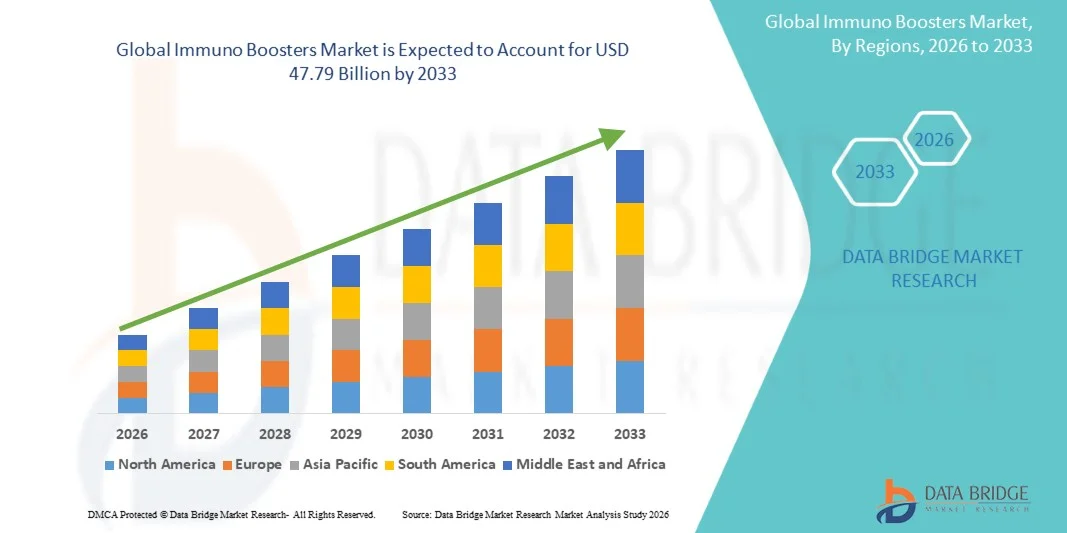
- The global Immuno Boosters market size was valued at USD 27.00 billion in 2025 and is expected to reach USD 47.79 billion by 2033, at a CAGR of 7.40% during the forecast period
- The market growth is largely driven by the increasing awareness regarding preventive healthcare and the rising adoption of health supplements aimed at strengthening the immune system. Growing consumer inclination toward wellness, coupled with advancements in nutraceutical formulations, is accelerating the demand for immuno boosters across both developed and emerging economies
- Furthermore, the surge in demand for natural, herbal, and organic products, along with the increasing focus on maintaining overall health and immunity, is positioning immuno boosters as an essential part of daily healthcare routines. These converging factors are significantly accelerating the adoption of Immuno Boosters solutions, thereby boosting the overall market growth
Immuno Boosters Market Analysis
- Immuno boosters, comprising dietary supplements, functional foods, and herbal formulations designed to strengthen the body’s natural defense system, are increasingly becoming essential components of preventive healthcare across both developed and emerging markets due to growing health consciousness and rising focus on overall wellness
- The escalating demand for immuno boosters is primarily fueled by increasing awareness regarding immunity enhancement, rising incidences of infectious diseases, and a growing preference for natural and plant-based health solutions among consumers
- North America dominated the Immuno Boosters market with the largest revenue share of approximately 36.5% in 2025, characterized by high consumer awareness, strong presence of key nutraceutical companies, and widespread adoption of dietary supplements, with the U.S. witnessing significant demand driven by preventive healthcare trends and continuous product innovations
- Asia-Pacific is expected to be the fastest growing region in the Immuno Boosters market during the forecast period, with a projected CAGR of around 9.2%, driven by increasing urbanization, rising disposable incomes, expanding middle-class population, and growing inclination toward traditional and herbal supplements
- The yeast beta segment dominated the largest market revenue share of 42.8% in 2025, driven by its scientifically proven immune-enhancing properties and increasing incorporation into dietary supplements and functional foods
Report Scope and Immuno Boosters Market Segmentation
|
Attributes |
Immuno Boosters Key Market Insights |
|
Segments Covered |
|
|
Countries Covered |
North America
Europe
Asia-Pacific
Middle East and Africa
South America
|
|
Key Market Players |
|
|
Market Opportunities |
|
|
Value Added Data Infosets |
In addition to the insights on market scenarios such as market value, growth rate, segmentation, geographical coverage, and major players, the market reports curated by the Data Bridge Market Research also include in-depth expert analysis, patient epidemiology, pipeline analysis, pricing analysis, and regulatory framework. |
Immuno Boosters Market Trends
“Enhanced Consumer Preference for Natural and Preventive Healthcare Solutions”
- A significant and rapidly evolving trend in the global Immuno Boosters market is the growing consumer inclination toward natural, herbal, and preventive healthcare solutions. This shift is driven by increasing awareness of maintaining overall health and immunity, particularly in the post-pandemic era
- For instance, companies such as Himalaya Wellness and Dabur have expanded their portfolios with herbal immunity products like chyawanprash, giloy-based supplements, and tulsi extracts, catering to the rising demand for natural solutions
- Consumers are actively seeking products enriched with vitamins, minerals, probiotics, and plant-based ingredients such as turmeric, ginger, and elderberry, which are traditionally associated with immune support
- In addition, there is a rising demand for clean-label products that are free from artificial additives, preservatives, and synthetic chemicals, reflecting a broader trend toward health-conscious consumption
- The integration of personalized nutrition is also gaining traction, where immuno boosters are tailored based on individual health needs, age groups, and lifestyle preferences, enhancing their effectiveness and appeal
- Furthermore, the expansion of e-commerce platforms and digital health awareness campaigns has made immuno booster products more accessible, enabling consumers to make informed purchasing decisions
- This ongoing shift toward preventive healthcare and natural wellness solutions is reshaping product development strategies, encouraging companies to innovate and diversify their immuno booster portfolios
Immuno Boosters Market Dynamics
Driver
“Rising Health Awareness and Increasing Focus on Preventive Healthcare”
- The growing awareness among consumers regarding the importance of maintaining a strong immune system is a key driver fueling the demand for immuno boosters globally
- For instance, in 2024, Amway expanded its Nutrilite immunity range with plant-based vitamin C and herbal supplements to address increasing consumer demand for preventive healthcare products
- Increasing incidences of lifestyle-related diseases, infections, and seasonal illnesses have prompted individuals to adopt preventive healthcare measures, including regular consumption of immunity-enhancing supplements and functional foods
- Governments and health organizations are also promoting health and wellness initiatives, encouraging populations to improve immunity through nutrition and supplementation, which further supports market growth
- The expanding geriatric population, which is more susceptible to infections and chronic conditions, is another major factor contributing to the increased demand for immuno boosters
- In addition, the rising popularity of dietary supplements, functional beverages, and fortified foods has significantly boosted product adoption across both developed and developing regions
- The convenience of availability through online platforms, pharmacies, and retail stores has further accelerated market penetration, making immuno boosters more accessible to a wider consumer base
Restraint/Challenge
“Concerns Regarding Product Efficacy, Regulatory Issues, and High Costs”
- One of the primary challenges in the Immuno Boosters market is the lack of standardized regulations and scientific validation for certain products, leading to skepticism among consumers regarding their effectiveness
- For instance, regulatory bodies such as the Food Safety and Standards Authority of India (FSSAI) have issued guidelines to curb misleading claims by supplement manufacturers, highlighting concerns over product efficacy and labeling practices
- Variations in quality, formulation, and ingredient sourcing across different brands can impact product reliability, thereby affecting consumer trust and long-term adoption
- Regulatory complexities and differing guidelines across regions create hurdles for manufacturers in terms of product approval, labeling, and marketing claims
- In addition, premium-priced immuno booster products, particularly those with specialized formulations or organic certifications, may not be affordable for all consumers, especially in price-sensitive markets
- Misleading claims and over-promotional marketing by some companies can further contribute to consumer confusion and hesitation in purchasing such products
- Addressing these challenges through rigorous clinical research, transparent labeling, regulatory compliance, and affordable product offerings will be crucial for sustaining market growth and building consumer confidence
Immuno Boosters Market Scope
The market is segmented on the basis of type, product, and application.
• By Type
On the basis of type, the Immuno Boosters market is segmented into yeast beta, yeast extract, and others. The yeast beta segment dominated the largest market revenue share of 42.8% in 2025, driven by its scientifically proven immune-enhancing properties and increasing incorporation into dietary supplements and functional foods. Yeast beta-glucans are widely recognized for their ability to stimulate the immune system, making them a preferred ingredient in preventive healthcare products. The growing consumer shift toward natural and plant-based immunity solutions has further strengthened the demand for yeast beta. In addition, its extensive use in pharmaceuticals and nutraceutical formulations supports its market leadership. Manufacturers are increasingly focusing on high-purity yeast beta products to cater to rising health awareness. The segment also benefits from strong clinical backing and regulatory acceptance in multiple regions. Its versatility across capsules, powders, and fortified foods enhances adoption. Increasing demand from aging populations and immunocompromised individuals further boosts growth. The rise of personalized nutrition trends also supports segment expansion. Strong R&D investments continue to improve product efficacy and bioavailability. These combined factors are expected to sustain its dominance throughout the forecast period.
The yeast extract segment is anticipated to witness the fastest CAGR of 9.6% from 2026 to 2033, fueled by its multifunctional benefits in both food and health applications. Yeast extract is widely used as a flavor enhancer as well as a nutritional ingredient rich in vitamins, amino acids, and minerals. Its growing application in processed and convenience foods is driving widespread adoption globally. In addition, the increasing demand for clean-label and natural food ingredients is significantly supporting segment growth. Yeast extract is also gaining traction in the nutraceutical sector for its immune-supportive properties. The expansion of the food processing industry, particularly in emerging markets, is further accelerating demand. Its cost-effectiveness compared to other bioactive ingredients makes it attractive for manufacturers. Continuous innovation in extraction technologies is improving product quality and functionality. Rising consumer awareness regarding gut health and immunity also contributes to growth. The segment is expected to see strong uptake across both developed and developing regions. These factors collectively position yeast extract as the fastest-growing segment.
• By Product
On the basis of product, the Immuno Boosters market is segmented into vitamins, minerals, antioxidants, probiotics, functional foods, and complementary and alternative medicine (CAM). The vitamins segment held the largest market revenue share of 38.5% in 2025, driven by widespread consumer awareness and strong demand for daily dietary supplements. Vitamins such as C, D, and B-complex are extensively consumed for their immune-supporting benefits. The ease of availability in various forms including tablets, capsules, and gummies contributes to their popularity. Increasing health consciousness, especially after global health crises, has significantly boosted vitamin consumption. Pharmaceutical companies and nutraceutical brands are heavily investing in fortified vitamin products. The segment also benefits from strong recommendations by healthcare professionals. Rising disposable incomes and preventive healthcare trends further support demand. In addition, vitamins are commonly included in functional foods and beverages, expanding their application scope. Continuous product innovation, including sugar-free and organic variants, enhances consumer appeal. The segment’s accessibility and affordability ensure sustained dominance in the market.
The probiotics segment is expected to witness the fastest CAGR of 10.8% from 2026 to 2033, driven by growing awareness of the gut-immune system connection. Probiotics are increasingly recognized for their role in maintaining gut health, which directly influences immunity. The rising popularity of fermented foods and probiotic supplements is accelerating market growth. Consumers are actively seeking natural and preventive health solutions, boosting demand for probiotics. The expansion of functional food and beverage categories further supports segment growth. In addition, ongoing research highlighting the benefits of microbiome health is encouraging adoption. Probiotics are widely used in dairy products, dietary supplements, and specialized nutrition products. Increasing cases of digestive disorders and lifestyle-related diseases also contribute to demand. The segment is witnessing innovation in delivery formats such as drinks, capsules, and powders. Growing investments by key players in probiotic R&D further strengthen the market outlook. These factors collectively drive the rapid expansion of the probiotics segment.
• By Application
On the basis of application, the Immuno Boosters market is segmented into dairy products, pharmaceuticals, beverages, bakery and processed foods, and others. The pharmaceuticals segment accounted for the largest market revenue share of 36.9% in 2025, driven by the increasing use of immune-boosting ingredients in preventive and therapeutic formulations. Pharmaceutical products such as tablets, syrups, and capsules are widely used to enhance immunity and overall health. The growing prevalence of chronic diseases and weakened immune conditions is fueling demand in this segment. Healthcare professionals frequently recommend pharmaceutical-grade immuno boosters, supporting market growth. Strong regulatory frameworks and clinical validation further strengthen consumer trust. The segment also benefits from rising investments in drug development and nutraceutical integration. Increasing aging population and post-illness recovery needs are additional growth drivers. Pharmaceutical companies are focusing on innovative formulations with improved efficacy. The expansion of online pharmacies and healthcare access further supports demand. These factors ensure the continued dominance of the pharmaceuticals segment.
The beverages segment is projected to witness the fastest CAGR of 9.9% from 2026 to 2033, driven by the rising demand for functional and ready-to-consume health drinks. Consumers are increasingly opting for convenient immunity-boosting solutions integrated into daily diets. Functional beverages enriched with vitamins, probiotics, and antioxidants are gaining significant traction. The shift toward healthy lifestyles and on-the-go consumption patterns is fueling demand. Beverage manufacturers are launching innovative products such as immunity shots, herbal drinks, and fortified juices. The segment also benefits from aggressive marketing and branding strategies. Increasing urbanization and busy lifestyles further support growth. In addition, the expansion of retail and e-commerce channels enhances product accessibility. Growing awareness regarding hydration and wellness contributes to higher consumption. Continuous innovation in flavors and formulations is attracting a broader consumer base. These combined factors position beverages as the fastest-growing application segment.
Immuno Boosters Market Regional Analysis
- North America dominated the immuno boosters market with the largest revenue share of approximately 36.5% in 2025, characterized by high consumer awareness, a strong presence of key nutraceutical companies, and widespread adoption of dietary supplements
- Consumers in the region increasingly prioritize preventive healthcare, leading to high demand for vitamins, minerals, and herbal supplements that support immune health
- This widespread adoption is further supported by high disposable incomes, advanced healthcare infrastructure, and continuous product innovation, establishing immuno boosters as a key component of daily wellness routines
U.S. Immuno Boosters Market Insight
The U.S. immuno boosters market captured the largest revenue share in 2025 within North America, fueled by strong consumer inclination toward preventive healthcare and high awareness regarding immunity enhancement. The increasing consumption of dietary supplements, functional foods, and fortified beverages is driving market growth. Moreover, continuous product innovations, growing demand for organic and clean-label products, and the presence of major market players further contribute to the expansion of the Immuno Boosters industry in the country.
Europe Immuno Boosters Market Insight
The Europe immuno boosters market is projected to expand at a substantial CAGR throughout the forecast period, primarily driven by increasing health consciousness and rising demand for preventive nutrition. The region is witnessing growing adoption of natural and plant-based supplements, supported by stringent regulations ensuring product quality and safety. In addition, the increasing aging population and focus on overall wellness are contributing to the steady growth of the market across countries in Europe.
U.K. Immuno Boosters Market Insight
The U.K. immuno boosters market is anticipated to grow at a noteworthy CAGR during the forecast period, driven by rising awareness regarding immune health and increasing demand for dietary supplements. Consumers are increasingly shifting toward herbal and natural products, along with vitamin-enriched foods and beverages. The strong retail and e-commerce infrastructure in the U.K. further supports easy product availability and market expansion.
Germany Immuno Boosters Market Insight
The Germany immuno boosters market is expected to expand at a considerable CAGR during the forecast period, fueled by a strong preference for high-quality, scientifically backed nutraceutical products. The country’s well-established healthcare system and increasing inclination toward preventive healthcare are driving product adoption. In addition, demand for organic and clean-label supplements is growing, aligning with consumer preferences for safe and sustainable health solutions.
Asia-Pacific Immuno Boosters Market Insight
The Asia-Pacific immuno boosters market is expected to be the fastest-growing region during the forecast period, with a projected CAGR of around 9.2%, driven by increasing urbanization, rising disposable incomes, and an expanding middle-class population. The region is also witnessing a growing inclination toward traditional and herbal supplements such as Ayurveda and Traditional Chinese Medicine, which significantly contributes to market expansion. Furthermore, increasing health awareness, government initiatives promoting nutrition, and expanding distribution channels are making immuno boosters more accessible across emerging economies
Japan Immuno Boosters Market Insight
The Japan immuno boosters market is gaining momentum due to the country’s aging population and strong focus on health and longevity. Consumers are increasingly adopting functional foods and dietary supplements to maintain immune health. The demand for scientifically formulated and high-quality products is particularly strong, supported by Japan’s advanced healthcare ecosystem and innovation in nutraceuticals.
China Immuno Boosters Market Insight
The China immuno boosters market accounted for the largest market revenue share in Asia-Pacific in 2025, attributed to rapid urbanization, a growing middle-class population, and increasing health awareness. The rising popularity of traditional herbal medicine, along with expanding domestic manufacturing capabilities, is driving market growth. In addition, the strong presence of e-commerce platforms and increasing availability of affordable products are further boosting the adoption of immuno boosters in China.
Immuno Boosters Market Share
The Immuno Boosters industry is primarily led by well-established companies, including:
- Amway (U.S.)
- Herbalife Nutrition Ltd. (U.S.)
- Bayer AG (Germany)
- Abbott (U.S.)
- GlaxoSmithKline plc (U.K.)
- Pfizer Inc. (U.S.)
- Himalaya Wellness Company (India)
- Dabur India Ltd. (India)
- Patanjali Ayurved Ltd. (India)
- Nature’s Bounty (U.S.)
- NOW Foods (U.S.)
- Archer Daniels Midland Company (U.S.)
- DuPont de Nemours, Inc. (U.S.)
- Kerry Group plc (Ireland)
- Nestlé Health Science (Switzerland)
- Danone S.A. (France)
- Yakult Honsha Co., Ltd. (Japan)
- DSM-Firmenich (Netherlands)
- Pharmavite LLC (U.S.)
- Swisse Wellness Pty Ltd. (Australia)
Latest Developments in Global Immuno Boosters Market
- In January 2022, Herbalife, a global nutrition company, announced the launch of its Immunoturmeric supplement in the Asia Pacific region, designed to strengthen its immune health product portfolio. The product incorporates turmeric-based ingredients aimed at supporting immune function, reflecting the rising consumer demand for plant-based and functional immunity solutions post-pandemic.
- In October 2022, Bayer, a leading pharmaceutical and life sciences company, launched Supradyn Immuno+, a formulation combining vitamins and natural ingredients to support daily and long-term immunity. This launch highlighted Bayer’s strategy to integrate science-backed nutrients with natural components, addressing the growing global demand for preventive healthcare and immune support products.
- In May 2023, multiple industry reports indicated that the global immune health supplements market experienced strong growth, reaching approximately $61.34 billion in 2023, driven by rising prevalence of infectious diseases and increased consumer focus on immunity. This surge reflects sustained post-COVID demand and continued expansion of product offerings in vitamins, minerals, and herbal supplements
- In April 2024, Naturacare announced the launch of multiple new health and immunity-focused supplements at Vitafoods Europe 2024, including advanced bilayer tablet formulations for sustained release. These innovations emphasize technological advancements in supplement delivery and formulation efficiency, catering to evolving consumer preferences for convenience and efficacy

- Interactive Data Analysis Dashboard
- Company Analysis Dashboard for high growth potential opportunities
- Research Analyst Access for customization & queries
- Competitor Analysis with Interactive dashboard
- Latest News, Updates & Trend analysis
- Harness the Power of Benchmark Analysis for Comprehensive Competitor Tracking
Data collection and base year analysis are done using data collection modules with large sample sizes. The stage includes obtaining market information or related data through various sources and strategies. It includes examining and planning all the data acquired from the past in advance. It likewise envelops the examination of information inconsistencies seen across different information sources. The market data is analysed and estimated using market statistical and coherent models. Also, market share analysis and key trend analysis are the major success factors in the market report. To know more, please request an analyst call or drop down your inquiry.
The key research methodology used by DBMR research team is data triangulation which involves data mining, analysis of the impact of data variables on the market and primary (industry expert) validation. Data models include Vendor Positioning Grid, Market Time Line Analysis, Market Overview and Guide, Company Positioning Grid, Patent Analysis, Pricing Analysis, Company Market Share Analysis, Standards of Measurement, Global versus Regional and Vendor Share Analysis. To know more about the research methodology, drop in an inquiry to speak to our industry experts.
Data Bridge Market Research is a leader in advanced formative research. We take pride in servicing our existing and new customers with data and analysis that match and suits their goal. The report can be customized to include price trend analysis of target brands understanding the market for additional countries (ask for the list of countries), clinical trial results data, literature review, refurbished market and product base analysis. Market analysis of target competitors can be analyzed from technology-based analysis to market portfolio strategies. We can add as many competitors that you require data about in the format and data style you are looking for. Our team of analysts can also provide you data in crude raw excel files pivot tables (Fact book) or can assist you in creating presentations from the data sets available in the report.












