Global Immunogenetics Market
Market Size in USD Billion
CAGR :
% 
 USD
6.32 Billion
USD
10.14 Billion
2025
2033
USD
6.32 Billion
USD
10.14 Billion
2025
2033
 Forecast Period Forecast Period |
2026 –2033 |
 Market Size (Base Year) Market Size (Base Year) |
USD 6.32 Billion |
 Market Size (Forecast Year) Market Size (Forecast Year) |
USD 10.14 Billion |
 CAGR CAGR |
% |
| Major Markets Players |
|
Immunogenetics Market Size
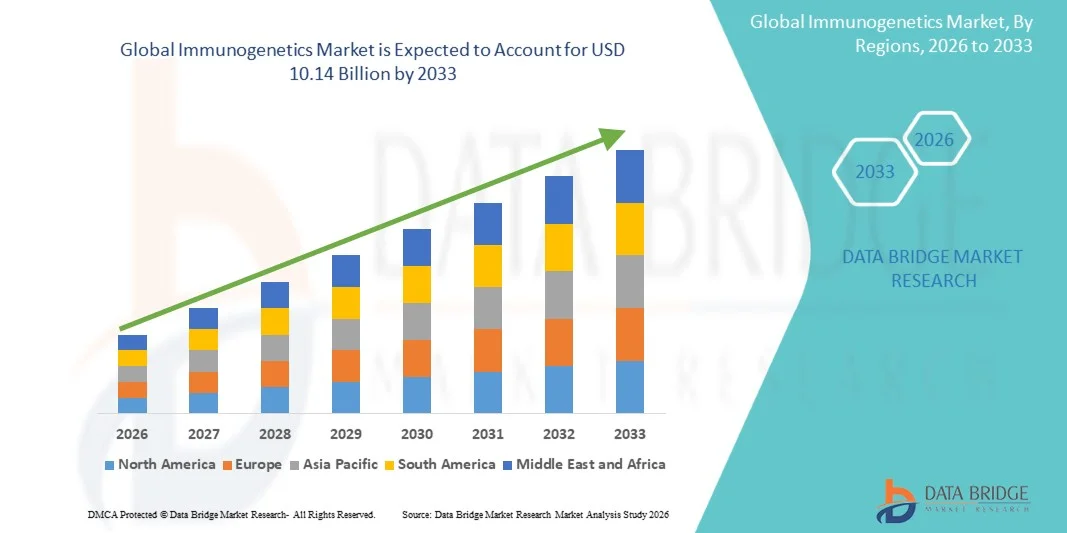
- The global immunogenetics market size was valued at USD 6.32 billion in 2025 and is expected to reach USD 10.14 billion by 2033, at a CAGR of 6.10% during the forecast period
- The market growth is largely fueled by the increasing advancements in genomic technologies and the rising adoption of precision medicine, leading to enhanced understanding of immune system genetics and its role in disease susceptibility and treatment outcomes
- Furthermore, the growing demand for personalized healthcare solutions, along with increasing research in autoimmune diseases, infectious diseases, and transplant compatibility, is establishing immunogenetics as a critical component of modern medical science. These converging factors are accelerating the uptake of Immunogenetics solutions, thereby significantly boosting the industry's growth
Immunogenetics Market Analysis
- Immunogenetics, which focuses on the study of the genetic basis of the immune system and its role in disease susceptibility, diagnosis, and treatment, is becoming an increasingly vital component of modern healthcare systems due to its applications in precision medicine, organ transplantation, and disease research
- The escalating demand for immunogenetics solutions is primarily fueled by the growing adoption of advanced genomic technologies, increasing prevalence of autoimmune and infectious diseases, and a rising preference for personalized and targeted therapies
- North America dominated the Immunogenetics market with the largest revenue share of approximately 38.2% in 2025, characterized by advanced healthcare infrastructure, significant investments in genomics research, and a strong presence of key biotechnology and pharmaceutical companies, with the U.S. experiencing substantial growth driven by expanding applications in diagnostics and personalized medicine
- Asia-Pacific is expected to be the fastest growing region in the Immunogenetics market during the forecast period, with a projected CAGR of around 10.4%, due to increasing healthcare expenditure, rising awareness of genetic testing, and expanding research initiatives in countries such as China, India, and Japan
- The oncology segment held the largest market revenue share of 36.1% in 2025, driven by the widespread integration of immunogenetics in cancer diagnosis and treatment
Report Scope and Immunogenetics Market Segmentation
|
Attributes |
Immunogenetics Key Market Insights |
|
Segments Covered |
|
|
Countries Covered |
North America
Europe
Asia-Pacific
Middle East and Africa
South America
|
|
Key Market Players |
|
|
Market Opportunities |
|
|
Value Added Data Infosets |
In addition to the insights on market scenarios such as market value, growth rate, segmentation, geographical coverage, and major players, the market reports curated by the Data Bridge Market Research also include in-depth expert analysis, patient epidemiology, pipeline analysis, pricing analysis, and regulatory framework. |
Immunogenetics Market Trends
“Advancements in Genomic Technologies and Personalized Medicine”
- A significant and accelerating trend in the global Immunogenetics market is the growing integration of advanced genomic technologies to enable personalized medicine approaches. This trend is enhancing the understanding of immune system variability and improving disease diagnosis and treatment outcomes
- For instance, companies such as Illumina and Thermo Fisher Scientific are expanding next-generation sequencing (NGS) platforms to support immunogenetic research and precision medicine applications
- The increasing use of technologies such as high-throughput sequencing, PCR-based assays, and bioinformatics tools is enabling more accurate identification of genetic variations associated with immune-related diseases
- In addition, immunogenetics is playing a critical role in transplant compatibility testing, autoimmune disease research, and vaccine development, further expanding its clinical applications
- The growing focus on precision healthcare is encouraging the development of targeted therapies based on individual genetic profiles, improving treatment efficacy and reducing adverse effects
- This trend toward technologically advanced and personalized healthcare solutions is reshaping the Immunogenetics market, driving innovation and expanding its scope across research and clinical domains
Immunogenetics Market Dynamics
Driver
“Increasing Prevalence of Autoimmune Diseases and Demand for Precision Medicine”
- The rising incidence of autoimmune disorders and infectious diseases is a key driver fueling the demand for immunogenetics solutions globally
- For instance, organizations such as World Health Organization have highlighted the growing burden of autoimmune and chronic diseases, increasing the need for advanced genetic-based diagnostic and treatment approaches
- Immunogenetics plays a crucial role in understanding genetic predisposition to diseases such as rheumatoid arthritis, multiple sclerosis, and type 1 diabetes, enabling early diagnosis and targeted interventions
- Furthermore, the increasing demand for precision medicine, where treatments are tailored based on an individual’s genetic makeup, is significantly boosting the adoption of immunogenetics technologies
- The growing number of organ transplant procedures worldwide is also driving the need for histocompatibility testing and HLA typing, which are core applications of immunogenetics
- In addition, advancements in biotechnology and increasing investments in research and development are further accelerating market growth
Restraint/Challenge
“High Costs, Ethical Concerns, and Limited Accessibility”
- One of the major challenges in the Immunogenetics market is the high cost associated with advanced genomic technologies and testing procedures, which can limit accessibility, especially in developing regions
- For instance, despite advancements, next-generation sequencing and genetic testing services offered by companies such as QIAGEN and Bio-Rad Laboratories remain relatively expensive for widespread adoption in cost-sensitive markets
- Ethical concerns related to genetic data privacy, consent, and potential misuse of genetic information also pose significant challenges to market growth
- In addition, the lack of skilled professionals and inadequate infrastructure in certain regions can hinder the effective implementation of immunogenetic technologies
- Variability in regulatory frameworks across countries further complicates the approval and commercialization of genetic testing products and services
- Addressing these challenges through cost reduction, improved regulatory clarity, enhanced data protection measures, and increased awareness will be essential for the sustained growth of the Immunogenetics market
Immunogenetics Market Scope
The market is segmented on the basis of application, therapeutic category, and end use.
• By Application
On the basis of application, the Immunogenetics market is segmented into cancers, multiple sclerosis, rheumatoid arthritis, Crohn’s disease, diabetes mellitus type 1, and systemic lupus erythematosus. The cancers segment dominated the largest market revenue share of 34.7% in 2025, driven by the extensive application of immunogenetics in oncology for personalized medicine and targeted therapies. Immunogenetic profiling plays a crucial role in identifying genetic predispositions and tailoring immunotherapies such as checkpoint inhibitors and CAR-T cell therapies. The rising global burden of cancer and increasing investments in precision medicine significantly support segment growth. In addition, advancements in genomic sequencing technologies have enhanced early detection and treatment planning. Pharmaceutical companies are heavily investing in immuno-oncology research, further strengthening the segment. The growing adoption of biomarker-based therapies is also contributing to demand. Increased awareness regarding genetic testing among patients and healthcare providers is accelerating uptake. Government initiatives supporting cancer research and treatment accessibility further boost the segment. Continuous innovation in targeted therapies enhances treatment outcomes. The expanding pipeline of immunotherapy drugs ensures sustained growth. These factors collectively maintain the dominance of the cancers segment.
The multiple sclerosis segment is anticipated to witness the fastest CAGR of 11.2% from 2026 to 2033, fueled by the growing prevalence of autoimmune disorders and increasing research in neuroimmunology. Immunogenetics plays a key role in understanding genetic susceptibility and disease progression in multiple sclerosis. Rising awareness and early diagnosis are significantly contributing to treatment adoption. The development of advanced biologics and disease-modifying therapies is accelerating market growth. Increasing healthcare expenditure and improved access to specialized treatments further support the segment. In addition, ongoing clinical trials focusing on genetic markers and personalized therapies are enhancing treatment efficacy. The segment benefits from strong collaborations between research institutions and pharmaceutical companies. Technological advancements in diagnostic tools enable better disease management. Growing patient support programs and awareness campaigns also contribute to higher adoption rates. The expansion of immunotherapy applications in neurological disorders strengthens future prospects. These combined factors position multiple sclerosis as the fastest-growing segment.
• By Therapeutic Category
On the basis of therapeutic category, the Immunogenetics market is segmented into central nervous system (CNS) disorders, oncology, immunology, musculoskeletal disorders, metabolic disorders, and others. The oncology segment held the largest market revenue share of 36.1% in 2025, driven by the widespread integration of immunogenetics in cancer diagnosis and treatment. The use of genetic profiling to identify tumor-specific antigens and guide immunotherapy decisions has revolutionized oncology care. Increasing adoption of precision medicine and targeted therapies is a major growth driver. The rising incidence of various cancers globally further fuels demand. In addition, advancements in next-generation sequencing (NGS) technologies enhance diagnostic accuracy. Pharmaceutical companies are focusing on developing innovative immunotherapies based on genetic insights. The segment also benefits from strong regulatory approvals and reimbursement support in developed regions. Growing investments in oncology research and development accelerate innovation. The availability of companion diagnostics improves treatment outcomes. Increasing collaborations between biotech firms and research organizations strengthen the market. These factors ensure the continued dominance of the oncology segment.
The immunology segment is expected to witness the fastest CAGR of 10.5% from 2026 to 2033, driven by the rising prevalence of autoimmune and inflammatory diseases. Immunogenetics is increasingly used to understand immune system dysfunction and develop targeted therapies. The growing demand for personalized treatment approaches significantly supports segment growth. Advances in biologics and monoclonal antibodies are improving treatment outcomes. Increasing awareness regarding immune-related disorders is boosting diagnosis rates. The segment is also benefiting from expanding research in genetic markers linked to immune diseases. Rising healthcare investments and improved access to advanced therapies further drive growth. Pharmaceutical companies are actively developing innovative immunology-based treatments. The integration of genetic data with clinical practice enhances precision medicine applications. Ongoing clinical trials and pipeline drugs strengthen future prospects. These factors collectively position immunology as the fastest-growing therapeutic category.
• By End Use
On the basis of end use, the Immunogenetics market is segmented into hospitals, diagnostic centers, and others. The hospitals segment accounted for the largest market revenue share of 40.3% in 2025, driven by the high volume of patient admissions and availability of advanced healthcare infrastructure. Hospitals are primary centers for conducting immunogenetic testing, diagnosis, and treatment planning. The presence of skilled healthcare professionals and access to advanced technologies support segment growth. Increasing adoption of personalized medicine in hospital settings further boosts demand. Hospitals also benefit from strong reimbursement frameworks and government funding. The rising prevalence of chronic and genetic disorders increases patient inflow. Integration of genomic data into clinical workflows enhances treatment accuracy. In addition, hospitals often collaborate with research institutions for advanced studies. The availability of comprehensive care under one roof supports patient preference. Continuous investments in healthcare infrastructure further strengthen the segment. These factors ensure the dominance of hospitals in the market.
The diagnostic centers segment is projected to witness the fastest CAGR of 9.8% from 2026 to 2033, driven by the increasing demand for specialized and early diagnostic services. Diagnostic centers are becoming key players in providing advanced genetic and immunogenetic testing. The growing emphasis on early disease detection and preventive healthcare supports segment growth. Technological advancements in diagnostic tools and automation enhance efficiency and accuracy. Rising awareness among patients regarding genetic testing contributes to higher adoption. Diagnostic centers offer cost-effective and accessible testing solutions compared to hospitals. The expansion of standalone and chain diagnostic laboratories further boosts the segment. Increasing partnerships with hospitals and research organizations strengthen service offerings. The integration of AI and data analytics improves diagnostic capabilities. Growing demand for personalized medicine also drives testing volumes. These factors collectively position diagnostic centers as the fastest-growing end-use segment.
Immunogenetics Market Regional Analysis
- North America dominated the immunogenetics market with the largest revenue share of approximately 38.2% in 2025, characterized by advanced healthcare infrastructure, significant investments in genomics research, and a strong presence of key biotechnology and pharmaceutical companies
- The region benefits from extensive adoption of genetic testing, precision medicine, and immunogenetic applications in diagnostics and therapeutics
- This widespread adoption is further supported by strong R&D funding, favorable regulatory frameworks, and increasing demand for personalized healthcare solutions, establishing immunogenetics as a critical component of modern medicine
U.S. Immunogenetics Market Insight
The U.S. immunogenetics market captured the largest revenue share in 2025 within North America, driven by expanding applications in diagnostics, transplantation, and personalized medicine. The country’s strong biotechnology ecosystem, along with high investments in genomic research and precision medicine initiatives, is fueling market growth. In addition, the increasing prevalence of chronic and autoimmune diseases and rising demand for advanced diagnostic tools are significantly contributing to the expansion of the Immunogenetics industry in the U.S.
Europe Immunogenetics Market Insight
The Europe immunogenetics market is projected to expand at a substantial CAGR throughout the forecast period, primarily driven by increasing focus on precision medicine and genetic research. The region benefits from well-established healthcare systems and supportive regulatory policies that ensure high-quality standards in genetic testing. In addition, the rising prevalence of chronic diseases and growing adoption of advanced diagnostic technologies are supporting market growth across Europe.
U.K. Immunogenetics Market Insight
The U.K. immunogenetics market is anticipated to grow at a noteworthy CAGR during the forecast period, driven by strong government support for genomics research and increasing integration of genetic testing into clinical practice. The country is witnessing rising demand for personalized medicine and early disease detection solutions. Furthermore, the presence of leading research institutions and expanding healthcare initiatives are boosting the adoption of immunogenetics technologies.
Germany Immunogenetics Market Insight
The Germany immunogenetics market is expected to expand at a considerable CAGR during the forecast period, fueled by increasing demand for high-quality diagnostic solutions and advancements in biotechnology. Germany’s robust healthcare infrastructure and strong emphasis on research and innovation are promoting the adoption of immunogenetics in disease diagnosis and treatment. In addition, the country’s focus on precision medicine and laboratory advancements is further supporting market expansion.
Asia-Pacific Immunogenetics Market Insight
The Asia-Pacific Immunogenetics market is expected to be the fastest-growing region during the forecast period, with a projected CAGR of around 10.4%, driven by increasing healthcare expenditure, rising awareness of genetic testing, and expanding research initiatives. The region is witnessing rapid growth due to the rising prevalence of chronic diseases, improving healthcare infrastructure, and growing investments in biotechnology and life sciences. Furthermore, increasing government initiatives and collaborations in countries such as China, India, and Japan are accelerating the adoption of immunogenetics technologies
Japan Immunogenetics Market Insight
The Japan immunogenetics market is gaining momentum due to the country’s advanced healthcare system and strong focus on research and innovation. The increasing aging population and rising demand for precision medicine are key factors driving market growth. In addition, the adoption of advanced genomic technologies and growing use of immunogenetics in disease diagnosis and treatment are contributing to market expansion in Japan.
China Immunogenetics Market Insight
The China immunogenetics market accounted for the largest market revenue share in Asia-Pacific in 2025, attributed to rapid advancements in biotechnology, increasing healthcare investments, and a growing focus on genetic research. The country’s expanding middle-class population and rising awareness regarding early disease diagnosis are driving demand for genetic testing. In addition, strong government support, expanding research capabilities, and the presence of domestic biotechnology companies are key factors propelling the Immunogenetics market in China.
Immunogenetics Market Share
The Immunogenetics industry is primarily led by well-established companies, including:
- Thermo Fisher Scientific Inc. (U.S.)
- Illumina, Inc. (U.S.)
- F. Hoffmann-La Roche Ltd. (Switzerland)
- QIAGEN N.V. (Netherlands)
- Bio-Rad Laboratories, Inc. (U.S.)
- Agilent Technologies, Inc. (U.S.)
- Danaher Corporation (U.S.)
- PerkinElmer, Inc. (U.S.)
- BD (U.S.)
- Abbott Laboratories (U.S.)
- Siemens Healthineers AG (Germany)
- BioMérieux SA (France)
- Charles River Laboratories International, Inc. (U.S.)
- GenScript Biotech Corporation (China)
- Adaptive Biotechnologies Corporation (U.S.)
- Eurofins Scientific SE (Luxembourg)
- Hologic, Inc. (U.S.)
- Myriad Genetics, Inc. (U.S.)
- Takara Bio Inc. (Japan)
- Oxford Nanopore Technologies plc (U.K.)
Latest Developments in Global Immunogenetics Market
- In September 2022, researchers introduced advanced long-read sequencing approaches for Human Leukocyte Antigen (HLA) typing, enabling more accurate prediction of immune-related genetic variations. This development improved the precision of immunogenetic analysis by allowing better identification of complex and highly polymorphic HLA regions, supporting advancements in transplantation matching and disease research
- In November 2022, scientists developed a transformer-based model (HLARIMNT) for HLA imputation using SNP data, significantly enhancing accuracy in predicting immune-related genetic markers. This innovation represents a major step toward integrating artificial intelligence into immunogenetics, improving large-scale genomic analysis and personalized medicine applications
- In January 2025, the IPD-IMGT/HLA Database introduced a new HLA Submission Tool along with enhanced API infrastructure to modernize data submission and access. This update replaced a legacy system used for over 26 years and supports more efficient global sharing and analysis of immunogenetic data, strengthening research collaboration and data accessibility
- In March 2025, new research highlighted advancements in HLA typing for hematopoietic stem cell transplantation (HSCT), improving donor–recipient compatibility assessment. These developments reinforce the critical role of immunogenetics in transplantation success and expanding treatment accessibility through improved matching techniques
SKU-
Get online access to the report on the World's First Market Intelligence Cloud

- Interactive Data Analysis Dashboard
- Company Analysis Dashboard for high growth potential opportunities
- Research Analyst Access for customization & queries
- Competitor Analysis with Interactive dashboard
- Latest News, Updates & Trend analysis
- Harness the Power of Benchmark Analysis for Comprehensive Competitor Tracking
Research Methodology
Data collection and base year analysis are done using data collection modules with large sample sizes. The stage includes obtaining market information or related data through various sources and strategies. It includes examining and planning all the data acquired from the past in advance. It likewise envelops the examination of information inconsistencies seen across different information sources. The market data is analysed and estimated using market statistical and coherent models. Also, market share analysis and key trend analysis are the major success factors in the market report. To know more, please request an analyst call or drop down your inquiry.
The key research methodology used by DBMR research team is data triangulation which involves data mining, analysis of the impact of data variables on the market and primary (industry expert) validation. Data models include Vendor Positioning Grid, Market Time Line Analysis, Market Overview and Guide, Company Positioning Grid, Patent Analysis, Pricing Analysis, Company Market Share Analysis, Standards of Measurement, Global versus Regional and Vendor Share Analysis. To know more about the research methodology, drop in an inquiry to speak to our industry experts.
Customization Available
Data Bridge Market Research is a leader in advanced formative research. We take pride in servicing our existing and new customers with data and analysis that match and suits their goal. The report can be customized to include price trend analysis of target brands understanding the market for additional countries (ask for the list of countries), clinical trial results data, literature review, refurbished market and product base analysis. Market analysis of target competitors can be analyzed from technology-based analysis to market portfolio strategies. We can add as many competitors that you require data about in the format and data style you are looking for. Our team of analysts can also provide you data in crude raw excel files pivot tables (Fact book) or can assist you in creating presentations from the data sets available in the report.