


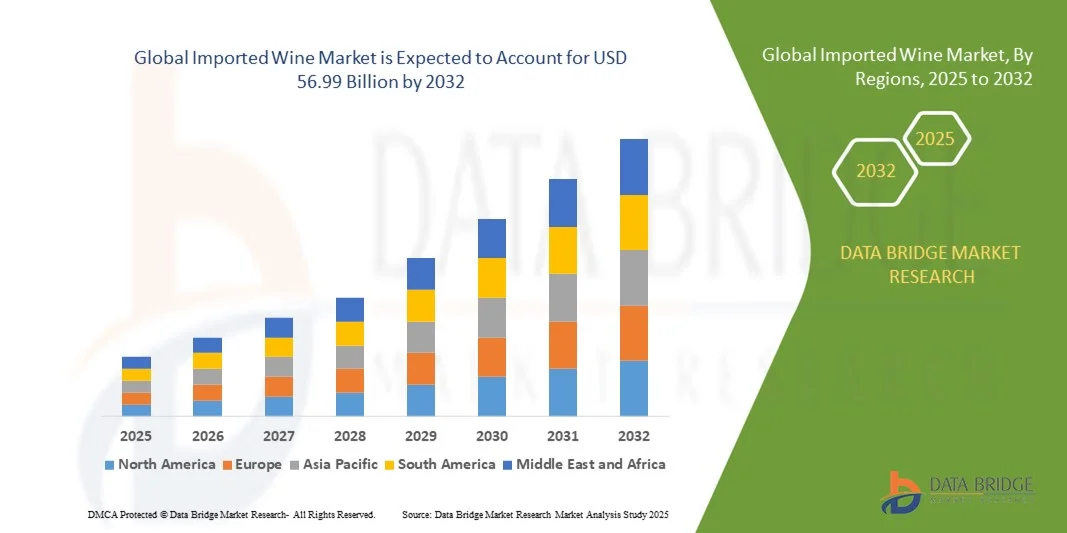
Imported Wine Market Size
- The global imported wine market size was valued at USD 41.2 billion in 2024 and is expected to reach USD 56.99 billion by 2032, at a CAGR of 4.14% during the forecast period
- The market growth is largely fueled by rising consumer preference for premium and international wine varieties, driven by increasing disposable incomes, urbanization, and growing interest in lifestyle-oriented beverages
- Furthermore, expanding e-commerce platforms, modern retail formats, and digital wine marketplaces are making imported wines more accessible to consumers. These converging factors are accelerating the adoption of imported wines, thereby significantly boosting the industry's growth
Imported Wine Market Analysis
- Imported wines, including still, sparkling, dessert, and fortified varieties, are increasingly sought after in both on-trade and off-trade channels due to their premium quality, diverse varietals, and unique regional origins
- The escalating demand for imported wines is primarily fueled by changing consumer preferences toward international flavors, rising wine knowledge, increasing gifting occasions, and a growing trend of at-home wine consumption facilitated by e-commerce and delivery services
- Europe dominated the imported wine market in 2024, due to strong wine-drinking traditions, high disposable incomes, and a preference for premium and imported wine varieties
- Asia-Pacific is expected to be the fastest growing region in the imported wine market during the forecast period due to urbanization, rising disposable incomes, and increasing interest in international wines in countries such as China, Japan, and India
- Still wine segment dominated the market with a market share of 47.8% in 2024, due to its widespread consumer preference and versatility in pairing with diverse cuisines. Consumers often favor still wines for both everyday consumption and special occasions due to their balanced flavor profiles and extensive variety across grape types and regions. The segment’s dominance is also supported by strong distribution networks and prominent wine brands offering consistent quality. Furthermore, still wine enjoys significant adoption among restaurants, hotels, and retail channels, enhancing its market penetration and overall revenue contribution
Report Scope and Imported Wine Market Segmentation
|
Attributes |
Imported Wine Key Market Insights |
|
Segments Covered |
|
|
Countries Covered |
North America
Europe
Asia-Pacific
Middle East and Africa
South America
|
|
Key Market Players |
|
|
Market Opportunities |
|
|
Value Added Data Infosets |
In addition to the insights on market scenarios such as market value, growth rate, segmentation, geographical coverage, and major players, the market reports curated by the Data Bridge Market Research also include in-depth expert analysis, pricing analysis, brand share analysis, consumer survey, demography analysis, supply chain analysis, value chain analysis, raw material/consumables overview, vendor selection criteria, PESTLE Analysis, Porter Analysis, and regulatory framework. |
Imported Wine Market Trends
Growing Preference for Premium and International Wine Varieties
- The imported wine market is experiencing robust growth driven by an increasing consumer preference for premium and international wine varieties. Consumers are seeking wines that offer distinct flavor profiles and heritage, often favoring single-vineyard, limited-edition, and region-specific labels that convey quality and exclusivity
- For instance, Grover Zampa Vineyards launched Grover Essence De Cabernet Sauvignon in 2025, a premium limited-edition wine with rich and complex tasting notes, reflecting the growing consumer interest in exclusive imported wines. Such offerings cater to wine enthusiasts looking for authentic experiences and unique varietals overseas
- This rising preference is supported by expanding wine education, tasting events, and increased awareness of wine provenance and terroir. Consumers are valuing sustainability credentials, organic and biodynamic certifications, and the storytelling behind wines, which adds to the appeal of imported premium selections
- In addition, diverse packaging innovations such as premium boxed wines and canned formats are improving accessibility and convenience for imported wines, further broadening their market reach. These formats appeal to younger, casual consumers and support sustainability initiatives by reducing packaging waste
- Growth in global travel and wine tourism fuels interest in international wine regions, increasing demand for renowned wines from countries such as France, Italy, Spain, Australia, and emerging producers in Asia and Latin America. This trend facilitates cultural exchange and strengthens global demand for imported premium wines
- Overall, the shift toward high-quality, authentic, and experiential wine consumption is expected to remain the primary market driver. Imported wines that showcase craftsmanship, heritage, and exclusivity will continue to capture growing consumer interest and premium price points
Imported Wine Market Dynamics
Driver
Expansion of E-Commerce and Modern Retail Channels for Imported Wines
- The rapid growth of e-commerce and modernization of retail channels are enabling greater access to imported wines, driving market expansion globally. Online platforms offer consumers an extensive selection of international wine brands, detailed product information, and convenient purchasing options
- For instance, global retailers such as Vivino and Wine.com are leveraging digital technology to enhance wine discovery, customer reviews, and personalized recommendations, making premium imported wines more accessible to diverse consumer segments. These platforms also invest in cold-chain logistics and curated delivery services to maintain wine quality during shipment
- The expansion of modern supermarket chains and specialty wine stores in urban and emerging markets facilitates convenient physical access to imported wines. Retailers are emphasizing branded wine sections and experiential purchasing environments to attract discerning buyers
- In addition, subscription models and direct-to-consumer sales by wineries and distributors are disrupting traditional supply chains, helping consumers source rare and premium imported wines efficiently. Digital marketing and social media engagement amplify awareness and stimulate demand
- Growing urban middle classes and millennials favor the convenience, variety, and transparency offered by digital and modern retail channels for their wine purchases. This structural shift will underpin sustained growth in imported wine sales and consumer diversification
Restraint/Challenge
High Import Tariffs and Regulatory Restrictions in Key Markets
- The imported wine market faces critical challenges from high import tariffs, duties, and complex regulatory restrictions imposed by various countries. These trade barriers increase the landed cost of imported wines, limiting competitiveness and affordability for consumers
- For instance, several markets including India and China maintain significant tariffs on imported alcoholic beverages, impacting major producers such as Treasury Wine Estates and Concha y Toro who must navigate these cost structures. Regulatory requirements such as labeling, certification, and quotas add layers of complexity and compliance costs
- The fluctuating trade policies amid geopolitical tensions and trade agreements create uncertainty, affecting long-term supply contracts and pricing strategies for importers. This volatility can discourage investment and innovation in premium imported wine portfolios
- Moreover, strict customs procedures and import licensing requirements can delay shipments and increase logistical risks. Smaller importers often lack the scale advantages required to absorb these costs and complexities, shrinking market diversity
- Addressing these hurdles requires strategic tariff negotiations, logistical efficiency improvements, and diversification of supply sources. Industry collaboration with policymakers and adoption of flexible market entry strategies will be pivotal for sustaining growth in the global imported wine sector
Imported Wine Market Scope
The market is segmented on the basis of product type, colour, and distribution channel.
- By Product Type
On the basis of product type, the imported wine market is segmented into still wine, sparkling wine, dessert wine, and fortified wine. The still wine segment dominated the market with the largest market revenue share of 47.8% in 2024, driven by its widespread consumer preference and versatility in pairing with diverse cuisines. Consumers often favor still wines for both everyday consumption and special occasions due to their balanced flavor profiles and extensive variety across grape types and regions. The segment’s dominance is also supported by strong distribution networks and prominent wine brands offering consistent quality. Furthermore, still wine enjoys significant adoption among restaurants, hotels, and retail channels, enhancing its market penetration and overall revenue contribution.
The sparkling wine segment is anticipated to witness the fastest growth rate from 2025 to 2032, fueled by rising consumer interest in premium and celebratory beverages. Sparkling wines, including Champagne and Prosecco, are increasingly popular among millennials and urban consumers who value luxury and lifestyle experiences. For instance, companies such as Moët & Chandon and Veuve Clicquot are expanding distribution and marketing efforts to cater to festive occasions and social gatherings. The segment’s growth is further supported by its rising adoption in on-trade channels, gifting markets, and international tourism destinations where premium wine experiences are promoted.
- By Colour
On the basis of colour, the imported wine market is segmented into red wine, rose wine, white wine, and other colours. The red wine segment held the largest market revenue share in 2024 due to its established preference among traditional wine consumers and its association with health benefits such as antioxidant content. Red wine consumption is widely favored for dinners, celebrations, and cultural occasions, creating strong and consistent demand across multiple regions. Its prominence is reinforced by renowned wine-producing countries such as France, Italy, and Spain, which dominate international exports. Red wines also benefit from extensive media coverage and sommelier recommendations, enhancing consumer confidence and repeat purchases.
The rose wine segment is expected to witness the fastest CAGR from 2025 to 2032, driven by growing popularity among younger and lifestyle-focused consumers seeking refreshing and versatile wine options. For instance, brands such as Whispering Angel and Miraval are leveraging social media marketing and influencer campaigns to promote rose wines for casual gatherings, brunches, and outdoor events. Its attractive visual appeal and lighter taste profile make it increasingly favored in both on-trade and off-trade channels, contributing to its accelerated growth trajectory.
- By Distribution Channel
On the basis of distribution channel, the imported wine market is segmented into on-trade and off-trade. The on-trade segment dominated the market with the largest revenue share in 2024, driven by extensive consumption in restaurants, bars, hotels, and premium hospitality venues. On-trade channels provide consumers with curated wine experiences, tasting events, and pairing options that enhance brand loyalty and preference. The segment also benefits from collaborations between wineries and hospitality chains, which facilitate exposure to new consumers and premium products. In addition, on-trade establishments often focus on recommending imported wines as part of premium offerings, reinforcing steady demand and higher margins.
The off-trade segment is anticipated to witness the fastest growth rate from 2025 to 2032, fueled by the expansion of retail chains, e-commerce platforms, and specialty wine stores offering convenient access to imported wines. For instance, platforms such as Vivino and Amazon Wine are making imported wines more accessible to consumers seeking home consumption and gifting options. The growth of off-trade channels is also supported by urbanization, rising disposable incomes, and increasing awareness of global wine varieties among domestic consumers.
Imported Wine Market Regional Analysis
- Europe dominated the imported wine market with the largest revenue share in 2024, driven by strong wine-drinking traditions, high disposable incomes, and a preference for premium and imported wine varieties
- Consumers in the region highly value quality, heritage, and varietal authenticity, making both local wine shops and international wine brands popular choices
- The widespread adoption is further supported by tourism, wine festivals, and lifestyle-driven consumption patterns, establishing Europe as a key market for imported wines
U.K. Imported Wine Market Insight
The U.K. imported wine market captured the largest revenue share in Europe in 2024, fueled by growing interest in premium wines and a robust retail and on-trade infrastructure. Consumers increasingly seek imported wines from renowned regions such as France, Italy, and Spain, emphasizing quality and tasting experiences. The market is further propelled by e-commerce platforms, wine clubs, and subscription services providing convenience and curated selections. Moreover, the U.K.’s mature wine culture and high disposable income levels support steady market expansion.
Germany Imported Wine Market Insight
The Germany imported wine market is expected to grow at a substantial CAGR during the forecast period, driven by the preference for high-quality wines and a strong culture of wine consumption. German consumers favor both red and white imported wines with recognized regional origins, appreciating varietal characteristics and sustainable sourcing. The market is supported by well-developed retail chains, specialty wine shops, and on-trade channels offering curated wine selections. Rising awareness of international wine trends and wine-pairing events further contributes to growth.
France Imported Wine Market Insight
The France imported wine market is witnessing steady growth despite being a strong domestic wine producer, as consumers increasingly explore international varietals and premium wines. French consumers value unique tasting experiences, heritage wines, and curated collections from renowned regions abroad. Urbanization, tourism, and lifestyle-driven consumption patterns support market expansion in both on-trade and off-trade channels. The integration of wine bars, retail wine shops, and e-commerce platforms enhances accessibility and adoption of imported wines.
North America Imported Wine Market Insight
The North America imported wine market is poised to grow steadily, driven by high demand for premium wines, diverse varietals, and branded international labels. The U.S. leads the market, with consumers favoring imported wines for gifting, celebrations, and lifestyle consumption. Retail chains, specialty wine shops, and e-commerce platforms are key channels supporting availability and convenience. Consumers increasingly seek curated wine experiences, tasting events, and subscription-based models, driving innovation in service offerings and marketing strategies.
Asia-Pacific Imported Wine Market Insight
The Asia-Pacific imported wine market is expected to grow at the fastest CAGR during 2025–2032, driven by urbanization, rising disposable incomes, and increasing interest in international wines in countries such as China, Japan, and India. Expansion of wine education, tasting events, and premium retail formats is boosting adoption. Rapid growth in e-commerce and mobile ordering platforms, along with lifestyle-driven consumption and gifting trends, further fuels market growth in the region.
China Imported Wine Market Insight
The China imported wine market accounted for the largest market revenue share in Asia-Pacific in 2024, attributed to rising middle-class consumers, growing wine knowledge, and increasing demand for premium and international wines. Retail expansion, on-trade channels, and online platforms facilitate convenient access and promote imported wine culture. The entry of international wine brands and the growing popularity of wine-pairing with modern cuisine are driving widespread adoption.
Japan Imported Wine Market Insight
The Japan imported wine market is gaining momentum due to strong consumer interest in premium and specialty wines from Europe, the Americas, and Oceania. Japanese consumers value tasting experiences, seasonal selections, and curated wine offerings in both retail and on-trade channels. The integration of digital ordering, e-commerce, and wine subscription services, along with rising disposable income, supports steady market growth. Unique wine-themed events and modern wine bar concepts further enhance market penetration.
Imported Wine Market Share
The imported wine industry is primarily led by well-established companies, including:
- Treasury Wine Estates Ltd. (Australia)
- The Wine Group (U.S.)
- Miguel Torres S.A. (Spain)
- J. Garcia Carrion (Spain)
- Henkell & Co., Sektkellerei KG (Germany)
- GRUPPO ITALIANO VINI S.P.A. (Italy)
- GRUPO PEÑAFLOR (Argentina)
- Freixenet SA (Spain)
- E. & J. Gallo Winery (U.S.)
- Constellation Brands, Inc. (U.S.)
- Codorníu, S.A. (Spain)
- Gruppo Caviro (Italy)
- CASTLE WINERY (South Africa)
- CANTINE RIUNITE & CIV S.C.AGR (Italy)
- Brown-Forman (U.S.)
- Bacardi & Company Limited (Bermuda)
- Accolade Wines (Australia)
- LANSON-BCC (France)
- Pernod Ricard (France)
Latest Developments in Global Imported Wine Market
- In October 2025, Half Baked Harvest (HBH) partnered with DRINKS to launch a shoppable wine storefront, integrating premium imported wines into the brand’s recipe-driven content experience. The initiative enhanced accessibility and convenience for consumers, driving higher online sales while fostering brand loyalty. By connecting lifestyle content with wine purchases, this strategy strengthened engagement with imported wines, particularly among millennial and Gen Z audiences
- In October 2025, German wines experienced a significant increase in imports into China, fueled by rising consumer demand for value-oriented European wines. This development diversified the imported wine portfolio, strengthened the presence of European wine brands, and offered alternatives amid shifting consumption patterns. It also highlighted growing opportunities for mid-to-premium imported wines across on-trade and off-trade channels
- In September 2025, China’s ‘Internet-Famous’ wine brand launched a Sauvignon Blanc amid a surge in white wine consumption. Leveraging social media marketing and influencer campaigns, the launch increased visibility of imported wines among younger, lifestyle-oriented consumers. This development boosted demand for premium white wines and also underscored the growing importance of digital channels in shaping consumer preferences, expanding the overall imported wine market in China
- In May 2025, global online wine sales reached USD 23.18 billion, with the Asia-Pacific region emerging as the fastest-growing market. Rising disposable incomes, urbanization, and the proliferation of e-commerce platforms enabled consumers to conveniently access imported wines, driving adoption across retail and direct-to-consumer channels. This trend expanded market penetration for international wine brands and accelerated the shift toward digital and home-based consumption of premium wines
- In October 2021, InVintory launched in the U.S., offering Aspire and Prestige subscription tiers with features such as label scanning, bottle tracking, cellar valuation, and white-glove collection import services. The platform enhanced the experience for wine collectors and enthusiasts, promoting engagement with imported wines and encouraging exploration of premium and rare international varietals. It also improved market transparency and convenience in managing imported wine collections

- Interactive Data Analysis Dashboard
- Company Analysis Dashboard for high growth potential opportunities
- Research Analyst Access for customization & queries
- Competitor Analysis with Interactive dashboard
- Latest News, Updates & Trend analysis
- Harness the Power of Benchmark Analysis for Comprehensive Competitor Tracking
Global Imported Wine Market, Supply Chain Analysis and Ecosystem Framework
To support market growth and help clients navigate the impact of geopolitical shifts, DBMR has integrated in-depth supply chain analysis into its Global Imported Wine Market research reports. This addition empowers clients to respond effectively to global changes affecting their industries. The supply chain analysis section includes detailed insights such as Global Imported Wine Market consumption and production by country, price trend analysis, the impact of tariffs and geopolitical developments, and import and export trends by country and HSN code. It also highlights major suppliers with data on production capacity and company profiles, as well as key importers and exporters. In addition to research, DBMR offers specialized supply chain consulting services backed by over a decade of experience, providing solutions like supplier discovery, supplier risk assessment, price trend analysis, impact evaluation of inflation and trade route changes, and comprehensive market trend analysis.
Data collection and base year analysis are done using data collection modules with large sample sizes. The stage includes obtaining market information or related data through various sources and strategies. It includes examining and planning all the data acquired from the past in advance. It likewise envelops the examination of information inconsistencies seen across different information sources. The market data is analysed and estimated using market statistical and coherent models. Also, market share analysis and key trend analysis are the major success factors in the market report. To know more, please request an analyst call or drop down your inquiry.
The key research methodology used by DBMR research team is data triangulation which involves data mining, analysis of the impact of data variables on the market and primary (industry expert) validation. Data models include Vendor Positioning Grid, Market Time Line Analysis, Market Overview and Guide, Company Positioning Grid, Patent Analysis, Pricing Analysis, Company Market Share Analysis, Standards of Measurement, Global versus Regional and Vendor Share Analysis. To know more about the research methodology, drop in an inquiry to speak to our industry experts.
Data Bridge Market Research is a leader in advanced formative research. We take pride in servicing our existing and new customers with data and analysis that match and suits their goal. The report can be customized to include price trend analysis of target brands understanding the market for additional countries (ask for the list of countries), clinical trial results data, literature review, refurbished market and product base analysis. Market analysis of target competitors can be analyzed from technology-based analysis to market portfolio strategies. We can add as many competitors that you require data about in the format and data style you are looking for. Our team of analysts can also provide you data in crude raw excel files pivot tables (Fact book) or can assist you in creating presentations from the data sets available in the report.













