


What is the Infertility Testing Market Size and Growth Rate?
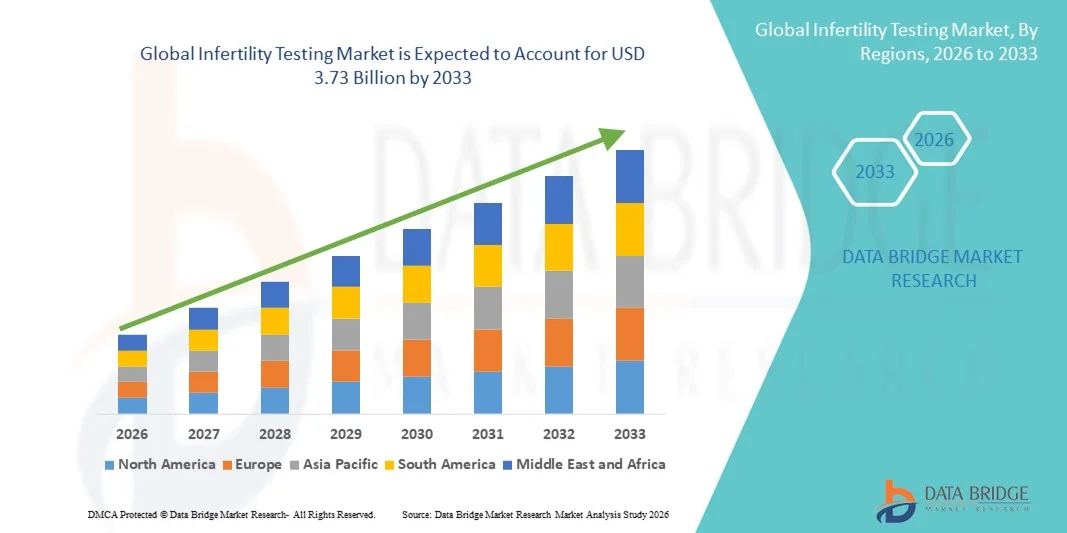
- As per Data Bridge Market Research Analysis the global infertility testing market size was valued at USD 2.90 billion in 2025 and is expected to reach USD 3.73 billion by 2033, at a CAGR of 3.2% during the forecast period
- The market growth is largely fueled by the rising prevalence of infertility cases worldwide, increasing awareness regarding reproductive health, and the growing trend of delayed pregnancies due to lifestyle and career choices
- Furthermore, advancements in diagnostic technologies such as hormonal assays, genetic testing, imaging techniques, and at-home fertility testing kits are establishing infertility testing as a critical component of modern reproductive healthcare. These converging factors are accelerating the adoption of infertility diagnostic solutions, thereby significantly boosting the industry's growth
Market Size & Forecast
- Global Market Value (2025): USD 2.90 billion
- Expected Market Value (2033): USD 3.73 billion
- Forecast CAGR (2026–2033): 3.2%
What are the Major Takeaways of Infertility Testing Market?
- Infertility testing, encompassing diagnostic procedures such as hormonal blood tests, semen analysis, ovulation tracking, imaging techniques, and genetic screening, plays a crucial role in identifying reproductive health issues in both men and women, supporting timely clinical intervention and personalized fertility treatment planning
- The escalating demand for infertility testing is primarily fueled by the increasing global prevalence of infertility, delayed parenthood due to lifestyle and career priorities, rising awareness regarding reproductive health, and expanding access to fertility clinics and assisted reproductive technologies
- North America dominated the infertility testing market with the largest revenue share of 38.76% in 2025, characterized by advanced healthcare infrastructure, high awareness levels, favorable reimbursement frameworks, and a strong presence of fertility clinics and diagnostic laboratories, with the U.S. witnessing significant growth in both clinical and at-home fertility testing solutions
- Asia-Pacific is expected to be the fastest growing region in the infertility testing market during the forecast period due to growing healthcare expenditure, increasing urbanization, rising cases of lifestyle-related infertility, and expanding access to fertility treatment services in countries such as China and India
- Female infertility testing segment dominated the infertility testing market with a market share of 52.4% in 2025, driven by higher clinical evaluation rates among women, broader availability of hormone-based diagnostic tests, and increasing emphasis on early reproductive health assessment
Report Scope and Infertility Testing Market Segmentation
|
Attributes |
Infertility Testing Key Market Insights |
|
Segments Covered |
|
|
Countries Covered |
North America
Europe
Asia-Pacific
Middle East and Africa
South America
|
|
Key Market Players |
|
|
Market Opportunities |
|
|
Value Added Data Infosets |
In addition to the insights on market scenarios such as market value, growth rate, segmentation, geographical coverage, and major players, the market reports curated by the Data Bridge Market Research also include in-depth expert analysis, patient epidemiology, pipeline analysis, pricing analysis, and regulatory framework |
What is the Key Trend in the Infertility Testing Market?
Expansion of At-Home and AI-Enabled Fertility Diagnostics
- A significant and accelerating trend in the global infertility testing market is the growing adoption of at-home fertility testing kits combined with artificial intelligence (AI)-enabled digital health platforms. This integration of diagnostics and digital tools is significantly enhancing accessibility, privacy, and early detection of reproductive health issues
- For instance, several femtech companies now offer app-connected ovulation tracking kits and hormone testing devices that sync results with smartphones, enabling users to monitor fertility cycles in real time and share reports directly with healthcare professionals for consultation
- AI integration in infertility testing enables features such as predictive ovulation tracking, personalized fertility insights based on hormonal data, and early identification of irregular patterns. For instance, AI-driven platforms can analyze menstrual cycle data over time to detect potential conditions such as polycystic ovary syndrome (PCOS) and provide intelligent recommendations for clinical follow-up. Furthermore, digital connectivity allows users to receive automated reminders, interpretive dashboards, and secure teleconsultation support
- The seamless integration of infertility diagnostic tools with mobile health applications and telemedicine platforms facilitates centralized reproductive health management. Through a single interface, individuals and couples can track hormone levels, semen parameters, medical appointments, and treatment progress, creating a more coordinated and data-driven fertility journey
- This trend towards more personalized, data-centric, and patient-friendly fertility diagnostics is fundamentally reshaping expectations in reproductive healthcare. Consequently, diagnostic companies are developing advanced at-home hormone panels, digital semen analysis devices, and AI-supported analytics to improve accuracy and user engagement
- The demand for infertility testing solutions that offer digital connectivity, AI-driven insights, and home-based convenience is growing rapidly across both developed and emerging markets, as individuals increasingly prioritize proactive reproductive health management and early intervention strategies
- In addition, increasing collaborations between diagnostic laboratories, fertility clinics, and digital health startups are accelerating product innovation and expanding distribution networks, further strengthening market penetration globally
Infertility Testing Market Dynamics
Driver
Increasing Infertility Prevalence and Delayed Parenthood
- The rising global prevalence of infertility among both men and women, combined with increasing trends of delayed parenthood due to lifestyle, career, and socio-economic factors, is a significant driver for the heightened demand for infertility testing services and products
- For instance, fertility clinics and diagnostic laboratories across North America and Europe have reported steady increases in patient visits for hormonal profiling, semen analysis, and genetic screening as couples seek early diagnosis before initiating assisted reproductive treatments. Such strategic service expansions by healthcare providers are expected to drive the infertility testing market growth during the forecast period
- As awareness regarding reproductive health increases and social stigma gradually declines, more individuals are proactively seeking fertility evaluations. Infertility testing offers essential diagnostic insights such as ovarian reserve assessment, sperm quality analysis, and detection of underlying medical conditions, supporting timely clinical decision-making
- Furthermore, the expansion of assisted reproductive technologies (ART) and the growing availability of specialized fertility centers are making infertility testing an integral step in comprehensive fertility treatment pathways, ensuring appropriate and personalized therapeutic approaches
- The availability of advanced diagnostic techniques including hormonal assays, ultrasound imaging, hysterosalpingography, and genetic testing is encouraging both physicians and patients to adopt structured fertility assessment protocols. Increasing healthcare expenditure and insurance coverage in certain regions further contribute to higher testing uptake
- Government-led reproductive health awareness programs and workplace fertility benefit initiatives are further stimulating demand by promoting early screening and reducing financial barriers associated with fertility evaluations
- In addition, the rising incidence of lifestyle-related risk factors such as obesity, stress, smoking, and environmental exposure is increasing the need for routine fertility assessment among reproductive-age populations
Restraint/Challenge
High Testing Costs and Emotional Sensitivity Barriers
- The relatively high cost associated with comprehensive infertility testing panels, especially those involving advanced genetic screening and imaging procedures, poses a significant challenge to broader market adoption, particularly in low- and middle-income regions
- For instance, in several developing countries, limited insurance reimbursement and high out-of-pocket expenses discourage couples from undergoing complete fertility evaluations, delaying diagnosis and treatment initiation
- Addressing affordability concerns through cost-effective diagnostic kits, expanded insurance coverage, and public health initiatives is crucial for improving access. In addition, infertility remains an emotionally sensitive issue in many cultures, leading to delayed testing due to social stigma or psychological stress associated with potential diagnoses
- While awareness campaigns are gradually improving public perception, misconceptions about infertility and fear of medical procedures can still hinder early testing adoption, especially among male patients who may be reluctant to undergo semen analysis
- Overcoming these challenges through expanded counseling services, awareness programs, subsidized testing initiatives, and continued innovation in affordable at-home diagnostic solutions will be vital for sustaining long-term growth in the global infertility testing market
- Limited availability of advanced diagnostic infrastructure and trained reproductive health specialists in rural and underserved regions further restricts timely access to accurate infertility testing services
- Moreover, variability in regulatory requirements and quality standards across countries can delay product approvals and create barriers for international market expansion of innovative fertility diagnostic technologies
How is the Infertility Testing Market Segmented?
The market is segmented on the basis of type, test kits, prescription mode, distribution channel, and end users.
- By Type
On the basis of type, the infertility testing market is segmented into female infertility testing and male infertility testing. The female infertility testing segment dominated the market with the largest market revenue share of 52.4% in 2025, driven by higher clinical consultation rates among women and the broad range of available diagnostic procedures such as hormonal profiling, ovarian reserve testing, ultrasound imaging, and hysterosalpingography. Women are often the first to undergo fertility evaluation, contributing to greater testing volumes in this segment. In addition, increased awareness regarding conditions such as polycystic ovary syndrome (PCOS) and endometriosis further supports segment growth. The availability of both laboratory-based and at-home hormone testing kits also strengthens demand for female infertility diagnostics globally.
The male infertility testing segment is anticipated to witness the fastest growth rate from 2026 to 2033, fueled by rising awareness of male-factor infertility and growing acceptance of semen analysis and sperm function tests. Technological advancements such as automated semen analyzers and smartphone-connected sperm testing devices are improving accessibility and privacy for male patients. Public health campaigns encouraging shared responsibility in fertility assessment are further accelerating growth. Increasing research linking lifestyle factors such as obesity, smoking, and stress to declining sperm quality also supports expanding adoption of male infertility testing solutions.
- By Test Kits
On the basis of test kits, the infertility testing market is segmented into Follicular Stimulating Hormone (FSH) urine test kits, Luteinizing Hormone (LH) urine test kits, Human Chorionic Gonadotropin (HCG) hormone blood test kits, and others. The LH urine test kits segment dominated the market with the largest revenue share in 2025, primarily due to their widespread use in ovulation prediction and ease of over-the-counter availability. These kits are highly popular among women tracking ovulation cycles for conception planning. Their affordability, convenience, and rapid results make them a preferred first-line fertility monitoring tool. Increasing digital integration with mobile applications further enhances their usage.
The FSH urine test kits segment is expected to witness the fastest growth rate from 2026 to 2033, driven by growing demand for ovarian reserve assessment among women delaying pregnancy. FSH testing helps evaluate reproductive hormone levels and identify early signs of diminished ovarian function. Rising awareness about age-related fertility decline and expanding at-home hormone testing options are contributing to segment expansion. In addition, fertility clinics increasingly recommend FSH testing as part of preliminary fertility screening protocols.
- By Prescription Mode
On the basis of prescription mode, the infertility testing market is segmented into prescription based and over the counter (OTC) based. The prescription-based segment dominated the market in 2025 due to the high volume of clinical diagnostic procedures conducted in hospitals and fertility centers. Comprehensive fertility assessments such as hormonal blood panels, imaging tests, and genetic screenings typically require physician supervision. Insurance reimbursement in certain regions further supports prescription-based testing growth. The accuracy and reliability associated with laboratory-based diagnostics also reinforce segment dominance.
The OTC-based segment is projected to witness the fastest CAGR from 2026 to 2033, driven by increasing consumer preference for privacy, convenience, and early self-assessment. The growing availability of at-home ovulation predictors, hormone monitoring kits, and digital fertility tracking devices is expanding this segment. E-commerce penetration and direct-to-consumer marketing strategies are further supporting growth. Technological advancements enabling lab-grade accuracy in home settings are expected to enhance adoption rates.
- By Distribution Channel
On the basis of distribution channel, the infertility testing market is segmented into hospital pharmacies, online pharmacies, and pharmacies & drug stores. Hospital pharmacies dominated the market with the largest revenue share in 2025, attributed to the high volume of fertility-related diagnostic procedures performed in hospital settings. Patients undergoing assisted reproductive treatments often procure prescribed diagnostic kits directly from hospital pharmacies. Strong physician influence and integrated clinical workflows further strengthen this segment’s position. The availability of specialized fertility testing products in hospital networks also contributes to sustained demand.
Online pharmacies are expected to witness the fastest growth rate from 2026 to 2033, driven by increasing digitalization and consumer preference for discreet purchasing options. Online platforms provide easy access to a wide range of fertility test kits, competitive pricing, and doorstep delivery. Growing internet penetration and telehealth consultations are supporting the shift toward online procurement. Promotional strategies and subscription-based fertility monitoring services are further accelerating growth in this channel.
- By End Users
On the basis of end users, the infertility testing market is segmented into fertility centres, hospitals and clinics, research institutes, and cryobanks. Fertility centres dominated the market in 2025 owing to their specialized focus on reproductive diagnostics and assisted reproductive technologies. These centers perform comprehensive fertility evaluations, including hormonal, genetic, and imaging tests, as part of structured treatment pathways. Increasing patient inflow for in vitro fertilization (IVF) and other ART procedures drives consistent demand for infertility testing services. Advanced laboratory infrastructure and skilled specialists further support segment dominance.
Hospitals and clinics are anticipated to witness the fastest growth rate from 2026 to 2033, fueled by expanding reproductive health departments and improved access to fertility diagnostics in secondary and tertiary care facilities. Growing collaborations between hospitals and specialized fertility experts are strengthening service capabilities. Increasing awareness and early screening initiatives are also boosting hospital-based fertility testing volumes. Continuous investments in diagnostic technologies and training programs are expected to sustain rapid growth in this segment.
Which Region Holds the Largest Share of the Infertility Testing Market?
- North America dominated the infertility testing market with the largest revenue share of 38.76% in 2025, characterized by advanced healthcare infrastructure, high awareness levels, favorable reimbursement frameworks, and a strong presence of fertility clinics and diagnostic laboratories
- Patients in the region highly value the availability of comprehensive diagnostic services, advanced hormonal and genetic testing technologies, and seamless integration of fertility diagnostics with assisted reproductive treatment programs
- This widespread adoption is further supported by favorable reimbursement frameworks in certain areas, high healthcare expenditure, strong presence of specialized fertility clinics, and the growing preference for early screening and proactive fertility management, establishing infertility testing as a critical component of reproductive healthcare services
U.S. Infertility Testing Market Insight
The U.S. infertility testing market captured the largest revenue share within North America in 2025, fueled by rising infertility prevalence and strong awareness regarding early reproductive health assessment. Patients are increasingly prioritizing timely fertility evaluations through hormonal assays, genetic screening, and semen analysis services. The growing preference for advanced diagnostic technologies, combined with robust demand for assisted reproductive treatments, further propels the infertility testing industry. Moreover, the expanding integration of digital health platforms, teleconsultation services, and at-home fertility monitoring kits is significantly contributing to the market's expansion.
Europe Infertility Testing Market Insight
The Europe infertility testing market is projected to expand at a substantial CAGR throughout the forecast period, primarily driven by increasing maternal age and supportive healthcare policies promoting reproductive health screening. The rise in lifestyle-related infertility factors, coupled with improved access to fertility clinics, is fostering the adoption of diagnostic testing services. European patients are also drawn to comprehensive, evidence-based fertility assessments and structured treatment pathways. The region is experiencing significant growth across public and private healthcare systems, with infertility testing increasingly incorporated into routine gynecological and andrological evaluations.
U.K. Infertility Testing Market Insight
The U.K. infertility testing market is anticipated to grow at a noteworthy CAGR during the forecast period, driven by increasing awareness of fertility preservation and delayed parenthood trends. In addition, rising concerns regarding declining birth rates and reproductive health complications are encouraging individuals and couples to seek early diagnostic evaluation. The UK’s established healthcare infrastructure, alongside expanding private fertility clinics and digital consultation platforms, is expected to continue to stimulate market growth.
Germany Infertility Testing Market Insight
The Germany infertility testing market is expected to expand at a considerable CAGR during the forecast period, fueled by heightened awareness of reproductive health and demand for technologically advanced diagnostic solutions. Germany’s well-developed healthcare infrastructure, combined with its emphasis on precision diagnostics and laboratory standards, promotes the adoption of comprehensive fertility assessments in both public and private settings. The integration of advanced genetic testing and hormone analysis services is also becoming increasingly prevalent, with a strong preference for accurate, privacy-focused diagnostic solutions aligning with local patient expectations.
Asia-Pacific Infertility Testing Market Insight
The Asia-Pacific infertility testing market is poised to grow at the fastest CAGR during the forecast period of 2026 to 2033, driven by increasing urbanization, rising disposable incomes, and growing incidence of lifestyle-related infertility in countries such as China, Japan, and India. The region's expanding healthcare infrastructure, supported by government initiatives aimed at improving maternal and reproductive health services, is driving the adoption of infertility testing. Furthermore, as APAC emerges as a rapidly growing hub for fertility clinics and diagnostic laboratories, the affordability and accessibility of infertility testing services are expanding to a wider patient base.
Japan Infertility Testing Market Insight
The Japan infertility testing market is gaining momentum due to the country’s aging population, delayed marriages, and strong focus on preventive healthcare. The Japanese market places significant emphasis on accurate diagnostic evaluation, and the adoption of infertility testing is driven by the increasing number of fertility consultations and assisted reproductive procedures. The integration of advanced laboratory technologies with digital record management systems is fueling growth. Moreover, Japan's supportive policies addressing declining birth rates are likely to spur demand for accessible and reliable fertility assessment solutions in both public and private healthcare sectors.
India Infertility Testing Market Insight
The India infertility testing market accounted for a significant market revenue share in Asia Pacific in 2025, attributed to the country's large reproductive-age population, rapid urbanization, and increasing awareness regarding fertility health. India stands as one of the fastest-growing markets for assisted reproductive services, and infertility testing is becoming increasingly common across urban fertility centers and multi-specialty hospitals. The push toward expanding healthcare access, alongside improving diagnostic infrastructure and growing private sector participation, are key factors propelling the market in India.
Which are the Top Companies in Infertility Testing Market?
The Infertility Testing industry is primarily led by well-established companies, including:
- Labcorp (U.S.)
- Proov Test (U.S.)
- Clearblue (Switzerland)
- BIOMÉRIEUX (France)
- Mira (U.S.)
- Modern Fertility (U.S.)
- LetsGetChecked (Ireland)
- Everlywell (U.S.)
- Cambridge Temperature Concepts Limited (U.K.)
- Merck KGaA (Germany)
- Thermo Fisher Scientific Inc. (U.S.)
- CooperSurgical, Inc. (U.S.)
- Vitrolife AB (Sweden)
- Cook (U.S.)
- Ferring Pharmaceuticals (Switzerland)
- Esco Micro Pte. Ltd. (Singapore)
- Hamilton Thorne Ltd. (Canada)
- Aetherion Diagnostics (U.K.)
- SCSA Diagnostics, Inc. (U.S.)
What are Latest Developments in Infertility Testing Market?
- In October 2025, London-based biotech startup Genie Fertility emerged from stealth after raising USD 1.22 million in pre-seed funding to develop the world’s first non-invasive fertility diagnostic that analyzes menstrual blood to assess uterine health, aiming to fill a critical diagnostic gap in reproductive health care and improve infertility evaluation without invasive biopsies. This innovation could significantly broaden infertility testing capabilities and clinical insights
- In September 2025, Femasys Inc. announced a strategic partnership with Medical Electronic Systems to launch the FemSperm™ Analysis Kit for use with FemaSeed, enabling gynecologists to offer complete in-office sperm handling for intratubal insemination procedures, thereby expanding male fertility diagnostics and treatment support within clinical settings
- In June 2025, doctors at Columbia University Fertility Center reported the first pregnancy achieved using STAR (Sperm Track and Recovery), a new AI-based system that detects and isolates sperm in men with azoospermia expanding possibilities for male infertility assessment and assisted reproduction outcomes after nearly two decades of unsuccessful attempts
- In April 2025, researchers in Mexico documented the birth of a baby conceived via an AI-operated sperm-injecting robotic system for intracytoplasmic sperm injection (ICSI), demonstrating the potential of automated precision technologies to improve success rates in infertility treatments where manual procedures face limitations
- In March 2025, UniHealth launched a state-of-the-art IVF and fertility clinic at UMC Victoria Hospital in Uganda equipped with advanced reproductive technology, addressing local infertility care gaps and reducing outbound medical tourism by offering high-quality diagnostics and treatment locally

- Interactive Data Analysis Dashboard
- Company Analysis Dashboard for high growth potential opportunities
- Research Analyst Access for customization & queries
- Competitor Analysis with Interactive dashboard
- Latest News, Updates & Trend analysis
- Harness the Power of Benchmark Analysis for Comprehensive Competitor Tracking
Data collection and base year analysis are done using data collection modules with large sample sizes. The stage includes obtaining market information or related data through various sources and strategies. It includes examining and planning all the data acquired from the past in advance. It likewise envelops the examination of information inconsistencies seen across different information sources. The market data is analysed and estimated using market statistical and coherent models. Also, market share analysis and key trend analysis are the major success factors in the market report. To know more, please request an analyst call or drop down your inquiry.
The key research methodology used by DBMR research team is data triangulation which involves data mining, analysis of the impact of data variables on the market and primary (industry expert) validation. Data models include Vendor Positioning Grid, Market Time Line Analysis, Market Overview and Guide, Company Positioning Grid, Patent Analysis, Pricing Analysis, Company Market Share Analysis, Standards of Measurement, Global versus Regional and Vendor Share Analysis. To know more about the research methodology, drop in an inquiry to speak to our industry experts.
Data Bridge Market Research is a leader in advanced formative research. We take pride in servicing our existing and new customers with data and analysis that match and suits their goal. The report can be customized to include price trend analysis of target brands understanding the market for additional countries (ask for the list of countries), clinical trial results data, literature review, refurbished market and product base analysis. Market analysis of target competitors can be analyzed from technology-based analysis to market portfolio strategies. We can add as many competitors that you require data about in the format and data style you are looking for. Our team of analysts can also provide you data in crude raw excel files pivot tables (Fact book) or can assist you in creating presentations from the data sets available in the report.













