


What is the Infused Fruits Jellies Market Size and Growth Rate?
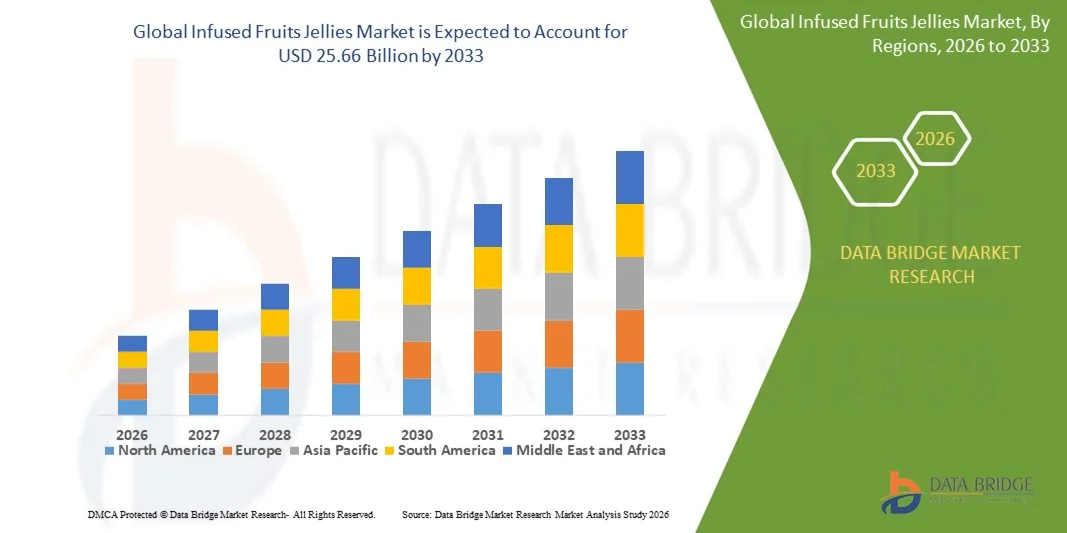
- As per Data Bridge Market Research Analysis the global infused fruits jellies market size was valued at USD 17.91 billion in 2025 and is expected to reach USD 25.66 billion by 2033, at a CAGR of 4.6% during the forecast period
- The market growth is largely fueled by the increasing consumer preference for natural, fruit-based, and functional snack products, driving higher adoption of infused fruits jellies across bakery, dairy, and confectionery applications
- Furthermore, rising demand for convenient, ready-to-eat, and health-oriented snack options is establishing infused fruits jellies as a popular choice among urban and health-conscious consumers. These converging factors are accelerating product innovation and expanding distribution channels, thereby significantly boosting the industry’s growth
Market Size & Forecast
- Global Market Value (2025): USD 17.91 Billion
- Expected Market Value (2033): USD 25.66 Billion
- Forecast CAGR (2026–2033): 4.6%
What are the Major Takeaways of Infused Fruits Jellies Market?
- Infused fruits jellies, offering flavorful, fruit-based confectionery and functional snack options, are becoming essential in modern snacking, breakfast, and dessert applications due to their convenience, taste appeal, and versatility across multiple product formats
- The escalating demand for infused fruits jellies is primarily fueled by growing health awareness, preference for natural ingredients, and the increasing popularity of functional foods, combined with expanding modern retail and online distribution networks
- North America dominated the infused fruits jellies market with a share of 35.58% in 2025, due to high consumer awareness of healthy snacking, demand for natural fruit-based products, and strong retail infrastructure
- Asia-Pacific is expected to be the fastest growing region in the infused fruits jellies market during the forecast period due to urbanization, rising disposable incomes, and increasing preference for natural and convenient snack options in countries such as China, Japan, and India
- High methoxyl pectin jellies segment dominated the market with a market share of 66.7% in 2025, due to their superior gel strength and compatibility with a wide range of fruit types. These jellies are favored for traditional applications such as spreads, bakery fillings, and confectionery, offering consistent texture and taste. High methoxyl jellies provide longer shelf life and easier processing for manufacturers, contributing to market adoption. Consumer preference for smooth and uniform jelly textures further reinforces their dominance. The segment benefits from established supply chains and global production expertise. Its versatility across multiple applications strengthens the market position
Report Scope and Infused Fruits Jellies Market Segmentation
|
Attributes |
Infused Fruits Jellies Key Market Insights |
|
Segments Covered |
|
|
Countries Covered |
North America
Europe
Asia-Pacific
Middle East and Africa
South America
|
|
Key Market Players |
|
|
Market Opportunities |
|
|
Value Added Data Infosets |
In addition to the insights on market scenarios such as market value, growth rate, segmentation, geographical coverage, and major players, the market reports curated by the Data Bridge Market Research also include in-depth expert analysis, pricing analysis, brand share analysis, consumer survey, demography analysis, supply chain analysis, value chain analysis, raw material/consumables overview, vendor selection criteria, PESTLE Analysis, Porter Analysis, and regulatory framework. |
What is the Key Trend in the Infused Fruits Jellies Market?
Rising Consumer Preference for Natural and Fruit-Based Snack Products
- A significant trend in the infused fruits jellies market is the growing consumer shift toward natural, fruit-based, and functional snacks, driven by increasing health awareness and demand for clean-label ingredients. This trend is encouraging manufacturers to develop products that combine indulgence with nutritional benefits, making infused fruit jellies a favored choice in bakery, dairy, and confectionery applications
- For instance, Hi-Chew, under Japan’s Morinaga & Company, has expanded its fruit-inspired jelly products, such as the "Fruit Combos Mix," catering to health-conscious and flavor-seeking consumers. Such offerings reinforce the appeal of natural fruit flavors and position infused fruits jellies as convenient, on-the-go indulgences with perceived functional benefits
- The market is also witnessing innovation in exotic and mixed fruit flavors that attract younger demographics, while premium segments focus on antioxidant-rich or fortified jelly products. These developments are driving product diversification, improving consumer engagement, and enhancing the market’s overall growth potential
- The convenience and portability of infused fruits jellies are making them increasingly popular in ready-to-eat snack segments. They are being integrated into breakfast cereals, confectionery packs, and dessert toppings, reflecting broader adoption in households and foodservice channels
- Consumers are showing rising interest in functional and fortified variants, including collagen-infused or vitamin-enriched jellies, further solidifying the category’s presence in health-oriented snacking. This trend is expected to continue, supported by expanding modern retail and e-commerce availability
- Overall, the market is being shaped by the dual consumer demand for taste and wellness, positioning infused fruits jellies as an essential element of the evolving snack and confectionery landscape
Infused Fruits Jellies Market Dynamics
Driver
Growing Demand for Convenient, Ready-To-Eat, and Health-Oriented Confectionery
- The market growth is primarily driven by increasing consumer demand for ready-to-eat, convenient, and health-oriented confectionery products that combine indulgence with functional benefits. This demand encourages manufacturers to innovate with natural flavors, low-sugar formulations, and fortified ingredients to appeal to urban and health-conscious consumers
- For instance, Gelly Jelly, a new entrant in 2025, launched five collagen-infused flavors targeted at skin health and wellness, highlighting consumer interest in beauty-from-within and functional jelly products. Such launches are enhancing product differentiation and expanding the market for premium and functional fruit jellies
- The growing presence of modern retail, supermarkets, and online stores is facilitating easy access to these convenient products, while packaging innovations such as pouches and single-serve portions are enhancing portability and on-the-go consumption
- The rising trend of indulgence paired with nutrition is further motivating companies to offer unique flavor combinations, organic fruit-based jellies, and fortified options, reinforcing the market’s expansion
- Overall, the convergence of convenience, taste, and health benefits is significantly accelerating the uptake of infused fruits jellies, driving sustained growth across multiple regions and applications
Restraint/Challenge
High Cost and Limited Availability of Premium Fruit Ingredients
- The infused fruits jellies market faces challenges due to the high cost and limited availability of premium fruits and natural ingredients required for product formulation. These factors restrict large-scale production and can affect product pricing, particularly in the premium and functional jelly segments
- For instance, Cloetta’s acquisition of The Jelly Bean Factory in 2023 enabled the company to expand its premium fruit jelly portfolio, but reliance on imported fruits and natural extracts increases operational costs and supply chain complexity. Such constraints can impact product availability and profitability for smaller and mid-sized players
- Manufacturers also encounter challenges in sourcing fruits that meet quality standards for color, flavor, and nutritional content, which can lead to fluctuations in production schedules and retail pricing
- In addition, limited availability of exotic or rare fruits restricts flavor diversification, potentially slowing market expansion in niche and high-end segments where unique taste profiles are a key differentiator
- Overall, the high cost and constrained supply of premium fruit ingredients remain critical challenges that companies must address to sustain growth and expand their presence in the infused fruits jellies market
How is the Infused Fruits Jellies Market Segmented?
The market is segmented on the basis of type, form, product, application, packaging, and distribution channel.
- By Type
On the basis of type, the Infused Fruits Jellies market is segmented into raisins, apples, apricots, peaches, mangoes, papaya, strawberry, raspberry, blueberry, cranberries, cherry, quince, and others. The strawberry segment dominated the market with the largest market revenue share in 2025, driven by its universal consumer appeal and strong flavor profile that pairs well with both confectionery and bakery applications. Consumers often prefer strawberry jellies for their natural sweetness, vibrant color, and versatility in culinary usage. The market also sees high demand for strawberry jellies due to their widespread availability and compatibility with various product forms, such as chews and candies. In addition, manufacturers often innovate with premium strawberry blends, enhancing shelf appeal and brand differentiation. The segment benefits from consistent seasonal and year-round production, ensuring supply stability. The presence of established brands offering high-quality strawberry jellies further consolidates its dominant position.
The raspberry segment is anticipated to witness the fastest growth rate from 2026 to 2033, fueled by rising consumer interest in exotic and antioxidant-rich fruit flavors. For instance, companies such as Welch’s are expanding raspberry jelly offerings to cater to health-conscious and premium-segment consumers. Raspberry jellies are increasingly used in bakery toppings, dessert fillings, and functional snack innovations, boosting adoption. Their tangy flavor profile and perceived health benefits make them appealing to younger and urban consumers. In addition, the segment is supported by innovations in natural and organic formulations, responding to the growing demand for clean-label products. The aesthetic and vibrant hue of raspberry jellies further enhances product appeal in retail displays. This combination of novelty, taste, and health perception drives the segment’s rapid growth.
- By Form
On the basis of form, the market is segmented into chews and candies. The chews segment dominated the market in 2025 due to its convenient, on-the-go consumption and longer shelf life. Consumers favor chewable jellies for snacking, gifting, and lunchbox options, providing a portable indulgence that appeals across age groups. In addition, the chews form allows for innovative flavor infusions, such as multi-fruit or functional variants, enhancing consumer engagement. Manufacturers often introduce playful shapes and textures in chews, boosting visual appeal and repeat purchase. The compatibility of chews with both retail and online channels strengthens their market position. The segment benefits from established consumer habits in gifting and impulse-buy purchases.
The candies segment is expected to witness the fastest growth owing to increasing demand in confectionery and seasonal gifting markets. For instance, Haribo has introduced infused fruit jelly candies that combine traditional sweetness with functional fruit flavors. Candies provide opportunities for flavor experimentation and promotional limited editions, attracting younger demographics. They are increasingly incorporated into bakery toppings, dessert inclusions, and gift assortments, boosting visibility. The convenience of individually wrapped candies aligns with rising hygiene and portability trends. Their growing popularity in festive and celebration-oriented occasions further supports adoption.
- By Product
On the basis of product, the market is segmented into high methoxyl pectin jellies and low methoxyl pectin jellies. The high methoxyl pectin jellies segment dominated the market with the largest share of 66.7% in 2025, driven by their superior gel strength and compatibility with a wide range of fruit types. These jellies are favored for traditional applications such as spreads, bakery fillings, and confectionery, offering consistent texture and taste. High methoxyl jellies provide longer shelf life and easier processing for manufacturers, contributing to market adoption. Consumer preference for smooth and uniform jelly textures further reinforces their dominance. The segment benefits from established supply chains and global production expertise. Its versatility across multiple applications strengthens the market position.
The low methoxyl pectin jellies segment is anticipated to witness the fastest growth due to rising demand for low-sugar and functional jelly products. For instance, Hero Group has launched low-sugar, low methoxyl fruit jellies targeting health-conscious consumers. These jellies appeal to diabetic and calorie-aware audiences without compromising on flavor and texture. The segment is increasingly used in premium and clean-label product lines, supporting brand differentiation. Their ability to gel in reduced sugar formulations expands formulation flexibility for manufacturers. Growth is further accelerated by the rising trend of functional foods and healthier snacking options in developed markets.
- By Application
On the basis of application, the market is segmented into breakfast cereals, bakery products, dairy, frozen dessert products, and salads. The bakery products segment dominated the market in 2025 due to the extensive use of infused fruit jellies as fillings, toppings, and decorations in cakes, pastries, and cookies. Consumers appreciate the combination of natural fruit flavors and sweetness in bakery items. Manufacturers prefer bakery applications for their high-margin potential and ability to create visually appealing products. The segment is strengthened by growing home baking trends and café culture, supporting consistent demand. The flavor versatility and color vibrancy of jellies enhance their appeal in premium bakery products. Established brands offering specialty bakery ingredients further consolidate the segment’s position.
The breakfast cereals segment is expected to witness the fastest growth driven by the increasing incorporation of fruit jellies in health-oriented and fortified cereals. For instance, Kellogg’s has introduced cereal bars with embedded fruit jellies, combining taste with nutritional value. The segment benefits from rising consumer interest in convenient, ready-to-eat breakfast solutions. Innovative jelly inclusions improve texture, flavor, and visual appeal, enhancing overall product attractiveness. The growth is further supported by rising awareness of functional ingredients and fruit-based nutrition in morning meals. Increased marketing and promotional campaigns highlighting the fruity advantage accelerate adoption in the breakfast segment.
- By Packaging
On the basis of packaging, the market is segmented into cans, jars, bottles, and pouches. The jars segment dominated the market in 2025 due to their ease of storage, resealability, and traditional consumer preference for home use. Jars provide convenient portion control and allow visibility of the product, which encourages purchase. Manufacturers favor jars for premium jelly lines as they enhance product presentation and gifting appeal. The segment benefits from established distribution channels and consistent consumer habits. The durability and ease of handling further reinforce the segment’s market leadership. The segment also allows manufacturers to innovate in jar sizes and labeling for brand differentiation.
The pouches segment is expected to witness the fastest growth owing to their lightweight, portable, and eco-friendly advantages. For instance, Del Monte has introduced fruit jelly pouches that appeal to on-the-go and younger consumers. Pouches reduce storage and transportation costs for manufacturers while offering convenience to consumers. The flexible packaging format supports single-serve and multipack options, expanding retail applicability. Growing demand for sustainable packaging solutions further drives adoption. Attractive pouch designs and resealable features enhance consumer engagement and repeat purchase.
- By Distribution Channel
On the basis of distribution channel, the market is segmented into supermarket/hypermarket, convenience store, online store, and others. The supermarket/hypermarket segment dominated the market in 2025 due to wide product assortment, brand visibility, and bulk purchasing options. Consumers prefer purchasing fruit jellies from large retail stores for the convenience of choice, promotional offers, and trust in quality. Supermarkets provide opportunities for brand sampling, in-store promotions, and premium product placement, driving sales. Retailers often collaborate with manufacturers for exclusive launches and display campaigns. The segment benefits from established consumer shopping habits and consistent footfall. Its robust infrastructure ensures product availability and supply chain efficiency, consolidating market dominance.
The online store segment is anticipated to witness the fastest growth driven by increasing e-commerce penetration, convenience, and growing preference for home delivery. For instance, Amazon and BigBasket have expanded infused fruit jelly offerings with subscription and bundle options. Online platforms provide access to niche, organic, and premium fruit jelly varieties that may be unavailable in physical stores. The segment benefits from targeted digital marketing, reviews, and influencer endorsements. Rising smartphone penetration and digital literacy accelerate consumer adoption of online channels. Flexible delivery, promotional pricing, and doorstep convenience further strengthen the growth trajectory.
Which Region Holds the Largest Share of the Infused Fruits Jellies Market?
- North America dominated the infused fruits jellies market with the largest revenue share of 35.58% in 2025, driven by high consumer awareness of healthy snacking, demand for natural fruit-based products, and strong retail infrastructure
- Consumers in the region prefer premium fruit jellies with natural flavors, vibrant colors, and clean-label ingredients, boosting adoption across bakery, dairy, and breakfast cereal applications
- This widespread acceptance is further supported by high disposable incomes, a preference for convenience foods, and growing interest in functional and fortified snacks, establishing infused fruit jellies as a favored indulgence in both households and commercial foodservic
U.S. Infused Fruits Jellies Market Insight
The U.S. market captured the largest revenue share in North America in 2025, fueled by rising demand for flavored, fortified, and clean-label fruit jellies. Consumers are increasingly prioritizing healthier alternatives in confectionery and breakfast products. The growing trend of online grocery shopping, combined with strong supermarket chains offering extensive product variety, further propels the market. Moreover, innovative packaging formats such as pouches and jars, and the introduction of novel flavors, are significantly contributing to market growth.
Europe Infused Fruits Jellies Market Insight
The Europe market is projected to expand at a substantial CAGR during the forecast period, primarily driven by increasing health consciousness, rising demand for natural ingredients, and a strong bakery and dairy sector. Consumers in urban areas are drawn to fruit jellies for their taste, convenience, and application versatility. The market is witnessing significant growth across bakery, frozen desserts, and breakfast cereal applications, with product innovations focusing on low-sugar and organic variants enhancing adoption.
U.K. Infused Fruits Jellies Market Insight
The U.K. market is anticipated to grow at a noteworthy CAGR, driven by the rising trend of healthy snacking and premium confectionery consumption. Consumers are showing preference for fruit jellies with natural fruit extracts and functional benefits. The region’s strong retail and e-commerce infrastructure, combined with seasonal gifting and indulgence trends, is expected to continue stimulating market growth.
Germany Infused Fruits Jellies Market Insight
The Germany market is expected to expand at a considerable CAGR, fueled by consumer demand for high-quality, innovative, and functional fruit-based products. Germany’s well-developed bakery and confectionery industries, coupled with high health awareness, promote the adoption of infused fruit jellies. The integration of natural and organic ingredients in traditional products and the focus on sustainable packaging further support market expansion.
Asia-Pacific Infused Fruits Jellies Market Insight
The Asia-Pacific market is poised to grow at the fastest CAGR during 2026–2033, driven by urbanization, rising disposable incomes, and increasing preference for natural and convenient snack options in countries such as China, Japan, and India. Government initiatives promoting food safety and healthy eating are also supporting adoption. The region’s growing manufacturing capabilities for fruit jelly production and expanding modern retail chains are enhancing product accessibility.
Japan Infused Fruits Jellies Market Insight
The Japan market is gaining momentum due to the country’s high consumer awareness of health, premium confectionery trends, and demand for convenience foods. Consumers are increasingly choosing fruit jellies with natural flavors, low sugar, and functional benefits. The adoption of premium and imported jelly variants, along with the integration of innovative packaging formats, is fueling growth in both retail and foodservice sectors.
China Infused Fruits Jellies Market Insight
The China market accounted for the largest revenue share in Asia-Pacific in 2025, attributed to the growing middle class, rapid urbanization, and preference for flavored and fortified snacks. Fruit jellies are increasingly incorporated into bakery products, breakfast cereals, and ready-to-eat snacks. The expansion of modern retail chains, online platforms, and strong domestic manufacturing of fruit-based confectionery products are key factors driving market growth in China.
Which are the Top Companies in Infused Fruits Jellies Market?
The infused fruits jellies industry is primarily led by well-established companies, including:
- The Hershey Company (U.S.)
- Ferrara Candy Company (U.S.)
- HARIBO GmbH & Co. KG (Germany)
- Jelly Belly Candy Company (U.S.)
- Perfetti Van Melle (Netherlands)
- Mars, Incorporated (U.S.)
- Impact Confections (U.S.)
- MORINAGA & CO., LTD. (Japan)
- Palmer Candy Company (U.S.)
- Mahak Group (India)
- MISTER CHIPS (India)
- FLAVORCAN INTERNATIONAL INC. (U.S.)
What are Latest Developments in Infused Fruits Jellies Market?
- In March 2025, Gelly Jelly, a new entrant in the collagen jelly market, launched five innovative flavors designed to enhance skin health and wellness. The product’s premium collagen content and distinctive texture quickly captured consumer attention, broadening its appeal in the competitive beauty-from-within segment. This launch strengthened the company’s position in the premium collagen jelly market and intensified competition among existing players seeking to differentiate through flavor innovation and functional benefits
- In 2023, Hi-Chew, under Japan’s Morinaga & Company, introduced the "Fruit Combos Mix," focusing on fruit-inspired flavor innovation. This launch underscored the company’s investment in research and development to align products with evolving consumer tastes. By expanding its portfolio with novel flavors, Hi-Chew reinforced its presence in the fruit jelly segment and attracted a wider base of health-conscious and indulgence-seeking consumers
- In 2023, Cloetta, a leading European confectionery company, acquired The Jelly Bean Factory, a brand recognized for its gourmet fruit gummies. This strategic acquisition strengthened Cloetta’s foothold in the premium jelly market, allowing the company to diversify its product range and cater to consumers seeking high-quality, artisanal fruit jelly products. The move also intensified competition in the European premium jelly segment, pushing other players to innovate and expand their offerings
- In June 2022, Shiseido launched its Collagen Jelly Plus in select Asian markets, offering a blend of bioactive collagen peptides and antioxidant-rich fruit extracts. This development capitalized on the growing trend of functional confectionery and beauty-from-within products, enhancing Shiseido’s market share in collagen-infused jellies. The launch demonstrated rising consumer demand for convenient, nutritionally enhanced jelly products that combine indulgence with health benefits

- Interactive Data Analysis Dashboard
- Company Analysis Dashboard for high growth potential opportunities
- Research Analyst Access for customization & queries
- Competitor Analysis with Interactive dashboard
- Latest News, Updates & Trend analysis
- Harness the Power of Benchmark Analysis for Comprehensive Competitor Tracking
Global Infused Fruits Jellies Market, Supply Chain Analysis and Ecosystem Framework
To support market growth and help clients navigate the impact of geopolitical shifts, DBMR has integrated in-depth supply chain analysis into its Global Infused Fruits Jellies Market research reports. This addition empowers clients to respond effectively to global changes affecting their industries. The supply chain analysis section includes detailed insights such as Global Infused Fruits Jellies Market consumption and production by country, price trend analysis, the impact of tariffs and geopolitical developments, and import and export trends by country and HSN code. It also highlights major suppliers with data on production capacity and company profiles, as well as key importers and exporters. In addition to research, DBMR offers specialized supply chain consulting services backed by over a decade of experience, providing solutions like supplier discovery, supplier risk assessment, price trend analysis, impact evaluation of inflation and trade route changes, and comprehensive market trend analysis.
Data collection and base year analysis are done using data collection modules with large sample sizes. The stage includes obtaining market information or related data through various sources and strategies. It includes examining and planning all the data acquired from the past in advance. It likewise envelops the examination of information inconsistencies seen across different information sources. The market data is analysed and estimated using market statistical and coherent models. Also, market share analysis and key trend analysis are the major success factors in the market report. To know more, please request an analyst call or drop down your inquiry.
The key research methodology used by DBMR research team is data triangulation which involves data mining, analysis of the impact of data variables on the market and primary (industry expert) validation. Data models include Vendor Positioning Grid, Market Time Line Analysis, Market Overview and Guide, Company Positioning Grid, Patent Analysis, Pricing Analysis, Company Market Share Analysis, Standards of Measurement, Global versus Regional and Vendor Share Analysis. To know more about the research methodology, drop in an inquiry to speak to our industry experts.
Data Bridge Market Research is a leader in advanced formative research. We take pride in servicing our existing and new customers with data and analysis that match and suits their goal. The report can be customized to include price trend analysis of target brands understanding the market for additional countries (ask for the list of countries), clinical trial results data, literature review, refurbished market and product base analysis. Market analysis of target competitors can be analyzed from technology-based analysis to market portfolio strategies. We can add as many competitors that you require data about in the format and data style you are looking for. Our team of analysts can also provide you data in crude raw excel files pivot tables (Fact book) or can assist you in creating presentations from the data sets available in the report.













