


Ink for Flexible Packaging Market Size
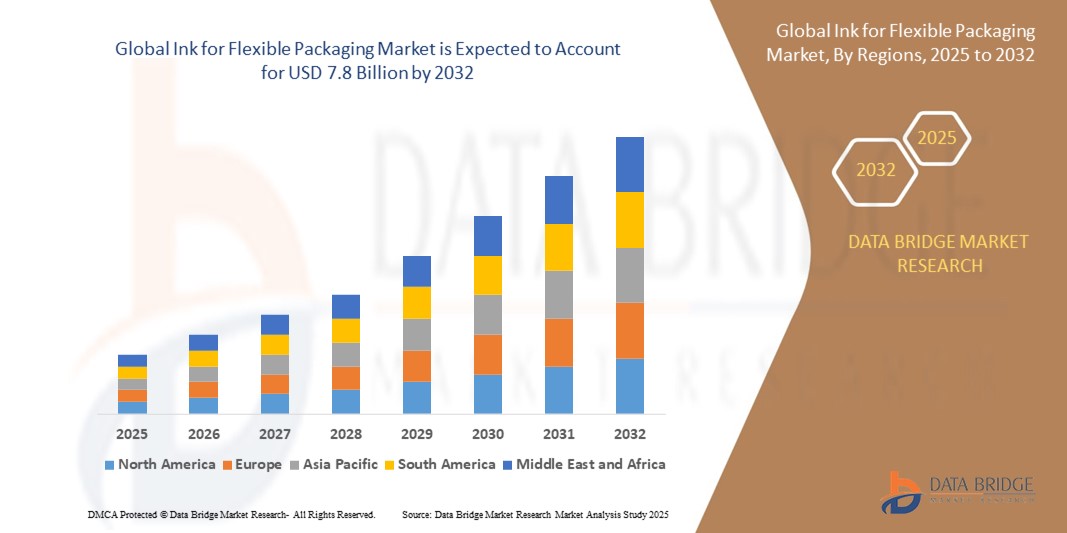
- The global Ink for Flexible Packaging market size was valued at USD 4.5 billion in 2024 and is expected to reach USD 7.8 billion by 2032, at a CAGR of 7.1% during the forecast period
- The market growth is largely fueled by increasing demand for sustainable packaging solutions, advancements in printing technologies, rising e-commerce activities, and the expanding food and beverage sector, especially in emerging economies seeking high-quality, visually appealing, and durable flexible packaging.
- Furthermore, stringent environmental regulations and consumer preference for eco-friendly products are driving the adoption of water-based and UV-curable inks. Innovations in digital printing and rapid industrialization in developing regions also contribute significantly to the market’s ongoing expansion and evolution.
Ink for Flexible Packaging Market Analysis
- The ink for flexible packaging market is expanding due to growing demand for high-quality, durable, and sustainable packaging. Technological advancements in printing, such as digital and flexographic methods, enhance efficiency, customization, and visual appeal, boosting industry adoption.
- Environmental regulations and shifting consumer preferences are driving the use of eco-friendly inks like water-based and UV-curable variants. These sustainable solutions not only reduce environmental impact but also help brands align with global green packaging initiatives and compliance requirements.
- Asia Pacific dominates the Ink for Flexible Packaging market with the largest revenue share of 38.12% in 2025, characterized by rapid industrial growth, rising consumer demand for packaged goods, strong e-commerce expansion, and increasing adoption of sustainable, eco-friendly ink technologies.
- Asia-Pacific is expected to be the fastest growing region in the Ink for Flexible Packaging market during the forecast period due to rapid industrialization, expanding middle-class consumer base, booming e-commerce, increasing demand for sustainable packaging, and advancements in printing technologies.
- Water-Based segment is expected to dominate the Ink for Flexible Packaging market with a 43.2% share in 2025, driven by its eco-friendly properties, compliance with environmental regulations, low VOC emissions, cost-effectiveness, and growing consumer demand for sustainable packaging solutions.
Report Scope and Ink for Flexible Packaging Market Segmentation
|
Attributes |
Ink for Flexible Packaging Key Market Insights |
|
Segments Covered |
|
|
Countries Covered |
North America
Europe
Asia-Pacific
Middle East and Africa
South America
|
|
Key Market Players |
|
|
Market Opportunities |
|
|
Value Added Data Infosets |
In addition to the insights on market scenarios such as market value, growth rate, segmentation, geographical coverage, and major players, the market reports curated by the Data Bridge Market Research also include in-depth expert analysis, pricing analysis, brand share analysis, consumer survey, demography analysis, supply chain analysis, value chain analysis, raw material/consumables overview, vendor selection criteria, PESTLE Analysis, Porter Analysis, and regulatory framework. |
Ink for Flexible Packaging Market Trends
“Increasing adoption of eco-friendly inks driven by environmental regulations”
- Governments worldwide are implementing strict regulations limiting harmful chemicals and volatile organic compounds (VOCs) in inks, pushing manufacturers to develop eco-friendly, water-based, and UV-curable ink formulations that reduce environmental impact and improve safety in flexible packaging applications.
- Consumer awareness about environmental sustainability is growing, encouraging brands to adopt greener packaging solutions, including the use of eco-friendly inks, which helps companies enhance their corporate social responsibility image and meet customer expectations for sustainable products.
- Eco-friendly inks contribute to reducing carbon footprints during production and disposal, aligning with global sustainability goals and circular economy principles, thus making them a preferred choice for manufacturers seeking to minimize environmental harm across the flexible packaging supply chain.
- Technological advancements have improved the performance of eco-friendly inks, offering better print quality, faster drying times, and compatibility with various substrates, which helps overcome earlier limitations and supports wider adoption in flexible packaging markets.
- Industry collaborations and investments in research are accelerating the development and commercialization of sustainable ink solutions, enabling companies to comply with evolving regulations, reduce hazardous waste, and tap into growing market demand for environmentally responsible flexible packaging.
Ink for Flexible Packaging Market Dynamics
Driver
“Rising consumer demand for sustainable packaging drives increased use of eco-friendly inks”
- Consumers are increasingly prioritizing environmental responsibility, prompting brands to adopt sustainable packaging solutions. This shift boosts demand for eco-friendly inks that minimize harmful emissions and support recyclable and biodegradable flexible packaging materials, aligning products with green consumer values and enhancing brand loyalty.
- Growing awareness about plastic pollution and chemical waste drives consumers to prefer products with environmentally safe packaging. As a result, manufacturers invest in water-based and UV-curable inks that reduce ecological impact, helping companies meet consumer expectations and differentiate themselves in competitive markets focused on sustainability.
- Millennials and Gen Z consumers, who are highly conscious of environmental issues, influence purchasing decisions significantly. Their preference for sustainable brands compels companies to use eco-friendly inks in flexible packaging, fostering responsible consumption patterns and encouraging the entire packaging industry to adopt greener practices.
- Retailers and e-commerce platforms are increasingly demanding sustainable packaging from suppliers to reduce their carbon footprint. This trend encourages brand owners and manufacturers to use eco-friendly inks that comply with environmental certifications, enhancing market access and meeting the sustainability criteria set by major distributors.
- Social media and environmental campaigns raise awareness about the benefits of sustainable packaging, influencing public opinion and consumer behavior. This creates market pressure for companies to innovate with eco-friendly inks, enabling them to stay relevant, attract eco-conscious customers, and contribute to global sustainability goals.
Restraint/Challenge
“High costs and limited performance of eco-friendly inks”
- Eco-friendly inks often involve higher raw material and production costs compared to traditional inks, making them less attractive for price-sensitive manufacturers and limiting widespread adoption in cost-competitive flexible packaging markets.
- Some eco-friendly inks may have performance limitations, such as slower drying times, lower adhesion, or reduced color vibrancy, which can affect printing efficiency and final packaging quality, challenging their use in high-speed industrial printing processes.
- Limited compatibility of certain sustainable inks with diverse packaging substrates can restrict their application range, forcing manufacturers to choose between eco-friendliness and functional performance, especially in complex multilayer flexible packaging materials.
- Transitioning to eco-friendly inks requires investment in new printing equipment and processes, which can be expensive and time-consuming for manufacturers, especially small and medium enterprises, hindering quick market penetration of sustainable ink technologies
- Market uncertainty around regulatory changes and evolving sustainability standards creates hesitation among manufacturers and brands to fully commit to eco-friendly inks, as they balance compliance risks with the costs and benefits of adopting new ink formulations. growth
Ink for Flexible Packaging Market Scope
The market is segmented on the basis of product type and end-user industry.
- By Product Type
On the basis of product type, the Ink for Flexible Packaging market is segmented in to water-based, solvent-based and Uv-curable. The water-based segment dominates the largest market revenue share of 43.2% in 2025, driven by growing environmental concerns, stringent regulations on VOC emissions, and rising demand for sustainable packaging solutions. Its non-toxic nature, cost-effectiveness, and suitability for food and pharmaceutical applications further boost its adoption across the packaging industry.
The water-based segment is anticipated to witness the fastest growth rate of 4.3% from 2025 to 2032, fueled by increasing demand for low-VOC, eco-friendly packaging inks, regulatory support for sustainable materials, and advancements in water-based ink formulation and application technologies.
- By End User Industry
On the basis of end User Industry, the Ink for Flexible Packaging market is segmented in to food and beverages, pharmaceutical, cosmetics and personal care and others The food and beverage industry is a major driver of the ink for flexible packaging market due to its high demand for safe, non-toxic, and regulatory-compliant packaging. Flexible packaging inks, especially water-based types, are favored for their suitability in direct and indirect food contact applications, ensuring consumer safety.
The end-user segment is expected to witness the fastest CAGR from 2025 to 2032, driven by increasing demand from food and beverage, pharmaceuticals, and personal care industries, which require high-quality, sustainable, and safe flexible packaging solutions to meet evolving consumer and regulatory standards.
Ink for Flexible Packaging Market Regional Analysis
- Asia Pacific dominates the Ink for Flexible Packaging market with the largest revenue share of 38.12% in 2025, characterized by rapid industrial growth, rising consumer demand for packaged goods, strong e-commerce expansion, and increasing adoption of sustainable, eco-friendly ink technologies.
- Rapid industrial growth in emerging economies fuels the flexible packaging market, boosting demand for inks that offer superior print quality and durability. This growth is supported by expanding manufacturing capabilities and rising investments in packaging innovations to meet diverse consumer needs.
- Rising consumer demand for packaged goods, especially convenience and ready-to-eat products, drives the adoption of advanced flexible packaging inks. Coupled with strong e-commerce expansion, manufacturers prioritize eco-friendly, high-performance inks to ensure product safety, branding appeal, and compliance with sustainability goals.
China Ink for Flexible Packaging Market Insight
The China Ink for Flexible Packaging market captured the largest revenue share of approximately 45% within Asia Pacific in 2025, fueled by rapid industrialization, growing e-commerce, increasing demand for sustainable packaging, and strong government support for eco-friendly manufacturing practices.
Europe Ink for Flexible Packaging Market Insight
The European Ink for Flexible Packaging market is projected to expand at a substantial CAGR throughout the forecast period, primarily driven by stringent environmental regulations promoting low-VOC and eco-friendly inks, rising demand for sustainable packaging, growth in the food and beverage sector, and increasing adoption of advanced printing technologies.
U.K. Ink for Flexible Packaging Market Insight
The U.K. Ink for Flexible Packaging market is anticipated to grow at a noteworthy CAGR during the forecast period, driven by stringent environmental regulations promoting eco-friendly inks, advancements in digital printing technologies, rising e-commerce demand, and increasing consumer preference for sustainable and visually appealing packaging solutions.
Germany Ink for Flexible Packaging Market Insight
The German Ink for Flexible Packaging market is expected to expand at a considerable CAGR, fueled by strict environmental regulations promoting low-VOC and bio-based inks, advancements in digital printing technologies, growing e-commerce demand, and strong food and beverage industry requirements for safe, sustainable, and high-quality packaging solutions.
North America Ink for Flexible Packaging Market Insight
The North America Ink for Flexible Packaging market is poised to grow at the fastest CAGR of 5.87% in 2025, driven by increasing demand for sustainable packaging solutions, advancements in digital printing technologies, and the expansion of e-commerce requiring durable and visually appealing packaging.
U.S. Ink for Flexible Packaging Market Insight
The U.S. Ink for Flexible Packaging market is gaining momentum due to rising consumer demand for sustainable, eco-friendly packaging, advancements in digital printing technologies enabling high-quality customization, and rapid growth of e-commerce requiring durable, attractive packaging solutions that enhance brand visibility and ensure product protection during transit.
Ink for Flexible Packaging Market Share
The Ink for Flexible Packaging industry is primarily led by well-established companies, including:
- Siegwerk AG & Co. KGaA (Germany)
- ALTANA AG (Germany)
- Toyo Holdings Co., Ltd. (Japan)
- BASF (Germany)
- Inx International Ink Co. (U.S.)
- Flint Group S.A. (Luxembourg)
- hubergroup (Germany)
- Wikoff Color Corporation (U.S.)
- Sun Chemical Corporation (U.S.)
- DIC Corporation (Japan)
- Fujifilm Holdings Corporation (Japan)
- T&K Toka Co., Ltd. (Japan)
- Huber Group (Germany)
- Sensient Technologies Corporation (U.S.)
- Sakata INX Corporation (Japan)
Latest Developments in Global Ink for Flexible Packaging Market
- In October 2024, Toppan Holdings Inc., Mitsui Chemicals, and RM Tohcello announced the development of a recycled BOPP film suitable for mass production. This innovation aims to enhance the recyclability of flexible packaging by utilizing horizontally recycled flexible packaging film.
- In May 2024, Xeikon and Sappi collaborated to produce fully recyclable, food-safe paper-based candy packaging using Xeikon’s TITON toner technology and Sappi Seal Silk paper. This partnership demonstrates a commitment to sustainable and recyclable packaging solutions in the flexible packaging market.communities
- In May 2025, DuPont launched its Artistri® water-based inks at drupa 2024, designed for corrugated, folding carton, and flexible packaging applications. These inks comply with Swiss Ordinance and EuPIA standards, catering to the increasing demand for safer, eco-friendly printing solutions in packaging
- In April 2025, Dai Nippon Printing Co., Ltd. (DNP) introduced two new thermal transfer ink ribbons, R380 and V670, globally in October 2024. These ribbons offer enhanced alcohol resistance and exceptional printing quality on both plastic and paper packages, meeting the evolving needs of the packaging industry.
- In March 2025, Siegwerk unveiled a new LED UV flexo ink series tailored for flexible packaging applications. This product aims to provide high-quality printing with reduced energy consumption, aligning with the industry's shift towards more sustainable and energy-efficient printing technologies.

- Interactive Data Analysis Dashboard
- Company Analysis Dashboard for high growth potential opportunities
- Research Analyst Access for customization & queries
- Competitor Analysis with Interactive dashboard
- Latest News, Updates & Trend analysis
- Harness the Power of Benchmark Analysis for Comprehensive Competitor Tracking
Global Ink For Flexible Packaging Market, Supply Chain Analysis and Ecosystem Framework
To support market growth and help clients navigate the impact of geopolitical shifts, DBMR has integrated in-depth supply chain analysis into its Global Ink For Flexible Packaging Market research reports. This addition empowers clients to respond effectively to global changes affecting their industries. The supply chain analysis section includes detailed insights such as Global Ink For Flexible Packaging Market consumption and production by country, price trend analysis, the impact of tariffs and geopolitical developments, and import and export trends by country and HSN code. It also highlights major suppliers with data on production capacity and company profiles, as well as key importers and exporters. In addition to research, DBMR offers specialized supply chain consulting services backed by over a decade of experience, providing solutions like supplier discovery, supplier risk assessment, price trend analysis, impact evaluation of inflation and trade route changes, and comprehensive market trend analysis.
Data collection and base year analysis are done using data collection modules with large sample sizes. The stage includes obtaining market information or related data through various sources and strategies. It includes examining and planning all the data acquired from the past in advance. It likewise envelops the examination of information inconsistencies seen across different information sources. The market data is analysed and estimated using market statistical and coherent models. Also, market share analysis and key trend analysis are the major success factors in the market report. To know more, please request an analyst call or drop down your inquiry.
The key research methodology used by DBMR research team is data triangulation which involves data mining, analysis of the impact of data variables on the market and primary (industry expert) validation. Data models include Vendor Positioning Grid, Market Time Line Analysis, Market Overview and Guide, Company Positioning Grid, Patent Analysis, Pricing Analysis, Company Market Share Analysis, Standards of Measurement, Global versus Regional and Vendor Share Analysis. To know more about the research methodology, drop in an inquiry to speak to our industry experts.
Data Bridge Market Research is a leader in advanced formative research. We take pride in servicing our existing and new customers with data and analysis that match and suits their goal. The report can be customized to include price trend analysis of target brands understanding the market for additional countries (ask for the list of countries), clinical trial results data, literature review, refurbished market and product base analysis. Market analysis of target competitors can be analyzed from technology-based analysis to market portfolio strategies. We can add as many competitors that you require data about in the format and data style you are looking for. Our team of analysts can also provide you data in crude raw excel files pivot tables (Fact book) or can assist you in creating presentations from the data sets available in the report.













