


Global Intraoral Cameras Market Analysis
The global intraoral cameras market has been experiencing significant growth and is expected to continue expanding in the coming years. This market's expansion can be attributed to various factors, including technological advancements in intraoral cameras, such as real-time image sharing, wireless connectivity, and easy compatibility with electronic health records. In addition, the increasing prevalence of dental caries, rising awareness and demand for advanced dental procedures, and favorable government initiatives regarding oral hygiene are significant drivers of this market. Despite the high cost of advanced intraoral cameras and the need for skilled professionals to operate them posing challenges, the integration of these cameras with digital dentistry tools and the rise of teledentistry present substantial growth opportunities for the industry.
Global Intraoral Cameras Market Size
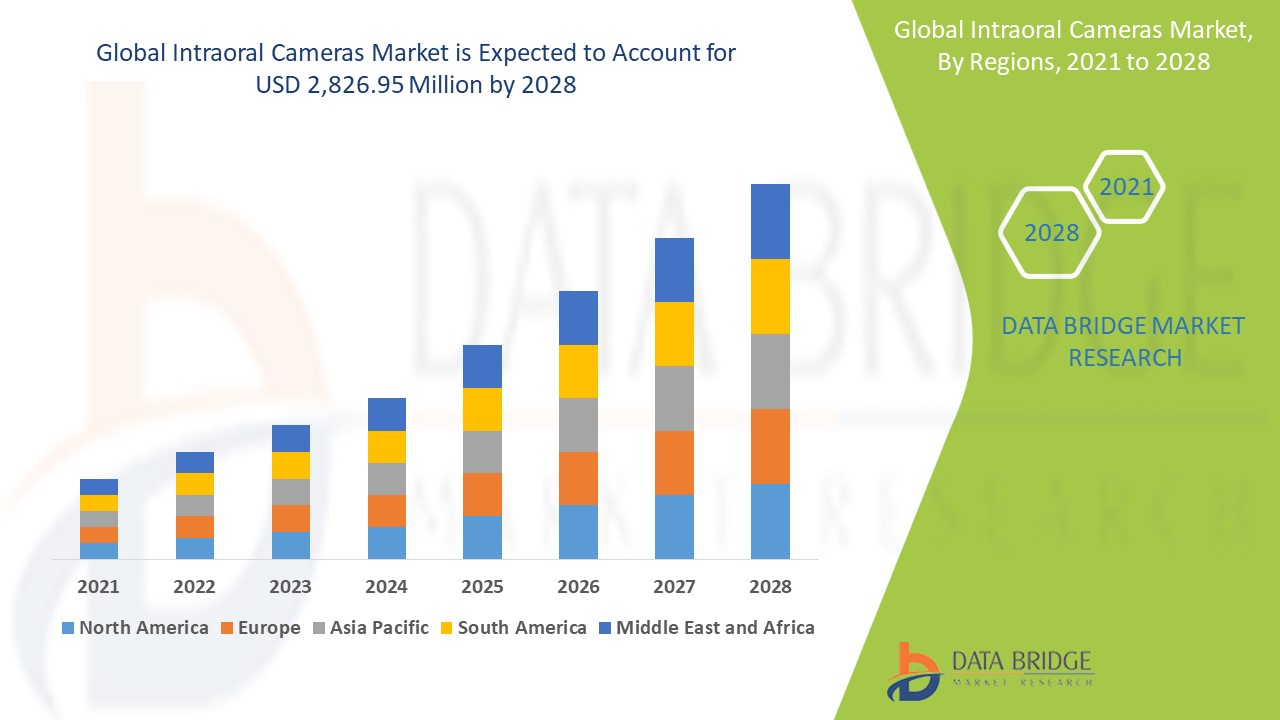
The global intraoral cameras market size was valued at USD 2.03 billion in 2024 and is projected to reach USD 3.91 billion by 2032, with a CAGR of 8.5% during the forecast period of 2025 to 2032. In addition to the insights on market scenarios such as market value, growth rate, segmentation, geographical coverage, and major players, the market reports curated by the Data Bridge Market Research also include depth expert analysis, patient epidemiology, pipeline analysis, pricing analysis, and regulatory framework.
Global Intraoral Cameras Market Trends
“Integration with Dental Software”
The integration of intraoral cameras with dental software platforms is becoming increasingly popular, significantly enhancing the efficiency of dental practices. This integration allows real-time image sharing, enabling dentists to make quicker and more accurate diagnoses. The easy compatibility with electronic health records (EHR) ensures that patient information is readily accessible and efficiently managed, improving workflow and patient care. This technology-driven approach not only optimizes the time and resources of dental professionals but also leads to better treatment outcomes and personalized care. The rising prevalence of dental disorders, such as dental caries, and the growing awareness and demand for advanced dental procedures further drive the adoption of intraoral cameras. While challenges such as the high cost of advanced intraoral cameras and the need for skilled professionals persist, the integration of these cameras with digital dentistry tools and the rise of teledentistry present substantial growth opportunities. Overall, the intraoral cameras market is witnessing significant advancements and is expected to continue its growth trajectory, driven by the ongoing technological innovations and the increasing focus on improving dental healthcare.
Report Scope and Global Intraoral Cameras Market Segmentation
|
Attributes |
Global Intraoral Cameras Market Insights |
|
Segments Covered |
|
|
Countries Covered |
U.S., Canada and Mexico in North America, Germany, France, U.K., Netherlands, Switzerland, Belgium, Russia, Italy, Spain, Turkey, Rest of Europe in Europe, China, Japan, India, South Korea, Singapore, Malaysia, Australia, Thailand, Indonesia, Philippines, Rest of Asia-Pacific (APAC) in the Asia-Pacific (APAC), Saudi Arabia, U.A.E., South Africa, Egypt, Israel, Rest of Middle East and Africa (MEA) as a part of Middle East and Africa (MEA), Brazil, Argentina and Rest of South America as part of South America |
|
Key Market Players |
Carestream Health (U.S.), Dentsply Sirona (U.S.), Danaher (U.S.), KaVo Dental(Germany), Digital Doc(U.S.), Dexis Consulting Group (U.S.), Prodent (Netherlands), Henry Schein, Inc. (U.S.), Lensiora (U.S.), MouthWatch, LLC (U.S.), Ashtel Dental (U.S.), Cieos, Inc. (U.S.), Imagin Systems Corporation (U.S.), Royal Dental Clinics (Netherlands), DÜRR DENTAL SE (Germany), Polaroid (U.S.), Flight Dental System (U.S.), Rolence Enterprise Inc. (Taiwan), Koninklijke Philips N.V. (Netherlands), Hamamatsu Photonics K.K. (Japan) |
|
Market Opportunities |
|
|
Value Added Data Infosets |
In addition to the insights on market scenarios such as market value, growth rate, segmentation, geographical coverage, and major players, the market reports curated by the Data Bridge Market Research also include depth expert analysis, patient epidemiology, pipeline analysis, pricing analysis, and regulatory framework. |
Global Intraoral Cameras Market Definition
Intraoral cameras are handheld dental devices used to capture detailed images of the inside of a patient's mouth. Equipped with LED lighting and magnification, they provide high-resolution, real-time visuals of teeth, gums, and other oral structures. These images aid in diagnosing conditions like cavities, fractures, and gum disease, and enhance patient understanding by visually explaining diagnoses and treatment options. Intraoral cameras are also useful for documenting oral health over time, helping track treatment progress and facilitating communication with specialists and insurance providers, making them indispensable tools in modern dentistry.
Global Intraoral Cameras Market Dynamics
Drivers
- Rising Cases of Dental Caries
This surge is particularly evident in both developing and developed countries, where dietary habits have shifted towards high-sugar content foods and beverages. Dental caries remain one of the most common chronic diseases worldwide, affecting people across all demographics. This growing prevalence emphasizes the need for improved dental care and advanced diagnostic tools to effectively identify and treat cavities. Regular dental check-ups, education on proper oral hygiene practices, and a balanced diet low in sugars are crucial in combating this widespread issue.
- Growing Awareness of Oral Health
There is an increasing recognition of the significance of maintaining good oral hygiene and its impact on overall health. Public health campaigns and educational programs are playing a crucial role in raising awareness about the importance of regular dental check-ups and preventive care. These initiatives highlight the connection between oral health and overall well-being, encouraging individuals to adopt better oral hygiene practices. As a result, more people are becoming proactive in seeking dental care and understanding the benefits of early detection and treatment of oral health issues.
Opportunities
- Growth in Demand for Advanced Dental Equipment in Emerging
As dental tourism gains popularity, there is a corresponding increase in the demand for advanced dental equipment in emerging markets. These regions are investing in modern dental technologies to attract international patients seeking high-quality care at lower costs. Emerging markets are focusing on upgrading their dental facilities with state-of-the-art equipment, including intraoral cameras, to provide exceptional care and meet the expectations of dental tourists. The investment in advanced dental technologies is driven by the need to offer competitive services and to establish these regions as preferred destinations for dental care. By adopting modern diagnostic and treatment tools, emerging markets can provide high-quality dental services at a fraction of the cost compared to developed countries, making them attractive to patients seeking affordable and effective dental treatments abroad.
- Patients Seek Affordable with Quality Dental Care Abroad
Many patients are traveling abroad to access affordable dental care without compromising on quality. Countries with competitive pricing and advanced dental facilities are becoming popular destinations for dental tourists. This trend is driving growth in the global dental industry and opening up opportunities for intraoral camera manufacturers and other dental equipment providers.As the demand for affordable dental services rises, countries that can offer cost-effective yet high-quality dental care are seeing an influx of international patients. These patients seek treatments such as cosmetic dentistry, implants, and other dental procedures at a fraction of the cost compared to their home countries. This surge in dental tourism is creating a robust market for advanced dental technologies, including intraoral cameras, which are essential for accurate diagnostics and effective treatment planning. Dental tourism not only benefits patients seeking affordable care but also stimulates the global dental equipment market. Manufacturers and suppliers are capitalizing on this trend by providing state-of-the-art equipment to dental clinics in popular tourist destinations. This growth in dental tourism is expected to continue, further expanding opportunities for innovation and development in the dental industry.
Restraints/Challenges
- High Initial Costs
The acquisition of advanced intraoral cameras can be a significant financial burden for smaller dental practices. These sophisticated devices require a substantial initial investment, which can be challenging for practices with limited budgets. Consequently, the high costs associated with intraoral cameras limit their market penetration in certain regions, particularly in developing countries or rural areas where financial resources and access to advanced technology may be restricted. This financial barrier hinders the widespread adoption of intraoral cameras and underscores the need for more cost-effective solutions to ensure broader accessibility and utilization across the dental industry.
- Resistance to Technological Adoption
Some dental professionals may be reluctant to adopt new technology or incorporate it into their daily practice routines. This resistance to change can stem from various factors, including comfort with existing methods, perceived complexity or learning curve associated with new tools, and concerns about the costs and time required for training. In addition, a lack of awareness about the benefits of intraoral cameras, such as improved diagnostic accuracy, enhanced patient communication, and better treatment outcomes, can further hinder their adoption. As a result, the market growth of intraoral cameras may be limited in areas where dental professionals are hesitant to embrace technological advancements.
This market report provides details of new recent developments, trade regulations, import-export analysis, production analysis, value chain optimization, market share, impact of domestic and localized market players, analyses opportunities in terms of emerging revenue pockets, changes in market regulations, strategic market growth analysis, market size, category market growths, application niches and dominance, product approvals, product launches, geographic expansions, technological innovations in the market. To gain more info on the market contact Data Bridge Market Research for an Analyst Brief, our team will help you take an informed market decision to achieve market growth.
Global Intraoral Cameras Market Scope
The market is segmented on the basis of type, software types, application, and end users. The growth amongst these segments will help you analyze meagre growth segments in the industries and provide the users with a valuable market overview and market insights to help them make strategic decisions for identifying core market applications.
Type
- USB Camera
- Fibre Optic Camera
- Wireless Camera and Other
Software Types
- X-Ray Software,
- Button Capture Software and Others
Application
- Implantology
- Endodontic
- Oral and Maxillofacial Surgery
- Orthodontics, and Others
End Users
- Dental Hospitals and Clinics
- Dental Diagnostic Centres
- Dental academic and Research Institutes
- Others
Global Intraoral Cameras Market Analysis
The market is analysed and market size insights and trends are provided by country, type, software types, application, and end users as referenced above.
The countries covered in the market report are U.S., Canada, Mexico in North America, Germany, Sweden, Poland, Denmark, Italy, U.K., France, Spain, Netherland, Belgium, Switzerland, Turkey, Russia, Rest of Europe in Europe, Japan, China, India, South Korea, New Zealand, Vietnam, Australia, Singapore, Malaysia, Thailand, Indonesia, Philippines, Rest of Asia-Pacific (APAC) in Asia-Pacific (APAC), Brazil, Argentina, Rest of South America as a part of South America, U.A.E, Saudi Arabia, Oman, Qatar, Kuwait, South Africa, Rest of Middle East and Africa (MEA) as a part of Middle East and Africa (MEA).
North America is projected to be dominance in the global intraoral cameras market during the forecast period. This dominance is attributed to several factors, including a high prevalence of dental disorders, advanced healthcare infrastructure, and early adoption of innovative dental technologies. The presence of key market players and significant investments in research and development further bolster the market's growth in this region. In addition, increased awareness about oral health and the importance of preventive care contributes to the high demand for intraoral cameras. The region's strong emphasis on patient-centric care models and the integration of digital dentistry also play crucial roles in maintaining North America's leading position in the global intraoral cameras market.
Asia Pacific region is projected to be the fastest-growing market for global intraoral cameras market imaging during the forecast period. This rapid growth is driven by several factors, including increasing awareness of oral health, rising disposable incomes, and the expanding dental tourism industry. Countries like China, India, and Japan are witnessing significant investments in dental infrastructure and advanced technologies, which are boosting the adoption of intraoral cameras. In addition, the growing prevalence of dental disorders and the increasing demand for cosmetic dentistry are further propelling the market's growth in this region.
The country section of the report also provides individual market impacting factors and changes in regulation in the market domestically that impacts the current and future trends of the market. Data points such as down-stream and upstream value chain analysis, technical trends and porter's five forces analysis, case studies are some of the pointers used to forecast the market scenario for individual countries. Also, the presence and availability of global brands and their challenges faced due to large or scarce competition from local and domestic brands, impact of domestic tariffs and trade routes are considered while providing forecast analysis of the country data.
Global Intraoral Cameras Market Share
The market competitive landscape provides details by competitor. Details included are company overview, company financials, revenue generated, market potential, investment in research and development, new market initiatives, global presence, production sites and facilities, production capacities, company strengths and weaknesses, product launch, product width and breadth, application dominance. The above data points provided are only related to the companies' focus related to market.
Global Intraoral Cameras Market Operating in the Market Are:
- Carestream Health (U.S.)
- Dentsply Sirona (U.S.)
- Danaher (U.S.)
- KaVo Dental (Germany)
- Digital Doc (U.S.)
- Dexis Consulting Group (U.S.)
- Prodent (Netherlands)
- Henry Schein, Inc. (U.S.)
- Lensiora (U.S.)
- MouthWatch, LLC (U.S.)
- Ashtel Dental (U.S.)
- Cieos, Inc. (U.S.)
- Imagin Systems Corporation (U.S.)
- Royal Dental Clinics (Netherlands)
- DÜRR DENTAL SE (Germany)
- Polaroid (U.S.)
- Flight Dental System (U.S.)
- Rolence Enterprise Inc. (Taiwan)
- Koninklijke Philips N.V. (Netherlands)
- Hamamatsu Photonics K.K. (Japan)
Latest Developments in Global Intraoral Cameras Market
- In February 2024, another notable event occurred in the world of dentistry. The Chicago Dental Society hosted its Midwinter Meeting, where various dental companies showcased their latest innovations and technologies. MouthWatch, LLC, presented its advanced intraoral cameras and teledentistry software, attracting the attention of many dental professionals seeking to enhance their practice workflows and patient care
- In May 2024, Danaher, a global science and technology innovator, launched a collaboration with Johns Hopkins University to develop new methods for diagnosing mild traumatic brain injury (TBI). This partnership, part of the Danaher Beacons program, leverages advanced technology from Beckman Coulter Diagnostics, a Danaher subsidiary, to identify new blood-based biomarkers for early and precise diagnosis of mild TBI2. The collaboration aims to improve patient outcomes and potentially extend these diagnostic methods to other neurological conditions
- In April 2023, Acteon introduced its most advanced intraoral camera, the next-generation C50. This cutting-edge device features advanced optics with autofocus, a high-definition image sensor, and a smart menu. The C50 is designed to provide dental professionals with extremely sharp images, enhancing diagnostic flexibility and patient care. Its ergonomic design ensures comfort for both patients and clinicians, making it a valuable addition to any dental practice
- In October 2021, MouthWatch, LLC, showcased the debut of its MouthWatch Plus+ HD intraoral camera at booth #B3309 during SmileCon 2021 in Las Vegas. This innovative camera features true 1080p HD resolution, a rapid video display rate of 60 frames per second, and adjustable LED lighting with four brightness levels. The MouthWatch Plus+ HD intraoral camera is designed to provide dental professionals with stunning images and accurate anatomical color rendition, enhancing diagnostic capabilities and patient care

- Interactive Data Analysis Dashboard
- Company Analysis Dashboard for high growth potential opportunities
- Research Analyst Access for customization & queries
- Competitor Analysis with Interactive dashboard
- Latest News, Updates & Trend analysis
- Harness the Power of Benchmark Analysis for Comprehensive Competitor Tracking
Data collection and base year analysis are done using data collection modules with large sample sizes. The stage includes obtaining market information or related data through various sources and strategies. It includes examining and planning all the data acquired from the past in advance. It likewise envelops the examination of information inconsistencies seen across different information sources. The market data is analysed and estimated using market statistical and coherent models. Also, market share analysis and key trend analysis are the major success factors in the market report. To know more, please request an analyst call or drop down your inquiry.
The key research methodology used by DBMR research team is data triangulation which involves data mining, analysis of the impact of data variables on the market and primary (industry expert) validation. Data models include Vendor Positioning Grid, Market Time Line Analysis, Market Overview and Guide, Company Positioning Grid, Patent Analysis, Pricing Analysis, Company Market Share Analysis, Standards of Measurement, Global versus Regional and Vendor Share Analysis. To know more about the research methodology, drop in an inquiry to speak to our industry experts.
Data Bridge Market Research is a leader in advanced formative research. We take pride in servicing our existing and new customers with data and analysis that match and suits their goal. The report can be customized to include price trend analysis of target brands understanding the market for additional countries (ask for the list of countries), clinical trial results data, literature review, refurbished market and product base analysis. Market analysis of target competitors can be analyzed from technology-based analysis to market portfolio strategies. We can add as many competitors that you require data about in the format and data style you are looking for. Our team of analysts can also provide you data in crude raw excel files pivot tables (Fact book) or can assist you in creating presentations from the data sets available in the report.













