


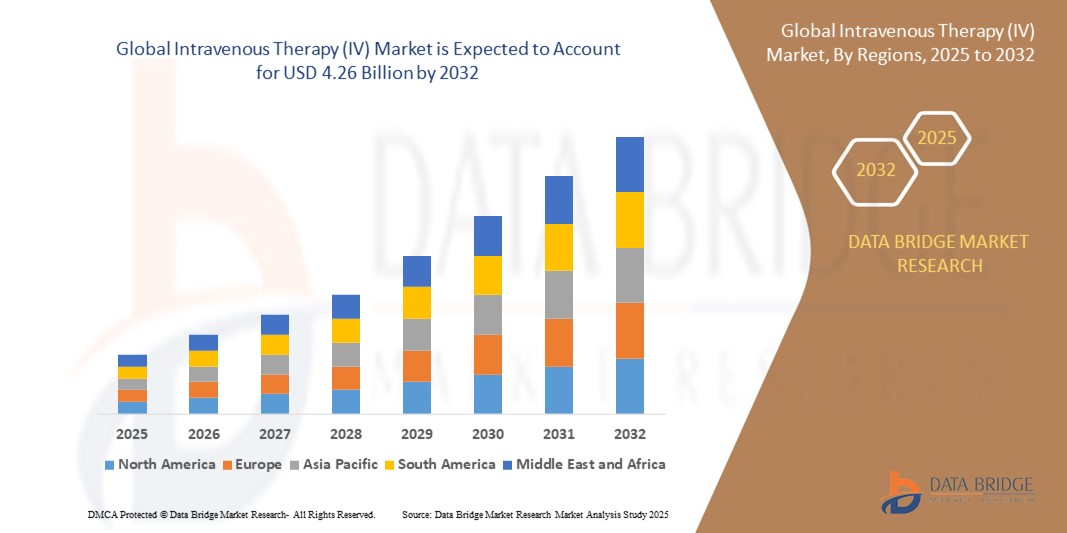
Intravenous Therapy (IV) Market Size
- The global intravenous therapy (IV) market size was valued at USD 2.62 billion in 2024 and is expected to reach USD 4.26 billion by 2032, at a CAGR of 6.25% during the forecast period
- The market growth is largely fuelled by the increasing prevalence of chronic diseases, rising demand for rapid and efficient drug delivery, and the growing use of IV therapy in home care and ambulatory settings
- Advancements in infusion pump technology, increased preference for minimally invasive treatments, and a surge in geriatric population also contribute significantly to the market expansion
Intravenous Therapy (IV) Market Analysis
- Intravenous therapy is becoming an essential component of modern healthcare due to its ability to deliver fluids, medications, and nutrients directly into the bloodstream with rapid therapeutic effects
- The growing burden of conditions such as cancer, gastrointestinal disorders, and immune deficiencies is amplifying the need for long-term intravenous treatment solutions across hospitals and specialty clinics
- North America dominated the intravenous therapy (IV) market with the largest revenue share of 38.9% in 2024, driven by the presence of advanced healthcare infrastructure, high prevalence of chronic conditions, and increased adoption of home-based IV therapies
- Asia-Pacific region is expected to witness the highest growth rate in the global intravenous therapy (IV) market, driven by expanding healthcare infrastructure, increasing medical tourism, growing population base with chronic conditions, and the rising affordability and accessibility of IV therapy products across emerging economies
- The polyvinyl chloride segment held the largest revenue share in 2024, owing to its durability, flexibility, and cost-efficiency. It is widely used in IV bags and tubing due to its excellent compatibility with medications and sterilization methods, making it a preferred material in both hospital and outpatient settings. The widespread adoption of PVC is also attributed to its easy processing and strong barrier properties, ensuring product safety during infusion
Report Scope and Intravenous Therapy (IV) Market Segmentation
|
Attributes |
Intravenous Therapy (IV) Key Market Insights |
|
Segments Covered |
|
|
Countries Covered |
North America
Europe
Asia-Pacific
Middle East and Africa
South America
|
|
Key Market Players |
|
|
Market Opportunities |
• Expansion of Home-Based IV Therapy Services • Rising Demand for Personalized Intravenous Nutrition Solutions |
|
Value Added Data Infosets |
In addition to the insights on market scenarios such as market value, growth rate, segmentation, geographical coverage, and major players, the market reports curated by the Data Bridge Market Research also include import export analysis, production capacity overview, production consumption analysis, price trend analysis, climate change scenario, supply chain analysis, value chain analysis, raw material/consumables overview, vendor selection criteria, PESTLE Analysis, Porter Analysis, and regulatory framework. |
Intravenous Therapy (IV) Market Trends
“Integration of Smart Infusion Devices and Remote Monitoring Technologies”
- The adoption of smart IV infusion devices is rising as hospitals aim to improve dosage precision, minimize manual intervention, and reduce medication errors through automated, digitally controlled systems that enhance treatment reliability and patient safety
- Integration of wireless monitoring technologies into IV setups allows healthcare professionals to track flow rates, detect blockages, and manage alarms remotely, leading to improved workflow efficiency and patient supervision in both hospital and home settings
- The combination of artificial intelligence and Internet of Things (IoT) in IV systems enables adaptive dosing algorithms that personalize fluid or medication delivery in real-time based on patient vitals, thereby ensuring better clinical outcomes and reduced risk
- Manufacturers are developing compact, user-friendly infusion pumps that feature programmable drug libraries, dose error reduction software, and real-time data transfer to electronic health records, aligning with the growing demand for smart hospital infrastructure
- For instance, B. Braun’s Space Infusion Pump System integrates drug databases and wireless connectivity, supporting multi-therapy management with increased precision, which has helped hospitals streamline medication administration while reducing adverse events
Intravenous Therapy (IV) Market Dynamics
Driver
“Increasing Incidence of Chronic Diseases and Hospital Admissions”
- Rising cases of chronic illnesses such as cancer, kidney failure, and diabetes are significantly increasing the demand for intravenous therapy as it provides immediate and controlled delivery of medications, fluids, and nutritional support to high-risk patients
- Surgical interventions, trauma care, and emergency procedures in both developed and developing healthcare systems are amplifying the need for IV setups, especially for administering anesthesia, pain relievers, and post-operative recovery medications
- The growing elderly population, particularly in countries such as Japan, Italy, and Germany, is leading to higher hospitalization rates and increased dependency on continuous IV therapies for managing age-related complications and long-term illnesses
- Healthcare infrastructure expansion in emerging markets, along with favorable government initiatives and insurance coverage for inpatient services, is enhancing access to IV therapy across rural and underserved regions, strengthening overall market penetration
- For instance, according to the World Health Organization, over 1 billion people globally live with chronic health conditions requiring periodic hospitalization and intravenous interventions, which is propelling the adoption of advanced IV therapy solutions worldwide
Restraint/Challenge
“Risk of Infections and Complications Associated with IV Therapy”
- Intravenous therapy poses a considerable risk of bloodstream infections, phlebitis, and catheter-related complications, especially in cases where sterile protocols are not strictly followed or when prolonged IV access is required in immunocompromised patients
- The need for trained healthcare professionals to administer and monitor IV treatment adds to the operational burden in under-resourced facilities and rural areas, where limited staffing can lead to improper technique and increased patient risk
- High costs associated with advanced infusion systems, along with maintenance requirements and the need for consumables such as catheters and sterile dressings, restrict their widespread adoption in low-income and price-sensitive healthcare markets
- Patient discomfort, vein irritation, and difficulty in locating suitable venous access points, particularly among the elderly or infants, lead to delayed treatments and higher failure rates, discouraging reliance on IV therapy in some medical settings
- For instance, the U.S. Centers for Disease Control and Prevention (CDC) reports that over 250,000 catheter-related bloodstream infections occur annually in the U.S. alone, leading to extended hospital stays, increased treatment costs, and higher mortality risk
Intravenous Therapy (IV) Market Scope
The market is segmented on the basis of material type, capacity, chamber type, and application.
- By Material Type
On the basis of material type, the intravenous therapy (IV) market is segmented into polypropylene, polyvinyl chloride, polyethylene, copolyester ether, and EVA. The polyvinyl chloride segment held the largest revenue share in 2024, owing to its durability, flexibility, and cost-efficiency. It is widely used in IV bags and tubing due to its excellent compatibility with medications and sterilization methods, making it a preferred material in both hospital and outpatient settings. The widespread adoption of PVC is also attributed to its easy processing and strong barrier properties, ensuring product safety during infusion.
The polyethylene segment is expected to witness the fastest growth rate from 2025 to 2032, driven by increasing preference for non-toxic and DEHP-free alternatives. As healthcare regulations tighten around the use of phthalates in medical devices, polyethylene's biocompatibility and chemical resistance are making it a strong contender. The material is gaining traction in pediatric and neonatal applications where patient safety is paramount and regulatory scrutiny is higher.
- By Capacity
On the basis of capacity, the market is segmented into 0–250 ml, 250–500 ml, 500–1000 ml, and above 1000 ml. The 500–1000 ml segment held the largest market share in 2024, largely due to its standard usage for fluid resuscitation, electrolyte replenishment, and parenteral nutrition in hospital settings. These bags are frequently used across general wards, ICUs, and emergency care units for both maintenance and rapid infusion purposes. Their balanced size offers optimal convenience for clinicians and sufficient volume for therapeutic needs.
The above 1000 ml segment is expected to witness the fastest growth rate from 2025 to 2032, fueled by rising demand in chronic disease management and long-duration therapies. Patients undergoing chemotherapy, dialysis, or long-term hydration often require larger infusion volumes, driving the adoption of high-capacity IV bags. In addition, the trend toward home healthcare is increasing demand for higher-capacity formats that reduce the need for frequent bag changes.
- By Chamber Type
On the basis of chamber type, the intravenous therapy market is segmented into single chamber and multi chamber. The single chamber segment dominated the market in 2024, attributed to its widespread use in routine IV fluid administration and medication delivery. These systems offer simplicity, ease of use, and cost-effectiveness, making them the go-to choice in emergency care and short-term treatments. Their design supports standardization and reduces complexity in hospital operations.
The multi chamber segment is expected to witness the fastest growth rate from 2025 to 2032, due to its ability to store and mix multiple medications or nutrients without compromising stability. These chambers are particularly valuable in parenteral nutrition where compatibility and timing of delivery are critical. The growth of personalized medicine and critical care nutrition is further propelling demand for these advanced infusion systems.
- By Application
On the basis of application, the intravenous therapy market is segmented into parenteral nutrition and intravenous therapies. The intravenous therapies segment accounted for the largest market share in 2024, driven by the growing incidence of dehydration, infections, and chronic illnesses requiring fluid and medication administration. IV therapies are a mainstay in hospitals, clinics, and emergency response units for their rapid onset and precision in dosing.
The parenteral nutrition segment is expected to witness the fastest growth rate from 2025 to 2032, supported by increasing cases of gastrointestinal disorders, cancer, and critical care patients unable to consume nutrients orally. Rising demand for personalized nutrition and advancements in compounding technology are also enhancing the clinical outcomes and safety of parenteral nutrition, strengthening its role in patient care.
Intravenous Therapy (IV) Market Regional Analysis
- North America dominated the intravenous therapy (IV) market with the largest revenue share of 38.9% in 2024, driven by the presence of advanced healthcare infrastructure, high prevalence of chronic conditions, and increased adoption of home-based IV therapies
- The region benefits from a strong pharmaceutical industry, widespread insurance coverage, and growing awareness about the benefits of intravenous nutritional and therapeutic interventions
- Moreover, supportive reimbursement policies and an increasing geriatric population requiring long-term care contribute significantly to the expanding use of IV therapy in both hospital and home settings
U.S. Intravenous Therapy (IV) Market Insight
The U.S. intravenous therapy (IV) market captured the largest revenue share in 2024 within North America, primarily due to its well-established healthcare systems and high patient demand for efficient treatment options. Increasing rates of cancer, gastrointestinal disorders, and malnutrition are boosting the need for IV nutritional support and drug delivery systems. The trend of outpatient and home healthcare is gaining momentum, supported by portable IV infusion devices and remote patient monitoring. The integration of smart infusion pumps and digital therapeutics is also enhancing the effectiveness and accuracy of intravenous treatments across the country
Europe Intravenous Therapy (IV) Market Insight
The Europe intravenous therapy (IV) market is expected to witness the fastest growth rate from 2025 to 2032, driven by aging demographics, rising hospital admissions, and an increase in post-operative recovery therapies. Countries such as Germany, France, and the United Kingdom are investing in modernizing their healthcare infrastructure, supporting the integration of IV technologies in both inpatient and outpatient settings. Moreover, favorable regulatory policies and growing demand for parenteral nutrition among cancer and geriatric patients are enhancing market growth. The region’s focus on cost-effective treatment approaches is further boosting the adoption of intravenous therapy
U.K. Intravenous Therapy (IV) Market Insight
The U.K. intravenous therapy (IV) market is expected to witness the fastest growth rate from 2025 to 2032, driven by the increasing burden of chronic illnesses and the expansion of community-based healthcare services. The National Health Service (NHS) is prioritizing early discharge and home care programs, which significantly rely on intravenous drug administration. In addition, innovation in IV catheter materials and infection prevention technologies is improving patient safety and encouraging widespread usage across healthcare settings. Demand is also rising from care homes and outpatient clinics adopting IV solutions to reduce hospital stays
Germany Intravenous Therapy (IV) Market Insight
The Germany intravenous therapy (IV) market is expected to witness the fastest growth rate from 2025 to 2032, supported by the country's focus on high standards of medical care, research-driven pharmaceutical practices, and aging population needs. Hospitals and clinics across Germany are increasingly utilizing IV therapy to manage chronic diseases, surgical recovery, and nutrition therapy. The country is also witnessing rising use of advanced multi-chamber IV bags for complex drug regimens, which help minimize preparation errors and save clinical time. Furthermore, Germany’s emphasis on innovation and patient-centered care is accelerating the uptake of smart infusion systems
Asia-Pacific Intravenous Therapy (IV) Market Insight
The Asia-Pacific intravenous therapy (IV) market is expected to witness the fastest growth rate from 2025 to 2032, driven by expanding healthcare access, rising disposable incomes, and a growing incidence of lifestyle-related illnesses. Rapid developments in healthcare infrastructure in countries such as China, India, and Japan are enabling greater adoption of IV treatments across hospitals and home care settings. Government health programs aimed at malnutrition and maternal care are further bolstering demand. The increasing presence of international and local medical device manufacturers is also improving affordability and availability of intravenous therapy solutions in the region
Japan Intravenous Therapy (IV) Market Insight
The Japan intravenous therapy (IV) market is expected to witness the fastest growth rate from 2025 to 2032 due to its highly developed healthcare ecosystem and a sharply increasing elderly population. Hospitals and long-term care facilities are adopting IV therapies to address age-related nutritional deficiencies, chronic illnesses, and cancer support care. Japan’s commitment to healthcare technology innovation is leading to the integration of precision IV devices, including smart infusion systems and pre-filled IV bags that simplify administration. The focus on reducing hospital burden and supporting home-based care is also driving the market’s expansion
China Intravenous Therapy (IV) Market Insight
The China intravenous therapy (IV) market captured the largest share within Asia-Pacific in 2024, supported by its massive population, rapid urbanization, and government initiatives to improve public health services. Intravenous therapy is widely utilized in hospitals and increasingly in outpatient clinics for rehydration, nutrition, and drug delivery. China's rising investment in healthcare digitization and hospital automation is boosting demand for IV pumps and infusion sets. Moreover, the presence of leading domestic manufacturers and cost-effective production capabilities positions China as a key player in the regional IV therapy market
Intravenous Therapy (IV) Market Share
The Intravenous Therapy (IV) industry is primarily led by well-established companies, including:
- Baxter (U.S.)
- Fresenius SE & Co. KGaA (Germany)
- ICU Medical, Inc. (U.S.)
- Pfizer Inc. (U.S.)
- Terumo Group (Japan)
- B. Braun SE (Germany)
- Technoflex (France)
- Macopharma (France)

- Interactive Data Analysis Dashboard
- Company Analysis Dashboard for high growth potential opportunities
- Research Analyst Access for customization & queries
- Competitor Analysis with Interactive dashboard
- Latest News, Updates & Trend analysis
- Harness the Power of Benchmark Analysis for Comprehensive Competitor Tracking
Global Intravenous Therapy Iv Market, Supply Chain Analysis and Ecosystem Framework
To support market growth and help clients navigate the impact of geopolitical shifts, DBMR has integrated in-depth supply chain analysis into its Global Intravenous Therapy Iv Market research reports. This addition empowers clients to respond effectively to global changes affecting their industries. The supply chain analysis section includes detailed insights such as Global Intravenous Therapy Iv Market consumption and production by country, price trend analysis, the impact of tariffs and geopolitical developments, and import and export trends by country and HSN code. It also highlights major suppliers with data on production capacity and company profiles, as well as key importers and exporters. In addition to research, DBMR offers specialized supply chain consulting services backed by over a decade of experience, providing solutions like supplier discovery, supplier risk assessment, price trend analysis, impact evaluation of inflation and trade route changes, and comprehensive market trend analysis.
Data collection and base year analysis are done using data collection modules with large sample sizes. The stage includes obtaining market information or related data through various sources and strategies. It includes examining and planning all the data acquired from the past in advance. It likewise envelops the examination of information inconsistencies seen across different information sources. The market data is analysed and estimated using market statistical and coherent models. Also, market share analysis and key trend analysis are the major success factors in the market report. To know more, please request an analyst call or drop down your inquiry.
The key research methodology used by DBMR research team is data triangulation which involves data mining, analysis of the impact of data variables on the market and primary (industry expert) validation. Data models include Vendor Positioning Grid, Market Time Line Analysis, Market Overview and Guide, Company Positioning Grid, Patent Analysis, Pricing Analysis, Company Market Share Analysis, Standards of Measurement, Global versus Regional and Vendor Share Analysis. To know more about the research methodology, drop in an inquiry to speak to our industry experts.
Data Bridge Market Research is a leader in advanced formative research. We take pride in servicing our existing and new customers with data and analysis that match and suits their goal. The report can be customized to include price trend analysis of target brands understanding the market for additional countries (ask for the list of countries), clinical trial results data, literature review, refurbished market and product base analysis. Market analysis of target competitors can be analyzed from technology-based analysis to market portfolio strategies. We can add as many competitors that you require data about in the format and data style you are looking for. Our team of analysts can also provide you data in crude raw excel files pivot tables (Fact book) or can assist you in creating presentations from the data sets available in the report.













