


KRAS Inhibitor Drug Market Size
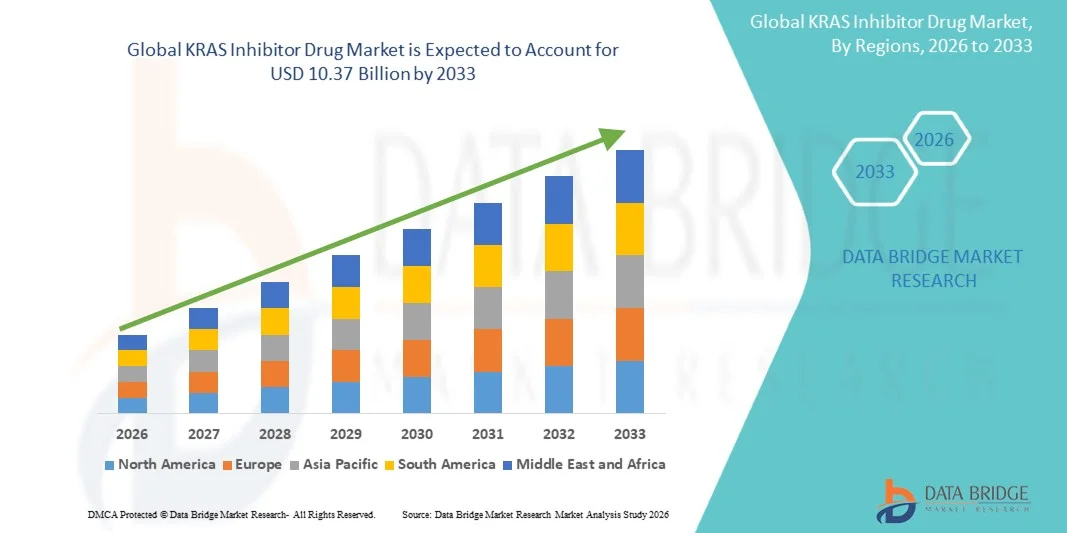
- The global KRAS inhibitor drug market size was valued at USD 2.43 billion in 2025 and is expected to reach USD 10.37 billion by 2033, at a CAGR of 19.90% during the forecast period
- The market growth is largely fueled by the rapid commercialization of targeted oncology therapies and breakthroughs in precision medicine, especially in treating cancers driven by KRAS mutations such as non-small cell lung cancer (NSCLC), colorectal cancer, and pancreatic cancer
- Furthermore, advancements in biomarker-driven patient selection, expanding clinical validation of KRAS-targeted drugs, and increasing adoption of personalized cancer treatments are establishing KRAS inhibitors as essential components of modern oncology therapeutic portfolios. These converging factors are accelerating the uptake of KRAS inhibitor therapies, thereby significantly boosting the industry’s growth
KRAS Inhibitor Drug Market Analysis
- KRAS inhibitors, designed to selectively target KRAS gene mutations long considered “undruggable,” are becoming critical components of modern precision oncology, particularly in the treatment of solid tumors such as non-small cell lung cancer (NSCLC), colorectal cancer, and pancreatic cancer, due to their mutation-specific mechanism of action and improved clinical outcomes compared to conventional chemotherapy
- The escalating demand for KRAS inhibitor therapies is primarily fueled by the rising global cancer burden, increasing prevalence of KRAS mutations across major tumor types, rapid advancements in molecular diagnostics, and growing adoption of biomarker-driven personalized treatment approaches
- North America dominated the KRAS inhibitor drug market with the largest revenue share of 42.5% in 2025, characterized by early regulatory approvals, strong oncology research infrastructure, high healthcare expenditure, and the presence of leading biopharmaceutical innovators, with the U.S. witnessing substantial uptake of approved KRAS G12C inhibitors supported by expanding clinical indications and favorable reimbursement frameworks
- Asia-Pacific is expected to be the fastest growing region in the KRAS inhibitor drug market during the forecast period due to improving cancer screening rates, expanding access to targeted therapies, rising healthcare investments, and increasing participation in global clinical trials
- The KRAS G12C inhibitor segment dominated the market with a market share of 57.8% in 2025, driven by its first-mover advantage, robust clinical validation, regulatory approvals in major markets, and strong adoption in second-line and combination treatment settings for KRAS-mutated cancers
Report Scope and KRAS Inhibitor Drug Market Segmentation
|
Attributes |
KRAS Inhibitor Drug Key Market Insights |
|
Segments Covered |
|
|
Countries Covered |
North America
Europe
Asia-Pacific
Middle East and Africa
South America
|
|
Key Market Players |
|
|
Market Opportunities |
|
|
Value Added Data Infosets |
In addition to the insights on market scenarios such as market value, growth rate, segmentation, geographical coverage, and major players, the market reports curated by the Data Bridge Market Research also include in-depth expert analysis, patient epidemiology, pipeline analysis, pricing analysis, and regulatory framework |
KRAS Inhibitor Drug Market Trends
“Expansion of Next-Generation and Combination Targeted Therapies”
- A significant and accelerating trend in the global KRAS inhibitor drug market is the advancement of next-generation mutation-specific and pan-KRAS inhibitors, alongside their integration into combination treatment regimens with immunotherapies and targeted agents, significantly enhancing clinical efficacy and expanding therapeutic scope
- For instance, ongoing clinical programs are evaluating KRAS G12D inhibitors for pancreatic cancer and combining KRAS G12C inhibitors with immune checkpoint inhibitors in non-small cell lung cancer to improve response durability and overcome resistance mechanisms
- The integration of KRAS inhibitors into combination protocols enables improved tumor response rates, delayed resistance development, and broader applicability across earlier lines of therapy. For instance, studies investigating KRAS inhibitors with SHP2 or MEK inhibitors aim to enhance pathway suppression and optimize therapeutic outcomes
- The seamless incorporation of KRAS inhibitors into precision oncology frameworks facilitates biomarker-driven patient selection and individualized treatment planning. Through advanced genomic testing, clinicians can identify eligible patients and tailor regimens based on mutation subtype, creating a more targeted and efficient therapeutic strategy
- This trend toward more comprehensive, mutation-focused, and combination-based oncology strategies is fundamentally reshaping expectations for targeted cancer therapy. Consequently, companies such as Amgen and Mirati Therapeutics are developing expanded KRAS pipelines and investigating broader mutation coverage to strengthen their oncology portfolios
- The demand for KRAS inhibitors that demonstrate higher efficacy, resistance management, and compatibility with combination regimens is growing rapidly across global oncology centers, as healthcare systems increasingly prioritize precision medicine and improved survival outcomes
- Growing investment in real-world evidence generation and post-marketing studies is supporting broader label expansions and reinforcing physician confidence in long-term safety and effectiveness profiles
KRAS Inhibitor Drug Market Dynamics
Driver
“Rising Cancer Burden and Precision Medicine Adoption”
- The increasing global incidence of KRAS-mutated cancers, coupled with the accelerating adoption of precision oncology approaches, is a significant driver for the heightened demand for KRAS inhibitor therapies
- For instance, regulatory approvals of KRAS G12C inhibitors for previously treated non-small cell lung cancer have expanded treatment options and stimulated investment in mutation-targeted drug development programs
- As clinicians become more aware of the importance of molecular profiling and targeted therapy selection, KRAS inhibitors offer mutation-specific mechanisms of action, improved progression-free survival in selected populations, and a compelling alternative to conventional chemotherapy
- Furthermore, the growing integration of comprehensive genomic testing and companion diagnostics into oncology practice is making KRAS mutation detection routine, enabling broader identification of eligible patients and supporting sustained therapeutic demand
- The expanding reimbursement frameworks for targeted therapies, increasing participation in global clinical trials, and rising healthcare expenditures in developed markets are key factors propelling the adoption of KRAS inhibitors across hospital and specialty oncology settings. The continuous evolution of biomarker-driven treatment guidelines further contributes to market growth
- Increasing awareness initiatives by cancer organizations and advocacy groups promoting early molecular testing are further supporting earlier diagnosis and timely initiation of targeted KRAS inhibitor therapies
- The expansion of oncology infrastructure in emerging economies, including the establishment of specialized cancer centers and access to advanced diagnostic platforms, is strengthening market penetration in high-growth regions
Restraint/Challenge
“Therapeutic Resistance and High Treatment Costs”
- Concerns surrounding acquired resistance mechanisms and limited efficacy across certain KRAS mutation subtypes pose a significant challenge to broader market penetration. As tumor cells adapt through pathway reactivation or secondary mutations, long-term treatment durability may be compromised
- For instance, emerging clinical data indicate that some patients receiving KRAS G12C inhibitors develop resistance through alternative signaling pathway activation, necessitating combination strategies and additional therapeutic interventions
- Addressing these resistance challenges through innovative combination regimens, next-generation inhibitors, and enhanced biomarker research is crucial for sustaining clinical benefit. Companies such as Amgen and Bristol Myers Squibb emphasize ongoing research into combination protocols to overcome resistance and improve patient outcomes. In addition, the relatively high cost of targeted oncology therapies compared to conventional treatments can limit accessibility, particularly in low- and middle-income regions
- While pricing strategies and expanded insurance coverage are gradually improving access, the financial burden associated with long-term targeted cancer therapy can still hinder widespread adoption, especially in healthcare systems with constrained reimbursement policies
- Overcoming these challenges through continued clinical innovation, cost-optimization strategies, expanded patient assistance programs, and strengthened global diagnostic infrastructure will be vital for sustained market growth
- Regulatory complexities and lengthy approval timelines for novel targeted oncology agents may delay commercialization and restrict rapid patient access in certain international markets
- Variability in biomarker testing availability and limited access to advanced molecular diagnostics in developing regions can restrict patient identification and reduce the eligible treatment population
KRAS Inhibitor Drug Market Scope
The market is segmented on the basis of drug type, mutation, cancer indication, and end user.
- By Drug Type
On the basis of drug type, the Global KRAS Inhibitor drug market is segmented into monotherapy, combination therapy, and indirect modulators. The monotherapy segment dominated the market with the largest revenue share in 2025, primarily due to the early regulatory approvals of KRAS G12C inhibitors as single-agent treatments for previously treated non-small cell lung cancer (NSCLC). Monotherapies gained strong initial adoption because of their clearly defined mechanism of action, simplified treatment protocols, and established safety profiles. Physicians preferred monotherapy use during the early commercialization phase to evaluate real-world effectiveness and tolerability. In addition, reimbursement pathways were more streamlined for approved single-agent targeted drugs. The first-mover advantage and widespread clinical familiarity significantly contributed to the dominance of this segment.
The combination therapy segment is anticipated to witness the fastest growth rate from 2026 to 2033, fueled by increasing evidence of resistance development with standalone KRAS inhibitors. Combination regimens involving immunotherapy, SHP2 inhibitors, or MEK inhibitors are demonstrating improved progression-free survival and broader mutation coverage. Pharmaceutical companies are heavily investing in combination-based clinical trials to enhance response durability and expand indications into earlier treatment lines. Oncologists are increasingly adopting multi-drug strategies to overcome pathway reactivation mechanisms. The shift toward precision oncology and personalized treatment planning further supports this segment’s rapid expansion. Growing regulatory approvals for combination protocols are expected to accelerate market growth.
- By Mutation
On the basis of mutation, the market is segmented into KRAS G12C, KRAS G12D, Pan-KRAS, and other KRAS mutations. The KRAS G12C segment dominated the market with the largest revenue share of 57.8% in 2025, driven by the availability of approved targeted inhibitors and strong clinical validation in NSCLC. KRAS G12C was the first mutation subtype successfully targeted with commercially available drugs, establishing a strong market presence. High prevalence in lung cancer patients and established diagnostic testing protocols further strengthened adoption. Pharmaceutical innovation initially focused on G12C due to its druggable binding pocket, leading to rapid commercialization. Favorable reimbursement frameworks in major markets also supported widespread utilization. As a result, G12C remains the leading revenue contributor.
The KRAS G12D segment is expected to witness the fastest growth during the forecast period, supported by significant unmet needs in pancreatic and colorectal cancers. G12D mutations are highly prevalent in pancreatic cancer, where limited targeted therapy options exist. Multiple late-stage clinical programs targeting G12D are progressing, attracting substantial investment. Advances in molecular drug design have improved the feasibility of targeting this previously challenging mutation subtype. Expanding genomic screening efforts are increasing identification of eligible patients. The anticipated approval of next-generation inhibitors is projected to significantly accelerate segment growth.
- By Cancer Indication
On the basis of cancer indication, the market is segmented into non-small cell lung cancer (NSCLC), colorectal cancer, pancreatic cancer, and other cancers. The NSCLC segment dominated the market with the largest revenue share in 2025, largely due to early approvals of KRAS-targeted therapies for previously treated lung cancer patients. High mutation prevalence and well-established biomarker testing in lung cancer contributed to faster adoption. NSCLC patients often undergo routine genomic profiling, facilitating identification of KRAS mutations. Clinical guidelines in major markets incorporated KRAS inhibitors into treatment pathways. Strong physician awareness and structured reimbursement policies further supported dominance. Consequently, NSCLC remains the primary revenue-generating indication.
The pancreatic cancer segment is projected to witness the fastest growth during the forecast period, driven by the high prevalence of KRAS mutations, particularly G12D. Pancreatic cancer has historically had limited targeted treatment options and poor survival outcomes, creating significant unmet clinical demand. Advancements in next-generation KRAS inhibitors are specifically addressing this patient population. Ongoing clinical trials are expanding therapeutic possibilities beyond chemotherapy-based regimens. Increasing investment in pancreatic oncology research is accelerating innovation. As new approvals emerge, the segment is expected to grow rapidly.
- By End User
On the basis of end user, the market is segmented into hospitals, cancer diagnostic centres, clinic laboratories, cancer research institutes, academic institutions, and others. The hospitals segment dominated the market with the largest revenue share in 2025, attributed to the concentration of oncology treatment services and access to advanced diagnostic infrastructure. Hospitals serve as primary treatment centers for targeted oncology therapies and manage complex cancer cases requiring multidisciplinary care. Availability of genomic testing facilities within hospital networks supports patient identification for KRAS inhibitor therapy. Strong reimbursement systems and integrated oncology departments further enhance adoption. In addition, hospital-based oncologists often participate in clinical trials, facilitating early access to innovative treatments.
The cancer research institutes segment is expected to witness the fastest growth during the forecast period, supported by expanding clinical research activities and drug development collaborations. These institutes play a critical role in conducting early- and late-phase clinical trials for next-generation KRAS inhibitors. Increasing partnerships between pharmaceutical companies and academic oncology centers are accelerating innovation. Research institutions are also leading biomarker discovery and resistance mechanism studies. Growing global funding for oncology research strengthens infrastructure development. This rising research intensity is anticipated to drive rapid segment expansion.
KRAS Inhibitor Drug Market Regional Analysis
- North America dominated the KRAS inhibitor drug market with the largest revenue share of 42.5% in 2025, characterized by early regulatory approvals, strong oncology research infrastructure, high healthcare expenditure, and the presence of leading biopharmaceutical innovators
- Healthcare providers in the region highly prioritize precision medicine approaches, advanced molecular diagnostics, and access to innovative targeted therapies, supporting the rapid adoption of KRAS inhibitors across major cancer treatment centers
- This widespread adoption is further supported by established reimbursement frameworks, a high prevalence of KRAS-mutated cancers, strong presence of leading biopharmaceutical companies, and increasing integration of genomic testing into routine oncology practice, positioning KRAS inhibitors as a preferred targeted treatment option in both hospital and specialty oncology settings
U.S. KRAS Inhibitor Drug Market Insight
The U.S. KRAS inhibitor drug market captured the largest revenue share within North America in 2025, fueled by early regulatory approvals of KRAS-targeted therapies and the country’s strong precision oncology infrastructure. Healthcare providers are increasingly prioritizing biomarker-driven treatment strategies to improve survival outcomes in cancers such as non-small cell lung cancer and colorectal cancer. The growing integration of comprehensive genomic profiling into routine oncology practice further propels market expansion. Moreover, strong reimbursement frameworks, high healthcare spending, and the presence of leading biopharmaceutical innovators are significantly contributing to sustained market growth.
Europe KRAS Inhibitor Drug Market Insight
The Europe KRAS inhibitor drug market is projected to expand at a substantial CAGR throughout the forecast period, primarily driven by increasing adoption of personalized medicine and supportive regulatory pathways for innovative oncology drugs. The rise in cancer incidence across major European countries is fostering demand for targeted treatment solutions. European healthcare systems are increasingly incorporating molecular diagnostic testing to identify KRAS mutations, supporting therapy uptake. The region is experiencing notable growth across hospital oncology centers and academic research institutions, with KRAS inhibitors being integrated into evolving clinical treatment guidelines.
U.K. KRAS Inhibitor Drug Market Insight
The U.K. KRAS inhibitor drug market is anticipated to grow at a noteworthy CAGR during the forecast period, driven by expanding genomic testing initiatives and growing awareness of mutation-targeted cancer therapies. In addition, national cancer strategies emphasizing early diagnosis and precision medicine are encouraging adoption of KRAS inhibitors. The country’s robust clinical research ecosystem and participation in multinational oncology trials are expected to stimulate further development and accessibility. Continued investment in oncology infrastructure and reimbursement support for innovative therapies are likely to sustain market momentum.
Germany KRAS Inhibitor Drug Market Insight
The Germany KRAS inhibitor drug market is expected to expand at a considerable CAGR during the forecast period, fueled by strong healthcare infrastructure and a focus on advanced oncology care. Germany’s emphasis on innovation and evidence-based treatment supports the integration of targeted therapies such as KRAS inhibitors into hospital settings. The country’s well-established reimbursement mechanisms and widespread access to molecular diagnostic services facilitate patient identification and treatment initiation. Growing collaborations between pharmaceutical companies and research institutions further promote adoption across specialized cancer centers.
Asia-Pacific KRAS Inhibitor Drug Market Insight
The Asia-Pacific KRAS inhibitor drug market is poised to grow at the fastest CAGR during the forecast period of 2026 to 2033, driven by rising cancer prevalence, improving healthcare access, and expanding precision medicine initiatives in countries such as China, Japan, and India. The region's increasing investment in oncology research and clinical trials is accelerating therapeutic innovation. Furthermore, government initiatives promoting advanced cancer diagnostics and digital health infrastructure are supporting the identification of KRAS-mutated patients. As regional pharmaceutical manufacturing capacity expands, access to targeted therapies is expected to improve across a broader patient population.
Japan KRAS Inhibitor Drug Market Insight
The Japan KRAS inhibitor drug market is gaining momentum due to the country’s advanced healthcare system, high cancer screening rates, and strong emphasis on innovative therapies. The Japanese market places significant importance on precision oncology, and the adoption of KRAS inhibitors is supported by structured reimbursement policies and clinical guideline integration. Increasing participation in global oncology trials is further driving innovation. Moreover, Japan’s aging population and rising incidence of lung and colorectal cancers are likely to spur demand for effective targeted treatment options in both hospital and specialty oncology settings.
India KRAS Inhibitor Drug Market Insight
The India KRAS inhibitor drug market accounted for a significant revenue share in Asia-Pacific in 2025, attributed to the country’s growing oncology burden, expanding middle-class population, and improving access to advanced diagnostic technologies. India stands as one of the fastest-growing markets for targeted cancer therapies, with increasing adoption in tertiary hospitals and private oncology centers. Government initiatives supporting cancer screening and precision medicine are strengthening infrastructure. The availability of clinical trial activity and gradual expansion of reimbursement coverage are key factors propelling the market in India.
KRAS Inhibitor Drug Market Share
The KRAS Inhibitor Drug industry is primarily led by well-established companies, including:
- Amgen Inc. (U.S.)
- Novartis AG (Switzerland)
- F. Hoffmann-La Roche Ltd (Switzerland)
- Eli Lilly and Company (U.S.)
- Boehringer Ingelheim International GmbH (Germany)
- BridgeBio Pharma, Inc. (U.S.)
- Erasca, Inc. (U.S.)
- Innovent Biologics, Inc. (China)
- Incyte Corporation (U.S.)
- Jemincare Pharmaceuticals Co., Ltd. (China)
- Cardiff Oncology, Inc. (U.S.)
- Revolution Medicines, Inc. (U.S.)
- GenFleet Therapeutics (U.S.)
- Elicio Therapeutics, Inc. (U.S.)
- D3 Bio, Inc. (U.S.)
- Gritstone bio, Inc. (U.S.)
- Taiho Pharmaceutical Co., Ltd. (Japan)
- Astex Pharmaceuticals, Inc. (U.S.)
- AstraZeneca (U.K.)
- Astellas Pharma Inc. (Japan)
What are the Recent Developments in Global KRAS Inhibitor Drug Market?
- In August 2025, German pharmaceutical company Bayer entered a deal worth up to USD 1.3 billion with Kumquat Biosciences to co-develop and commercialize a potential KRAS G12D-targeting cancer drug, boosting investment and strategic collaboration in next-generation KRAS mutation therapies
- In June 2025, Verastem Oncology announced U.S. IND clearance for VS-7375, an oral KRAS G12D (ON/OFF) inhibitor, enabling initiation of a Phase 1/2a clinical trial in advanced solid tumors an important step toward therapies for the prevalent G12D mutation
- In January 2025, the U.S. Food and Drug Administration (FDA) approved sotorasib (Lumakras) in combination with panitumumab (Vectibix) for the treatment of adults with KRAS G12C-mutated metastatic colorectal cancer (mCRC), offering a new targeted therapy option for patients previously treated with standard chemotherapies and expanding the clinical utility of KRAS G12C targeted therapy beyond lung cancer
- In June 2024, the FDA granted accelerated approval to adagrasib (Krazati) plus cetuximab for adults with KRAS G12C-mutated locally advanced or metastatic colorectal cancer, making it the first KRAS G12C inhibitor combination approved for this CRC indication and marking a major regulatory milestone in the KRAS inhibitor landscape
- In June 2021, the FDA approved sotorasib (Lumakras) the first KRAS inhibitor for the treatment of adults with KRAS G12C-mutated non-small cell lung cancer (NSCLC), representing a foundational breakthrough in KRAS-targeted therapy after decades of research and effectively validating KRAS as a druggable target

- Interactive Data Analysis Dashboard
- Company Analysis Dashboard for high growth potential opportunities
- Research Analyst Access for customization & queries
- Competitor Analysis with Interactive dashboard
- Latest News, Updates & Trend analysis
- Harness the Power of Benchmark Analysis for Comprehensive Competitor Tracking
Data collection and base year analysis are done using data collection modules with large sample sizes. The stage includes obtaining market information or related data through various sources and strategies. It includes examining and planning all the data acquired from the past in advance. It likewise envelops the examination of information inconsistencies seen across different information sources. The market data is analysed and estimated using market statistical and coherent models. Also, market share analysis and key trend analysis are the major success factors in the market report. To know more, please request an analyst call or drop down your inquiry.
The key research methodology used by DBMR research team is data triangulation which involves data mining, analysis of the impact of data variables on the market and primary (industry expert) validation. Data models include Vendor Positioning Grid, Market Time Line Analysis, Market Overview and Guide, Company Positioning Grid, Patent Analysis, Pricing Analysis, Company Market Share Analysis, Standards of Measurement, Global versus Regional and Vendor Share Analysis. To know more about the research methodology, drop in an inquiry to speak to our industry experts.
Data Bridge Market Research is a leader in advanced formative research. We take pride in servicing our existing and new customers with data and analysis that match and suits their goal. The report can be customized to include price trend analysis of target brands understanding the market for additional countries (ask for the list of countries), clinical trial results data, literature review, refurbished market and product base analysis. Market analysis of target competitors can be analyzed from technology-based analysis to market portfolio strategies. We can add as many competitors that you require data about in the format and data style you are looking for. Our team of analysts can also provide you data in crude raw excel files pivot tables (Fact book) or can assist you in creating presentations from the data sets available in the report.












