


Landline Personal Emergency Response Systems Market Size
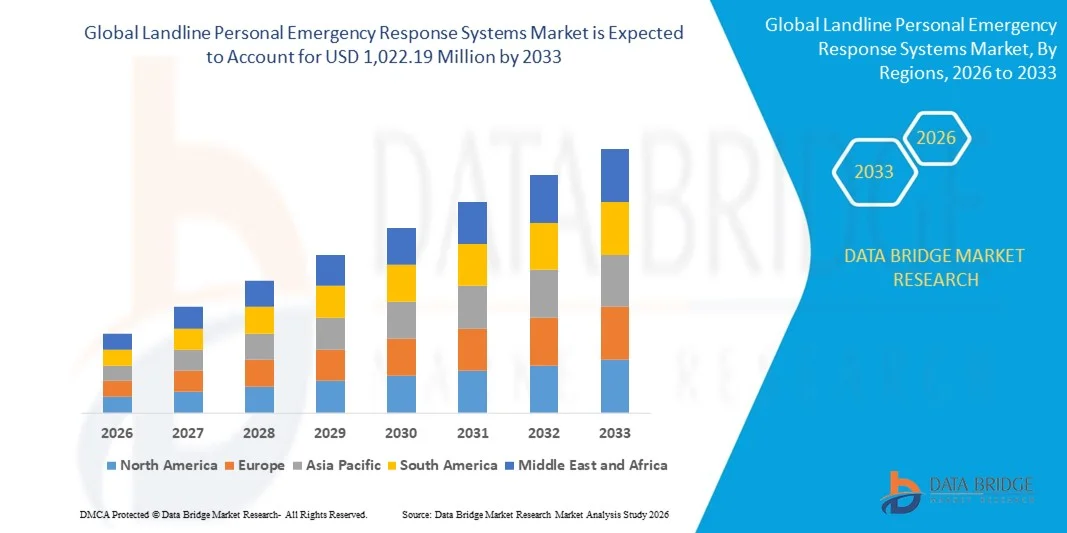
- The global landline personal emergency response systems market size was valued at USD 540.53 million in 2025 and is expected to reach USD 1,022.19 million by 2033, at a CAGR of 8.29% during the forecast period
- The market growth is largely fuelled by the rising aging population, increasing awareness regarding personal safety, and growing adoption of emergency monitoring devices among elderly individuals
- In addition, the demand is supported by advancements in telecommunication infrastructure and the growing emphasis on independent living solutions for seniors
Landline Personal Emergency Response Systems Market Analysis
- The market is witnessing steady expansion due to the increasing preference for traditional landline-based systems among older adults who may be less familiar with mobile or smart technologies
- Continuous innovations in system design, such as enhanced two-way communication and integration with healthcare support services, are further improving product efficiency and reliability
- North America dominated the landline personal emergency response systems (PERS) market with the largest revenue share of 41.26% in 2025, driven by a rapidly aging population, high healthcare awareness, and the growing emphasis on independent living among seniors
- Asia-Pacific region is expected to witness the highest growth rate in the global landline personal emergency response systems market, driven by increasing healthcare digitization, a growing aging population, and supportive government programs promoting senior safety. Expanding telecommunication infrastructure and rising disposable incomes are also boosting the adoption of PERS devices across developing nations in the region
- The home-based users segment held the largest market revenue share in 2025, driven by the increasing preference among the elderly to live independently while ensuring personal safety and access to immediate emergency assistance. The availability of user-friendly devices designed for easy installation and 24/7 monitoring has further boosted adoption among individual households
Report Scope and Landline Personal Emergency Response Systems Market Segmentation
|
Attributes |
Landline Personal Emergency Response Systems Key Market Insights |
|
Segments Covered |
|
|
Countries Covered |
North America
Europe
Asia-Pacific
Middle East and Africa
South America
|
|
Key Market Players |
|
|
Market Opportunities |
|
|
Value Added Data Infosets |
In addition to the insights on market scenarios such as market value, growth rate, segmentation, geographical coverage, and major players, the market reports curated by the Data Bridge Market Research also include in-depth expert analysis, geographically represented company-wise production and capacity, network layouts of distributors and partners, detailed and updated price trend analysis and deficit analysis of supply chain and demand. |
Landline Personal Emergency Response Systems Market Trends
Increasing Integration Of Artificial Intelligence (AI) And Machine Learning (ML) In Emergency Response
- The incorporation of AI and ML technologies is revolutionizing the landline personal emergency response systems (PERS) market by enhancing the accuracy and efficiency of emergency detection. These systems can now analyze user behavior and identify irregular patterns that may indicate potential emergencies before they occur. This predictive capability reduces response times, minimizes false alerts, and ensures timely intervention to prevent severe health outcomes for vulnerable users
- AI-enabled systems also assist caregivers and monitoring centers in making informed decisions by filtering false alarms and prioritizing critical alerts. The use of advanced data analytics and automated algorithms helps track long-term health trends, enabling personalized care and timely medical attention. This transition from reactive to proactive monitoring is significantly enhancing safety standards in elderly care
- For instance, in 2024, several U.S.-based PERS manufacturers introduced AI-powered platforms capable of voice and motion analysis, enabling faster identification of falls and health-related incidents. These innovations are transforming elderly care and independent living by providing real-time situational awareness. The systems are designed to adapt to users’ routines, improving responsiveness and overall quality of life
- As AI and ML become more affordable and adaptable, their adoption in landline-based systems is expected to grow significantly. Manufacturers are increasingly integrating cloud-based analytics and smart voice assistants to optimize monitoring efficiency. This integration will improve system reliability, user experience, and expand the market reach among aging populations seeking technologically advanced yet affordable safety solutions
Landline Personal Emergency Response Systems Market Dynamics
Driver
Rising Geriatric Population And Increased Demand For Independent Living Solutions
- The expanding elderly population globally is one of the major drivers of the landline PERS market. Older adults increasingly prefer to live independently while maintaining access to quick emergency assistance. PERS devices offer reassurance to both users and caregivers through immediate response capabilities during medical or safety incidents, ensuring timely help in critical situations
- Governments and healthcare organizations are promoting aging-in-place initiatives, encouraging the adoption of home-based monitoring systems such as PERS. These efforts are improving healthcare accessibility for seniors and reducing the burden on medical facilities. Increased government funding and insurance coverage for telecare solutions are further driving adoption among cost-conscious consumers
- For instance, in 2024, the World Health Organization reported a significant increase in home-based care programs, emphasizing technology-driven safety systems for seniors. This has accelerated the deployment of landline PERS across developed and emerging nations. Public-private partnerships are also emerging to ensure wider system availability, especially in countries with rapidly aging populations
- The growing focus on personal safety, coupled with advancements in device reliability, continues to strengthen the market outlook. Manufacturers are increasingly targeting elderly users with simplified interfaces, affordable subscription options, and enhanced emergency connectivity. This combination of accessibility and innovation is ensuring steady market growth and long-term adoption
Restraint/Challenge
Limited Technological Flexibility Of Landline Systems Compared To Mobile-Based Solutions
- Despite their reliability, landline PERS devices face limitations in mobility and integration compared to modern mobile-based systems. The inability to function outside the home restricts their appeal among users seeking broader coverage, such as seniors who frequently travel or move between locations. This limitation is gradually leading consumers to adopt more portable alternatives with broader connectivity
- The rising preference for smartphone-based emergency applications and wearable devices has also intensified competition, reducing the growth potential of purely landline systems. Many users now opt for solutions offering both home and on-the-go protection, supported by smart apps and GPS-enabled wearables. As a result, the traditional landline model faces declining appeal among younger seniors adopting digital lifestyles
- For instance, in 2023, major healthcare providers in the Asia-Pacific region reported a 30% shift toward mobile PERS adoption, citing greater flexibility and connectivity benefits. This transition is gradually impacting the demand for landline-based alternatives and influencing manufacturers to evolve their product portfolios. The changing consumer preference highlights the need for innovation in system functionality and design
- To remain competitive, manufacturers must focus on enhancing compatibility, integrating voice assistance, and offering hybrid upgrades to ensure landline PERS remain relevant in the evolving emergency response ecosystem. Strategic partnerships with telecom providers and technology firms can also help bridge the gap between traditional and mobile systems, ensuring continued relevance in a connected healthcare environment
Landline Personal Emergency Response Systems Market Scope
The landline personal emergency response systems (PERS) market is segmented on the basis of end-user, component, and services.
- By End-User
On the basis of end-user, the landline personal emergency response systems market is segmented into home-based users, senior living facilities, and assisted living facilities. The home-based users segment held the largest market revenue share in 2025, driven by the increasing preference among the elderly to live independently while ensuring personal safety and access to immediate emergency assistance. The availability of user-friendly devices designed for easy installation and 24/7 monitoring has further boosted adoption among individual households.
The assisted living facilities segment is expected to witness the fastest growth rate from 2026 to 2033, supported by the rising number of institutional care settings adopting PERS to enhance resident safety. The integration of emergency systems within facility management frameworks allows staff to respond quickly to incidents, reducing medical response times and improving patient outcomes. The growing emphasis on quality care and regulatory compliance is further driving the use of PERS across assisted living centers.
- By Component
On the basis of component, the landline personal emergency response systems market is segmented into software and hardware. The hardware segment accounted for the largest market share in 2025, owing to the widespread deployment of base units, wearable pendants, and wall-mounted emergency buttons. These components form the foundation of traditional PERS setups, providing reliable connectivity and immediate access to emergency support without the need for mobile devices.
The software segment is anticipated to grow at the fastest pace from 2026 to 2033, driven by the integration of advanced data analytics, remote monitoring, and AI-driven alert systems. The shift toward connected and intelligent platforms is transforming emergency response solutions into proactive systems capable of detecting health anomalies and predictive alerts. Software innovation continues to be a key differentiator, improving operational efficiency and system adaptability across user environments.
- By Services
On the basis of services, the landline personal emergency response systems market is segmented into monthly and yearly plans. The monthly service segment dominated the market in 2025, attributed to its flexibility and affordability, allowing users to access professional monitoring without long-term commitments. The recurring nature of these subscriptions supports consistent revenue streams for service providers while offering users ease of cancellation and upgrades.
The yearly service segment is expected to grow at the highest rate from 2026 to 2033, as long-term plans often provide cost savings and additional service benefits such as extended warranties and premium monitoring features. The increasing number of users seeking uninterrupted emergency support and lower annual costs is driving the adoption of yearly subscriptions, strengthening customer retention and market stability.
Landline Personal Emergency Response Systems Market Regional Analysis
- North America dominated the landline personal emergency response systems (PERS) market with the largest revenue share of 41.26% in 2025, driven by a rapidly aging population, high healthcare awareness, and the growing emphasis on independent living among seniors
- Consumers in the region value the reliability, simplicity, and immediate response capabilities of landline PERS devices, which are widely adopted in both home-based and assisted living environments
- This strong demand is further supported by advanced healthcare infrastructure, increasing telehealth integration, and ongoing initiatives promoting aging-in-place, positioning North America as a leading region for PERS adoption
U.S. Landline Personal Emergency Response Systems Market Insight
The U.S. landline PERS market captured the largest revenue share in 2025 within North America, fuelled by the growing number of elderly individuals opting for home-based care solutions. The country’s focus on healthcare innovation and safety-driven technology adoption supports the expansion of personal emergency response systems. Rising incidences of chronic illnesses, combined with a preference for remote monitoring and caregiver connectivity, are further driving demand. In addition, government programs and private healthcare providers are encouraging the use of PERS devices to reduce hospital readmissions and enhance patient safety.
Europe Landline Personal Emergency Response Systems Market Insight
The Europe landline PERS market is expected to witness the fastest growth rate from 2026 to 2033, driven by the region’s aging demographic, increasing healthcare expenditures, and strong emphasis on elderly welfare programs. Countries across Europe are investing in home healthcare technologies that promote independent living and reduce reliance on institutional care. The adoption of landline-based emergency systems remains significant, particularly in rural and semi-urban areas where internet connectivity is limited. Moreover, rising collaborations between healthcare agencies and telecommunication providers are enhancing accessibility and reliability.
U.K. Landline Personal Emergency Response Systems Market Insight
The U.K. landline PERS market is expected to witness the fastest growth rate from 2026 to 2033, supported by government-backed initiatives for elderly care and home safety improvements. The increasing prevalence of chronic diseases and the growing focus on aging-in-place are boosting the adoption of landline PERS devices. Healthcare providers and local councils are integrating PERS technology into social care programs, ensuring 24/7 emergency assistance for vulnerable populations. Moreover, the expanding awareness of assistive technologies among caregivers and families continues to strengthen market demand.
Germany Landline Personal Emergency Response Systems Market Insight
The Germany landline PERS market is expected to witness the fastest growth rate from 2026 to 2033, fuelled by the country’s robust healthcare infrastructure, technological innovation, and emphasis on senior safety. Germany’s growing elderly population and preference for reliable, non-internet-dependent systems contribute to the continued relevance of landline-based PERS. The market is also benefiting from increased partnerships between device manufacturers, healthcare insurers, and elderly care providers. Furthermore, the integration of emergency systems with telemonitoring services enhances overall patient security and care coordination
Asia-Pacific Landline Personal Emergency Response Systems Market Insight
The Asia-Pacific landline PERS market is expected to witness the fastest growth rate from 2026 to 2033, driven by rising elderly populations, healthcare digitalization, and growing awareness of personal safety solutions in countries such as Japan, China, and India. Rapid urbanization and government initiatives promoting elderly care are further boosting adoption rates. The affordability and simplicity of landline-based systems make them ideal for home users in both urban and rural settings. In addition, increasing healthcare expenditure and the entry of international players are supporting market expansion.
Japan Landline Personal Emergency Response Systems Market Insight
The Japan landline PERS market is expected to witness the fastest growth rate from 2026 to 2033 due to the country’s rapidly aging population and cultural focus on elderly care. Landline systems are preferred for their reliability and ease of use, especially among older adults unfamiliar with advanced mobile technologies. The growing adoption of home monitoring and medical alert systems reflects Japan’s strong commitment to safety and independence for seniors. Furthermore, collaborations between healthcare institutions and technology providers are enhancing system efficiency and outreach.
China Landline Personal Emergency Response Systems Market Insight
The China landline PERS market accounted for the largest revenue share in Asia-Pacific in 2025, driven by its vast elderly population, expanding healthcare infrastructure, and government initiatives aimed at improving senior safety. The increasing number of single-person households and aging residents in urban centers is accelerating the adoption of emergency response systems. Domestic manufacturers are introducing affordable and locally adapted devices to cater to diverse consumer needs. The integration of PERS with healthcare monitoring platforms and community support services further reinforces market growth in China.
Landline Personal Emergency Response Systems Market Share
The Landline Personal Emergency Response Systems industry is primarily led by well-established companies, including:
• Koninklijke Philips N.V. (Netherlands)
• Tunstall (U.K.)
• VRI (U.S.)
• Guardian Alarm (U.S.)
• ALERTONE Services LLC (U.S.)
• Connect America (U.S.)
• ADT (U.S.)
• Medical Guardian LLC (U.S.)
• MobileHelp (U.S.)
• Nortek Security & Control LLC (U.S.)
• Galaxy Medical Alert System (U.S.)
• Critical Signal Technologies (U.S.)
• Mytrex Inc. (U.S.)
• LifeFone Medical Alert Services (U.S.)
• Bay Alarm Family of Companies (U.S.)
• VitalConnect (U.S.)
• Cisco Systems (U.S.)
• Nortek Security and Control (U.S.)
• Honeywell International Inc. (U.S.)
• GreatCall (U.S.)
• Essence (Israel)

- Interactive Data Analysis Dashboard
- Company Analysis Dashboard for high growth potential opportunities
- Research Analyst Access for customization & queries
- Competitor Analysis with Interactive dashboard
- Latest News, Updates & Trend analysis
- Harness the Power of Benchmark Analysis for Comprehensive Competitor Tracking
Global Landline Personal Emergency Response Systems Market, Supply Chain Analysis and Ecosystem Framework
To support market growth and help clients navigate the impact of geopolitical shifts, DBMR has integrated in-depth supply chain analysis into its Global Landline Personal Emergency Response Systems Market research reports. This addition empowers clients to respond effectively to global changes affecting their industries. The supply chain analysis section includes detailed insights such as Global Landline Personal Emergency Response Systems Market consumption and production by country, price trend analysis, the impact of tariffs and geopolitical developments, and import and export trends by country and HSN code. It also highlights major suppliers with data on production capacity and company profiles, as well as key importers and exporters. In addition to research, DBMR offers specialized supply chain consulting services backed by over a decade of experience, providing solutions like supplier discovery, supplier risk assessment, price trend analysis, impact evaluation of inflation and trade route changes, and comprehensive market trend analysis.
Data collection and base year analysis are done using data collection modules with large sample sizes. The stage includes obtaining market information or related data through various sources and strategies. It includes examining and planning all the data acquired from the past in advance. It likewise envelops the examination of information inconsistencies seen across different information sources. The market data is analysed and estimated using market statistical and coherent models. Also, market share analysis and key trend analysis are the major success factors in the market report. To know more, please request an analyst call or drop down your inquiry.
The key research methodology used by DBMR research team is data triangulation which involves data mining, analysis of the impact of data variables on the market and primary (industry expert) validation. Data models include Vendor Positioning Grid, Market Time Line Analysis, Market Overview and Guide, Company Positioning Grid, Patent Analysis, Pricing Analysis, Company Market Share Analysis, Standards of Measurement, Global versus Regional and Vendor Share Analysis. To know more about the research methodology, drop in an inquiry to speak to our industry experts.
Data Bridge Market Research is a leader in advanced formative research. We take pride in servicing our existing and new customers with data and analysis that match and suits their goal. The report can be customized to include price trend analysis of target brands understanding the market for additional countries (ask for the list of countries), clinical trial results data, literature review, refurbished market and product base analysis. Market analysis of target competitors can be analyzed from technology-based analysis to market portfolio strategies. We can add as many competitors that you require data about in the format and data style you are looking for. Our team of analysts can also provide you data in crude raw excel files pivot tables (Fact book) or can assist you in creating presentations from the data sets available in the report.













